Puppies in Heaven

pupWill dogs and other fauna have a place in the new creation? It’s an interesting—and controversial—subject.

I just reread a delightful essay in which the author, an Orthodox theologian, describes a debate he had with a Roman Catholic scholastic on the subject.* I enjoyed the following description of the discussion so much that I had to share it.

I was once told by a young, ardently earnest Thomist . . . you know, one of those manualist neo-paleo-neo-Thomists of the baroque persuasion you run across ever more frequently these days, gathered in the murkier corners of coffee bars around candles in wine bottles, clad in black turtlenecks and berets, sipping espresso . . . this young Thomist told me that not only could my dog not love me (since he lacks a rational nature), but I could not love my dog (something about there needing to be some rational equality between lover and beloved).

Now, while I admitted that I could only presume the former claim to be incorrect . . . I was adamant that I could be absolutely certain of the falsity of the latter. But my friend was not deterred: “Oh, no,” he insisted, “you don’t really love him; you just think you do because of your deep emotional attachment to him.”

Of course. Foolish of me. Leave it to a two-tier Thomist to devise a definition of love that does not actually involve love. If you can believe in pure nature, I suppose you can believe anything.

{More on the question of animals in paradise below . . .}

Debates (civilized variants of arguments) can be fascinating when they are dissected and examined. Theological debates are particularly enthralling.

C.S. Lewis appreciated the value of debate in sharpening one’s position. This approach to learning can be traced back to the Socratic Method, which is based upon asking and answering questions.

In 1941, the Oxford Socratic Club was formed to “follow the argument wherever it led them.” C.S. Lewis was its first president (faculty sponsor), serving until 1955 when he moved to Cambridge University. In the first issue of the Socratic Digest, Lewis wrote:

In any fairly large and talkative community such as a university, there is always the danger that those who think alike should gravitate together into coteries where they will henceforth encounter opposition only in the emasculated form of rumour that the outsiders say thus and thus.

The absent are easily refuted, complacent dogmatism thrives, and differences of opinion are embittered by group hostility. Each group hears not the best, but the worst, that the other groups can say.

Some of the debates conducted by the club were legendary. You can read a fine article about these “University Battles” here.

Returning to the Question of Animals in Heaven

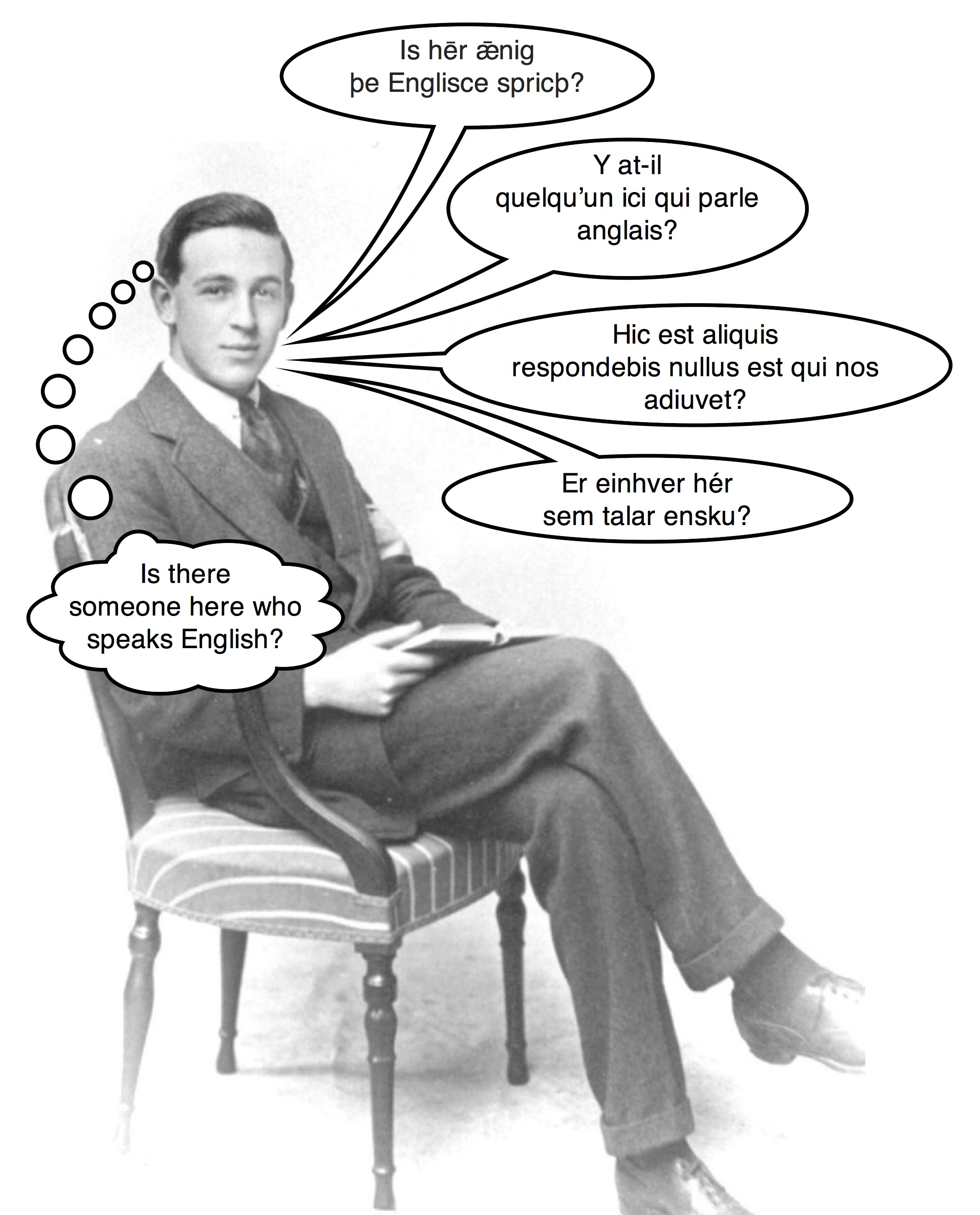
I wrote on this subject several years ago. That post is worth checking out if only for the amazing graphic that graces it.

You can read my own perspective on the question there, if you are interested.

Today I wish to end, instead, with the summary of my kindred spirit, who debated the philosopher.

The final sentence in this next section is priceless.

The occasion of the exchange, incidentally, was a long and rather tediously circular conversation concerning Christian eschatology. My interlocutor was an adherent to a particularly colorless construal of the beatific vision, one that allows for no real participation of animal creation (except eminently, through us) in the final blessedness of the Kingdom; I, by contrast, hope to see puppies in paradise, and persevere in faith principally for that reason.

His sentiment reminds me of C.S. Lewis’ thoughts in Mere Christianity.

I sometimes like to imagine that I can just see how it might apply to other things. I think I can see how the higher animals are in a sense drawn into Man when he loves them and makes them (as he does) much more nearly human than they would otherwise be.

Hart offers another delightfully sarcastic comment about the weight of different authorities the two debaters were citing. And with that observation, we shall end.

On his side, all the arguments were drawn from Thomas and his expositors; on mine, they were drawn from Scripture; naturally, limited to the lesser source of authority, I was at a disadvantage. . . . [arguing] that the biblical imagery of the redeemed state is cosmic in scope and positively teeming with fauna (lions lying down with lambs and such)—that Paul’s vision of salvation in Romans 8 is of the entirety of creation restored and glorified—things of that sort. All in vain, though; nothing I said could rival the dialectical force of his ringing sic Thomas dixit [so Thomas said].

_____

* The author, David Bentley Hart, is not anti-Catholic. In fact, he has taught at several Roman Catholic universities. The article quoted appears here.
 

C.S. Lewis and Supermen

NietzscheI unexpectedly encountered C.S. Lewis while unpacking a box today.

I’m ashamed to admit it, but five years after moving into our retirement home, I have yet to unpack half of my library.

The text that stood out among the two score volumes restored to the light today is called The Cult of the Superman. It was written in 1944 by Eric Bentley.

The 1969 edition which I possess includes “An Appreciation” by C.S. Lewis. Before emigrating to the United States, Bentley had studied under Lewis at Oxford. He spent his own professorial career at Columbia University.*

I have yet to find the time to read the volume, but it’s subtitle clarifies the profound subject it addresses: A Study of the Idea of Heroism in Carlyle and Nietzsche, With Notes on Other Hero-Worshippers of Modern Times. Thomas Carlyle and Nietzsche, in elevating the exceptionality of the hero or superman who “shapes history,” diminish the value of the vast majority of human beings who seek no such domineering role.

This view, so warmly embraced by the Nazis, is directly opposed to the Christian worldview.

The news that God lifts the lowly will come as a disappointment to any supermen or superwomen who are reading this.

However, to those of us who do not yearn to rule over the masses, it is joyous news. “Blessed are the poor in spirit, for theirs is the kingdom of heaven.”

In Jesus’ own words, “Whoever exalts himself will be humbled, and whoever humbles himself will be exalted.”

Nietzsche would revile those words, yet his knee too will one day bow before the One who “emptied himself, by taking the form of a servant, being born in the likeness of men.”

In his “Appreciation,” Lewis declares that Bentley is the right man to address this challenging topic.

The Author, though sternly critical, has a sympathy which I cannot emulate with those elements in Heroic Vitalism which really deserve a serious answer, and this enables him to make a constructive book out of what might easily have become a mere chamber of horrors.

Sheep or Wolves?

This aggrandizement of those who seize their self-ordained right to lord over others can certainly lead to horrors. One example I recently saw was a violent criminal’s justification for his actions. “There are sheep and there are wolves. I’m a wolf. The sheep only exist for my benefit.”

Those of us who comprise the lambs find it inconceivable that evil people believe we exist only to be preyed upon. Yet, this is precisely what predators think. And this Nietzschean notion can justify any atrocity, based as it is upon the maxim that “might makes right.”

Coincidentally, as I was writing this column, “Fishers of Men” by The Newsboys began playing. The first lyrics in the song coincide perfectly with the biblical promise above that every single person—including you—is precious to God.

Seven billion people on a spinning ball,

And they all mean the world to You.

So much for those who would consider themselves super-men . . .

_____

* Lewis’ praise for Bentley’s work is also found in a letter included as an expression of appreciation in ‪The Play and Its Critic: Essays for Eric Bentley.

For an interesting assessment of Lewis’ influence on Bentley’s vocation as a drama critique, Donald Cunningham writes in his Ph.D. dissertation:

Dissent and debate were seen by Lewis as a method for testing ideas, and so he felt that discussion of an ideological sort could only strengthen a grasp on truth. . . . It is possible, then, that Bentley’s positive attitude toward conflict and its necessary presence in a pluralistic, growth-oriented world was learned at Oxford.

True Friendship

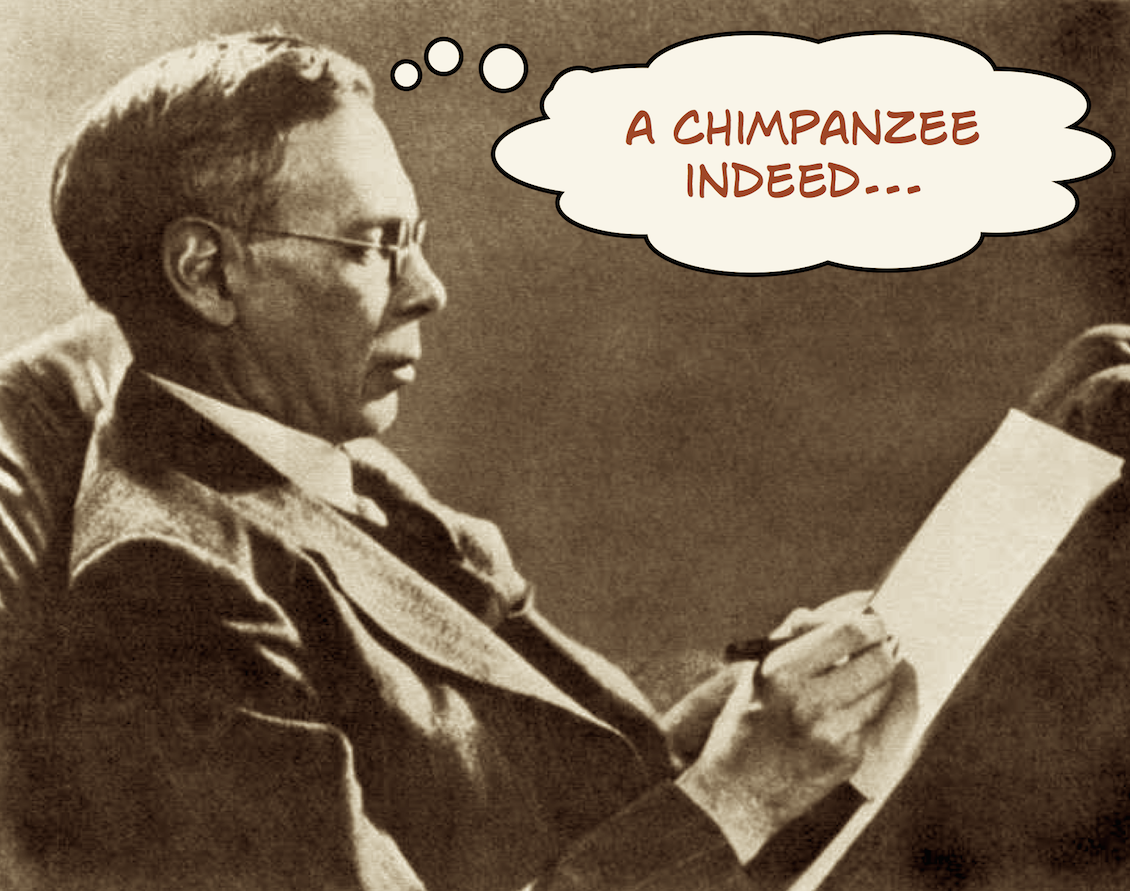
charles williamsIt seems odd to describe someone you deeply respect with the words “ugly as a chimpanzee,” but that’s precisely what C.S. Lewis once did.

Yet, reading the description in full, we find that Lewis considered the physical unattractiveness of his mentor to be a positive thing. In a sense, it accented his impressive persona.

Describing Charles Williams to his childhood friend, Arthur Greeves, Lewis wrote:

As for the man: he is about 52, of humble origin (there are still traces of cockney in his voice), ugly as a chimpanzee but so radiant (he emanates more love than any man I have ever known) that as soon as he begins talking whether in private or in a lecture he is transfigured and looks like an angel. He sweeps some people quite off their feet and has many disciples. Women find him so attractive that if he were a bad man he could do what he liked either as a Don Juan or a charlatan.

I find this description evocative of the words about Jesus’ physical appearance. You can read the full passage about Jesus, the promised Messiah, here.

For he grew up before him like a young plant, and like a root out of dry ground; he had no form or majesty that we should look at him, and no beauty that we should desire him.

Lewis continues with his description of Williams, revealing a more intimate relationship than the previous words might suggest. Williams, you see, was one of the Inklings.

He works in the Oxford University Press. In spite of his “angelic” quality he is also quite an earthy person and when Warnie, Tolkien, he and I meet for our pint in a pub in Broad Street, the fun is often so fast and furious that the company probably thinks we’re talking bawdy when in fact we’re very likely talking Theology. He is married and, I think, youthfully in love with his wife still.

I find it amazing how vivid Lewis’ portrait of his colleague is. He briefly passes over his physical appearance (the least important of human traits, despite what the modern era intimates). And, even though his words are not flattering, the rest of the description reveals they are expressed with deep affection.

Lewis then quickly presses on to a poetic depiction of Williams’ oratorical skills, and concludes with a personable picture of the man among brothers. The final sentence, given Lewis’ perception that he himself would remain a lifelong bachelor, is quite perceptive.

Mutual respect—especially when tempered with affection—generates bonds that allow for honest assessments of both weaknesses and strengths.

A Personal Experience

I recall receiving a lovely engraved glass plaque as a memento of my tour at the United States Air Force Chaplain School. Most of my duties related to writing, but it was common knowledge that there were few subjects on which I did not have something to say.

When the Commandant of the Institute read the inscription during the presentation (it was the first time he had seen it), he paused in embarrassed silence thinking he must have read it wrong. It didn’t sound like the flattery that traditionally adorns such tokens.

“He says in a book what others say in a sentence.”

You can only offer such a dialectical “compliment” to a friend.

It was true, of course, and it was to much laughter that I immediately responded, “True, and it is a book well worth reading.”

When I read this description of the literary friend who made such a profound impression on Lewis, it makes me smile. It is all the more poignant, since it was written just a year before Williams’ death.

There are far, far worse things a person can experience than having someone who respects and loves them say they resemble a chimpanzee . . . or that they tend to be just a little bit verbose.

Engage Brain

brainsWhen I attended the University of Washington, we had to learn the old-fashioned way—by studying. Now they are anticipating downloading information directly into students’ brains.

Literal brain dumps are actually still in the future . . . but researchers have documented the first indisputable brain-to-brain interface between humans!

My first paragraph is not an exaggeration of what researchers think may one day happen.

The project could also eventually lead to “brain tutoring,” in which knowledge is transferred directly from the brain of a teacher to a student.

The student would view this shortcut as advantageous. (It could also save a great deal in tuition expenses, if each course only took, say, an hour or two of brain interfacing.)

The university sees another advantage—circumventing limited teaching skills.

“Imagine someone who’s a brilliant scientist but not a brilliant teacher. Complex knowledge is hard to explain – we’re limited by language,” said co-author Chantel Prat, a faculty member at the Institute for Learning & Brain Sciences and a UW assistant professor of psychology.

My main question is, what will the teacher do, once their knowledge has been transferred to a student?

Presumably they will be able to retain a semblance of their knowledge, unlike the experience of the unfortunate Orbanians. They rely on a nanite technology, and it leaves the brilliant brain in a childlike state after the knowledge is siphoned out of it. You can learn more about them in “Learning Curve,” a documentary about the Stargate project.

C.S. Lewis had a great deal to say about education. He was a popular professor, despite the fact many of his students were intimidated by his brilliance. It is possible that if his students were able to download his knowledge, it might have caused their crania to explode.

In one essay, Lewis explains the differences between education and training, declaring “If education is beaten by training, civilization dies.” (“Our English Syllabus”).

Lewis continues, arguing that learning itself, is something distinct. It is not marked by a transfer of knowledge, but by a hunger to grow.

Now learning, considered in itself, has, on my view, no connexion at all with education. It is an activity for . . . all [who] desire to know. . . .

Societies have usually held a belief . . . that knowledge is the natural food of the human mind: that those who specially pursue it are being specially human; and that their activity is good in itself besides being always honourable and sometimes useful to the whole society.

Oh, and if you are waiting to “learn” when they can download knowledge directly into your skull, consider this wise advice from Lewis.

The only people who achieve much are those who want knowledge so badly that they seek it while the conditions are still unfavourable. (“Learning in Wartime”).

_____

The picture above shows two UW guinea pigs transferring brain waves to one another. (I am uncertain whether two-way transfer is already possible, or if one brain is forced to serve in a receptacle role.)

The article announcing the results can be seen here.

Deadly Gargoyles

gargoyle magdalenWhoever first considered gargoyles an attractive addition to buildings, must have had an odd personality. I have never developed an appreciation them.

What’s worse is when moonstruck (lunatic) architects deem gargoyles suitable for adorning churches.

There are too many examples out there to count. I am sure there are a number of websites devoted to them. But I don’t care enough to investigate.

It is one thing to shape a natural or fantastical creature to use as a rain spout on a building. Quite another, in my opinion, to opt for a grotesquery.

Churches should stick with symbolism that edifies the people. Admittedly, this can include some potentially gruesome subject, such as images of martyrdoms.

Our familiarity with the crucifix itself has dulled the impact of its terrible agony. We often fail to recognize the magnitude of the suffering Jesus endured.

Gargoyles were in the news this week. The reason for their appearance gave the title to this column.

A tragedy occurred in Chicago when a gargoyle broke free from a dated building and struck an innocent pedestrian. She was killed almost immediately by the crushing blow.

To make matters even more sad, the building from which the “ornament” fell was a church.

Second Presbyterian Church was built in 1874 and is a national historic landmark. Local news outlets report that it failed various inspections between 2007 and 2011, but passed them in 2012 and 2013. (The picture above is not of the gargoyle in question.)

Sarah was the name of the victim of this tragic accident. I invite your prayers on behalf of this young woman’s loved ones, especially her two children.

I think so little of church gargoyles that I included the subject in an as yet unpublished book set in the medieval period.

The nightmare gargoyle pictured on the top of the page adorns Magdalen College in Oxford. It was established in 1458, and was the school where C.S. Lewis began his teaching career.

In C.S. Lewis: An Examined Life, Bruce Edwards writes, “The college is noted for its wealth of gargoyles, grotesques, and stone portraits of notable people.”

Well, the college may be named after Mary Magdalene, but at least it isn’t a church. As for the stone “portraits,” they sound like a very agreeable adornment.

As lovely as Magdalen is considered to be, on the whole Lewis considered Cambridge University more appealing than Oxford. In a 1954 letter he wrote, “I’m afraid one must admit that, architecturally, Cambridge beats Oxford; there is so much more variety in Cambridge.”

In two other letters written the same year, Lewis revealed that there was much more to his new academic post than mere architecture that appealed to him. Oxford had taken Lewis for granted, and often belittled him because of his simplistic trust in Christ.

You know I am going as a Professor to Cambridge? My new college is Magdalene, Cambridge: a tiny little place compared with this, but a perfect gem architecturally and (I think) much more congenial socially & spiritually.

Did I tell you I’ve been made a professor at Cambridge? I take up my duties on Jan. 1st at Magdalene College, Cambridge (Eng.). Note the difference in spelling. It means rather less work for rather more pay. And I think I shall like Magdalene better than Magdalen. It’s a tiny college (a perfect cameo architecturally) and they’re so old fashioned, & pious, & gentle and conservative– unlike this leftist, atheist, cynical, hard-boiled, huge Magdalen. Perhaps from being the fogey and ‘old woman’ here I shall become the enfant terrible there.

It is not about architecture at all—or the presence or absence of grotesqueries. It is about finding a home where you know you are welcome and appreciated. A place where you do not need to remain constantly on your guard, because there are colleagues present who desire to see you humbled.

It is good to know C.S. Lewis spent the final years of his teaching life in an academic family that truly appreciated the gifted scholar in their midst.

C.S. Lewis’ Bilingualism

csl bilingualHow many extremely intelligent and well educated people do you know . . . who can actually communicate with those of us possessing normal human intelligence?

That talent is a rarity.

And it is precisely what makes C.S. Lewis such an unusual man. He was brilliant. Yet he could communicate with the common person—even the child—just as easily as he conversed with his fellow university dons.

Lewis, of course, could comprehend a number of languages, so he was more than merely “bilingual.” But that is not exactly the sense in which I am using the word today. I mean it in the sense of my opening paragraphs. It is the ability to communicate (even with the same “language”) to distinctly different groups who would normally not be able to readily understand one another.

In an interview that appeared in Christianity Today, Detroit pastor Christopher Brooks was asked about the challenges of urban ministry.

How have you included both righteousness and justice in your setting?

I think about C.S. Lewis, who had the challenge of building the bridge between the culture of Oxford and Cambridge and the culture of the church. These cultures were worlds apart by his time, but he was bilingual, in a sense: able to speak the language of Oxford to the church and the language of the church to the intellectuals and naturalists.

One of the titles for ancient Roman priests that was adopted by their Christian successors is “pontifex.” It means “bridge-maker.” The Pontifex Maximus was, of course, referred to the greatest of these offices.

In light of Brooks’ words about Lewis as building bridges between elite academia and Christianity, I have added that dimension to my view of him. C.S. Lewis, Pontifex Maximus. (I doubt it would make him happy, so I’ll keep it under wraps . . . and probably never mention it again.) But I am genuinely happy about his skill in building these bridges of understanding.

Before signing off, a special treat. If you call someone who speaks two languages “bilingual,” and someone who speaks three “trilingual,” what do you call someone who only speaks one language? Why, an American, of course.

That joke would not be as funny if it were not so sadly true. While the rest of the world almost assumes that people know at least two languages, most Americans stumble their way through the study of a second language for two or three years and never develop a comfort level with it. But that’s a story for another day.

Chinese Complexity

Chinese ChroniclesSome people consider “writing” difficult. It’s not. When you add the adverb “well,” it does become much rarer. Still, writing in English is not challenging at all when you compare it to the hurdle traditional Chinese authors face.

One of the most popular television programs in the People’s Republic of China is essentially a “spelling bee.” During a recent episode the studio audience was embarrassed by the fact only one-third of them were able to correctly write “gan ga,” which means “embarrassed.”

Chinese ComplexThe problem is apparently two-fold. First, Chinese characters are “complex.” That’s why I selected that very word to include here.

The most comprehensive Chinese dictionary, Zhonghua Zihai, was compiled in 1994. It includes 85,568 characters. When compared to the Latin alphabet of 26 characters, it’s no surprise that a poll in China found 99% of the population admitting they forget how to write words. (To be fair, I’m not sure we could find even 1% in the West claiming that they never forget how to spell a word.)

The second reason for the growing national writing crisis in China is the amazing phenomenon called pinyin. Pinyin is the official phonetic system for transcribing the sound of Chinese characters into Latin script. It was created in 1958 by mainland China and has been adopted by the Republic of China as well.

The influence of pinyin has grown dramatically with the advent of computing, and many young Chinese have become dependent on the shortcut. Some educators have labeled the crippling practice “a type of social disease.”

Fortunately for aspiring Chinese authors, knowing a meager 4,000 distinct characters makes one “functionally” literate. Still, even that seems rather daunting. I’ll no longer take for granted my good fortune in having a mere 26 characters to strive to master.

C.S. Lewis offered some fascinating observations about the Chinese worldview. While he discussed the subject in a variety of places, he presents his thoughts most extensively in The Abolition of Man. He finds the concept of “Tao” a useful corollary to what Christians usually refer to as Natural Law.

The Chinese also speak of a great thing (the greatest thing) called the Tao. It is the reality beyond all predicates, the abyss that was before the Creator Himself. It is Nature, it is the Way, the Road. It is the Way in which the universe goes on, the Way in which things everlastingly emerge, stilly and tranquilly, into space and time. It is also the Way which every man should tread in imitation of that cosmic and supercosmic progression, conforming all activities to that great exemplar.

“In ritual,” say the Analects, “it is harmony with Nature that is prized.” The ancient Jews likewise praise the Law as being “true.” This conception in all its forms, Platonic, Aristotelian, Stoic, Christian, and Oriental alike, I shall henceforth refer to for brevity simply as “the Tao.”

Some of the accounts of it which I have quoted will seem, perhaps, to many of you merely quaint or even magical. But what is common to them all is something we cannot neglect. It is the doctrine of objective value, the belief that certain attitudes are really true, and others really false, to the kind of thing the universe is and the kind of things we are.

Although the following story does not relate to C.S. Lewis directly, it offers an interesting insight into the subject of this post. It appears in the book Remembering C.S. Lewis: Recollections of Those who Knew Him, and refers to J.A. Smith, one of Lewis’ fellow professors at Magdalen.

“At the Breakfast Table” was written by another member of the faculty, Adam Fox. Both men knew Lewis well, since they were part of a breakfast foursome in the Common Room at the college.

Now J.A. had fallen into the way of speculating on odd little problems, which apparently assailed him in bed when sleep deserted him. I remember him coming down one morning and telling us that he had been thinking in the night what a dreadful thing it would be for a learned Chinese to go blind. I do not know if the other members of the party knew why it would be more dreadful for a Chinese than for any other learned person.

I had no idea, but I knew my place, and when I asked why this was so, it appeared, according to J.A., that many of the ideograms that make Chinese writing so beautiful conveyed meaning to the eye but had no sound attached to them. Reading in Chinese was in part at least like looking at a picture book, and for that reason, of course, a blind man is fatally handicapped.

As an epilogue of sorts, I can’t resist including one of my favorite Chinese characters. Perhaps you’ll enjoy it also.

Chinese Verbose

Ironically, since it required sixty-four strokes, the word zhé fell from common usage around the fifth century.