Explosive Clergy

What’s with pastors? As one, I probably know more than the typical person does about them – and all too often, they disappoint.

That’s a bit harsh. Most pastors are pretty selfless. That’s fairly evident in their salaries (if they even receive one). And, trust me, trying to be a faithful leader and peacemaker in any group comprised of human beings, is no easy task.

My sainted grandmother, born at the end of the nineteenth century, was the daughter of Norwegian immigrants. She was an authentic follower of Jesus, and when she was young the sermons at Fordefjord Lutheran Church* were preached in the immigrants’ tongue. We occasionally talked about how scandalized she was when one of the ministers serving the congregation pronounced “helvete vil være fullt av pastorer” (hell will be full of pastors).

Well, not “full” perhaps, but in principle he was right. And, sadly, his warning is not at all shocking to us today. We read regularly about clergy who are arrested for violating the trust of the most vulnerable. Likewise, we hear about the outrageous wealth of some ministers (including, it seems, nearly every televangelist). Even pastors in small enclaves with little access to the temptation offered by easily accessible cash, can too often succumb to the sirens of pride and power, twisting their pastoral authority into a weapon to abuse others. (It’s the opposite of the messianic promise found in Isaiah 2:4.)

It’s almost enough to drive a person from the Lord’s house. But that is not the answer, of course. Finding a truly Christian church, with a pastor earnestly (albeit imperfectly) pursuing his holy vocation, is the best course.

The Scriptures say many things about ministry, and Jesus himself provides the perfect example of willingness to lay down one’s life for the sheep.

The letter of James cautions those considering a life of “ministry” that they will face a stricter judgment than the laity (which comes from λαός which refers to the people at large).

Personally, I especially appreciate being reminded of God’s warning to religious leaders from the lips of Jeremiah. (I also appreciate the ironic tone of God’s judgment.)

“Woe to the shepherds who destroy and scatter the sheep of my pasture!” declares the Lord. Therefore thus says the Lord, the God of Israel, concerning the shepherds who care for my people: “You have scattered my flock and have driven them away, and you have not attended to them. Behold, I will attend to you for your evil deeds,” declares the Lord.

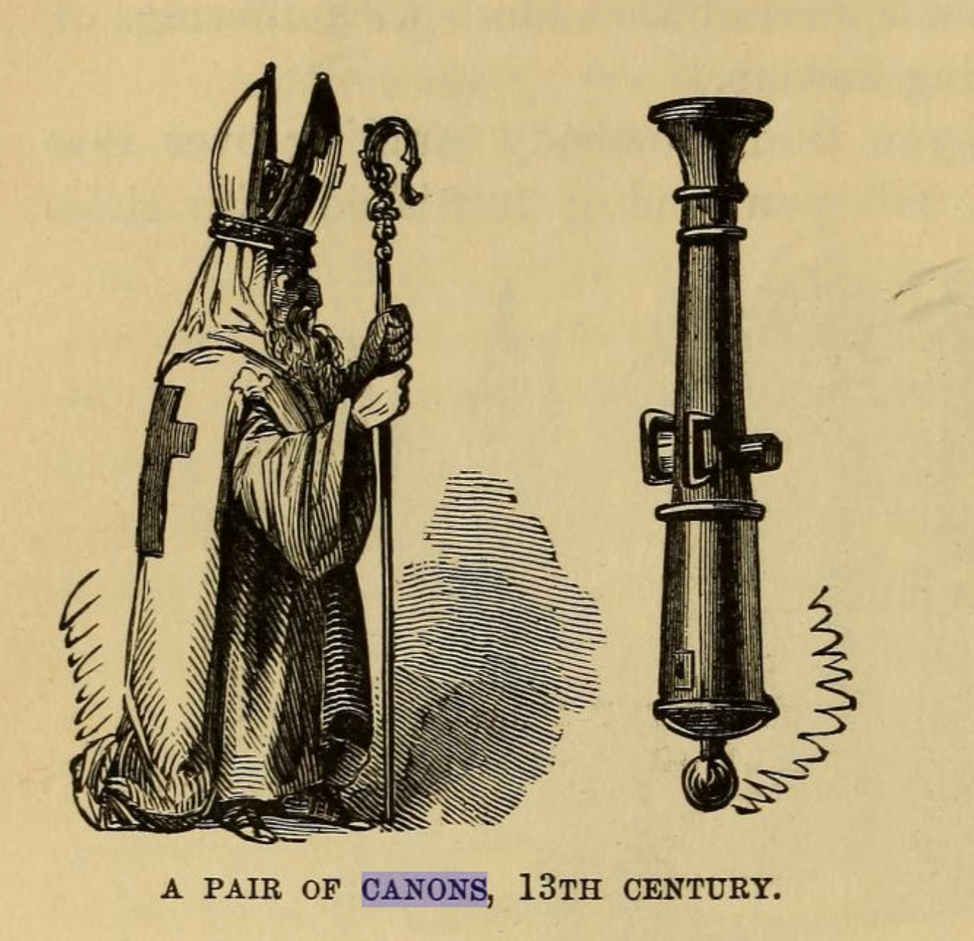
The picture at the top of this column comes from one of Mark Twain’s travelogues. It illustrates the vindictive priest Fulbert, in Twain’s retelling of the story of Abelard and Héloïse, 12th century lovers. More about that momentarily. Abelard was a prominent philosopher who tangled for several years with Saint Bernard of Clairvaux, a significant dispute ably discussed here.

Abelard and the Inklings

Abelard (c. 1079-1142) was a philosopher who, as was common during the Middle Ages, was also a theologian. Among his contributions to religion was revising the Roman Catholic doctrine of limbus infantium (Limbo for unbaptized infants).

In popular culture, Abelard’s love affair with his eventual “wife” is more prominent than his religious pursuits. Although Abelard was a famous figure during the medieval period, he did not feature significantly in C.S. Lewis’ thought. He did, however, exert a prominent influence on Charles Williams’ Place of the Lion, a volume Lewis praised.

In “Friendship in The Place of the Lion,” Dan Hamilton provides a very accessible synopsis of Williams’ book. He describes the experience of a primary character, who is writing her dissertation on “Pythagorean Influences on Abelard.” As she struggles with the appearance of supernatural phenomena, “she encounters the specter of Abelard, a major subject of her studies. But he is dead, and powerless to give her any aid, not even a meaningful word.” The “archetypes” in the story, by contrast, possess genuine power. It is a very unique book.

Returning to Mark Twain’s retelling of the popular medieval tale, we leave the realm of platonic philosophy, and enter the world of sordid human activities. Twain, you see, was not sympathetic to Abelard’s wooing of a young student and his eventual repentance. In his account, Twain desired “to show the public that they have been wasting a good deal of marketable sentiment very unnecessarily.” If you are curious as to his perspective on the events, continue reading.

Twain’s Take on Abelard and Héloïse
(not brief, but well worth reading)

In his own words, Twain’s “faithful” version of their story – but first, he begins with a description of their shared gravesite.

But among the thousands and thousands of tombs in Père la Chaise [cemetery] there is one that no man, no woman, no youth of either sex, ever passes by without stopping to examine. Every visitor has a sort of indistinct idea of the history of its dead, and comprehends that homage is due there, but not one in twenty thousand clearly remembers the story of that tomb and its romantic occupants. This is the grave of Abelard and Heloise – a grave which has been more revered, more widely known, more written and sung about and wept over, for seven hundred years, than any other in Christendom, save only that of the Saviour.

All visitors linger pensively about it; all young people capture and carry away keepsakes and mementoes of it; all Parisian youths and maidens who are disappointed in love come there to bail out when they are full of tears; yea, many stricken lovers make pilgrimages to this shrine from distant provinces to weep and wail and “grit” their teeth over their heavy sorrows, and to purchase the sympathies of the chastened spirits of that tomb with offerings of immortelles and budding flowers.

Go when you will, you find somebody snuffling over that tomb. Go when you will, you find it furnished with those bouquets and immortelles. Go when you will, you find a gravel-train from Marseilles arriving to supply the deficiencies caused by memento-cabbaging vandals whose affections have miscarried.

Yet who really knows the story of Abelard and Heloise? Precious few people. The names are perfectly familiar to every body, and that is about all. With infinite pains I have acquired a knowledge of that history, and I propose to narrate it here, [italics added] partly for the honest information of the public and partly to show that public that they have been wasting a good deal of marketable sentiment very unnecessarily.

Heloise was born seven hundred and sixty-six years ago. She may have had parents. There is no telling. She lived with her uncle Fulbert, a canon of the cathedral of Paris. I do not know what a canon of a cathedral is, but that is what he was. He was nothing more than a sort of a mountain howitzer, likely, because they had no heavy artillery in those days. Suffice it, then, that Heloise lived with her uncle the howitzer, and was happy.

She spent the most of her childhood in the convent of Argenteuil – never heard of Argenteuil before, but suppose there was really such a place. She then returned to her uncle, the old gun, or son of a gun, as the case may be, and he taught her to write and speak Latin, which was the language of literature and polite society at that period.

Just at this time, Pierre Abelard, who had already made himself widely famous as a rhetorician, came to found a school of rhetoric in Paris. The originality of his principles, his eloquence, and his great physical strength and beauty created a profound sensation. He saw Heloise, and was captivated by her blooming youth, her beauty and her charming disposition. He wrote to her; she answered. He wrote again, she answered again. He was now in love. He longed to know her – to speak to her face to face.

His school was near Fulbert’s house. He asked Fulbert to allow him to call. The good old swivel saw here a rare opportunity: his niece, whom he so much loved, would absorb knowledge from this man, and it would not cost him a cent. Such was Fulbert – penurious . . . He asked Abelard to teach her.

Abelard was glad enough of the opportunity. He came often and staid long. A letter of his shows in its very first sentence that he came under that friendly roof like a cold-hearted villain as he was, with the deliberate intention of debauching a confiding, innocent girl. This is the letter :

“I can not cease to be astonished at the simplicity of Fulbert; I was as much surprised as if he had placed a lamb in the power of a hungry wolf. Heloise and I, under pretext of study, gave ourselves up wholly to love, and the solitude that love seeks our studies procured for us. Books were open before us, but we spoke oftener of love than philosophy, and kisses came more readily from our lips than words.”

And so, exulting over an honorable confidence which to his degraded instinct was a ludicrous “simplicity,” this unmanly Abelard seduced the niece of the man whose guest he was. Paris found it out. Fulbert was told of it – told often – but refused to believe it. He could not comprehend how a man could be so depraved as to use the sacred protection and security of hospitality as a means for the commission of such a crime as that. But when he heard the rowdies in the streets singing the love-songs of Abelard to Heloise, the case was too plain – love-songs come not properly within the teachings of rhetoric and philosophy.

He drove Abelard from his house. Abelard returned secretly and carried Heloise away to Palais, in Brittany, his native country. Here, shortly afterward, she bore a son, who, from his rare beauty, was surnamed Astrolabe. . . . The girl’s flight enraged Fulbert, and he longed for vengeance, but feared to strike lest retaliation visit Heloise – for he still loved her tenderly. At length Abelard offered to marry Heloise – but on a shameful condition: that the marriage should be kept secret from the world, to the end that (while her good name remained a wreck, as before) his priestly reputation might be kept untarnished. It was like that miscreant.

Fulbert saw his opportunity and consented. He would see the parties married, and then violate the confidence of the man who had taught him that trick; he would divulge the secret and so remove somewhat of the obloquy that attached to his niece’s fame. But the niece suspected his scheme. She refused the marriage, at first; she said Fulbert would betray the secret to save her, and besides, she did not wish to drag down a lover who was so gifted, so honored by the world, and who had such a splendid career before him. It was noble, self-sacrificing love, and characteristic of the pure-souled Heloise, but it was not good sense.

But she was overruled, and the private marriage took place. Now for Fulbert! The heart so wounded should be healed at last; the proud spirit so tortured should find rest again; the humbled head should be lifted up once more. He proclaimed the marriage in the high places of the city, and rejoiced that dishonor had departed from his house. But lo! Abelard denied the marriage! Heloise denied it! The people, knowing the former circumstances, might have believed Fulbert, had only Abelard denied it, but when the person chiefly interested – the girl herself – denied it, they laughed despairing Fulbert to scorn.

The poor canon of the cathedral of Paris was spiked again. The last hope of repairing the wrong that had been done his house was gone. What next? Human nature suggested revenge. He compassed it. The historian says: “Ruffians, hired by Fulbert, fell upon Abelard by night, and inflicted upon him a terrible and nameless mutilation.”

I am seeking the last resting-place of those “ruffians.” When I find it I shall shed some tears on it, and stack up some bouquets and immortelles, and cart away from it some gravel whereby to remember that howsoever blotted by crime their lives may have been, these ruffians did one just deed, at any rate, albeit it was not warranted by the strict letter of the law.

Heloise entered a convent and gave good-bye to the world and its pleasures for all time. For twelve years she never heard of Abelard – never even heard his name mentioned. She had become prioress of Argenteuil, and led a life of complete seclusion. She happened one day to see a letter written by him, in which he narrated his own history. She cried over it, and wrote him. He answered, addressing her as his “sister in Christ.”

They continued to correspond, she in the un-weighed language of unwavering affection, he in the chilly phraseology of the polished rhetorician. She poured out her heart in passionate, disjointed sentences; he replied with finished essays, divided deliberately into heads and sub-heads, premises and argument. She showered upon him the tenderest epithets that love could devise, he addressed her from the North Pole of his frozen heart as the “Spouse of Christ!” The abandoned villain!

On account of her too easy government of her nuns, some disreputable irregularities were discovered among them, and the Abbot of St. Denis broke up her establishment. Abelard was the official head of the monastery of St. Grildas de Ruys, at that time, and when he heard of her homeless condition a sentiment of pity was aroused in his breast (it is a wonder the unfamiliar emotion did not blow his head off), and he placed her and her troop in the little oratory of the Paraclete, a religious establishment which he had founded.

She had many privations and sufferings to undergo at first, but her worth and her gentle disposition won influential friends for her, and she built up a wealthy and flourishing nunnery. She became a great favorite with the heads of the church, and also the people, though she seldom appeared in public. She rapidly advanced in esteem, in good report and in usefulness, and Abelard as rapidly lost ground. The Pope so honored her that he made her the head of her order.

Abelard, a man of splendid talents, and ranking as the first debater of his time, became timid, irresolute, and distrustful of his powers. He only needed a great misfortune to topple him from the high position he held in the world of intellectual excellence, and it came. Urged by kings and princes to meet the subtle St. Bernard in debate and crush him, he stood up in the presence of a royal and illustrious assemblage, and when his antagonist had finished he looked about him, and stammered a commencement; but his courage failed him, the cunning of his tongue was gone: with his speech unspoken, he trembled and gat down, a disgraced and vanquished champion.

He died a nobody, and was buried at Cluny, A.D., 1144. They removed his body to the Paraclete afterward, and when Heloise died, twenty years later, they buried her with him, in accordance with her last wish. He died at the ripe age of 64, and she at 63. After the bodies had remained entombed three hundred years, they were removed once more. They were removed again in 1800, and finally, seventeen years afterward, they were taken up and transferred to Pere la Chaise, where they will remain in peace and quiet until it comes time for them to get up and move again.

History is silent concerning the last acts of the mountain howitzer. Let the world say what it will about him, I, at least, shall always respect the memory and sorrow for the abused trust, and the broken heart, and the troubled spirit of the old smooth-bore. Rest and repose be his!

Such is the story of Abelard and Heloise. (Innocents Abroad).


* Later Fordefjord was unimaginatively renamed “First Lutheran Church.”

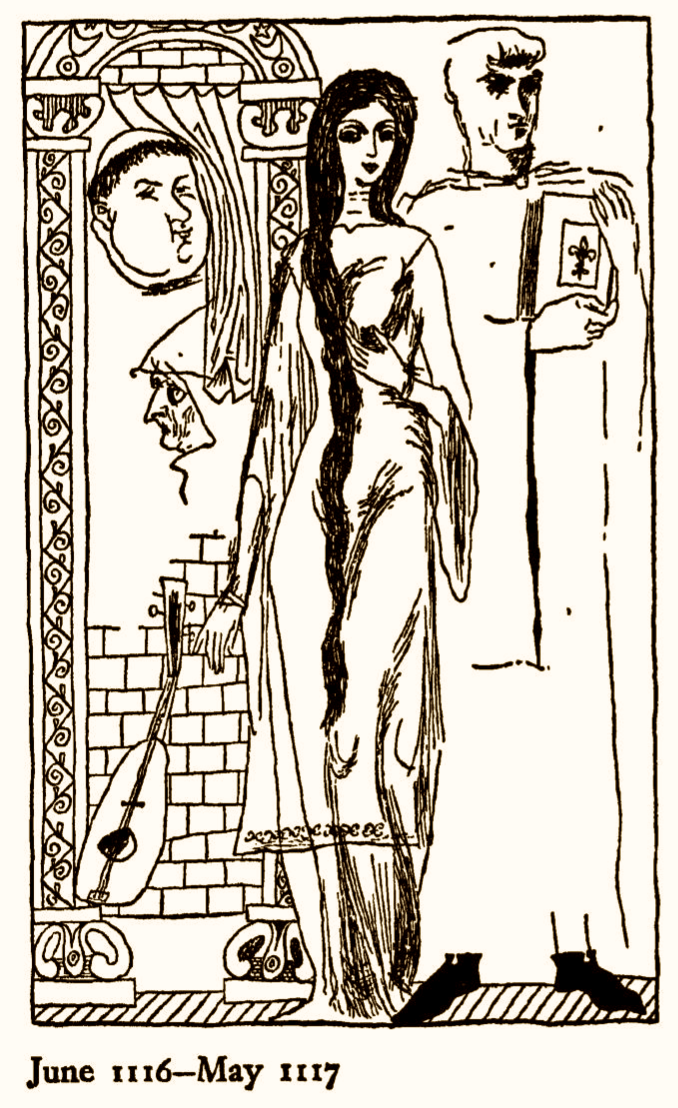
A novel entitled Peter Abelard was published in 1933 by Helen Waddell. It is available at Internet Archive for those who prefer their history via the medium of historical fiction. The illustration below, apparently imitating a fading fresco, comes from that volume.
Good, Bad and Ugly Hymns

There’s good “church music.” There’s mediocre church music. (And, there’s even terrible church music.) Read on and I’ll provide a link to an article I wrote about one questionable ditty that wormed its way into a military hymnal.

C.S. Lewis was not a fan of most church music. I’ve written about his musical tastes previously.

His assessment is no secret. He deemed most hymns to be “fifth-rate poems set to sixth-rate music.”

When it comes to hymns, there is general agreement on what’s good. These songs have passed the test of time. They have proven edifying and inspirational for generations. Some contemporary music is also biblically faithful and possesses the potential to join the ranks of the church’s lasting hymnody.

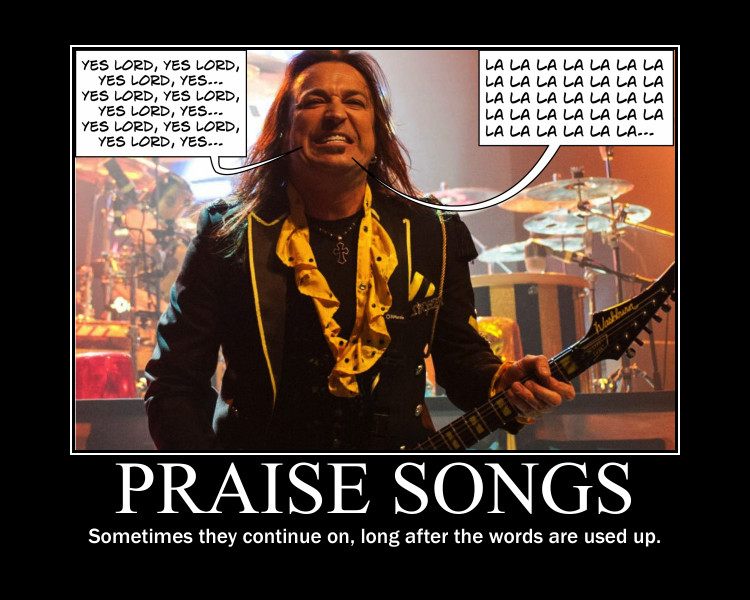
Then there are the others. Uninhibited redundancy, for example, suggests a corresponding shallowness. I forego the idiom about something being broad but shallow, since such songs are actually narrow and shallow. Case in point, the song “Yes, Lord.”

It begins promisingly enough:
I’m trading my sorrow
I’m trading my shame
I’m laying it down for the joy of the Lord

Then the theology gets a wee bit blurrier, especially for believers who still suffer after praying for healing:

I’m trading my sickness
I’m trading my pain
I’m laying it down for the joy of the Lord

But it’s the chorus that undermines the song’s edificatory potential.

And we say
Yes Lord yes Lord yes yes Lord
Yes Lord yes Lord yes yes Lord Amen

Yes Lord yes Lord yes yes Lord
Yes Lord yes Lord yes yes Lord Amen

The last two chorus breaks are replaced by the less challenging:

La la la la la la
La la la la la
La la la la la la
La la la la la
La la la la la la la la la
La la la la

La la la laLa la
La la la la la
La la la la la la
La la la la la
La la la la la la la la la
La la la laLa la la la

To those of you who adore this particular song—please accept my apologies for singling it out. Yet I stand by my view of these lyrics. And I can certainly imagine what C.S. Lewis would have thought of it.

The Power of Music

Various Christian leaders have expressed the opinion it’s more important to write the church’s hymns than its theological books. Hopefully that’s hyperbole, but few would deny the words we sing directly influence our thinking.

Arius, one of the early heretics who denied the divinity of Christ, knew this. His movement created tremendous confusion and resulted in much persecution. One of his most successful tools consisted of composing heretical songs. The words were “religious,” and the tunes were catchy, so people were singing them even when they didn’t agree with his doctrine.

C.S. Lewis & Church Music

As mentioned above, C.S. Lewis was very candid about his own disaffection for most church hymnody. In “Answers to Questions on Christianity,” Lewis answers the question of whether it’s necessary to attend worship services. He describes how duty rather than desire brought him to congregational worship.

When I first became a Christian . . . I thought that I could do it on my own, by retiring to my rooms and reading theology, and I wouldn’t go to the churches and Gospel Halls; and then later I found that it was the only way of flying your flag . . .

[However,] I disliked very much their hymns, which I considered to be fifth-rate poems set to sixth-rate music. But as I went on I saw the great merit of it. I came up against different people of quite different outlooks and different education, and then gradually my conceit just began peeling off.

I realized that the hymns (which were just sixth-rate music) were, nevertheless, being sung with devotion and benefit by an old saint in elastic-side boots in the opposite pew, and then you realize that you aren’t fit to clean those boots. It gets you out of your solitary conceit.

In light of Lewis’ attitude toward religious hymnody, it’s ironic that in 1946 he was invited to help evaluate new hymns.

The Hymn Society of Great Britain and Ireland is opening a file of new hymns to which modern hymn-writers are to be asked to contribute. I have been asked to write to you and ask if you will be a member of the panel to whom new hymns may be submitted in order that their merit may be assessed . . .

Lewis’ response to the invitation is as revealing as it is (unintentionally, I’m sure) curt.

The truth is that I’m not in sufficient sympathy with the project to help you. I know that many of the congregation like singing hymns: but I am not yet convinced that their enjoyment is of a spiritual kind. It may be: I don’t know.

To the minority, of whom I am one, the hymns are mostly the dead wood of the service. Recently in a party of six people I found that all without exception would like fewer hymns. Naturally, one holding this view can’t help you.

Two months later, the men exchanged letters again, and Lewis clarified his thoughts.

I can’t quite remember my own last letter; but I was wrong if I said or implied that . . . hymns, were bad in principle. . . . In modern England, however, we can’t sing—as the Welsh and Germans can. Also (a great pity, but a fact) the art of poetry has developed for two centuries in a private and subjective direction.

That is why I find hymns ‘dead wood.’ But I spoke only for myself and a few others. If an improved hymnody—or even the present hymnody—does edify other people, of course it is an elementary duty of charity and humility for me to submit. I have never spoken in public against the use of hymns . . .

The Gospel Coalition has an informative essay on Lewis’ broader view of worship here.

The Armed Forces Hymnal Scandal

At the outset of this column I promised readers a link to a recently published article. If you would like to read about a bizarre hymn that (temporarily) slithered into the Book of Worship for United States Forces, check it out here. The article begins on page fifteen of the new issue of Curtana: Sword of Mercy.

The hymn in question may be thought-provoking, but it belongs in a discussion group, not in a worship service. The lyrics are placed on the tongue of thief crucified beside Jesus. The criminal who was not invited by Jesus to “be with [him] in paradise” (Luke 23). The first stanza will amply illustrate the spirit of the piece.

It was on a Friday morning that they took me from my cell,
And I saw they had a carpenter to crucify as well
You can blame it on to Pilate, you can blame it on the Jews,
You can blame it on the Devil, It’s God I accuse.
(Refrain)
It’s God they ought to crucify, instead of you and me.
I said to the carpenter a-hanging on the tree.

If you read the article, and consider me unfair to the song’s writer, please leave a comment below. I would love the chance to respond. Likewise, if you think I’ve been too harsh in my evaluation of “Yes, Lord.” Given a choice between mediocre and terrible hymns, there’s no contest.

One wonders how Lewis would have rated “It was on a Friday Morning.” I suspect it would not even rise to the bar of being a “fifth-rate poem.”

Chesterton, Tertullian and C.S. Lewis on Arguments

babble.jpg

With civil discourse in such short supply today, it may be beneficial to consider some wisdom from the past about disagreeing calmly.

If you’re a thoughtful person, and you interact with other rational people, it’s inevitable that you will sometimes disagree. These differences of opinion are not bad things, in and of themselves. They help us sharpen our thinking and occasionally result in someone (from either side) recognizing the errors in their opinions.

There are times, however, when disagreements are not handled respectfully. In such situations, they seldom result in a positive end. In cases where quarrels arise, people don’t persuade others. They do the opposite—they motivate them to entrench themselves and hide behind mental and verbal barricades that reinforce their “errors.”

You can go all the way back to the Scriptures to find the recognition that this sort of debate is destructive. Here is the counsel of the apostle Paul to his protégée Timothy, a young pastor:

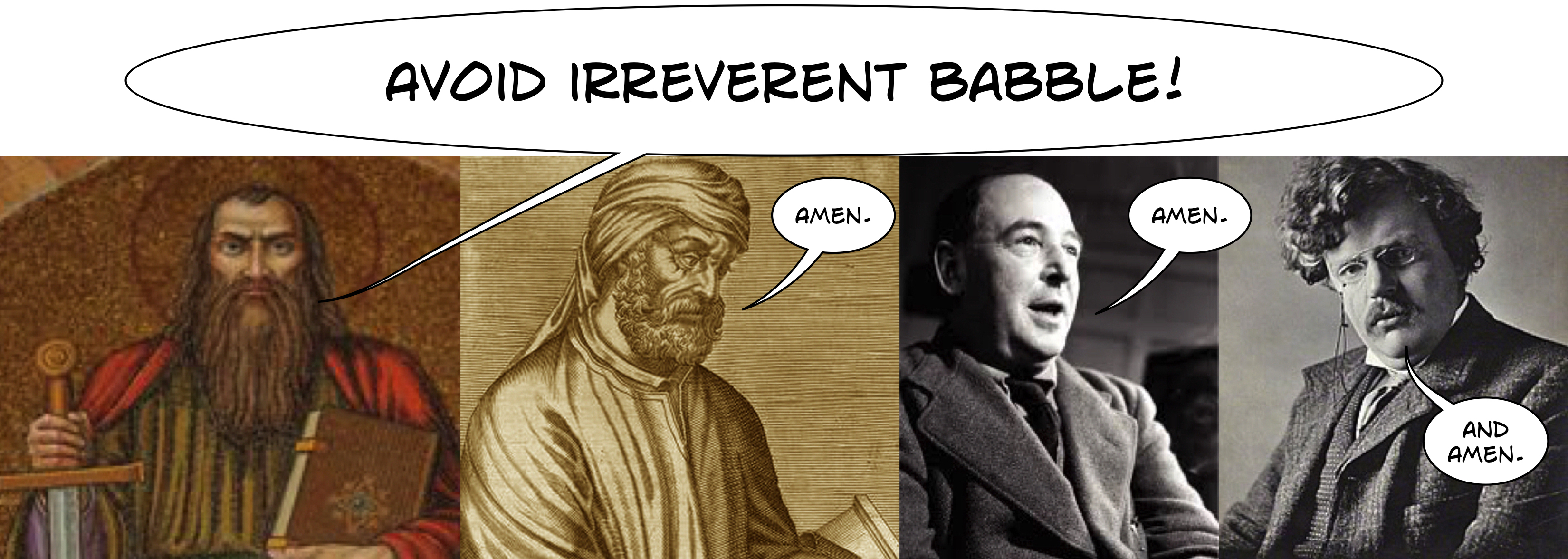
Remind them of these things, and charge them before God not to quarrel about words, which does no good, but only ruins the hearers. Do your best to present yourself to God as one approved, a worker who has no need to be ashamed, rightly handling the word of truth. But avoid irreverent babble, for it will lead people into more and more ungodliness, and their talk will spread like gangrene. (2 Timothy 2:14-17)

In the second century, Tertullian, a brilliant North African Christian scholar, penned one of my favorite passages in all of patristic literature.

I might be bringing forward this objection from a want of confidence, or from a wish to enter upon the case in dispute in a different manner from the heretics, were not a reason to be found at the outset in that our Faith owes obedience to the Apostle who forbids us to enter into questionings, or to lend our ears to novel sayings, or to associate with a heretic after one admonition—he does not say after discussion.

Indeed, he forbade discussion by fixing on admonition as the reason for meeting a heretic. And he mentions this one admonition, because a heretic is not a Christian, and . . . because argumentative contests about the Scriptures profit nothing, save of course to upset the stomach or the brain.

This or that heresy rejects certain of the Scriptures, and those which it receives it perverts both by additions and excisions to agree with its own teaching. For even when it receives them it does not receive them entire, and if it does in some cases receive them entire, it none the less perverts them by fabricating heterodox interpretations.

A spurious interpretation injures the Truth quite as much as a tampered text. Baseless presumptions naturally refuse to acknowledge the means of their own refutation. They rely on passages which they have fraudulently rearranged or received because of their obscurity.

What wilt thou effect, though thou art most skilled in the Scriptures, if what thou maintainest is rejected by the other side and what thou rejectest is maintained? Thou wilt indeed lose nothing—save thy voice in the dispute; and gain nothing—save indignation at the blasphemy. (On the Prescription of Heretics, 16-17)

If you would like to read a fascinating scholarly article on this passage you can download one here. In “Accusing Philosophy of Causing Headaches: Tertullian’s Use of a Comedic Topos,” J. Albert Harrill writes:

Among the most famous passages in Tertullian’s De praescriptione haereticorum (ca. 203) is what appears to be nothing more than a throwaway line. After declaring that ‘heretics’ have no right to use Christian Scripture, he writes, ‘Besides, arguments over Scripture achieve nothing but a stomachache or a headache.’

Previous scholarship has assumed the protest to epitomize Tertullian’s fideism and general anti-intellectualism. However, I argue that the line evokes a comedic stereotype within a medical topos about ‘excessive’ mental activity causing disease in the body, going back to Plato and Aristophanes.

The passage is, therefore, not a throwaway line but an important part of Tertullian’s attempt to caricature his opponents with diseased superstitio (excessive care and ‘curiosity’).

More Recent Variations of this Theme

Those who have attempted serious, rational argument with someone who is unserious or irrational know very well what Tertullian was describing. If you are earnest and calm in your advocacy, only to have your counterpart act flippant or ignorantly obstinate, it really can make one feel nauseous.

G.K. Chesterton, who was an articulate defender of Christianity during the beginning of the twentieth century, described the frustration in a predictably entertaining manner.

If you argue with a madman, it is extremely probable that you will get the worst of it; for in many ways his mind moves all the quicker for not being delayed by things that go with good judgment.

He is not hampered by a sense of humour or by clarity, or by the dumb certainties of experience. He is the more logical for losing certain sane affections.

Indeed, the common phrase for insanity is in this respect a misleading one. The madman is not the man who has lost his reason. The madman is the man who has lost everything except his reason.” (Orthodoxy)

As Chesterton suggests, the madman has retained his ability to reason, but is no longer inhibited by reason itself. I would liken it to retaining the appearance of reasoning, bereft of its essence. It parallels what we read in 2 Timothy 3.

In the last days . . . people will be lovers of self, lovers of money, proud, arrogant, abusive, disobedient to their parents, ungrateful, unholy,  heartless, unappeasable, slanderous, without self-control, brutal, not loving good,  treacherous, reckless, swollen with conceit, lovers of pleasure rather than lovers of God, having the appearance of godliness, but denying its power. Avoid such people. (Italics added.)

C.S. Lewis also addresses the inability of many who are wrong to conduct rational conversations. Whenever they meet a reasoned argument, they are disarmed.

Unfortunately, their lack of logic does not prevent them from charging into the disputation. They assume their passion or their appeal to subjectivity (i.e. that “everyone” is right) will win the day.

Lewis grew so frustrated by the phenomenon that he coined a new word to identify it. He regrets the passing of the day when you persuade someone of their error before you could legitimately explain why your own position is correct on a given issue.

The modern method is to assume without discussion that he is wrong and then distract his attention from this (the only real issue) by busily explaining how he became so silly.

In the course of the last fifteen years I have found this vice so common that I have had to invent a name for it. I call it Bulverism.

Some day I am going to write the biography of its imaginary inventor, Ezekiel Bulver, whose destiny was determined at the age of five when he heard his mother say to his father – who had been maintaining that two sides of a triangle were together greater than the third – `Oh you say that because you are a man.’

“At that moment,” E. Bulver assures us, “there flashed across my opening mind the great truth that refutation is no necessary part of argument. Assume that your opponent is wrong, and then explain his error, and the world will be at your feet.

“Attempt to prove that he is wrong or (worse still) try to find out whether he is wrong or right, and the national dynamism of our age will thrust you to the wall.” That is how Bulver became one of the makers of the Twentieth Century.

I find the fruits of his discovery almost everywhere. Thus I see my religion dismissed on the grounds that “the comfortable able parson had every reason for assuring the nineteenth century worker that poverty would be rewarded in another world.” Well, no doubt he had. On the assumption that Christianity is an error, I can see early enough that some people would still have a motive for inculcating it.

I see it so easily that I can, of course, play the game the other way round, by saying that “the modern man has every reason for trying to convince himself that there are no eternal sanctions behind the morality he is rejecting.”

For Bulverism is a truly democratic game in the sense that all can play it all day long, and that it gives no unfair privilege to the small and offensive minority who reason. But of course it gets us not one inch nearer to deciding whether, as a matter of fact, the Christian religion is true or false. . . . I see Bulverism at work in every political argument.

Until Bulverism is crushed, reason can play no effective part in human affairs. Each side snatches it early as a weapon against the other; but between the two reason itself is discredited. (“‘Bulverism:’ Or the Foundation of Twentieth Century Thought”)

So, there we have it. We may derive some comfort from the fact that irrational arguing has frequently displaced civil discourse since the dawn of human communication.

As for me, I intend to avoid the Bulverites as much as possible. The last thing I need is a migraine or a serious case of indigestion.

Trivial Finale

catechicAll good things must draw to an end . . . and so it is that we wrap up our running review of interesting trivia questions from Catéchic, “the Catholic trivia game” by Tyco®.

Today we move beyond the miscellaneous historical and ecclesiastical subjects we have thus far considered. Prepare yourself for some serious literary and theological matters.

There were a fair number of questions asked about literary matters. Most related to authors (religious and secular) I have never read. However, some were of greater interest to me.

Who wrote the religious sonnet “Death Be Not Proud?”

John Donne

I hadn’t read that classic poem for years, and I’m grateful to the game for encouraging me to pause to reread it. If you are unfamiliar with this timeless verse, you can read it here.

Was the Gutenberg Bible the first book to be printed?

No. (Printing already existed in China.)

Actually, printing via woodblocks existed in various places. The great breakthrough came in the development of moveable type, and it did indeed exist in China before Gutenberg refined it in the West.

Was the first Bible printed in the New World in the English language?

No. (Algonquian, the predominant language of Northeastern Native Americans)

Now there is an edifying fact which reminds us of the importance of sharing the Good News with all people

Which alphabet is named after a saint?

The Cyrillic alphabet, developed by St. Cyril

And, ironically, used most prominently in the formerly atheistic republics of the Soviet Union.

A triad of questions about Roman Catholic periodicals.

What newspaper is generally thought of as the most liberal American Catholic weekly?

The National Catholic Reporter

Something I believe they are quite proud of. They offer online news here.

What newspaper is generally thought of as the most conservative American Catholic weekly?

The Wanderer

I had never heard of this lay publication, but you can read it online here.

How much does an issue of The Catholic Worker cost?

One cent

Amazing. I disagree with most of its political positions, but I have to admire the statement they make in continuing this practice.

The Catholic Worker newspaper is not online. Subscription or copy requests must be sent by regular mail . . . The newspaper was started by Dorothy Day herself in New York City in the 1930s. The price has been and will remain a penny a copy, excluding mailing costs. It is issued seven times per year and a year’s subscription is available for 25 cents (30 cents for foreign subscriptions) . . .

When the game addresses Roman Catholic history and dogma, it stays close to doctrinal boundaries. However, when it addresses interfaith and “Protestant” subject matter, it raises some issues which require comment.

Saint Olaf is the patron saint of which country?

Norway

I had to include this because my own heritage is half Norwegian. This despite the fact that dear Olaf was free in his use of the sword as an instrument for converting the Norse heathen. My hometown is Poulsbo, Washington, and its nickname is “Little Norway.” It is no surprise Poulsbo’s Roman Catholic parish is named in honor of Saint Olaf.

As far as we know, who erected the first Christian cross in the New World?

Christopher Columbus

Perhaps, but the first Christians setting foot in the so-called New World were likely Leif Erikson and those who accompanied him on the voyage from Greenland.

Name the politically influential American Catholic family sometimes known as “America’s Royal Family?”

The Kennedys

Although sadly some prominent Kennedys have not lived and served in a manner consistent with their religious profession.

As a Lutheran Christian, I was particularly eager to discover what sort of questions dealt with so-called “Protestant” matters. Here are a couple, with my personal observations added:

Before the Protestant Reformation, how many Christian Churches were there?

Two, Catholic and Orthodox

Sorry, only one. Both Roman Catholic and Eastern Orthodox communions confess a belief that there is only “one, holy, catholic and apostolic church.” It’s true that there was a schism* between the two, but there remains only one Christian Church, comprised of all who “believe and are baptized.”

During the 19th century, what Protestant group played a key role in settling the American West?

Church of Jesus Christ Latter-Day Saints (The Mormons)

The LDS Church is a distinct religion in and of itself. They would not regard themselves as “Protestant,” nor would Trinitarian Protestant traditions regard the LDS religion as belonging under that admittedly stretched label.

What is a member of any of the various Protestant groups characterized by their rejection of military service called?

A Mennonite

Hmmm . . . it’s a bit more complicated than that. Various Christian denominations (e.g. Quakers) discourage military service, along with non-Christian religions (e.g. Jehovah’s Witnesses). They, along with other individuals from more traditional church bodies whose consciences prevent them from serving in the armed forces, are more accurately called “pacifists.”

What was condemned as heresy at The Council of Trent?

The teachings of Protestant reformers such as Martin Luther.

And then there are those who would consider the Council of Trent itself to be a fount of heresy . . .

For which institution did Johann Sebastian Bach write his magnificent cantatas?

The Lutheran Church in Leipzig.

A gracious (ecumenical) acknowledgment of a musical genius who composed his works “soli Deo gloria.”

It will surprise no regular readers of Mere Inkling to see that we are closing with another reference to our favorite Inkling.

Which British author of children’s fantasies wrote an allegory about the Devil called The Screwtape Letters?

C.S. Lewis

One of C.S. Lewis’ masterpieces. I have blogged on them in the past, as the search bar to the right will reveal. Here is one column I’m particularly proud of, since it contributes a new piece of correspondence to the Screwtape corpus.

_____

* Schism is one of the most mispronounced words in the English language. Although “skizuh m” has become so commonplace that it is now “accepted,” the proper pronunciation is “sizuh m.” Of course, if you say it correctly everyone will think you are wrong . . . just like when you leave the “s” off of the biblical book of Revelation or properly pronounce psalm without the “l” (“sahm” instead of “salhm”).

If you missed the first two columns dealing with Roman Catholic trivia, you can check them out here: A Trivial Windstorm and Curious Christian Trivia.