

How long is it good for us to live? That’s a strange question, I know. But, do you have an answer? C.S. Lewis had some thoughts on the subject that you may find provocative.
Aging is on my mind this week. I had never thought about myself becoming a septuagenarian – but this week I became one. Well, I still think of myself as being in my fifties, but that appears to be more common than one would guess. When I entered my fifties, I told my dad (then in his seventies) that “I still picture myself as being in my thirties.”
My dad responded without a moment’s thought: “That doesn’t surprise me at all. I still think of myself as being in my fifties.”
Many people become preoccupied with age. The only time I recall it mattering to me, was when I turned eighteen – able to vote, and registered for the draft (with Vietnam still a war zone) . . . and when I turned twenty-one, for reasons I prefer not to divulge at this time.
People are living longer, and I’m not convinced that translates into living better. Listen to C.S. Lewis, as he writes in his essay “Is Progress Possible?”
I care far more how humanity lives than how long. Progress, for me, means increasing goodness and happiness of individual lives. For the species, as for each man, mere longevity seems to me a contemptible ideal.
Lewis elaborates on this concept – that long life and happiness do not always intertwine – in the Screwtape Letters. The words which follow are the advice of a senior Tempter (devil) to a less experienced junior.
The truth is that the Enemy [i.e. the true God], having oddly destined these mere animals to life in His own eternal world, has guarded them pretty effectively from the danger of feeling at home anywhere else. That is why we must often wish long life to our patients; seventy years is not a day too much for the difficult task of unravelling their souls from Heaven and building up a firm attachment to the Earth.
While they are young we find them always shooting off at a tangent. Even if we contrive to keep them ignorant of explicit religion, the incalculable winds of fantasy and music and poetry . . . are always blowing our whole structure away. They will not apply themselves steadily to worldly advancement, prudent connections, and the policy of safety first.
So inveterate is their appetite for Heaven, that our best method, at this stage, of attaching them to Earth is to make them believe that Earth can be turned into Heaven at some future date by politics or eugenics or “science” or psychology or what not.
Real worldliness is a work of time. . . . How valuable time is to us may be gauged by the fact that the Enemy allows us so little of it. . . .
We are allowed to work only on a selected minority of the race, for what humans call a “normal life” is the exception. Apparently He wants some – but only a very few – of the human animals with which He is peopling Heaven to have had the experience of resisting us through an earthly life of sixty or seventy years. Well, there is our opportunity. The smaller it is, the better we must use it. (Letter XXVIII).
Sadly, far too many people grow far too attached to this world. They lose sight of the promise of Resurrection (if they had ever known it), and as death approaches crave just one more year, another month, another week, another day, even another hour.
Now, I’m not saying long life is a negative, per se. I agree with C.S. Lewis when he wrote “I must never, like the Stoics, say that death does not matter. Nothing is less Christian than that” (“The Grand Miracle”). The danger is not in enjoying the Lord’s wonderful creation. It is in growing too attached to this fallen version of it – in losing touch with the truth proclaimed by musician Larry Norman, that this sin-stained world is not our ultimate home.
Having been at the bedside of too many people as they face their mortality, I have witnessed many final days. Some literally go, trembling and cursing. Others depart with grim resignation, and no evidence of hope. And then there are those who die with faith, experiencing true peace and joyous anticipation, despite the pain they may be enduring.
I wish everyone could die in such a state, at peace and earnestly desiring to see the glory of God unblurred by our mortal eyes (1 Corinthians 13).
On that day we will enter into the fullness of life, into eternal life. (Dr. Michael Zeigler offers an encouraging sermon you can read or listen to at “The Problem and Promise of Deathbed Conversion.”)
The Screwtape Letters is one of C.S. Lewis’ most imitated books. I have even experimented with his model myself. But, rather than emulate these letters, today I would be so bold as to offer an addition to this demonic epistle.
My supplement is not intended for Christians, except as a truth they may wish to share with others who are walking through the valley of the shadow of death.
And never, my dear Wormwood, at the risk of your own torment, forget this one dire threat. Even after a long life, lived in hedonistic pleasure, deeply tethered to this decaying world, it is still possible for these wretches to be rescued from our claws.
The Enemy is so blindly compassionate that he will foolishly overlook a magnitude of savory sins sown during a carnal life. The dissolute lives we have toiled so steadfastly to soil with uncountable depravities and unrelenting selfishness, remain vulnerable until the patients’ final breath is exhaled.
The Gordian Knot we have so skillfully twisted can be undone in an instant, if they cry out to the Enemy for forgiveness. That is why we must remain vigilant to the very end. It is ideal to have them railing at the end against a God who has allowed them to suffer.
Yet it is sufficient that they die without that rage. A hopeless resignation to what they foolishly consider the end of their existence, still provides fodder for the insatiable appetite of Our Father Below quite adequately.
Final Encouragement
God’s mercy is beyond our ability to comprehend it. While there is breath, there remains hope. Even at the end of a squandered life, God’s love in Jesus Christ is sufficient to wash away every failing, and usher a penitent soul into the glory of everlasting life.
Remember that, if you find yourself feeling too defiled to come to Christ at the end, that is a lie of Satan. Every single one of us Christians was in similar straits – “while we were still sinners, Christ died for us.”
And, should you ever have the experience of traveling beside a dying friend who sees only darkness ahead, share with them this gospel hope.






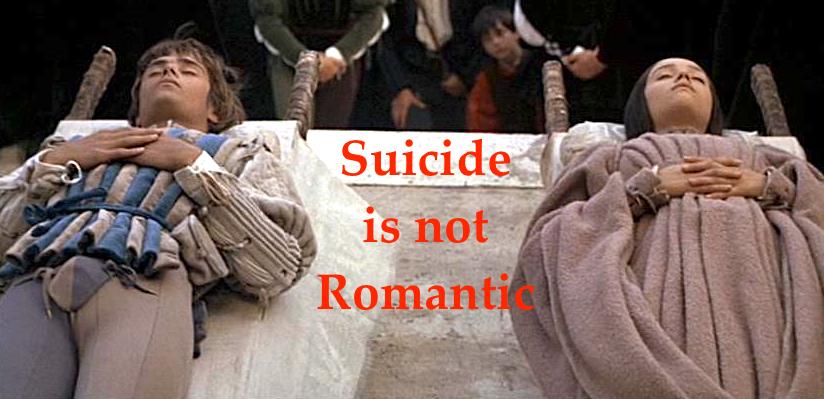 Are all who commit suicide damned? Some would claim this is true. I, however, agree with Martin Luther and C.S. Lewis that God’s mercy is capable of rescuing even these.


 Mere Inkling Press