C.S. Lewis, the Brothers Grimm & Snow White

You may blame the recent cinematic debacle that is Snow White on a declining Film Studio or the Brothers Grimm, but C.S. Lewis is innocent.

That’s not to say the Grimms didn’t have an influence on the great Oxbridge professor, a subject we’ll explore momentarily. But it was the German folk tales published by academics Jacob and Wilhelm Grimm who published the classic fairy tales that Walt Disney mined so effectively. 

They also popularized CinderellaHansel and GretelLittle Red Riding HoodThe Princess and the Frog, and Rapunzel. Disney began the transformation of these tales into visual treasures as early as 1921 when he founded Laugh-O-Gram Studio in Kansas City, Missouri.

In addition to films, over the years Walt gleaned memorable Grimm stories for a multitude of cartoon shorts, including The Brave Little Tailor and The Four Musicians of Bremen.

Obviously, Walt Disney himself respected the source material for the stories and wielded his editorial prerogative in an appropriate manner. Tragically, the same cannot be said for his corporate heirs. Likewise, the Brothers Grimm bear no culpability in this area.

C.S. Lewis, J.R.R. Tolkien & Snow White

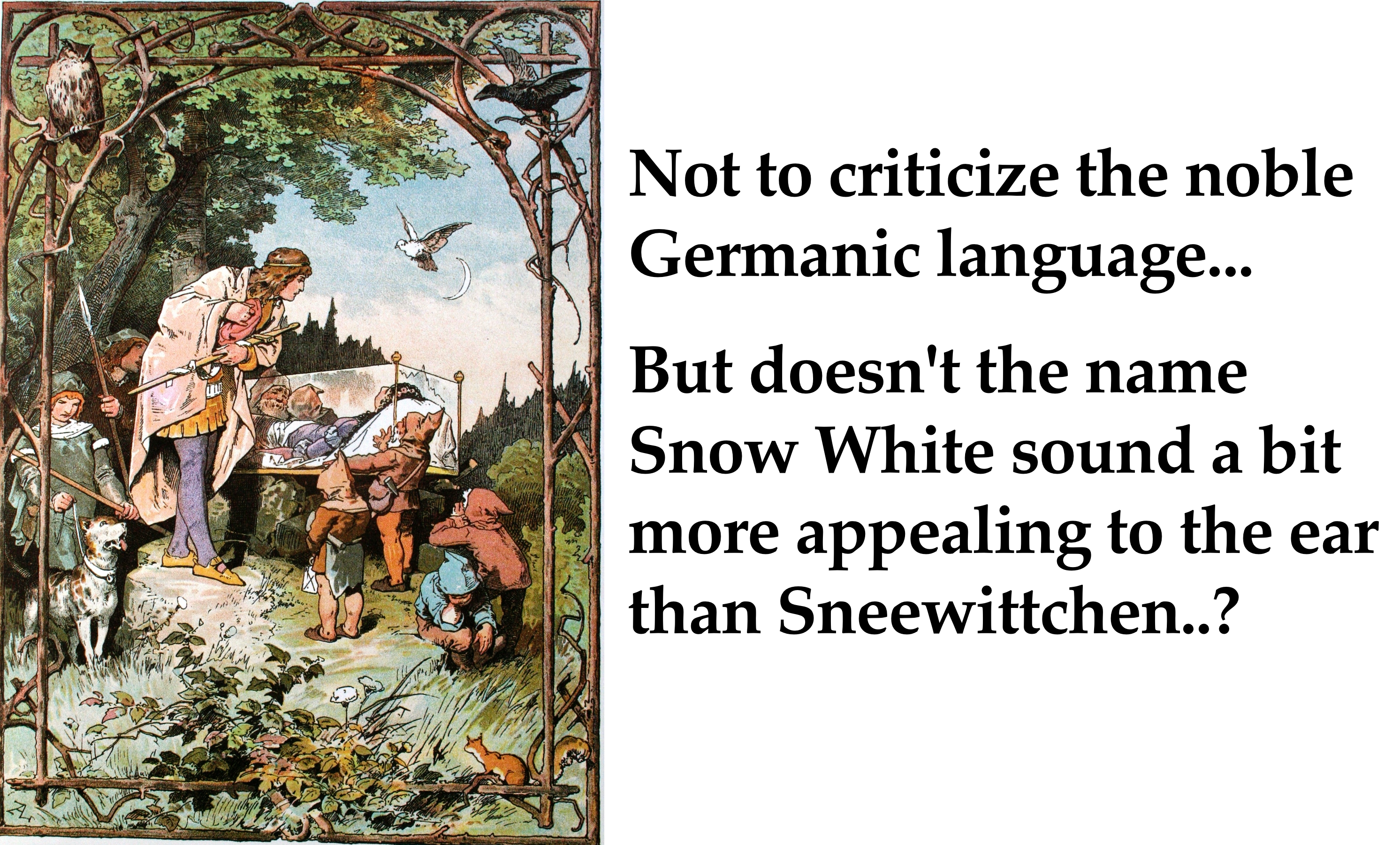
The truth is, although Lewis and Tolkien appreciated literary fairy tales, neither of the preeminent Inklings were enamored with Disney’s animated treatment of the stories. Curiously, the two distinguished dons actually attended the theater together to view the trailblazing novelty that was Snow White.

They were particularly disappointed with the dwarves, seeing just how different they were from the genuine legends about them. Lewis even wrote “Dwarfs ought to be ugly of course, but not in that way.” Atlas Obscura has an entertaining article about their “movie date” and notes some of the elements they also enjoyed in the feature.

In his lectures published as A preface to Paradise lost, C.S. Lewis elaborates on his response to the Disney version of the tale.

That strange blend of genius and vulgarity, the film of Snow-White, will illustrate the point. There was good unorginality in the drawing of the Queen. She was the very archetype of all beautiful, cruel queens: the thing one expected to see, save that it was truer to type than one dared to hope for.

There was bad originality in the bloated, drunken, low-comedy faces of the dwarfs. Neither the earthiness, the avarice, nor the wisdom of true dwarfs was there, but an imbecility of arbitrary invention.

But in the scene where Snow-White wakes in the woods both the right originality and the right unoriginality were used together. The good unoriginality lay in the use of small, delicate animals as comforters, in the true Märchen [fairy tale] style. The good originality lay in letting us at first mistake their eyes for the eyes of monsters.

If you want to read more about the subject, you can do no better than read Joe Christopher’s article on the subject.

For an interesting argument that fellow Brit G.K. Chesterton would have loved Snow White for the very reason that moved the Inklings to criticize it, see “Tolkien and Lewis disliked Snow White. You know who wouldn’t have?

C.S. Lewis & Grimm’s Fairy Tales

Like his friend, J.R.R. Tolkien, C.S. Lewis was a champion of classical fairy tales. Neither was apologetic for it, although Lewis admitted to being shy about it when he was young. In an essay titled “On Three Ways of Writing For Children,” he wrote,

When I was ten, I read fairy tales in secret and would have been ashamed if I had been found doing so. Now that I am fifty I read them openly. When I became a man I put away childish things, including the fear of childishness and the desire to be very grown up.

In a great post called “Old Enough For Fairy Tales: C.S. Lewis’ “The Chronicles of Narnia” the writer describes this distinction to which Lewis alludes.

The Chronicles of Narnia are not children’s stories. They are fairy tales—but that is precisely why they are not children’s stories. If you can’t understand, you haven’t been listening. Go back and read the quote from Lewis’ essay again. Children are not the only audience for fairy tales.

In 1954, C.S. Lewis apologized to a German professor for being unable to understand the nuances of his volume on philosophy. In doing so, he referred to his youthful reading of the Brothers Grimm in their original German (available at Internet Archive).

I look forward to reading the book (when the translation arrives! My German is wretched, and what there is of it belongs chiefly to the libretto of the Ring and Grimm’s Märchen – works whose style and vocabulary you very possibly do not closely follow).

If you are in the mood for reading Grimm’s Fairy tales today, and your German is sadly lacking, Project Gutenberg has just the translation for you . . . as long as you can read English.


Addendum [added 10 April 2025]

The Brothers Grimm were far more than simply folklorists. They were respected professors at the University of Göttingen. They were devout Christians and worked with other prominent Germans. 

Goethe assisted them at a crucial moment in collecting their tales, and the philosopher Friedrich Schleiermacher provided copyediting assistance. Jacob’s work on German mythology had a pronounced influence on the composer Richard Wagner (World Magazine).

They also began compiling the Deutsches Wörterbuch (Germany dictionary) in 1838, with the first volumes published in 1854. It was the first dictionary to include historical usages of each word, preceding the Oxford English Dictionary, which was initiated in 1857 with its first edition published in 1884.


Bonus Trivia: The dwarves were unnamed until their debut on Broadway in 1912. And on that day they were christened Blick, Flick, Glick, Plick, Snick, Whick and Quee.
How Precious, Is Memory

What would you do if tomorrow you awoke never again able to remember the births of your three children? Never to remember your marriage or your college years? How would you rebuild your life with children and a husband you no longer knew?

In Out of the Silent Planet, C.S. Lewis described a fundamental expectation we possess – “Every day in a life fills the whole life with expectation and memory.” this makes the fragility of the human brain and mind all the more sad.

The question above sounds like the plot to some novel or film, but this was a real life experience for Marcy Gregg. She has written a detailed account of the amazing story in Blank Canvas, and an account of the experience is available online at Focus on the Family

Before you rush to read it, though, I would like to share a few thoughts about memory. Today, increasing life expectancies make senility and dementia far too familiar to families. Dismissing such disorders related to causes such as brain injuries or drug abuse, we still hear of so many cases of Alzheimer’s and other neurodegenerative diseases. Many of us have been touched by this pain, as it has destroyed the lives of people we love. 

Happily, there are growing options for residences equipped with skilled nursing care trained especially for “memory care.” The problem, of course, is not just the availability, but also the significant cost. AARP reported that in 2021, “the average memory care monthly rent is $6,935 in the U.S.”

That’s significantly more than assisted living, which averages $5,380 a month, but a lot less than the $10,562 average monthly cost of a nursing home.

Since we identify our personhood so heavily with our minds, we do not like to think about things like the multiple types of amnesia. Some are terrible, and one is nearly universal. WebMD includes six in their list. The woman above experienced anterograde amnesia which they describe as the loss of “your ability to recall events that happened just before the event that caused your amnesia.” Fortunately, though not the case for Marcy, they add, “usually this affects recently made memories, not those from years ago.‌”

One form of amnesia listed by WebMD may come as a surprise to you, as it did to me. It is referred to as infantile or childhood amnesia. It describes how our young brains were not yet developed well enough to consolidate and store memories for retrieval. Many of us lack early memories, and rely on stories and media to fill in that long gap in our lives.‌

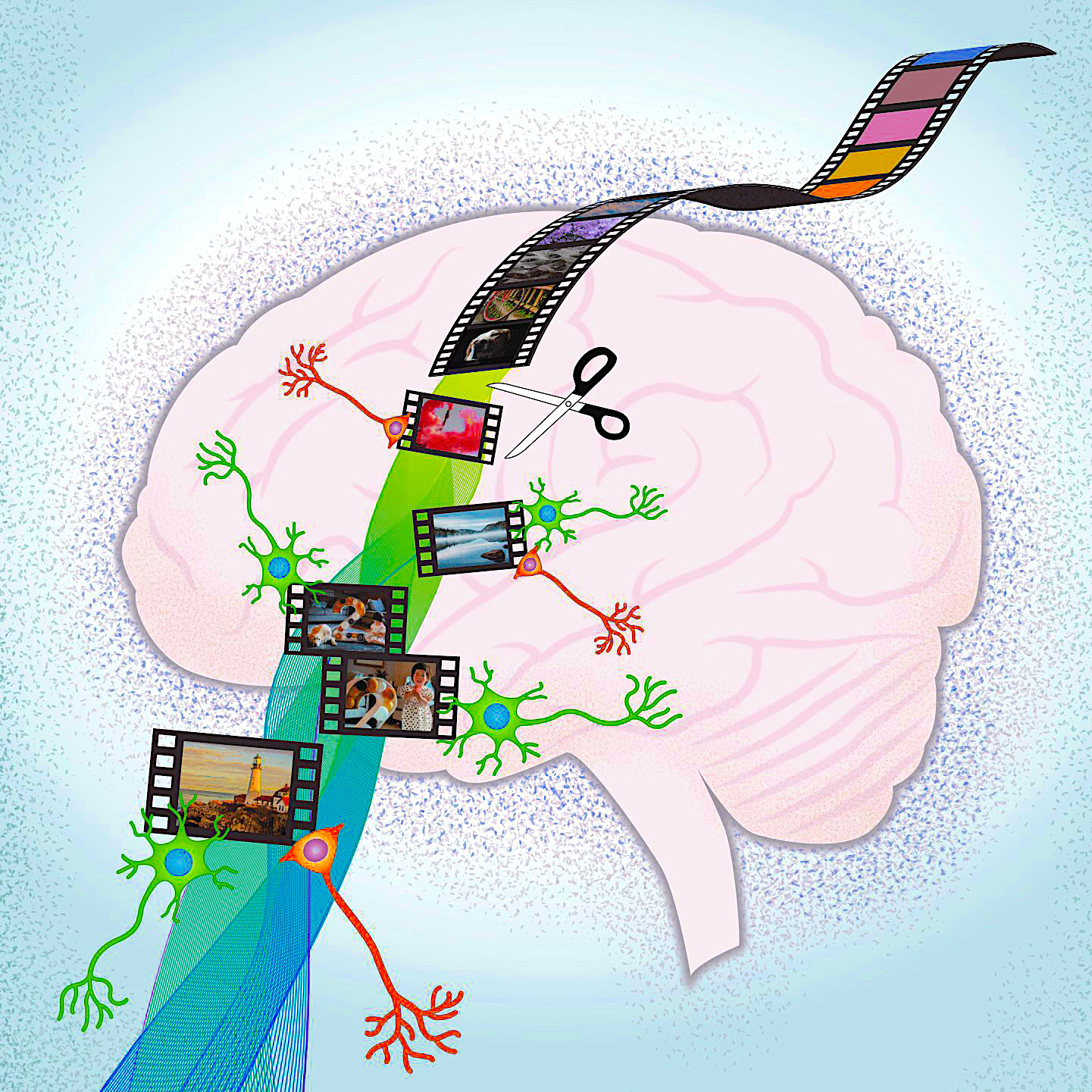
A brief article from the University of Queensland describes how “memories aren’t stored in just one part of the brain.” Differing types are stored “across different, interconnected brain regions.”

Cedars-Sinai has “discovered two types of brain cells that play a key role in creating memories.”

“One of the reasons we can’t offer significant help for somebody who suffers from a memory disorder is that we don’t know enough about how the memory system works,” said [a] senior author of the study, adding that memory is foundational to us as human beings.

Human experience is continuous, but psychologists believe, based on observations of people’s behavior, that memories are divided by the brain into distinct events, a concept known as event segmentation.

Forgetfulness is, for most who live long enough, an unavoidable aspect of aging. But it may not be quite so bad as it appears to us, as C.S. Lewis related in a letter written several years before his death.

About forgetting things. Dr. Johnson* said “If, on leaving the company, a young man cannot remember where he has left his hat, it is nothing. But when an old man forgets, everyone says, Ah, his memory is going.”

So with ourselves. We have always been forgetting things: but now, when we do so, we attribute it to our age.

Why, it was years ago that, on finishing my work before lunch, I stopped myself only just in time from putting my cigarette-end into my spectacle case and throwing my spectacles into the fire!

Forgetfulness is a common part of human experience, but clinical amnesia is something altogether different.

Tragically, some suffer from anterograde amnesia. One of the saintly matrons at our church carries this cross, assisted by her loving daughter and son-in-law. This cruel disease prevents the retention of new memories. While it is often linked with geriatric considerations, and can affect all of one’s memories, this article from the National Library of Medicine describes a particularly tragic case in which a child “had an abrupt onset of amnesia due to a respiratory arrest at the age of 8 years.”

Cases such as this move Christians to prayer, and many others to despair. While miracles do happen, they are rarer than we desire. Ultimately the Christian hope is in a Lord who keeps his promises, and one of these is that he will come again and will take us to himself, so that where he is, we may be also (John 14). And, in heaven, we will receive a new body like Christ’s resurrection body (Philippians 3).


* Samuel Johnson (1709-1784), a prolific and influential English writer, was often referred to simply as “Dr. Johnson.” Many volumes of the good doctor’s writings are available as free downloads from Internet Archive. For example, volume 7 of the 1810 collection, includes the following essay discussing human shallowness. He begins by contemplating the ability of animals to remember and to anticipate the future.

The Idler
Numb. 24. Saturday, September 30, 1758.

When man sees one of the inferiour creatures perched upon a tree, or basking in the sunshine, without any apparent endeavour or pursuit, he often asks himself or his companion, On what that animal can be supposed to be thinking?

Of this question, since neither bird nor beast can answer it, we must be content to live without the resolution. We know not how much the brutes recollect of the past, or anticipate of the future; what power they have of comparing and preferring; or whether their faculties may not rest in motionless indifference, till they are moved by the presence of their proper object, or stimulated to act by corporal sensations.

I am the less inclined to these superfluous inquiries, because I have always been able to find sufficient matter for curiosity in my own species. It is useless to go far in quest of that which may be found at home; a very narrow circle of observation will supply a sufficient number of men and women, who might be asked, with equal propriety, On what they can be thinking?

It is reasonable to believe, that thought, like every thing else, has its causes and effects; that, it must proceed from something known, done, or suffered; and must produce some action or event. Yet how great is the number of those in whose minds no source of thought has ever been opened, in whose life no consequence of thought is ever discovered; who have learned nothing upon which they can reflect; who have neither seen nor felt any thing which could leave its traces on the memory; who neither foresee nor desire any change of their condition, and have therefore neither fear, hope, nor design, and yet are supposed to be thinking beings.

To every act a subject is required. He that thinks must think upon something. But tell me, ye that pierce deepest into nature, ye that take the widest surveys of life, inform me, kind shades of Malbranche [Nicolas Malebranche] and of [John] Locke, what that something can be, which excites and continues thoughts in maiden aunts with small fortunes; in younger brothers that live upon annuities; in traders retired from business; in soldiers absent from their regiments; or in widows, that have no children?

Life is commonly considered as either active or contemplative; but surely this division, how long soever it has been received, is inadequate and fallacious. There are mortals whose life is certainly not active, for they do neither good nor evil; and whose life cannot be properly called contemplative, for they never attend either to the conduct of men, or the works of nature, but rise in the morning, look round them till night: in careless stupidity, go to bed and sleep, and rise again in the morning.

Johnson’s essay continues with a discussion of the soul and its distinction from the mental processes themselves. Obviously, he is not considering the subject of amnesia, but he reminds us never to become too doctrinaire, since that “supposes what cannot be proved, that the nature of mind is properly defined.” 

His purpose in the essay is not to discuss the abilities of the brain but, at least in part, to critique those who choose to be unthinking. Those who spend not a moment in reflection or contemplation.

I encourage you to read the entire essay, as it demonstrates Johnson’s brilliance. I close this extended “footnote” with a passage in his concluding section which keenly describes our common human experience with memory.

We every day do something which we forget when it is done, and know to have been done only by consequence. The waking hours are not denied to have been passed in thought; yet he that shall endeavour to recollect on one day the ideas of the former, will only turn the eye of reflection upon vacancy; he will find, that the greater part is irrevocably vanished, and wonder how the moments could come and go, and leave so little behind them.

C.S. Lewis and Robots

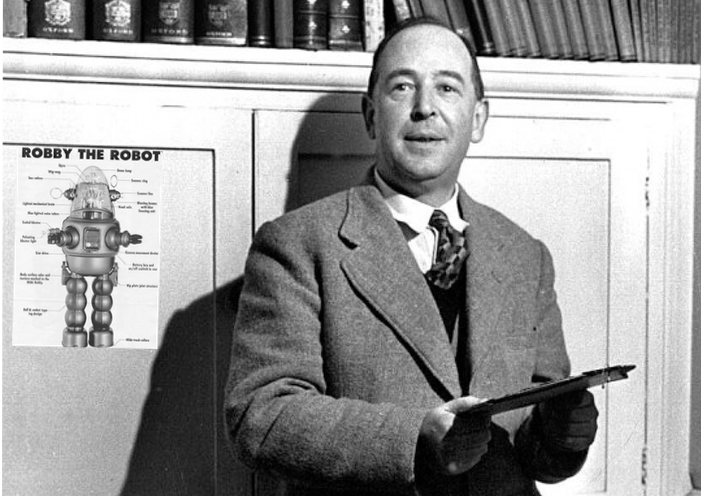
robot.png

No robots were involved in the writing of this column.

That’s not to say that robots aren’t writing a considerable amount of what you might come across today on the internet.

A recent article, entitled “Robots Wrote this Story,” describes how “in 2013, AI-powered journalism was in its infancy . . . [but today it] identifies the relevant data, matches it with the corresponding phrases in the template, merges them, and then publishes different versions across different platforms.”

The various artificial intelligences writing the news for us have interesting names. Among them are Wibbitz (USA Today), News Tracer (Reuters), Buzzbot (open source), and Heliograf (Washington Post). Rumors are that Skynet may be on the horizon.

A Washington Post reporter optimistically says, “We’re naturally wary about any technology that could replace human beings. But this technology seems to have taken over only some of the grunt work.”

So far.

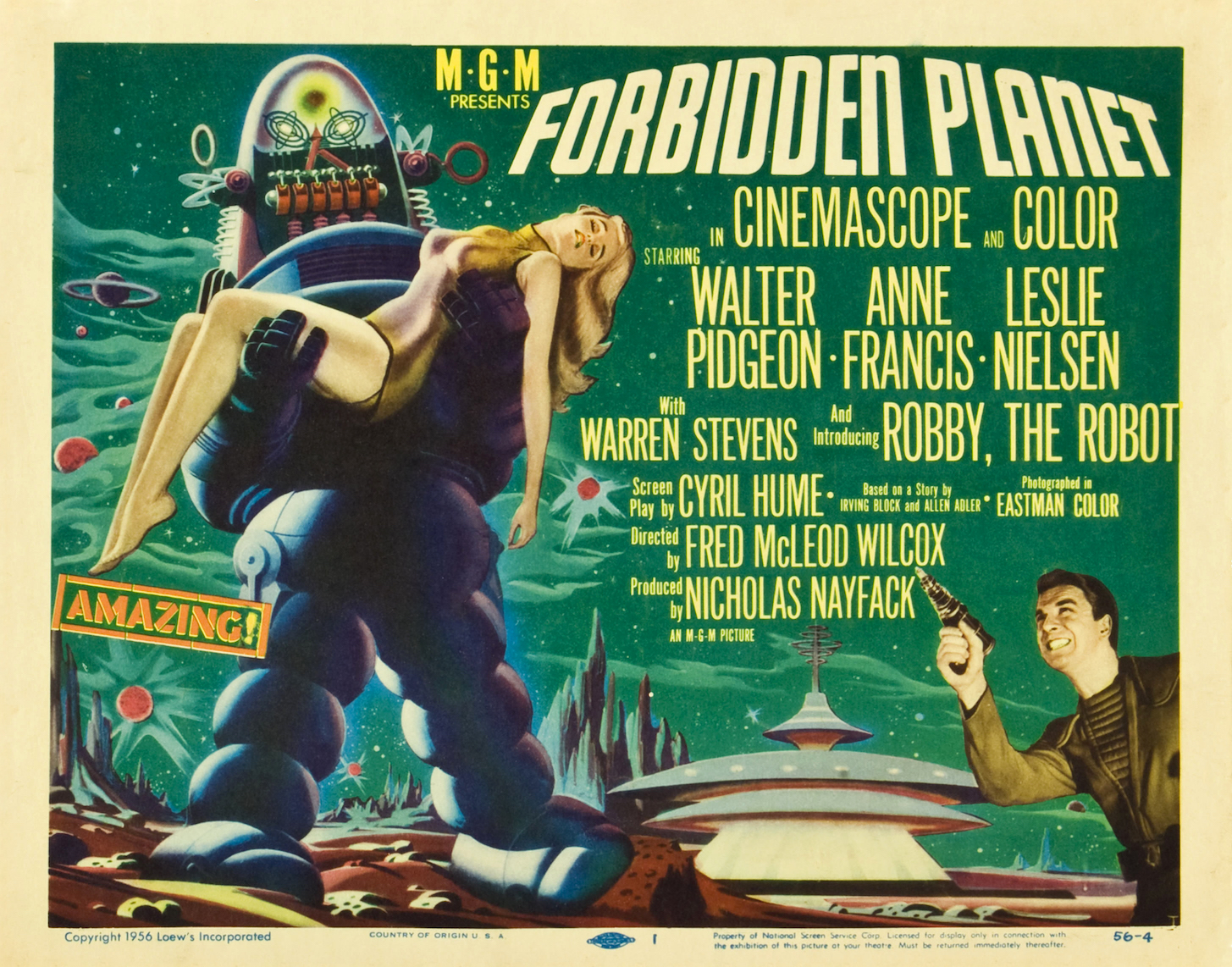
Lewis certainly wasn’t overly impressed by the robot in a classic science fiction film released in 1956.

Before leaving home [for a trip to Northern Ireland] I saw the film of The Forbidden Planet, a post-civilisation version of the Tempest with a Robot for Caliban . . . The contrast between the magnificent technical power and the deplorable level of ethics and imagination in the story was what struck me most.*

Count me as a member of C.S. Lewis’ camp. He possessed little to no fear of robots. He was far more suspicious about a future shaped by the devotees of scientism.

Scientism is that warped theory that, in the words of one Professor of Biological Sciences, surrenders to the “temptation to overreach.”

When I decided on a scientific career, one of the things that appealed to me about science was the modesty of its practitioners. The typical scientist seemed to be a person who knew one small corner of the natural world and knew it very well, better than most other human beings living and better even than most who had ever lived.

But outside of their circumscribed areas of expertise, scientists would hesitate to express an authoritative opinion. This attitude was attractive precisely because it stood in sharp contrast to the arrogance of the philosophers of the positivist tradition, who claimed for science and its practitioners a broad authority with which many practicing scientists themselves were uncomfortable. (Emphasis added.)

Scientism, not robotics, is clearly the danger. However . . . what if the disciples of scientism intend to use robots to further their misanthropic plans?

I suspect taking over our news sources may only be the first stage of the robot blueprint for humanity’s future ruin.

Where are we prepared to draw the line in terms of robots displacing humanity. Apparently, not even in the realm of spiritual matters and worship. I have previously written about a curious, presumably docile, robot. It is, in fact, a Buddhist monk, and presumably a moderately successful evangelist.

A Greater Danger

A futuristic threat that once fell in the domain of science fiction has become science fact. Scientific American has reported that “some of the brightest minds in science and tech think we need a plan to keep humans safe from supersmart machines.”

C.S. Lewis identified a much more ominous alternative than robots seeking to lord it over humans. Lewis worried about the danger of human beings devolving into robots. Well, not robots per se, but beings who have suppressed the qualities that make us who we are, and forfeited our humanity.

The Jewish and Christian scriptures describe an event that must have stunned the angels in heaven. God deigned to create humanity, men and women, in his own image.

It is precisely when we choose to disobey God’s leading, and further distort that divine image, that we become less human.

When I was a child, I wondered why God would create people capable of disobedience. Not only capable but, as the Lord knew in his omniscience, beings who would disobey him. To a more mature mind, the answer seems obvious. No automaton, guided by its programming, can truly love. Lewis explores this dilemma in Mere Christianity.

God created things which had free will. That means creatures which can go either wrong or right. Some people think they can imagine a creature which was free but had no possibility of going wrong; I cannot.

If a thing is free to be good it is also free to be bad. And free will is what has made evil possible. Why, then, did God give them free will? Because free will, though it makes evil possible, is also the only thing that makes possible any love or goodness or joy worth having.

A world of automata—of creatures that worked like machines—would hardly be worth creating.

The happiness which God designs for His higher creatures is the happiness of being freely, voluntarily united to Him and to each other in an ecstasy of love and delight compared with which the most rapturous love between a man and a woman on this earth is mere milk and water. And for that they must be free.

Of course, God knew what would happen if they used their freedom the wrong way: apparently He thought it worth the risk. . . .

If God thinks this state of war in the universe a price worth paying for free will—that is, for making a live world in which creatures can do real good or harm and something of real importance can happen, instead of a toy world which only moves when He pulls the strings—then we may take it it is worth paying.

_____

* The Forbidden Planet received an Academy Award nomination for Best Visual Effects. It is also received the honor of being selected to be preserved for posterity by America’s National Film Preservation Board.

Along with its literary influence, highly influential special effects and visual style, the film also pushed the boundaries of cinematic science fiction. For the first time, all action happened intergalatically (not on Earth) and humans are depicted as space travelers, regularly jetting off to the far reaches of the cosmos. Additionally, Forbidden Planet is remembered for its innovative score—or lack thereof. No music exists on the film’s soundtrack; instead, all ambient sounds are “electronic tonalities.”

forbidden planet.jpg

Words of Death

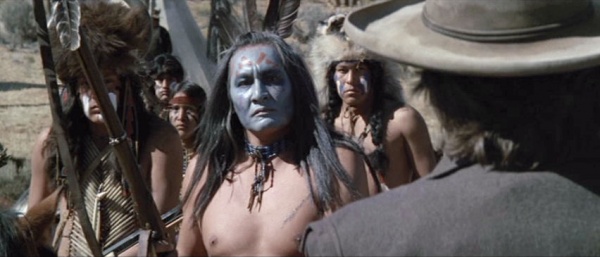
joseyOne of the cinema’s most powerful scenes occurs in a film many might disregard due to its genre. In “The Outlaw Josey Wales,” a man trying to rebuild his war-shattered life, rides out to face a Comanche chieftain.

Josey: You be Ten Bears?

Ten Bears: I am Ten Bears.

Josey: I’m Josey Wales.

Ten Bears: I have heard. You’re the Gray Rider. You would not make peace with the Blue Coats. You may go in peace.

Josey: I reckon not. Got nowhere to go.

Ten Bears: Then you will die.

Josey: I came here to die with you. Or, live with you. Dying ain’t so hard for men like you and me, it’s living that’s hard; when all you ever cared about has been butchered or raped. Governments don’t live together, people live together. With governments you don’t always get a fair word or a fair fight. Well I’ve come here to give you either one, or get either one from you. I came here like this so you’ll know my word of death is true. And that my word of life is then true. The bear lives here, the wolf, the antelope, the Comanche. And so will we. Now, we’ll only hunt what we need to live on, same as the Comanche does. And every spring when the grass turns green and the Comanche moves north, he can rest here in peace, butcher some of our cattle and jerk beef for the journey. The sign of the Comanche, that will be on our lodge. That’s my word of life.

Ten Bears: And your word of death?

Josey: It’s here in my pistols, there in your rifles . . . I’m here for either one.

Ten Bears: These things you say we will have, we already have.

Josey: That’s true. I ain’t promising you nothing extra. I’m just giving you life and you’re giving me life. And I’m saying that men can live together without butchering one another.

Ten Bears: It’s sad that governments are chiefed by the double-tongues. There is iron in your word of death for all Comanche to see. And so there is iron in your word of life. No signed paper can hold the iron, it must come from men. The word of Ten Bears carries the same iron of life and death. It is good that warriors such as we meet in the struggle of life . . . or death. It shall be life.

This conversation has always caused me to stop and think—even as I typed it out now. It contains many profound thoughts about honesty, commitment, respect and even peace. Most captivating to my thoughts, though, is the contrast between words of death and words of life.

“There is iron in your word of death . . . And so, there is iron in your word of life.”

People say all sorts of things, often without much regard as to whether or not they are true. They often speak without thinking about the words before they leave their lips. Most daily conversation is superficial, and immediately forgotten.

That changes, when we speak of death. Sure, comedians joke about it, but when people discuss actual death—often in the wake of someone’s passing—our words become more measured, our tempo slows, and we more consciously ponder what we are saying.

I recall a conversation with a fellow chaplain who described his father’s dying. He contracted a terminal disease, which would take some time to extinguish his life, and he told his children: “As you have grown up, I’ve done my best to teach you how to live. Now I will do my best to teach you how to die.”

It doesn’t require faith in God to die with dignity, but those of us who know the resurrected Jesus, face death with a confidence that death does not have the final word.

The truly wise live all of their days in the knowledge that we all will someday (barring the parousia) experience physical death. In light of that, our words should not be careless, or even frivolous. That’s true for our life words, as well as our death words.

By this I do not mean that we should not play with language or engage in humor. After all, humor is inarguably one of God’s most precious gifts to us. Nor should we allow the cloud of death that hangs over all mortal flesh rob us of the many joys life brings.

C.S. Lewis would have understood the essence of the conversation quoted above. (The movie was made thirteen years after his own death.) When grieving the death of his wife, Lewis wrote:

You never know how much you really believe anything until its truth or falsehood becomes a matter of life and death to you. It is easy to say you believe a rope to be strong and sound as long as you are merely using it to cord a box. But suppose you had to hang by that rope over a precipice. Wouldn’t you then first discover how much you really trusted it? . . . Only a real risk tests the reality of a belief. (A Grief Observed).

What I am trying to capture is more than simply the notion that our words of life, our day to day conversations, should be just as sincere and thoughtful as our words of death. It’s more in line with what Lewis was referring to. That our words, thoughts, and hopes have been tested and proven true . . . because they are based not on the fancy of the moment, but on the final, concluding whole of the testimony of our lives.

In other words, it is precisely because one’s word of death (ultimate, naked honesty) is true, that you can trust their word of life.

That’s a message that echoes both the sound of a hammer driving nails on a Judean hill, and a heavy stone rolling away from the entrance to a sealed tomb, two days later.

Return to Narnia

Chauvet Quote

Great news for all fans of Narnia—after a three year delay, it’s just been announced that they will be making a film based on The Silver Chair!

Voyage of the Dawn Treader was released in 2010, although it seems to many of us even more time has passed. And, due to the vagaries of film making, the fourth title in the series may not see the screen until 2018. However, there is additional good news too.

Most fans will be happy to learn that the new partner in the production is Mark Gordon. Among the films and shows Gordon has produced are Saving Private Ryan, The Patriot, Speed, The Day After Tomorrow and Grey’s Anatomy. Gordon is quoted as saying:

Like many readers, both young and old, I am a huge fan of C.S. Lewis’ beautiful and allegorical world of Narnia. These fantasy stories inspire real-world passion among millions of devoted fans around the world. As we prepare to bring the next book to life, we are humbled and excited to contribute to the outstanding legacy of Narnia.

Lewis’ son, Doug Gresham, will continue to work on the project, and strive to maintain fidelity to the author’s vision.

The Silver Chair offers a fascinating tale, much of which takes place in a subterranean realm. I’m certain the cinematography will be spectacular.

The story marks the return of Eustace Scrubb and the addition of a classmate, Jill Pole. The other major character—aside from Aslan, of course—is Puddleglum, a taciturn Marsh-wiggle. (We named the pond on our property in his honor, enjoying the alliteration.)

As the script is written, I’m most concerned about how Puddleglum will be portrayed. He’s not a cartoon character, although much that he says in utter seriousness comes across as slightly silly.

Much of the “humor” comes from the fact that Puddleglum is the archetypal pessimist, as I’ll illustrate in a moment. I just hope they don’t pursue the all too common path of setting him up as comic relief (à la Jar Jar Binks).

Puddleglum, in fact, is the hero of the story. He leads the young children on their dangerous mission to locate the son and heir of King Caspian (who we met in the two previous films). Here are a few quotations from the courageous Marsh-wiggle.

Good morning Guests . . . Though when I say good I don’t mean it won’t probably turn to rain or it might be snow, or fog, or thunder. You didn’t get any sleep, I daresay.

. . . but I’d better not tell you that story. It might lower your spirits, and that’s a thing I never do.

The bright side of it is . . . that if we break our necks getting down the cliff, then we’re safe from being drowned in the river.

Life isn’t all fricasseed frogs and eel pie.

In the climatic confrontation with the Queen of the Underland, Puddleglum champions the truth in this amazing scene.

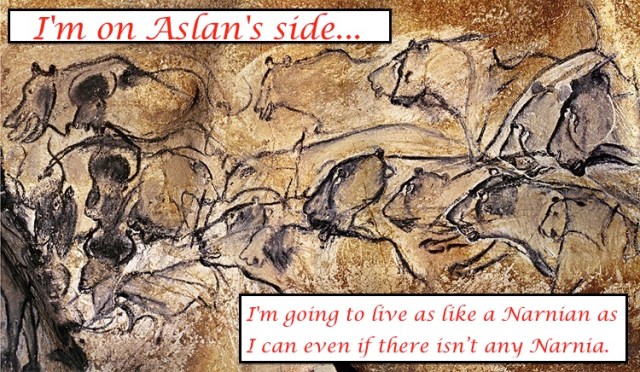
One word, Ma’am . . . All you’ve been saying is quite right, I shouldn’t wonder. I’m a chap who always liked to know the worst and then put the best face I can on it. So I won’t deny any of what you said. But there’s one more thing to be said, even so. Suppose we have only dreamed, or made up, all those things–trees and grass and sun and moon and stars and Aslan himself. Suppose we have. Then all I can say is that, in that case, the made-up things seem a good deal more important than the real ones. Suppose this black pit of a kingdom of yours is the only world. Well, it strikes me as a pretty poor one.

And that’s a funny thing, when you come to think of it. We’re just babies making up a game, if you’re right. But four babies playing a game can make a play-world which licks your real world hollow. That’s why I’m going to stand by the play world.

I’m on Aslan’s side even if there isn’t any Aslan to lead it. I’m going to live as like a Narnian as I can even if there isn’t any Narnia. So, thanking you kindly for our supper, if these two gentlemen and the young lady are ready, we’re leaving your court at once and setting out in the dark to spend our lives looking for Overland. Not that our lives will be very long, I should think; but that’s a small loss if the world’s as dull a place as you say.

Simply rereading these words has whet my hunger for the new addition to the Narnian cinematic canon. May it arrive soon.

During the next few years, as a script is written, the cast is chosen and the various scenes are filmed and edited, join me in offering an occasional prayer that the movie’s producers will both remain true to Lewis’ message, and produce a film worthy of the novel upon which it is based.

Lengthening Good Stories

bayeuxWe’re all familiar with the saying “too much of a good thing.” Because it’s a cliché, most reviewers wisely avoid the phrase, but in reading a fair number of reviews of The Hobbit, I’ve heard this very thought expressed in a number of ways.

Everyone is familiar with Director Peter Jackson’s Oscar-winning trilogy of The Lord of the Rings. Most fans were thrilled when it was announced he would also film J.R.R. Tolkien’s much “smaller” tale of The Hobbit. Some were surprised when they learned he would divide it into two parts. Still, the general sentiment was “the more the better” (another tired phrase). However, when it was ultimately announced that Jackson intended to stretch the modest novel into a trilogy of its own, many fans were incredulous.

There is a tad of irony in transforming Tolkien’s beloved adventure of a hobbit assisting dwarves in a regional quest into an epic to rival the high fantasy of The Lord of the Rings with its conflict enmeshing every corner of Middle Earth.

As I write this column, The Hobbit: An Unexpected Journey is doing well. It is ranked sixth at the box office, and held the number one position for three full weeks, against tough competition.

In order to discover sufficient content to expand the story, Jackson has incorporated a number of Middle Earth tales Tolkien had written about its history in other sources. The primary sourcebook was The Silmarillion, a collection published posthumously by Tolkien’s son Christopher in 1977. Some regard the importing of these elements as a sort of corruption of the simpler story of the single volume. Others welcome the elaboration on the essential story, since the additions are certainly “genuine Tolkien,” and they provide a more elaborate portrayal of Middle Earth.

The reactions to the expansion have been mixed. I don’t have strong feelings either way, but I treasure my time in Middle Earth so highly, that I would likely pitch my tent in the camp of those who approve of the increase. (Not to the point, of course, where I would behead those who objected, as we see on the fragment from the Bayeux Tapestry above.)

In the energetic conversation about the expansion of the saga, people frequently interject the name of the author, and offer suppositions about how he would have reacted. I find this interesting, but somewhat futile. Frankly, there is far too much that we simply don’t know about Middle Earth to authoritatively render Tolkien’s judgment on these things. Yes, we know that he was reluctant to see his work on the screen, but he did sell those rights to his creations. Of course we are aware of his lack of confidence in material originating in the colonies.

In a 1937 letter he writes about a possible publisher in the United States: “As for the illustrations: I am divided between knowledge of my own inability and fear of what American artists (doubtless of admirable skill) might produce.” It is in this same letter that he offers his criticism about a Disneyesque presentation: “It might be advisable, rather than lose the American interest, to let the Americans do as seems good to them—as long as it was possible (I should like to add) to veto anything from or influenced by the Disney studios (for all whose works I have a heartful loathing).”

In an essay entitled “On Criticism,” C.S. Lewis described the limitations of outsiders attempting to discern the intent of authors.

Nearly all reviewers assume that your books were written in the same order in which they were published and all shortly before publication. There was a very good instance of this lately in the reviews of Tolkien’s Lord of the Rings. Most critics assumed (this illustrates a different vice) that it must be a political allegory and a good many thought that the master Ring must “be” the atomic bomb.

Anyone who knew the real history of the composition knew that this was not only erroneous, but impossible; chronologically impossible. Others assumed that the mythology of his romance had grown out of his children’s story The Hobbit. This, again, he and his friends knew to be mainly false. Now of course nobody blames the critics for not knowing these things: how should they? The trouble is that they don’t know they don’t know. A guess leaps into their minds and they write it down without even noticing that it is a guess.

Learning from Lewis, I won’t hazard a guess about Tolkien’s ultimate attitude towards the cinematic portrayals of his works—which will now, I assume, come to carry greater weight in the public psyche than the novels themselves. Well, at least until the current mode of motion pictures becomes obsolete. Then, once again, the words as Tolkien wrote them will reign supreme.

For those who are interested, I created the faux Bayeux Tapestry scrap at the top of the column using a program that allows manipulation of a variety of the hand-stitched images. Then I simply added the text in a simple graphics program. The Historic Tale Construction Kit is available here.

There is also a more sophisticated software interface that I haven’t tried called the “interactive” Bayeux Tapestry.