Great Grandparent or Great-Grandparent?

ggfI have never been more glad to have a birthday than I was this year. After all, at a mere sixty, I would have been far too young to become a great-grandfather. Now, at sixty-one, I feel adequately prepared for the momentous event which transpired just under an hour ago.


Tobin (meaning “God is Good”) is the child of my grandson and his wife, who currently reside in Texas where dad handles munitions for B-1 bombers.

Age and offspring do not always line up the way that we ourselves would plan. Yet every precious child is a miraculous gift from God.

Our grandson was born to our precious daughter-in-law while she was in high school. We didn’t get to meet him until he was ten, but we’ve done our best to make up for lost time. Our grandson, early on began calling us his “great grandparents.” That didn’t make us feel old, just special.

When my wife worked in a residential care facility for severely handicapped children, one of the aides arrived one morning with joyous news. “I’m a great-grandmother!”

Because the woman seemed too young, Delores responded, “Congratulations, you look so young for being a grandmother.”

The lady laughed and said, “No, a great-grandmother!” It turns out she was not yet forty . . . having been 13 when she had a daughter who was 13 when she had her own daughter who now had birthed her own baby. (I don’t recall the gender of the child.)

As I wrote this, it dawned on me that this all took place thirty-seven years ago, so it’s quite possible there are now several more generations in that particular family tree.

Some people will scoff at the thought of celebrating such early and assumedly unintended pregnancies. But, that caregiver knew the truth—every young life is a gift from God.

As an imperfect parent and grandparent, I recognize all too well that I won’t be the great-grandfather Tobin should have. I do pray, though, that God would grant that my mistakes with him would be few, and the memories forged during this life will help this little one grow into the finest man that he can become.

Most importantly, I pray that he will see Christ in my life and recognize the value of faith. Only the Lord knows what the future will bring, and I will not be here to share too many decades of life with my grandchildren and great-grandchildren. But my hope is that the time we do have will leave a lasting legacy of encouragement, faith, and compassion.

The letters of C.S. Lewis provide insights into the influence of his grandparents on his young life.

In a 1905 letter to his brother Warnie, he describes family festivities on Halloween. They even persuaded his grandfather to join in.

On Halow-een we had great fun and had fireworks; rockets, and Catherine wheels, squbes, and a kind of thing that you lit and twirled and then they made stars. We hung up an apple and bit at it. We got [his paternal] Grandfather down to watch and he tried to bite.

In a 1916 letter to his father, he refers to his grandmother’s declining health. (She died two weeks after he wrote.) Lewis refers to the common sentiment that we should have tried harder to spend time with family while they were with us. “I am sorry to hear what you say about [Lewis’ maternal] Grandmother: I feel that we ought to have seen more of her, but it was not easy.”

I should dearly love to get away for a bit, but, as you say, for so short a time, the expense and the interruption of work is hardly worth it. The Colonel must have had an unpleasant journey: I wish he would keep a diary which we could compare with that of Grandfather Hamilton in the same waters. Two generations of sub-tropical Atlantic and Hamilton temperament would be worth studying!

The diaries left by C.S. Lewis’ grandfather, and by his brother Warnie, provide a reminder to us that a written legacy will outlast our voices. If we have something important to say to our descendants, perhaps that is something we should keep in mind.

Pet Names

hypocorismHow many hypocorisms do you have? Which of them are your favorites? Are there any you would sooner never hear again?

I subscribe to one of those “word of the day” emails sent by services such as dictionary.com or thefreedictionary.com.

The truth is, more often than not I’m already familiar with the word they choose to define each day. However, when something hits me out of the proverbial blue—I am amazed and pause to ponder its meaning, history, and reasons why I may never have crossed its path before. (I imagine this behavior is widely replicated among word lovers.)

“Hypocorism” is one of those surprises. It had no place in my lexicon, although the concept of “pet names that are bestowed with affection” is something my family and I have always practiced.

I grew up being called Robbie, and as a young adolescent told my family I preferred to go by Rob. Rob is probably verbal shorthand for Robert, but Robbie is definitely hypocoristic. It is amusing to me that my beloved grandmother never ceased to call me Robbie—even though every precious letter I received from her while serving in the military far from home began, “Dear Robert.”

We’ve already noted the key aspect of a hypocorism. It is a name expressing endearment, not disrespect. That doesn’t mean, of course, that it is not embarrassing. Many people bestow pet names on their loved ones that are best shared only with family.

Some pet names are simply silly. Two of my granddaughters often call me “Bumpa.” That is not a reference to any lumpiness on my part, but to the way the eldest of them began pronouncing “Grandpa” when she was oh so tiny. It was cute, special, and passed on to her younger sister, at first through aural osmosis . . . and later through conscious affection.

C.S. Lewis’ family members were enthusiastic practitioners of hypocorism.

One of the things that new students of Lewis often find confusing is his own name. The fact that he was known to family and friends as “Jack” begs the question of the source of that name. The story, though oft told, remains quite entertaining.

The initial version of Lewis’ adopted name was Jacksie. Lewis loved dogs, and his stepson Douglas Gresham writes that Jacksie was one of these childhood animals.

When he was a small boy, he didn’t like the name [Clive] and soon changed it to “Jacksie” by simply refusing to answer to anything else. It was actually because of a small dog that he was fond of that he picked the name Jacksie, which was what the dog was called. It was run over (probably by a horse and cart as there were almost no cars at the time and place where he was a child), and Jack, as he later became known, just took the name for himself. (Jack’s Life)

I have shared in the past how Lewis’ brother Warnie [Warren] related the event.

Then, in the course of one holiday, my brother made the momentous decision to change his name. Disliking “Clive”, and feeling his various baby-names to be beneath his dignity, he marched up to my mother, put a forefinger on his chest, and announced “He is Jacksie.”

He stuck to this next day and thereafter, refusing to answer to any other name: Jacksie it had to be, a name contracted to Jacks and then to Jack. So to his family and his intimate friends, he was Jack for life: and Jack he will be for the rest of this book.

Lewis’ life was filled with other hypocorisms. One of the most curious was the nick name “Minto,” given to Janie Moore. Mrs. Moore and her daughter were supported in his home by Lewis after her son Paddy had been killed in WWI. The two men had pledged that if only one survived, he would care for the other’s widowed parent. Lewis kept that promise.

As you reflect on the pet names that you share with those you love, you are in good company. An affectionate hypocorism is a truly precious gift.

Dogs are Better than Kids

dressed dogAt least that appears to be the thinking in Seattle. A recent census of the city’s population found that the preference isn’t even close.

While Seattle boasts 107,178 children it is home to about 153,000 dogs.

As a dog-loving Washingtonian, I’m not surprised by this statistic. But I don’t support the odd excesses of some pet owners. These include a woman who uses a baby stroller to keep her Chihuahua safe. “She also owns a basket full of dog clothes, including a few dog necklaces and wigs…”

Seattle Magazine notes the city is becoming a top destination for canine travelers.

Seattle’s dog-mecca status is starting to get noticed nationally; it’s considered one of the top 20 destinations in the United States for people who want to travel with their dogs, according to Melissa Halliburton, the founder of Bring Fido, a dog-focused travel agency out of South Carolina. “Seattle has 45 pet-friendly hotels, 38 [pet-friendly] attractions—including the dog-friendly Fremont Sunday Ice Cream Cruise…”

As delightful as an Ice Cream Cruise for dogs sounds, I’d prefer to invest in my children’s educations and take our Border Collies for a brisk walk. I’m sure they’d enjoy the frozen treat, but they will appreciate the exercise even more.

Why Dogs Instead of Kids?

Obviously, simultaneously enjoying human offspring and doggie kids is possible. They aren’t mutually exclusive. And most of the parents I know understand how having a dog in the family helps children grow up healthier (allergies aside).

The article asks this question and offers insightful thoughts.

Why are we so dog crazy? It could be that the 41 percent of us who are single appreciate the companionship. Maybe our outdoorsy pursuits are more fun with dogs. Or maybe dogs just make us feel good.

I heartily concur with the second and third points. And I find the first suggestion (highlighted in the original article) to be quite provocative.

God created us to desire companionship. “Then the Lord God said, ‘It is not good that the man [or woman] should be alone…”

This companionship need not be restricted to marriage. Some people have the gift of celibacy and can live chastely without marrying. C.S. Lewis would be a good example of this. He found his needs for deep friendships met by a handful of intimate friends. The profound joy he experienced when he married caught him totally off guard.

Unfortunately though, there are many who long to find their life companion and have yet to find that prayer answered. Then there are those tragic cases where illness, accident or war have stolen a spouse far too early. The Christian Church has always possessed an intense compassion for widows.

In either of these cases, the companionship of a dog provides a responsive outlet for our affection. Here too C.S. Lewis provides an example. I’ve written here in the past about his love of dogs.

However, it is not only the still-waiting and the bereaved who find themselves reluctantly single.

Another case that is far more common arises when people have made themselves vulnerable and opened their hearts to another… only to be betrayed.* This betrayal may have been physical, emotional, or psychological. Often it is all of these.

In these cases, replacing our unfaithful partner with a dog is especially apropos. There could be no more faithful and forgiving a friend than a dog. A dog who welcomes you every time you come through the door with passionate enthusiasm and happiness impossible to fake.

The truth is that as special as they are, dogs aren’t better than kids… even in Seattle. But, that said, life is sure a lot more fun with them in the mix.

_____

* Just as most of us know the pain of betrayal, many of us recognize we too may have been betrayers. There have been times—perhaps many—when we have disappointed or wounded those who trusted and loved us. However, it does not need to end here, with us mired in guilt.

If you find yourself in this situation, seek reconciliation or forgiveness from the person(s) you have wronged. Confess what you have done as the sin it is, and receive his promised forgiveness. And finally, as Jesus himself said, “Neither do I condemn you; go, and from now on sin no more.”

Marrying a Writer

museA recent episode of the series Castle illustrated something all of the spouses of writers know—they are wed to peculiar people.

The premise for the program, currently in its seventh season, is that a mystery novelist accompanies homicide detectives in New York City on their investigations.

Despite his frequently outlandish theories, Richard Castle often contributes significantly to solving the crimes. His counterpart is Kate Beckett, the senior detective who leads the team.

The two of them recently wed, which led to the following exchange while they were on their honeymoon, which doubled as a homicide investigation at a frontier “dude ranch.”

Faced with complex evidence, Castle says, “That’s why we approach this as writers.”

Beckett responds with a comment representative of literary spouses. “So we procrastinate and we make things up?”

Ouch.

That strikes a bit close to home. The second element—making things up—can be construed by our nimble minds as an actual compliment. Yes, we do think creatively and out of the mundane box. Thank you very much.

On the other hand, the procrastination label . . . well, speaking for myself, it fits far too well.

Writing, after all, is not simple. Even poor writing requires effort. And, if one hopes to write well . . . it requires time, skill and practice.

Few can sit down at the keyboard and imperiously command their “muse” or inspiration to be at hand. This is true for all authors, including Christian writers who seek guidance from the Holy Spirit.

The simple fact is, however, that if we waited until we felt fully inspired, most of us would accomplish little.

In my own case, I sincerely attribute anything good that I might write to the Lord. The chaff comes from me. I won’t presume to guess what small percentage of the words are wheat, but I will confess that I am most productive when I discipline myself to write. And, this discipline typically involves a self-imposed deadline.

Thus the reason for the graphic at the head of the page. I have recognized in the fall of life, as I seek to pursue my writing avocation more seriously, that “The deadline is my Muse.”

Beckett knows very well that her fictional husband often requires a deadline to complete his novels.

My wife sees the same principle at work when I request her urgent proofreading of something I’ve waited too long to complete.

C.S. Lewis had ample experience with deadlines himself. And he knew well that even a required submission date could not guarantee literary production. In 1958 he wrote to his editor, Jocelyn Gibb, saying that he may, or may not, be able to provide a contribution to an upcoming edition of The Psalms as Poetry.

Dear Gibb, Thanks for the book, a very nice bit of work. I’ll try to re-read Miracles for mis-prints while I’m in Ireland, where my wife and I go tomorrow. When is deadline for your Fifty-Two? Not that I’m sure I can pump anything up anyway.

He did manage to provide a contribution, which he later included as part of the introductory chapter for Reflections on the Psalms.

I’m not certain whether Lewis wrote those pages simply because inspiration compelled him to . . . or if the issue deadline provided a little supplemental motivation. I suspect it was the latter.

To any writers out there who never require the encouragement of a deadline—consider yourself uniquely blessed!

To the masses who share my battle with the plague of procrastination, you have my sympathy. Still, after pausing for just a moment to commiserate, let’s get back to the pleasant labor of writing, and the thrill of “making things up.”

Bill Cosby Redux

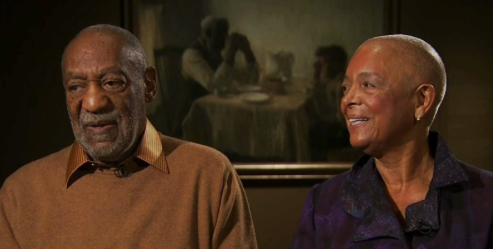
Bill & CamilleIn light of recent revelations, my daughter urged me to delete my recent post about Bill Cosby.

As the extensive evidence of a sordid past have been coming to light, albeit accusations rather than substantiated facts, the propriety of that original post falls into question.

For the time being, I am disposed to leaving it up. For several reasons. I could say one is the notion of “innocent until proven guilty,” but that’s not true. Despite statutes of limitations, the accumulating evidence, quite sadly, appears indisputable.

On the subject of innocence, I admit to confused sentiments. As a Christian, who accepts the historic doctrine of “original sin,” I confess at every worship service that I too am a hopeless sinner, in dire need of God’s grace and mercy. What’s more, as a Christian who believes we cannot earn forgiveness, I point not to my own ragged good works, but rely wholly on the grace—the undeserved love—of God.

C.S. Lewis recognized that mercy is the only solution for our guilt. In “The Humanitarian Theory of Punishment,” he wrote these words:

The essential act of mercy was to pardon; and pardon in its very essence involves the recognition of guilt and ill-desert in the recipient. If crime is only a disease which needs cure, not sin which deserves punishment, it cannot be pardoned.

I am quite conscious of my own deep need for pardon. Thus, I am ever wary of condemning those whose heart I cannot know.

The second reason for my reticence in removing this post, is that much of it remains true. The Bill Cosby who offered our family genuine laughter and wholesome entertainment, was apparently not identical with the real man.

But then I pause to wonder how many celebrities are truly consistent with their public persona? And, in light of the fact that we all have our failures and sometimes grievous sins, why should we expect them to be transparent and vulnerable to greater emotional violence than they all already receive?

My comments below were written with the understanding I possessed two short months ago. They were heartfelt at that time, and they illustrate in a clear way how perception is not always reality. Perhaps they can serve as a sort of a caution to others who are prone to investing too much trust in people they do not genuinely know.

Another reason I am inclined to leave the post up for the time being, is that there may be a value in preserving the quality of the artist’s work, even when we have been disappointed by the artist himself.

As an example of this, during a sketch on the last episode of Saturday Night Live, Michael Che criticized the actor’s vile behavior, but ended his scripted “newscast” with a thought that I believe represents the view of many.

“I don’t know how to feel about [networks cancelling The Cosby Show] because I don’t know Bill Cosby, but Cliff Huxtable practically raised me. I love that dude, and the only thing he ever tried to sneak while people were asleep is a hoagie. So while I may never forgive Bill Cosby, hopefully someday I can forgive Dr. Huxtable.”

It’s that Bill Cosby, the idealized, honorable, ever-witty, and doting father, that I remind my wife of. And I remain flattered by that.

Meanwhile, I pray for Bill and Camille Cosby. I pray for the victims of his offenses. I pray for the victims of some of those very women who, in likely turn, have wounded others because of their own emotional and spiritual injuries.

Sin is powerful. It’s effects cascade from life to life. But sin and evil do not have the final word. That is left to the Word incarnate, who has redeemed this fallen world. The Lord who heals our wounds and offers the glorious promise that one day . . .

He will wipe away every tear from their eyes, and death shall be no more, neither shall there be mourning, nor crying, nor pain anymore, for the former things have passed away. (Revelation 21.4).

Bill Cosby & Me

cosby[Do not read this post without also reading “Bill Cosby Redux,” which was written two months later.]

One of the finest compliments my wife ever paid me was saying, “You remind me of Bill Cosby.”

She tells me that’s one of the reasons she married me thirty-eight years ago. And she also says it’s still true today.

I owe a lot to Bill Cosby. He has modeled (for several generations now), how humor highlights the most precious aspects of our human lives. He also showed us how a real man works hard to accomplish his goals, and keeps the promises he makes.

And now, approaching the winter of his life, Cosby continues to inspire.

My wife and I have always wanted to see him perform. This summer that dream came true.

He offered the audience two full hours of good natured (healthy) laughter with an ample dose of self-introspection as well.

Cosby began his performance (at one of our Washington State fairgrounds) by commenting on our lovely weather. He noted that every other time he had spoken outdoors that it had poured. He suggested that there was something demented about Washingtonians wanting to watch entertainers on stage being drenched while they are handling microphone and other electrical devices.

I refer to Cosby’s presentation as a “performance,” but it was far more than that. It is no exaggeration to say that it was like being invited to an intimate family gathering. One where everyone has gathered around—and the audience was filled with people of all ages—to hear their witty patriarch weave delightful stories about their shared past and mysteries of life.

Bill Cosby embodies the truth spoken by C.S. Lewis in The Screwtape Letters: “Humour is . . . the all-consoling and . . . the all-excusing, grace of life.” Cosby is, in a sense, an ambassador of humor. Or, even, a physician of humor, whose words carry the power to heal.

In mere minutes he made us all, albeit temporarily, his family. (Another reason for me to be proud my wife likens me to this gifted story-teller.)

I’ve always liked Cosby. I was introduced to him on a vinyl album my family had. We probably owned several, over the years, but this one was his debut album, recorded live in 1963.

As a young Christian, I was particularly captivated by his three sketches about Noah. (If you’ve never heard the routine, check out my note at the bottom of this column.) Only today, in the fall season of my own life, does it dawn on me just how profound an effect his comedy had on me.

I believe that was the first time I became aware that matters of faith could be funny. Not diminished by ridicule, but uplifted by laughter. It was okay to enjoy discussing serious matters, by highlighting some of their humorous aspects.

In a world where so many of faith’s spokespersons were dour and humorless, seeds of mirth were planted in my life. Thank you, Bill.

Those seeds have born fruit. They have never undermined my recognition of the authority and trustworthiness of the Scriptures. But, at the same time, they have opened my eyes to the warmth and wonder of the Creator who spoke the cosmos into existence.

Cosby engaged us with an exploration of humanity’s creation, and moved on into a delightful conversation about the differences between men and women. He spoke about his beloved Camille and his children in ways the entire audience connected to. His deep affection for his family resonates even as he uses them as a comedic foil (actually, the majority of his humor is self-deprecating).

Here’s a simple truth. A winsome witness to the faith, who can laugh with one of America’s finest humorists about their beliefs, will win far more “converts” than someone who does not know the joy that comes from being God’s child.

For those unfamiliar with Bill Cosby, allow me to offer a note about only a few of his many accomplishments.

He served for four years as a hospital corpsman in the United States Navy.

He attended Temple University on a track scholarship, where he also played fullback on the football team.

He has an earned doctorate (not the “honorary” type that adorns many public figures). Doctor Cosby earned his Doctor of Education degree in 1976 from the University of Massachusetts Amherst.

On the amazing espionage series, I Spy, Cosby became the first African-American to co-star in a dramatic series. (I remember being riveted to the show, identifying more with Cosby’s thoughtful portrayal than with the shallower, flashier persona of Robert Culp.) Apparently, many recognized Cosby’s acting prowess—he won three consecutive Emmy Awards during the show’s run.

Cosby’s acting prowess was proven repeatedly through television accomplishments, most notably The Cosby Show, which overwhelmed its competition.

He is a gifted musician and has recorded a dozen music albums.

He is also a skilled writer, and has written a dozen books.

He is a genuine family man, whose devotion to his wife, children and grandchildren is unquestioned. He also has gracefully born the pain of losing his only son quite tragically.

He has courageously confronted some of the serious issues facing the poor in the world’s most prosperous nation. He has put his talents and treasures where his words are, seeking to reinforce the value of education in communities where far too many condemn themselves to poverty by dropping out of school.

Bill Cosby is an amazing man. He is a person to be respected, and heeded.

I can think of no better compliment from the woman I love than hearing that I remind her of him.

_____

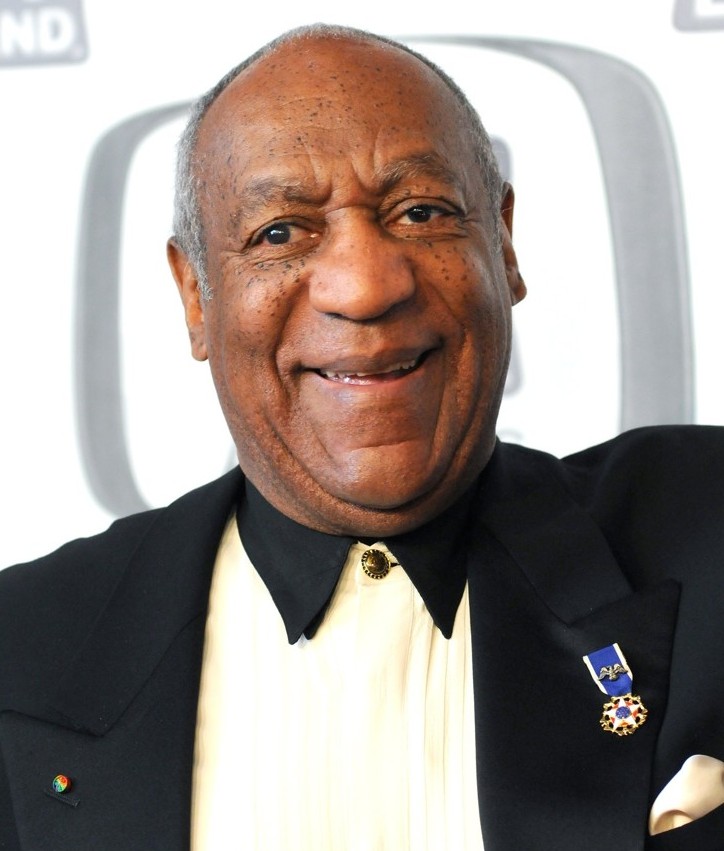
In the picture above, Cosby is wearing his Presidential Medal of Freedom, awarded to him in 2002.

If you’ve never heard Cosby’s account of God’s conversation with Noah, your life is incomplete. Fortunately, you can remedy that sad situation by viewing a brief version of it here.

If you’re interested in a brief survey of Cosby’s impact, this clip provides an excellent introduction.

Volcano Hurricane

volcanoVolcano hurricane. An epic disaster film! No sharks, but copious amounts of lava flung by gale force winds across the globe. And all from the mind of a six year old boy.

Imaginations are great. They are one of the most precious gifts of God (which makes it all the more tragic when the human imagination is diverted towards carnal ends).

The minds of young boys, thankfully, have yet to turn to such lamentable matters. Their innocence shields them from the worst of human corruption. They, instead, are consumed with thoughts of spiders and other things that creep out girls . . . and especially their moms.

Our almost-seven-year-old grandson was here for the weekend with his family. We had a wonderful time. We had actually found the ideal book to include as part of his birthday celebration: How to Convince Your Parents You Can Care for a Pet Tarantula. Perfect.

Young male imaginations seem to revolve around things that shock—and also things that gross others out.

Our kids have trained their own children well. For example, they always excuse themselves when they experience flatulence. It’s a natural experience, of course, and as we mature, adults learn to ignore potentially embarrassing moments related to it. That’s part of becoming “civilized.”

Six year olds . . . not so much. Our grandson properly excuses himself, but he typically does so in the midst of enthusiastic laughter. It’s as though he relishes just how uncultured the moment seems.

During this particular visit, he leaped into my lap in a semi-ninja attack. As we wrestled, there was a minor explosion. Not quite volcanic, but close enough. He apologized, amidst great hilarity. “Sorry about my little gas,” he added.

And here’s where I made the mistake. I reinforced his innate boyhood grossness by saying, “little! . . . that sounded like it was a buffalo!”

Not quite the right thing to say, since it simply encouraged the precocious guy. But what I can say . . . time may change a boy into a man, but in most of us . . . somewhere deep in the recesses of our psyches . . . that boyhood irreverence lingers.

Not that I enjoy the crass “body humor” that pervades so much comedy (on tv and film). I steadfastly avoid it. It insults my mind and viewing it constitutes a total waste of time. Still, with my grandson wrapped in my arms, laughing away, it all seemed so genuine and innocently funny.

Of course, I recognize one needed to be there—and probably to also be related by bloodline to the participants—to find any humor in the moment. But it certainly seemed funny to us.

C.S. Lewis and Children

I was thinking about that moment as I sat down to write this post. I intended to focus on the amazing imaginations of children, and my grandson’s current preoccupation with gigantic volcanoes.

But whim or muse redirected the column. In the end, it turns out to be a reflection on the simple pleasure that we adults experience when we interact with kids. Especially when they are children who are precious to us.

I wish that C.S. Lewis had been able to experience that joy. He wasn’t. His awkwardness with children is well known. Most attribute it to the early passing of his mother, and the emotional distance his father maintained from his sons.

In a 1935 letter he wrote to a close friend, “I theoretically hold that one ought to like children, but am shy with them in practice.”

In The Abolition of Man he was even more forthcoming, sharing that, “I myself do not enjoy the society of small children: . . . I recognize this as a defect in myself.”

So, Lewis recognized his discomfort with children as a shortcoming. It was something he wished could be dispelled. Unfortunately, we can’t simply wish (or pray) away our ingrained personality traits. We’re lucky if we can tame them or reshape them.

We work hard to strengthen our positive traits and the wise deny nourishment to their weaker qualities. People often use the analogy of wearing off one’s rough edges, and that’s an apt image.

Lewis’ reticence with children makes his creation of Narnia all the more wondrous. The Chronicles of Narnia have captivated the hearts and imaginations of innumerable children, and adults alike. Certainly Lewis was correct when he wrote the following in “On Stories.”

No book is really worth reading at the age of ten which is not equally (and often far more) worth reading at the age of fifty—except, of course, books of information. The only imaginative works we ought to grow out of are those which it would have been better not to have read at all.

With his marriage, late in life, Lewis became a step-father. He did the very best he could, but was conscious of just how ill-equipped he was to raise Douglas and David. Both became successful men. Doug shares his parents’ love of Christ, and helps direct the course of various Lewisian projects today.

Allow me to close with another evidence of the greatness of C.S. Lewis. He was able to rise far above his innate uneasiness with children. In fact, his fabled correspondence included many children who had written to him seeking his attention. In 1951 he wrote to one of them, saying:

I am glad you all liked The Lion. A number of mothers, and still more, schoolmistresses, have decided that it is likely to frighten children, so it is not selling very well. But the real children like it, and I am astonished how some very young ones seem to understand it. I think it frightens some adults, but v[ery] few children.

Lewis did not disappoint the many children who wrote to him during those terribly busy years. Nor do his writings disappoint us today. Unlike the transience of youthful volcano hurricanes, Lewis’ legacy will forever remain alive in the imaginations of child and adult alike.

Adoption = Love

coupleToday marks a very special day in our family, the anniversary of our oldest grandchild’s adoption into our family.

While seven of our grandkids are aged seven and younger, Andrew is an amazing young man who has already married a lovely young woman. My wife and I are terribly proud of the path he is on, which has taken him to Japan, where he is promoting peace as a member of the United States Air Force.

While we all naturally love children physically “born into” our families, there is a singular affection—a consciously chosen and active love—we extend to those we adopt.

Delores and I seriously investigated international adoption during my assignment to Korea in the late eighties. Unfortunately, the doors closed, and it was not to be. We believe strongly in the importance and delight of adoption.

Although adoptions bring a few unique challenges to the family mix, there is no stress free recipe for parenting. Every successful formula involves a number of the same ingredients. Among them, patience and forgiveness need to be poured out in considerable quantity.

I wish to commend each of you readers who have adopted a child, or helped others to do so. And I also pray for God’s blessing upon each of you who are foster parents.

Finally, I offer a prayer for each of you who are, yourself, adopted. May your relationship with your parents fulfill all of the hopeful dreams that were held by all on the day that you entered your “new” family.

C.S. Lewis knew a great deal about adoption. He recognized how ill-prepared he was to become a step-father and ultimately a widowed single parent. In a 1957 letter he wrote:

I have married a lady suffering from cancer. I think she will weather it this time: after that, life under the sword of Damocles. Very little chance (not exactly none) of a permanent escape. I acquire two schoolboy stepsons. My brother and I have been coping with them for their Christmas holidays. Nice boys, but gruelling work for 2 old bachelors! I’m dead tired now.

In his biography, Jack’s Life, Douglas Gresham, one of those “nice boys,” described the situation after the death of his mother, Joy.

Jack also had a new responsibility to take care of, two teenage stepsons, each presenting the typical problems associated with growing up, though each in his own unique way. As was typical of the man he had become, Jack did everything he could to help these two young men. He knew all too well from his own life’s experiences how difficult their lives had been and tried hard to do the best he could for them.

A closing thought, as we all return to our other tasks and diversions. Christians see themselves as adopted. While all humanity is created in the wondrous image of God, entrance into the community of faith, the family of God, comes through faith in his only begotten Son. Because of Jesus’ life, death and resurrection, we are able to rightly call God, “Father.”

I’m overjoyed to be adopted into that holy family. And that adoption didn’t occur because I was smart, or handsome, or witty, or praiseworthy in any way. I was adopted solely because of the mercy and love of God.

And that divine adoption provides the perfect model for us to emulate in our world today.

Reading to Children

grandparent readingAs a father whose military service required extended separations from my children, I wish technology had been about three decades more advanced than it was while I was in uniform.

As a grandfather who has most of his grandkids living hours away, I’m grateful to be alive during an era when we can still nurture close relationships despite geographic separation.

There are many wonderful ways to keep in touch across the miles. And, a new program adds a wonderful touch to the time proven joy of reading to our children. It’s called Kindoma, and more about it momentarily.

It’s a little known secret that there are few—very few—activities children love more than reading with a loved one. It’s not just about the book, it’s also about relationships and bonding.

C.S. Lewis had an interesting relationship with children. As a bachelor academic, he was not around them all that much. And when he wrote The Abolition of Man in 1943—before becoming a step-father—Lewis confessed “I myself do not enjoy the society of small children . . . I recognize this as a defect in myself—just as a man may have to recognize that he is tone deaf or colour blind.”

Eight years earlier, at the modest age of thirty-seven, he wrote to a good friend, “I theoretically hold that one ought to like children, but am shy with them in practice.” Lewis isn’t alone in possessing this unfortunate trait, which from my observation [political incorrectness alert] is more common among men than women. Of course, in our increasingly equalitarian culture it does seem that character flaw is becoming a bit more gender-balanced.

Then there is the fact that many of us who dearly love our young progeny, enjoy the children of our friends, and hold genuine compassion for young ones suffering in any variety of miserable conditions . . . do not particularly seek out the company of children. From my personal perspective, I feel like I “expend” all of my (admittedly finite) kid-patience with my own kin and the offspring of my friends. I don’t have a surplus left after spending a significant amount of time with the (precious) little ones.

And, like Lewis, “I recognize this as a defect in myself.”

At the same time as I admire teachers who can pour themselves into little ones, and I am absolutely dumbfounded by people who prefer working with young teenagers, I recognize that the world works well when some of us are better equipped to work with adults also . . . so the entire spectrum of learners is served.

Recognizing our own prejudices is a prerequisite to suppressing or evicting them. Lewis, of course, was extremely concerned about children and their upbringing, particularly their education.

Returning to the subject of how to nurture relationships with children through the intercontinental reading of books, technology has made the miraculous possible.

Kindoma is novel in the sense that it allows you to read the book together (either the child or the adult can be the actual “reader”) while you actually turn the pages of the etext together! So you get the genuine experience of reading together.

The creator of the program holds a PhD in Computer Science. So he’s not merely an idea guy (like me) who comes up with a slew of amazing concepts but doesn’t have the scientific skill to make them reality.

The program is currently available for ipod and ipad. I’m sure it’s just a matter of time before it is ported to other operating systems. Since I still use “regular” desk and lap-top computers, I haven’t experimented with it myself. The app itself is free. I’m unsure about their revenue stream, whether it will come from ads, or purchase of access to a specific library, but it’s definitely worth checking out.

The brief link below offers an introduction to the tool. I hope that you will use it if applicable to your situation, and pass it on to others you know who might benefit from it. (In the meantime, I’m thinking about approaching my wife about us making that ipad purchase I’ve been pondering.)

A Narnian Madlib

EVO-WWI-064-01060I got to savor one of the joys of being a grandpa today, watching over two of my five lovely granddaughters while their parents traveled to an important business meeting.

Naturally, we had fun playing, drawing, tossing a ball for their German shepherd, building things, cleaning up their room (not quite so “fun”) and—since it’s summer—playing with water balloons (extremely fun, even though I got drenched).

We also did a madlib, one of those “phrasal templates” popularized by Roger Price and Leonard Stern in the 1950s. These simple word games are entertaining and educational. And, even for novice writers, they’re not too challenging to compose. After all, the stories themselves are by nature brief and rather superficial.

Today I even set my granddaughters in front of an episode of The Powerpuff Girls so I could write a short scene from Narnia for them. You’ll find it below.

I had forgotten how much fun we had with madlibs when our own children were young. We made many up on the spur of the moment, and laughed at the silly combinations of word that resulted. The process, as most readers know, involves randomly selecting a series of words for inclusion in the narrative. With a lack of imagination, the readings can fall a bit flat, but typically you end up with some (accidentally) witty wordplay.

One of the benefits of madlibs is how they can be used more than once. While the outline of the story remains the same, of course, the choices made by readers generate amazing diversity.

Most madlibs are admittedly rather juvenile. That’s because they are written for juveniles. They rely on providing specific types of words, such as nouns or adjectives. Theoretically, you could devise a madlib as complex or sophisticated as you desire. For example, an entertaining tale certainly could doubtless be woven by including random selections for the following word choices.

____________ prime number

____________ copular verb

____________ Napoleonic regimental commander

____________ homograph

____________ life stage of a butterfly (other than larva or pupa)

____________ ditransitive verb

____________ type of psychosis

____________ infielder for 1874 Chicago White Stockings

____________ gerund

____________ rare earth mineral

____________ monotransitive verb

____________ early kabbalist (other than Bahye ben Asher ibn Halawa)

____________ type of arachnid with blue coloration

____________ free predictive

____________ reciprocal pronoun

____________ chemical process (other than esterification)

Unfortunately, I don’t have time to write the story accompanying this worthy list, but if you should write it, I’d love to read it.

There are a number of fan sites online that generate madlibs. I won’t recommend any since the ones I’ve glanced at today are merely advertising collections for sale. (I also found the examples I experimented with to be rather feeble . . . even weaker than the story I wrote today in a single hour.)

You will search in vain if you’re seeking a C.S. Lewis reference to madlibs. However, he was a master wordsmith, who recognized well their power, and greatly loved humor. The following passage, from “Prudery and Philology,”
refers to the versatility and weight of language, and includes a valuable caution.

We are sometimes told that everything in the world can come into literature. This is perhaps true in some sense. But it is a dangerous truth unless we balance it with the statement that nothing can go into literature except words, or (if you prefer) that nothing can go in except by becoming words. And words, like every other medium, have their own
proper powers and limitations.

The brief tale below is not pretentious, so you need not fear it exceeding its limitation. It simply is what it is . . . one grandfather’s passing literary adventure with his grandchildren.

It you like “Sharpbeak’s Narnian Adventure,” you’re welcome to download a PDF copy of the story I’ve appended to the end of the column. It’s 100% free, and I’m not trying to sell a collection of madlibs after hooking you. Besides, if I was trying to make a profit off of anything including the word “Narnian,” I have no doubt lawyers would be descending upon me in droves.

The Words You Will Need

____________ adjective

____________ animal

____________ adjective

____________ adjective

____________ something  you drink

____________ color

____________ adverb

____________ adjective

____________ adjective

____________ meal time

____________ adjective

____________ adjective

____________ adjective

____________ adjective

____________ plural noun

____________ plural noun

____________ adjective

____________ adjective

____________ adjective

____________ animal

____________ adjective

____________ food

____________ food

____________ food

____________ place

____________ adverb

____________ adjective

____________ place

____________ number

____________ plural relative

____________ verb

____________ adjective

____________ plural monster

The Story Into Which You Insert Your Words

Once upon a time, when Narnia was still young, a/an ____________, young eagle named Sharpbeak decided to set out for an adventure. A wise ____________ climbed his ____________ tree to talk to him before he left. He crawled into the eagle’s ____________ nest and said, “That was a long climb. I’m thirsty. May I have a cup of ____________?”

As the two friends watched the sun set over the ____________ mountains, the eagle said ____________, “I wonder what’s on the other side of those mountains?”

His ____________ companion warned him, “Beware of the ____________ giants in the north. They like nothing better than to eat us Talking Animals for ____________ or even for a snack. Sharpbeak promised he would avoid the giants.

Then his friend said, “Don’t forget that there are also ____________ dragons living on some of the mountaintops. They don’t appreciate ____________ visitors. If you surprise them, they may blast you with a ____________ burst of their ___________ flames. And definitely don’t disturb their treasure of ____________ and ____________.”

The eagle said, “I’ll be sure to watch out for dragons when I go on my ____________ adventure.”

“Oh,” added Sharpbeak’s friend, “I wouldn’t advise you to fly over the ____________ ocean either. What if you flew as far as you could, and you didn’t find a/an ____________ island where you could land?” The eagle looked worried. His wise friend added, “If you ever find yourself in dangerous circumstances, remember that you can call on Aslan to protect you. I heard that once he once allowed a timid ____________ to walk safely across a stormy lake without sinking.”

“My,” said Sharpbeak, “that would be a terrible thing.” He looked up at the ____________ stars, twinkling in the sky. The two friends had spoken long into the night. “I didn’t realize it was so late,” he said. All I have to offer you to eat is ____________ and ____________.”

“That would be nice,” said his friend. He reached into his pocket and said, “and we could have this ____________ for dessert. But, after we eat I had better scurry home to my ____________, since I can’t imagine sleeping in a tree. I mean, if a storm comes up, you have the wind blowing ____________ and ___________ rain pouring down in torrents. I’m much happier living in a ____________ with my ____________ ____________. While you go on your journey, I will stay home and ____________.”

The two friends gave each other a big hug. The eagle’s feathers tickled his friend, who said, “May Aslan watch over you during your travels.”

The next morning the ____________ eagle soared off to begin his adventure. Sharpbeak would be sure to avoid all of the giants, dragons and ____________ along the way. But that’s a story for another day.

Epilogue

Those of you curious about how my granddaughters’ story turned out, should read on.

Once upon a time, when Narnia was still young, a big, young eagle decided to go off for an adventure. A wise deer climbed his pink tree to talk to him before he left. He crawled into the eagle’s fuzzy nest and said, “That was a long climb. I’m thirsty. May I have a cup of juice?

As the two friends watched the sun set over the blue mountains, the eagle said roughly, “I wonder what’s on the other side of those mountains?”

His wide companion warned him, “Beware of the cold giants in the north. They like nothing better than to eat us Talking Animals for breakfast or even for a snack.” Sharpbeak promised he would avoid the giants.

Then his friend said, “Don’t forget that there are also hairy dragons living on some of the mountaintops. They don’t appreciate old visitors. If you surprise them, they may blast you with a soft burst of their speedy flames. And definitely don’t disturb their treasure of trash cans and flowers.”

The eagle said, “I’ll be sure to watch out for dragons when I go on my fun adventure.”

“Oh,” added his friend, “and I wouldn’t advise you to fly out over the heavy ocean either. What if you flew as far as you could, and you didn’t find a dark island where you could land?” The eagle looked worried. His wise friend added, “If you ever find yourself in dangerous circumstances, remember that you can call on Aslan to protect you. I heard that once he once allowed a timid bunny to walk safely across a stormy lake without sinking.”

“My,” said the eagle, “that would be a terrible thing.” He looked up at the watery stars, twinkling in the sky. The two friends had spoken long into the night. “I didn’t realize it was so late,” he said. “All I have to offer you to eat is noodles and cheese.”

“That would be nice,” said his friend. He reached into his pocket and said, “and we could have this snack bar for dessert. But, after we eat I had better scurry home to my fairgrounds, since I can’t imagine sleeping in a tree. I mean, if a storm comes up, you have the wind blowing bravely and messy rain pouring down in torrents. I’m much happier living in a playground with my ten sisters. While you go on your journey, I will stay home and dance.”

The two friends gave each other a big hug. The eagle’s feathers tickled his friend, who said, “May Aslan watch over you during your travels.”

The next morning the brown eagle soared off to begin his adventure. He would be sure to avoid all of the giants, dragons and dinosaurs along the way. But that’s a story for another day.

Downloadable Version

Here’s the story. On the PDF, it is preceded by a list of the type of words required to fill in the various blanks.

Narnian Madlib