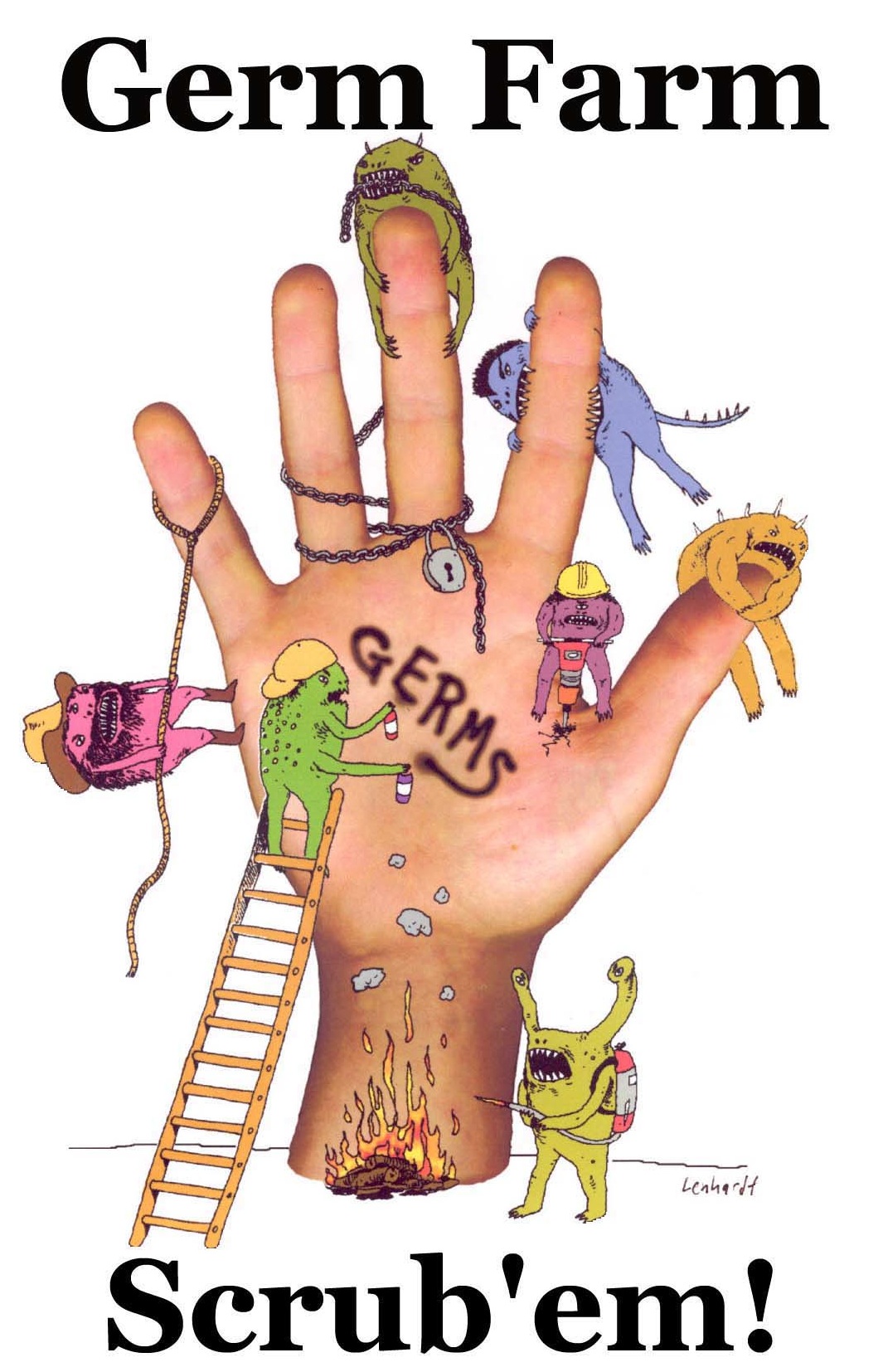
Human Filth

washI’m writing this from lovely Saint Louis. It’s a “far piece” from my home in Puget Sound, but I love it here. My wife and I spent two years just across the Mississippi, at Scott Air Force Base.

I’m here to begin study for my Doctor of Ministry degree, and it’s off to a grand beginning. As I said, I like Saint Louis, and Concordia Seminary has a first class faculty.

The only problem about coming here was precisely that . . . the process of getting here.

I hate flying these days. This trip was particularly trying. I wasn’t troubled by the fact that both my first flight and my connection were more than an hour behind their scheduled departures. (Although they were.) Nor was I troubled by being selected (once again) for a full body scan. (Must be due to using my military ID rather than a driver’s license that could more easily be counterfeited.)

Nor was it because the airline misplaced my luggage and was reluctant to give me an overnight toiletry kit until I insisted that although a hotel would offer me a toothbrush, what I really wanted to ensure I had the first day of class was deodorant. (They got the last laugh by giving me a bar of Lady Speed Stick; let me assure you that the elegant Powder Fresh scent turned more than one head that day in class.)

No, what really disturbed me as I traveled was encountering filthy people in the restrooms I used as I traveled across the continent. By filthy, I mean those disgusting people who choose not to wash their hands. When I observe 50% of the men exiting the bathroom without pausing to use one of the many available sinks, it’s all I can do not to say something. It makes me want to call up their aged parents and ask how they managed to raise such a disgusting son.

I love animals, and just this week I’ve seen dogs, cats, rabbits and deer grooming themselves. They have better manners and hygiene than the pigs I’m talking about here. Yes, they are disgusting enough for me to refer to them as swine . . .  although pigs are only being true to their nature, when homo sapiens are supposed to possess a higher character.

C.S. Lewis was writing about the shortcomings of only doing what is right because it is mandated, but it has a slight bearing on the disgust I’ve described above.

We do not wish either to be, or to live among, people who are clean or honest or kind as a matter of duty: we want to be, and to associate with, people who like being clean and honest and kind. The mere suspicion that what seemed an act of spontaneous friendliness or generosity was really done as a duty subtly poisons it. (English Literature in the Sixteenth Century).

While Lewis is certainly correct that insincerity strips kindness and honesty of their virtuous essence—when it comes to cleanliness, I’m willing to settle for the “forced” variety!

Well, enough about human filth. I just needed to get that out of my system. Parents, please teach your children better than this. And ladies, please don’t dispel my naïve notion that 100% of women clean up after using their facilities.

Please forgive me for this disgusting post, and I promise that my next column will be much more pleasant and edifying.


Beware of Beavers

beaverIt’s rather ironic that after my last post on the peaceful harmony of wildlife I would choose to post on the subject of increasing violence among once peaceful forest mammals.

Beavers—of all the unlikely creatures—have apparently been growing more aggressive.

That’s a far cry from the gentle domestic rodents C.S. Lewis introduced us to in The Lion, the Witch and the Wardrobe. Just consider the politeness of Mr. and Mrs. Beaver when the Pevensie children are meeting Aslan for the first time:

“Go on,” whispered Mr. Beaver.

“No,” whispered Peter, “you first.”

“No, Sons of Adam before animals,” whispered Mr. Beaver back again.

As if we needed another reminder that we’re not in Narnia, reports out of Belarus indicate that beaver attacks are on the rise. In the most serious attack, a sixty year old man was actually slain by one of the web-footed amphibians. Accounts said a major artery in his leg was sliced by its “razor-sharp teeth.”

A frightening picture indeed.

Well, worrisome certainly . . . until we hear the rest of the story.

It turns out the fisherman was assaulting the poor little animal. While we must remain considerate of the grief of the sportsman’s family, it appears he was driving past the beaver—which was presumably minding its own woodland business—when he decided it would be fun to grab it and force it to pose for a picture with him.

Apparently—make note of this lest you inadvertently arouse a beaver’s ire—since they are predominantly nocturnal, beavers become disoriented and irritable when forced to pose for portraits during the daytime.

It’s one thing to enjoy nature’s wildness from a distance. Quite another to interpose ourselves and expect undomesticated beasts to behave with good manners. After all, as we learned when Aslan created Narnia, he didn’t civilize all of the furry beavers:

He was going to and fro among the animals. And every now and then he would go up to two of them (always two at a time) and touch their noses with his. He would touch two beavers among all the beavers, two leopards among all the leopards, one stag and one deer among all the deer, and leave the rest. (The Magician’s Nephew).

Honor Your Parents . . . Or Else!

parentsThere are a variety of reasons for expressing affection and care for one’s parents. Many feel gratitude for the sacrifices their parents made while providing for them. Others treasure memories of never doubting their parents’ love for them. Some enjoyed less idyllic childhoods, but honor their parents out of a sense of duty.

C.S. Lewis described the last type of family in The Four Loves. Rather than giving cause for their children to appreciate them, some parents raise obstacles to their affections.

We hear a great deal about the rudeness of the rising generation. I am an oldster myself and might be expected to take the oldsters’ side, but in fact I have been far more impressed by the bad manners of parents to children than by those of children to parents.

Who has not been the embarrassed guest at family meals where the father or mother treated their grown-up offspring with an incivility which, offered to any other young people, would simply have terminated the acquaintance?

Dogmatic assertions of matters which the children understand and their elders don’t, ruthless interruptions, flat contradictions, ridicule of things the young take seriously—sometimes of their religion—insulting references to their friends, all provide an easy answer to the question “Why are they always out? Why do they like every house better than their home?” Who does not prefer civility to barbarism?

Yes, there are several reasons for honoring our parents, even when they have not “earned” that respect. And now we can add another incentive to do so—because you might be sued in court if you do not honor them! While this statute has not arrived in the Western world, it is a relatively new law in the world’s most populous nation.

The recently revised law requires that adult children visit their parents “often” . . . without defining the specific frequency. Apparently, too many children have become preoccupied with their own concerns. (Shades of Harry Chapin’s “Cats in the Cradle.”)

Traditional Chinese culture is renowned for the value it places on revering elders in general, and parents specifically. In the Analects of the philosopher Confucius, an entire section is devoted to “filial piety.”

58. Confucius said: “When at home, a young man should serve his parents; when away from home, he should be respectful to his elders. He should always be earnest and truthful, express love to all, and follow men of virtue. Then, if he has the time and energy, he should study literature and the arts.” [1.6]

71. Confucius said: “When your father is alive, obey him. When your father has passed on, live as he did. If you do so for [at least] three years after your father’s death, then you are a true son.” [1.11]

72. Tzu Lu asked about the meaning of filial piety. Confucius said: “Nowadays filial piety means being able to support your parents. But we support even our horses and dogs. Without respect, what’s the difference between the two kinds of support?” [2.7]

73. Tzu Hsia asked about filial piety. Confucius said: “What matters is the expression you show on your face. ‘Filial piety’ doesn’t mean merely doing physical tasks for your parents, or merely providing them with food and wine.” [2.8]

74. Confucius said: “In serving your parents, you may disagree with them from time to time and seek to correct them gently. But if they will not go along with you, you must continue to respect and serve them without complaining.” [4.18]

75. Confucius said: “Never ignore your parents’ ages, which are both a source of joy (because they are still living) and a source of anxiety (because their deaths are coming nearer).” [4.21]

The Judeo-Christian tradition, of course, also demands respect for one’s parents. “Honor your father and your mother, that your days may be long in the land that the Lord your God is giving you (Exodus 20:12, ESV). And from the Letter to the Church in Ephesus: “Children, obey your parents in the Lord, for this is right. ‘Honor your father and mother’ (this is the first commandment with a promise), “that it may go well with you and that you may live long in the land.”

It is challenging to discern what it means to honor a parent who does not merit gratitude. Indeed, destructive (abusive) parents may well disqualify themselves from receiving honor, since they tacitly reject the very essence of what it means to be a mother or father.

Aside from these extreme cases, where only a biological relationship exists, we must be honest. None of our parents are perfect. But then the corollary is also true—none of their children are, either. It is in these common, shaded cases where our own character is tested.

C.S. Lewis lost his mother at a young age. His father remained distant, and sent his sons to distant boarding schools. During the First World War, Lewis was severely wounded and shipped from the front lines to a London hospital where he recuperated. While a patient he wrote the following to his father in Ireland.

Wherever I am I know that you will come and see me. You know I have some difficulty in talking of the greatest things; it is the fault of our generation and of the English schools. But at least you will believe that I was never before so eager to cling to every bit of our old home life and to see you.

I know I have often been far from what I should be in my relation to you, and have undervalued an affection and generosity which an experience of “other people’s parents” has shown me in a new light. But, please God, I shall do better in the future. Come and see me, I am homesick, that is the long and the short of it.

Sadly, Lewis’ father did not make the trip to visit his son at the hospital. Such is the nature of real life relationships . . . and such is the reason why honoring our parents sometimes needs to assume the form of a law, or even a Commandment.

May it not be so in your family. If your parents still live, I pray God will grant you great joy in honoring them. And, if you have children, I pray that the Lord will fill them with well-deserved affection for you.

_____

If you have never heard the song “Cats in the Cradle,” you owe it to yourself to ponder its powerful message today. You can view it here.

Our Common Tongue

Bruegel BabelThe ancestors of Europeans and Asians spoke a common language 15,000 years ago, as the ice age was ending.

That “discovery” sounds remarkably familiar to those acquainted with an ancient story about a colossal edifice erected in the ancient past. The Hebrews preserved a record of the achievement in the eleventh chapter of the book of Genesis. At the time of the tower’s construction, all of humanity consisted of “one people [sharing] one language.”

The argument for just such a common language is made in a detailed study published this week in the Proceedings of the National Academy of Sciences. After finishing this column, you may wish to read the original journal article, which is available here.

The mechanics of the study will be of great interest to all logophiles (word lovers).

Using sophisticated statistical analysis, the researchers identified 23 different words that have remained recognizable for fifteen millennia. These “ultraconserved” words include some of the fundamental building blocks of basic communication. They include: not, mother, man (i.e. male), we, this, hand, old, fire, ashes and (rather oddly) worm.

The study identifies “proto-words” that underlie common terms in extremely diverse languages. It is no accident that these universal words are the ones that are the most concrete, frequent and essential for human communication.

The Languages of the World Etymological Database, part of the Tower of Babel project . . . records reconstructed proto-words for language families from around the world. Proto-words are hypotheses as to the form of the word used by the common ancestor or proto-language of a given language family to denote a given meaning.

These words are reconstructed by first identifying cognate words among the languages of a given family and then, because cognate words derive from a common ancestral word, working back in time to reconstruct the probable features of that shared ancestral form.

J.R.R. Tolkien was a brilliant linguist, and his abiding love of languages provided the impulse for the creation (and intricate history) of all of Middle Earth.

C.S. Lewis was one of the twentieth centuries greatest writers. He was also a scholar—one with an outstanding grasp of literature. Lewis acknowledged that words describing immediate, touchable concerns can be distinct and firm, just like the realities they connote. However, when language moves farther from such elements, it invariably grows more abstract.

All language, except about objects of sense, is metaphorical through and through. To call God a “Force” (that is, something like a wind or a dynamo) is as metaphorical as to call Him a Father or a King. On such matters we can make our language more polysyllabic and duller: we cannot make it more literal. The difficulty is not peculiar to theologians. Scientists, poets, psychoanalysts, and metaphysicians are all in the same boat. (God in the Dock, “Horrid Red Things”).

The linguistic study described here notes that frequency of usage exerts a stabilizing influence on words. Whereas less common (and more abstract) vocabulary “evolves” more rapidly.

A rule-of-thumb emerges that words used more than around once per 1,000 in everyday speech evolve slowly enough to have a high chance of being judged cognate among more than two of the language families; this might equate to around 16 uses per day per speaker of these high-frequency words.

Throughout history various languages have vied with one another for precedence. In the Mediterranean world Greek, for a season, and then Latin for another, were the “universal” tongues. The phrase lingua franca (literally, the “Frankish language”) has now come to refer to any language that is extensively used as a common bridge between speakers of different tongues.

Such languages, of course, enhance communication. That is not to suggest, however, that the development of these “dominant” languages is without critics. It seems, for example, that France was delighted in their language serving for many years as a standard for international diplomacy. Today however, France continues to staunchly resist the advances of English. (In 1994 the initial version of the Toubon Law overreached in requiring the extensive use of French in nearly all contexts. You can read about some implications for international businesses here.)

Even C.S. Lewis regretted some of the negative influences of American English on the mother tongue. In his book Studies in Words, he mourns:

I have an idea of what is good and bad language. . . . Language is an instrument for communication. The language which can with the greatest ease make the finest and most numerous distinctions of meaning is the best. It is better to have like and love than to have aimer for both.

It was better to have the older English distinction between “I haven’t got indigestion” (I am not suffering from it at the moment) and “I don’t have indigestion” (I am not a dyspeptic) than to level both, as America has now taught most Englishmen to do, under “I don’t have.”

It remains to be seen whether any single language will come to truly dominate the world scene. Being able to communicate freely across all political borders sounds like a noble goal. It is ironic that should that day ever arrive it will mark a return to how things once began.

_____

The painting reproduced above was painted circa 1563 by the Flemish artist Pieter Bruegel the Elder.

Irradiated Once Again

alfredhitchcock_bw_bI had to make a whirlwind trip to San Diego this weekend. Yes, I know . . . San Diego in January—I don’t expect any sympathy.

I don’t expect any empathy related to my destination, but I do know others who share my concern about the “full-body scanners” used at many terminals, such as my own SeaTac Airport.

Naturally, as an older retired military officer, I’m always a prime candidate for being directed to pass through the scanner. And that’s the part that I don’t mind. I want the Transportation Security Administration to be thorough. I enjoy the prospect of landing safely at the end of an uneventful flight. And, because of my desire to be protected from terrorists, I don’t mind having to submit to an additional search.

What I am concerned about is my health. I’m not greatly comforted by claims that these “extremely high frequency radio waves” emitted by millimeter wave scanners are not harmful. And the sister technology, “backscatter x-ray” doesn’t sound any healthier. I’m no scientist, but I recall having heard that many types of radiation are cumulative, and when you add traveling to medical and dental x-rays, cell phones, law enforcement radar guns, and the radon that permeated the military housing my wife and I shared for two years in Illinois . . . well, I am slightly concerned.

Health matters aside, the concern which elicits most criticism relates to the scanners as a violation of “privacy.” Truth is, the images they produce leave little to the imagination. However, there’s no possible way for that “faceless” person to actually be associated with you. Regulations, in fact, do not allow for the images to be preserved at all. So, while inspectors in a shielded room may make some passing ribald remark about the “naked” image on their screen, they have no idea what the person’s face even looks like. Thus, I’m not bothered at all by the so-called privacy concern.

Not that privacy is unimportant. It is crucial to life in a free society. We experience precious little privacy in our lives. C.S. Lewis talked about how our lives are enmeshed in a world of crowds and clamor. The following comes from The Four Loves.

Our imitation of God in this life—that is, our willed imitation as distinct from any of the likenesses which He has impressed upon our natures or states—must be an imitation of God incarnate: our model is the Jesus, not only of Calvary, but of the workshop, the roads, the crowds, the clamorous demands and surly oppositions, the lack of all peace and privacy, the interruptions. For this, so strangely unlike anything we can attribute to the Divine life in itself, is apparently not only like, but is, the Divine life operating under human conditions.

The Irony about Privacy in the Modern Age

This fact makes our willingness to reveal ourselves so openly in social media rather ironic. We need privacy—and the less we experience, the more valuable it becomes. Yet, we also desire to be known by others—for in some twisted way this has become synonymous in the modern world with “important.” Yes, the more hits my Facebook page has, the more likes my post receives, the more followers my blog has, the more important I am. And, the more important I am, the less lonely and forgotten I feel.

Loneliness feels terrible. Human beings were created to be in relationships. First with our Father in heaven. And then with our family, friends and neighbors. There is nothing quite so comforting as having someone who knows our imperfections and shortcomings and still loves us. God loves us that way. And, if we are fortunate, we find others willing to overlook our failings and still love us. We can’t find that kind of deep affection in shallow channels like the internet. When we cast wide the net in social media, so to speak, if we are fortunate we’ll catch a rare treasure in the form of a genuine relationship that enriches our life.

Back to the Status of the Invasive Scanners

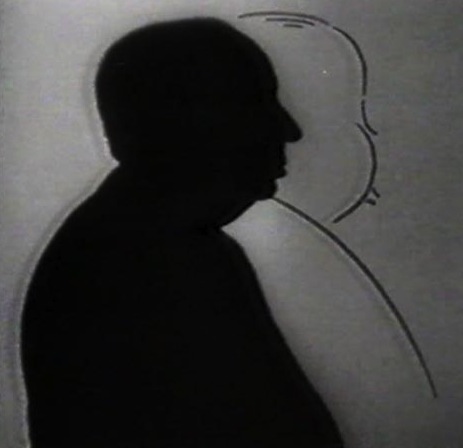
Apparently, the complaints of those who feel violated by scanners producing a naked image of the travelers passing through them, have been heard. Apparently the TSA intends to replace them with “less invasive” models. In fact, the generic images the new machines produce have been likened to stick figures or cartoons. Presumably they’ll still be able to detect the foreign objects secreted in or on a criminal’s body.

In the meantime, we don’t have to worry about having our naked likeness published on the internet. Instead we’ll all look like cartoons or, perhaps, famous personages. That’s what inspired me to use the Alfred Hitchcock image above. I can visualize my next visit to the airport and almost overhear the hidden inspectors saying, “nothing to ogle here, just another Hitchcock passing through the scanner.”

Vivacious Vocabularies

One reason I love reading C.S. Lewis arises from his adroit use of the English language. His vocabulary is immense. It is pleasant to run into words one seldom encounters on the drab byways of modern journalism and tangled thoroughfares of contemporary “social media.”

Consider the following example. I was exploring The Allegory of Love when I read this: “There is nothing in literature which does not, in some degree, percolate into life.”

What a delightful verb! It evokes for me recollections of my youth when my parents would refer to our coffee pot as the percolator. Simultaneously, it reminds me of more recent—less happy—usages: “I’m sorry, but inadequate soil percolation means you’ll have to install a far more expensive septic system than normally required.”

It’s discouraging when you consider the sad state of modern vocabularies. I read somewhere that people typically only use about 10% of the words they know. So a common vocabulary of 5,000 spoken words would mean they know (i.e. can recognize written or audible forms of) about 50,000 words. Shakespeare used 29,000 words in his plays and sonnets, suggesting an expansive vocabulary. Likewise, brilliant authors like C.S. Lewis would boast a praiseworthy mental dictionary.

I am sometimes curious about my own vocabulary. I consciously attempt—in conversation as well as writing—to utilize at least 15% of the words I know. After all, the English language is so rich, it’s criminal to limit ourselves to pedestrian words. It’s like having all the ingredients for a delicious feast available to us and settling for slapping together a peanut butter sandwich.

I also love the precision that comes from using the exact word that suits the occasion. For example, in a thriller it matters greatly how the hero’s nemesis inflicts injury. A skilled writer would never say “Professor Moriarty cut Holmes.” Instead, we would learn that he slashed . . . stabbed . . . sliced . . . scarred . . . carved . . . or perhaps he merely nicked the detective. Likewise, we would probably know the type of weapon he was using. It would not be a mere “knife.” It might be a saber . . . a dagger . . . a pocketknife . . . scalpel . . . carving knife . . . or perhaps even a bayonet.

Lewis addressed this richness in vocabulary in an essay on “Transposition” which appears in The Weight of Glory.

If the richer system is to be represented in the poorer at all, this can only be by giving each element in the poorer system more than one meaning. The transposition of the richer into the poorer must, so to speak, be algebraical, not arithmetical. If you are to translate from a language which has a large vocabulary into a language that has a small vocabulary, then you must be allowed to use several words in more than one sense. If you are to write a language with twenty-two vowel sounds in an alphabet with only five vowel characters than you must be allowed to give each of those five characters more than one value. If you are making a piano version of a piece originally scored for an orchestra, then the same piano notes which represent flutes in one passage must also represent violins in another.

It is wonderful to be fortunate enough to speak a language with a diverse vocabulary. English is such a tongue. Now, if we could just simplify its complexities and purge its irregularities, we would enjoy the best of all linguistic worlds.

Discovering Your Elvish Name

Most readers of Mere Inkling are either fans of C.S. Lewis and his fellow Inklings, or writers interested in similar topics such as adventure, virtue, imagination, and spirituality. In light of that, and the fact that the finale of the trilogy won Oscar for Best Film, I assume the vast majority have seen “The Lord of the Rings.”

When you watched the films, with whom did you most identify? Ladies had options from warriors, to counselors, to royalty. Likewise for the men. Then there were the different races of Middle Earth . . . did you cast yourself as human, elf or dwarf? Or perhaps, as a modest, earthy hobbit? (I hope there weren’t too many who identified with the orcs, and if you did, I’d suggest an appointment with your local therapist.)

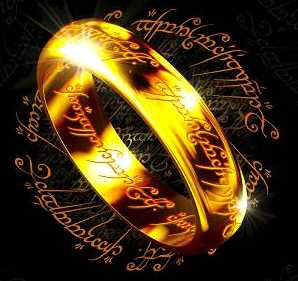
If the notion of living a long, peaceful life, studying the arts and enjoying God’s creation inspires you, then it may be you possess a kinship with the Elvish soul. And if you do (or even if you’re merely curious) there is a wonderful website where you can learn not only how to speak your name in the Elf tongue, but also to write it in the Elf script.

J.R.R. Tolkien, C.S. Lewis’ treasured friend, was at heart a philologist. Few people have ever lived who shared the intensity of his love for language. Not everyone knows though, that the matchless realm of Middle Earth with its timeless sagas grew neither from a vision for the heroic story nor out of the visualization of any of its vibrant inhabitants. No, the seeds of the most renowned fantasy realm ever envisioned, were planted and watered by Tolkien’s love of language.

It was primarily linguistic in inspiration and was begun in order to provide the necessary background of ‘history’ for Elvish tongues. (J.R.R. Tolkien, Forward to the Second Edition of The Lord of the Rings).

Tolkien’s passion for the languages of Middle Earth is legend. Today, other linguists continue to study, document and teach the sophisticated system. Tolkien’s creation was so complex that it resulted in the creation (and evolution) of several languages—distinguished by both history and geography. In the same way, Tolkien was not content to settle for a single version of text with which to pen these musical dialects. He created no fewer than three styles, with Tengwar being most familiar. (You can download these and related fonts here.)

So, how exactly do you discover your Elvish name?

There have long been “random generators” for Middle Earth-sounding names. The generator at one site renders my Elvish name as Eöl Séregon, which does sound fairly distinguished. (Who knows whether or not it means anything?) These programs may satisfy the curiosity of the passing surfer seeking random oddities. However, for those who respect the love Tolkien invested in his linguistic progeny, this will never suffice.

Fortunately, there is an amazing website, overseen by a bona fide lover of languages. Moreover, his site is devoted to maintaining the integrity of Tolkien’s Elvish tongues. (And many of us who are writers are similarly enamored with language itself, making this a worthwhile domain to visit.)

The host of Quenya101 embraced the tongue so completely that in college he even took lecture notes in the language! Today he teaches Quenya through his website and other means. Although there’s a long waiting list (that can be circumvented, I believe, by donating to the site) he will actually translate names into Quenya. Note that I said “translate.” This is no mere transposing of letters.

He does not waste his time with transliterations. He actually applies the etymology of your given name to rendering the very same meaning in the Elvish language. For good measure, he provides a Tengwar rendition of your Elvish name. (It may be that he has already translated your name and has it posted at the site.)

Here’s how it works, as illustrated by my own name. Fortunately, my father’s name has also been translated, so I am seeking the Quenya for “Robert (son of) Charles.”

Robert

From: Germanic name Hrodebert.

Meaning: Bright fame, derived from the Germanic elements

     hrod ”fame” and beraht “bright”.

Quenya: Calialcaro

     (calima+alcar+[o] = bright+splendour, glory+[masculine names suffix])

Charles

From: Germanic name Karl, which was derived from the same Germanic word. However, an alternative theory states that it is derived from the common Germanic element hari

Meaning: Karl means “man” & hari means “army, warrior”

Quenya: Nér (nér = man) or Ohtatyaro (ohtatyaro = warrior)

So, henceforth you may address me as Calialcaro Ohtatyaro!

It is encouraging to see people keeping alive the vision and wonder of Middle Earth. The same is true for Narnia, of course, though you cannot really compare the purpose. These magical realms were both created by geniuses. It is a divine coincidence that these men, with major differences in their temperaments and imaginations, were lifelong friends.

Discovering your unique Elvish name can establish a dramatic connection with an imaginary, but at the same time gloriously real, realm.

Your Writing Style

Each of us writes in a unique manner.

You can study writing patterns in various ways, by considering vocabulary, changes in sentence lengths, repeated phrases, and various other measurable elements.

Then there are more subjective aspects of our writing, but these too are recognizable. They would include tone and more abstract things like pacing.

When you add them all together, you arrive at an amorphous quality called the writer’s “voice.” And, as I said above, each of our “voices” are different.

It may be that we dabble in a variety of forms and genres. For example, in addition to these casual blog posts, I also write about theology and military ministry from a much more “professional” perspective. And, shockingly (to my own writing identity) I’ve recently received encouragement related to poetry with which I’ve been experimenting.

Even when we write in various literary forms, and they clearly differ from one another in their voice, the truth is that for each of these documents we develop a personal, inimitable voice.

Now, after emphasizing our literary uniqueness, I want to switch perspectives and consider that our various styles and voice resemble those of others. Occasionally, when reading someone’s work it strikes you as familiar. You may even recall the author that the work reminds you of. (I’m not referring to plagiarism, of course, although the internet has apparently made that particular plague even more common now than in the past.)

It would be vanity to claim that our own writing voice resembles that of no one else. Yes, some voices are so peculiar that they are clearly “rarities,” but others have shared even those odd personalities in the past. I suspect that’s even true for the senseless ramblings with which some self-styled “artists” assail the public. (Even insanities can resemble one another.)

In any case, if you ponder this subject it’s natural to wonder: who do I write like?

Today, through the amazing processing abilities of the computer, you may be able to get an answer to that very question. It’s not a definitive answer, because as I said above, our writing voice possesses both material (words and syntax) and spiritual (ephemeral and aesthetic) dimensions. And, while a computer may be without peer in comparing the former, I believe it to be quite deficient in discerning the latter.

Nevertheless, a rudimentary program is available online to compare your writing with that of a number of writers of varying reputation. The program has a number of limitations, but I think there may be something to it. It requires an extensive section of your writing (several paragraphs, at least). I assume more would be better, in terms of promoting accuracy.

As I just mentioned, it includes a limited number of authors currently entered into the database, and I suspect that the gifted C.S. Lewis is not among them. (I say this not because I expected to be aligned with him, but because of some of the included authors I am aware of. In addition, the program’s creator is actually Russian, so I would be curious to learn how the represented English authors were selected.)

It would limit the program’s value, for example, if I only input data on three writers and you were matched with the one you resembled most closely. Would you prefer, for example, to be told you write like Edward Bulwer-Lytton, Georgette Heyer, or Fabius Planciades Fulgentius?

Even with a significant number of writers included, the program’s accuracy will be affected by the quantity (and specific choice) of what is included to represent each. For example, the programmer properly included Stephen King. How valuable would that be, however, if he had only used King’s poetry and excluded his prose works? (Yes, the horror master has also penned poetry—now, that’s a scary thought!)

Well, despite the limitations of the “I Write Like” program, it is fun to try out. And it sounds impressive, in that it relies upon a naive Bayesian classifier. (Well, the “naive” part doesn’t sound especially remarkable, but the formula looks pretty imposing to someone who never took calculus.

You can use take the “test” at this site.

Make sure you include lengthy selections from your work. Also, testing the program with different genres (assuming you write in different styles) will actually give you new matches. (That is, of course, as it should be.)

If you do decide to experiment with it, a comment below about your results would be interesting for others. And now, for the moment that you have been awaiting . . . with whose writing did the program match mine?

I tried a number of times (no—not fishing for results I wanted, but using a variety of types of my writing) and here were the repeated results:

For my blog posts: H.P. Lovecraft or J.R.R. Tolkien

For my more formal essays: J.R.R. Tolkien or Jonathan Swift

(It’s Swift’s picture, you’ll note, that begins this post.) Actually, the majority of the results linked to Swift, whose work I don’t recall ever reading in full, not even Gulliver’s Travels. However, our shared emphasis on wit, advocacy and satire account for what I deem a genuinely accurate assessment. And it does not hurt that Swift was Anglo-Irish, like my favorite author!

So, until Dmitry Chestnykh adds C.S. Lewis to the writers included in the “classifier,” I’m quite content to rest on my matches. Because even if I don’t share Lovecraft’s worldview, I can still respect his literary skill. And being identified with the other gentlemen, is a grand compliment.

[Special thanks to Julie Catherine who introduced me to the site via her post on the subject.]

Mastering the Anacoluthon

Allow me to once again display my grammatical ignorance. I was reading an online book review and the author used lots of multisyllabic words. (That’s something I actually enjoy.) But then he went and threw in one of those words I had to rush to dictionary.com to define. (That’s another thing I love—learning new words.)

Naturally, I could partially decipher the definition from the context. However, whenever I have a dictionary within reach, that shortcut doesn’t satisfy me.

In this case, the word was anacolutha, the plural form of anacoluthon. It is defined as “a construction involving a break in grammatical sequence, as ‘It makes me so—I just get angry.’” Well, we can all agree that is not a good sentence; it’s a fine example of what a writer should avoid.

Not all grammar rules make sense. Take for example the notion that one cannot end a sentence with a preposition. Some of us literally had our knuckles rapped for scribbling such grammatical “obscenities.” While it’s true that you can avoid using prepositions in this manner, it’s not the great sin we were taught it was. In his Letters to an American Lady, C.S. Lewis writes:

[Regarding] a sentence ending with a preposition. The silly “rule” against it was invented by Dryden. I think he disliked it only because you can’t do it in either French or Latin which he thought more “polite” languages than English.

Well, isn’t that an interesting historical note to become aware of?

But, back to anacolutha . . . let’s see if it’s difficult for a trained pen to sever the ties of logic, and compose this sort of literary construction.

Reepicheep was a great swordsman who, “a tail is the honor and glory of a Mouse” was his creed.

Frodo pondered his options while—the Nazgûl loathed bathing more than once each fortnight.

Wow, that’s a lot harder than it looks. If you can think of better examples (not difficult, I’m sure), feel free to share them in a comment! But only write them here, and don’t allow any anacolutha to slip into your real writing!