Autistic Considerations

Bill & Barbara ChristopherMost of us have a friend, loved one, or acquaintance affected by autism. I’m not sure if this would have been accurate a generation ago.

And I’m not merely referring to the lack of proper diagnosis of the problem. There are numerous reports that its frequency is increasing.

Autism is not necessarily debilitating. In minor cases it’s barely noticeable. Like many problems, its severity is manifested across a wide spectrum.

I have autism on my mind now, as the new school year approaches and my wife sets up her special education classroom. She’s excited about the return of her precious kids. It’s wonderful how so many of them make amazing process both in academics and social abilities.

The return of school, however, is not the primary reason for my current thoughts. I’m writing an article I hope to submit to an Autism magazine, inspired by a recent interview I conducted.

I was privileged to speak at length with the father of a severely autistic son who will be known to many readers of Mere Inkling. William Christopher, who played Father Mulcahy on M*A*S*H, has been a prominent spokesman for autism concerns for many years. (A link to the article appears below.)

Along with his wife Barbara, Christopher wrote a book entitled Mixed Blessings. It recounted their early struggles providing Ned with everything he needed to make his life as full as it could possibly be. Due to their diligence and deep love for their son, Ned continues to enjoy his active life today.

They embody the noble type of earnest love C.S. Lewis describes in The Four Loves. There he says that true love is gift-love, not seeking increased dependence on itself, but liberating the beloved to become as independent as they possibly can.

The maternal instinct . . . is a Gift-love, but one that needs to give; therefore needs to be needed. But the proper aim of giving is to put the recipient in a state where he no longer needs our gift. We feed children in order that they may soon be able to feed themselves; we teach them in order that they may soon not need our teaching.

Thus a heavy task is laid upon this Gift-love. It must work towards its own abdication. We must aim at making ourselves superfluous. The hour when we can say “They need me no longer” should be our reward. But the instinct, simply in its own nature, has no power to fulfil this law.

The instinct desires the good of its object, but not simply; only the good it can itself give. A much higher love—a love which desires the good of the object as such, from whatever source that good comes—must step in and help or tame the instinct before it can make the abdication.

This despite the counsel of one early specialist who advised them that since Ned was adopted they should just take him and trade him in for a child who wasn’t defective. Yes, someone really said that to them.

If I end up publishing the article, I’ll mention it again for those who might be interested in reading it. In the meantime, the extensive interview appears in the current issue of a journal I edit for military chaplains, called Curtana: Sword of Mercy.

When we look at a list of autistic traits, it’s normal to recognize some of them in ourselves. That shouldn’t surprise us, since most of these traits are completely “normal” in various degrees.

It is a commonplace practice to perform posthumous diagnoses of well known figures, based upon detailed descriptions of their behaviors. In that vein, I found online lists that included the following personages as possibly autistic: Thomas Jefferson, Albert Einstein, James Joyce, Stanley Kubrick, Lewis Carroll, and Hans Christian Andersen.

Oh, and there’s another name I discovered in one article. The writer suggested that C.S. Lewis’ social preferences suggest that he too suffered the mild version of autism, typically called “Asperger’s Syndrome.”

I don’t intend to discuss that now, but I wanted to share a fascinating concept I encountered while researching for this column. In Autism, Art and Children: The Stories We Draw, I read the following about imaginary worlds like Narnia and Middle Earth:

It is this element of world building that forms a bridge between the impersonal character of research and clinical observations and the individual young artists with autism in whom our interest especially lies.

Sacks (1995) points out the importance of fantasy worlds to some individuals with autism . . . this predilection for alternate worlds is frequently encountered in many high-functioning people with autism . . . such high-functioning individuals with autism “describe a great fondness for, almost an addiction to, alternative worlds, imaginary worlds such as those of C.S. Lewis and Tolkien, or worlds they imagine themselves.”

Illustrating such world-building activities by an entire family (two parents and their son), all of whom have autism, Sacks remarks, “They have spent years constructing an imaginary world with its own landscapes and geography (endlessly mapped and drawn), its own languages, currency, laws, and customs—a world in which fantasy and rigidity play equal parts.”

This creative activity is of particular interest, for many of the children we have met have individual fantasies in alternative worlds that play major roles in their lives and activities.

I find this analysis captivating. I am utterly fascinated by the construction of imaginary settings. That’s one reason I love the alternate history genre, as it combines the familiar with elements that have transformed them into something inherently different.

I must confess I’ve occupied many an idle hour imaging new worlds. I’ve even invested a fair amount of time in world-building myself—for an alternative history for which I still compile notes and ideas, despite the fact it’s unlikely to ever be written. I don’t attribute this to autism, but it serves as another example of just how much all of us have in common.

The fact is none of us is perfectly healthy—physically, emotionally, psychologically, or spiritually. We are who we are. We can strive to improve many aspects of our lives (and the wellbeing of others), but attaining perfection is impossible in this life.

In the meantime, we can be grateful for wonderful people like Barbara and Bill Christopher, who have courageously shared their own journey to aid us in ours. Their willingness to forsake their rightful shield of privacy and step out into the glare of the public—for our benefit—reveals both their love for their children and their generosity towards strangers.

_____

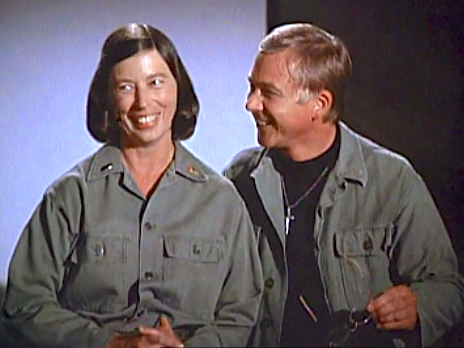
The wonderful photograph at the top of the column features Bill and Barbara Christopher. Barbara had a guest role as a nurse in “Dear Mildred,” during which the two of them sang a duet.

The interview with Bill Christopher can be downloaded for free in the current issue of Curtana: Sword of Mercy, which is available here.

Discipline or Abuse?

beltDiscipline is not a bad thing. In fact, it’s a necessary thing, if you understand it in terms of correction or protection (its true purposes).

Sadly, the very word has been contaminated by its association with something diametrically opposed to discipline—abuse. It is extremely common for abusers to try to hide their crimes under the once untainted label of discipline.

Here is biblical wisdom: “My son, do not despise the Lord’s discipline or be weary of his reproof, for the Lord reproves him whom he loves, as a father the son in whom he delights” (Proverbs 3:11-12).

And, a testimony from the Psalmist that discipline’s role is to protect. “Blessed is the man whom you discipline, O Lord, and whom you teach out of your law, to give him rest from days of trouble, until a pit is dug for the wicked” (Psalm 94:12-13).

C.S. Lewis elaborates on this truth in “A Preface to ‘Paradise Lost.’”

Discipline, while the world is yet unfallen, exists for the sake of what seems its very opposite—for freedom, almost for extravagance. The pattern deep hidden in the dance, hidden so deep that shallow spectators cannot see it, alone gives beauty to the wild, free gestures that fill it, just as the decasyllabic norm gives beauty to all the licences and variations of the poet’s verse. The happy soul is, like a planet, a wandering star; yet in that very wandering (as astronomy teaches) invariable; she is eccentric beyond all predicting, yet equable in her eccentricity.

It is precisely because of this, the genuinely noble and affectionate character of genuine discipline that I was so deeply repulsed (and moved) by the following story. It comes from the fine journal, First Things.

A friend who corresponds with prisoners on death row sends one prisoner’s poem describing the horrific abuse he endured as a child. He tells her that most of the men on death row with him suffered that kind of abuse. The poem, titled “Spare the Rod” and addressed to his father, begins with the story of his sister’s beatings, and continues:

Then came a son to intercede,

a five-year-old you caused to bleed;

he would not flee your spit and roar,

you smashed his face into the floor.

And those were just the better years.

It ends:

What shall you find at heaven’s gate?

What shall be a father’s fate

who reveled in his children’s screams

who haunts them still in all their dreams?

You took your children meek and mild,

and beat them feral, stomped them wild.

You’ve now moved on to spar with God,

Who spares the child and breaks the rod.

Reading to Children

grandparent readingAs a father whose military service required extended separations from my children, I wish technology had been about three decades more advanced than it was while I was in uniform.

As a grandfather who has most of his grandkids living hours away, I’m grateful to be alive during an era when we can still nurture close relationships despite geographic separation.

There are many wonderful ways to keep in touch across the miles. And, a new program adds a wonderful touch to the time proven joy of reading to our children. It’s called Kindoma, and more about it momentarily.

It’s a little known secret that there are few—very few—activities children love more than reading with a loved one. It’s not just about the book, it’s also about relationships and bonding.

C.S. Lewis had an interesting relationship with children. As a bachelor academic, he was not around them all that much. And when he wrote The Abolition of Man in 1943—before becoming a step-father—Lewis confessed “I myself do not enjoy the society of small children . . . I recognize this as a defect in myself—just as a man may have to recognize that he is tone deaf or colour blind.”

Eight years earlier, at the modest age of thirty-seven, he wrote to a good friend, “I theoretically hold that one ought to like children, but am shy with them in practice.” Lewis isn’t alone in possessing this unfortunate trait, which from my observation [political incorrectness alert] is more common among men than women. Of course, in our increasingly equalitarian culture it does seem that character flaw is becoming a bit more gender-balanced.

Then there is the fact that many of us who dearly love our young progeny, enjoy the children of our friends, and hold genuine compassion for young ones suffering in any variety of miserable conditions . . . do not particularly seek out the company of children. From my personal perspective, I feel like I “expend” all of my (admittedly finite) kid-patience with my own kin and the offspring of my friends. I don’t have a surplus left after spending a significant amount of time with the (precious) little ones.

And, like Lewis, “I recognize this as a defect in myself.”

At the same time as I admire teachers who can pour themselves into little ones, and I am absolutely dumbfounded by people who prefer working with young teenagers, I recognize that the world works well when some of us are better equipped to work with adults also . . . so the entire spectrum of learners is served.

Recognizing our own prejudices is a prerequisite to suppressing or evicting them. Lewis, of course, was extremely concerned about children and their upbringing, particularly their education.

Returning to the subject of how to nurture relationships with children through the intercontinental reading of books, technology has made the miraculous possible.

Kindoma is novel in the sense that it allows you to read the book together (either the child or the adult can be the actual “reader”) while you actually turn the pages of the etext together! So you get the genuine experience of reading together.

The creator of the program holds a PhD in Computer Science. So he’s not merely an idea guy (like me) who comes up with a slew of amazing concepts but doesn’t have the scientific skill to make them reality.

The program is currently available for ipod and ipad. I’m sure it’s just a matter of time before it is ported to other operating systems. Since I still use “regular” desk and lap-top computers, I haven’t experimented with it myself. The app itself is free. I’m unsure about their revenue stream, whether it will come from ads, or purchase of access to a specific library, but it’s definitely worth checking out.

The brief link below offers an introduction to the tool. I hope that you will use it if applicable to your situation, and pass it on to others you know who might benefit from it. (In the meantime, I’m thinking about approaching my wife about us making that ipad purchase I’ve been pondering.)

A Narnian Madlib

EVO-WWI-064-01060I got to savor one of the joys of being a grandpa today, watching over two of my five lovely granddaughters while their parents traveled to an important business meeting.

Naturally, we had fun playing, drawing, tossing a ball for their German shepherd, building things, cleaning up their room (not quite so “fun”) and—since it’s summer—playing with water balloons (extremely fun, even though I got drenched).

We also did a madlib, one of those “phrasal templates” popularized by Roger Price and Leonard Stern in the 1950s. These simple word games are entertaining and educational. And, even for novice writers, they’re not too challenging to compose. After all, the stories themselves are by nature brief and rather superficial.

Today I even set my granddaughters in front of an episode of The Powerpuff Girls so I could write a short scene from Narnia for them. You’ll find it below.

I had forgotten how much fun we had with madlibs when our own children were young. We made many up on the spur of the moment, and laughed at the silly combinations of word that resulted. The process, as most readers know, involves randomly selecting a series of words for inclusion in the narrative. With a lack of imagination, the readings can fall a bit flat, but typically you end up with some (accidentally) witty wordplay.

One of the benefits of madlibs is how they can be used more than once. While the outline of the story remains the same, of course, the choices made by readers generate amazing diversity.

Most madlibs are admittedly rather juvenile. That’s because they are written for juveniles. They rely on providing specific types of words, such as nouns or adjectives. Theoretically, you could devise a madlib as complex or sophisticated as you desire. For example, an entertaining tale certainly could doubtless be woven by including random selections for the following word choices.

____________ prime number

____________ copular verb

____________ Napoleonic regimental commander

____________ homograph

____________ life stage of a butterfly (other than larva or pupa)

____________ ditransitive verb

____________ type of psychosis

____________ infielder for 1874 Chicago White Stockings

____________ gerund

____________ rare earth mineral

____________ monotransitive verb

____________ early kabbalist (other than Bahye ben Asher ibn Halawa)

____________ type of arachnid with blue coloration

____________ free predictive

____________ reciprocal pronoun

____________ chemical process (other than esterification)

Unfortunately, I don’t have time to write the story accompanying this worthy list, but if you should write it, I’d love to read it.

There are a number of fan sites online that generate madlibs. I won’t recommend any since the ones I’ve glanced at today are merely advertising collections for sale. (I also found the examples I experimented with to be rather feeble . . . even weaker than the story I wrote today in a single hour.)

You will search in vain if you’re seeking a C.S. Lewis reference to madlibs. However, he was a master wordsmith, who recognized well their power, and greatly loved humor. The following passage, from “Prudery and Philology,”
refers to the versatility and weight of language, and includes a valuable caution.

We are sometimes told that everything in the world can come into literature. This is perhaps true in some sense. But it is a dangerous truth unless we balance it with the statement that nothing can go into literature except words, or (if you prefer) that nothing can go in except by becoming words. And words, like every other medium, have their own
proper powers and limitations.

The brief tale below is not pretentious, so you need not fear it exceeding its limitation. It simply is what it is . . . one grandfather’s passing literary adventure with his grandchildren.

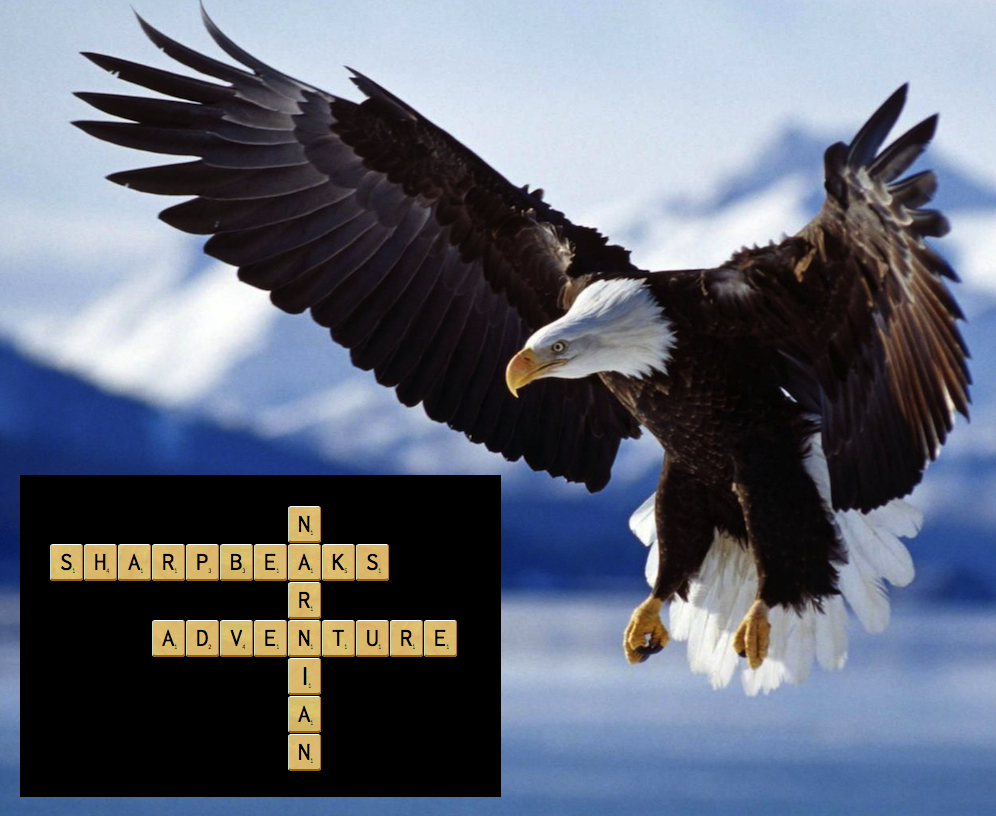
It you like “Sharpbeak’s Narnian Adventure,” you’re welcome to download a PDF copy of the story I’ve appended to the end of the column. It’s 100% free, and I’m not trying to sell a collection of madlibs after hooking you. Besides, if I was trying to make a profit off of anything including the word “Narnian,” I have no doubt lawyers would be descending upon me in droves.

The Words You Will Need

____________ adjective

____________ animal

____________ adjective

____________ adjective

____________ something  you drink

____________ color

____________ adverb

____________ adjective

____________ adjective

____________ meal time

____________ adjective

____________ adjective

____________ adjective

____________ adjective

____________ plural noun

____________ plural noun

____________ adjective

____________ adjective

____________ adjective

____________ animal

____________ adjective

____________ food

____________ food

____________ food

____________ place

____________ adverb

____________ adjective

____________ place

____________ number

____________ plural relative

____________ verb

____________ adjective

____________ plural monster

The Story Into Which You Insert Your Words

Once upon a time, when Narnia was still young, a/an ____________, young eagle named Sharpbeak decided to set out for an adventure. A wise ____________ climbed his ____________ tree to talk to him before he left. He crawled into the eagle’s ____________ nest and said, “That was a long climb. I’m thirsty. May I have a cup of ____________?”

As the two friends watched the sun set over the ____________ mountains, the eagle said ____________, “I wonder what’s on the other side of those mountains?”

His ____________ companion warned him, “Beware of the ____________ giants in the north. They like nothing better than to eat us Talking Animals for ____________ or even for a snack. Sharpbeak promised he would avoid the giants.

Then his friend said, “Don’t forget that there are also ____________ dragons living on some of the mountaintops. They don’t appreciate ____________ visitors. If you surprise them, they may blast you with a ____________ burst of their ___________ flames. And definitely don’t disturb their treasure of ____________ and ____________.”

The eagle said, “I’ll be sure to watch out for dragons when I go on my ____________ adventure.”

“Oh,” added Sharpbeak’s friend, “I wouldn’t advise you to fly over the ____________ ocean either. What if you flew as far as you could, and you didn’t find a/an ____________ island where you could land?” The eagle looked worried. His wise friend added, “If you ever find yourself in dangerous circumstances, remember that you can call on Aslan to protect you. I heard that once he once allowed a timid ____________ to walk safely across a stormy lake without sinking.”

“My,” said Sharpbeak, “that would be a terrible thing.” He looked up at the ____________ stars, twinkling in the sky. The two friends had spoken long into the night. “I didn’t realize it was so late,” he said. All I have to offer you to eat is ____________ and ____________.”

“That would be nice,” said his friend. He reached into his pocket and said, “and we could have this ____________ for dessert. But, after we eat I had better scurry home to my ____________, since I can’t imagine sleeping in a tree. I mean, if a storm comes up, you have the wind blowing ____________ and ___________ rain pouring down in torrents. I’m much happier living in a ____________ with my ____________ ____________. While you go on your journey, I will stay home and ____________.”

The two friends gave each other a big hug. The eagle’s feathers tickled his friend, who said, “May Aslan watch over you during your travels.”

The next morning the ____________ eagle soared off to begin his adventure. Sharpbeak would be sure to avoid all of the giants, dragons and ____________ along the way. But that’s a story for another day.

Epilogue

Those of you curious about how my granddaughters’ story turned out, should read on.

Once upon a time, when Narnia was still young, a big, young eagle decided to go off for an adventure. A wise deer climbed his pink tree to talk to him before he left. He crawled into the eagle’s fuzzy nest and said, “That was a long climb. I’m thirsty. May I have a cup of juice?

As the two friends watched the sun set over the blue mountains, the eagle said roughly, “I wonder what’s on the other side of those mountains?”

His wide companion warned him, “Beware of the cold giants in the north. They like nothing better than to eat us Talking Animals for breakfast or even for a snack.” Sharpbeak promised he would avoid the giants.

Then his friend said, “Don’t forget that there are also hairy dragons living on some of the mountaintops. They don’t appreciate old visitors. If you surprise them, they may blast you with a soft burst of their speedy flames. And definitely don’t disturb their treasure of trash cans and flowers.”

The eagle said, “I’ll be sure to watch out for dragons when I go on my fun adventure.”

“Oh,” added his friend, “and I wouldn’t advise you to fly out over the heavy ocean either. What if you flew as far as you could, and you didn’t find a dark island where you could land?” The eagle looked worried. His wise friend added, “If you ever find yourself in dangerous circumstances, remember that you can call on Aslan to protect you. I heard that once he once allowed a timid bunny to walk safely across a stormy lake without sinking.”

“My,” said the eagle, “that would be a terrible thing.” He looked up at the watery stars, twinkling in the sky. The two friends had spoken long into the night. “I didn’t realize it was so late,” he said. “All I have to offer you to eat is noodles and cheese.”

“That would be nice,” said his friend. He reached into his pocket and said, “and we could have this snack bar for dessert. But, after we eat I had better scurry home to my fairgrounds, since I can’t imagine sleeping in a tree. I mean, if a storm comes up, you have the wind blowing bravely and messy rain pouring down in torrents. I’m much happier living in a playground with my ten sisters. While you go on your journey, I will stay home and dance.”

The two friends gave each other a big hug. The eagle’s feathers tickled his friend, who said, “May Aslan watch over you during your travels.”

The next morning the brown eagle soared off to begin his adventure. He would be sure to avoid all of the giants, dragons and dinosaurs along the way. But that’s a story for another day.

Downloadable Version

Here’s the story. On the PDF, it is preceded by a list of the type of words required to fill in the various blanks.

Narnian Madlib

A Song Joined Our Family

lyricLast night a new member joined our family. Her name is musical. We didn’t choose it; her previous family did. But we think it fits and she’ll live up to it.

Her name is Lyric.

We adopted Lyric through the agency of DRAW Rescue.

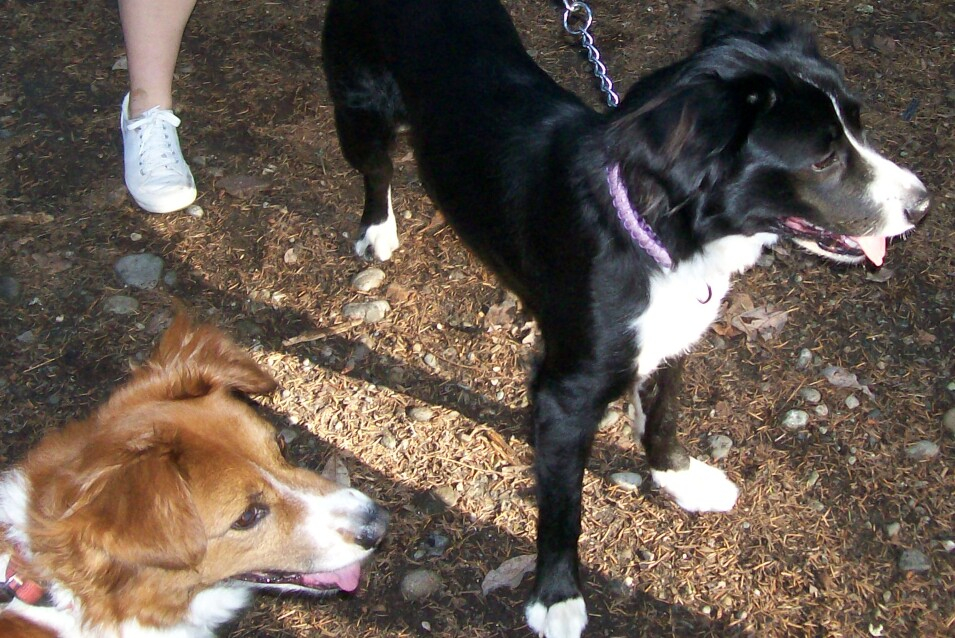
The picture above shows black and white Lyric at her first meeting with her new sister, Foxy. (We didn’t name Foxy either; she joined our family when we “rescued” her from a California shelter six years ago.)

The two girls are getting along quite well their first full day together, but those of you with more than one pet know that it takes a little bit of time to sort things out when a new member joins the family.

Lyric is our third consecutive rescue pet. Although she’s younger than the others who came to us in the past, adopting a rescue dog isn’t the same thing as getting a puppy. You don’t enjoy the same cuddly acceptance. Many rescued dogs are quite wary of human beings—especially men.

It takes time and patience to bond. To let them know that they’re safe and they are now in their “forever home.” Some, like Lyric, benefit from interim stays with gracious foster parents. But their move to your home is still just part of their unstable life until the day when they “forget” about all the previous transitions and just know they are home.

C.S. Lewis talks about this longing for a home in Till We Have Faces. Psyche is describing her desire to find that place where she truly belongs.

Somewhere else there must be more of it. Everything seemed to be saying, Psyche come! But I couldn’t (not yet) come and I didn’t know where I was to come to. It almost hurt me. I felt like a bird in a cage when the other birds of its kind are flying home. . . .”

The sweetest thing in all my life has been the longing— to reach the Mountain, to find the place where all the beauty came from . . . my country, the place where I ought to have been born. Do you think it all meant nothing, all the longing? The longing for home? For indeed it now feels not like going, but like going back.”

Although the myth he’s retelling in this book has nothing to do with adopting pets, the following passage also relates (by dramatic extension) to the situation of “rescued” animals who join you with a legacy of previous relationships (not all of them good).

“Where shall we ever be safe if we’re not safe here? This is my home, Maia. And you won’t understand the wonder and glory of my adventure unless you listen to the bad part.

If you are in a position to share your home with a pet, I probably don’t need to tell you there are many, very many of them who need homes today. If you’re up to the extra challenge of adopting a rescued animal who comes with often unknown “baggage,” just contact one of your local rescue agencies.

These organizations are almost always run by volunteers who are motivated solely by their compassion for these innocent creatures who can no longer be cared for by their owners or—more tragically, have been discarded by those who should have cared for them. (Some, of course, are strays who were never in a human family.) I’m proud to say my nephew and his wife provide a foster home for rescued dogs in Seattle.

Whatever their background . . . the “bad part” of their story, you can be instrumental in “rehabilitating” them. And, trust me, they will reward you with more love than you could ever imagine.

Now, even if you’re not prepared to take in one of these lovely creatures, you can still help. Your local rescue organizations and shelters welcome any contributions you make—either in kind or in cash. You can check your phonebook for local rescues. Or, check out one of these websites which can connect you to many of these groups.

Adopt a Pet

Petfinder

Rescue Me (Dogs)

This column turned into more than I intended it to be. Originally I set out to simply celebrate Lyric’s entrance to our family. Now I realize that her blessing just may encourage the adoption of another cat or dog. And that would be a wonderful thing indeed.

In closing, let’s consider another passage from C.S. Lewis, the creator of Narnia. In a letter he wrote in 1955, he mentions the importance of home.

As Dr. [Samuel] Johnson said, “To be happy at home is the end of all human endeavour.” (1st to be happy to prepare for being happy in our own real home hereafter; 2nd in the meantime to be happy in our houses.)

These words remind us that the happiness we know in our earthly homes is only a foretaste of the joy we can know when we ultimately take our place in the eternal home prepared for us by our Creator.

Perhaps on that day we’ll be welcomed not only by our loved ones who have preceded us, but also by the pets we have loved during this mortal life. That would certainly be a magnificent thing . . . but that’s a discussion for another day.

The Power of Names

babyC.S. Lewis was a man who recognized the power of a name. In fact, that awareness made the opening line of The Voyage of the Dawn Treader one of the most memorable in all of Christian literature: “There was a boy called Eustace Clarence Scrubb, and he almost deserved it.”

Names are used, of course, for identification. Throughout history, different countries have had different naming conventions. A rather common one featured the giving of a personal name to a child, with the patronym added to distinguish between individuals of the same name.

This led to distinctions such as James ben Zebedee of the Christian gospels or Leifr Eiríksson the first millennium explorer of North America. Hearkening back to my own Scandinavian roots, I favor the innovative example Ole Olson, or more commonly Ole Olsen. (The only problem with this name was that it failed to distinguish one Ole from the thousands of other Ole Olsons who dotted the steep coastlines of the Viking fjords.)

God too reveals the importance of names. In the Gospel according to Matthew we read:

But as he considered these things, behold, an angel of the Lord appeared to him in a dream, saying, “Joseph, son of David, do not fear to take Mary as your wife, for that which is conceived in her is from the Holy Spirit. She will bear a son, and you shall call his name Jesus, for he will save his people from their sins. (Matthew 1:20-21).

In one of the most powerful prophecies ever recorded, we hear various titles—in essence, names—of the Messiah Jesus.

For to us a child is born,

   to us a son is given;

and the government shall be upon his shoulder,

    and his name shall be called

Wonderful Counselor, Mighty God,

   Everlasting Father, Prince of Peace.

                                                             (Isaiah 9:6).

The reason that names are on my mind is because recent research has revealed that in America (well, California precisely, and assuming that data can be applied to the entire country) . . . the choice of baby names can even evidence the political leanings of the parents. Now, we’re not talking about parents who name their children directly in honor of a particular politician; it’s much more subtle than that.

Here are a couple of interesting facts gleaned from the study.

The results revealed that overall, the less educated the parent, the more likely they were to give their child either an uncommon name (meaning fewer than 20 children got the same name that year in California), or a unique name (meaning only one child got that name in 2004 in California). When parents had less than a college education, there were no major ideological differences in naming choice.

However, among college-educated whites, politics made a difference. College-educated moms and dads in the most liberal neighborhoods were twice as likely as college-educated parents in the most conservative neighborhoods to give their kids an uncommon name. Educated conservatives were more likely to favor popular names, which were defined as names in the top 100 in California that year.

The sounds of liberal and conservative names varied, too. For both boys and girls, liberals tended to pick more feminine-sounding choices, such as Liam, Ely and Leila names that include lots of L sounds and soft-A endings, including popular choices Ella and Sophia. Conservatives, on the other hand, tend to pick names with more masculine-sounding Ks, Bs, Ds and Ts, such as Kurt.

Beware of the temptation of attempting to jump aboard a naming fad. “Unique baby names can sometimes grate, however. In 2011 . . . an informal survey of hated baby names found that Nevaeh, or ‘heaven’ spelled backward, was the most commonly cited as a hated name. The name was invented in the 1990s and became the 31st most popular in the United States in 2007.”

My wife and I are surely in a minority. We chose the names for all three of our children based upon their meanings . . . a practice quite common in the Scriptures.

C.S. Lewis knew well the power of a name.

Perhaps it has sometimes happened to you in a dream that someone says something which you don’t understand but in the dream it feels as if it had some enormous meaning—either a terrifying one which turns the whole dream into a nightmare or else a lovely meaning too lovely to put into words, which makes the dream so beautiful that you remember it all your life and are always wishing you could get into that dream again. It was like that now.

At the name of Aslan each one of the children felt something jump in his inside. . . . Susan felt as if some delicious smell or some delightful strain of music had just floated by her. And Lucy got the feeling you have when you wake up in the morning and realise that it is the beginning of the holidays or the beginning of summer. (The Lion, the Witch and the Wardrobe).

It comes as no surprise to any Narnian sojourner that the very name of Aslan should so move his followers. After all, we too understand Who the great Lion is. For, as he once said to Lucy and Edmund, when asked if he was here in our world as well,

“Are—are you there too, Sir?” said Edmund.

“I am,” said Aslan. “But there I have another name. You must learn to know me by that name. This was the very reason why you were brought to Narnia, that by knowing me here for a little, you may know me better there.” (Voyage of the Dawn Treader).

Honor Your Parents . . . Or Else!

parentsThere are a variety of reasons for expressing affection and care for one’s parents. Many feel gratitude for the sacrifices their parents made while providing for them. Others treasure memories of never doubting their parents’ love for them. Some enjoyed less idyllic childhoods, but honor their parents out of a sense of duty.

C.S. Lewis described the last type of family in The Four Loves. Rather than giving cause for their children to appreciate them, some parents raise obstacles to their affections.

We hear a great deal about the rudeness of the rising generation. I am an oldster myself and might be expected to take the oldsters’ side, but in fact I have been far more impressed by the bad manners of parents to children than by those of children to parents.

Who has not been the embarrassed guest at family meals where the father or mother treated their grown-up offspring with an incivility which, offered to any other young people, would simply have terminated the acquaintance?

Dogmatic assertions of matters which the children understand and their elders don’t, ruthless interruptions, flat contradictions, ridicule of things the young take seriously—sometimes of their religion—insulting references to their friends, all provide an easy answer to the question “Why are they always out? Why do they like every house better than their home?” Who does not prefer civility to barbarism?

Yes, there are several reasons for honoring our parents, even when they have not “earned” that respect. And now we can add another incentive to do so—because you might be sued in court if you do not honor them! While this statute has not arrived in the Western world, it is a relatively new law in the world’s most populous nation.

The recently revised law requires that adult children visit their parents “often” . . . without defining the specific frequency. Apparently, too many children have become preoccupied with their own concerns. (Shades of Harry Chapin’s “Cats in the Cradle.”)

Traditional Chinese culture is renowned for the value it places on revering elders in general, and parents specifically. In the Analects of the philosopher Confucius, an entire section is devoted to “filial piety.”

58. Confucius said: “When at home, a young man should serve his parents; when away from home, he should be respectful to his elders. He should always be earnest and truthful, express love to all, and follow men of virtue. Then, if he has the time and energy, he should study literature and the arts.” [1.6]

71. Confucius said: “When your father is alive, obey him. When your father has passed on, live as he did. If you do so for [at least] three years after your father’s death, then you are a true son.” [1.11]

72. Tzu Lu asked about the meaning of filial piety. Confucius said: “Nowadays filial piety means being able to support your parents. But we support even our horses and dogs. Without respect, what’s the difference between the two kinds of support?” [2.7]

73. Tzu Hsia asked about filial piety. Confucius said: “What matters is the expression you show on your face. ‘Filial piety’ doesn’t mean merely doing physical tasks for your parents, or merely providing them with food and wine.” [2.8]

74. Confucius said: “In serving your parents, you may disagree with them from time to time and seek to correct them gently. But if they will not go along with you, you must continue to respect and serve them without complaining.” [4.18]

75. Confucius said: “Never ignore your parents’ ages, which are both a source of joy (because they are still living) and a source of anxiety (because their deaths are coming nearer).” [4.21]

The Judeo-Christian tradition, of course, also demands respect for one’s parents. “Honor your father and your mother, that your days may be long in the land that the Lord your God is giving you (Exodus 20:12, ESV). And from the Letter to the Church in Ephesus: “Children, obey your parents in the Lord, for this is right. ‘Honor your father and mother’ (this is the first commandment with a promise), “that it may go well with you and that you may live long in the land.”

It is challenging to discern what it means to honor a parent who does not merit gratitude. Indeed, destructive (abusive) parents may well disqualify themselves from receiving honor, since they tacitly reject the very essence of what it means to be a mother or father.

Aside from these extreme cases, where only a biological relationship exists, we must be honest. None of our parents are perfect. But then the corollary is also true—none of their children are, either. It is in these common, shaded cases where our own character is tested.

C.S. Lewis lost his mother at a young age. His father remained distant, and sent his sons to distant boarding schools. During the First World War, Lewis was severely wounded and shipped from the front lines to a London hospital where he recuperated. While a patient he wrote the following to his father in Ireland.

Wherever I am I know that you will come and see me. You know I have some difficulty in talking of the greatest things; it is the fault of our generation and of the English schools. But at least you will believe that I was never before so eager to cling to every bit of our old home life and to see you.

I know I have often been far from what I should be in my relation to you, and have undervalued an affection and generosity which an experience of “other people’s parents” has shown me in a new light. But, please God, I shall do better in the future. Come and see me, I am homesick, that is the long and the short of it.

Sadly, Lewis’ father did not make the trip to visit his son at the hospital. Such is the nature of real life relationships . . . and such is the reason why honoring our parents sometimes needs to assume the form of a law, or even a Commandment.

May it not be so in your family. If your parents still live, I pray God will grant you great joy in honoring them. And, if you have children, I pray that the Lord will fill them with well-deserved affection for you.

_____

If you have never heard the song “Cats in the Cradle,” you owe it to yourself to ponder its powerful message today. You can view it here.

On Burying One’s Father

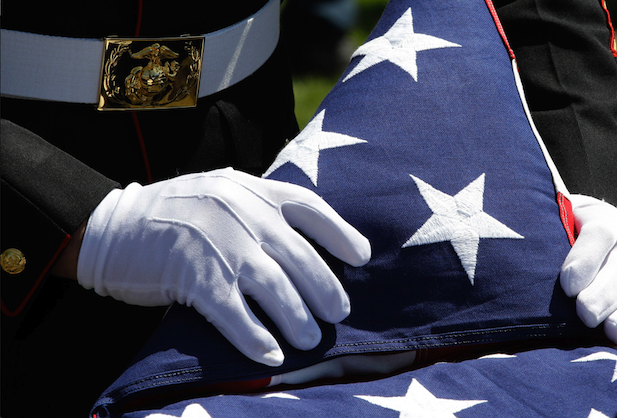
marine flagI just buried my father yesterday. Well, not literally, since the service was held in a chapel at the cemetery, but my family and I said goodbye to him in a traditional Christian service. Because he was a combat veteran Marine Corps sergeant major, he received also very impressive military honors at graveside.

It was quite nice. Although he had passed rather quickly, and completely unexpectedly, he had lived a long and full life. That sounds cliché, but during his 84 years he had a successful career in the Corps, enjoyed a long and peaceful retirement, was blessed with a loving and faithful wife, and found great joy in his three children, nine grandchildren and ten great-grandchildren.

Best of all, though, after what some would call a rather misspent youth, he became a good man . . . and ended his days with faith in Christ and with virtues such as repentance, forgiveness and charity evident in his life.

As the day of the funeral was approaching, I recalled one of Jesus’ conversations with several prospective disciples.

As they were going along the road, someone said to [Jesus], “I will follow you wherever you go.” And Jesus said to him, “Foxes have holes, and birds of the air have nests, but the Son of Man has nowhere to lay his head.” To another [Jesus] said, “Follow me.” But he said, “Lord, let me first go and bury my father.” And Jesus said to him, “Leave the dead to bury their own dead. But as for you, go and proclaim the kingdom of God.” (Luke 9:57-60, ESV).

To some, Jesus’ words here sound harsh. However, the Messiah was not encouraging people to cease honoring their parents. After all, that would be in direct disobedience to the Commandments God delivered to us through Moses. No, Jesus affirmed our call to respect and care for our parents. What he was condemning was the excuses we make to delay accepting his invitation to follow him.

While we might offer a truly important reason for our procrastination, we often push back the spiritual “season” of our life with far more lame reasoning. “I’ll settle down after I get married, but right now I just need some time to “enjoy” life.” or “I’ll start going to church once I have kids and they can benefit from it.”

On Sundays we rarely think twice about disobeying another of the Commandments by ignoring the Sabbath and not preserving it’s holiness. Years ago Keith Green wrote a song “Asleep in the Light,” which featured the convicting lyrics:

How can you be so dead

When you’ve been so well fed

Jesus rose from the grave

And you, you can’t even get out of bed.

Most of us live long enough to suffer the loss of a parent. It’s something, perhaps, that you don’t really understand until you experience it yourself. Even then it’s difficult to console others by saying we’ve shared their loss. After all, every relationship is unique, and each human being processes grief in a unique manner.

C.S. Lewis knew well what it was like to lose his parents. His beloved mother died when he was quite young. In Surprised by Joy, he describes the pain. With my mother’s death all settled happiness, all that was tranquil and reliable, disappeared from my life. There was to be much fun, many pleasures, many stabs of Joy; but no more of the old security. It was sea and islands now; the great continent had sunk like Atlantis.

Alas, Lewis does not describe his father’s passing in his too-brief autobiography. What he does say, reminds me of my own father’s vast reservoir of humor and encouragement as his health waned. Lewis simply writes: “My father’s death, with all the fortitude (even playfulness) which he displayed in his last illness, does not really come into the story I am telling.”

Many of you who have lost your parents can empathize with me, and with the journey I am facing as I adjust to life without either of my parents. Because I loved them, I miss them. And the love makes the pain worth it. Besides, as Paul reminded young Christians in his first letter to the Church in Thessalonica, we “do not grieve as other do who have no hope.” Our hope is secure, resting in the very One who said, “I am the resurrection and the life.”

Give Yourself a Holiday Gift

space trilogyChristmas is the season of giving, and as a grandfather I can truly say it’s more wonderful to give than to receive. Those little smiles and squeals of joy are precious indeed.

Sadly, many children (and adults) will be forgotten this season. Worthwhile programs to reach out to the overlooked are sponsored by countless churches and communities. One of the most highly regarded, Angel Tree, provides gifts to the children of men and women who are incarcerated. These innocent children are already suffering due to the poor choices of adults; God alone knows how special the most modest Christmas gift might be to these little ones.

That is one end of the spectrum—those who have little. Equally sadly, many children (and adults) will overindulge this season. They will bury themselves under piles of soon-to-be-forgotten presents. Most will also bury themselves further under mounds of debt.

C.S. Lewis colorfully captured this quandary in “Xmas and Christmas.”

And they buy as gifts for one another such things as no man ever bought for himself. For the sellers, understanding the custom, put forth all kinds of trumpery, and whatever, being useless and ridiculous, they have been unable to sell throughout the year they now sell as an Exmas gift. And though the Niatirbians [British] profess themselves to lack sufficient necessary things, such as metal, leather, wood and paper, yet an incredible quantity of these things is wasted every year, being made into the gifts.

Striving for balance in gift exchanging is important. For years now my father has said it’s unnecessary to give him Christmas or birthday gifts. It’s true. He’s able to purchase whatever he wants, and even the most thoughtful gifts are either redundant or undesired. He’s grateful, of course, but only out of courtesy. Last month, for his birthday, I took him up on his words. Instead of spending money on a gift, we made a special donation to the Gideons in his honor. He was delighted. I’ve known others who made the same request, that gifts intended for them be diverted to the benefit of others. It’s a grand custom.

After the homily on selflessness above, it may sound strange to hear that there is a Christmas gift I would like to suggest you consider giving to yourself. Actually, I’d advise a friend or loved one to purchase it for you, but since you probably haven’t encouraged them to subscribe to Mere Inkling (yet), I must satisfy myself with advising you to check out this special offer.

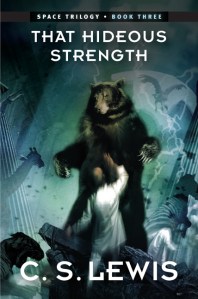
During the holiday season, HarperOne is running a special on C.S. Lewis’ Cosmic Trilogy (often referred to as the Space Trilogy). You can get them in various digital editions for only $1.99 each. Quite a bargain. And it leaves you plenty of resources to practice the truth that it’s better to give than receive.

Out of the Silent Planet, the first of these science fiction works, was the first Lewis book I read. A friend in a college fellowship group suggested it, and it introduced me to one of the greatest mentors a person could ever have! The books are available through this link: Cosmic Trilogy.

Oh, and if the Cosmic Trilogy is already in your library, or not your cup of tea, they are also discounting an illustrated edition of The Screwtape Letters.

The Trilogy is suitable for Christian and secular readers alike. It’s not overtly “religious.” In fact, in his C.S. Lewis: Companion and Guide, Walter Hooper says many of the intial reviewers of the title were rather confused about its intended meaning. (This despite offering positive reviews.) One person who did comprehend its significance was an Anglican theologian named Eric Mascall. In a 1939 issue of Theology he wrote:

This is an altogether satisfactory story, in which fiction and theology are so skillfully blended that the non-Christian will not realize that he is being instructed until it is too late. It is excellent propaganda and first-rate entertainment.

I’m certain he meant “propaganda” in the most positive, pre-war sense. Actually, one does not need to be a follower of Jesus of Nazareth to appreciate the series. If you’ve never read it before—and you don’t have a 100% aversion to the science fiction genre—the two dollar price means you’ll rarely have a better opportunity.

Fatherhood as Modeled by Two Historical Giants

Thanksgiving is a very special holiday. In truth, it’s a “holy-day” for all those who offer their thanks to a benevolent God.

Like all holidays, it can be good or bad, depending on the way it is perceived by each individual, and the unique circumstances in which they find themselves. Most of us are thankful, for example, for our loving families. And, even if we can’t be together at these special times, we draw warmth and strength from their love. Tragically, others have been victimized by those who should have protected them, and “family” in their eyes is not something to be thankful for at all.

I was not a perfect son. I strove to be a better father. And, now that I’m blessed with seven grandchildren, I’m trying to be the best grandfather I can be

Many years ago, shortly after having our first child, I gave myself a Father’s Day gift. (That’s not a typo. I purchased for myself a modest plaque with a priceless message.) It reads: “the greatest gift a man can ever give his children is to love their mother.”

I displayed this proverb in my office through the years, as a reminder to myself and others of this profound truth. It’s easy to love one’s spouse as a newlywed in the hot flush of youth. It’s also easy, I’m learning, to love my wife in the snug and warm autumn of life. For many, however, the trials and tribulations that are a natural part of all relationships appear insurmountable. Between the newlywed and maturelywed days, it’s not all easy. While our hormones still surge and familiarity breeds corrosive contempt, we may take for granted the person we once vowed to cherish above all others.

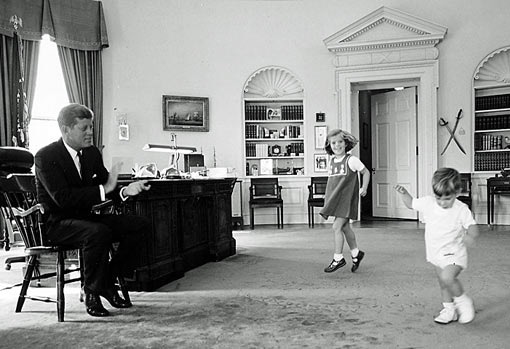
The desire to be a decent father greatly amplifies the importance of being a devoted husband. Knowing this made my reading of a recent article quite painful. I had known for years that President John F. Kennedy was rather promiscuous. Yet a recent article in The Atlantic reveals just how debauched the man was. The article, if you have the stomach for it, praises the strength of his wife Jackie, and is available online here.

It describes just a few of his disease spawning liaisons, and noted that he often traveled with one of his so-called secretaries, should there be “any trouble scaring up local talent.” One imagines the dirtiness felt by the Secret Service agents tasked with protecting him during his sordid escapades in the White House pool. The saddest tale for me was his deflowering of a sophomore intern from Wheaton “right there on his wife’s bed.” I won’t sully you with any more accounts.

When I read the article, it nearly made me sick. He was a vile husband. I recalled the numerous famous pictures of him playing with his children—the doting father, one would think. Yet, in reality, just because he was such a malignant husband, he was also an appalling father. To mistreat his wife so badly, was to dishonor his children as well.

The image that came to me as I looked again at the pictures of Kennedy’s glorious Camelot brought to mind Jesus’ words about whitewashed sepulchers “which outwardly appear beautiful, but within are full of dead people’s bones and all uncleanness.” (Matthew 23:26-28, ESV). The verse which follows could be JFK’s epitaph: “So you also outwardly appear righteous to others, but within you are full of hypocrisy and lawlessness.”

A More Godly Alternative

C.S. Lewis experienced neither the normal, nor ideal, form of fatherhood. While he loved and respected his own father, theirs was not a close relationship. And then, at the end of his life, the death of his beloved Joy caused him to transition from the already tentative role of stepfather into the fullest demands of single parenthood. Lewis loved his two sons. He was the best father he knew how to be.

Despite being ill equipped, he did the honorable and right thing—he could do no other. He provided for all the physical needs of his sons, and did his best to meet their emotional needs as well. In Lenten Lands, his son Douglas Gresham describes how painful it was to be at The Kilns following his mother’s passing.

In cowardice and self-pity, I deserted the home and the two men whose company and loving support had for so long been all that had preserved my sanity. When at home from school, I was rarely at home. I know now that I could have done far more than I did to help both Jack and Warnie to bear the burdens which were their lot, but with the blind selfishness which is characteristic of egocentric teen-aged boys, I was too wrapped up in myself to spare time for others.

Strangely, Jack and I had, through these difficult years, become very close, and I think that he understood quite well the reasons for my reluctance to be a part of The Kilns at that time. At first, after Mother’s death, with almost unbelievably naïve complacency, I never doubted that The Kilns and Jack would always be there for as long as I needed them. Then, when it began to dawn on me that there was an increasing likelihood of Jack being snatched away, and with him The Kilns, I reacted by rejecting The Kilns entirely and by not daring to love Jack any more than I already irrevocably did.

For his part, Lewis comprehended just how important understanding fatherhood was. In his tribute George MacDonald: An Anthology, he says this about his mentor:

An almost perfect relationship with his father was the earthly root of all his wisdom. From his own father, he said, he first learned that Fatherhood must be at the core of the universe. He was thus prepared in an unusual way to teach that religion in which the relation of Father and Son is of all relations the most central.

Lewis concurred with MacDonald that “Fatherhood must be at the core of the universe.” And, if this is indeed true, our emulation of it in this life possesses even more importance than I ever imagined.