Norse Linguistic Invasion

vik
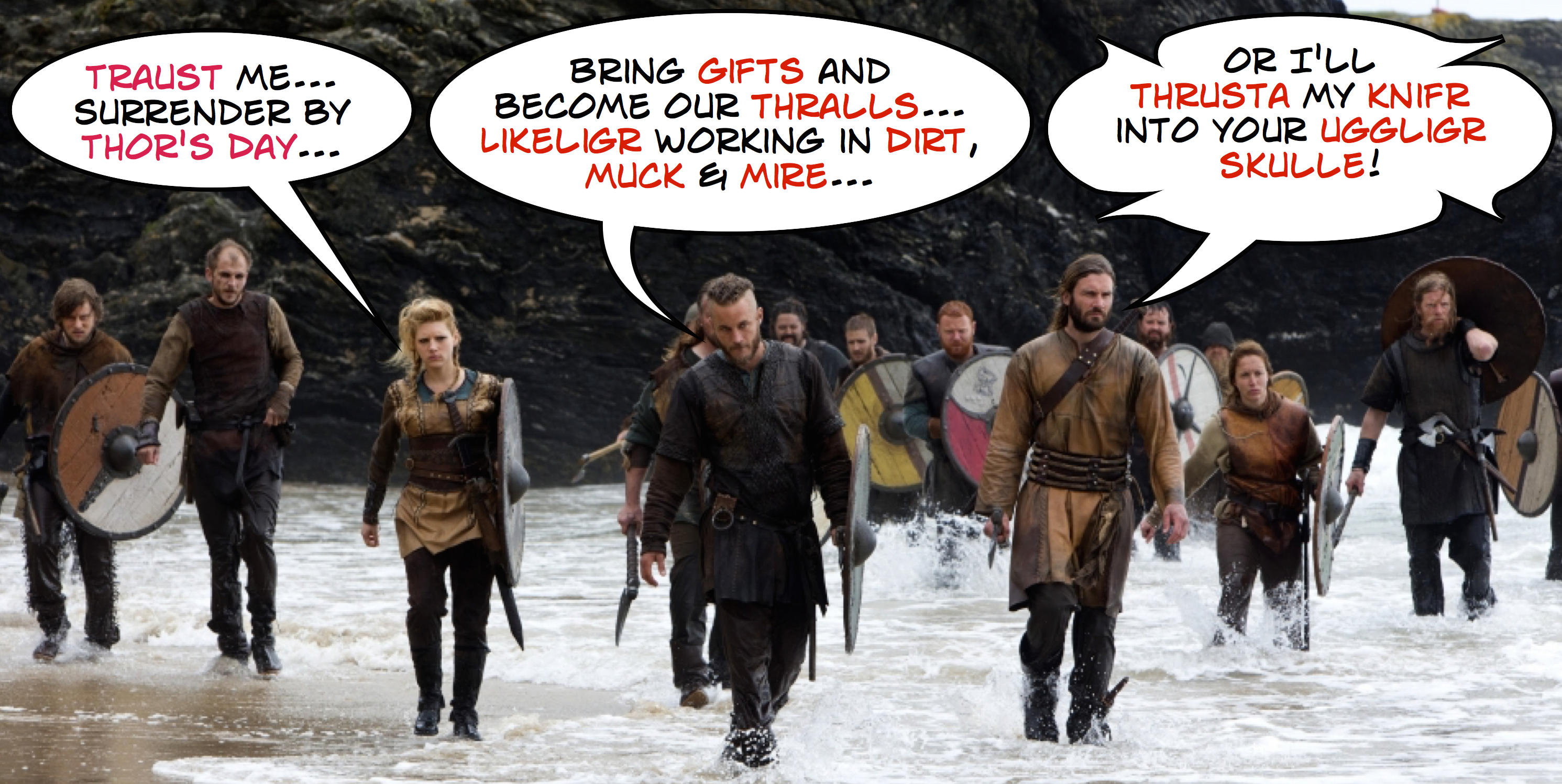
The initial Viking incursions into England were violent, but they left a colorful linguistic legacy in their wake.

Victims of the onslaught, like the unfortunate monks of Lindisfarne, paid a steep price, but the Norse eventually became farmers and craftsmen like the people they initially displaced.

Their contribution to the British gene pool was small, as was their donation to the English language, but it was not insignificant.

Some of the words fit the Viking mystique. Klubba becomes club (as in the weapon, not the association). Rannsaka may have initially meant searching the house for something like your missing keys, but the English experienced it as ransack. And slatra transfers into slaughter. The original word means “to butcher,” and one wonders if it originally applied to meal preparation. It so, the decades of Norse raids modified that focus.

Other adopted words arose from the more peaceful pursuits of the Scandinavians. Bylög meant the laws of the village and became bylaw. Law itself comes from the Norse lag. Husband, skill, thrift, litmus and loan have Viking roots. Those who enjoy a great slice of beef can thank them for their “steak” as well, since steik was their term for frying meat.

The Inkling Affection for the Sagas

J.R.R. Tolkien was actually a Professor of Anglo-Saxon at Oxford. He founded a society devoted to the study of Icelandic and Norse sagas called Kolbitar (Coalbiters).* C.S. Lewis joined him in the group, which preceded the development of the Inklings fellowship.

As a young student, Lewis was attracted to Norse myth and experimented with writing his contribution to the tales. He penned over 800 lines of a massive epic he entitled “Loki Bound.” Only fragments have survived, but the following passage is especially intriguing. In it, Loki criticizes Odin for the manner in which he created humanity.

Odin! And who art thou to make a soul

And force it into being? Who art thou

To bring forth men to suffer in the world

Without their own desire? Remember this,

In all the universe the harshest law,

No soul must ever die: it can but change

Its form and thro’ the myriad years

Must still drag on for aye its weary course,

Enduring dreadful things for thy caprice.

The echoes of teenaged angst are clear in this tirade. The words describe (well, I believe) the fatalistic despair of many people. Fortunately, this young man eventually encountered the One who rescues us from “harshest law” and “dreadful things” that are the lot of fallen mortals.

A Few More Norse>English Words

Here are some more of the seven score words that are identified as having a Scandinavian origin.

An interesting collection of verbs include: bark, blunder, choose, crawl, glitter, race, scare, stagger, stammer and whirl.

The following words associated with people: Guest, kid, lad, oaf, foot, leg, skin, freckles, ill, and weak.

The gamut of emotions: anger, awe, and happy.

And, without their Norse contribution, who knows what we would call these articles today.

axle   ~   window   ~   cake   ~   bag

glove   ~   mug   ~   plow   ~   link

they   ~   trust   ~   same   ~   gift

and even Hell

One final example, as quoted in the source of the comprehensive list of Norse words.

Even though the gun wasn’t invented until centuries after the Viking era, the word comes from Old Norse. The most common usage was in the female name Gunnhildr: gunn and hildr both can translate as “war” or “battle.” Only truly [ferocious] Vikings named their infant daughters “Warbattle.”

_____

*You can read a bit more about Kolbitar here. I have also mentioned Kolbitar in this column.


Food that Bites

Guardians_of_the_Galaxy_Rocket_movie_posterMany peculiar delights are eaten in Los Angeles County, but diners might want to reconsider the fare offered at The Metro Supermarket. While it’s apparently not illegal to sell raccoons for consumption, it could become dangerous when the Guardians of the Galaxy learn of the practice.

In one of the year’s most successful blockbusters, Guardians of the Galaxy, we were introduced to Rocket Raccoon. Rocket is a genetically altered Procyon lotor designed to be a deadly fighting machine. Not only is he a brilliant tactician, the genetic manipulations have left him with one bad attitude.

Which makes it all the more important for the customers who purchase the ten-dollar-a-pound frozen raccoon carcasses to be cautious.

On a more serious note, the question of what we eat is not merely academic.

I’m not referring to modern insights into healthy diets. I’m talking about international, and potentially intergalactic, relations!

World travelers are often introduced to foods that seem, to put it gracefully, exotic. On such occasions, some respond enthusiastically—eager to sample alien delights. Others are somewhat more wary—reluctant to place in their mouths things they cannot quite identify.

Back in the 1980s I resided for a year in the Republic of Korea. I declined to eat gaegogi, not because I assumed dog meat would be unpalatable, but because I could not imagine contributing in any way to the slaughter of dogs for their flesh.

Another time that year, a sergeant who worked at our chapel purchased a paper cone full of toasted rice during an outing. When he was done with the rice (burned, he thought, rather than “toasted”), his Korean girlfriend clarified that he had just devoured a cup of rice beetles.

Military members stationed abroad are encouraged to be respectful of the cultures they encounter. And those cultures included different foods.

We need not travel to other nations to experience this diversity. I grew up in a family which considered processed “fish sticks” to be seafood. Combined with canned tuna fish and an occasional canned salmon “patty” it constituted the whole of my exposure to the abundance of the sea.

While I have since that time expanded my tastes to include many types of fresh fish, I must admit that crustaceans are not among my favorite foods. And, well, let’s not even talk about those creatures that have tentacles . . .

Not that I’m a culinary snob. In Texas I sampled rattlesnake. In South Carolina I ate alligator. (I preferred the rattlesnake, but I don’t reserve a regular spot for reptiles on my menu.)

To Eat, Or Not to Eat

Showing respect to others by dining as they do, is not a new concept. The early Christians were advised to eat without reluctance food that may have been sacrificed in a pagan temple, without questioning their hosts as to its source. “If one of the unbelievers invites you to dinner and you are disposed to go, eat whatever is set before you without raising any question on the ground of conscience” (1 Corinthians 10:25, ESV).

C.S. Lewis enjoyed a good meal. And he wrote many times about eating. Here are two of his insights on the subject.

For eating and reading are two pleasures that combine admirably. Of course not all books are suitable for mealtime reading. It would be a kind of blasphemy to read poetry at table. What one wants is a gossipy, formless book which can be opened anywhere. (Surprised by Joy).

Contrasting humility and pride, he wrote:

A man who is eating or lying with his wife or preparing to go to sleep in humility, thankfulness and temperance, is, by Christian standards, in an infinitely higher state than one who is listening to Bach or reading Plato in a state of pride. (Letters of C.S. Lewis).

Those interested in learning more about how Lewis approached the subject of meals in his fiction should download a copy of a doctoral thesis on the subject. Lower Sacraments: Theological Eating in the Fiction of C.S. Lewis is available for free here.

We’ll close with the following words from the newly minted “doctor’s” abstract to his dissertation, citing some of the subjects he explores.

For years, critics and fans of C. S. Lewis have noted his curious attentiveness to descriptions of food and scenes of eating. Some attempts have been made to interpret Lewis‘s use of food, but never in a manner comprehensively unifying Lewis‘s culinary expressions with his own thought and beliefs.

My study seeks to fill this void [proposing] ecclesiastical themes appear whenever Lewis’s protagonists eat together. The ritualized meal progression, evangelistic discourse, and biographical menus create a unity that points to parallels between Lewis’s body of protagonists and the church. . . .

Lewis’s meals which are eaten in the presence of the novel’s Christ figure or which include bread and wine in the menu reliably align with the Anglo-Catholic doctrine of the Eucharist. . . . sinful eating affects the spiritual states of Lewis’s characters.

The author ends his introduction with a particularly intriguing thesis that makes sense with my own reading of Lewis. He argues “Lewis’s culinary language draws from Edenic sources, resonating with a very gastronomic Fall of Humanity, then examines how the progressively sinful eating of certain characters signifies a gradual alienation from the Divine. . . . Lewis’s portrayal of culinary desire and pleasure ultimately points to an eschatological theme”

I love that phrase, “gastronomic Fall of Humanity.” I’m not sure I can work it into a sermon someday, but only time will tell.

Until then, I have to be content to regard the eating of dogs—and probably raccoons as well—as consequences of humanity’s Fall. And I will look forward to the new creation when all such things will have passed away.

Sanctified Languages

petrusOne major difference between Christianity and Islam is their view of language. For the Muslim, Arabic is the language by which the Quran is to be known. For the Christian, there is a great impulse to translate the Scriptures into every tongue in the world.

In Islamic worship, the Quran is properly recited only in Arabic, whether the individual understands Arabic or not. This is similar to the way that most Hindus chant mantras in ancient Sanskrit.

A parallel can be drawn with the medieval practice in the Western branches of Christianity where Latin continued to be used for worship, even after it lost its role as the shared language.

The fact, however, that the Bible had even been translated into Latin was due to the Christian desire to make God’s word accessible to all people. Jerome, an early Christian theologian, became a linguistic scholar with the goal of translating the Vulgate, into the common language of his day.

It would have been a great shock to him, and to Pope Damasus I who commissioned his effort, to see the Latin so ingrained in the church’s usage that their heirs in leadership lost sight of the desire to bring the Lord’s words directly to the people so that all could understand them.

One of the great successes of the Reformation was the successful translation and distribution of the Scriptures into the vernacular of various language groups. Martin Luther’s translation, in fact, standardized the German language which had evolved into several different dialects.

Coincidentally, Lutherans have remained at the forefront of Bible translation, and Lutheran Bible Translators continue that vital work today. They currently have twenty-two Bible translations in process. LBT works in conjunction with Wycliffe Bible Translators, which is an even larger organization.

C.S. Lewis delivered a lecture at the University of London entitled “The Literary Impact of The Authorised Version.” In one portion he addressed the influence of the King James translation on the English language. While not nearly so pronounced as Luther’s on German, it is measurable.

The history of the Authorised Version has been told so often that I will not attempt to re-tell it, and its beauties praised so lavishly that I will not praise them. Instead, I will proceed at once to its influence as an English book. I shall attempt to define that influence, for I think there has been misunderstanding about it and even a little exaggeration.

Lewis’ argument is that the Bible has a profound influence on English literature, the particular translation, less so.

Ideally, all Christians would understand Hebrew and Greek, and be able to read the Scriptures in their original languages. However, there is no stigma in reading a translation. In fact, there are small pockets of people who do not understand the history of the Bible who believe that one particular translation (i.e. the King James Version) is the only authoritative text.

Sadly, I once saw an advertisement in a newspaper inviting worshipers that read: “Are you tired of people changing the Authorized Version of God’s Word with Greek and other languages? If so, come and join us at . . .”

Fortunately, the vast majority of Jesus’ disciples celebrate the translation of God’s word of life into every language spoken today.

Meanwhile, memorization of the Quran in Arabic (even when that is not the reciter’s actual language) remains highly regarded in Islam. Arabic has been regarded as so holy, in fact, that there was great reluctance to contaminate the Quran by using a printing press.

During the Ottoman Empire, until 1729, printing anything in Arabic was a crime. Somewhat ironically, the first printing utilizing Arabic movable type was done by Pope Julius II in the first decade of the sixteenth century. It was created for the benefit of Christians living in Arabic lands.

To provide a powerful illustration of a Christian validation of the authentic inspiration and power of God’s words—in any language—we turn once again to the German reformer.

Since it becomes Christians then to make good use of the Holy Scriptures as their one and only book and it is a sin and a shame not to know our own book or to understand the speech and words of our God, it is a still greater sin and loss that we do not study languages, especially in these days when God is offering and giving us men and books and every facility and inducement to this study, and desires his Bible to be an open book. . . .

In proportion then as we value the gospel, let us zealously hold to the languages. For it was not without purpose that God caused his Scriptures to be set down in these two languages alone—the Old Testament in Hebrew, the New in Greek. Now if God did not despise them but chose them above all others for his word, then we too ought to honor them above all others. St. Paul declared it to be the peculiar glory and distinction of Hebrew that God’s word was given in that language, when he said in Romans 3, “What advantage or profit have those who are circumcised? Much indeed. To begin with, God’s speech is entrusted to them. . . .”

Similarly, the Greek language too may be called sacred, because it was chosen above all others as the language in which the New Testament was to be written, and because by it other languages too have been sanctified as it spilled over into them like a fountain through the medium of translation. (Martin Luther, “To the Councilmen of Germany”).

_____

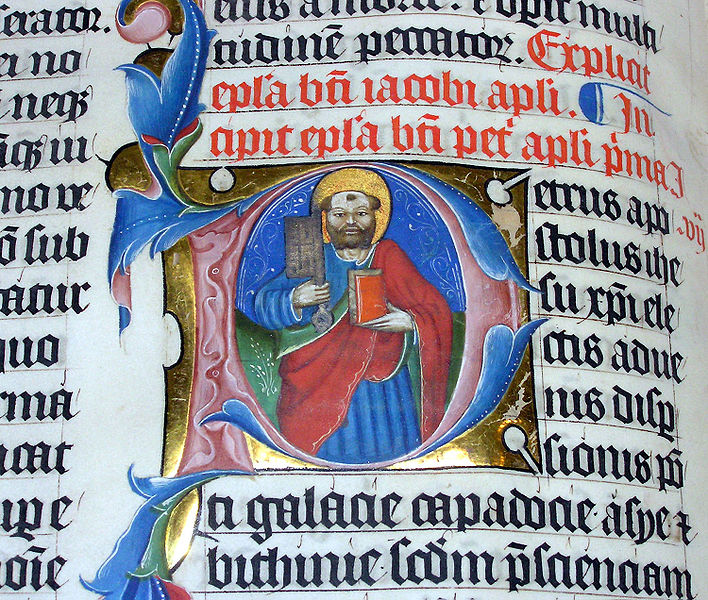
The image above is an illuminated “P” which begins the name Petrus (Peter). The manuscript is displayed in Malmesbury Abbey in England, but was originally transcribed in Belgium circa 1400.

Similes & Metaphors

agdeiSimiles are wonderful literary tools. Being able to compare two dissimilar things in a way that brings out subtle nuances and insights is quite enjoyable.

Here are a couple of examples off the top of my head. (I don’t pretend others haven’t written these things, but I didn’t plagiarize them.).

A politician is like a weathervane.

Arguing theology is like having indigestion.

Disliking Narnia is like hating a feast.

Metaphors, of course, are far more powerful than similes. When we consider a metaphor we are pondering how two different things actually share some fundamental quality.

Comprehending metaphors requires the ability to think abstractly. A child—confined to a world of concrete concepts—cannot begin to think of their nation as a “motherland” or “fatherland,” as the case may be. Yet, those are powerful nurturing and bonding words that countless patriots have embraced throughout the centuries.

A simile might say “our country is like a family.” A metaphor suggests far more. In this case, it might convey that one’s allegiance to their nation should exceed their loyalty to their biological kin.

Nowhere is the magnificence of metaphors more manifest than in the way we talk about God. One of the most famous biblical passages is a straight forward example. “God is love” (1 John 4:8).

Jesus the Christ said of himself, “I am the Way, the Truth and the Life” (John 14:6). He also called himself the “Light of the world. Whoever follows me,” he added, “will not walk in darkness, but will have the light of life” (John 8:12).

It is a sad thing when a symbol loses its meaning. There is a prime example of that phenomenon in Oxford. And you can see it in the sign that hangs above a pub frequented by the Inklings.

No, not the Eagle and Child, which they affectionately referred to as the Bird and Baby.

After renovations to the Eagle and Child eliminated their privacy, the writers transitioned across the street to the Lamb and Flag. Both pubs trace their history back to the seventeenth century, and the latter is actually owned by St. John’s College. (It’s profits fund student scholarships.) In a 1963 letter, Lewis colorfully described the move thusly:

Mon 11 March it is. But note that our causeries de lundi are now permanently transferred to the Lamb & Flag. We were sorry to break with tradition, but the B & B had become too intolerably cold, dark, noisy, and child-pestered.

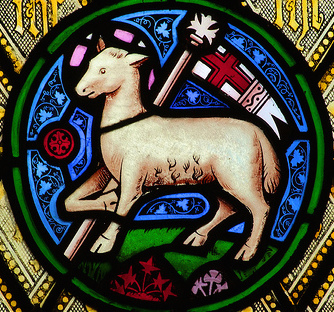
Sadly, when many people look at the Lamb on the pub’s sign, they fail to recognize it’s significance. The lamb carrying a cross-emblazoned banner is nothing other than the Agnus Dei, the Lamb of God.

What, some may wonder, is the Lamb of God? The better question is “who” is the lamb. The symbol represents Jesus Christ himself. It hearkens to the declaration of John the Baptizer as Jesus approached the Jordan: “Behold, the Lamb of God, who takes away the sin of the world!” (John 1:29).

To understand what it means to say “Jesus is the Lamb,” requires two things. First, a recognition that it is more than a simile; it is not simply that he possesses some of the attributes we would naturally associate with a lamb, such as gentleness. The second requisite is that we understand something about the Jewish sacrificial system.

For, Jesus being the Lamb of God means nothing less than that he is the true, complete, ultimate and final sacrifice for the sins of humanity.

And that is a wonder definitely worth pondering during this Christmas season.

The World’s End

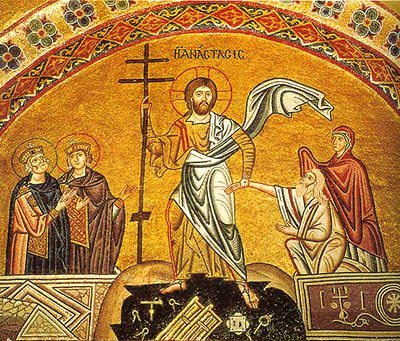
christ arisenMany years ago, while attending seminary, I was invited to preach at a Pentecostal congregation in my home town. One of the conversations I had that day taught me more about the importance of sound biblical preaching than every homiletics course I ever took (combined).

Lutherans, I must admit, are not big advocates of “end times” concerns. The reasons for this are far too complicated to address in a brief column now. Ironically, however, although we confess our confidence that Jesus “will come again to judge the living and the dead” every week, we seldom talk about the details of that arrival.

At the aforementioned service, I did preach on the second coming of the Messiah. And, to distill it down to a single message, I suggested that the Scriptures teach us to live in a sort of tension. We should live with a conscious awareness and urgency that the parousia could happen at any moment . . . and, prepare for the future as though the return of Christ (and subsequent new creation) will not take place for another thousand years.

Shortly after the service ended, a woman approached me and shared how she “wished she could have heard that sermon thirty years earlier.” She related how different her life would have been.

She said in her youth she had longed to attend college, but she never did . . . because she knew Jesus would return before she graduated.

When she and her husband bought a home, she wished the property had some fruit trees, but she never planted any . . . because she knew Jesus would return before they bore fruit.

Saddest of all, she told me that when her children were born, she never raised them to become mature adults . . . because she knew Jesus would return before they grew into the men and women they became.

Nearly forty years later I am more convinced than ever that living with the “tension” I described is the proper course of disciples of Jesus.

So, how does this work out in reality?

While a few of us know people who become so preoccupied with the end of the world that their lives go askew, it’s the other error to which most of us are prone. We tend to think that the return of Christ bears little or no connection to the age in which we live.

We are so preoccupied with our present responsibilities and dreams that we invest precious little time in contemplating how these things will matter in the scope of eternity.

I highly recommend to you a recent article on this subject that will remedy this dilemma. Andrée Seu Peterson, a gifted writer I have commended before at Mere Inkling, reminds us all of the fact that Jesus’ second coming may be just around the corner. Andrée writes:

Who would have thought that after centuries of modernity, beheading would once again be a means of persecuting the people of God? Does it not send a chill up our spine to read all about it in Revelation 20:4 even as we hear about it on CNN? “Then I saw thrones, and seated on them were those to whom the authority to judge was committed. Also I saw the souls of those who had been beheaded for the testimony of Jesus.”

C.S. Lewis famously described two errors people fall into when considering the occult. Either we get caught up in unhealthy expressions of the supernatural, or we dismiss the reality of demons and their destructive agenda altogether.

I believe humanity’s impulsive nature makes us vulnerable to the same extremes when it comes to the final days of the world we call home.

I strongly encourage you to read Peterson’s article here, as a timely reminder that you were created for far more wonderful and amazing things than we can ever know in this life. Even the best this world offers is but a hint and a foretaste of what awaits those who trust in God.

Deadly Gargoyles

gargoyle magdalenWhoever first considered gargoyles an attractive addition to buildings, must have had an odd personality. I have never developed an appreciation them.

What’s worse is when moonstruck (lunatic) architects deem gargoyles suitable for adorning churches.

There are too many examples out there to count. I am sure there are a number of websites devoted to them. But I don’t care enough to investigate.

It is one thing to shape a natural or fantastical creature to use as a rain spout on a building. Quite another, in my opinion, to opt for a grotesquery.

Churches should stick with symbolism that edifies the people. Admittedly, this can include some potentially gruesome subject, such as images of martyrdoms.

Our familiarity with the crucifix itself has dulled the impact of its terrible agony. We often fail to recognize the magnitude of the suffering Jesus endured.

Gargoyles were in the news this week. The reason for their appearance gave the title to this column.

A tragedy occurred in Chicago when a gargoyle broke free from a dated building and struck an innocent pedestrian. She was killed almost immediately by the crushing blow.

To make matters even more sad, the building from which the “ornament” fell was a church.

Second Presbyterian Church was built in 1874 and is a national historic landmark. Local news outlets report that it failed various inspections between 2007 and 2011, but passed them in 2012 and 2013. (The picture above is not of the gargoyle in question.)

Sarah was the name of the victim of this tragic accident. I invite your prayers on behalf of this young woman’s loved ones, especially her two children.

I think so little of church gargoyles that I included the subject in an as yet unpublished book set in the medieval period.

The nightmare gargoyle pictured on the top of the page adorns Magdalen College in Oxford. It was established in 1458, and was the school where C.S. Lewis began his teaching career.

In C.S. Lewis: An Examined Life, Bruce Edwards writes, “The college is noted for its wealth of gargoyles, grotesques, and stone portraits of notable people.”

Well, the college may be named after Mary Magdalene, but at least it isn’t a church. As for the stone “portraits,” they sound like a very agreeable adornment.

As lovely as Magdalen is considered to be, on the whole Lewis considered Cambridge University more appealing than Oxford. In a 1954 letter he wrote, “I’m afraid one must admit that, architecturally, Cambridge beats Oxford; there is so much more variety in Cambridge.”

In two other letters written the same year, Lewis revealed that there was much more to his new academic post than mere architecture that appealed to him. Oxford had taken Lewis for granted, and often belittled him because of his simplistic trust in Christ.

You know I am going as a Professor to Cambridge? My new college is Magdalene, Cambridge: a tiny little place compared with this, but a perfect gem architecturally and (I think) much more congenial socially & spiritually.

Did I tell you I’ve been made a professor at Cambridge? I take up my duties on Jan. 1st at Magdalene College, Cambridge (Eng.). Note the difference in spelling. It means rather less work for rather more pay. And I think I shall like Magdalene better than Magdalen. It’s a tiny college (a perfect cameo architecturally) and they’re so old fashioned, & pious, & gentle and conservative– unlike this leftist, atheist, cynical, hard-boiled, huge Magdalen. Perhaps from being the fogey and ‘old woman’ here I shall become the enfant terrible there.

It is not about architecture at all—or the presence or absence of grotesqueries. It is about finding a home where you know you are welcome and appreciated. A place where you do not need to remain constantly on your guard, because there are colleagues present who desire to see you humbled.

It is good to know C.S. Lewis spent the final years of his teaching life in an academic family that truly appreciated the gifted scholar in their midst.

A Caveat about Caveats

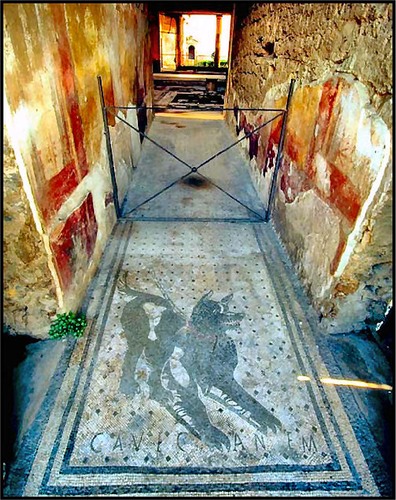
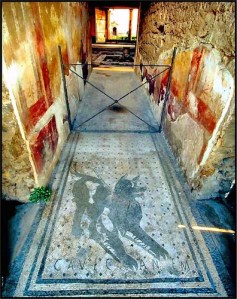
cave canemA caveat, most readers will know, is a warning. One of my favorite usages comes from ancient Rome, where many villa owners procured guard dogs to protect their property. Cave Canem–beware of the dog–became a common motif for entryway mosaics.

One of the most familiar caveats is caveat emptor—buyer beware. Not only is this warning well known, it is absolutely true. Without an express warranty, you may have little hope recouping your loss when something you purchase fails.

Caveats, however, need not infer that the subjects they refer to are dangerous.

For example, the guard dog may well be an affectionate “member of the family,” who warms up quickly, even to strangers who have been invited into the home. Likewise, the new car I’m contemplating purchasing may be ideal for me. Fairly priced, economical to drive, and not so dated in appearance that it shouts, “yes, I’m a grandpa.”

Caveats don’t mean “stay away.” They merely advise us all to think before we act. (And, as universal rules go, this is a very good one.) Caveats, and good parenting, remind us to read the “fine print” before signing anything.

I want to encourage all readers of Mere Inkling to use their God-given intelligence to evaluate what you read on these pages. In the same way, I hope you will all apply your God-instilled conscience to measure my words.

In light of this sincere desire, I encourage you to read the gentle caveats offered below.

General Caveats for Readers

What should readers of Mere Inkling keep in mind as they peruse these posts? First of all, there are a number of general considerations—applicable to everything each of us reads and hears.

1.  Understand the perspective of the writer. What are the assumptions and worldview of the person who wrote the piece? It can be hazardous to simply assume that a writer shares your own values—or even definitions. Many people would be shocked at the diversity of definitions for a word like “church” that roam the internet.

2.  Ensure we read what we think we did. By this I mean that we should reread sections that we find confusing or offensive. It may be we have misread what the author intended. (This is especially true when a writer seeks to play with the English language, and uses phrasing unfamiliar to our ear.) In cases where we have normally enjoyed the writing, but now find ourselves bothered by something, it is always good to ask the writer to clarify what they meant. More often than not, I’ve found this opportunity to elaborate dispels the problem.

3.  Reject the myth that anything you read is absolutely objective. Objectivity, except for mathematics, is essentially impossible. Our education, values, experiences and mood all affect the words we write. The best we can hope for in what we read—something Mere Inkling strives for—is personal honesty and fairness.

Mere Inkling Caveats

1.  Mere Inkling’s author is a fallen human being. By definition, that means that I am imperfect. Not all-knowing, nor always gracious. Imperfect though I am, I try my best to speak here in a forthright, considerate, modestly entertaining and, most importantly, a truthful way. When I fall short of that, feel free to write to me about it.

2.  I am a Christian. I certainly don’t apologize for this. Nor do I apologize for the wish of all disciples of Jesus that everyone might know the joy, forgiveness and peace that comes from abiding in the Vine (a metaphor for Jesus, as described in John 15).

3.  Your host at Mere Inkling is an evangelical Christian. This is a hazy adjective, often used in mutually contradictory ways. I apply it here to myself in the context of holding fast to the basic Christian truths, including the aforementioned desire of God that all people might come to him through his only begotten Son.

4.  I am a catholic Christian. Not a Roman Catholic (with a capital C), but catholic in the word’s creedal sense—a member of the one universal Church. As a catholic Christian, I subscribe to the ecumenical creeds, agreed upon as the fundamental doctrines of the faith during its earliest years. These include the Triune nature of God, the Incarnation miracle, and the atonement. Like my mentor, C.S. Lewis, here at Mere Inkling we focus on “Mere Christianity,” the common core of the faith. I consistently attempt to qualify my words on subjects where there is not a clear consensus.

Each of us has his individual emphasis: each holds, in addition to the Faith, many opinions which seem to him to be consistent with it and true and important. And so perhaps they are. But as apologists it is not our business to defend them. We are defending Christianity; not “my religion.” When we mention our personal opinions we must always make quite clear the difference between them and the Faith itself. (C.S. Lewis, “Christian Apologetics”).

5.  I am a Lutheran Christian. Again, I do not apologize. Lutherans understand we are only a small part of the “one holy catholic and apostolic faith.” Each denomination (indeed, each individual) possesses a distinctive interpretation of the Christian faith. We are free, of course, to associate with that community we believe follows God’s leading most faithfully. (It is a given that no community is without flaw, since no human being is.) I have written more on this aspect of my identity in the next point, and on the “Mercy” tab you will find at the top of the page.

6.  I am an evangelical Lutheran Christian. This is not a formal category, but means that I subscribe to historic Lutheranism as it has been taught and held since the Reformation, rather than some of the current expressions of “religion” that may be labeled Lutheran. In essence, this can be summarized in the “solas” of Lutheran doctrine.

Sola Scripture – Scripture Alone meaning that the Bible, the Jewish and Christian Scriptures, are the ultimate authority for determining true faith.

Sola Gratia – Grace Alone meaning salvation is an unearned gift of God, given not because we have earned it.

Sola Fides – Faith Alone meaning that God’s grace is apprehended not through wisdom, good works, or any means other than a simple trust in the promise. Ironically, this faith itself is also a gift of God.

7.  I am a pastor. While pastors with seminary educations do study Greek, Hebrew, Theology and assorted other subjects, we are not the same as what most people mean by the word “theologians.” Pastoral Theology is distinct from Systematic Theology. The former focuses on practical ministry to individuals, while the latter is most concerned with abstract matters. While I also possess a second graduate degree, my Master of Theology degree (much different than an M.A. in theology) was earned in the study of Early Church History. My concern remained the work of God among everyday human beings, rather than scholastic philosophy.

8.  While I never intentionally write anything with the goal of offending any reader, I recognize it is impossible to avoid all offense. (Even the least controversial prose is capable of offending.)

Allow me to illustrate how simple truths can elicit dramatically different responses, with two simple declarations.

God loves all people. This is true, and inoffensive. Most people today, and all orthodox (biblical) Christians would agree with the statement.

Not all people will go to heaven. This too is true. However, it provokes great outcries from many quarters, including some religious organizations that arise out of the Judeo-Christian tradition. Jesus himself offered “hard sayings” that elicited grumbling. John’s Gospel records a powerful account of this, occurring immediately after the Feeding of the Five Thousand.

When many of his disciples heard it, they said, “This is a hard saying; who can listen to it?” But Jesus, knowing in himself that his disciples were grumbling about this, said to them, “Do you take offense at this? . . . The words that I have spoken to you are spirit and life. But there are some of you who do not believe.” . . . “This is why I told you that no one can come to me unless it is granted him by the Father.” After this many of his disciples turned back and no longer walked with him.

C.S. Lewis referred to the alienating nature of some truths when he wrote the essay, “Cross-Examination.”

I believe that there are many accommodating preachers, and too many practitioners in the church who are not believers. Jesus Christ did not say “Go into all the world and tell the world that it is quite right.” The Gospel is something completely different. In fact, it is directly opposed to the world.

9.  I am an American. Again, no apologies. I applaud much of what this nation has valued and shared during its history. I regret many of the mistakes the United States has made, and continues to make. I recognize how fortunate I have been to live in a nation with access to educational and medical resources not available to all. I genuinely appreciate other cultures and have been privileged to live in Europe, Asia and the Pacific. The right I treasure most—and one I pray will be extended to all people—is freedom of religion.

10.  I welcome offline correspondence. I recognize many people are reluctant to post a comment on a blog, which is visible to the public. I also realize that some readers would appreciate privately offering a comment or posing a question. I welcome this, and encourage you to use the form below to write to me. I will respond from my personal email account and we can discuss sensitive matters in greater depth. I must say in advance, however, that I do not have the leisure time to aid with any research. Similarly, while I am happy to offer general pastoral advice, only a fool or con artist would presume to conduct serious counseling or therapy via email. (You need a local pastor or counselor for that.) That said, I do enjoy spirited and honest discourse, so d feel free to contact me.

← Back

Thank you for your response. ✨

_____

The picture at the top of the page comes from the entryway to the “House of the Tragic Poet” in Pompeii.

Any Name But That

jesus nameThis week I read one of the clearest descriptions of the gospel I have ever heard. It appeared in an article written by the most (how do I put this mildly?) daunting professor I have encountered in my Doctor of Ministry studies. “Intimidating” would also work . . .

But his brilliance and rapid fire delivery of thought-provoking concepts is not the reason for me mentioning him here. It is his ability to cut through the confusion, and express simply the essence of the good news, the Christian hope, the gospel.

I’m not pandering to him, mind you, because my grade for his systematics course was filed long ago. It is simply that Joel Biermann said extremely succinctly, something that I have always attempted to emphasize in my own ministry.

The Gospel is the good news, but it is not just any good news. The Gospel is a word of liberation and encouragement, but it is not just any word of liberation and encouragement. The Gospel is a wonderful event and a joyful experience, but it is not just any wonderful event and joyful experience.

In other words, when it comes to defining the Gospel, it is vitally important that we move past vague ideas or general notions and grab hold of the central thing. The central thing is Jesus.

This is a truth too many fail to understand. Sadly, this is true for some “inside” the Church as well as outside of its doors.

Goodness is good. Generosity is wonderful. Encouragement is precious. Courage is noble. Love is (almost) divine.

Yet none of these are the Gospel. The Gospel is Jesus. In him the world discovers every good thing from the hand of God the Father, our Creator.

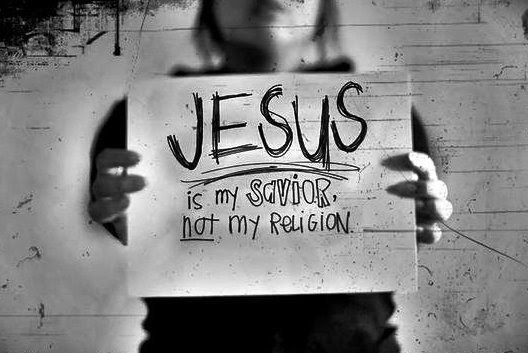
Jesus is indispensable. Without his holy name, the “faith” would simply be a praiseworthy “religion.” Without Jesus, it could instruct how to live, but it could not redeem.

It is precisely this point—the name of Jesus—that makes the Gospel objectionable to some. “Care for the sick,” some say, “just don’t mention that name.” On other lips we hear “The Church does lots of things that benefit the community, but please don’t mention that name that offends people.”

They arrested the apostles and put them in the public prison. But during the night an angel of the Lord opened the prison doors and brought them out, and said, “Go and stand in the temple and speak to the people all the words of this Life. . . .”

And someone came and told [the High Priest], “Look! The men whom you put in prison are standing in the temple and teaching the people. . . .”

And the high priest questioned them, saying, “We strictly charged you not to teach in this name, yet here you have filled Jerusalem with your teaching, and you intend to bring this man’s blood upon us.”

But Peter and the apostles answered, “We must obey God rather than men. The God of our fathers raised Jesus, whom you killed by hanging him on a tree. God exalted him at his right hand as Leader and Savior, to give repentance to Israel and forgiveness of sins. And we are witnesses to these things, and so is the Holy Spirit, whom God has given to those who obey him.” (Acts of the Apostles, chapter five).

C.S. Lewis knew quite well that Christianity is all about Jesus. Without him, the person Jesus the Christ, whatever passes for the “Church” would merely be a noisy gong. Lots of “religious” talk would remain . . . but the Gospel would be absent.

“What are we to make of Christ?” There is no question of what we can make of Him, it is entirely a question of what He intends to make of us. You must accept or reject the story. The things He says are very different from what any other teacher has said. Others say, “This is the truth about the Universe. This is the way you ought to go,” but He says, “I am the Truth, and the Way, and the Life.” He says, “No man can reach absolute reality, except through Me. Try to retain your own life and you will be inevitably ruined. Give yourself away and you will be saved. . . .”

“Come to Me everyone who is carrying a heavy load, I will set that right. Your sins, all of them, are wiped out, I can do that. I am Re-birth, I am Life.” (1950 essay, “What Are We to Make of Jesus Christ?”).

In the same way as the apostles, C.S. Lewis, my seminary professor, and all of those who have entrusted themselves to the grace of God in Christ, know the name of Jesus is not optional. In fact, it is all about the name.

For it is Jesus, and him alone, who is the alpha, omega and the whole of the Gospel.

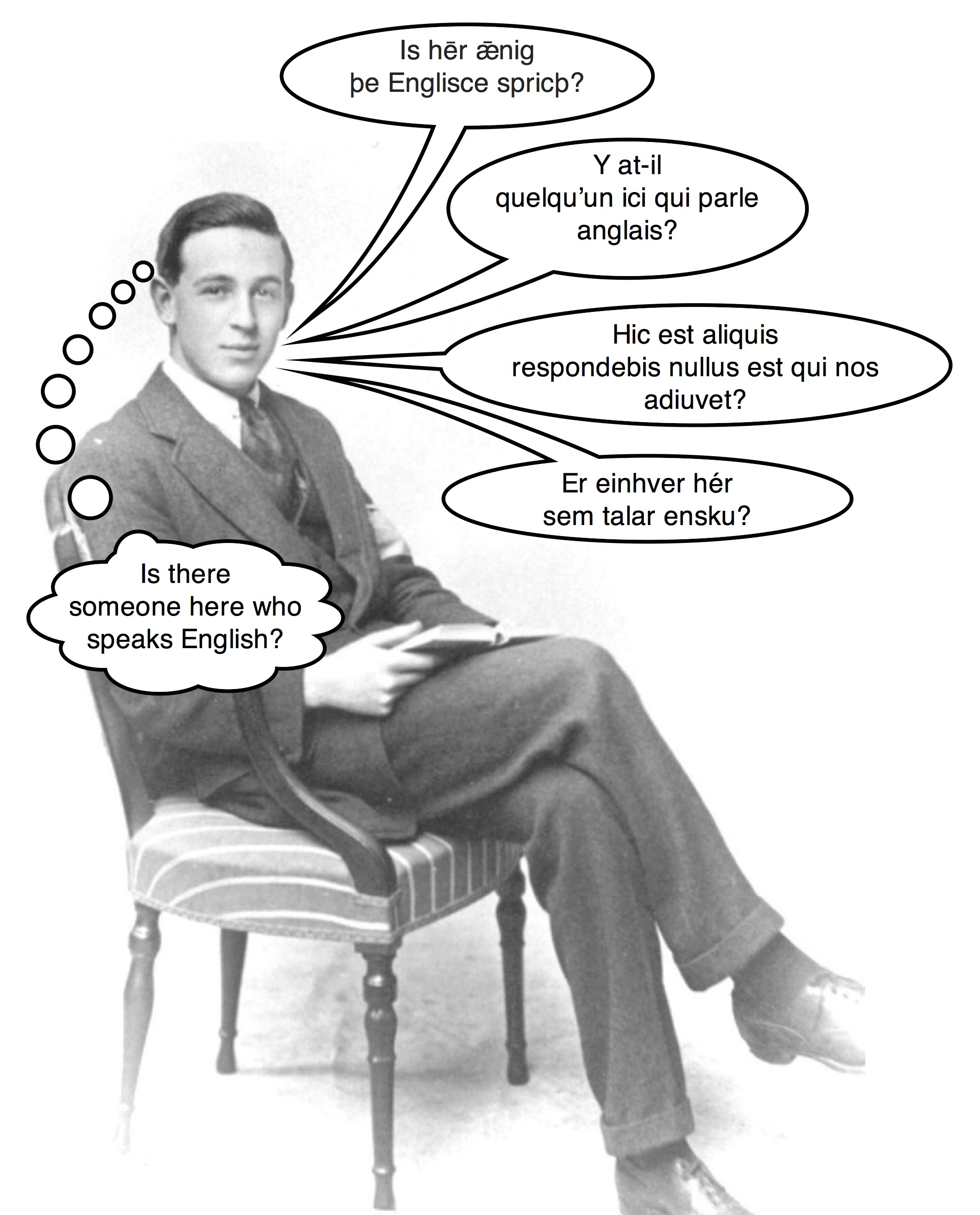
C.S. Lewis’ Bilingualism

csl bilingualHow many extremely intelligent and well educated people do you know . . . who can actually communicate with those of us possessing normal human intelligence?

That talent is a rarity.

And it is precisely what makes C.S. Lewis such an unusual man. He was brilliant. Yet he could communicate with the common person—even the child—just as easily as he conversed with his fellow university dons.

Lewis, of course, could comprehend a number of languages, so he was more than merely “bilingual.” But that is not exactly the sense in which I am using the word today. I mean it in the sense of my opening paragraphs. It is the ability to communicate (even with the same “language”) to distinctly different groups who would normally not be able to readily understand one another.

In an interview that appeared in Christianity Today, Detroit pastor Christopher Brooks was asked about the challenges of urban ministry.

How have you included both righteousness and justice in your setting?

I think about C.S. Lewis, who had the challenge of building the bridge between the culture of Oxford and Cambridge and the culture of the church. These cultures were worlds apart by his time, but he was bilingual, in a sense: able to speak the language of Oxford to the church and the language of the church to the intellectuals and naturalists.

One of the titles for ancient Roman priests that was adopted by their Christian successors is “pontifex.” It means “bridge-maker.” The Pontifex Maximus was, of course, referred to the greatest of these offices.

In light of Brooks’ words about Lewis as building bridges between elite academia and Christianity, I have added that dimension to my view of him. C.S. Lewis, Pontifex Maximus. (I doubt it would make him happy, so I’ll keep it under wraps . . . and probably never mention it again.) But I am genuinely happy about his skill in building these bridges of understanding.

Before signing off, a special treat. If you call someone who speaks two languages “bilingual,” and someone who speaks three “trilingual,” what do you call someone who only speaks one language? Why, an American, of course.

That joke would not be as funny if it were not so sadly true. While the rest of the world almost assumes that people know at least two languages, most Americans stumble their way through the study of a second language for two or three years and never develop a comfort level with it. But that’s a story for another day.

Suspicious Séances

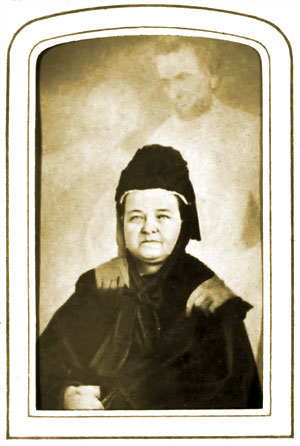
lincolnsDid you hear about the séances that were held at the White House? It’s true, but it’s not recent news. They were conducted for Mary Todd Lincoln, and her husband, the president, apparently joined in attendance at some of them.

The Lincoln’s had lost their eleven year old son Willie to Typhoid in February 1862. Nearly all historians describing Mary’s grief accurately use the word “inconsolable”.

Since the Lincoln’s were not Christian, Mary sought the illusion of comfort in spiritualism, a thriving movement in the mid-nineteenth century. Spiritualism typically contends that the spirits of the dead survive in a manner where they can, and do, communicate with the living. This interchange is typically facilitated by a “medium,” someone particularly attuned to the “spirit world.”

Mediums sometimes allow themselves to become physical vessels for these spirits.

Christians either dismiss such experiences as fraud, or as demonic possession. Which depends on their own worldview. Some Christians dismiss the spiritual realm, while others recognize it is quite real.

C.S. Lewis would be in the latter camp, as his preface to The Screwtape Letters amply illustrates.

There are two equal and opposite errors into which our race can fall about the devils. One is to disbelieve in their existence. The other is to believe, and to feel an excessive and unhealthy interest in them. They themselves are equally pleased by both errors and hail a materialist or a magician with the same delight.

Christians who acknowledge the spiritual warfare which is waged beyond our physical senses understand the meaning of Paul’s words: “For we do not wrestle against flesh and blood, but against the rulers, against the authorities, against the cosmic powers over this present darkness, against the spiritual forces of evil in the heavenly places” (Ephesians 6:12).

Returning to the 1800s

The reason I have been thinking about Mary Lincoln—who would later be institutionalized and attempted suicide—is because I’m finishing up an article for the online journal I edit about the military chaplaincy. It’s called Curtana: Sword of Mercy, and the new issue will be posted by the end of the month.*

The specific article relates the story of Ellen Elvira Gibson (Hobart),** who was the first woman chaplain in the American military. She served a Wisconsin regiment, and her story is nothing short of fascinating.

Hobart was a spiritualist, and “ordained” by a group of the same who banded together to provide just such credentials. Interestingly, although she gave hundreds of (paid) lectures in a spiritual “trance” state, she would ultimately reject spiritualism. She turned to a more radical and secular “freethinking” as spiritualism was waning in popularity, but still a formidable presence.

Chaplain Hobart would gain renown in anti-Christian circles for her book The Godly Women of the Bible by an Ungodly Woman of the Nineteenth Century. Numerous atheist websites cite a quotation from the volume. “The abominable laws respecting [women in the Bible] . . . are a disgrace to civilization and English literature; and any family which permits such a volume to lie on their parlor-table ought to be ostracized from all respectable society. . .”

Contemporary readers will find it odd that one of the reasons spiritualism received a warm welcome in Europe and America was precisely because it seemed to offer measurable, “scientific” evidence of the afterlife. In This Republic of Suffering: Death and the American Civil War, Drew Faust writes:

To an age increasingly caught up in the notion of science as the measure of truth, spiritualism offered belief that seemed to rely on empirical evidence rather than revelation and faith. If the dead could cause tables to rise, telegraph messages from the world beyond, and even communicate in lengthy statements through spirit mediums, an afterlife clearly must exist. Here was, in the words of one popular spiritualist advocate, ‘proof palpable of immortality’” (180-81).

Returning to the Inklings

One of Lewis’ dearest friends was Owen Barfield. Sadly, the two remained separated throughout life by their religious beliefs. Barfield had helped Lewis come to believe in God (i.e. theism) but could not journey with Lewis on to Christianity. Barfield, instead, became one of the greatest of Anthroposophist evangelists.

Anthroposophy possesses elements of philosophy, but is also inarguably a religion in its own right. It also holds a view of the afterlife distinct from both Christianity and historic spiritualism.

But the nature of the religion created by Rudolf Steiner (which evolved from his involvement in Theosophy) is not the subject of our reflections here. However, if one is interested in learning more about Owen Barfield, a 1992 documentary can be viewed here.

_____
The image above is a famous example of “spirit photography” taken by William Mulmer, who made it popular. He was once placed on trial for fraud, but the case was dismissed for lack of evidence.

* I may delay publication of this particular article since the issue will already carry the biography of another chaplain.

** The reason “Hobart” is bracketed, is because it was her married name at the time of her military service. However, the marriage was short lived, and most of her life she went by “Ella E. Gibson.”