C.S. Lewis & Medicine

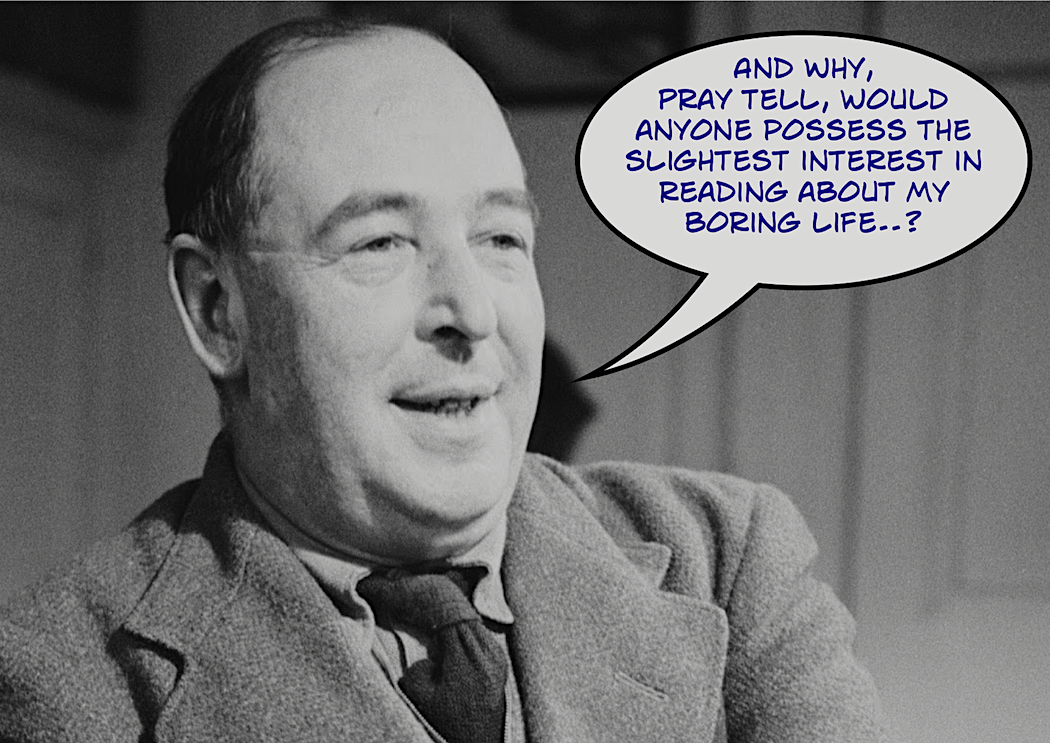
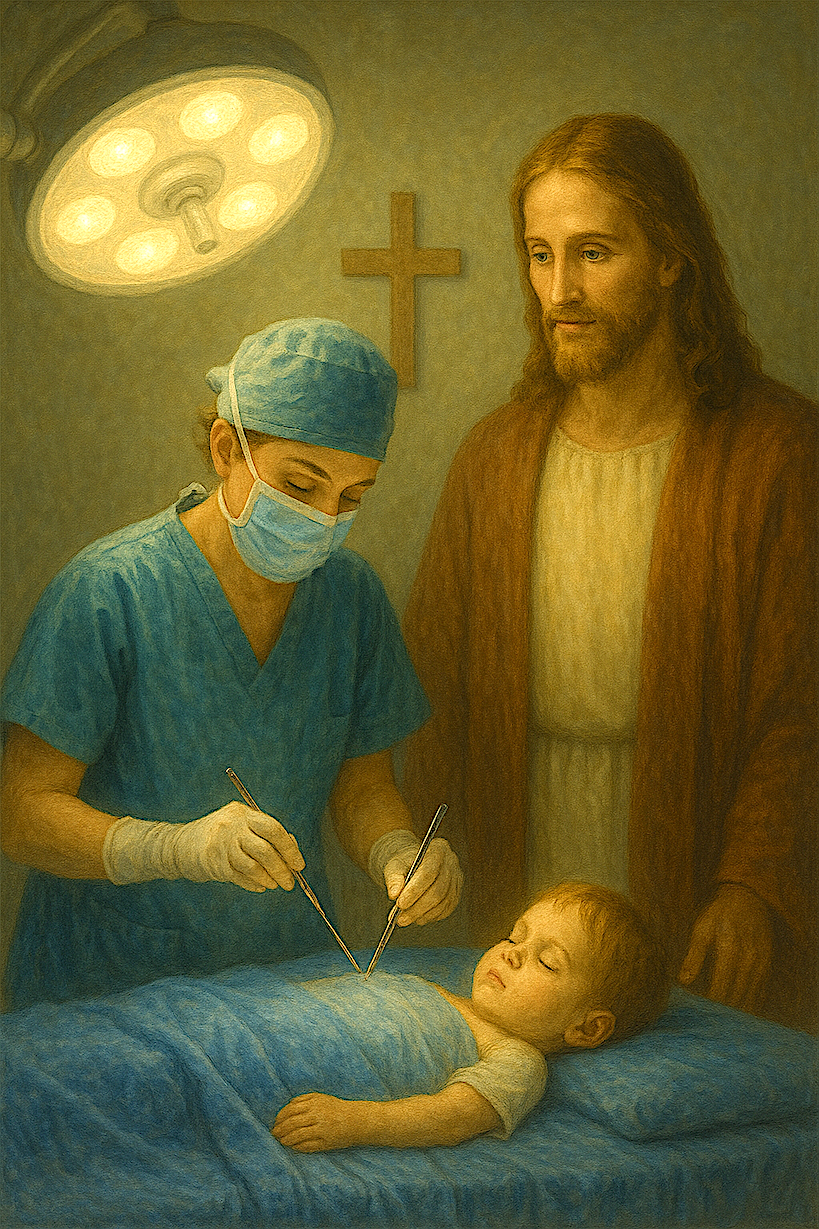
[I originally penned this post in 2020, but delayed its publication due to failing in my attempt to secure permission to receive this perfect illustration. Five years later, AI allowed me to create the image shown above. Since the message remains pertinent, I’m offering my thoughts on this subject today.]

Medicines are precious. Right now we are seeing the release of the first antiviral drugs devised to protect us from the covid plague. The trials have been positive, and now the caregivers on the frontlines are receiving these protective injections.

Unfortunately, some so-called medicines are not effective. They can even be harmful. That’s the case with “patent medicines” hawked by shysters lying about their results. Originally the term was positive. According to one museum, “patent medicines originally referred to medications whose ingredients had been granted government protection for exclusivity.”

Sadly, though, “the recipes of most 19th century patent medicines were not officially patented. Most producers (often small family operations) used ingredients quite similar to their competitors—vegetable extracts laced with ample doses of alcohol.

In a previous post, I shared Lewis’ view of God’s role in healing.

In his essay entitled “Miracles,” C.S. Lewis described during World War II the Christian viewpoint that God is the author of healing. After discussing the natural order of creation, he argues that God is at work in restoring the health of the those who are ailing.

In 1962, Lewis commiserated with a correspondent complaining about the number of pills she needed to take. He acknowledges the problem, and then points to a very positive corollary.

Yes, and one gets bored with the medicines too–besides always wondering ‘Did I remember to take them after breakfast?’ and then wondering whether the risk of missing a dose or the risk of an over dose is the worst!

Yes, one gets sick of pills. But thank God we don’t live in the age of horrible medicines such as our grandparents had to swallow.

In A Grief Observed, Lewis used an illustration of physical pain to explore the emotional pain caused by his sorrow at his wife’s passing.

I once read the sentence “I lay awake all night with a toothache, thinking about the toothache and about lying awake.” That’s true to life. Part of every misery is, so to speak, the misery’s shadow or reflection: the fact that you don’t merely suffer but have to keep on thinking about the fact that you suffer. I not only live each endless day in grief, but live each day thinking about living each day in grief.

In some ways, psychological suffering is particularly painful. The mentally ill have historically been ostracized. For all of the neurological discoveries that have been made in recent years, the human brain remains a mystery.

Fortunately, medical science has experienced some success formulating medicines that are helpful in treating mental disorders. One problem, however, is that (like nearly all meds) psychological formulas occasionally produce extreme side effects.

C.S. Lewis’ primary experience of psychological suffering came through grief. Tweaking Optimism, a great blog, has gathered a number of Lewis’ thoughts on mental anguish. One passage he cites from The Problem of Pain aptly contrasts physical and mental suffering.

Mental pain is less dramatic than physical pain, but it is more common and frequently more difficult to bear. The common attempt to conceal mental pain increases the burden: it is easier to say “My tooth is aching” than to say “My heart is broken.”

In the same book, Lewis lifts up the truth about suffering. In cases where no cure can bring relief, he beautifully describes various ways to survive journeying through the valley.

When pain is to be born, a little courage helps more than much knowledge, a little human sympathy more than much courage, and the least tincture of the love of God more than all.

C.S. Lewis’ Prescription for Christians Today

We live in an uncertain and turbulent time. Only God knows how long this world will last, but he has promised to deliver from death and hell those who call on his name. Thus, Jesus’ followers need not live in dread or despair.

We live with hope, and look forward with enthusiasm to our Lord’s return. It is to that glorious day, the Parousia, that Lewis refers in his essay “The World’s Last Night.”

The doctrine of the Second Coming, then, is not to be rejected because it conflicts with our favorite modern mythology. It is, for that very reason, to be the more valued and made more frequently the subject of meditation. It is the medicine our condition especially needs.

An Entertaining Tolkien “Game”

The inspiration for this revisitation of Lewis’ thoughts about medicine came from a fun website I recently encountered. Some creative soul noticed the similarity between two dissimilar matters—antidepressant medications and residents of Middle Earth.

The game offers 24 words, and you are challenged to identify the group into which it falls. Is it the name of a pharmaceutical, or is it one of the characters created by J.R.R. Tolkien? One name is a giveaway, but you may find many of the others rather difficult to discern.

Kudos to anyone who gets over twenty correct. (I almost did . . . well, if sixteen is close.) Have fun, and learn something, at the very same time!

Antidepressants or Tolkien Character?

C.S. Lewis & Emotions

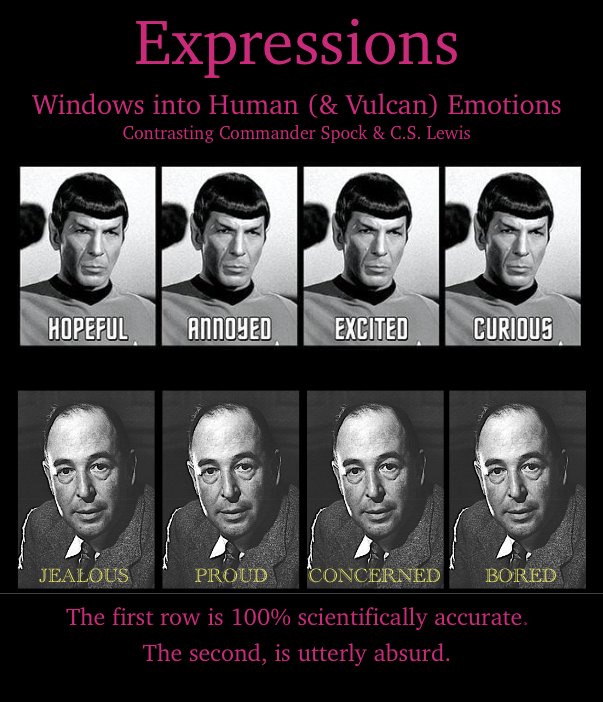
Are you one of those people who pride themselves on not being particularly emotional? Probably not, since the pendulum has swung far in the opposite direction in our current day. (Consider how few clicks a Tik Tok influencer with “flat affect” would get.)

Most of us know some people (most commonly men – forgive me the generalization) who keep their emotions under tight rein.

Back when I was a child, in the mid-twentieth century, it was not uncommon for men to “guard” their notion of masculinity by acting emotionless. And various ethnicities, including my own ancestors, possessed a reputation for being staid.

I can’t recall my Norwegian grandfather, who died when I was about ten, ever expressing truly warm sentiments. I know he must have laughed, and my grandmother had a great sense of humor, but I have no memory of it.

For some reason, many people picture C.S. Lewis as an emotionally sober intellectual. Perhaps it’s because he wrote so many profound essays. The truth is that Lewis was extremely jovial and fun-loving. I have noted some of this humor in the past.

Like most of us, C.S. Lewis’ closest friends saw him most clearly. They witnessed his jocularity in their regular gatherings. His fellow Inklings witnessed it frequently, but I don’t see how anyone can read the Chronicles of Narnia, and perceive their author as reserved, much less grave.

One reason some readers misunderstand C.S. Lewis’ exquisite sense of humor is because it is British. For Americans, for example, appreciating British humor is an acquired taste. As reported by the BBC, the wit often includes elements of “sarcasm, understatement [and] self-deprecation.”

In The Screwtape Letters, C.S. offers an insight into one of the Tempter’s tactics in undermining human nature, in terms of being fashioned in the image of our Creator.

[Englishmen] take their “sense of humour” so seriously that a deficiency in this sense is almost the only deficiency at which they feel shame. Humour is for them the all-consoling and (mark this) the all-excusing, grace of life.

Hence it is invaluable as a means of destroying shame. [. . .] A thousand bawdy, or even blasphemous, jokes do not help towards a man’s damnation so much as his discovery that almost anything he wants to do can be done, not only without the disapproval but with the admiration of his fellows, if only it can get itself treated as a Joke.

And this temptation can be almost entirely hidden from your patient by that English seriousness about Humour. Any suggestion that there might be too much of it can be represented to him as “Puritanical” or as betraying a “lack of humour.”

Lewis’ humor was on full display to his intimate friends, and uninhibitedly on display to the world in a number of his writings. But his openness didn’t end there. 

Just Like the Rest of Us:
a Person of Humor and Grief

I don’t recall anyone labeling C.S. Lewis a “humorist” – likely because his corpus is so diverse and complex – but I think a literary critic could make that case.

Ironically, I once cited an autobiographical reference in which C.S. Lewis applied that very attribute to his own father, a serious solicitor.

In contrast, C.S. Lewis would mature to the point where he was willing to expose that deepest of emotions, grief, with the entire world. In A Grief Observed, he explored his pain in the wake of his wife’s untimely passing. Joy Davidman was the precious wife this confirmed bachelor never anticipated having, and her death crippled him.

His description of his thoughts, doubts, and spiritual struggle in the aftermath has helped many others to survive the nightmare of bereavement. Curiously, for privacy C.S. Lewis initially used a pen name for the volume. (You can read about that here.)

He did not wish to have his authorship of the book distract from its subject matter. He would have known that would only be a temporary tool, since pseudonyms are nearly always uncovered. Initially, however, it was so effective that when it was published, readers recognized it could speak to Lewis’ own grief, and offered him gift copies.

T.S. Eliot was one of its first advocates for the volumes publication, and you can read that story at Faber & Faber.

A Final Lewisian Observation on Emotions

Some people view the intensity of emotions associated with events to be a measure of their validity. If my passions are aroused by an activity, we incorrectly think, it must be real!

This error is particularly dangerous when related to so-called “matters of the heart” and matters of faith. 

C.S. Lewis was cautious in both realms. We already noted his resignation to live out his life as a single man. In terms of faith, he was just as circumspect. His conversion from atheism to Christianity was long, thoughtful, and reluctant. 

And this, I found, was something I had not wanted. But to recognize the ground for my evasion was of course to recognize both its shame and its futility.

I know very well when, but hardly how, the final step was taken. I was driven to Whipsnade [Zoo] one sunny morning. When we set out I did not believe that Jesus Christ is the Son of God, and when we reached the zoo I did.

Yet I had not exactly spent the journey in thought. Nor in great emotion. “Emotional” is perhaps the last word we can apply to some of the most important events.

It was more like when a man, after long sleep, still lying motionless in bed, becomes aware that he is now awake. And it was, like that moment on top of the bus, ambiguous.

Freedom, or necessity? Or do they differ at their maximum? At that maximum a man is what he does; there is nothing of him left over or outside the act.

Certainly, many people are blessed with emotional confirmation in their spiritual lives. The obvious peril, of course, is in evaluating the veracity of something by how giddy it makes us feel. 

After all, there will always come “dark nights of the soul” when the feelings have fled . . . but Jesus, still remains.  

Suffering Caused by Labeling Children

Kids are often cruel, dishing out insults and rude nicknames to those they deem “different.” Sadly, not everyone outgrows this ugly behavior. As C.S. Lewis wrote in The Four Loves,

We hear a great deal about the rudeness of the rising generation. I am an oldster myself and might be expected to take the oldsters’ side, but in fact I have been far more impressed by the bad manners of parents to children than by those of children to parents.

I recently discovered an artist whose music reveals the pain caused by this cruelty. In “Not My Name,” Matt Sassano describes how we can move beyond the wounds of our past. For we all understand these hurtful words possess power.

These are the scars
     that I’m forced to live with,
These are the scars
     that mark me as a misfit . . .

Who among us does not bear scars from past struggles? Who among us has never been ridiculed by others?

Despite having a loving mother who sheltered me from much of life’s traumas, I bear my own scars. That’s one reason this song powerfully resonated with me. 

But there is a stronger reason I am touched by “Not My Name.” It’s because, as a pastor I have seen far, far too many women and men who remain buried beneath their pain.

I found healing in God’s grace. The scars now cause me little discomfort, though the memories remain. And I have found healing often begins when people who have endured life’s onslaughts learn they are not alone. 

This man shares a heart just like their own.

These are the scars
     that I am forced to live with
So pick me apart
I won’t fit the mold that you fit
But thеre’s a warrior inside me
That you playеd a part in building
Because you made me understand.

About staying strong when you’ve fought so long
In a world that tells you you don’t belong
Living in the shadow of all your flaws
Where it’s hard to be seen for who you are.

And, the emotionally and spiritually wounded can see how someone suffering like them can proclaim this liberating truth:

So label me
Call me by my pain
That’s not my name
That’s not my name.

I’m so much more
     than your throw away
That’s not my name
That’s not my name. . . .

You won’t sentence me
Your words are dead to me
I know my suffering
     is not my identity.

As impressed as I was with this song, it means all the more now that I learned something about Sassano’s life.

The Sins of the Father

A short biography reveals some of the reason for Sassano’s plaintive spirit. 

He was the son of an unfit pastor, whose anger and abuse crushed his childhood faith. His search for meaning “was intensified by the experience of living with two disabilities: Cerebral Palsy and dyscalculia (which impairs brain functions like navigation and mathematics).

“I spent much of my early life in and out of doctor’s offices and disability meetings, which led me to struggle with my self-perception and self-esteem.”

It is this tragic youth which directly inspires his video “Dear God.” Released in 2022, it reminds me of the lamentations we find in the Scriptures, particularly the Psalms and Jeremiah. In Madeleine L’Engle’s forward to C.S. Lewis’  lamentations in A Grief Observed, she expresses gratitude for his honest treatment of grief’s violence. 

I am grateful to Lewis for the honesty of his journal of grief, because it makes quite clear that the human being is allowed to grieve, that it is normal, it is right to grieve, and the Christian is not denied this natural response to loss.

I am grateful, too, to Lewis for having the courage to yell, to doubt, to kick at God . . . This is a part of healthy grief not often encouraged. It is helpful indeed that C.S. Lewis, who has been such a successful apologist for Christianity, should have the courage to admit doubt about what he has so superbly proclaimed. It gives us permission to admit our own doubts, our own angers and anguishes, and to know that they are part of the soul’s growth.

The video amplifies the power of the lyrics of “Dear God.” So, do watch it.

I’ve got questions, confessions
I just want peace of mind
Time’s fading and I’m waiting
For something I can’t find
I am overwhelmed
Can I endure this hell?
No way to break the spell
I’ll spill my heart again

Dear God
I’ve lost the will to fight
Please give me a sign
I’m empty inside
Got no strength to carry on
The plague has multiplied
It’s eating me alive
How can I survive?
Dear God

Much like C.S. Lewis’ book describing the loss of his wife, Sassano’s songs can help bring healing to those in similar pain. Even if you don’t need to listen to these songs . . . trust me, there is someone you know and care about, who does!

C.S. Lewis & Scrabble

scrabble

It’s not uncommon for people who love words to also enjoy the game Scrabble.

The word game, born in 1933, is quite popular. In fact, the Hasbro company claims “today the SCRABBLE game is found in three of every five American homes.”

The game made enough of an impact in New York City, that the neighborhood where it was conceived is adorned with the distinctive Scrabblesque street sign shown above.

C.S. Lewis was also a fan of the game. He and his wife Joy played the game regularly. But they modified the rules, to allow for their particular intellects. Doug Gresham, their son, describes this in The Magic Never Ends: The Life and Works of C.S. Lewis.

They played word games with each other. They had their own rather unique rules for Scrabble. They would take one board and both sets of letters from two Scrabble sets. And then they would proceed to play Scrabble, allowing all known languages, whether factual or fictional, and they would fill the whole board with words.

Jack, Joy & Their Love of Words

The third volume of The Collected Letters of C.S. Lewis includes two references to the way Scrabble became a familiar feature of their married life. In the first, written in July of 1957, he describes the situation at the beginning of Joy’s remission.

It is fascinating in several ways. It describes Lewis’ own declining health and the manner in which God had used it to be a blessing in their relationship. The shock, however, comes in Lewis’ confession about who was the Scrabble champion at The Kilns.

Joy is now home, home from hospital, completely bed-ridden. The cancer is ‘arrested,’ which means, I fear, hardly any hope for the long term issue, but for the moment, apparently perfect health, no pain, eating & sleeping like a child, spirits usually excellent, able to beat me always at Scrabble and sometimes in argument.

She runs the whole house from her bed and keeps a pack of men not only loving her but (what’s rarer) one another.

We are crazily in love.

My back turns out to be not slipped disc but osteoporosis–a spongy condition of the bones that is common in men of 75 but almost unknown at my age (58). After full investigation by a great Professor of Pathology the cause remains quite obscure. It has passed the stage of spasms and screams (each was rather like having a tooth out with no anaesthetic and you never knew when they were coming!), but I still ache a good deal and need sleeping draughts.

Can you realise the good side? Poor Joy, after being the sole object of pity & anxiety can now perform the truly wifely function of fussing over me–I’m in pain and sit it out–and of course the psychological effect is extremely good. It banishes all that wearisome sense of being no use. You see, I’m very willing to have osteoporosis at this price.

The fact that Jack and Joy were truly “crazily in love,” made the brevity of their life together all the more poignant and precious. In July of 1960, Lewis wrote to inform a friend of Joy’s passing.

Dear Mrs Gebbert, Alas, you will never send anything ‘for the three of us’ again, for my dear Joy is dead. Until within ten days of the end we hoped, although noticing her increasing weakness, that she was going to hold her own, but it was not to be.

Last week she had been complaining of muscular pains in her shoulders, but by Monday 11th seemed much better, and on Tuesday, though keeping her bed, said she felt a great improvement; on that day she was in good spirits, did her ‘crossword puzzle’ with me, and in the evening played a game of Scrabble.

At quarter past six on Wednesday morning, the 13th, my brother, who slept over her, was wakened by her screaming and ran down to her. I got the doctor, who fortunately was at home, and he arrived before seven and gave her a heavy shot.

At half past one I took her into hospital in an ambulance. She was conscious for the short remainder of her life, and in very little pain, thanks to drugs; and died peacefully in my company about 10.15 the same night.

I could not wish that she had lived, for the cancer had attacked the spine, which might have meant several days of suffering, and that she was mercifully spared.

You will understand that I have no heart to write more, but I hope when next I send a letter it will be a less depressing one.

This letter suggests that Joy’s final evening in this world was a happy one. It was filled with warm and family domesticity. Under the circumstances, who could hope for more. As Lewis writes, it would only be for our own selfishness that we would wish to prolong the suffering of those we love.

I would be curious to learn whether Lewis ever again played Scrabble during those final few years of his own life. I suspect that it would have been too painful. Best to recall the game in light of the affectionate competition the two of them shared.

Autobiographical Temptations

autobiography.png

When you get to a certain age, most writers will consider, at least momentarily, penning an autobiography. Often, aware the effort will invite charges of vanity, they will opt to call it a memoir. Whatever the label, the result is the same.

Writers are faced with the question—and they alone can answer it—as to whether or not there is any value in the preservation of notes about their life journey.

I would argue that there is a clear benefit, even when no one else will read it. Self-reflection, in and of itself, enriches one’s life. Even if it is painful, it can be therapeutic. And, since we’re still alive as we examine our past, time remains to rectify some of the mistakes we have made.

This very process of looking at our lives invites us to question our motives for recording these stories. And, if we’re considering merely to praise ourselves, it would be best to abstain.

On the other hand, it seems to me that many “normal” lives can validly serve as an inspiration to others. (I don’t presume my own effort would fit into this category.)

Here is the reason why I’m actually contemplating assembling some notes for a near-the-end-of-my-earthly-sojourn document. It just might be of interest to some of my descendants. I have often wished to have just such a jewel written by my own ancestors.

Putting myself in the place of my great-grandchildren, etc., I suspect some of them and their own grandchildren might be curious about an ancient progenitor. In fact, the more such records, the fuller the picture they stand to gain of their lineage.

The key, I think, to writing a worthwhile memoir is honesty. If we share our challenges and failures, the volume will not only be more interesting, if may offer our descendants encouragement in their own struggles.

As a man vulnerable to the sin of pride, I’m cautious about proceeding. I pulled this disarming contrast from a book review written several years ago by theologian Carl Trueman.

Autobiographies are typically opportunities for the display of ego and the rationalizing of error. They have been so at least since Julius Caesar’s military memoirs. In our day, it is not just politicians and military leaders who indulge in this.

One thinks of the memoirs of Hans Küng: names dropped on every page, always with the purpose of reminding the reader how important—and how correct—Küng has been over the years on every significant issue and how unfairly he has been treated by his mediocre opponents.

Autobiography need not be so, as this volume [A Change of Heart] by Thomas Oden shows. Though Oden seems to have known everyone who was anyone in the theological world of the last sixty years, from Barth and Niebuhr to Dulles, Ratzinger, and Wojtjyla, there is no sense of ego. Names are regularly dropped but no self is ever promoted. Oden is a humble, fascinating, and important man blissfully unaware of the fact.

I’ve had the good fortune to meet several people during my life whose names would be familiar to you. But, God be merciful, I prefer to be an Oden rather than a Küng.

C.S. Lewis was a man like the former, “humble, fascinating and important.” Yet, despite the accolades he received from some quarters, he remained blissfully unaware of the fact that God would continue using his words to inspire others so many decades after he joined his Lord in Paradise.

A Worthy Exemplar

Lewis resisted writing about himself. Not out of a false modesty, but due to a desire to maintain personal privacy and a genuine sense that his life was neither particularly inspirational nor unique. Nevertheless, if it were possible that sharing about his life could help others, he was willing to do so.

His works are sprinkled with autobiographical commentary. His vast correspondence also provides great insight into his life. In 1955, he wrote a traditional autobiography, primarily to explain his conversion.

He entitled it Surprised by Joy: The Shape of My Early Life. As he begins in the Preface:

This book is written partly in answer to requests that I would tell how I passed from Atheism to Christianity and partly to correct one or two false notions that seem to have got about.

He describes his approach, noting how it differs from what readers might expect.

The book aims at telling the story of my conversion and is not a general autobiography, still less “Confessions” like those of St. Augustine or Rousseau.

This means in practice that it gets less like a general autobiography as it goes on. In the earlier chapters the net has to be spread pretty wide in order that, when the explicitly spiritual crisis arrives, the reader may understand what sort of person my childhood and adolescence had made me.

When the “build-up” is complete, I confine myself strictly to business and omit everything (however important by ordinary biographical standards) which seems, at that stage, irrelevant.

I do not think there is much loss; I never read an autobiography in which the parts devoted to the earlier years were not far the most interesting. The story is, I fear, suffocatingly subjective; the kind of thing I have never written before and shall probably never write again.

I have tried so to write the first chapter that those who can’t bear such a story will see at once what they are in for and close the book with the least waste of time.

A Naked Autobiography

As fascinating as Surprised by Joy is, there exists another volume in which the mature Lewis bared his soul as have few others. When he lost his wife, Lewis experienced a profound sorrow that he described in A Grief Observed. So vulnerable was his writing, that Lewis published it under a pseudonym.

In 1988, Madeleine L’Engle penned a Foreword to the book, which now appears under Lewis’ own name.

In the end, what shines through the last pages of his journal of grief is an affirmation of love, his love for Joy and hers for him, and that love is in the context of God’s love.

No easy or sentimental comforts are offered, but the ultimate purpose of God’s love for all of us human creatures is love.

Reading A Grief Observed is to share not only in C. S. Lewis’s grief but in his understanding of love, and that is richness indeed.

Lewis was an exceptional writer, but I daresay that his life was little more amazing than your own. Certainly, Lewis’ life was no more precious to God than yours is.

I encourage you to consider writing (at the appropriate moment) your own memoir. This is particularly important if you have family who may be interested. But even if you don’t, consider writing.

Just remember to follow Lewis’ example and try “to write the first chapter that those who can’t bear such a story will see at once what they are in for and close the book with the least waste of time.”

A Song has Ended

lyric christmasSix months of life with someone you love, is too brief. Far too brief.

Only last June I invited you to share our joy with the adoption into our family of Lyric, a border collie mix.

Tragically, last night the precious girl passed away. And our family is now dealing with the shock and grief that are such a painful (but inescapable) part of loving the pets who join our families.

After Lyric had been with us for several months, we saw evidence (excessive salivation and frantic, happy racing around the house) of a health concern. When we later witnessed a seizure that lasted just a minute or two, it was nearly as traumatic to us as it was to her. That feeling of helplessness is horrible, isn’t it?

Visits to the vet resulted in the suspicion that it may have been caused by the mushrooms that grow abundantly in the Pacific Northwest forest where we live. (This has been a particularly favorable year to all forms of fungi, and this is a fairly common cause of canine seizures.)

We took precautions to minimize her exposure to that source, but she had several more seizures, weeks apart. Our two vets said that if she experienced a “cluster” of seizures, there were some drugs we could try. However, we never saw any indications of that, so we remained in a monitoring status.

Tragically, late last night, while lying beside me as I was writing, she began what became a relentless series of attacks on her system. She briefly stabilized between each seizure, but they grew longer and more severe. Finally, her strong heart (mercifully) surrendered, and she was gone.

C.S. Lewis was writing about the death (and resurrection) of human beings in his essay “Some Thoughts,” but his words about the alien nature of death resonate with what I am feeling today.

Of all men, we hope most of death [as in, not being the end of all, but a passage to an even more real life]; yet nothing will reconcile us to—well, its unnaturalness. We know that we were not made for it; we know how it crept into our destiny as an intruder; and we know Who has defeated it.

Because Our Lord is risen we know that on one level it is an enemy already disarmed; but because we know that the natural level also is God’s creation we cannot cease to fight against the death which mars it, as against all those other blemishes upon it, against pain and poverty, barbarism and ignorance. Because we love something else more than this world we love even this world better than those who know no other.

Animals, of course, don’t share humanity’s souls. But when you gaze into those love-filled, adoring eyes of your dog, only someone spiritually blind would fail to recognize there is a precious spark within.

I have written in the past about the possibility of God restoring our pets to us in heaven. I won’t belabor that possibility here. After all, it’s merely conjecture. But, in these moments of grief, many find some small comfort in the possibility of God restoring to life these beloved, and innocent, victims of humanity’s disobedience in the Garden.

I began my first post about Lyric with these words:

Last night a new member joined our family. Her name is musical. We didn’t choose it; her previous family did. But we think it fits and she’ll live up to it.

It was for far too short a time, but Lyric definitely did live up to the beauty of her name.

Face to Face with God

Jesus with animalsA recent letter to the editor of Lutheran Witness includes a delightful example of the wondrous glory of childhood simplicity.

When our four-year-old son . . . saw a bird outside the window, he commented “I wish I were a bird with wings so I could fly up to heaven and talk to Jesus.” [His parents] asked what he would say to Jesus if he were a bird. His simple reply . . . “Tweet, tweet.”

How gloriously innocent. So unpretentious and joyously pure. I think this captures the essence of what Jesus was referring to when he said “Truly, I say to you, unless you turn and become like children, you will never enter the kingdom of heaven. Whoever humbles himself like this child is the greatest in the kingdom of heaven” (Matthew 18:3-4, ESV).

C.S. Lewis discussed the innocence of children in his essay “The Abolition of Man.” He is discussing the monolithic power of society, or government, in reshaping what it means to be human. God preserve us from those who would redefine and eradicate the very qualities of humanity Jesus praised.

Human nature will be the last part of Nature to surrender to Man. The battle will then be won. . . . But who, precisely, will have won it? For the power of Man to make himself what he pleases means, as we have seen, the power of some men to make other men what they please. . . .

Hitherto the plans of educationalists have achieved very little of what they attempted and indeed, when we read them—how Plato would have every infant “a bastard nursed in a bureau,” and Elyot would have the boy see no men before the age of seven and, after that, no women, and how Locke wants children to have leaky shoes and no turn for poetry—we may well thank the beneficent obstinacy of real mothers, real nurses, and (above all) real children for preserving the human race in such sanity as it still possesses.

But the man-moulders of the new age will be armed with the powers of an omnicompetent state and an irresistible scientific technique: we shall get at last a race of conditioners who really can cut out all posterity in what shape they please.

When you and I stand in the presence of God, our adult words will vary. We’ll all drop to our knees—some in adoration, others perhaps in fear—but what will we say?

I can imagine some of the words that will come to our lips.

“Thank you.”

“Why did you allow . . ?”

“I love you.”

“I despise you because . . ?”

“Hallelujah.”

Or, perhaps, “Why did you delay so long?”*

I suspect we will probably be speechless. Certainly, at first. There’s a song that captures well the mystery that awaits us when we find ourselves face to face with our Creator. It’s more in spirit with the response of the young child who simply tweeted out his greeting to God.

Surrounded by Your Glory, what will my heart feel?

Will I dance for you, Jesus? Or in awe of You, be still?

Will I stand in Your presence, or to my knees will I fall?

Will I sing ‘Hallelujah!’? Will I be able to speak at all?

I can only imagine! I can only imagine!

We used to sing this song at chapel services in southwest Asia. I have often thought it would be very meaningful to record this song in my own voice, to be played at my own funeral (should the Lord tarry).

That’s not nearly as morbid as some might think. It’s a song of praise, awe and wonder, in my rendition I would end it with the words “I no longer imagine,” for my faith in God will have given way to sight.

_____
* The answer to that question is actually found in the Scriptures. From the third chapter of Peter’s second epistle:

This is now the second letter that I am writing to you, beloved. In both of them I am stirring up your sincere mind by way of reminder, that you should remember the predictions of the holy prophets and the commandment of the Lord and Savior through your apostles, knowing this first of all, that scoffers will come in the last days with scoffing, following their own sinful desires. They will say, “Where is the promise of his coming? For ever since the fathers fell asleep, all things are continuing as they were from the beginning of creation.” For they deliberately overlook this fact, that the heavens existed long ago, and the earth was formed out of water and through water by the word of God, and that by means of these the world that then existed was deluged with water and perished. But by the same word the heavens and earth that now exist are stored up for fire, being kept until the day of judgment and destruction of the ungodly.

But do not overlook this one fact, beloved, that with the Lord one day is as a thousand years, and a thousand years as one day. The Lord is not slow to fulfill his promise as some count slowness, but is patient toward you, not wishing that any should perish, but that all should reach repentance. But the day of the Lord will come like a thief, and then the heavens will pass away with a roar, and the heavenly bodies will be burned up and dissolved, and the earth and the works that are done on it will be exposed.

Since all these things are thus to be dissolved, what sort of people ought you to be in lives of holiness and godliness, waiting for and hastening the coming of the day of God, because of which the heavens will be set on fire and dissolved, and the heavenly bodies will melt as they burn! But according to his promise we are waiting for new heavens and a new earth in which righteousness dwells.