Famous People You’ve Known

How many famous people have you met? Perhaps more than you realize, when you consider how in our expanding and complex world a person can achieve relative fame in a given field, while remaining anonymous to most.

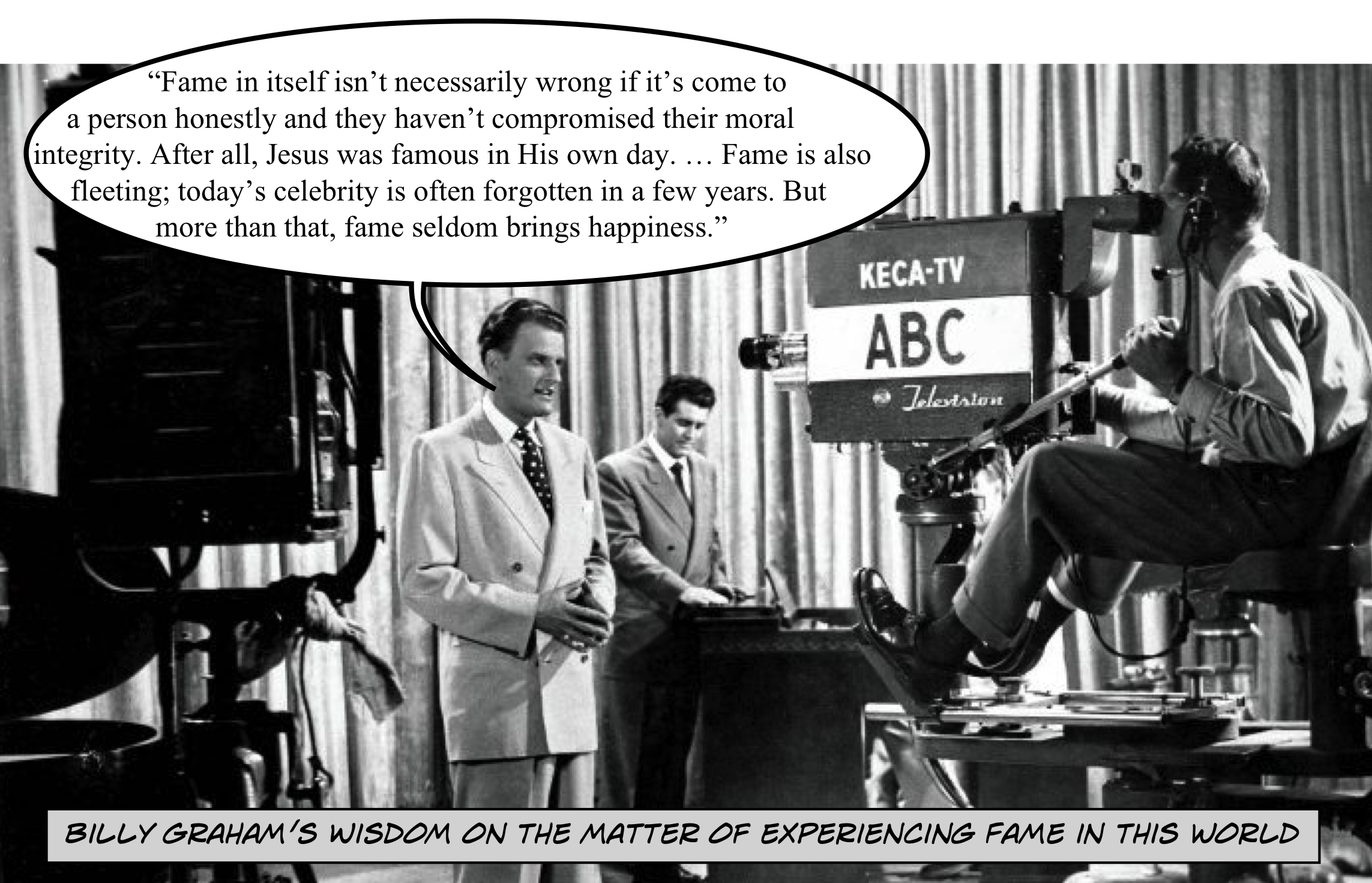
Fame is a pretty lame measure of a person’s character or “worth.” Contemporary society lavishes it on “entertainers,” primarily from sports and a variety of media. Even in these highly visible fields, though, there is so much competition for attention that only an anointed few gain recognition beyond their personal fans.

The subject of notoriety is on my mind now due to the traditional January publications of lists of those who passed during the previous year.

I was surprised to see the names of two people I had met and conversed with on World Magazine’s 2024 account. And only a small number of you will recognize either of their names. After all, a figure’s prominence is frequently restricted to a particular audience, and fame, after all, is notoriously fleeting.

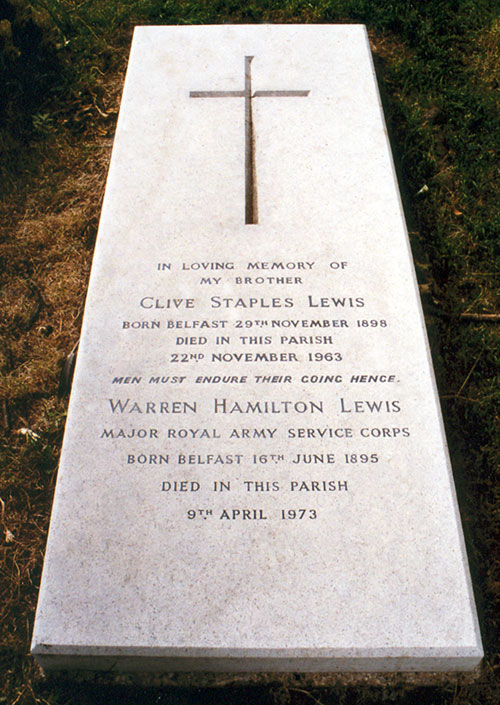
Fame, or notoriety, is not the true measure of a man or woman. In fact, as C.S. Lewis wrote, “even posthumous fame depends largely on accident” (English Literature in the Sixteenth Century).

David Soul was an actor and singer who starred in Starsky & Hutch. His song “Don’t Give Up on Us” topped the Billboard charts.

I met Soul back in the late 70s, when he spoke at an environmental conference. His father was also a Lutheran pastor. We were able to chat for a while at several points during the conference.

The other individual I saw on the list was a man I got to know far better.

Jim Otto was a center for the Oakland Raiders. As a teen and young adult, I was impressed by his Hall of Fame performance, and the fact that he never let an injury keep him from playing. In fact, Otto never missed a game during his 1960-1974 football career.

And then there was his unique jersey number, in honor of his name – 00. Here’s what NPR said about this exceptional athlete who had continued actively supporting the Raiders after their relocation to Vegas, and up to this very year:

Otto joined the Raiders for their inaugural season in the American Football League in 1960 and was a fixture on the team for the next 15 years.

He never missed a game because of injuries, competing in 210 consecutive regular-season games and 308 straight total contests despite undergoing nine operations on his knees during his playing career. His right leg was amputated in 2007.

“He’s a warrior,” former Raiders quarterback Rich Gannon once said. “When you think of the old-time, tough Raider, you think of Jim Otto.”

Of course, like all premier athletes who are genuinely good people, Otto may have been a true warrior on the field, but he remained an unpretentious and compassionate person in everyday life.

I got to know him when we served together on a planning team for a major Christian conference in Sacramento. I even visited him in the hospital, along with his own pastor, while he was having back surgery in Los Angeles.

Fame is not Always Beneficial

Fame is not, of course, intrinsically positive. In our modern era, people often gain it for disturbing reasons. And many of those who sought it end up resenting its demands and desiring anonymity.

I would commend to you a prayer I prayed as I composed this post: Thank you, Lord, for shielding me from fame

Naturally, if you do happen to find fame unavoidable, you can use it for good purposes, like promoting worthwhile causes. But count me as one of those who is utterly content in simply being trusted (and perhaps even respected), by those who know me best.

We’ll close with another profound thought offered by C.S. Lewis. In a 1949 letter to his friend Don Giovanni Calabria, Lewis described how he felt his literary skills decreasing. And, in genuine humility, he ponders whether it might be a divine blessing for him to lose the public renown which had become a burden.

As for my own work, I would not wish to deceive you with vain hope. I am now in my fiftieth year. I feel my zeal for writing, and whatever talent I originally possessed, to be decreasing; nor (I believe) do I please my readers as I used to. I labour under many difficulties. . . .

These things I write not as complaints but lest you should believe I am writing books. If it shall please God that I write more books, blessed be He. If it shall please Him not, again, blessed be He. Perhaps it will be the most wholesome thing for my soul that I lose both fame and skill lest I were to fall into that evil disease, vainglory.

The great irony here is two-fold. Not only has C.S. Lewis’ reputation continued to grow since his passing, so has Father Calabria’s. In fact, after his own death, Lewis’ friend was canonized a Roman Catholic saint.

I have no doubt that had he been asked if he deserved such an honor, he would have vociferously objected. That is because one essential quality of Christian discipleship is humility. In the Vatican description of his life, it notes “he served all, offering himself to do the most humiliating and courageous tasks.

Now that is an example well worth following.
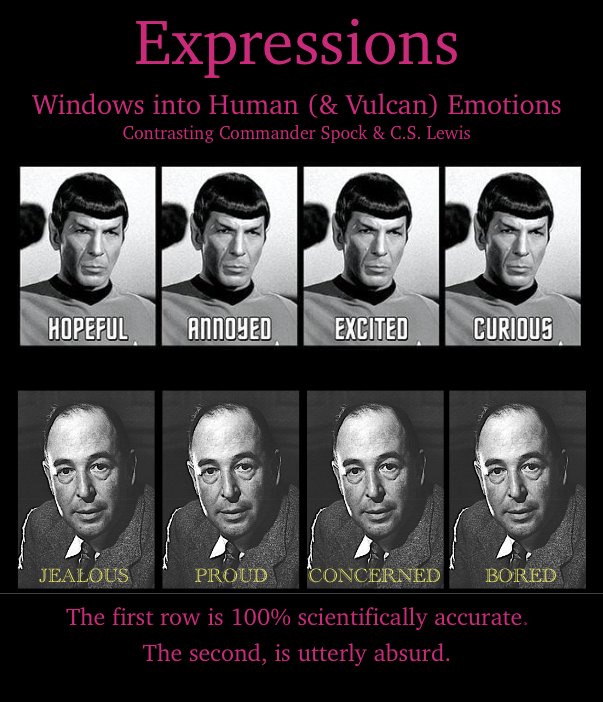
C.S. Lewis & Emotions

Are you one of those people who pride themselves on not being particularly emotional? Probably not, since the pendulum has swung far in the opposite direction in our current day. (Consider how few clicks a Tik Tok influencer with “flat affect” would get.)

Most of us know some people (most commonly men – forgive me the generalization) who keep their emotions under tight rein.

Back when I was a child, in the mid-twentieth century, it was not uncommon for men to “guard” their notion of masculinity by acting emotionless. And various ethnicities, including my own ancestors, possessed a reputation for being staid.

I can’t recall my Norwegian grandfather, who died when I was about ten, ever expressing truly warm sentiments. I know he must have laughed, and my grandmother had a great sense of humor, but I have no memory of it.

For some reason, many people picture C.S. Lewis as an emotionally sober intellectual. Perhaps it’s because he wrote so many profound essays. The truth is that Lewis was extremely jovial and fun-loving. I have noted some of this humor in the past.

Like most of us, C.S. Lewis’ closest friends saw him most clearly. They witnessed his jocularity in their regular gatherings. His fellow Inklings witnessed it frequently, but I don’t see how anyone can read the Chronicles of Narnia, and perceive their author as reserved, much less grave.

One reason some readers misunderstand C.S. Lewis’ exquisite sense of humor is because it is British. For Americans, for example, appreciating British humor is an acquired taste. As reported by the BBC, the wit often includes elements of “sarcasm, understatement [and] self-deprecation.”

In The Screwtape Letters, C.S. offers an insight into one of the Tempter’s tactics in undermining human nature, in terms of being fashioned in the image of our Creator.

[Englishmen] take their “sense of humour” so seriously that a deficiency in this sense is almost the only deficiency at which they feel shame. Humour is for them the all-consoling and (mark this) the all-excusing, grace of life.

Hence it is invaluable as a means of destroying shame. [. . .] A thousand bawdy, or even blasphemous, jokes do not help towards a man’s damnation so much as his discovery that almost anything he wants to do can be done, not only without the disapproval but with the admiration of his fellows, if only it can get itself treated as a Joke.

And this temptation can be almost entirely hidden from your patient by that English seriousness about Humour. Any suggestion that there might be too much of it can be represented to him as “Puritanical” or as betraying a “lack of humour.”

Lewis’ humor was on full display to his intimate friends, and uninhibitedly on display to the world in a number of his writings. But his openness didn’t end there. 

Just Like the Rest of Us:
a Person of Humor and Grief

I don’t recall anyone labeling C.S. Lewis a “humorist” – likely because his corpus is so diverse and complex – but I think a literary critic could make that case.

Ironically, I once cited an autobiographical reference in which C.S. Lewis applied that very attribute to his own father, a serious solicitor.

In contrast, C.S. Lewis would mature to the point where he was willing to expose that deepest of emotions, grief, with the entire world. In A Grief Observed, he explored his pain in the wake of his wife’s untimely passing. Joy Davidman was the precious wife this confirmed bachelor never anticipated having, and her death crippled him.

His description of his thoughts, doubts, and spiritual struggle in the aftermath has helped many others to survive the nightmare of bereavement. Curiously, for privacy C.S. Lewis initially used a pen name for the volume. (You can read about that here.)

He did not wish to have his authorship of the book distract from its subject matter. He would have known that would only be a temporary tool, since pseudonyms are nearly always uncovered. Initially, however, it was so effective that when it was published, readers recognized it could speak to Lewis’ own grief, and offered him gift copies.

T.S. Eliot was one of its first advocates for the volumes publication, and you can read that story at Faber & Faber.

A Final Lewisian Observation on Emotions

Some people view the intensity of emotions associated with events to be a measure of their validity. If my passions are aroused by an activity, we incorrectly think, it must be real!

This error is particularly dangerous when related to so-called “matters of the heart” and matters of faith. 

C.S. Lewis was cautious in both realms. We already noted his resignation to live out his life as a single man. In terms of faith, he was just as circumspect. His conversion from atheism to Christianity was long, thoughtful, and reluctant. 

And this, I found, was something I had not wanted. But to recognize the ground for my evasion was of course to recognize both its shame and its futility.

I know very well when, but hardly how, the final step was taken. I was driven to Whipsnade [Zoo] one sunny morning. When we set out I did not believe that Jesus Christ is the Son of God, and when we reached the zoo I did.

Yet I had not exactly spent the journey in thought. Nor in great emotion. “Emotional” is perhaps the last word we can apply to some of the most important events.

It was more like when a man, after long sleep, still lying motionless in bed, becomes aware that he is now awake. And it was, like that moment on top of the bus, ambiguous.

Freedom, or necessity? Or do they differ at their maximum? At that maximum a man is what he does; there is nothing of him left over or outside the act.

Certainly, many people are blessed with emotional confirmation in their spiritual lives. The obvious peril, of course, is in evaluating the veracity of something by how giddy it makes us feel. 

After all, there will always come “dark nights of the soul” when the feelings have fled . . . but Jesus, still remains.  

C.S. Lewis & Longevity

How long is it good for us to live? That’s a strange question, I know. But, do you have an answer? C.S. Lewis had some thoughts on the subject that you may find provocative.

Aging is on my mind this week. I had never thought about myself becoming a septuagenarian – but this week I became one. Well, I still think of myself as being in my fifties, but that appears to be more common than one would guess. When I entered my fifties, I told my dad (then in his seventies) that “I still picture myself as being in my thirties.”

My dad responded without a moment’s thought: “That doesn’t surprise me at all. I still think of myself as being in my fifties.” 

Many people become preoccupied with age. The only time I recall it mattering to me, was when I turned eighteen – able to vote, and registered for the draft (with Vietnam still a war zone) . . . and when I turned twenty-one, for reasons I prefer not to divulge at this time.

People are living longer, and I’m not convinced that translates into living better. Listen to C.S. Lewis, as he writes in his essay “Is Progress Possible?”

I care far more how humanity lives than how long. Progress, for me, means increasing goodness and happiness of individual lives. For the species, as for each man, mere longevity seems to me a contemptible ideal.

Lewis elaborates on this concept – that long life and happiness do not always intertwine – in the Screwtape Letters. The words which follow are the advice of a senior Tempter (devil) to a less experienced junior.

The truth is that the Enemy [i.e. the true God], having oddly destined these mere animals to life in His own eternal world, has guarded them pretty effectively from the danger of feeling at home anywhere else. That is why we must often wish long life to our patients; seventy years is not a day too much for the difficult task of unravelling their souls from Heaven and building up a firm attachment to the Earth.

While they are young we find them always shooting off at a tangent. Even if we contrive to keep them ignorant of explicit religion, the incalculable winds of fantasy and music and poetry . . . are always blowing our whole structure away. They will not apply themselves steadily to worldly advancement, prudent connections, and the policy of safety first.

So inveterate is their appetite for Heaven, that our best method, at this stage, of attaching them to Earth is to make them believe that Earth can be turned into Heaven at some future date by politics or eugenics or “science” or psychology or what not.

Real worldliness is a work of time. . . . How valuable time is to us may be gauged by the fact that the Enemy allows us so little of it. . . .

We are allowed to work only on a selected minority of the race, for what humans call a “normal life” is the exception. Apparently He wants some – but only a very few – of the human animals with which He is peopling Heaven to have had the experience of resisting us through an earthly life of sixty or seventy years. Well, there is our opportunity. The smaller it is, the better we must use it. (Letter XXVIII).

Sadly, far too many people grow far too attached to this world. They lose sight of the promise of Resurrection (if they had ever known it), and as death approaches crave just one more year, another month, another week, another day, even another hour.

Now, I’m not saying long life is a negative, per se. I agree with C.S. Lewis when he wrote “I must never, like the Stoics, say that death does not matter. Nothing is less Christian than that” (“The Grand Miracle”). The danger is not in enjoying the Lord’s wonderful creation. It is in growing too attached to this fallen version of it – in losing touch with the truth proclaimed by musician Larry Norman, that this sin-stained world is not our ultimate home.

Dying

Having been at the bedside of too many people as they face their mortality, I have witnessed many final days. Some literally go, trembling and cursing. Others depart with grim resignation, and no evidence of hope. And then there are those who die with faith, experiencing true peace and joyous anticipation, despite the pain they may be enduring. 

I wish everyone could die in such a state, at peace and earnestly desiring to see the glory of God unblurred by our mortal eyes (1 Corinthians 13). 

On that day we will enter into the fullness of life, into eternal life. (Dr. Michael Zeigler offers an encouraging sermon you can read or listen to at “The Problem and Promise of Deathbed Conversion.”)

The Screwtape Letters is one of C.S. Lewis’ most imitated books. I have even experimented with his model myself. But, rather than emulate these letters, today I would be so bold as to offer an addition to this demonic epistle. 

My supplement is not intended for Christians, except as a truth they may wish to share with others who are walking through the valley of the shadow of death.

And never, my dear Wormwood, at the risk of your own torment, forget this one dire threat. Even after a long life, lived in hedonistic pleasure, deeply tethered to this decaying world, it is still possible for these wretches to be rescued from our claws.

The Enemy is so blindly compassionate that he will foolishly overlook a magnitude of savory sins sown during a carnal life. The dissolute lives we have toiled so steadfastly to soil with uncountable depravities and unrelenting selfishness, remain vulnerable until the patients’ final breath is exhaled.

The Gordian Knot we have so skillfully twisted can be undone in an instant, if they cry out to the Enemy for forgiveness. That is why we must remain vigilant to the very end. It is ideal to have them railing at the end against a God who has allowed them to suffer.

Yet it is sufficient that they die without that rage. A hopeless resignation to what they foolishly consider the end of their existence, still provides fodder for the insatiable appetite of Our Father Below quite adequately.

Final Encouragement

God’s mercy is beyond our ability to comprehend it. While there is breath, there remains hope. Even at the end of a squandered life, God’s love in Jesus Christ is sufficient to wash away every failing, and usher a penitent soul into the glory of everlasting life. 

Remember that, if you find yourself feeling too defiled to come to Christ at the end, that is a lie of Satan. Every single one of us Christians was in similar straits – “while we were still sinners, Christ died for us.”

And, should you ever have the experience of traveling beside a dying friend who sees only darkness ahead, share with them this gospel hope.

Following C.S. Lewis’ Military Example

Like his friend J.R.R. Tolkien, and many of the British men of their generation, C.S. Lewis served in the grim battlefields of the First World War. (However, since Lewis was actually Irish, he could not be drafted, and instead volunteered to serve.)

In recent years a number of books have appeared related to the military service of the Inklings. In A Hobbit, a Wardrobe, and a Great War, the author introduces his discussion with a succinct summary.

For a generation of men and women, [WWI] brought the end of innocence – and the end of faith. Yet for two extraordinary authors and friends, J.R.R. Tolkien and C.S. Lewis, the Great War deepened their spiritual quest. Both men served as soldiers on the Western Front, survived the trenches, and used the experience of that conflict to shape their Christian imagination. . . .

By the time of the Armistice, more than nine million soldiers lay dead and roughly thirty-seven million wounded. On average, there were about 6,046 men killed every day of the war, a war that lasted 1,566 days. In Great Britain, almost six million men—a quarter of Britain’s adult male population – passed through the ranks of the army. About one in eight perished. Tolkien and Lewis might easily have been among their number.

In 1939, a correspondent inquired if Lewis was going to reassume his commission in the army for the new conflict, and he responded with sentiments I have heard voiced by a number of other combat veterans.

No, I haven’t joined the Territorials. I am too old. It would be hypocrisy to say that I regret this. My memories of the last war haunted my dreams for years.

C.S. Lewis proceeded to graphically explain the cost of serving under such pressure. 

Military service, to be plain, includes the threat of every temporal evil: pain and death which is what we fear from sickness: isolation from those we love which is what we fear from exile: toil under arbitrary masters, injustice and humiliation, which is what we fear from slavery: hunger, thirst, cold and exposure which is what we fear from poverty.

I’m not a pacifist. If it’s got to be, it’s got to be. But the flesh is weak and selfish and I think death would be much better than to live through another war.

A new announcement from the United States’ Department of Defense brought Lewis’ situation to mind. It appears that due to a number of factors – not least of which the emphasis on Diversity, Equity and Inclusion,* which (imo) has discouraged veterans from encouraging their children to serve in the armed forces – some services are repeatedly falling short of their recruiting goals. 

In light of the fact that the world is inarguably growing more dangerous – the Doomsday Clock is set at “90 seconds to midnight” – it is alarming that we are unable to fully staff our shrunken military.

Just today my sixteen year old grandson expressed concerns about the resumption of a draft. I could not muster a persuasive argument that it won’t happen. Ironically, the last time the U.S. involuntarily conscripted troops was 1972, the year I turned eighteen. Oh, in the process of including a link to the Selective Service Sytem, I was surprised to learn that a “Medical Draft is in Standby Mode.” 

It is designed to be implemented in connection with a national mobilization in an emergency, and then only if Congress and the President approve the plan and pass and sign legislation to enact it. . . .

[The plan will] provide a fair and equitable draft of doctors, nurses, medical technicians and those with certain other health care skills if, in some future emergency, the military’s existing medical capability proved insufficient and there is a shortage of volunteers. . . .

[If implemented, the plan will] begin a mass registration of male and female health care workers between the ages of 20 and 45. . . . HCPDS [the innocuously named Health Care Personnel Delivery System] would provide medical personnel from a pool of 3.4 million doctors, nurses, specialists and allied health professionals in more than 60 fields of medicine.

No Draft Yet

Since we are not currently at war, the specter of a draft remains ephemeral. Still, the shortage of volunteers has led to a variety of initiatives, such as lowering service qualification standards. These efforts have proven inadequate, resulting in the aforementioned announcement.

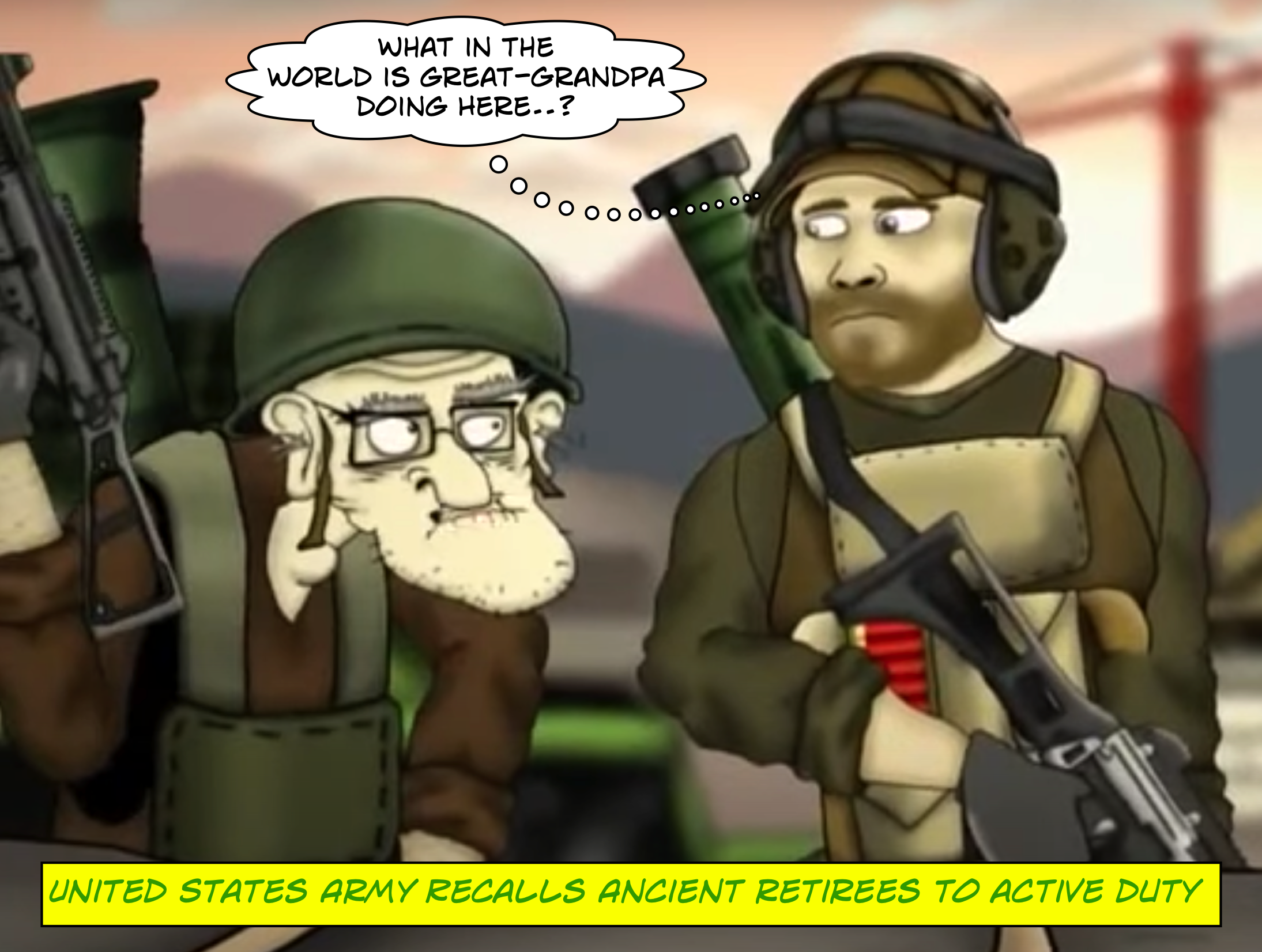
Both the Army and the Air Force have begun Retiree Recalls. Yes, that is just what it sounds like. People who have actually retired from the armed forces, normally after 20+ years of active duty, are being recalled to serve again. 

When I heard this news I was stunned. It is legally possible for the military to recall former members via a tiered process, but the first thing that came to my mind was my favorite high school teacher. He had served in Viet Nam as a draftee and finished his enlistment. He once told me that he felt safe, having survived, because now he was in the same call-up status as a “pregnant nun.” (Rather hyperbolic, but comforting to him.)

Fortunately, the current recalls are all voluntary. Only retirees whose personal circumstances make the offer appealing, will respond. As the Air Force Times reports, “Regret retiring? Here’s your shot at a second chance in the Air Force.”

I suspect that even vets who enjoyed their military service will be inclined to consider redonning the uniform as “too much of a good thing.” And if they witnessed the bloody horrors of war, as seen by C.S. Lewis, returning to the ranks would be even less tempting.

Since I, myself, have no desire to resume the demands of military life, I haven’t researched the age requirements for the Air Force recall program. Like Lewis, “I am too old.” 

But amazingly, depending on individual factors, the Army is willing to recall retired volunteers up to the age of seventy. That’s not a typo. As someone reaching that very milestone this summer, I can’t imagine returning to work side-by-side with troops half a century younger than me. 

Now, I pray for peace, knowing that being prepared for war is one way to increase that likelihood. So, I hope the military can throw off some of its political shackles and return to its necessary focus.

Furthermore, like C.S. Lewis, I have a pragmatic view of the effects of war. In “Learning in War-Time,” Lewis summarized the effects of military service during a war. As always, his insights are profound.

What does war do to death? It certainly does not make it more frequent: 100 per cent of us die, and the percentage cannot be increased. . . . Does it increase our chances of painful death? I doubt it. . . .

Does it decrease our chances of dying at peace with God? I cannot believe it. If active service does not persuade a man to prepare for death, what conceivable concatenation of circumstances would?


* This reference is to the convoluted and inequitable DEI philosophy and program(s) being mandated today. In truth, most people value diversity, and all people of goodwill believe in the importance of equity and inclusion. Along with Martin Luther King, Jr., they long for a day when people are not “judged by the color of their skin, but by the content of their character.”

Errors that Seem to be True (Angels)

Many people have been taught so little about biblical Truth that they believe many errors. For example, many people (and no offense intended if you are among them) mistakenly believe that when people die, they become angels.

That connection is so blatantly contrary to the fact that angels who “see the face [of God] who is in heaven” are completely different creations than the Sons of Adam and Daughters of Eve who are actually human beings, created in the image of God.

In his preface to The Screwtape Letters, C.S. Lewis alludes to how this confusion is reinforced by humanity’s lack of familiarity with angels in their true or natural (for them) form. While there are clear examples in the Bible where God has his angels appear in the likeness of human beings (e,g. before Sodom’s judgment and at the empty tomb), there are also times when their celestial radiance is not disguised (i.e. when the shepherds are informed about birth of the Savior or in John’s visions as recorded in the Book of Revelation).

[Angels] are given human form because man is the only rational creature we know. Creatures higher in the natural order than ourselves, either incorporeal or animating bodies of a sort we cannot experience, must be represented symbolically if they are to be represented at all (Screwtape Letters).

Nevertheless, this myth permeates the thinking of our secular culture. Once, some years past, a pastor friend was relating to me that one of his distant relatives had recently died. He said it comforted him to know that she was now an angel. I started to chuckle in response to his humorous way of lightening his own mood, until I realized he wasn’t joking. This poor, genuinely compassionate minister had been tricked by the spirit of this world into buying into a lie.

C.S. Lewis famously said that anything worth reading once is worth reading again. I’m clearing out some magazines from several years ago, and rereading insightful articles as I go. In a short piece about a complex subject, “What Happens to the Dead?” Ryan Pemberton makes a troubling comment.

Pop culture has done more to shape modern views about death than biblical teaching has.

The brevity of the article prevents the author from exploring other subjects, but his observation is applicable to a wide array of concerns.

I’m confident I could state, without fear of contradiction, that contemporary culture has done more to shape modern views about marriage than biblical teaching has. And, adding only a few additional examples, more about . . . justice . . . demons . . . love . . . mental health . . . responsibility . . . heaven . . . labor . . . creation . . . and Jesus himself.

It’s Not All Bad

It should be admitted that not all contemporary insights have been 100% misguided. One area where modern sensibilities have restored balance to truthful thinking is in the area of care for the environment. Ignoring extreme notions about nature being more important than human life, we can applaud the work of Christian environmentalists who have helped restore a biblical (i.e. true) view of the world around us.

Reacting to twisted notions that humanity’s “dominion” over the earth allows for nature’s misuse and abuse, these men and women helped open our eyes to the fact that God calls us to be trustworthy stewards in our care of, and appreciation for, this amazing world he has made.

The Inklings, C.S. Lewis and J.R.R. Tolkien, in particular, possessed a profound love for nature. Their general antipathy to the ugly and polluting trappings of industrialization are grounded in their belief that the world God created was truly “good.” With that came the recognition that man does little to enhance, and much to undermine, that initial goodness.

When two ideas clash, go with the one that is correct. And, when one of those authorities is the Word of the Creator of all that exists, well, isn’t it obvious which is the right choice?

Angels & People

For more on the angelic subject with which we began, check out the provocatively titled “People Aren’t Downgraded to Angels When They Die.” As the author there so rightly explains,

When Christians die, heaven does not “get another angel.” We cannot become angels any more than we can become giraffes or ocean waves or stars. We are people and will remain so after this present life. God did not make a mistake when he made us human.

On the Anniversary of C.S. Lewis’ Death

Today, on the sixtieth anniversary of C.S. Lewis’ passing, I offer you a special gift. Well, not a modest gift from my own pen, but a link to an insightful obituary, written by one of Lewis’ students.

The author of the obituary, John Wain, one of Britain’s “angry young men,” is critical of some aspects of Lewis’ work that are most appreciated by others. Yet his unique perspective is valuable. 

The Inklings included in their number Charles Williams, a man C.S. Lewis deeply respected. They compiled for him a Festschrift, but since he passed before it was presented, it was published as a memorial collection. Lewis wrote the preface, in which he included this amazing passage.

So, at any rate, many of us felt it to be. No event has so corroborated my faith in the next world as Williams did simply by dying. When the idea of death and the idea of Williams thus met in my mind, it was the idea of death that was changed. (Essays presented to Charles Williams).

The legacy of C.S. Lewis himself, exerts a similar influence on many.

I’ll not say more, other than to extend a sincere “thank you” to Dr. Brenton Dickieson, who transcribed it from a twentieth century literary magazine. Dickieson consistently provides solid, and accessible, Inkling scholarship at A Pilgrim in Narnia

An Obituary of C.S. Lewis by John Barrington Wain CBE

Happy Thanksgiving to citizens of the United States, and a belated Thanksgiving to Canadians such as Dickieson.

Timothy Keller & C.S. Lewis

The spiritual legacy of C.S. Lewis continues to bear abundant fruit. And, although his humility would prevent him from accepting it, Lewis shares credit in the blessings being passed on to new generations by those whose lives he directly touched.

Some of these gifted Gospel communicators have publicly praised Lewis for his role in their own conversions or moments of deeper epiphany into the work of our Creator. 

One such Christian leader was Timothy Keller, who recently died at the age of 72. Although he was just a few years older than me, Keller and I shared a number of traits. Raised Lutheran, we accepted the truths about Jesus’s work as kids, but it wasn’t until our young adulthood that we were confronted with the fact that trusting Christ as a loving Savior falls far short of taking up our own crosses and following him as Lord.

It’s no accident that our mutual spiritual awakenings coincided with our introduction to the writings of C.S. Lewis during our collegiate years. Both of us became pastors, although the paths of ministry we followed differed, as befits children of a heavenly Father who guides each of his children as the unique person he has created them to be. 

Keller was ordained in the Presbyterian tradition, and devoted most of his energy to helping the Christian Church establish a far more intentional ministry in cities. I was ordained in the Lutheran branch of the Body of Christ, and served much of my ministry as a military chaplain. Both of us were pastors in evangelical, Scripture-affirming denominations within our respective traditions.

I’m sure there are other parallels, such as both being married since the mid-70s and having three kids, but the last similarity I wish to note is that we both have writing as part of our vocations. Not that I would compare my own modest talents to Keller’s.

Tim Keller was a prolific author. And the influence of C.S. Lewis on his thinking, and writing, is pervasive in Keller’s work. Last year The Evangelical Christian Publishers Association presented him with the prestigious “Pinnacle Award.”

Timothy Keller has written more than 35 books, published by a variety of companies, with some co-authored by his wife Kathy.  His published body of work represents a variety of categories including apologetics, biblical studies, theology, prayer, devotionals, marriage, Bible study, the Church, and cultural engagement – with sales exceeding 7.5 million units and translated into more than 25 languages.

Keller’s prodigious literary output is one reason he has been likened to C.S. Lewis. Another obvious reason is the subject matter, particularly the prominent place occupied by Christian apologetics.

Like Lewis, Keller was an avid reader. This trait provided the foundation for both authors’ literary contributions to Christian thinking. “A Reading List to Understand Tim Keller” includes a number of the works of great importance to him.

Read This Twice, which gathers book endorsements found on the internet, provides a list of 64 books endorsed by Tim Keller. What makes this curious site special is they provide quotations for his recommendations and the sources from which they are gleaned. Oddly, the aggregator appears to lean heavily on contemporary Twitter sources. Consequently, it includes not a single book written by C.S. Lewis himself, belying the Inkling’s seminal influence on Keller.

The endorsement website also offers access to book recommendations on subjects of a visitor’s choice, compliments of Sona. Sona, as a caution to those among us who are wary of artificial intelligence, is an “AI-driven book recommendation assistant that makes it easy for you to discover your next read. Just provide your specific preferences, and [she] will quickly search through a large database of books to offer you options that closely align with your request.” The invitation closes with: “Try ‘Sona’ and enjoy a seamless, personalized book-finding experience.”

In “Remembering Tim Keller – Today’s C.S. Lewis,” the writer plays with his title.

It is often said that Dr. Timothy Keller, who died last Friday at his home in Manhattan, was this generation’s C.S. Lewis. The dust jacket for The Reason for God says so.

Tim would have had none of it. He just wasn’t that kind of person. I remember sitting down with him after yet another remarkable talk that he had delivered, sparkling with ideas and insight, with lots more to explore, and all he wanted to talk about was his kids and how great they were. Tim was a simple child of God with, like all of us, the normal joys and worries in life.

And yet . . . that impact! It was enormous. Although it might be an overstatement to ascribe C.S. Lewis status to his contribution, it would only be a slight overstatement.

Tim Keller certainly shared some of C.S. Lewis’ righteous qualities, but some writers are adamant about acknowledging their distinctions. A fellow Presbyterian pastor has a great post on this subject titled “Tim Keller is NOT this generation’s C.S. Lewis.” The author persuasively argues that their vocations were too different to make such a claim. 

But please, can we not call him another C.S. Lewis?  Any time we call a great person “another” anybody, we are doing disservice to both figures.  Lewis’ vocation was to serve as a man of letters who wove his faith into his writing.  Keller’s vocation is to be a pastor and equipper who employs writing as but one of his tools.

There are even some conservative Reformed authorities who view Keller (and C.S. Lewis) with suspicion. According to Christian Network Europe “Laurens van der Tang . . . wrote in De Wachter Sions (The Watchman of Sion) . . . that the books of Christian writers, such as Lewis, Dietrich Bonhoeffer and Tim Keller” may possess positive elements but are incomplete. “He argues that they did not pay enough attention to man’s death state, the need for repentance and God’s holy wrath on sin.”

He concludes that “distancing is appropriate” and that these “authors cannot replace theologians from the Reformation or the Dutch Second Reformation.” Also, the Dutch Rev. A. Schreuder writes that “whoever reads the works of the Big Three misses the ultimate point of the personal appropriation of salvation.”

Fortunately, such opinions are in the minority. Most Christians find all three writers inspiring. As this very article reports, “the combination of reason, feeling and imagination is also why Christians in many different surveys indicate that they see Lewis . . . as one of the most influential theologians of the 20th century.”

A glance at virtually any one of Keller’s books will reveal at least one reference to the writings of C.S. Lewis. In Shaped by the Gospel, he references four of Lewis’ books and essays. In his book On Death, Keller discusses that when we stand in God’s very presence – a joy he even now knows – and alludes to a powerful metaphor offered by C.S. Lewis in The Weight of Glory.

C.S. Lewis says if these lower reaches of the stream of God’s glory are so intoxicating, what will it be like to drink from the fountainhead?

The Atlantic published a poignant essay by Keller as he faced his impending death. “Growing My Faith in the Face of Death: I spent a lifetime counseling others before my diagnosis. Will I be able to take my own advice?”

The subtitle says it all. It’s a challenge many Christians one day face, and it is particularly sobering for pastors. In the article, Keller relates an acutely tragic conversation.

A significant number of believers in God find their faith shaken or destroyed when they learn that they will die at a time and in a way that seems unfair to them. Before my diagnosis, I had seen this in people of many faiths. One woman with cancer told me years ago, “I’m not a believer anymore—that doesn’t work for me. I can’t believe in a personal God who would do something like this to me.” Cancer killed her God.

Yes, reality and the suffering consequences of the Fall may have shattered the spectral image of her god (lower case “g”), but I hope that through the ministry of Keller and others that unfortunate woman came to know the true God before she stood in his presence.

For I am sure that neither death nor life, nor angels nor rulers, nor things present nor things to come, nor powers, nor height nor depth, nor anything else in all creation, will be able to separate us from the love of God in Christ Jesus our Lord (Romans 8).

Timothy Keller, like C.S. Lewis before him, who served as one of Keller’s mentors, left us with a treasure trove of edifying literature. In the past I’ve often been too busy to read much of Keller’s work. However, as of now I am in the process of rectifying that problem. If you join me in that journey, I’m sure neither of us will be disappointed.

The Weight of Class Reunions

I clearly remember my mother preparing to attend her fortieth high school reunion. I was struck by the thought wow, my mom is really old!

A few days ago, I attended my own fiftieth reunion. Needless to say, the milestone was sobering.

Read on and I’ll share two insights – the first of which is widely recognized, the second thought is a personal insight to the emotional trauma that can accompany these gatherings.

As the decades advance, most such events add a moment where the names of classmates who are deceased are read. Naturally, the list continues to grow. From my class of 220, 38 are no longer alive. One can only imagine how many of the 74 graduates the steering committee couldn’t reach belong on that list as well.

Seeing the names of people you remember as energetic teenagers, who have already perished, reminds us of our own mortality. Not a single person can be sure their own name won’t appear on that memorial roster, when next the class of 1972 gathers.

Death is rarely a welcome specter, but as a Christian who is confident of the resurrection, reading those names does not elicit fear. True, I do feel some sadness, knowing that each of their families and friends have suffered deep personal loss. But I am resigned to the brevity of life in this world.

I’ve arrived at peace with the fact that we “do not know what tomorrow will bring . . . for [we] are a mist that appears for a little time and then vanishes” (James 4).

King David declared our utter dependence on God for everything, and the short duration of our earthly life.

O Lord, make me know my end and what is the measure of my days; let me know how fleeting I am! Behold, you have made my days a few handbreadths, and my lifetime is as nothing before you. Surely all mankind stands as a mere breath! (Psalm 39).

Fortunately, however, as most people have at least heard, if not (yet) believed: “For God so loved the world, that he gave his only Son, that whoever believes in him should not perish but have eternal life. For God did not send his Son into the world to condemn the world, but in order that the world might be saved through him” (John 3).

This aspect of class reunions is self-evident. The next, less so.

The Legacy of Isolation

Why is it that so many of my classmates opted to skip the reunion – when I know for a fact that a number of them still live in the local area? I suppose the cost may have discouraged some. But I recognize the most significant reason for the majority who were absent.

They felt they were never part of “the In Crowd.” They watched other people standing in the limelight, getting all of the attention, and pretending to be happy and carefree.

The truth is that adolescence is a challenge for everyone. And it’s quite possible that the most “popular” kids are actually the most angst-ridden. The people we considered safely nestled in the popular cliques were frequently stressed by their insecurities about continuing to be perceived as winners.

In many cases, the years after high school are great equalizers. And, it’s not uncommon for the people who appeared to have the easiest social paths during their teens to be the least equipped to live successful adult lives.

So far, what I’ve said is not too surprising. But here I am going to take a bit of a leap. I make no claims to being a psychologist, but as a dedicated student of humanity, and a pastor who has heard many private, personal stories, I believe this observation to be true.

While we were teenagers attending school, nearly all of us felt like we were on the fringe of our school’s social core. And the handful who didn’t could well have been nascent narcissists. Trust me, the few who experienced actual delusions of grandeur at that time, were destined to take the greatest falls as they left that insulated environment.

So, this is what I think. Most of those who choose not to attend their class reunions, lacked a feeling of truly belonging. But, on the other side of the very same coin, most of those who choose to attend those very same gatherings also felt like they were insignificant people on the periphery of what was “happening.”

The Lord of this world (Lucifer) invests a great deal of energy trying to destroy the self-image of women and men who were created in the very image of God. My prayer is that if you have read this far, you consider what I’ve written. You are precious. You have always been precious, even when you considered yourself most ugly.

Attending your next class reunion may not be something you desire to do. But, don’t allow a false perception that you are unimportant be the reason you skip the event.

C.S. Lewis wrote a superb essay on the subject of “The Inner Ring,” and the temptation people have to compromise their integrity trying to fit in. He presented it as a lecture at King’s College, University of London, in 1944. In his words, “Of all the passions, the passion for the Inner Ring is most skillful in making a man who is not yet a very bad man do very bad things.”

If you read the essay, which I heartily recommend, recognize that he was speaking to a student audience which consisted only of men. The truths he describes are applicable, of course, to both genders. Lewis’ observations certainly ring true with me.

I believe that in all men’s lives at certain periods, and in many men’s lives at all periods between infancy and extreme old age, one of the most dominant elements is the desire to be inside the local Ring and the terror of being left outside.

C.S. Lewis, Dentistry & Bones

Visiting the dentist for a regular check-up is one thing. Going there to address a painful problem is quite another. That is a truth everyone – including Oxford’s great scholar, C.S. Lewis – understands.

Occasional comments in his letters reflect on his mixed attitude toward dentistry. In 1914 he related to his father this balanced attitude. Many readers will identify with his ironic opening.

This week I have enjoyed the doubtful privilege of having two teeth extracted, both of which had been bothering me a good deal off and on this term. The dentist, who is a thoroughly competent official, pronounced his verdict that as they had been tinkered with over and over again, and were now hopelessly rotten, they had better come out. So out they came, with gas, and I think it was a good job.

I too have “enjoyed the doubtful privilege.” Like Lewis, I appreciate the skill and care of dentists, but hold an aversion to the more painful of their interventions.

Typically, C.S. Lewis was able to use our complex attitudes toward dental work, one of the “necessary evils of life” (Surprised by Joy), to teach about larger truths. An interesting piece on the subject can be seen here.

Lewis says when we move toward God, it will be like going to the dentist. If we dodge and hesitate to move, our aches will only increase.

Lewis wouldn’t tell his mother about his toothache because he knew it meant fixing it, and that likely meant the pokes and prods of the dentist on other infected teeth. So he hid and endured the pain for a time. It didn’t help. And it doesn’t help when we hesitate to be upturn our lives for Jesus. “Our Lord is like the dentists,” Lewis says. “He will give you the full treatment.”

As Lewis learned from experience during his extractions, healthy teeth are inseparable from bone, which forms the “tooth sockets.”

Which segues into a subject of even more significance to C.S. Lewis and every other lifeform with a skeleton: bones. But before we discuss that subject, allow me to share a personal note.

A Patient’s Dilemma

The reason dentistry is on my mind comes from the fact that I recently endured the extraction of one of my molars. That initiated the involved (and expensive) process of getting a “dental implant.”

The molar had served me well for decades, even after having a root canal many years ago. Its full golden crown still shines radiantly. Sadly, one of its roots fractured, and an endodontist determined removal is the only option.

For those who will someday follow this regrettable path, we no longer have to resort to human (or animal) bone to restore our jaws after the extraction of the renegade teeth.

Yes, that’s right. The most common “grafting material” has historically been bone. While it’s possible to transplant some of your own, it usually comes from another source.

Autograft Tissue is from your own body. Allograft Tissue is donated by another – typically deceased – individual. I wonder if others find the thought of having cadaver bone added to one’s personal physiology unsettling.

I’ve been an organ donor since I was first able to sign up. Sadly, being stationed in England during the spread of the Mad Cow Disease (bovine spongiform encephalopathy) has reduced any future value for my redundant body parts.

The seriousness of the danger is revealed in the story of Sergeant Major James Alford, a Green Beret who contracted it during his military service.

Speaking of the armed forces, the military is on the leading edge of medical advances. Shortly before I required my own bone graft, I read a fascinating press release from the Veterans Affairs Health Care System. It describes a new system for using 3D printers to create “3-dimensional bioprinting of vascularized bone tissue.” This breakthrough promises to relieve the suffering of countless people with bone injuries and ailments.

For VA Ventures, the future of using 3D printing to build constructs from each patient’s own cells, matched to their anatomy and defect geometry will soon be a reality, offering customized bone tissue grafts at the point of care.

The connection between teeth and bones is one thing, but there are far more important bones in the human body than the sockets in our jaw bones.

C.S. Lewis & Bone Disease

C.S. Lewis died young; he was nearing his sixty-fifth birthday. Toward the end of his life, he suffered from osteoporosis. He describes his diagnosis in a 1957 letter.

My back turns out to be not slipped disc but osteoporosis – a spongy condition of the bones that is common in men of 75 but almost unknown at my age (58). After full investigation by a great Professor of Pathology the cause remains quite obscure.

It has passed the stage of spasms and screams (each was rather like having a tooth out with no anaesthetic and you never knew when they were coming!), but I still ache a good deal and need sleeping draughts.

As vividly as C.S. Lewis describes the pain created by his bone disease, it diminished to nothing in comparison to the suffering of his wife, Joy. She was dying of cancer resident primarily in her bones, when Lewis married her at her hospital bedside.

Although she would eventually succumb to the disease, she experienced a miraculous respite after an Anglican priest prayed for her healing as he laid his hands upon her frail, pain-racked body.

Peter Bide had laid hands on Joy and prayed for her healing because, some years earlier, he had discovered that when he did this people often were indeed healed: he possessed, it appears, what the Church calls the gift of healing.

In January 1959 an essay by Lewis appeared in the Atlantic Monthly; it was called “The Efficacy of Prayer,” and one of its early paragraphs goes like this: I have stood by the bedside of a woman whose thigh-bone was eaten through with cancer and who had thriving colonies of disease in many other bones as well. It took three people to move her in bed. The doctors predicted a few months of life, the nurses (who often know better), a few weeks. A good man laid his hands on her and prayed. A year later the patient was walking (uphill, too, through rough woodland) and the man who took the last x-rays was saying, “These bones are solid as rock. It’s miraculous.” (The Narnian: The Life and Imagination of C. S. Lewis).

Sadly, Joy’s remission was only that. She did, however, live for several years. Her relative health even allowed the couple to take a bona fide honeymoon.

During her terminal illness, Lewis resorted to a questionable practice to which many of us can personally relate. He prayed that God might spare his wife, and transfer her pain to him instead. This common prayer is fueled by the desperation and helplessness we feel as we witness the suffering of our loved ones.

On these grounds Lewis began [after her release from the hospital] to pray for Joy’s sufferings to be transferred to him. Soon thereafter, Joy’s bones began to heal, and Lewis’s began to weaken. He did not get cancer but rather osteoporosis; nevertheless, as the pain in her bones decreased, his increased.

To Sister Penelope he wrote about his worst period: “I was losing calcium just about as fast as Joy was gaining it, and a bargain (if it were one) for which I’m very thankful.” In the same conversation in which he told Coghill of his unexpected happiness, he explained that he believed that God had allowed him to accept in his body her pain: the way of exchange.

These were for him very strange times. When he still thought that, despite his osteoporosis, Joy was dying, he wrote to Dorothy Sayers . . . “Indeed the situation is not easy to describe. My heart is breaking and I was never so happy before; at any rate there is more in life than I knew about.”

But at this point he still had little hope, though he noticed that she seemed much better than the doctors told him she really was, despite her bedridden status. By November he could tell Sister Penelope that Joy was walking with a cane; a month later he could tell a godson that she “has made an almost miraculous, certainly an unexpected, recovery.”

In August 1958 he wrote to a friend to say that “my wife walks up the wooded hill behind our house”; it seems likely that the image of her doing so was what went into the Atlantic essay. “All goes amazingly well with us.” (The Narnian: The Life and Imagination of C. S. Lewis).

In the previously cited 1957 correspondence, C.S. Lewis describes a curious interplay between their two ailments. It notes a practical benefit to his own osteoporosis.

Joy is now home, home from hospital, completely bed-ridden. The cancer is ‘arrested,’ which means, I fear, hardly any hope for the long term issue, but for the moment, apparently perfect health, no pain, eating & sleeping like a child, spirits usually excellent, able to beat me always at Scrabble and sometimes in argument.

She runs the whole house from her bed and keeps a pack of women not only loving her but (what’s rarer) one another. We are crazily in love. . . .

My back turns out to be not slipped disc but osteoporosis . . . Can you realise the good side? Poor Joy, after being the sole object of pity & anxiety can now perform the truly wifely function of fussing over me – I’m in pain and sit it out – and of course the psychological effect is extremely good. It banishes all that wearisome sense of being no use. You see, I’m very willing to have osteoporosis at this price.

To recognize the grace in being the one “in need,” is a wonderful gift. Something only the mature can ever possess.

So, once again we see just how much we have in common with the creator of Narnia. We may lack his brilliance, and fall shy of his skills as a communicator . . . but his willingness to lay bare his own life, offers encouragement to us as we experience the same challenges – and joys.

The Goodness of Good Friday

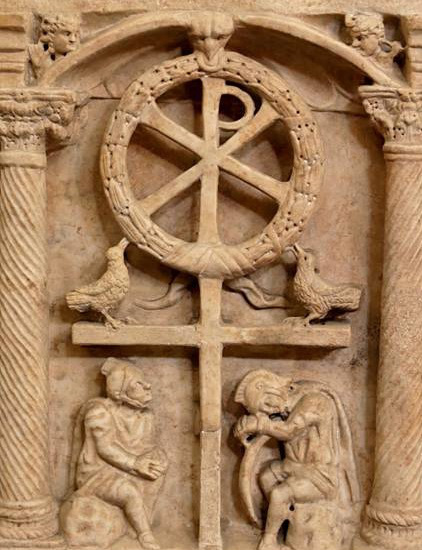
Jesus died on a cross. So why in the world would his followers choose the image of a cross to identify their faith?

The answer comes via a paradox. The cross is about two, superficially-contradictory realities. (1) Jesus bled, suffered and died on the cross. (2) On that very cross, Jesus purchased for all who call upon his name, eternal life.

This seeming paradox between simultaneous truths is sometimes referred to as a theological dialectic.

C.S. Lewis brilliantly illustrates this dynamic in his description of Death in his book Miracles.

On the one hand Death is the triumph of Satan, the punishment of the Fall, and the last enemy. Christ shed tears at the grave of Lazarus and sweated blood in Gethsemane: the Life of Lives that was in Him detested this penal obscenity not less than we do, but more.

On the other hand, only he who loses his life will save it. We are baptized into the death of Christ, and it is the remedy for the Fall. Death is, in fact, what some modern people call “ambivalent.”

It is Satan’s great weapon and also God’s great weapon: it is holy and unholy; our supreme disgrace and our only hope; the thing Christ came to conquer and the means by which He conquered (Miracles).

Thus, the grim suffering of Good Friday . . . becomes Good. It is not an accident. Nor is it a mistake. It was the necessary consequence of humanity’s fall and our costly, divine rescue. As C.S. Lewis writes in The Four Loves:

He creates the universe, already foreseeing – or should we say “seeing”? there are no tenses in God – the buzzing cloud of flies about the cross, the flayed back pressed against the uneven stake, the nails driven through the mesial nerves, the repeated torture of back and arms as it is time after time, for breath’s sake, hitched up. . . .

Herein is love. This is the diagram of Love Himself, the inventor of all loves.

Of course, this truth is only recognizable to those who have knelt before Jesus the Messiah and received his grace.

To unbelievers, “the world,” the cross makes no sense at all. Those in spiritual blindness reject it as the epitome of Christian absurdity.

Just such claims were made from the very beginning. Not long after Christ’s resurrection, these challenges were addressed by Paul, the Pharisee turned Apostle. Proclaiming the miracle of the cross, he reminds the young church in Corinth how they cannot expect the lost to comprehend its glory, its untainted goodness.

For the word of the cross is folly to those who are perishing, but to us who are being saved it is the power of God. . . .

Where is the one who is wise? Where is the scribe? Where is the debater of this age? Has not God made foolish the wisdom of the world? For since, in the wisdom of God, the world did not know God through wisdom, it pleased God through the folly of what we preach to save those who believe.

For Jews demand signs and Greeks seek wisdom, but we preach Christ crucified, a stumbling block to Jews and folly to Gentiles, but to those who are called, both Jews and Greeks, Christ the power of God and the wisdom of God. For the foolishness of God is wiser than men, and the weakness of God is stronger than men (1 Corinthians).

The crucifixion and resurrection of the only begotten Son of God are the sole means by which you and I may be cleansed, healed, and restored to the unending life for which our Lord created us.