Reading to Children

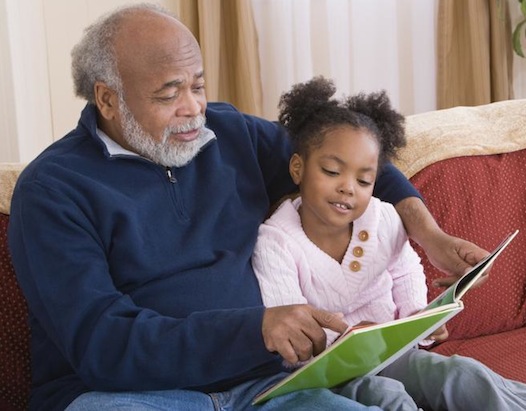
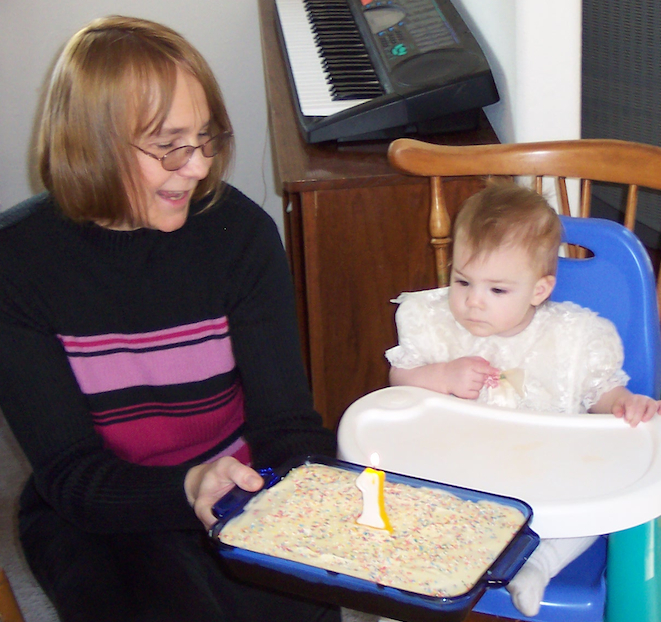
grandparent readingAs a father whose military service required extended separations from my children, I wish technology had been about three decades more advanced than it was while I was in uniform.

As a grandfather who has most of his grandkids living hours away, I’m grateful to be alive during an era when we can still nurture close relationships despite geographic separation.

There are many wonderful ways to keep in touch across the miles. And, a new program adds a wonderful touch to the time proven joy of reading to our children. It’s called Kindoma, and more about it momentarily.

It’s a little known secret that there are few—very few—activities children love more than reading with a loved one. It’s not just about the book, it’s also about relationships and bonding.

C.S. Lewis had an interesting relationship with children. As a bachelor academic, he was not around them all that much. And when he wrote The Abolition of Man in 1943—before becoming a step-father—Lewis confessed “I myself do not enjoy the society of small children . . . I recognize this as a defect in myself—just as a man may have to recognize that he is tone deaf or colour blind.”

Eight years earlier, at the modest age of thirty-seven, he wrote to a good friend, “I theoretically hold that one ought to like children, but am shy with them in practice.” Lewis isn’t alone in possessing this unfortunate trait, which from my observation [political incorrectness alert] is more common among men than women. Of course, in our increasingly equalitarian culture it does seem that character flaw is becoming a bit more gender-balanced.

Then there is the fact that many of us who dearly love our young progeny, enjoy the children of our friends, and hold genuine compassion for young ones suffering in any variety of miserable conditions . . . do not particularly seek out the company of children. From my personal perspective, I feel like I “expend” all of my (admittedly finite) kid-patience with my own kin and the offspring of my friends. I don’t have a surplus left after spending a significant amount of time with the (precious) little ones.

And, like Lewis, “I recognize this as a defect in myself.”

At the same time as I admire teachers who can pour themselves into little ones, and I am absolutely dumbfounded by people who prefer working with young teenagers, I recognize that the world works well when some of us are better equipped to work with adults also . . . so the entire spectrum of learners is served.

Recognizing our own prejudices is a prerequisite to suppressing or evicting them. Lewis, of course, was extremely concerned about children and their upbringing, particularly their education.

Returning to the subject of how to nurture relationships with children through the intercontinental reading of books, technology has made the miraculous possible.

Kindoma is novel in the sense that it allows you to read the book together (either the child or the adult can be the actual “reader”) while you actually turn the pages of the etext together! So you get the genuine experience of reading together.

The creator of the program holds a PhD in Computer Science. So he’s not merely an idea guy (like me) who comes up with a slew of amazing concepts but doesn’t have the scientific skill to make them reality.

The program is currently available for ipod and ipad. I’m sure it’s just a matter of time before it is ported to other operating systems. Since I still use “regular” desk and lap-top computers, I haven’t experimented with it myself. The app itself is free. I’m unsure about their revenue stream, whether it will come from ads, or purchase of access to a specific library, but it’s definitely worth checking out.

The brief link below offers an introduction to the tool. I hope that you will use it if applicable to your situation, and pass it on to others you know who might benefit from it. (In the meantime, I’m thinking about approaching my wife about us making that ipad purchase I’ve been pondering.)

What Children Read

young readerI recently reread C.S. Lewis’ brief essay, “On Juvenile Tastes.” In it he ponders two basic questions.

First, what do children prefer to read? And second, why do they evidence that preference?

Lewis set the stage by discussing the state of children’s literature in 1958, which was of course, more than half a century ago. Nevertheless, like most of Lewis’ observations, there is much that is timeless about his argument.

Not long ago I saw in some periodical the statement that “Children are a distinct race”. Something like this seems to be assumed today by many who write, and still more who criticise, what are called children’s books or ‘juveniles’. Children are regarded as being at any rate a distinct literary species, and the production of books that cater for their supposedly odd and alien taste has become an industry; almost a heavy one.

It seems little has changed during the intervening decades. If anything, this concept has become much more deeply entrenched. No one can doubt that the publication of “juvenile” literature has expanded dramatically. (To maintain the entrenchment allusion, we might say it has “exploded.”)

Lewis, however, does not accept the notion that children have unique—in his picturesque words “odd and alien”—literary interests. His first argument is that their preferences are by no means monolithic.

This theory does not seem to me to be borne out by the facts. For one thing, there is no literary taste common to all children. We find among them all the same types as among ourselves. Many of them, like many of us, never read when they can find any other entertainment. Some of them choose quiet, realistic, “slice-of-life” books . . . Some like fantasies and marvels . . . Some care for little but books of information, and so do some adults. Some of them, like some of us, are omnivorous. Silly children prefer success stories about school life as silly adults like success stories about grown-up life.

So, in Lewis’ opinion, we witness great difference in the tastes of children, as well as adults. He attributes changing literary emphases to human nature, rather than chronological considerations. The difference enters with children’s focus on enjoying literature, which provides them immunity to literary fads.

Surely it would be less arrogant, and truer to the evidence, to say that the peculiarity of child readers is that they are not peculiar. It is we who are peculiar. Fashions in literary taste come and go among the adults, and every period has its own shibboleths. These, when good, do not improve the taste of children, and, when bad, do not corrupt it; for children read only to enjoy.

Of course their limited vocabulary and general ignorance make some books unintelligible to them. But apart from that, juvenile taste is simply human taste, going on from age to age, silly with a universal silliness or wise with a universal wisdom, regardless of modes, movements, and literary revolutions.

Lewis’ critique of the publishing arena follows. Since these literary phases fade in and out, it is here where contemporary literary critics may fairly evaluate things differently.

This has one curious result. When the literary Establishment—the approved canon of taste—is so extremely jejune and narrow as it is today, much has to be addressed in the first instance to children if it is to get printed at all. Those who have a story to tell must appeal to the audience that still cares for storytelling.

The literary world of today is little interested in the narrative art as such; it is preoccupied with technical novelties and with ‘ideas’, by which it means not literary, but social or psychological, ideas. The ideas (in the literary sense) on which Miss Norton’s The Borrowers or Mr. White’s Mistress Masham’s Repose are built would not need to be embodied in “juveniles” at most periods.

Lewis ends his essay by contrasting two disparate approaches to the production of so-called children’s literature. I suspect the two general categories still hold true for most. However, having only dabbled in writing for children, I’m by no means an authority on the subject. As for the creator of Narnia . . . I’m persuaded he possesses the credibility to speak with some modest influence.

It follows that there are now two very different sorts of “writers for children”. The wrong sort believe that children are “a distinct race”. They carefully “make up” the tastes of these odd creatures—like an anthropologist observing the habits of a savage tribe—or even the tastes of a clearly defined age-group within a particular social class within the “distinct race”. They dish up not what they like themselves but what that race is supposed to like. Educational and moral, as well as commercial, motives may come in.

The right sort work from the common, universally human, ground they share with the children, and indeed with countless adults. They label their books ‘For Children’ because children are the only market now recognised for the books they, anyway, want to write.

Right or wrong, like Lewis I cast my lot with those who write for children from their shared humanity with them. After all, they may be slightly less mature than most grown-ups, but they are not truly “alien” (even if they occasionally behave that way).

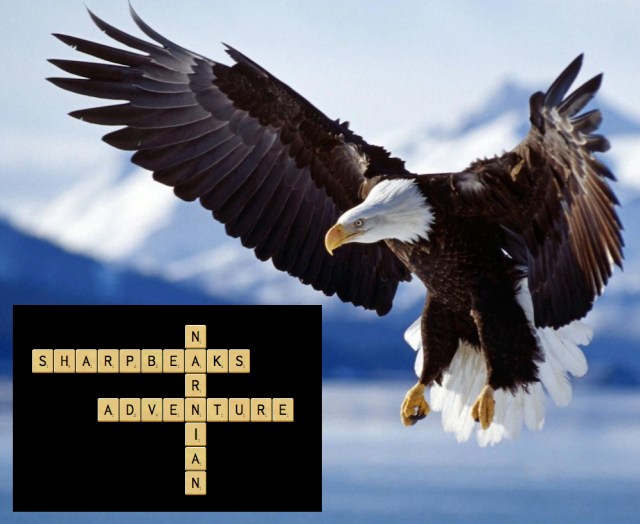
A Narnian Madlib

EVO-WWI-064-01060I got to savor one of the joys of being a grandpa today, watching over two of my five lovely granddaughters while their parents traveled to an important business meeting.

Naturally, we had fun playing, drawing, tossing a ball for their German shepherd, building things, cleaning up their room (not quite so “fun”) and—since it’s summer—playing with water balloons (extremely fun, even though I got drenched).

We also did a madlib, one of those “phrasal templates” popularized by Roger Price and Leonard Stern in the 1950s. These simple word games are entertaining and educational. And, even for novice writers, they’re not too challenging to compose. After all, the stories themselves are by nature brief and rather superficial.

Today I even set my granddaughters in front of an episode of The Powerpuff Girls so I could write a short scene from Narnia for them. You’ll find it below.

I had forgotten how much fun we had with madlibs when our own children were young. We made many up on the spur of the moment, and laughed at the silly combinations of word that resulted. The process, as most readers know, involves randomly selecting a series of words for inclusion in the narrative. With a lack of imagination, the readings can fall a bit flat, but typically you end up with some (accidentally) witty wordplay.

One of the benefits of madlibs is how they can be used more than once. While the outline of the story remains the same, of course, the choices made by readers generate amazing diversity.

Most madlibs are admittedly rather juvenile. That’s because they are written for juveniles. They rely on providing specific types of words, such as nouns or adjectives. Theoretically, you could devise a madlib as complex or sophisticated as you desire. For example, an entertaining tale certainly could doubtless be woven by including random selections for the following word choices.

____________ prime number

____________ copular verb

____________ Napoleonic regimental commander

____________ homograph

____________ life stage of a butterfly (other than larva or pupa)

____________ ditransitive verb

____________ type of psychosis

____________ infielder for 1874 Chicago White Stockings

____________ gerund

____________ rare earth mineral

____________ monotransitive verb

____________ early kabbalist (other than Bahye ben Asher ibn Halawa)

____________ type of arachnid with blue coloration

____________ free predictive

____________ reciprocal pronoun

____________ chemical process (other than esterification)

Unfortunately, I don’t have time to write the story accompanying this worthy list, but if you should write it, I’d love to read it.

There are a number of fan sites online that generate madlibs. I won’t recommend any since the ones I’ve glanced at today are merely advertising collections for sale. (I also found the examples I experimented with to be rather feeble . . . even weaker than the story I wrote today in a single hour.)

You will search in vain if you’re seeking a C.S. Lewis reference to madlibs. However, he was a master wordsmith, who recognized well their power, and greatly loved humor. The following passage, from “Prudery and Philology,”
refers to the versatility and weight of language, and includes a valuable caution.

We are sometimes told that everything in the world can come into literature. This is perhaps true in some sense. But it is a dangerous truth unless we balance it with the statement that nothing can go into literature except words, or (if you prefer) that nothing can go in except by becoming words. And words, like every other medium, have their own
proper powers and limitations.

The brief tale below is not pretentious, so you need not fear it exceeding its limitation. It simply is what it is . . . one grandfather’s passing literary adventure with his grandchildren.

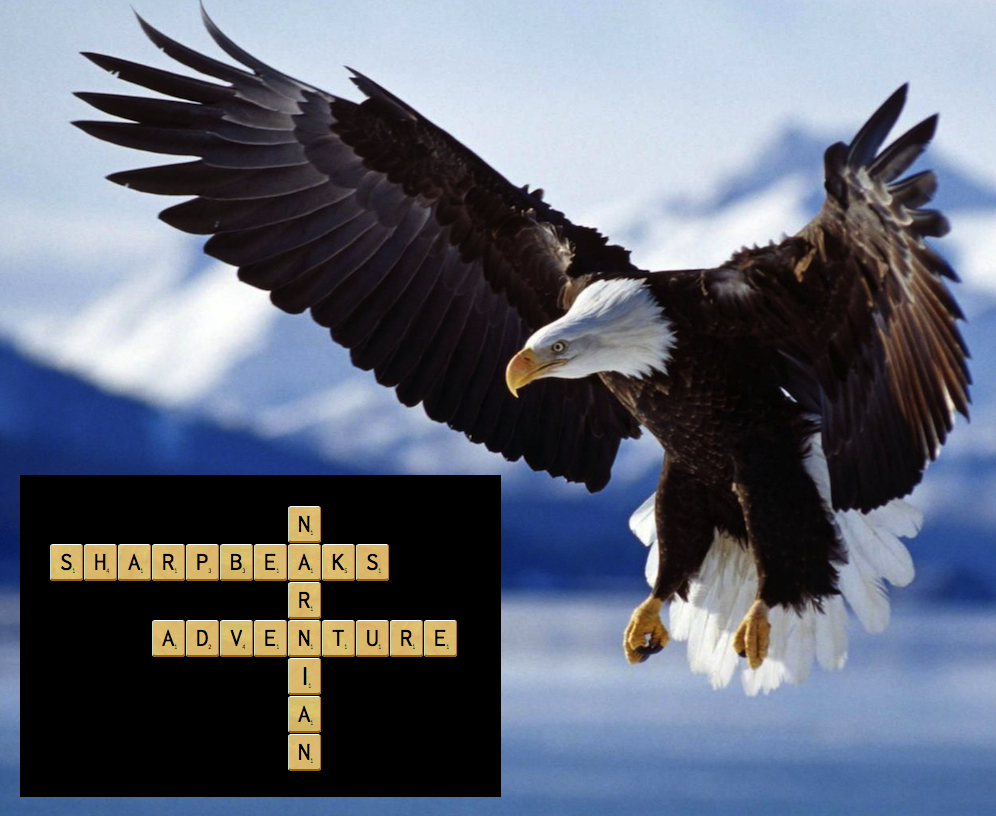
It you like “Sharpbeak’s Narnian Adventure,” you’re welcome to download a PDF copy of the story I’ve appended to the end of the column. It’s 100% free, and I’m not trying to sell a collection of madlibs after hooking you. Besides, if I was trying to make a profit off of anything including the word “Narnian,” I have no doubt lawyers would be descending upon me in droves.

The Words You Will Need

____________ adjective

____________ animal

____________ adjective

____________ adjective

____________ something  you drink

____________ color

____________ adverb

____________ adjective

____________ adjective

____________ meal time

____________ adjective

____________ adjective

____________ adjective

____________ adjective

____________ plural noun

____________ plural noun

____________ adjective

____________ adjective

____________ adjective

____________ animal

____________ adjective

____________ food

____________ food

____________ food

____________ place

____________ adverb

____________ adjective

____________ place

____________ number

____________ plural relative

____________ verb

____________ adjective

____________ plural monster

The Story Into Which You Insert Your Words

Once upon a time, when Narnia was still young, a/an ____________, young eagle named Sharpbeak decided to set out for an adventure. A wise ____________ climbed his ____________ tree to talk to him before he left. He crawled into the eagle’s ____________ nest and said, “That was a long climb. I’m thirsty. May I have a cup of ____________?”

As the two friends watched the sun set over the ____________ mountains, the eagle said ____________, “I wonder what’s on the other side of those mountains?”

His ____________ companion warned him, “Beware of the ____________ giants in the north. They like nothing better than to eat us Talking Animals for ____________ or even for a snack. Sharpbeak promised he would avoid the giants.

Then his friend said, “Don’t forget that there are also ____________ dragons living on some of the mountaintops. They don’t appreciate ____________ visitors. If you surprise them, they may blast you with a ____________ burst of their ___________ flames. And definitely don’t disturb their treasure of ____________ and ____________.”

The eagle said, “I’ll be sure to watch out for dragons when I go on my ____________ adventure.”

“Oh,” added Sharpbeak’s friend, “I wouldn’t advise you to fly over the ____________ ocean either. What if you flew as far as you could, and you didn’t find a/an ____________ island where you could land?” The eagle looked worried. His wise friend added, “If you ever find yourself in dangerous circumstances, remember that you can call on Aslan to protect you. I heard that once he once allowed a timid ____________ to walk safely across a stormy lake without sinking.”

“My,” said Sharpbeak, “that would be a terrible thing.” He looked up at the ____________ stars, twinkling in the sky. The two friends had spoken long into the night. “I didn’t realize it was so late,” he said. All I have to offer you to eat is ____________ and ____________.”

“That would be nice,” said his friend. He reached into his pocket and said, “and we could have this ____________ for dessert. But, after we eat I had better scurry home to my ____________, since I can’t imagine sleeping in a tree. I mean, if a storm comes up, you have the wind blowing ____________ and ___________ rain pouring down in torrents. I’m much happier living in a ____________ with my ____________ ____________. While you go on your journey, I will stay home and ____________.”

The two friends gave each other a big hug. The eagle’s feathers tickled his friend, who said, “May Aslan watch over you during your travels.”

The next morning the ____________ eagle soared off to begin his adventure. Sharpbeak would be sure to avoid all of the giants, dragons and ____________ along the way. But that’s a story for another day.

Epilogue

Those of you curious about how my granddaughters’ story turned out, should read on.

Once upon a time, when Narnia was still young, a big, young eagle decided to go off for an adventure. A wise deer climbed his pink tree to talk to him before he left. He crawled into the eagle’s fuzzy nest and said, “That was a long climb. I’m thirsty. May I have a cup of juice?

As the two friends watched the sun set over the blue mountains, the eagle said roughly, “I wonder what’s on the other side of those mountains?”

His wide companion warned him, “Beware of the cold giants in the north. They like nothing better than to eat us Talking Animals for breakfast or even for a snack.” Sharpbeak promised he would avoid the giants.

Then his friend said, “Don’t forget that there are also hairy dragons living on some of the mountaintops. They don’t appreciate old visitors. If you surprise them, they may blast you with a soft burst of their speedy flames. And definitely don’t disturb their treasure of trash cans and flowers.”

The eagle said, “I’ll be sure to watch out for dragons when I go on my fun adventure.”

“Oh,” added his friend, “and I wouldn’t advise you to fly out over the heavy ocean either. What if you flew as far as you could, and you didn’t find a dark island where you could land?” The eagle looked worried. His wise friend added, “If you ever find yourself in dangerous circumstances, remember that you can call on Aslan to protect you. I heard that once he once allowed a timid bunny to walk safely across a stormy lake without sinking.”

“My,” said the eagle, “that would be a terrible thing.” He looked up at the watery stars, twinkling in the sky. The two friends had spoken long into the night. “I didn’t realize it was so late,” he said. “All I have to offer you to eat is noodles and cheese.”

“That would be nice,” said his friend. He reached into his pocket and said, “and we could have this snack bar for dessert. But, after we eat I had better scurry home to my fairgrounds, since I can’t imagine sleeping in a tree. I mean, if a storm comes up, you have the wind blowing bravely and messy rain pouring down in torrents. I’m much happier living in a playground with my ten sisters. While you go on your journey, I will stay home and dance.”

The two friends gave each other a big hug. The eagle’s feathers tickled his friend, who said, “May Aslan watch over you during your travels.”

The next morning the brown eagle soared off to begin his adventure. He would be sure to avoid all of the giants, dragons and dinosaurs along the way. But that’s a story for another day.

Downloadable Version

Here’s the story. On the PDF, it is preceded by a list of the type of words required to fill in the various blanks.

Narnian Madlib

The Power of Names

babyC.S. Lewis was a man who recognized the power of a name. In fact, that awareness made the opening line of The Voyage of the Dawn Treader one of the most memorable in all of Christian literature: “There was a boy called Eustace Clarence Scrubb, and he almost deserved it.”

Names are used, of course, for identification. Throughout history, different countries have had different naming conventions. A rather common one featured the giving of a personal name to a child, with the patronym added to distinguish between individuals of the same name.

This led to distinctions such as James ben Zebedee of the Christian gospels or Leifr Eiríksson the first millennium explorer of North America. Hearkening back to my own Scandinavian roots, I favor the innovative example Ole Olson, or more commonly Ole Olsen. (The only problem with this name was that it failed to distinguish one Ole from the thousands of other Ole Olsons who dotted the steep coastlines of the Viking fjords.)

God too reveals the importance of names. In the Gospel according to Matthew we read:

But as he considered these things, behold, an angel of the Lord appeared to him in a dream, saying, “Joseph, son of David, do not fear to take Mary as your wife, for that which is conceived in her is from the Holy Spirit. She will bear a son, and you shall call his name Jesus, for he will save his people from their sins. (Matthew 1:20-21).

In one of the most powerful prophecies ever recorded, we hear various titles—in essence, names—of the Messiah Jesus.

For to us a child is born,

   to us a son is given;

and the government shall be upon his shoulder,

    and his name shall be called

Wonderful Counselor, Mighty God,

   Everlasting Father, Prince of Peace.

                                                             (Isaiah 9:6).

The reason that names are on my mind is because recent research has revealed that in America (well, California precisely, and assuming that data can be applied to the entire country) . . . the choice of baby names can even evidence the political leanings of the parents. Now, we’re not talking about parents who name their children directly in honor of a particular politician; it’s much more subtle than that.

Here are a couple of interesting facts gleaned from the study.

The results revealed that overall, the less educated the parent, the more likely they were to give their child either an uncommon name (meaning fewer than 20 children got the same name that year in California), or a unique name (meaning only one child got that name in 2004 in California). When parents had less than a college education, there were no major ideological differences in naming choice.

However, among college-educated whites, politics made a difference. College-educated moms and dads in the most liberal neighborhoods were twice as likely as college-educated parents in the most conservative neighborhoods to give their kids an uncommon name. Educated conservatives were more likely to favor popular names, which were defined as names in the top 100 in California that year.

The sounds of liberal and conservative names varied, too. For both boys and girls, liberals tended to pick more feminine-sounding choices, such as Liam, Ely and Leila names that include lots of L sounds and soft-A endings, including popular choices Ella and Sophia. Conservatives, on the other hand, tend to pick names with more masculine-sounding Ks, Bs, Ds and Ts, such as Kurt.

Beware of the temptation of attempting to jump aboard a naming fad. “Unique baby names can sometimes grate, however. In 2011 . . . an informal survey of hated baby names found that Nevaeh, or ‘heaven’ spelled backward, was the most commonly cited as a hated name. The name was invented in the 1990s and became the 31st most popular in the United States in 2007.”

My wife and I are surely in a minority. We chose the names for all three of our children based upon their meanings . . . a practice quite common in the Scriptures.

C.S. Lewis knew well the power of a name.

Perhaps it has sometimes happened to you in a dream that someone says something which you don’t understand but in the dream it feels as if it had some enormous meaning—either a terrifying one which turns the whole dream into a nightmare or else a lovely meaning too lovely to put into words, which makes the dream so beautiful that you remember it all your life and are always wishing you could get into that dream again. It was like that now.

At the name of Aslan each one of the children felt something jump in his inside. . . . Susan felt as if some delicious smell or some delightful strain of music had just floated by her. And Lucy got the feeling you have when you wake up in the morning and realise that it is the beginning of the holidays or the beginning of summer. (The Lion, the Witch and the Wardrobe).

It comes as no surprise to any Narnian sojourner that the very name of Aslan should so move his followers. After all, we too understand Who the great Lion is. For, as he once said to Lucy and Edmund, when asked if he was here in our world as well,

“Are—are you there too, Sir?” said Edmund.

“I am,” said Aslan. “But there I have another name. You must learn to know me by that name. This was the very reason why you were brought to Narnia, that by knowing me here for a little, you may know me better there.” (Voyage of the Dawn Treader).

Honor Your Parents . . . Or Else!

parentsThere are a variety of reasons for expressing affection and care for one’s parents. Many feel gratitude for the sacrifices their parents made while providing for them. Others treasure memories of never doubting their parents’ love for them. Some enjoyed less idyllic childhoods, but honor their parents out of a sense of duty.

C.S. Lewis described the last type of family in The Four Loves. Rather than giving cause for their children to appreciate them, some parents raise obstacles to their affections.

We hear a great deal about the rudeness of the rising generation. I am an oldster myself and might be expected to take the oldsters’ side, but in fact I have been far more impressed by the bad manners of parents to children than by those of children to parents.

Who has not been the embarrassed guest at family meals where the father or mother treated their grown-up offspring with an incivility which, offered to any other young people, would simply have terminated the acquaintance?

Dogmatic assertions of matters which the children understand and their elders don’t, ruthless interruptions, flat contradictions, ridicule of things the young take seriously—sometimes of their religion—insulting references to their friends, all provide an easy answer to the question “Why are they always out? Why do they like every house better than their home?” Who does not prefer civility to barbarism?

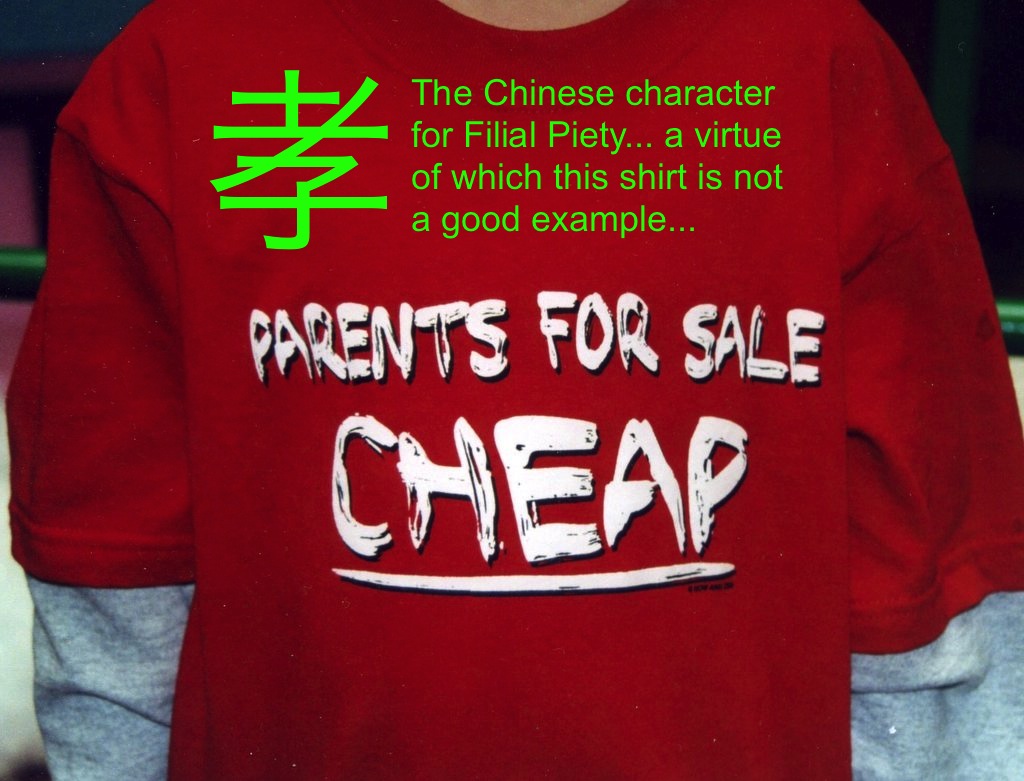
Yes, there are several reasons for honoring our parents, even when they have not “earned” that respect. And now we can add another incentive to do so—because you might be sued in court if you do not honor them! While this statute has not arrived in the Western world, it is a relatively new law in the world’s most populous nation.

The recently revised law requires that adult children visit their parents “often” . . . without defining the specific frequency. Apparently, too many children have become preoccupied with their own concerns. (Shades of Harry Chapin’s “Cats in the Cradle.”)

Traditional Chinese culture is renowned for the value it places on revering elders in general, and parents specifically. In the Analects of the philosopher Confucius, an entire section is devoted to “filial piety.”

58. Confucius said: “When at home, a young man should serve his parents; when away from home, he should be respectful to his elders. He should always be earnest and truthful, express love to all, and follow men of virtue. Then, if he has the time and energy, he should study literature and the arts.” [1.6]

71. Confucius said: “When your father is alive, obey him. When your father has passed on, live as he did. If you do so for [at least] three years after your father’s death, then you are a true son.” [1.11]

72. Tzu Lu asked about the meaning of filial piety. Confucius said: “Nowadays filial piety means being able to support your parents. But we support even our horses and dogs. Without respect, what’s the difference between the two kinds of support?” [2.7]

73. Tzu Hsia asked about filial piety. Confucius said: “What matters is the expression you show on your face. ‘Filial piety’ doesn’t mean merely doing physical tasks for your parents, or merely providing them with food and wine.” [2.8]

74. Confucius said: “In serving your parents, you may disagree with them from time to time and seek to correct them gently. But if they will not go along with you, you must continue to respect and serve them without complaining.” [4.18]

75. Confucius said: “Never ignore your parents’ ages, which are both a source of joy (because they are still living) and a source of anxiety (because their deaths are coming nearer).” [4.21]

The Judeo-Christian tradition, of course, also demands respect for one’s parents. “Honor your father and your mother, that your days may be long in the land that the Lord your God is giving you (Exodus 20:12, ESV). And from the Letter to the Church in Ephesus: “Children, obey your parents in the Lord, for this is right. ‘Honor your father and mother’ (this is the first commandment with a promise), “that it may go well with you and that you may live long in the land.”

It is challenging to discern what it means to honor a parent who does not merit gratitude. Indeed, destructive (abusive) parents may well disqualify themselves from receiving honor, since they tacitly reject the very essence of what it means to be a mother or father.

Aside from these extreme cases, where only a biological relationship exists, we must be honest. None of our parents are perfect. But then the corollary is also true—none of their children are, either. It is in these common, shaded cases where our own character is tested.

C.S. Lewis lost his mother at a young age. His father remained distant, and sent his sons to distant boarding schools. During the First World War, Lewis was severely wounded and shipped from the front lines to a London hospital where he recuperated. While a patient he wrote the following to his father in Ireland.

Wherever I am I know that you will come and see me. You know I have some difficulty in talking of the greatest things; it is the fault of our generation and of the English schools. But at least you will believe that I was never before so eager to cling to every bit of our old home life and to see you.

I know I have often been far from what I should be in my relation to you, and have undervalued an affection and generosity which an experience of “other people’s parents” has shown me in a new light. But, please God, I shall do better in the future. Come and see me, I am homesick, that is the long and the short of it.

Sadly, Lewis’ father did not make the trip to visit his son at the hospital. Such is the nature of real life relationships . . . and such is the reason why honoring our parents sometimes needs to assume the form of a law, or even a Commandment.

May it not be so in your family. If your parents still live, I pray God will grant you great joy in honoring them. And, if you have children, I pray that the Lord will fill them with well-deserved affection for you.

_____

If you have never heard the song “Cats in the Cradle,” you owe it to yourself to ponder its powerful message today. You can view it here.

Happy Leap Day Birthday!

When our daughter-in-law was given a due date for her third child around the end of February, she decided to have her daughter on February 29, Leap Day. This was not a “scheduled” delivery with an inducement of labor. Katie simply chose to give birth to her baby on that day. And, she did.

After we sang “Happy Birthday” to that precious angel today, she immediately volunteered “I’m four!” It’s so nice that she’s not confused by the fact her actual birthday has only appeared on the calendar twice during her brief life.

Age is an interesting subject. We understand its relative applications (e.g. being old enough to begin formal schooling or drive an automobile), but what is its ultimate significance?

In his novel That Hideous Strength, C.S. Lewis says “Youth and age touch only the surface of our lives.” Quite an insight.

Like this body of ours, which we inhabit only for a limited time, in the scope of eternity our age means less than we typically think. Jesus, for example, encouraged his adult followers to receive God’s message with the simple faith “of a child.” I’ve learned firsthand that what passes for “maturity” is sometimes merely a calcification of our hearts and minds.

Our relationship with our Creator is intended to be a dynamic, living, growing thing. And, I suspect that when we’ve been in the Lord’s presence for a thousand eons it will still pulse with the vigor of youth and newness.

As Lewis wrote in The Silver Chair, “People have no particular ages in Aslan’s country.” Ages are something meant for here, for this transitory world.

Thus it’s fitting that we celebrate such transitions for those who mark birthday milestones of four, forty or fourscore. May God bless each and every child until we enter that Place where we no longer care to keep track of such concerns.

No Child Unwanted

Certificates Bearing Their New NamesIt’s difficult for people who are products of Western civilization to comprehend the different view of the value of life held by many in our world.

An article today described a terrible practice in India, home to more than 1.2 billion human beings. Like many less developed nations, male children are often preferred to female offspring. Sons are viewed as a blessing and daughters (primarily due to dowries, in the case of India) are less welcome.

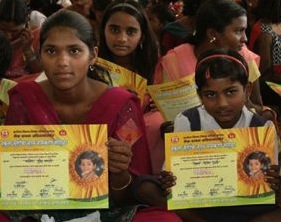
And because of that sad fact, it has become common for some families to name their innocent daughters Nakusha, which sounds rather pleasant, but means “unwanted.” It would be difficult to imagine an uglier name.

Recently a movement has arisen to rename girls cursed by their parents with this crippling birthright. Yesterday, in fact, just such a renaming ceremony was conducted in Satara District. The girls were allowed to choose their own name to replace the vile one that had shadowed their lives up to this point.

While there are millions of Christians in India, they have hardly made an impact on the Hindu worldview that dominates the land. It is inconceivable that in a Christian land (i.e. one rooted in the biblical documents and principles like most nations in the West), that children would be named “Unwanted.”

On the contrary, children are esteemed in the Christian context. Listen to these gracious words of Jesus the Christ:

At that time the disciples came to Jesus, saying, “Who is the greatest in the kingdom of heaven?” And calling to him a child, he put him in the midst of them and said, “Truly, I say to you, unless you turn and become like children, you will never enter the kingdom of heaven. Whoever humbles himself like this child is the greatest in the kingdom of heaven.

“Whoever receives one such child in my name receives me, but whoever causes one of these little ones who believe in me to sin, it would be better for him to have a great millstone fastened around his neck and to be drowned in the depth of the sea.”

Let us say a prayer for each little girl and boy—in every land around the globe—who finds themselves unwanted by their family. And let’s support worthwhile agencies that work to rescue them.

Because every child is precious to God.

Addendum:

…and every child is precious to all of those who already know God as their Father, as well.