Martian Tribute to C.S. Lewis

Malacandra CraterMere Inkling recently named a crater on Mars, in honor of C.S. Lewis. The crater’s name is Malacandra, which was the name for the red planet in the first volume of Lewis’ Space Trilogy, Out of the Silent Planet.

The naming of Malacandra Crater was done through an organization preparing the map which will be used by the Mars One Mission. Mars One is the optimistic international effort to establish a permanent human settlement on the red planet, beginning in 2024.

The über-adventurous (or foolhardy) are able to apply today for consideration to become an astronaut.

The crater naming project is not sponsored by the International Astronomical Union (IAU). Instead, it is coordinated by Uwingu, a for profit company that has a goal of raising $10,000,000 for grants to scientists and educators promoting space exploration.

Due to its limited* budget, Mere Inkling was only able to name a small crater. However, it’s not the expense, it’s the thought that counts.

In addition to Malacandra Crater, I named the impact mark directly to its south in honor of my grandchildren. The process allows one to include a dedication for each named crater. For theirs, I wrote:

Stroud Crater is named in honor of the brilliant grandchildren of Rob & Delores Stroud. Andrew, Ariana, Dominic, Arabelle, Rachel, Rebecca, Kaelyn & Asher. Whether they grow up to be astrophysicists, veterinarians or educators, we know they will all make this world a better place. Soli Deo Gloria.

The tiny basins named above lie in Aurorae Chaos. It’s a rugged neighborhood, but there are surprisingly few craters in the immediate vicinity. I’m always seeking opportunities to encourage my grandchildren to study science, and I hope this will pique their interests, both now and in the years to come.

C.S. Lewis is not primarily known today as a writer of science fiction, but his series (also known as the Cosmic Trilogy, or the Ransom Trilogy, after its protagonist) is quite good. In fact, it was the very first of Lewis’ works I ever read. I was introduced to them by a Christian friend during my college years.

Several influences converged to move Lewis to venture into science fiction. In 1938, he thanked a friend for his praise of Out of the Silent Planet, and wrote:

You are obviously much better informed than I about this type of literature and the only one I can add to your list is Voyage to Arcturus by David Lyndsay (Methuen) which is out of print but a good bookseller will probably get you a copy for about 5 to 6 shillings. It is entirely on the imaginative and not at all on the scientific wing.

What immediately spurred me to write was Olaf Stapledon’s Last and First Men and an essay in J. B. S. Haldane’s Possible Worlds both of which seemed to take the idea of such travel seriously and to have the desperately immoral outlook which I try to pillory in Weston.

I like the whole interplanetary idea as a mythology and simply wished to conquer for my own (Christian) point of view what has always hitherto been used by the opposite side. I think Wells’ 1st Men in the Moon the best of the sort I have read.**

Lewis then appends a comment referring to the other planets in our solar system, but intriguing in light of the recent discovery of numerous planets throughout the galaxy. “The more astronomy we know the less likely it seems that other planets are inhabited: even Mars has practically no oxygen.”

One of Lewis often overlooked science fiction short stories, “Ministering Angels,” is set on Mars. It begins in the following way.

The Monk, as they called him, settled himself on the camp chair beside his bunk and stared through the window at the harsh sand and black-blue sky of Mars. He did not mean to begin his ‘work’ for ten minutes yet. Not, of course, the work he had been brought there to do. He was the meteorologist of the party, and his work in that capacity was largely done; he had found out whatever could be found out.

There was nothing more, within the limited radius he could investigate, to be observed for at least twenty-five days. And meteorology had not been his real motive. He had chosen three years on Mars as the nearest modern equivalent to a hermitage in the desert.

He had come there to meditate: to continue the slow, perpetual rebuilding of that inner structure which, in his view, it was the main purpose of life to rebuild. And now his ten minutes’ rest was over. He began with his well-used formula. ‘Gentle and patient Master, teach me to need men less and to love thee more.’ Then to it. There was no time to waste.

There were barely six months of this lifeless, sinless, unsuffering wilderness ahead of him. Three years were short . . . but when the shout came he rose out of his chair with the practised alertness of a sailor.

The Botanist in the next cabin responded to the same shout with a curse. His eye had been at the microscope when it came. It was maddening. Constant interruption. A man might as well try to work in the middle of Piccadilly as in this infernal camp. And his work was already a race against time. Six months more . . . and he had hardly begun.

The flora of Mars, these tiny, miraculously hardy organisms, the ingenuity of their contrivances to live under all but impossible conditions—it was a feast for a lifetime. He would ignore the shout. But then came the bell. All hands to the main room.
(“Ministering Angels,” Of Other Worlds: Essays and Stories).

Malacandra Crater may be a small feature on a vast and curious planet, but it is a tribute to an author of immense and lasting talent.

_____

* i.e. nonexistent

** The following titles mentioned by Lewis are available for free digital download:

Voyage to Arcturus

Last and First Men

The First Men in the Moon

Abusing Puppies

henriPuppies are cute and cuddly, but leave it to a French king to carry that fact to absurd lengths.

One might think owning 2,000 lap dogs is a bit overmuch. Not so Henri III (1551-1589). It would seem that after the first thousand, it might become difficult to recall all of their names, but that didn’t deter Henri.

He so loved his puppies that he used them as a form of adornment, regularly wearing them in a small basket suspended around his neck.

And, amazingly, it appears none of his courtiers mentioned that it looked quite silly. Who knows, he may have established a temporary fad, not unlike the purse puppies used by some modern celebrities to increase attention to themselves.

Puppies are on my mind now, because my wife and I have “reserved” a border collie from a recent litter.

Some readers will recall the grief we experienced when a dog we rescued a year ago, died due to an onslaught of seizures, one after the other. Lyric’s tragic passing, at a young age, was so much more difficult than the loss of our previous three who had lived well into their geriatric years.

It’s taken us a year to be willing to consider adding another dog to our family. We still have Foxy, who we rescued about eight years ago, during our final military tour in California. We decided it would be much easier for her if we added a puppy to our family this time.

I’ll write more about our puppy in the future. For now I’ll end with the “teaser” that we’re naming her after one of the Greek Muses.

C.S. Lewis loved dogs, although apparently not enough to wear them like jewelry.

In 1916, he corresponded with his friend Arthur Greeves about adding a puppy to the latter’s family. His first mention, as Greeves was contemplating the decision, reveals Lewis’ emphasis on the wellbeing of the dog over its master’s preferences.

I think you are very wise not to take that puppy from K. Unless you are a person with plenty of spare time and real knowledge, it is a mistake to keep dogs–and cruel to them.

Greeves proceeded with the adoption, as Lewis appends a postscript to his next letter, written a week later.

Poor puppy!! What a life it’ll have! I shall poison it in kindness when I come home!

In a subsequent letter, the same month, Lewis offers advice about naming the puppy that I was delighted to read. It suggests that he would approve of our decision for the name of the new addition to our family.

In the meantime, whatever name we bestowed on our new puppy, she would never need to worry about being traipsed around on display like a fashion accessory. We’ll leave that to French kings and egocentric divas.

Marrying a Writer

museA recent episode of the series Castle illustrated something all of the spouses of writers know—they are wed to peculiar people.

The premise for the program, currently in its seventh season, is that a mystery novelist accompanies homicide detectives in New York City on their investigations.

Despite his frequently outlandish theories, Richard Castle often contributes significantly to solving the crimes. His counterpart is Kate Beckett, the senior detective who leads the team.

The two of them recently wed, which led to the following exchange while they were on their honeymoon, which doubled as a homicide investigation at a frontier “dude ranch.”

Faced with complex evidence, Castle says, “That’s why we approach this as writers.”

Beckett responds with a comment representative of literary spouses. “So we procrastinate and we make things up?”

Ouch.

That strikes a bit close to home. The second element—making things up—can be construed by our nimble minds as an actual compliment. Yes, we do think creatively and out of the mundane box. Thank you very much.

On the other hand, the procrastination label . . . well, speaking for myself, it fits far too well.

Writing, after all, is not simple. Even poor writing requires effort. And, if one hopes to write well . . . it requires time, skill and practice.

Few can sit down at the keyboard and imperiously command their “muse” or inspiration to be at hand. This is true for all authors, including Christian writers who seek guidance from the Holy Spirit.

The simple fact is, however, that if we waited until we felt fully inspired, most of us would accomplish little.

In my own case, I sincerely attribute anything good that I might write to the Lord. The chaff comes from me. I won’t presume to guess what small percentage of the words are wheat, but I will confess that I am most productive when I discipline myself to write. And, this discipline typically involves a self-imposed deadline.

Thus the reason for the graphic at the head of the page. I have recognized in the fall of life, as I seek to pursue my writing avocation more seriously, that “The deadline is my Muse.”

Beckett knows very well that her fictional husband often requires a deadline to complete his novels.

My wife sees the same principle at work when I request her urgent proofreading of something I’ve waited too long to complete.

C.S. Lewis had ample experience with deadlines himself. And he knew well that even a required submission date could not guarantee literary production. In 1958 he wrote to his editor, Jocelyn Gibb, saying that he may, or may not, be able to provide a contribution to an upcoming edition of The Psalms as Poetry.

Dear Gibb, Thanks for the book, a very nice bit of work. I’ll try to re-read Miracles for mis-prints while I’m in Ireland, where my wife and I go tomorrow. When is deadline for your Fifty-Two? Not that I’m sure I can pump anything up anyway.

He did manage to provide a contribution, which he later included as part of the introductory chapter for Reflections on the Psalms.

I’m not certain whether Lewis wrote those pages simply because inspiration compelled him to . . . or if the issue deadline provided a little supplemental motivation. I suspect it was the latter.

To any writers out there who never require the encouragement of a deadline—consider yourself uniquely blessed!

To the masses who share my battle with the plague of procrastination, you have my sympathy. Still, after pausing for just a moment to commiserate, let’s get back to the pleasant labor of writing, and the thrill of “making things up.”

Bill Cosby Redux

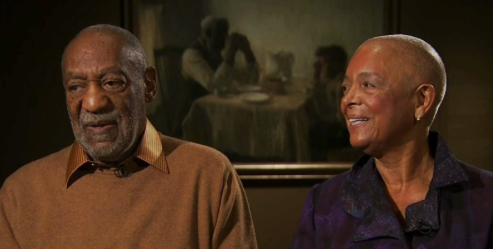
Bill & CamilleIn light of recent revelations, my daughter urged me to delete my recent post about Bill Cosby.

As the extensive evidence of a sordid past have been coming to light, albeit accusations rather than substantiated facts, the propriety of that original post falls into question.

For the time being, I am disposed to leaving it up. For several reasons. I could say one is the notion of “innocent until proven guilty,” but that’s not true. Despite statutes of limitations, the accumulating evidence, quite sadly, appears indisputable.

On the subject of innocence, I admit to confused sentiments. As a Christian, who accepts the historic doctrine of “original sin,” I confess at every worship service that I too am a hopeless sinner, in dire need of God’s grace and mercy. What’s more, as a Christian who believes we cannot earn forgiveness, I point not to my own ragged good works, but rely wholly on the grace—the undeserved love—of God.

C.S. Lewis recognized that mercy is the only solution for our guilt. In “The Humanitarian Theory of Punishment,” he wrote these words:

The essential act of mercy was to pardon; and pardon in its very essence involves the recognition of guilt and ill-desert in the recipient. If crime is only a disease which needs cure, not sin which deserves punishment, it cannot be pardoned.

I am quite conscious of my own deep need for pardon. Thus, I am ever wary of condemning those whose heart I cannot know.

The second reason for my reticence in removing this post, is that much of it remains true. The Bill Cosby who offered our family genuine laughter and wholesome entertainment, was apparently not identical with the real man.

But then I pause to wonder how many celebrities are truly consistent with their public persona? And, in light of the fact that we all have our failures and sometimes grievous sins, why should we expect them to be transparent and vulnerable to greater emotional violence than they all already receive?

My comments below were written with the understanding I possessed two short months ago. They were heartfelt at that time, and they illustrate in a clear way how perception is not always reality. Perhaps they can serve as a sort of a caution to others who are prone to investing too much trust in people they do not genuinely know.

Another reason I am inclined to leave the post up for the time being, is that there may be a value in preserving the quality of the artist’s work, even when we have been disappointed by the artist himself.

As an example of this, during a sketch on the last episode of Saturday Night Live, Michael Che criticized the actor’s vile behavior, but ended his scripted “newscast” with a thought that I believe represents the view of many.

“I don’t know how to feel about [networks cancelling The Cosby Show] because I don’t know Bill Cosby, but Cliff Huxtable practically raised me. I love that dude, and the only thing he ever tried to sneak while people were asleep is a hoagie. So while I may never forgive Bill Cosby, hopefully someday I can forgive Dr. Huxtable.”

It’s that Bill Cosby, the idealized, honorable, ever-witty, and doting father, that I remind my wife of. And I remain flattered by that.

Meanwhile, I pray for Bill and Camille Cosby. I pray for the victims of his offenses. I pray for the victims of some of those very women who, in likely turn, have wounded others because of their own emotional and spiritual injuries.

Sin is powerful. It’s effects cascade from life to life. But sin and evil do not have the final word. That is left to the Word incarnate, who has redeemed this fallen world. The Lord who heals our wounds and offers the glorious promise that one day . . .

He will wipe away every tear from their eyes, and death shall be no more, neither shall there be mourning, nor crying, nor pain anymore, for the former things have passed away. (Revelation 21.4).

Bach’s Lost Classics

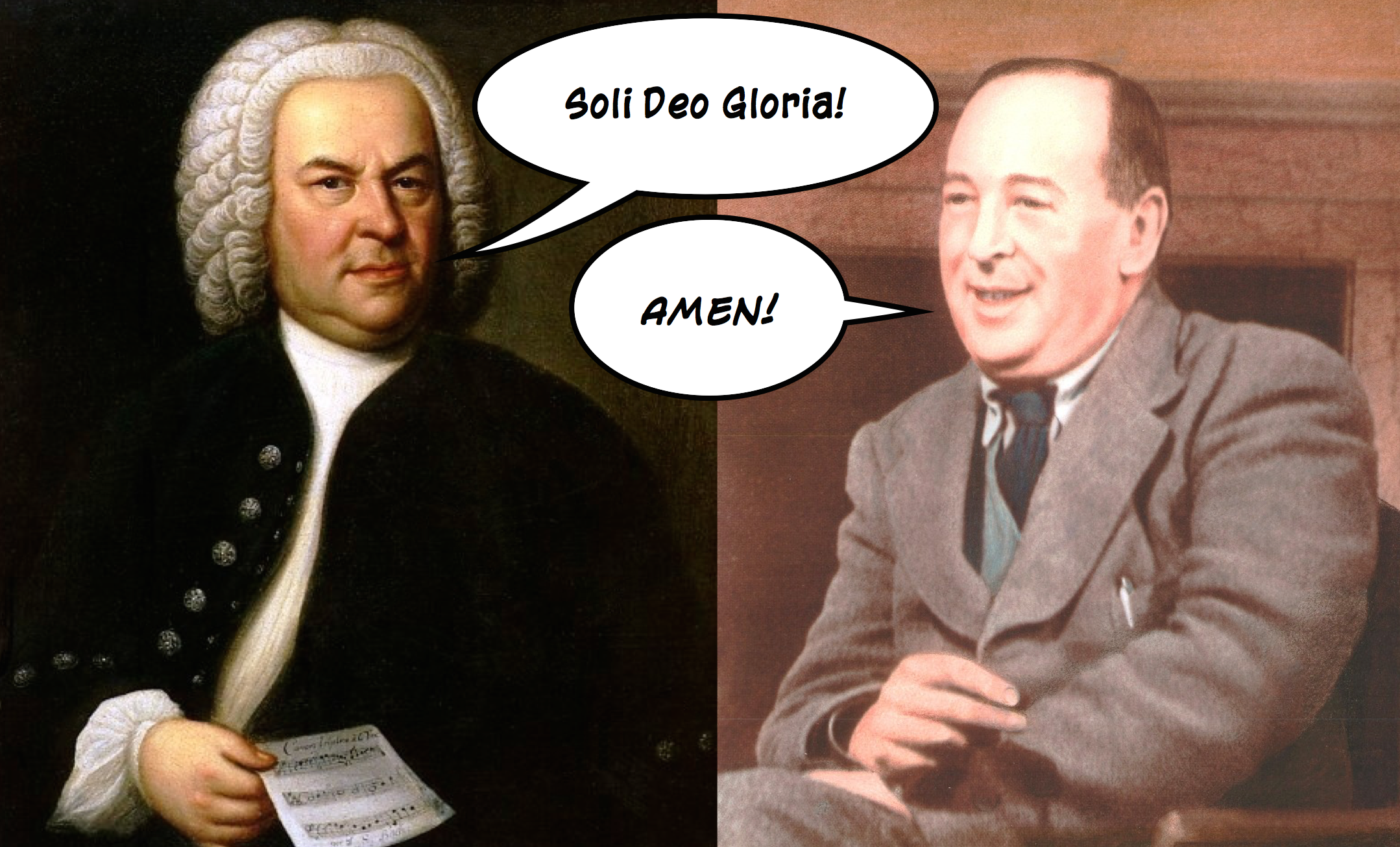
csl bach


Were you aware that scholars believe half of Johann Sebastian Bach’s music has been lost to the world due to the carelessness of his relatives?

I was unaware of that sad fact until recently.

J.S. Bach was the preeminent prodigy of a gifted musical family. His father, Johann Ambrosius Bach, was the leader of the musicians in their German city. All of his uncles were professional musicians. Two of Bach’s sons also became noteworthy composers.

Bach (1685-1750) held a number of important posts. These included serving the courts of Leopold, Prince of Anhalt-Köthen and Augustus III, King of Poland and Grand Duke of Lithuania.

It is not uncommon for gifted men and women to remain unrecognized during their lifetimes. In such cases, it is not surprising that many of their works would be lost.

Bach, on the other hand, was appreciated during his own lifetime. Despite that fact, many of his creations would pass into oblivion. Why?

Amazing, only a single early cantata was published during his lifetime.

Upon his death, all of his precious musical manuscripts—chorales, motets, arias, sonatas, suites, fugues, concertos, canons and more—were divided among his family. Some of the manuscripts were sold, and others presumably were saved and eventually lost to time. Perhaps someday more pieces will be rediscovered, but that remains to be seen.

Bach was a devout Christian (of Lutheran persuasion). While the Cantor of St. Thomas Church in Leipzig he wrote more than 300 cantatas inspired by the Gospel readings for Sundays and church festivals. One hundred of these musical gems have not survived.

C.S. Lewis enjoyed Bach. In An Experiment in Criticism, he uses the composer’s music as an example of something so profound that it continues to satisfy.

Many people enjoy popular music in a way which is compatible with humming the tune, stamping in time, talking, and eating. And when the popular tune has once gone out of fashion they enjoy it no more. Those who enjoy Bach react quite differently.

In his Diary, Lewis’ brother Warnie describes the inauguration of a new record player in 1933. “This after my long expected new gramophone arrived . . . I am delighted with it . . . After supper Jack, Minto and I sat cozily in the study and I played them the Pastoral Symphony and a sonata of Bach.”

In our modern world, the increase in leisure time has allowed many people to pursue their creative dreams. Some write, others paint, and a smaller number compose music.

Bach’s tale makes one wonder what will happen to their labors of love once they are gone. Will our family or friends divide them among themselves? Will they ever be read?

Rather than be depressed by these questions, let me encourage you to share your work with others now. Perhaps a blog would be a suitable avenue for publishing your thoughts? There are also a number of options for publishing ebooks, including some that do so at no cost.

Of course, not everything we write merits publication. We should strive to write something worthwhile, and edit it to the point where we can be suitably “proud” of our literary offspring. No doubt Bach spent many hours revising his compositions until they sounded perfect to his own ear.

And, for those of us who share the faith of Bach, it is worth noting the words he wrote at the close of each of his religious works (and many of his secular pieces): Soli Deo Gloria . . . Glory to God Alone.

British Weather

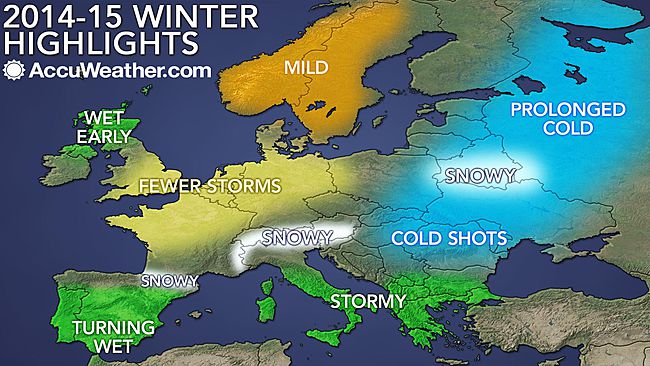
euro weatherWinter arrived early. The current “arctic outbreak” has brought subzero temperatures to Canada and the United States. It proves once again that the demarcation of seasons is capricious.

“Meteorological winter” reckoning makes much more sense than relying on a solstice, which actually occurs in the midst of the season.

Prior to the arrival of this polar cold front, the shortening of the days had been the only sign of winter’s approach where we live. Our summer in Puget Sound was wonderful, and lasted long into the fall.

Although the United States Air Force preferred to assign me to hot climates, I’m really a temperate (climate) person. I enjoy seeing four separate seasons, and seek the unique joys that arrive with each of them.

I don’t enjoy any of them in excess. The record-setting snowfalls we survived during several years in Minnesota were a bit much. The relentless heat of the Mojave Desert was even worse.

We did enjoy the weather of England, when we spent three wonderful years there. I guess it takes a true Washingtonian to say they genuinely enjoyed the weather in Britain—but we did.

C.S. Lewis recognized the perceived shortcomings of England’s weather. In the eyes of many, of course, the rain that keeps everything lush and green is considered a dreary imposition on their activities. In 1950 he wrote the following to one of his American correspondents.

Here we are enjoying the dubious delights of early English spring, and I often wonder what visiting Americans make of it: for they are already arriving in surprisingly large numbers considering the time of year. I can only suppose that they all come from Northern Alaska, and find our climate a nice change! If you have any friends who think of coming over, tell them that the English summer generally falls in the third week in June.

This delightful paragraph brings to mind the apocryphal Mark Twain comment that, “The coldest winter I ever spent was a summer in San Francisco.”

The great thing about the pseudo-Twain quote is its versatility. It is easily edited for any locale.

One last thought about winter. We Northern Hemisphereans reveal our hemisphere-centric prejudices when we fail to realize that these colder months don’t represent winter to half of the globe.

And I suspect the folks who live on that side of the world are not subject to “Antarctic outbreaks” of polar cold, due to the oceans . . . but that’s a question to research on another day.

Free Books

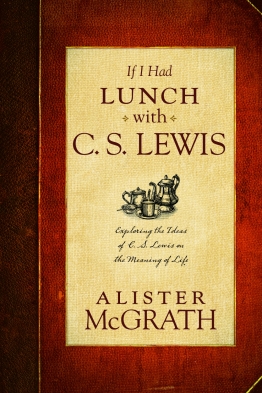
lunchIf you would like to pick up a free kindle copy of a very recent book on C.S. Lewis, you need to hurry. No telling how long the offer will last.

If I Had Lunch with C. S. Lewis by Alister McGrath has a normal (U.S.) price of $17.99, so it’s quite an offer.

But read on for another great deal. Ugh, that sounded like what a shill—which I am not—might say. Allow me to rephrase.

But keep reading. That’s not the only special offer for kindle readers right now. (And remember, even if you don’t own a kindle reader, Amazon offers a free program for use on your computer.)

I rarely look for free kindle titles, since it’s a genuine effort to sort through the chaff to find the grains of wheat. Today, however, I took a quick look, and I’m glad I did.

When this book was first released, just this year, I thought it looked interesting. Only last year, McGrath wrote the biography, C.S. Lewis A Life: Eccentric Genius, Reluctant Prophet.

The free title offers a thematic introduction to Lewis. It’s subtitle reads, Exploring the Ideas of C.S. Lewis on the Meaning of Life. It may be something you might want to suggest to your acquaintances unfamiliar with the Oxford Inkling.

Often, when items or services are offered without cost, it indicates a lack of value. This is why the maxim “you get what you pay for” arose.

However, the rapidly morphing publishing business contradicts the usual accuracy of that principle.

In order to promote their work, and expand their paying audience, a new distribution model has writers offering their books for free. And, alert readers can take advantage of the opportunities.

In light of that, allow me to share with you another time sensitive offer that I found as I browsed further. Right now you can purchase the kindle version of volume three of Lewis’ correspondence for a mere ninety-nine cents. I can’t recall now what I paid for my hardback and kindle copies of the volume, but trust me . . . this is an amazing deal.

Free Bonus Book

Students of C.S. Lewis will recall the significant impression that George MacDonald (1824-1905) made on his life. Right now you can download a collection of 365 quotations from MacDonald’s works for free.

365 Meditations from George MacDonald’s Fiction is edited by David Wilson-Okamura. This work, he writes, “was inspired by George MacDonald, An Anthology: 365 Readings, edited by C. S. Lewis (1946).”

Plagiarizing Screwtape

breigHow many letters have you read that were penned in the tradition of C.S. Lewis’ groundbreaking Screwtape Letters?

If you’re a fan of the collection, you’ve probably read similar correspondence that owed its very existence to Lewis’ work.

Now a more sensitive question—have you ever written anything similar to The Screwtape Letters? I must confess that I have. In fact, I’m currently working on a similar collection I hope to finish during the coming year.

Many writers have tried their hand at writing angelic letters, with varying degrees of skill and success. After you finish this column, you might want to check out two examples right here at Mere Inkling: Screwtape Letters Anniversary and Screwtape Goes to War.

Some letters have been composed from the perspective of a heavenly angel (often perceived of as a “guardian” angel). Others have been, like Lewis’ innovative example, written from a diabolical angle. Demons, we recognize, have been cast out of the heavens for which they were created, but they still remain angels, albeit fallen angels.

One of the lures that motivates those who emulate the Screwtape Letters is found in C.S. Lewis’ statement that they were rather easy to compose, once he had undergone the uncomfortable process of placing himself in the mind of an enemy of God.

It is disorienting, to reverse reality. For example, to hate what God loves (i.e. his creation, and especially humanity). And it is this discomfort that Lewis alludes to in describing his reluctance to pursue the genre any further than he did.

Considering Copyrights

For writers, copyrights are precious. It is good news, unknown to many, that current law (at least in the United States) protects everything we write. As soon as it is created (the words are arranged in their unique order), our work is protected by copyright whether or not we use the © symbol.

I say this because the arrangement of words can be protected by law, but “ideas” cannot. (I’m not talking about patents here, but literary ideas or techniques.)

Thus, it’s possible to freely follow Lewis’ example. However, quotations should only be used with permission. (There are, of course, “fair use laws” that describe the acceptable use of quotations in various contexts.)

There was a bit of a scandal a few years after Lewis wrote The Screwtape Letters. Well, “scandal” is too serious a word. More like an awkward and uncertain moment, when an American journalist wrote a book that was clearly inspired by Lewis.

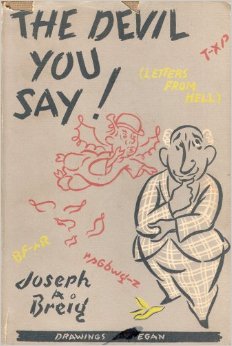
I’ve only recently received my copy of The Devil You Say by Joseph A. Breig. It was published in 1952, and the introduction echoes Lewis’ own. While the letters themselves appear to be independent of Lewis, I suspect the following parallel from the two prefaces shocked Lewis when he saw it.

I have no intention of explaining how the correspondence which I now offer to the public fell into my hands. (Lewis)

I have not the remotest intention of disclosing to anyone—not even my confessor—how these choice tidbits of demonology fell into my hands. (Breig)

Following its publication, one of Lewis’ correspondents, Idrisyn Oliver Evans, sent him a copy. Lewis’ response follows.

Magdalen College Oxford

27/ 4/ 53

Dear Evans I am really very sorry. The Devil you Say got put on a pile of ‘books received’– most of them (I don’t include yours) a major plague of my life–and I forgot all about it. I have now read a few pages: there was nothing to tempt one to go on. It certainly seems to be a gross plagiarism: I am writing to New York Macmillan to draw their attention to it. Thanks very much for sending it. With all good wishes, and thanks also to your American friend. Yours C.S. Lewis

I cannot find any record of whether or not Macmillan challenged the publication of the new volume.

Lewis had no objection to another writer developing his idea about devilish correspondence in their own creative direction. He simply desired to ensure his own work was not usurped.

Before ending, I would not want to leave a negative impression about Mr. Breig. In looking further into the work, one sees just how little resemblance it bears to The Screwtape Letters. It clearly is not plagiaristic. In fact, it’s quite possible that the line cited above was actually intended to be an homage to Lewis.

It turns out that Joseph Anthony Breig (1905-1982) was an accomplished and well respected Roman Catholic journalist.

Breig stayed at the Universe Bulletin until his retirement in March 1975. He continued to write his columns after 1975. They appeared not only in the Universe Bulletin but also in several other Catholic newspapers in the USA. Besides being a newspaper writer, Breig also wrote for many magazines (Ave Maria, Our Lady’s Digest, The Family Digest, Crozier, and others) and published eight books and several short stories and plays.

In honor of his work he received two honorary doctorates (St. Vincent College, Latrobe, Pennsylvania, 1954, and Carroll College, Helena, Montana, 1967). He also won several awards, one of which was the St. Francis de Sales Award from the Catholic Press Association in 1966. (The Book of Catholic Authors).

I’ll close with a final quotation from the same biographical source. When writers gaze at a blank sheet of paper they see many things. Some see it as naked canvas, and others as a challenge. I enjoyed the compliment offered by one of Breig’s editors, who praised his prolific literary production.

“Douglas Roche of Sign magazine . . . holds that Breig cannot endure the sight of a sheet of paper not covered with words.”

The World’s End

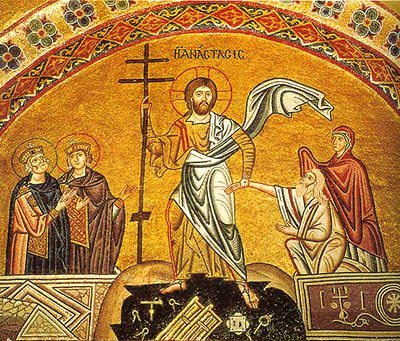
christ arisenMany years ago, while attending seminary, I was invited to preach at a Pentecostal congregation in my home town. One of the conversations I had that day taught me more about the importance of sound biblical preaching than every homiletics course I ever took (combined).

Lutherans, I must admit, are not big advocates of “end times” concerns. The reasons for this are far too complicated to address in a brief column now. Ironically, however, although we confess our confidence that Jesus “will come again to judge the living and the dead” every week, we seldom talk about the details of that arrival.

At the aforementioned service, I did preach on the second coming of the Messiah. And, to distill it down to a single message, I suggested that the Scriptures teach us to live in a sort of tension. We should live with a conscious awareness and urgency that the parousia could happen at any moment . . . and, prepare for the future as though the return of Christ (and subsequent new creation) will not take place for another thousand years.

Shortly after the service ended, a woman approached me and shared how she “wished she could have heard that sermon thirty years earlier.” She related how different her life would have been.

She said in her youth she had longed to attend college, but she never did . . . because she knew Jesus would return before she graduated.

When she and her husband bought a home, she wished the property had some fruit trees, but she never planted any . . . because she knew Jesus would return before they bore fruit.

Saddest of all, she told me that when her children were born, she never raised them to become mature adults . . . because she knew Jesus would return before they grew into the men and women they became.

Nearly forty years later I am more convinced than ever that living with the “tension” I described is the proper course of disciples of Jesus.

So, how does this work out in reality?

While a few of us know people who become so preoccupied with the end of the world that their lives go askew, it’s the other error to which most of us are prone. We tend to think that the return of Christ bears little or no connection to the age in which we live.

We are so preoccupied with our present responsibilities and dreams that we invest precious little time in contemplating how these things will matter in the scope of eternity.

I highly recommend to you a recent article on this subject that will remedy this dilemma. Andrée Seu Peterson, a gifted writer I have commended before at Mere Inkling, reminds us all of the fact that Jesus’ second coming may be just around the corner. Andrée writes:

Who would have thought that after centuries of modernity, beheading would once again be a means of persecuting the people of God? Does it not send a chill up our spine to read all about it in Revelation 20:4 even as we hear about it on CNN? “Then I saw thrones, and seated on them were those to whom the authority to judge was committed. Also I saw the souls of those who had been beheaded for the testimony of Jesus.”

C.S. Lewis famously described two errors people fall into when considering the occult. Either we get caught up in unhealthy expressions of the supernatural, or we dismiss the reality of demons and their destructive agenda altogether.

I believe humanity’s impulsive nature makes us vulnerable to the same extremes when it comes to the final days of the world we call home.

I strongly encourage you to read Peterson’s article here, as a timely reminder that you were created for far more wonderful and amazing things than we can ever know in this life. Even the best this world offers is but a hint and a foretaste of what awaits those who trust in God.

Misplaced Trust

trustingWhy do some nurses kill? Most people attracted to the nursing profession possess deep reservoirs of compassion for others. And yet, every once in a while we read about a nurse intentionally taking the life of a patient.

Today’s case comes from Italy, where a forty-two year old nurse is under investigation for thirty-eight possible cases of murder. And we are not talking about the ending of a life that some would term euthanasia.

Poggiali did not overdose them to end their suffering. She did it simply because they irritated her. She, or their relatives, bothered her.

One troubling aspect of the case could only happen today. Authorities have actually found a photograph on her phone where she is standing beside a deceased patient giving a “thumbs up” sign. (The article didn’t indicate whether this was a sickening “selfie,” or if there is another person at the hospital with a similarly demented sense of humor.

When people we implicitly trust violate our faith in them, it is jarring. We struggle to comprehend things when . . .

Medical professionals intentionally cause injury . . .

Clergy behave immorally, particularly when they attempt to justify it from the pulpit . . .

Police victimize rather than protect . . .

Teachers care more about themselves than their students . . .

Soldiers display cowardice rather than courage . . .

There is some good news here. It is precisely because these breaches of our expectations are the rare exception, that we are shocked by them. For the most part, people entrusted by the public with authority or power honor that trust.

(Let’s exclude, for our discussion here, the case of politicians, where that supposition would be hotly debated. As Lewis in his essay “Equality” wrote, “Mankind is so fallen that no man can be trusted with unchecked power over his fellows.”)

Our trust in people who occupy special positions goes so far as to be illogical. For example, we tend to think of actors or actresses as possessing the traits of various characters they have portrayed.

We laugh at the joke, “I’m not a doctor, but I play one on TV.” Yet, we’re still tempted to ask the person how we can best deal with our persistent cough or chronic rash.

We think of television cops as believing in law and order, but if we seriously considered the matter, we would recognize just how foolish that is. They are no more, or less, likely than anyone else in Hollywood to be law abiding.

An ongoing scandal reveals just how disorienting it can be to have our illusions shattered. It is the case of Stephen Collins. In the popular Seventh Heaven series, he played the ideal father. A pastor, no less. We mourn for the lives he has injured, and we subconsciously grieve our own disillusionment.

The solution to the problem is not in ceasing to trust others. Life from that perch would result in paranoia and alienation.

No, I think that it still makes sense to trust—within limits. I am willing to extend my trust to someone in a respected profession who I have just met. That is based on the profession’s self-policing of standards.* Most require minimal education and competence standards, and have mechanisms for decertifying those who violate professional ethics.

Still, when time allows, the best advice is probably to “trust and verify.” The time I take to verify whether the person’s credentials or claims are true corresponds to the importance of what I’m entrusting to them. I would leave my car with a mechanic far sooner than I would entrust my child to a babysitter.

Returning to the case with which we began, we assume that a hospital is one of the safest places to be. And, even in light of the latest tragedy, this remains true.

For every one nurse tempted to end a complainer’s life early, there are a hundred thousand** who are striving to prolong the lives of their charges.

Trusting should not only be viewed as something we extend to others. Each of us would do well to ponder for a few moments just how trustworthy we are. This is especially true for those of us in privileged or respected professions. However, it is no exaggeration to say that the measure of any woman or man is determined by the degree to which they have earned the trust of others.

Lewis writes about the nature of trust, as it relates to friendship. It doesn’t relate to trust imbued in societal roles, but rather in the trust that exists where a relationship is already present. Still, he expertly describes the interplay between mind and heart, when it comes to trust. And this explains, in part, why the betrayal of our trust causes us so much anguish, in mind and soul.

To love involves trusting the beloved beyond the evidence, even against much evidence. No man is our friend who believes in our good intentions only when they are proved. No man is our friend who will not be very slow to accept evidence against them. Such confidence, between one man and another, is in fact almost universally praised as a moral beauty, not blamed as a logical error. And the suspicious man is blamed for a meanness of character, not admired for the excellence of his logic. (“On Obstinacy in Belief”).

_____

* The fact that some “professions” don’t have any mandatory requirements or standards, means that I remain wary when I meet people sporting those titles. For example, in America it’s possible to “ordain” oneself (or buy a meaningless diploma or certificate online). Thus, when someone tells me they are a minister, I am eager to learn more (about their education, congregation, accountability, etc.). There are far too many hucksters out there to take a person’s word for it that they are a genuine minister of God.

** Perhaps a slight exaggeration, but I’d like to continue believing that the ratio is something wonderful like that, 1:100,000. Then again, if I think of it literally, in terms of how many are “tempted” to expedite the passing of an inconsiderate and ungrateful patient, I imagine the numbers might be rather less encouraging.