True Friendship

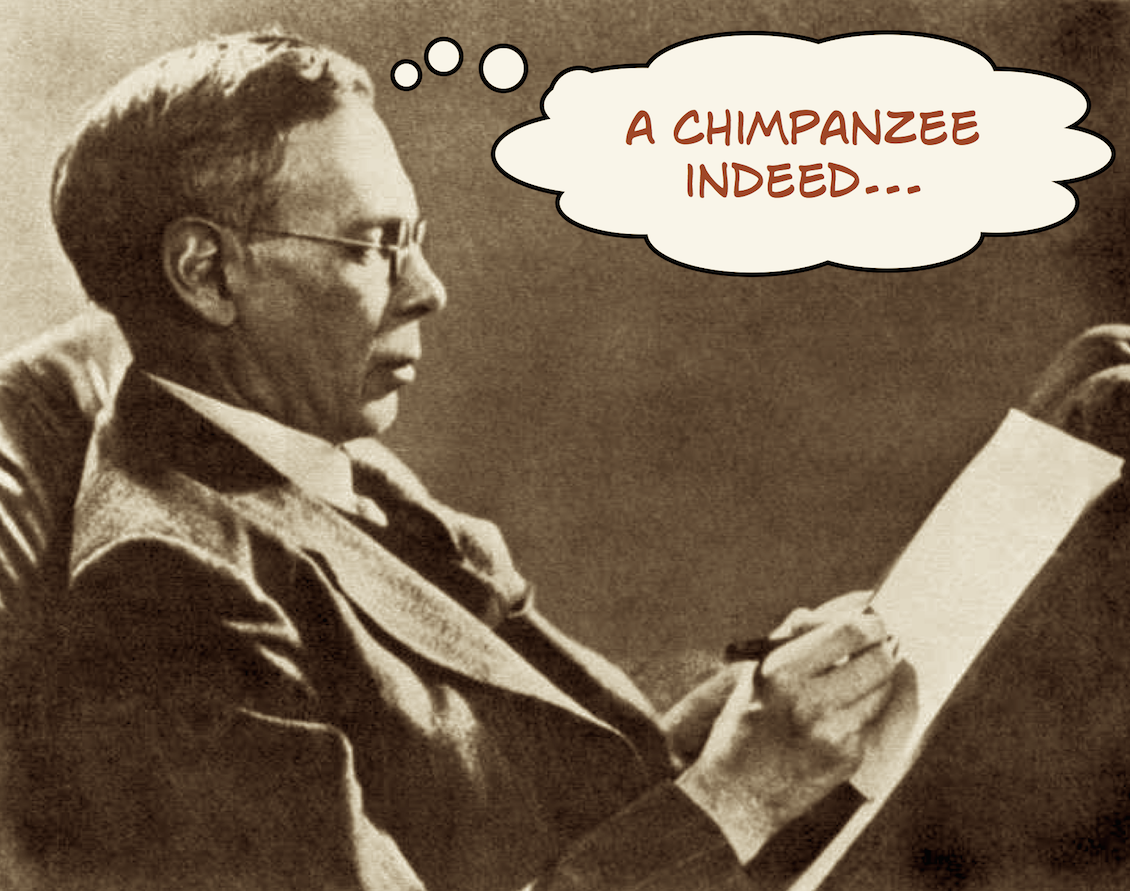
charles williamsIt seems odd to describe someone you deeply respect with the words “ugly as a chimpanzee,” but that’s precisely what C.S. Lewis once did.

Yet, reading the description in full, we find that Lewis considered the physical unattractiveness of his mentor to be a positive thing. In a sense, it accented his impressive persona.

Describing Charles Williams to his childhood friend, Arthur Greeves, Lewis wrote:

As for the man: he is about 52, of humble origin (there are still traces of cockney in his voice), ugly as a chimpanzee but so radiant (he emanates more love than any man I have ever known) that as soon as he begins talking whether in private or in a lecture he is transfigured and looks like an angel. He sweeps some people quite off their feet and has many disciples. Women find him so attractive that if he were a bad man he could do what he liked either as a Don Juan or a charlatan.

I find this description evocative of the words about Jesus’ physical appearance. You can read the full passage about Jesus, the promised Messiah, here.

For he grew up before him like a young plant, and like a root out of dry ground; he had no form or majesty that we should look at him, and no beauty that we should desire him.

Lewis continues with his description of Williams, revealing a more intimate relationship than the previous words might suggest. Williams, you see, was one of the Inklings.

He works in the Oxford University Press. In spite of his “angelic” quality he is also quite an earthy person and when Warnie, Tolkien, he and I meet for our pint in a pub in Broad Street, the fun is often so fast and furious that the company probably thinks we’re talking bawdy when in fact we’re very likely talking Theology. He is married and, I think, youthfully in love with his wife still.

I find it amazing how vivid Lewis’ portrait of his colleague is. He briefly passes over his physical appearance (the least important of human traits, despite what the modern era intimates). And, even though his words are not flattering, the rest of the description reveals they are expressed with deep affection.

Lewis then quickly presses on to a poetic depiction of Williams’ oratorical skills, and concludes with a personable picture of the man among brothers. The final sentence, given Lewis’ perception that he himself would remain a lifelong bachelor, is quite perceptive.

Mutual respect—especially when tempered with affection—generates bonds that allow for honest assessments of both weaknesses and strengths.

A Personal Experience

I recall receiving a lovely engraved glass plaque as a memento of my tour at the United States Air Force Chaplain School. Most of my duties related to writing, but it was common knowledge that there were few subjects on which I did not have something to say.

When the Commandant of the Institute read the inscription during the presentation (it was the first time he had seen it), he paused in embarrassed silence thinking he must have read it wrong. It didn’t sound like the flattery that traditionally adorns such tokens.

“He says in a book what others say in a sentence.”

You can only offer such a dialectical “compliment” to a friend.

It was true, of course, and it was to much laughter that I immediately responded, “True, and it is a book well worth reading.”

When I read this description of the literary friend who made such a profound impression on Lewis, it makes me smile. It is all the more poignant, since it was written just a year before Williams’ death.

There are far, far worse things a person can experience than having someone who respects and loves them say they resemble a chimpanzee . . . or that they tend to be just a little bit verbose.

Tolerating Blasphemy

There is a high price to be paid for the privilege of freely proclaiming our personal faith.

It is not simply respectfully allowing every competing worldview the same freedom.

It requires far more than that.

Free speech—as understood in the Western tradition—means allowing even objectionable messages to be expressed.

A British author recently spoke to students graduating from an American college about this conundrum.

The British novelist called on students to remember that “religion and atheism, and all thought systems, all grand claims to truth, must be open to criticism, satire, even, sometimes, mockery,” and that “being offended is not to be confused with a state of grace; it’s the occasional price we all pay for living in an open society.”

Mockery of what we consider holy . . . that certainly is a steep price.

Some are unwilling to pay this price for the freedom of speech. The bloody atrocities committed by some followers of Muhammad attest to that.

Christians, on the other hand, no longer take the lives of blasphemers. They follow the leading of the Prince of Peace in praying for those who despise them and their Lord.

No one likes blasphemy—not even, I believe—those who spew it. And yet, the very existence of such “hate speech” proves at least two things.

First, that Christians are willing to endure hearing painful speech in appreciation for their own right to speak honestly about matters of eternal significance.

Second, that we recognize our Creator is great enough—and, more importantly, compassionate enough—to offer grace, mercy and healing to the wounded souls who are so desperate they can only express their anguish with a curse.

May God have mercy on those guilty of blasphemy.

We are Blasphemers All

Forgiveness and mercy flow naturally from the hearts of the redeemed when they reflect on the magnitude of their own sins.

Who among us can cast the first stone when it comes to dishonoring the name of our Creator? Not I.

And, as an imperfect man I am in good company.

C.S. Lewis describes an example of his own blasphemies in his autobiographical Surprised by Joy: The Shape of My Early Life. The situation revolved, ironically, around his “confirmation” within the Anglican communion.

His father was eager to see his son publically confirm his faith and assume a fuller membership in the church. The problem was, Lewis was no longer a Christian. He was already apostate. Yet, out of deference to his father, he willingly made a mockery of the “sacrament.”

My relations to my father help to explain (I am not suggesting that they excuse) one of the worst acts of my life. I allowed myself to be prepared for confirmation, and confirmed, and to make my first Communion, in total disbelief, acting a part, eating and drinking my own condemnation.

As Johnson points out, where courage is not, no other virtue can survive except by accident. Cowardice drove me into hypocrisy and hypocrisy into blasphemy. It is true that I did not and could not then know the real nature of the thing I was doing: but I knew very well that I was acting a lie with the greatest possible solemnity.

It seemed to me impossible to tell my father my real views. Not that he would have stormed and thundered like the traditional orthodox parent. On the contrary, he would (at first) have responded with the greatest kindness. “Let’s talk the whole thing over,” he would have said. But it would have been quite impossible to drive into his head my real position.

The thread would have been lost almost at once, and the answer implicit in all the quotations, anecdotes, and reminiscences which would have poured over me would have been one I then valued not a straw— the beauty of the Authorized Version, the beauty of the Christian tradition and sentiment and character. And later, when this failed, when I still tried to make my exact points clear, there would have been anger between us, thunder from him and a thin, peevish rattle from me. Nor could the subject, once raised, ever have been dropped again.

All this, of course, ought to have been dared rather than the thing I did. But at the time it seemed to me impossible. The Syrian captain was forgiven for bowing in the house of Rimmon. I am one of many who have bowed in the house of the real God when I believed Him to be no more than Rimmon (2 Kings 5).

Like Lewis, I have much for which to be forgiven. I am willing to suffer the abuse of my beliefs precisely because my Lord Jesus was willing to endure the thorns, whip and nails that should have been mine.

And, because of God’s love for all sinners, I can sincerely pray, “Lord, have mercy on those who blaspheme.”

Publishing Troubles

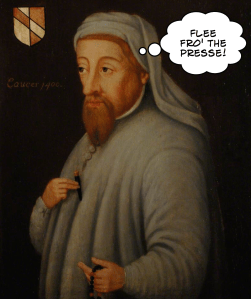
chaucerDespite C.S. Lewis’ vast experience as an author, even he was abused by publishers to the point where he could simply echo Chaucer in saying, “Flee from the Press!”


Print on demand technology has delivered a stout, but not debilitating, blow to traditional publishers. They still possess a significant amount of influence.

And—like all power—that which is wielded by publishers can be used for either good or evil.

We can thank many different publishers for making the works of Lewis, J.R.R. Tolkien and their fellow Inklings available to us. We would be wrong, however, to assume these relationships were without their stresses.

John H. McCallum was an American editor with whom Lewis worked. McCallum worked at Harcourt, Brace & World.

A piece of correspondence from 1960 reveals how complex the publishing world remained even to a veteran such as Lewis.

McCallum had sought permission to publish Lewis’ latest work, and the Cambridge professor had sought to accommodate that request. Unfortunately, he had negotiated a contract that restricted him from doing so. He begins his letter of explanation with an apology for having taken so long to respond.

Dear Mac

‘Why the heck can’t C.S.L. have the civility to answer a letter?’ I don’t blame you, but it wasn’t exactly my fault. Like a fool, I dealt direct with C.U.P. [Cambridge University Press] for Studies in Words instead of working through [his regular literary agent] Curtis Brown: chiefly because I regarded this book as too academic to be of any serious commercial value.

And like a double fool I’ve let them take it up so that I’m not free to arrange for an American edn. with anyone else.

The delay in answering you is due to the fact that I’ve been all this time trying to get out of them whether this is exactly what my contract with them means. It is. But of all the impenetrable block heads! Their answer—the correspondence was long and infuriating—dealt with every question under the sun except the one I had asked (besides being unintelligible and contradictory).

I am sorry about all this. How well Chaucer advised us ‘Flee fro the Presse’!

Yours Lewis, C.S.

Dealing with publishers today remains challenging. They are, in a sense, gatekeepers. One of their roles is to prevent undeserving works from seeing print. Unfortunately, because literary tastes are utterly subjective, they bar many worthwhile manuscripts as well.

For that reason, we can be thankful that digital publishing allows quality works that would formerly have been overlooked to find their audience. The price of that boon, however, is that we must sometimes wade through major quantities of dregs to savor fine writing.

The majority of writers, given the opportunity, would prefer to be published by traditional publishing houses. There is no way around the fact that this adds a degree of status to most books. A recent poll supports this notion. It found among those published traditionally, “32% of respondents said the prestige of having a deal with a traditional publisher was important to them, while a further 54% said it was one of the appealing aspects of a traditional publishing deal.”

If we should ever seek “publication” for our own work, it is good to remember that the publishing business could puzzle even as gifted a writer as C.S. Lewis. If the author of so many impressive books could be mystified by it, it’s no wonder it seems labyrinthine to the likes of us.

Perhaps Chaucer’s advice, offered more than 500 years ago, really does ring just as true today.

Fit to Print?

amazonIt’s challenging enough to conduct painstaking research. But, only to have it become immediately obsolete by virtue of it’s own publication—that is simply too much.

Flying home from a whirlwind trip from the Pacific to the Atlantic, I came across an interesting analysis of how many sheets of paper would be required to print out the entire contents of the internet.

One hundred and thirty-six billion.

Didn’t sound like all that many when I read it. Why, that’s not even a fraction of the annual deficit here in the United States.

Still, it’s quite a few sheets of paper. As the article said, stacked on one another, the pile would tower 8,300 miles high. That sounds a bit more impressive.

The researchers determined eight million Amazonian trees would have to be sacrificed to provide sufficient pulp. Impressive. But then they turn about and make that very number far less remarkable by declaring that this total would constitute only 0.002% of the rainforest.

The Flaw in the Research

Sadly, as diligent and mathematical as the researchers were, there was a weakness in their model. You see, they did not factor in their own research. Immediately upon it’s publication, their numbers were obsolete.

In fact, because they meddled with the internet equilibrium, there were at least 36,000,000,002 pages. (And, although I am not a scientific researcher, I suspect there were even more.) And, despite my mediocre numerical skills, even I know that when I hit post with this column, the internet page counter will advance another digit.

More ominously, especially in light of our recent reflections about the dark web, is the following:

Also, it is thought the non-explicit web is only a mere 0.2% of the total internet, the rest encompassing the Dark Web. This would mean that printing the entire internet including the Dark web would use 2% of the rainforest.

This relates to the question that entered my mind when I read the original statistic. (And I was not even thinking about the garbage that oozes throughout the internet.)

A More Important Question

As entertaining as it might be to ponder how many pages of data exist on the web, there is a far more valuable question. How many pages of the material on the internet are worth printing out?

C.S. Lewis has a delightful passage about wasted newsprint in Surprised by Joy. Although he is specifically talking about how students should not squander time or attention on newspapers, his point extends beyond that to people of all ages, and to all media including the internet.

I think those are very wrong who say that schoolboys should be encouraged to read the newspapers. Nearly all that a boy reads there in his teens will be known before he is twenty to have been false in emphasis and interpretation, if not in fact as well, and most of it will have lost all importance.

Most of what he remembers he will therefore have to unlearn; and he will probably have acquired an incurable taste for vulgarity and sensationalism and the fatal habit of fluttering from paragraph to paragraph to learn how an actress has been divorced in California, a train derailed in France, and quadruplets born in New Zealand.

If Lewis were alive today, I have no doubt he would share my opinion that most of what is written both on- and offline, is not worth printing.

Perhaps someone should undertake a study of how many trees would need to be cut to print everything worthy of being printed? If they did so, I am fairly confident we would need not worry about the future of the Amazonian rain forest.

The Devil’s Printing Press

pressIf the devil has used the printing press so effectively to advance his purposes, one can only imagine how easily the internet can be twisted to his purposes.

Whether or not you believe Satan is an actual (fallen angelic) person, we all recognize the web provides a ready conduit for unimaginable evil. Recent discussions of the traffic that occurs on the Dark Web is sobering. Actually, not “sobering,” but frightening.

While a small fraction of the data is innocent, the majority deals with criminal and dehumanizing material. Some investigators suggest more than half of the data transfers involve pedophilia.

I’ve been doing some personal research into parallels between the advent of the printing press and the rise of the internet. I’m approaching it from the perspective of how each has provided access to competing faith claims.

Martin Luther viewed the “recent” invention of Gutenberg’s press as divinely appointed to coincide with what would come to be known as the Reformation.

Roman Catholics also published treatises and pamphlets opposing the calls for institutional change within the church. The persuasiveness of arguments aside, one reason for their lack of success against the evangelical leaders was simple.

Rather than writing for the German people in their own tongue, they directed nearly all of their initial energies at writing for the elite, in Latin. While only a minority of sixteenth century Germans were literate, only a small percentage of these were able to read Latin.

During the first half century of the existence of movable type for the press, the majority of published titles were religious. Only later did popular and secular titles eclipse them.

However, they did. Many were wonderful. Scientific and literary knowledge blossomed.

Foremost among the good fruits disseminated by the press, we would have to include the works of the Inklings, especially C.S. Lewis and J.R.R. Tolkien. (Consecrated imaginations are capable of wondrous creations!)

Eventually, of course—given humanity’s imperfect nature—this neutral device was harnessed to baser purposes.

This would lead a nineteenth century minister to write an essay with the title of this column, “The Devil’s Printing Press.” Thomas Green described the dilemma vividly.

The first book printed in Europe had six hundred leaves, and it took nearly ten years to make it. Now books are written, printed, sold, read and forgotten in one-fourth the time. A single century ago, and a man well to do, thought himself fortunate if he had one book in this wild western world.

Today there are books in well kept rank upon almost every cottage shelf It is little wonder that the powers of evil should have invaded the province of the influence of the book shelf and bound up in attractive colors and insidious page the poison of wickedness and sin.

Later in his address, available to read at your leisure here, he contrasts the noble and corrupt purposes for which the press (or internet) might be used.

There are papers of every shape and for every use; daily, tri-daily and almost hourly, weekly and semi-weekly, monthly and quarterly, and filled with everything. You have no idea unless you have given it especial attention, of the magnitude and wondrous dimensions of the newspaper as a factor in civilization. You have little idea, unless you have studied it, of the influence, the formative power of this outwardly ephemeral agency upon human life.

You have little idea, unless you have sought it, of the labor, the enterprise, the energy, the talent, the outlay necessary to plan and execute this gigantic result. You have little conception of the influence of the printing press, as an enlightener, as a pioneer of civilization, as a promoter, a creator, a conservator of purity and virtue; and you have little idea of the magnitude of the devil’s work through this mighty agency, as in a thousand ways he uses it for pollution and ruin.

Green’s florid and dated verbiage may weaken the impact of his argument. Likewise the revivalist tones of his message. Still, as the existence of the dark web reminds us, even the good can be touched by corruption. Perhaps our vigilance can reduce this danger.

We will close now with another description by the author of the lurid material which preceded the pornography which abounds today. Would that our dulled sensitivities remained innocent enough to “blush” at explicit material, as he says.

But the devil has a channel by which he ruins life and character, in a specialty in the newspaper line that panders to the low and more bestial part of man’s being. Broadcast over the land there are sown every day almost countless thousands of papers filled with the corrupt, lascivious, the impure, gathered from all the fact and fancy that a filthy mind can contrive.

Facts that transpire often in the lowest slums of life are here placarded with all the embellishment of illustration and seductive coloring; language and recitals no man would read without a blush are hidden in its folds. It is a slimy, salacious mosaic of filth and wickedness, and yet go up and down the city streets and in every news-dealer’s window and on every corner stand they are spread out for inspection and sale.

_____

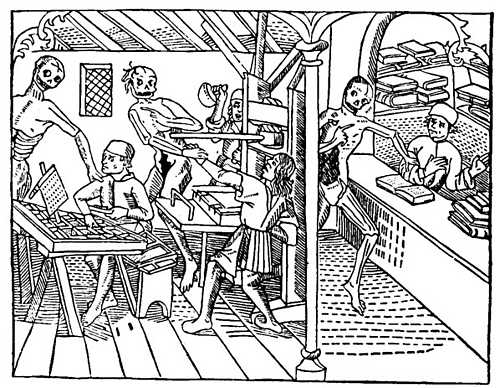
The woodcut illustration above comes from a book entitled The Dance of Death, and is the first representation of a printing press. The point being made was not to associate death with printing, but to reveal how death comes to all, unanticipated, regardless of who they are.

Dogs are Better than Kids

dressed dogAt least that appears to be the thinking in Seattle. A recent census of the city’s population found that the preference isn’t even close.

While Seattle boasts 107,178 children it is home to about 153,000 dogs.

As a dog-loving Washingtonian, I’m not surprised by this statistic. But I don’t support the odd excesses of some pet owners. These include a woman who uses a baby stroller to keep her Chihuahua safe. “She also owns a basket full of dog clothes, including a few dog necklaces and wigs…”

Seattle Magazine notes the city is becoming a top destination for canine travelers.

Seattle’s dog-mecca status is starting to get noticed nationally; it’s considered one of the top 20 destinations in the United States for people who want to travel with their dogs, according to Melissa Halliburton, the founder of Bring Fido, a dog-focused travel agency out of South Carolina. “Seattle has 45 pet-friendly hotels, 38 [pet-friendly] attractions—including the dog-friendly Fremont Sunday Ice Cream Cruise…”

As delightful as an Ice Cream Cruise for dogs sounds, I’d prefer to invest in my children’s educations and take our Border Collies for a brisk walk. I’m sure they’d enjoy the frozen treat, but they will appreciate the exercise even more.

Why Dogs Instead of Kids?

Obviously, simultaneously enjoying human offspring and doggie kids is possible. They aren’t mutually exclusive. And most of the parents I know understand how having a dog in the family helps children grow up healthier (allergies aside).

The article asks this question and offers insightful thoughts.

Why are we so dog crazy? It could be that the 41 percent of us who are single appreciate the companionship. Maybe our outdoorsy pursuits are more fun with dogs. Or maybe dogs just make us feel good.

I heartily concur with the second and third points. And I find the first suggestion (highlighted in the original article) to be quite provocative.

God created us to desire companionship. “Then the Lord God said, ‘It is not good that the man [or woman] should be alone…”

This companionship need not be restricted to marriage. Some people have the gift of celibacy and can live chastely without marrying. C.S. Lewis would be a good example of this. He found his needs for deep friendships met by a handful of intimate friends. The profound joy he experienced when he married caught him totally off guard.

Unfortunately though, there are many who long to find their life companion and have yet to find that prayer answered. Then there are those tragic cases where illness, accident or war have stolen a spouse far too early. The Christian Church has always possessed an intense compassion for widows.

In either of these cases, the companionship of a dog provides a responsive outlet for our affection. Here too C.S. Lewis provides an example. I’ve written here in the past about his love of dogs.

However, it is not only the still-waiting and the bereaved who find themselves reluctantly single.

Another case that is far more common arises when people have made themselves vulnerable and opened their hearts to another… only to be betrayed.* This betrayal may have been physical, emotional, or psychological. Often it is all of these.

In these cases, replacing our unfaithful partner with a dog is especially apropos. There could be no more faithful and forgiving a friend than a dog. A dog who welcomes you every time you come through the door with passionate enthusiasm and happiness impossible to fake.

The truth is that as special as they are, dogs aren’t better than kids… even in Seattle. But, that said, life is sure a lot more fun with them in the mix.

_____

* Just as most of us know the pain of betrayal, many of us recognize we too may have been betrayers. There have been times—perhaps many—when we have disappointed or wounded those who trusted and loved us. However, it does not need to end here, with us mired in guilt.

If you find yourself in this situation, seek reconciliation or forgiveness from the person(s) you have wronged. Confess what you have done as the sin it is, and receive his promised forgiveness. And finally, as Jesus himself said, “Neither do I condemn you; go, and from now on sin no more.”

Priceless Letters

letterHow precious is a single letter?

If it is eagerly anticipated correspondence from a close friend or loved one, it may be invaluable.

Telephones and email have diminished the impact offered by the contents of an individual message, yet even now we value the touch of the written word shared by our soul mates across the miles.

Prior to the invention of the internet, and before the cost of international calls grew reasonable, I spent a year in the Republic of Korea, far from my wife and three young children. Naturally, like all military members serving far from home—even during times of peace—I missed them terribly.

While many wonderful things happened during the course of that year, and lifelong friendships were born, the highlight of each day was a visit to the installation post office. And, due to the faithfulness of my mother, sister and wife, I was greeted nearly every day by one or more handwritten messages of love and encouragement.

So important were these bonds that, prior to my departure, Delores and I covenanted to write one another every single day. A promise we both kept. In addition, I promised to write each of my three children their own letter each week. One evidence of the impact of those letters was the seamless reunion our family experienced when I returned after a year away.

In the even more distant past, this means of communication was even more vital. As little as a century ago, when individuals and families emigrated from their homelands they recognized the sad truth that they would probably never see their loved ones again.

Think about that for a moment. Saying “goodbye” usually meant “I will never see you again in this life.” How precious those missives must have been when they found their way between intimate companions!

Eighty-five years ago, C.S. Lewis was carrying on an active correspondence with the dearest friend from his youth, Arthur Greeves.

In the 1930s, the two men were corresponding on a weekly basis. Lewis opened one of his letters with the following paragraph to gently reprimand Greeves for allowing other responsibilities to delay his writing.

July 8th 1930

My dear Arthur,

Your letters get later and later every week. If you write on Monday the first week, on Tuesday the second week, and so on, then in seven weeks you will be writing on Monday again: but you will have written one letter less than you should.

In a year you will have written eight letters less, that is thirty six pages. Assuming that we both live thirty years more you will in that time have cheated me out of one thousand and eighty pages. Why, oh why, do you do these things?

As I said, the “reprimand” is gentle, even humorous, but it is sincere. It reveals just how meaningful each piece of his friend’s correspondence was to Lewis.

Many of us can relate to Lewis’ experience. We know firsthand how a smile comes to our lips and our pulse quickens when we find a message from a close companion.

I wanted to share this thought with each of you today for two reasons. First, I thought it might remind you of those whose words have encouraged and supported you in the past.

My second motivation is more important. I would like to suggest that you pause to consider just how important your letters are to others.

There are thousands of reasons for not scheduling (and guarding) time to write letters. Life is busy. The distractions vying for our attention are certainly more numerous, and loud, than they were in decades past.

Still, reminded of the value of the gift we offer when we write, perhaps it is time to shuffle our priorities.

Crying for Attention

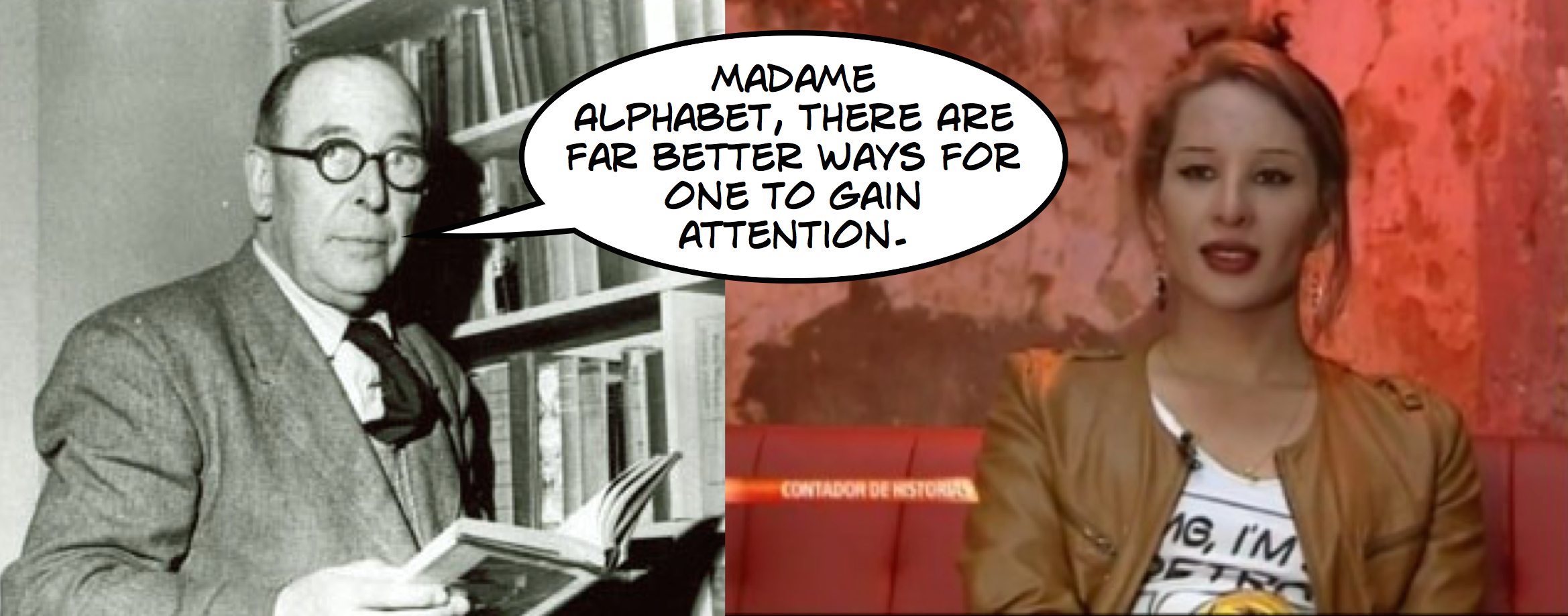
abcxyzAre you driven by the unquenchable thirst to be the center of everyone’s attention. Or, would you be more content to live out your life appreciated by a small cadre of friends?

A woman in South America recently displayed an extreme case of the former impulse. She had grown tired of her name because it was too mundane. Apparently she garnered insufficient attention as Ladyzunga Cyborg.

So now her name, legally changed, is ABCDEFGHIJKLMNOPQRSTUVWXYZ.

My first thought when reading this was not that I didn’t believe it. In our foolish world, where people use symbols that aren’t even words for their names, I just shook my head. And . . . I thought “how fortunate for her that she’s not Chinese,” with its 46,964 characters as recorded in the Kangxi Dictionary.

This is not the sort of publicity Columbia needs. She’s acting bizarrely enough to be a mistaken for a Californian.

Of course, people at the opposite extreme—those who cannot bear the presence of other human beings—are also troubled. As with so many aspects of the human personality, people at either of the extreme poles are frequently deemed mentally ill.

This fetish for exhibitionism is alien to me. I would much prefer downing a pint with friends at the Eagle and Child to standing on some stage in front of “adoring crowds.”

My “introvert” quotient appears to be eclipsing my “extravert” qualities.

C.S. Lewis never sought the limelight either. He did not find his experience with notoriety pleasant. And yet, he accepted its burden graciously.

It is commonly known that some days he would spends hours (literally) corresponding with some of the thousands of readers who wrote to him as the creator of Narnia.

It was exhausting.

I assume people like Ms. Abcdefghijklmnopqrstuvwxyz seek attention because they feel insignificant or unnoticed.

I find that tragic. Tragic because their name, their true name, is known by the most important and amazing person in the universe. The God who created them.

Each and every person, including you, is unique, precious and loved.

Knowing this provides profound peace. It also delivers us from the constant compulsion to seek attention.

Jesus described the profound value of each person by contrasting God’s love for us with the attention he devotes even to a single sparrow . . . “Not one of them will fall to the ground outside your Father’s care.”

And you, that’s you, are far more precious than these.

An Impious C.S. Lewis

csl glassWhen C.S. Lewis was contacted for permission to publish a recent sermon in a distinguished collection, he confessed an “impious” hope.

Lewis, of course, was not a pastor. He was instead a highly regarded professor. Nevertheless, due to his mastery of public speaking, and his unapologetic faith, he was invited to preach on a number of occasions.

This particular sermon had been delivered at St Mary the Virgin in Oxford, on 22 October 1939. The Student Christian Movement had already published it in pamphlet format with the title The Christian in Danger.*

Lewis ends a lengthy 1940 letter to his brother Warnie by mentioning the request, almost as an afterthought.

Did I tell you that someone wants to include that St Mary’s sermon of mine in a collection of (save the mark**) Famous Sermons?

Famous English Sermons would be published by Thomas Nelson in London later that year. The anthology was edited by Ashley Sampson, who had asked Lewis to write his volume The Problem of Pain.

Lewis’ modest “impiety” was revealed in the rest of his announcement to his brother. He confesses to that common human fear of being upstaged by the other works in the collection.

I am divided between gratification and a fear that I shall be merely made a fool of by appearing in the same book as Bede, Latimer, Donne, Taylor etc. However, let’s hope that I shall be divided from them by some good 19th century duds!—but I grow impious.

How easy it is to relate to Lewis’ concern. As I moved from assignment to assignment during my military career, I subconsciously hoped I was relieving someone who had left room for me to excel . . . and, simultaneously, that as I left my recent assignment my performance would not be outshined by my successor.

Better, in my mind, to be proceeded and followed by 20th century duds. (Forgive me, Lord.)

I doubt C.S. Lewis and I are the only people to have shared that impious thought.

Still, recognizing the impiety is the beginning of purging it. I tried to make it a practice to pray for those who followed in my ministry wake. That they would be successful, and that the men and women entrusted to our spiritual care would be blessed by their ministries.

I must confess, though, that when my literary work has been placed in direct juxtaposition to that of others, I have not been so eager for theirs to be better received than my own contributions. Not that I wish upon anyone that they would be a dud, but merely that their eloquence not put my own humble efforts to shame.

_____

* The sermon is found in The Weight of Glory with the title “Learning in War-Time.”

** “Save the mark” is an exclamation that connotes a sense something is unbelievable. It can even be dismissive, but that would not be the sense in which Lewis uses it here, since it is obvious he regards the request as a humbling honor.

Vodka the Opiate

ApolloIn our troubled world, some disappointed souls seek solace in a bottle. There are also corrupt governments that steer their people toward such destructive distractions to draw their attention from their rulers’ crimes.

Such, sadly, is the current state of Russia.

I have long felt a compassion and affinity for Russia. Even when it was the Soviet Union, I knew that the Russian people did not want the world to end in a nuclear conflagration.

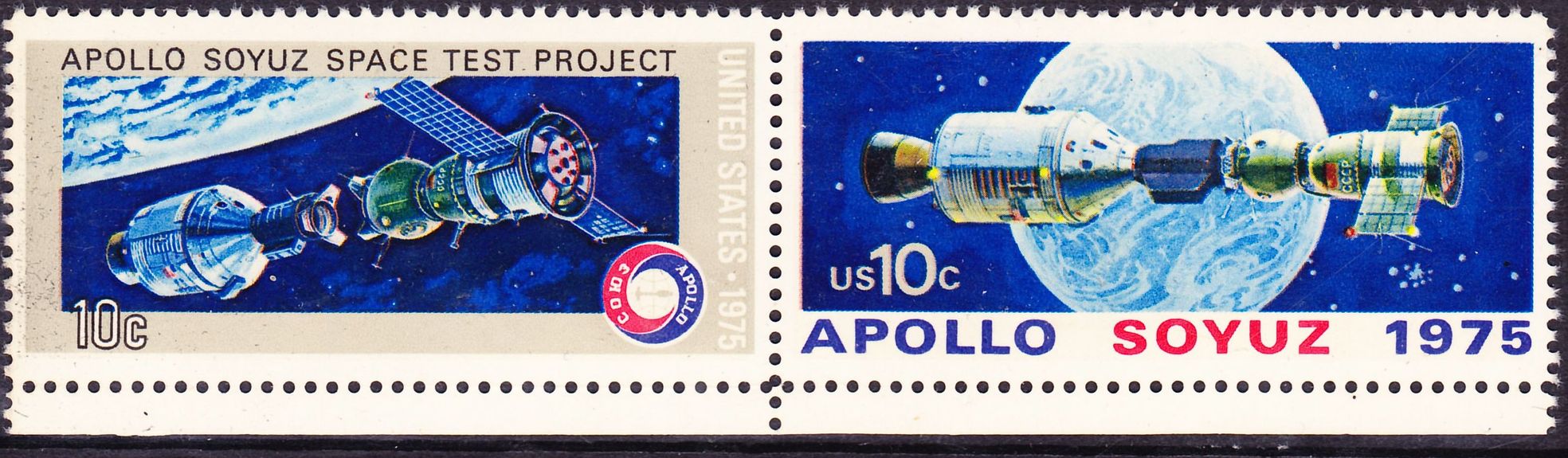
For many years I displayed the dual Soviet and American stamps issued to commemorate the docking of the Soyuz and Apollo spacecraft. I saw that event as a promise of the peace and cooperation that might someday exist between our nations. A peaceful, even warm, relationship that would be a blessing to the entire world.

I thought that day might have arrived with the end of the Soviet Union and the restoration of a Russian nation.

Unfortunately, democracy was not to prevail—at least at this moment—in that historic land. Russia ended up with the worst elements of capitalism. They got the West’s privileged (i.e. rich) classes who hoarded the nation’s wealth. And, the Russian version was even harsher. The masses have been left with dreams unfulfilled, and an oligarchy living in luxury.

As the people begin to awaken to the injustice, their leaders turn to a proven means of dulling human thought—alcohol. And, since we are talking about Russia, that means vodka. I found this analysis by David Satter quite interesting.

The Putin regime needs an end to sanctions—not because they are crippling in themselves but because, in combination with the growing crisis of the economy and the unpredictable trajectory of the war [in eastern Ukraine], they could help lead to the destabilization of Russia. . . . It is a measure of the government’s concern that it has cut the price of vodka. . . . This is a transparent attempt to use vodka to tranquilize the population.

SoyuzWhile I will continue to pray for the people of Russia, this description of Putin’s strategy reminded me of the oft-quoted Communist adage that “religion is the opiate of the masses.”

Marx or Lewis?

Karl Marx was right, in that manmade “religion” can be used to blind people to their surroundings.

Marx, however, did not understand Christianity. Because Jesus of Nazareth dispels all illusion and enables us to truly comprehend reality.

C.S. Lewis referred to Marx’s slander in his book, The Problem of Pain.

Those who reject Christianity will not be moved by Christ’s statement that poverty is blessed. But here a rather remarkable fact comes to my aid. Those who would most scornfully repudiate Christianity as a mere ‘opiate of the people’ have a contempt for the rich, that is, for all mankind except the poor.

They regard the poor as the only people worth preserving from ‘liquidation,’ and place in them the only hope for the human race. But this is not compatible with a belief that the effects of poverty on those who suffer it are wholly evil; it even implies that they are good.

The Marxist thus finds himself in real agreement with the Christian in those two beliefs which Christianity paradoxically demands–that poverty is blessed and yet ought to be removed.

Lewis aptly describes the hypocrisy of the elite who live with the comforts they supposedly disdain. In contrast, he affirms Christ’s own words about how the least are the greatest in the Kingdom of God.

Far from serving as a debilitating opiate, Christianity moves people to overcome the trials of this world. It motivates them to care for the less fortunate. It is active, not passive and resigned.

Unlike a mind-dulling spirit, Christianity calls us to forgive even our enemies and extend to them a hand of peace.

Who knows if lowering the price of vodka will distract the Russian people from the disastrous direction of their ruling regime. I hope not.

I pray that Russia will seize instead the promise bequeathed them in their Christian heritage. So that, following in the footsteps of the Prince of Peace, they might become an example of national righteousness for the rest of us, whose homelands have their own deep imperfections.

_____

Satter’s editorial, which appeared in the Wall Street Journal, is available here.