Death by Crocodile

200350761-001Suicide is always a tragedy. Many families have been touched by its pain.

The moral implications of this are vast, of course, and not the topic of this column. Today I am more intrigued by the modes that people select as they act on their suicidal impulses (or long-deliberated decisions).

As a pastor and military chaplain, I have worked with families in the aftermath of suicide. As a volunteer law enforcement chaplain, I have responded to the actual event.

Life is precious. It should never be squandered. Contrary to the notions of reincarnationists, “it is appointed for man to die once, and after that comes judgment” (Hebrews 9:27). That judgment need not be feared, for those sheltered in the mercy of God. Still, I doubt the Lord desires to see us ushered into his presence for that judgment by our own hand.

Even the darkest of lives can be rescued and recreated with new hope. That’s the testimony of many people, like Joni Eareckson Tada, who became a quadriplegic at only seventeen.

There are diverse ways people choose to end their days on earth.

Some European countries have made the passing a gentle, numbing for the most part, painless transition. In their euthanasia clinics, powerful drugs can be used to simply suppress one’s breathing until they “fall asleep” permanently.

Others make drug concoctions of their own, and some die in agony because of miscalculation, or are “rescued” to live debilitated by their failed attempt.

Some, for twisted macho reasons perhaps, decide to go out with a literal bang. Here too the attempt can fail and leave the individual in a horrific condition. And, even when it is “successful,” it leaves a sickening aftermath.

Perhaps the worst of all are those who desire to leave a “mark” on this “cruel world” as they depart. They may lash out at people they know—or even strangers—seeking to leave a lasting scar as a memory. Most of these people are likely insane. Not so the fanatic “suicide bombers.” Those disciples of evil comprehend what they are doing. The magnitude of their vile acts do not escape them.

Not the Why, but the How

As I said above, I’m not thinking today about the reasons a person would end their life. I am wondering about the means they choose to do so.

I was shocked by the recent suicide by a sixty-five year old Thai woman who calmly removed her shoes and then leapt into a ten-foot-deep pond which is home to more than a thousand crocodiles. A dozen were on her immediately.

I cannot stand to watch nature shows that portray crocodiles viciously dragging antelopes or zebras to their grim deaths. Just thinking of this woman’s final moments leaves me in emotional disbelief.

C.S. Lewis hinted at humanity’s archetypal antipathy to crocodiles. In a 1949 letter he wrote:

I don’t think the idea that evil is an illusion helps. Because surely it is a (real) evil that the illusion of evil should exist. When I am pursued in a nightmare by a crocodile the pursuit and the crocodile are illusions: but it is a real nightmare, and that seems a real evil.

Just as shocking as this poor woman’s death itself, is the fact that a decade ago another woman committed suicide at the Samutprakarn Crocodile Farm and Zoo in the same way.

The only reason I can conceive of for a person choosing such a terrible manner of death, is that they believed they deserved to suffer. Aside from that, only insanity can provide an answer.

For those who believe their guilt for real or imagined sins demands such a path, I have a life-saving alternative. There is One who can forgive those crimes and failings, and offer us a new beginning.

In the same passage from Hebrews cited above, we read the following good news.

[Jesus] has appeared once for all at the end of the ages to put away sin by the sacrifice of himself. And just as it is appointed for man to die once, and after that comes judgment, so Christ, having been offered once to bear the sins of many, will appear a second time, not to deal with sin but to save those who are eagerly waiting for him.

Share this hope with your friends and family—especially with those you know who may be contemplating the untimely end of their lives.

_____

I have written on the subject of suicide in the past. If you are interested in considering the subject from a different perspective, please read “The Anguish of Suicide.”

Bill Cosby & Me

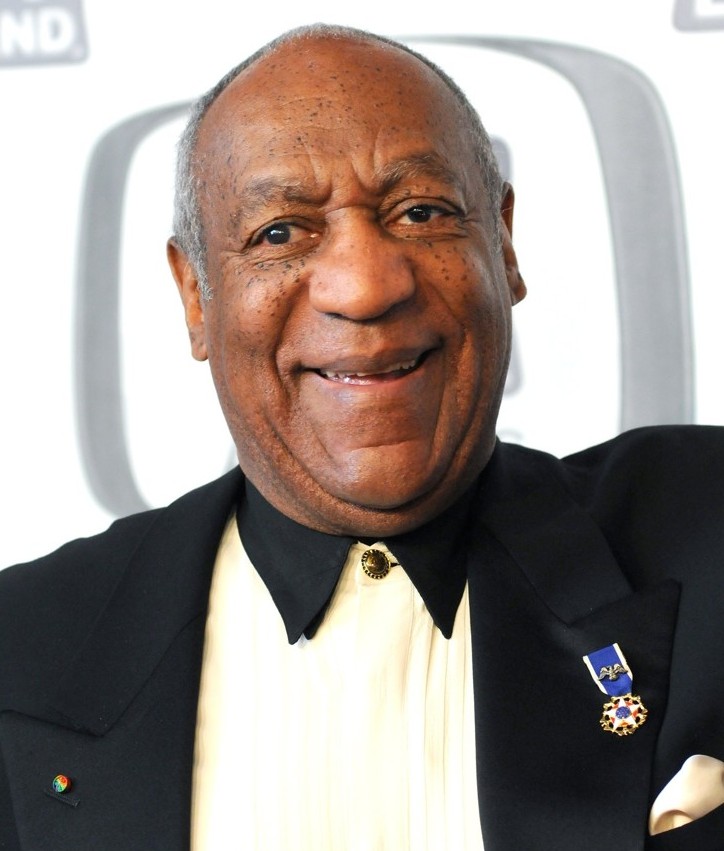
cosby[Do not read this post without also reading “Bill Cosby Redux,” which was written two months later.]

One of the finest compliments my wife ever paid me was saying, “You remind me of Bill Cosby.”

She tells me that’s one of the reasons she married me thirty-eight years ago. And she also says it’s still true today.

I owe a lot to Bill Cosby. He has modeled (for several generations now), how humor highlights the most precious aspects of our human lives. He also showed us how a real man works hard to accomplish his goals, and keeps the promises he makes.

And now, approaching the winter of his life, Cosby continues to inspire.

My wife and I have always wanted to see him perform. This summer that dream came true.

He offered the audience two full hours of good natured (healthy) laughter with an ample dose of self-introspection as well.

Cosby began his performance (at one of our Washington State fairgrounds) by commenting on our lovely weather. He noted that every other time he had spoken outdoors that it had poured. He suggested that there was something demented about Washingtonians wanting to watch entertainers on stage being drenched while they are handling microphone and other electrical devices.

I refer to Cosby’s presentation as a “performance,” but it was far more than that. It is no exaggeration to say that it was like being invited to an intimate family gathering. One where everyone has gathered around—and the audience was filled with people of all ages—to hear their witty patriarch weave delightful stories about their shared past and mysteries of life.

Bill Cosby embodies the truth spoken by C.S. Lewis in The Screwtape Letters: “Humour is . . . the all-consoling and . . . the all-excusing, grace of life.” Cosby is, in a sense, an ambassador of humor. Or, even, a physician of humor, whose words carry the power to heal.

In mere minutes he made us all, albeit temporarily, his family. (Another reason for me to be proud my wife likens me to this gifted story-teller.)

I’ve always liked Cosby. I was introduced to him on a vinyl album my family had. We probably owned several, over the years, but this one was his debut album, recorded live in 1963.

As a young Christian, I was particularly captivated by his three sketches about Noah. (If you’ve never heard the routine, check out my note at the bottom of this column.) Only today, in the fall season of my own life, does it dawn on me just how profound an effect his comedy had on me.

I believe that was the first time I became aware that matters of faith could be funny. Not diminished by ridicule, but uplifted by laughter. It was okay to enjoy discussing serious matters, by highlighting some of their humorous aspects.

In a world where so many of faith’s spokespersons were dour and humorless, seeds of mirth were planted in my life. Thank you, Bill.

Those seeds have born fruit. They have never undermined my recognition of the authority and trustworthiness of the Scriptures. But, at the same time, they have opened my eyes to the warmth and wonder of the Creator who spoke the cosmos into existence.

Cosby engaged us with an exploration of humanity’s creation, and moved on into a delightful conversation about the differences between men and women. He spoke about his beloved Camille and his children in ways the entire audience connected to. His deep affection for his family resonates even as he uses them as a comedic foil (actually, the majority of his humor is self-deprecating).

Here’s a simple truth. A winsome witness to the faith, who can laugh with one of America’s finest humorists about their beliefs, will win far more “converts” than someone who does not know the joy that comes from being God’s child.

For those unfamiliar with Bill Cosby, allow me to offer a note about only a few of his many accomplishments.

He served for four years as a hospital corpsman in the United States Navy.

He attended Temple University on a track scholarship, where he also played fullback on the football team.

He has an earned doctorate (not the “honorary” type that adorns many public figures). Doctor Cosby earned his Doctor of Education degree in 1976 from the University of Massachusetts Amherst.

On the amazing espionage series, I Spy, Cosby became the first African-American to co-star in a dramatic series. (I remember being riveted to the show, identifying more with Cosby’s thoughtful portrayal than with the shallower, flashier persona of Robert Culp.) Apparently, many recognized Cosby’s acting prowess—he won three consecutive Emmy Awards during the show’s run.

Cosby’s acting prowess was proven repeatedly through television accomplishments, most notably The Cosby Show, which overwhelmed its competition.

He is a gifted musician and has recorded a dozen music albums.

He is also a skilled writer, and has written a dozen books.

He is a genuine family man, whose devotion to his wife, children and grandchildren is unquestioned. He also has gracefully born the pain of losing his only son quite tragically.

He has courageously confronted some of the serious issues facing the poor in the world’s most prosperous nation. He has put his talents and treasures where his words are, seeking to reinforce the value of education in communities where far too many condemn themselves to poverty by dropping out of school.

Bill Cosby is an amazing man. He is a person to be respected, and heeded.

I can think of no better compliment from the woman I love than hearing that I remind her of him.

_____

In the picture above, Cosby is wearing his Presidential Medal of Freedom, awarded to him in 2002.

If you’ve never heard Cosby’s account of God’s conversation with Noah, your life is incomplete. Fortunately, you can remedy that sad situation by viewing a brief version of it here.

If you’re interested in a brief survey of Cosby’s impact, this clip provides an excellent introduction.

Getting Fresh

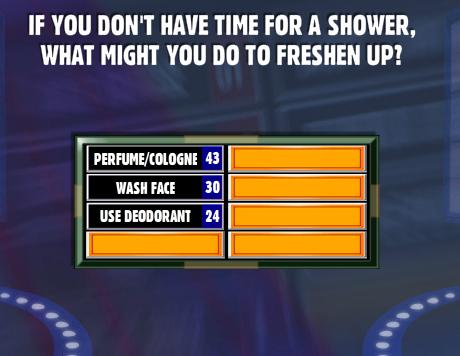
freshenIt’s possible for blogs to get stale. That’s no surprise, to regular readers.

Like everything else in life, same old same old (American slang) gets old.

I’ve never been one to desire change for its own sake. C.S. Lewis satirizes such notions in his poem, “Evolutionary Hymn.”

Lead us, Evolution, lead us

     Up the future’s endless stair:

Chop us, change us, prod us, weed us.

     For stagnation is despair:

Groping, guessing, yet progressing

     Lead us nobody knows where.

Still, for some time I have felt like I wanted to freshen up the look of Mere Inkling.

I’ve taken the plunge and purchased the package where I can tailor colors and fonts. I’ve also decided to move some of my old websites here to Mere Inkling.

First of all, I have added The Odes of Solomon. If you’re interested in learning about the most ancient Christian hymnal, check it out. I have included paraphrases of five of the Odes.

Next I will either move my C.S. Lewis Chronicles pages here, or the information that I’ve assembled online for two of our family’s ancestors who served in the American Civil War. I have also added a link to the military chaplaincy journal I edit.

Those will all be static pages, of course. The main feature of Mere Inkling will continue to be the regular columns, or posts.

I hope you enjoy the new format. I think it is an improvement, and enabling me to get all of these efforts under a single digital “roof,” will certainly help me stay better organized.

In expanding the offerings of Mere Inkling, I have maintained the valued past and am importing material that will be of interest to some. My goal has been to have the site “grow,” in the sense used by C.S. Lewis in “Hamlet: The Prince or the Poem.”

Mere change is not growth. Growth is the synthesis of change and continuity, and where there is no continuity there is no growth.

Loving Prostitutes

comfort womenI love prostitutes.

It’s true.

Although I have never in my life “physically” loved one, I possess great compassion for them.

Sharing physical intimacy with a prostitute would have nothing to do with “love,” anyway.

My empathy for prostitutes grew significantly during the year I spent stationed with the United States Air Force in South Korea during the 1980s.

My love for them has just been reignited by an article I read about the plight of aged Korean prostitutes who are being evicted from their hovels so that developers can profit. These women, ostracized by their own society and discarded by their pimps and the soldiers, sailors and airmen who abused them, have nowhere to go.

Americans have a perverse understanding of prostitution. Calling it a “victimless crime” is incomprehensible. For every one American call girl living in comfort and able to choose her “clients,” there are probably five thousand who are beaten daily, and driven to an early (often welcome) death.

No woman, at least none with a healthy mind, wants to sell their body and forfeit their future.

The gifted author and professor, C.S. Lewis, recognized this fact.

Prostitutes are in no danger of finding their present life so satisfactory that they cannot turn to God: the proud, the avaricious, the self-righteous, are in that danger (The Problem of Pain).

I love prostitutes because God has granted me the vision to see them as he does. Jesus spoke with true love (agape love) to one unloved and physically used woman he met at a well. You can read the story here.

She had been passed from one man to another and no longer had any options. Her current partner had not even bothered to marry her. She was not unlike the poor prostitutes of South Korea.

Jesus looked into this woman’s scarred soul and offered her forgiveness, healing and peace.

South Korea is prosperous today. It was not always so. During the Second World War, and the Japanese occupation, thousands of woman were enslaved as “comfort women.” The Korean government provides these victims with special compensation. Not so the post-war “comfort women” who serviced the country’s allies.

They did not have a choice either. Which is one reason C.S. Lewis writes, “a cold, self-righteous prig who goes regularly to church may be far nearer to hell than a prostitute.” (Mere Christianity).

And now they languish. Others, working in bars and “clubs” near bases today, are in their “prime.” It won’t last. This will be their destiny as well.

Because I love prostitutes, I pray that they might be liberated from their bondage. And, I also pray, that if they remain trapped in their current plight, that their souls might be free . . . that they might encounter the Messiah who can offer them “a spring of water welling up to eternal life” (John 4:14).

The article I read, and linked to above, ends with a potent yet tragic image.

Jang Young-mi, 67, who was orphaned as a girl and worked in a military camptown for nearly two decades, lives with three mangy dogs. A bite from one of them left the long white scar on her hand, but she refuses to abandon the offending animal.

Dogs too, are often outcasts in many societies. The irony is not lost that in Korea a dog is as likely to be devoured, as it is to be embraced and protected.

_____

The WWII image of so-called “comfort women” is of Indonesian women. It is estimated that the Imperial Japanese Army enslaved a quarter of a million women in Asia to serve in this cruel and vile manner. Due to the large number of victims, many still live today, still hoping for an official apology for their suffering.

Deadly Gargoyles

gargoyle magdalenWhoever first considered gargoyles an attractive addition to buildings, must have had an odd personality. I have never developed an appreciation them.

What’s worse is when moonstruck (lunatic) architects deem gargoyles suitable for adorning churches.

There are too many examples out there to count. I am sure there are a number of websites devoted to them. But I don’t care enough to investigate.

It is one thing to shape a natural or fantastical creature to use as a rain spout on a building. Quite another, in my opinion, to opt for a grotesquery.

Churches should stick with symbolism that edifies the people. Admittedly, this can include some potentially gruesome subject, such as images of martyrdoms.

Our familiarity with the crucifix itself has dulled the impact of its terrible agony. We often fail to recognize the magnitude of the suffering Jesus endured.

Gargoyles were in the news this week. The reason for their appearance gave the title to this column.

A tragedy occurred in Chicago when a gargoyle broke free from a dated building and struck an innocent pedestrian. She was killed almost immediately by the crushing blow.

To make matters even more sad, the building from which the “ornament” fell was a church.

Second Presbyterian Church was built in 1874 and is a national historic landmark. Local news outlets report that it failed various inspections between 2007 and 2011, but passed them in 2012 and 2013. (The picture above is not of the gargoyle in question.)

Sarah was the name of the victim of this tragic accident. I invite your prayers on behalf of this young woman’s loved ones, especially her two children.

I think so little of church gargoyles that I included the subject in an as yet unpublished book set in the medieval period.

The nightmare gargoyle pictured on the top of the page adorns Magdalen College in Oxford. It was established in 1458, and was the school where C.S. Lewis began his teaching career.

In C.S. Lewis: An Examined Life, Bruce Edwards writes, “The college is noted for its wealth of gargoyles, grotesques, and stone portraits of notable people.”

Well, the college may be named after Mary Magdalene, but at least it isn’t a church. As for the stone “portraits,” they sound like a very agreeable adornment.

As lovely as Magdalen is considered to be, on the whole Lewis considered Cambridge University more appealing than Oxford. In a 1954 letter he wrote, “I’m afraid one must admit that, architecturally, Cambridge beats Oxford; there is so much more variety in Cambridge.”

In two other letters written the same year, Lewis revealed that there was much more to his new academic post than mere architecture that appealed to him. Oxford had taken Lewis for granted, and often belittled him because of his simplistic trust in Christ.

You know I am going as a Professor to Cambridge? My new college is Magdalene, Cambridge: a tiny little place compared with this, but a perfect gem architecturally and (I think) much more congenial socially & spiritually.

Did I tell you I’ve been made a professor at Cambridge? I take up my duties on Jan. 1st at Magdalene College, Cambridge (Eng.). Note the difference in spelling. It means rather less work for rather more pay. And I think I shall like Magdalene better than Magdalen. It’s a tiny college (a perfect cameo architecturally) and they’re so old fashioned, & pious, & gentle and conservative– unlike this leftist, atheist, cynical, hard-boiled, huge Magdalen. Perhaps from being the fogey and ‘old woman’ here I shall become the enfant terrible there.

It is not about architecture at all—or the presence or absence of grotesqueries. It is about finding a home where you know you are welcome and appreciated. A place where you do not need to remain constantly on your guard, because there are colleagues present who desire to see you humbled.

It is good to know C.S. Lewis spent the final years of his teaching life in an academic family that truly appreciated the gifted scholar in their midst.

A Caveat about Caveats

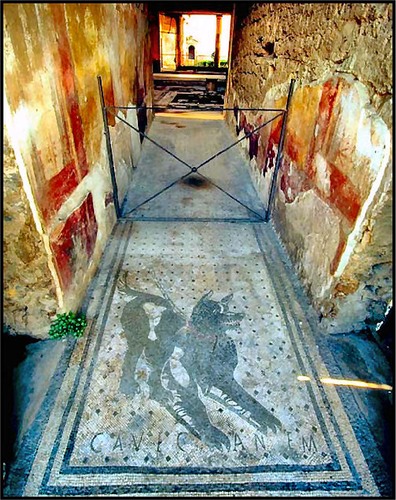
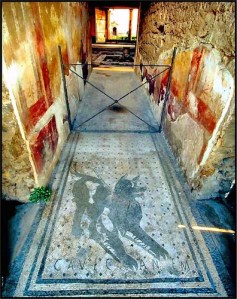
cave canemA caveat, most readers will know, is a warning. One of my favorite usages comes from ancient Rome, where many villa owners procured guard dogs to protect their property. Cave Canem–beware of the dog–became a common motif for entryway mosaics.

One of the most familiar caveats is caveat emptor—buyer beware. Not only is this warning well known, it is absolutely true. Without an express warranty, you may have little hope recouping your loss when something you purchase fails.

Caveats, however, need not infer that the subjects they refer to are dangerous.

For example, the guard dog may well be an affectionate “member of the family,” who warms up quickly, even to strangers who have been invited into the home. Likewise, the new car I’m contemplating purchasing may be ideal for me. Fairly priced, economical to drive, and not so dated in appearance that it shouts, “yes, I’m a grandpa.”

Caveats don’t mean “stay away.” They merely advise us all to think before we act. (And, as universal rules go, this is a very good one.) Caveats, and good parenting, remind us to read the “fine print” before signing anything.

I want to encourage all readers of Mere Inkling to use their God-given intelligence to evaluate what you read on these pages. In the same way, I hope you will all apply your God-instilled conscience to measure my words.

In light of this sincere desire, I encourage you to read the gentle caveats offered below.

General Caveats for Readers

What should readers of Mere Inkling keep in mind as they peruse these posts? First of all, there are a number of general considerations—applicable to everything each of us reads and hears.

1.  Understand the perspective of the writer. What are the assumptions and worldview of the person who wrote the piece? It can be hazardous to simply assume that a writer shares your own values—or even definitions. Many people would be shocked at the diversity of definitions for a word like “church” that roam the internet.

2.  Ensure we read what we think we did. By this I mean that we should reread sections that we find confusing or offensive. It may be we have misread what the author intended. (This is especially true when a writer seeks to play with the English language, and uses phrasing unfamiliar to our ear.) In cases where we have normally enjoyed the writing, but now find ourselves bothered by something, it is always good to ask the writer to clarify what they meant. More often than not, I’ve found this opportunity to elaborate dispels the problem.

3.  Reject the myth that anything you read is absolutely objective. Objectivity, except for mathematics, is essentially impossible. Our education, values, experiences and mood all affect the words we write. The best we can hope for in what we read—something Mere Inkling strives for—is personal honesty and fairness.

Mere Inkling Caveats

1.  Mere Inkling’s author is a fallen human being. By definition, that means that I am imperfect. Not all-knowing, nor always gracious. Imperfect though I am, I try my best to speak here in a forthright, considerate, modestly entertaining and, most importantly, a truthful way. When I fall short of that, feel free to write to me about it.

2.  I am a Christian. I certainly don’t apologize for this. Nor do I apologize for the wish of all disciples of Jesus that everyone might know the joy, forgiveness and peace that comes from abiding in the Vine (a metaphor for Jesus, as described in John 15).

3.  Your host at Mere Inkling is an evangelical Christian. This is a hazy adjective, often used in mutually contradictory ways. I apply it here to myself in the context of holding fast to the basic Christian truths, including the aforementioned desire of God that all people might come to him through his only begotten Son.

4.  I am a catholic Christian. Not a Roman Catholic (with a capital C), but catholic in the word’s creedal sense—a member of the one universal Church. As a catholic Christian, I subscribe to the ecumenical creeds, agreed upon as the fundamental doctrines of the faith during its earliest years. These include the Triune nature of God, the Incarnation miracle, and the atonement. Like my mentor, C.S. Lewis, here at Mere Inkling we focus on “Mere Christianity,” the common core of the faith. I consistently attempt to qualify my words on subjects where there is not a clear consensus.

Each of us has his individual emphasis: each holds, in addition to the Faith, many opinions which seem to him to be consistent with it and true and important. And so perhaps they are. But as apologists it is not our business to defend them. We are defending Christianity; not “my religion.” When we mention our personal opinions we must always make quite clear the difference between them and the Faith itself. (C.S. Lewis, “Christian Apologetics”).

5.  I am a Lutheran Christian. Again, I do not apologize. Lutherans understand we are only a small part of the “one holy catholic and apostolic faith.” Each denomination (indeed, each individual) possesses a distinctive interpretation of the Christian faith. We are free, of course, to associate with that community we believe follows God’s leading most faithfully. (It is a given that no community is without flaw, since no human being is.) I have written more on this aspect of my identity in the next point, and on the “Mercy” tab you will find at the top of the page.

6.  I am an evangelical Lutheran Christian. This is not a formal category, but means that I subscribe to historic Lutheranism as it has been taught and held since the Reformation, rather than some of the current expressions of “religion” that may be labeled Lutheran. In essence, this can be summarized in the “solas” of Lutheran doctrine.

Sola Scripture – Scripture Alone meaning that the Bible, the Jewish and Christian Scriptures, are the ultimate authority for determining true faith.

Sola Gratia – Grace Alone meaning salvation is an unearned gift of God, given not because we have earned it.

Sola Fides – Faith Alone meaning that God’s grace is apprehended not through wisdom, good works, or any means other than a simple trust in the promise. Ironically, this faith itself is also a gift of God.

7.  I am a pastor. While pastors with seminary educations do study Greek, Hebrew, Theology and assorted other subjects, we are not the same as what most people mean by the word “theologians.” Pastoral Theology is distinct from Systematic Theology. The former focuses on practical ministry to individuals, while the latter is most concerned with abstract matters. While I also possess a second graduate degree, my Master of Theology degree (much different than an M.A. in theology) was earned in the study of Early Church History. My concern remained the work of God among everyday human beings, rather than scholastic philosophy.

8.  While I never intentionally write anything with the goal of offending any reader, I recognize it is impossible to avoid all offense. (Even the least controversial prose is capable of offending.)

Allow me to illustrate how simple truths can elicit dramatically different responses, with two simple declarations.

God loves all people. This is true, and inoffensive. Most people today, and all orthodox (biblical) Christians would agree with the statement.

Not all people will go to heaven. This too is true. However, it provokes great outcries from many quarters, including some religious organizations that arise out of the Judeo-Christian tradition. Jesus himself offered “hard sayings” that elicited grumbling. John’s Gospel records a powerful account of this, occurring immediately after the Feeding of the Five Thousand.

When many of his disciples heard it, they said, “This is a hard saying; who can listen to it?” But Jesus, knowing in himself that his disciples were grumbling about this, said to them, “Do you take offense at this? . . . The words that I have spoken to you are spirit and life. But there are some of you who do not believe.” . . . “This is why I told you that no one can come to me unless it is granted him by the Father.” After this many of his disciples turned back and no longer walked with him.

C.S. Lewis referred to the alienating nature of some truths when he wrote the essay, “Cross-Examination.”

I believe that there are many accommodating preachers, and too many practitioners in the church who are not believers. Jesus Christ did not say “Go into all the world and tell the world that it is quite right.” The Gospel is something completely different. In fact, it is directly opposed to the world.

9.  I am an American. Again, no apologies. I applaud much of what this nation has valued and shared during its history. I regret many of the mistakes the United States has made, and continues to make. I recognize how fortunate I have been to live in a nation with access to educational and medical resources not available to all. I genuinely appreciate other cultures and have been privileged to live in Europe, Asia and the Pacific. The right I treasure most—and one I pray will be extended to all people—is freedom of religion.

10.  I welcome offline correspondence. I recognize many people are reluctant to post a comment on a blog, which is visible to the public. I also realize that some readers would appreciate privately offering a comment or posing a question. I welcome this, and encourage you to use the form below to write to me. I will respond from my personal email account and we can discuss sensitive matters in greater depth. I must say in advance, however, that I do not have the leisure time to aid with any research. Similarly, while I am happy to offer general pastoral advice, only a fool or con artist would presume to conduct serious counseling or therapy via email. (You need a local pastor or counselor for that.) That said, I do enjoy spirited and honest discourse, so d feel free to contact me.

← Back

Thank you for your response. ✨

_____

The picture at the top of the page comes from the entryway to the “House of the Tragic Poet” in Pompeii.


Avoiding Gadzookeries

gadzookeryWriting quality historical fiction is challenging. This is especially true if one wishes to avoid the common crutch that a talented writer of the last century first labeled “gadzookery.”

And just what is this faux pas we should avoid when writing about the past? Well, it relates most directly to the dialog placed on the lips of historical figures. The offensive technique involves the overuse of archaic expressions or phrases. (Some would argue it includes any use of any archaisms.)

If the word gadzookery sounds a tad, how shall I put it, “goofy” to you, you may prefer using another word that means the same thing: “tushery.” Tushery was coined by Robert Louis Stevenson. Way back in the nineteenth century.

Gadzookery is a newer version, insulting the same lazy writing technique. I believe it may have been coined by Rosemary Sutcliff (1920-1992). Sutcliff’s historical influence has exerted a literary influence on my life second only to C.S. Lewis.*

The article about Sutcliff in The Oxford Encyclopedia of Children’s Literature praises her work, saying, “She carefully creates dialogue in her novels that recollects the speech of a bygone era without falling into what she termed ‘gadzookery.’”

Having tested the waters of historical fiction myself, I know this to be far more difficult that it may sound.

Sutcliff had several things in common with C.S. Lewis. Both wrote for adults and for children. (It was her young adult series about the decline of Roman influence in Britain that sparked my own lifelong interest in Rome.)

Both authors also received the Carnegie Medal for their work. When Lewis was awarded his, he received a congratulatory letter from Pauline Baynes, who had illustrated several of his books. He responded quite graciously.

Dear Miss Baynes, Very nice to hear from you again, and thanks for sending on the book, which I have returned to Lane. Thanks for your congratulations on the Carnegie, but is it not rather ‘our’ Medal? I’m sure the illustrations were taken into consideration as well as the text. I am well, and as happy as a man can be whose wife is desperately ill.

Although C.S. Lewis had married, quite late in life, the two authors were alike in spending most of their life single. Sutcliff, in fact, lived with her parents during most of her life, having suffered crippling arthritis as a child. She did not resent remaining unmarried. In a 1992 interview she said,

Beatrix Potter wrote all her gorgeous stories when she was very lonely and not very happy—after she married, she never wrote another thing. Nothing worth reading, anyway.

Another similarity between the two was that they both fell under the powerful sway of myth during their childhoods. They used their familiarity with its rich echoes to imbue their own work with themes that flowed far beyond the familiar channels travelled by other writers.

Each of them took their readers seriously, and refused to speak down to them. That is why they share one more quality I wish to mention in closing—their high standards. Neither Lewis nor Sutcliff could tolerate poor writing. And their finely tuned skills meant neither ever needed to resort to gadzookery.

______

* Excepting, of course, the Bible itself, which is literature of an entirely different sort. I don’t consider it fair to compare mortal writers, no matter how inspired, to a volume I regard as God’s written word.

Misnaming Kids

baby namesWhy do they do it? I’m sure they considered it witty. They may have laughed as they inscribed his name on the birth certificate of their newborn son. (I doubt he shared the humor of the moment.)

Let’s think about this for just a moment. If your family name was Lemon, a totally respectable and not uncommon name, would you give your child a first name that is also a citrus?

That’s what I encountered as I completed the current issue of the military chaplaincy journal that I edit. One of the American Civil War chaplains I mentioned in the current issue of Curtana: Sword of Mercy bore the striking name “Orange V. Lemon.”

Really? Yes, really.

It reminded me of a quaint Canadian television series that my dad used to enjoy, The Red Green Show. His parents should have known that one color in a person’s name is sufficient.

Still, the temptation to be silly is irresistible to some people. Years ago I knew an attorney whose last name was Cain. Her parents had named her Candy, of course. Peculiar names are so common today, of course, that there are myriads of internet repositories for them.

Names are more important than many of us realize. I’ve written in the past about how my wife and I followed the biblical example of choosing our children’s names based on their meanings.

Even if that approach doesn’t appeal to a parents, there are an almost unlimited number of options that would not subject their children to unwanted attention.

Fortunately, when we get older, we have some control over what we are called. I was “Robbie” in my childhood, and graduated to “Rob” as soon as I could. “Robert’s” always been fine with me, since it’s my given name and what I expect someone I’ve never met to call me. “Bob,” however, is not okay. There’s nothing wrong with “Bob,” except that I’ve never been one. And when someone greets me as such it projects a very false familiarity.

Curiously, I recall reading in the Oxford dictionary of names that more primitive nicknames for Robert included Hob, Dob and Nob. So I suppose I should count my blessings when addressed as Bob.

C.S. Lewis chose his own name. Many people are surprised when they learn that he went by the name of Jack. How, they wonder, could one get “Jack” out of “Clive Staples?” Good question.

Lewis was not enamored with the name Clive. When he was only four, he decided to use the name of a pet dog that had been killed by an early motorist. The pet’s name was a human-friend designation, “Jacksie.” His brother Warren relates the event thusly, in his 1966 collection of Lewis’ letters.

Then, in the course of one holiday, my brother made the momentous decision to change his name. Disliking “Clive”, and feeling his various baby-names to be beneath his dignity, he marched up to my mother, put a forefinger on his chest, and announced “He is Jacksie.” He stuck to this next day and thereafter, refusing to answer to any other name: Jacksie it had to be, a name contracted to Jacks and then to Jack. So to his family and his intimate friends, he was Jack for life: and Jack he will be for the rest of this book.

It’s fascinating that Lewis’ family acquiesced to his demand, but it took. One small consequence, of course, is that this gifted writer is known today as “C.S.” rather than by his full names.

As for faithful Orange, I don’t know if he adopted any other name during his lifetime. He may have been quite content. It certainly did not prevent him from enjoying a meaningful life. He became a Methodist pastor and served as chaplain with the 36th Indiana Infantry.

Any Name But That

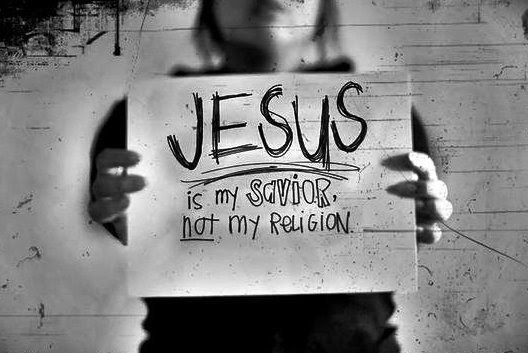
jesus nameThis week I read one of the clearest descriptions of the gospel I have ever heard. It appeared in an article written by the most (how do I put this mildly?) daunting professor I have encountered in my Doctor of Ministry studies. “Intimidating” would also work . . .

But his brilliance and rapid fire delivery of thought-provoking concepts is not the reason for me mentioning him here. It is his ability to cut through the confusion, and express simply the essence of the good news, the Christian hope, the gospel.

I’m not pandering to him, mind you, because my grade for his systematics course was filed long ago. It is simply that Joel Biermann said extremely succinctly, something that I have always attempted to emphasize in my own ministry.

The Gospel is the good news, but it is not just any good news. The Gospel is a word of liberation and encouragement, but it is not just any word of liberation and encouragement. The Gospel is a wonderful event and a joyful experience, but it is not just any wonderful event and joyful experience.

In other words, when it comes to defining the Gospel, it is vitally important that we move past vague ideas or general notions and grab hold of the central thing. The central thing is Jesus.

This is a truth too many fail to understand. Sadly, this is true for some “inside” the Church as well as outside of its doors.

Goodness is good. Generosity is wonderful. Encouragement is precious. Courage is noble. Love is (almost) divine.

Yet none of these are the Gospel. The Gospel is Jesus. In him the world discovers every good thing from the hand of God the Father, our Creator.

Jesus is indispensable. Without his holy name, the “faith” would simply be a praiseworthy “religion.” Without Jesus, it could instruct how to live, but it could not redeem.

It is precisely this point—the name of Jesus—that makes the Gospel objectionable to some. “Care for the sick,” some say, “just don’t mention that name.” On other lips we hear “The Church does lots of things that benefit the community, but please don’t mention that name that offends people.”

They arrested the apostles and put them in the public prison. But during the night an angel of the Lord opened the prison doors and brought them out, and said, “Go and stand in the temple and speak to the people all the words of this Life. . . .”

And someone came and told [the High Priest], “Look! The men whom you put in prison are standing in the temple and teaching the people. . . .”

And the high priest questioned them, saying, “We strictly charged you not to teach in this name, yet here you have filled Jerusalem with your teaching, and you intend to bring this man’s blood upon us.”

But Peter and the apostles answered, “We must obey God rather than men. The God of our fathers raised Jesus, whom you killed by hanging him on a tree. God exalted him at his right hand as Leader and Savior, to give repentance to Israel and forgiveness of sins. And we are witnesses to these things, and so is the Holy Spirit, whom God has given to those who obey him.” (Acts of the Apostles, chapter five).

C.S. Lewis knew quite well that Christianity is all about Jesus. Without him, the person Jesus the Christ, whatever passes for the “Church” would merely be a noisy gong. Lots of “religious” talk would remain . . . but the Gospel would be absent.

“What are we to make of Christ?” There is no question of what we can make of Him, it is entirely a question of what He intends to make of us. You must accept or reject the story. The things He says are very different from what any other teacher has said. Others say, “This is the truth about the Universe. This is the way you ought to go,” but He says, “I am the Truth, and the Way, and the Life.” He says, “No man can reach absolute reality, except through Me. Try to retain your own life and you will be inevitably ruined. Give yourself away and you will be saved. . . .”

“Come to Me everyone who is carrying a heavy load, I will set that right. Your sins, all of them, are wiped out, I can do that. I am Re-birth, I am Life.” (1950 essay, “What Are We to Make of Jesus Christ?”).

In the same way as the apostles, C.S. Lewis, my seminary professor, and all of those who have entrusted themselves to the grace of God in Christ, know the name of Jesus is not optional. In fact, it is all about the name.

For it is Jesus, and him alone, who is the alpha, omega and the whole of the Gospel.

Emphasizing Italics

italicsSermons do not make great books. Sorry, but that’s the opinion of this pastor who has to compel himself to read the sermons of preachers.

Yes, some of them sell decently (when the author has a national “pulpit”). But I suspect many copies of those books are purchased out of support of their broader ministry. I imagine most purchasers try to wade through a few of the homilies, but decide after a while they prefer listening to the sermon “preached.”

As a lifelong student of communication, I continue to be intrigued by the different ways in which aural and printed word can be used to communicate the good news. The subject promises to be a major part of my dissertation research.

Sermons are meant to be delivered orally. Transposing them to the page, without making various accommodations, is (in my personal opinion) a mistake.

C.S. Lewis apparently agreed with me on that—before he came to disagree with the effort.

Ever since the rise of the keyboard, I have celebrated the ability to use italics for emphasis. I consider the availability of italics especially important when we translate spoken messages into text.

C.S. Lewis discussed this process in his preface to Mere Christianity. His focus was on how best to transpose words prepared for oral delivery to a written medium, while still maintaining their original voice.

The contents of this book were first given on the air, and then published in three separate parts as Broadcast Talks (1942), Christian Behaviour (1943) and Beyond Personality (1944).

In the printed versions I made a few additions to what I had said at the microphone, but otherwise left the text much as it had been. A “talk” on the radio should, I think, be as like real talk as possible, and should not sound like an essay being read aloud. In my talks I had therefore used all the contractions and colloquialisms I ordinarily use in conversation.

In the printed version I reproduced this, putting don’t and we’ve for do not and we have. And wherever, in the talks, I had made the importance of a word clear by the emphasis of my voice, I printed it in italics.

I am now inclined to think that this was a mistake—an undesirable hybrid between the art of speaking and the art of writing.

A talker ought to use variations of voice for emphasis because his medium naturally lends itself to that method: but a writer ought not to use italics for the same purpose. He has his own, different, means of bringing out the key words and ought to use them.

In this edition I have expanded the contractions and replaced most of the italics by a recasting of the sentences in which they occurred: but without altering, I hope, the “popular” or “familiar” tone which I had all along intended. I have also added and deleted where I thought I understood any part of my subject better now than ten years ago or where I knew that the original version had been misunderstood by others.

When one’s mentor advises something, it demands thoughtful consideration. Lewis’ opinion that the use of italics for emphasis is not ideal forced me to seriously consider the practice, which I obviously favor.

I agree with Lewis on expanding contractions. I learned that lesson when I wrote a paper during seminary studies and the professor instructed me to make that change.

However, I disagree about the use of italics. They need to be properly applied, of course. And I recognize that the most gifted of writers may be able to consistently avoid using them. (Or “leaning on them” as an anti-italics anarchist would probably say.)

In the end, I guess it is time to ponder again Lewis’ pronouncement that writers have their “own, different, means of bringing out the key words and ought to use them.”

Until I receive a divine mandate, C.S. Lewis notwithstanding, you should continue to expect to occasionally see italics here at Mere Inkling.

_____

The cartoon at the top of the page comes from an interesting site. You can find the original source for the image here. Just for the record, I hate ALL CAPS, and I absolutely despise underlining.