Slippery Crimes

willeIn the hierarchy of criminals within the penitentiary system, murderers are feared, crime lords respected, and pedophiles despised. Where, one wonders, did the butter forgers rank?

Alongside Machine Gun Kelly, and my namesake, the Birdman of Alcatraz, the Pen at Leavenworth housed violators of the Oleomargarine Act of 1886. Notorious, they were not.

Take a look at Chuck Wille’s mug shot above. I wonder what bank robbers and car thieves thought of his dandy mustache.
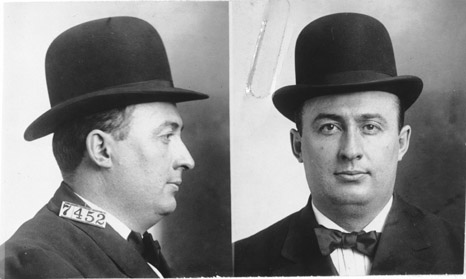
wirthJoe Wirth, pictured to the right, looks more like a vaudeville comedian than a hardened criminal. I can easily imagine naive people being duped by someone who appeared as unthreatening as Wirth.
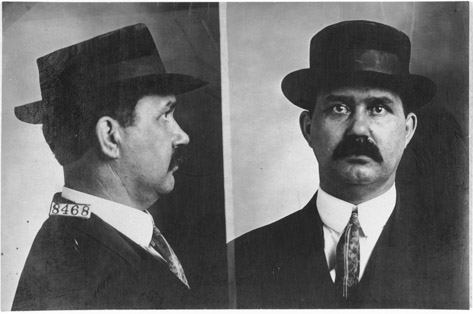
mcmonigleJohn McMonigle, prisoner 8468, was not deterred by his stint in prison. He was sent to Leavenworth twice, due to an encore violation of the oleomargarine law.

The word oleomargarine probably sounds alien to most young people. They know what margarine is—well, some of them do—but the oleo part likely sounds more like a cookie than a butter substitute.

Oleomargarine was made from beef fat. A chemical compound of olein and margarine. Olein is “a colorless to yellowish, oily, water-insoluble liquid, C57 H104 O6.” How appetizing!

Most people today opt for margarine made from refined vegetable oils, but even today animal “by-products” can find their way into margarine products.

I recall growing up when oleo was still part of the American lexicon. My mother used it as a sort of synonym for margarine. That faded as I grew, but persisted long enough for me to vividly remember it.

Washington State was one of those with a strong dairy industry. Such locations drew clear demarcations between butter and its “substitutes.” The dairy organizations vigorously challenged the “unnatural” competition.

The primary battle line was whether or not oleo could colored to make it appear more like the food it was replacing. You see, in its natural state it doesn’t look nearly as tasty as when a yellow coloring was kneaded into it.

Congress taxed the invention differently. Ten cents a pound for the yellow version, but only .25 cents (1/4 of a cent) per pound for the raw version. Amazingly, this tax did not end until 1951. Homemakers would color their own oleomargarine to get their unsuspecting children to eat the stuff.

Nowadays, some people prefer margarine to butter. And, even when it was inferior to current standards, if butter was unavailable, most people would be delighted to have access to the alternative.

Meanwhile, at the beginning of the twentieth century, 32 states—with strong dairy lobbies—banned the coloring of margarine by businesses.

Naturally, where there is a law, there will be lawbreakers. Presumably private citizens were able to continue camouflaging the material in the secrecy of their own homes. The three criminals on this page violated the Oleomargarine Act. And they paid for their illicit marketeering.

C.S. Lewis & Margarine

Regular readers of Mere Inkling may be wondering how in the world this subject connects with the Oxford don.

Lewis wrote a wonderful essay, entitled “Religion: Reality or Substitute?” You can find it in the Christian Reflections collection, edited by Walter Hooper.

The message of the essay is that we cannot completely trust our own experiences. Some people, he says, are inclined to think that the spiritual realm is a sort of “substitute” for reality, rather than real itself. Among the vibrant illustrations he provides for this is the following.

‘Substitutes’ suggest wartime feeding. Well, there too I have an example. During the last war, as at present, we had to eat margarine instead of butter. When I began doing so I couldn’t tell the difference between them. For the first week or so, I would have said, ‘You may call the margarine a substitute if you like, but it is actually just as good as the real thing.’ But by the end of the war I could never again have mistaken one for the other and I never wanted to see margarine again.

This is different from the previous examples because here I started knowing which, in fact, was the substitute. But the point is that mere immediate taste did not at first confirm this bit of knowledge. It was only after long experience that the margarine revealed itself to my senses as the inferior.

Lewis’ essay argues that “There is nothing we cannot be made to believe or disbelieve,” so it is necessary that we place our truth (faith) in something more reliable than our own impressions.

Lewis is right. Just as there have been secular criminals who sought to profit off of the misrepresentation of oleomargarine, there are religious hypocrites and vermin who desire to deceive people about divine truths.

The deepest purpose of all things dark, is to draw people away from the Light. Evil seeks to substitute the lie for the Truth. It has been this way ever since our first parents resided in the Garden.

Whether one prefers butter or margarine, is left to individual taste, and of little consequence. However, whether we choose to consign ourselves to death, when freely offered Life, is something of eternal consequence.

_____

The criminal masterminds cited here are identified further at the National Archives page subtitled, “Crimes against Butter.”



Fleeting Fame

fameIt’s likely that the names of 98.6% of authors who top the bestseller charts today will be unremembered a century from now.

This weekend I posted the latest issue of Curtana: Sword of Mercy, a journal I edit about military chaplains. (If you are interested in checking it out, you can download a free copy here.)

The current issue includes an interesting article about two chaplains from Vermont who served during the War of 1812. (For international readers, that was the war following the winning of America’s independence when they British got their revenge—they captured our national capital and burned the capitol.)

In the biographical portion of the article, the author included a final summary of the life of one of the chaplains. Solomon Aiken (1758-1833) left his civilian pulpit to serve soldiers and sailors.

Aiken was quite prominent in his day. Not only was he a well known preacher and writer, he actually served as a member of Vermont’s legislature. Yet, I doubt that even Vermonters would recognize his name today.

Here is the quotation from a nineteenth century tribute published after his passing.

Mr. Aiken enjoyed uncommon health and vigor. He never took a particle of medicine, or lost a relish for food, until his final and brief sickness—a pleurisy fever. He possessed peculiar power as a logician, and was very popular as a preacher. He was kind-hearted and benevolent, almost to a fault. But it is chiefly as a political writer that Mr. Aiken is remembered. He was sent as a representative for two years, by the town of Dracut. He published several sermons and pamphlets, chiefly upon political themes, which excited much attention in their season.

The words that seized my attention were the conclusion, “. . . which excited much attention in their season.”

“In their season . . .” That season must have been brief, since the history was written just twenty years after Aiken’s death. By then his works had either withered or, more optimistically, gone to seed. In either case, their day was passed.

Translating that to our modern era, where things become obsolete almost as soon as they are envisioned, it would imply that our “season” of fame or reputation will last little more than a handful of months. And that, of course, assumes that a person actually achieves some level of renown.

Fame is fleeting. It has always been so, and the good Reverend Aiken is simply another example of that truth.

Thank God (literally) that there is more to life than notoriety.

C.S. Lewis is one of the 1.4% whose fame lasts. His has not diminished; it continues to grow. Just a year ago, on the fiftieth anniversary of his death, he was honored by having a plaque dedicated in Poet’s Corner in Westminster Abbey.

Lewis never sought fame, as the following discussion from his essay “The Weight of Glory” clearly reveals.

I turn next to the idea of glory. There is no getting away from the fact that this idea is very prominent in the New Testament and in early Christian writings. Salvation is constantly associated with palms, crowns, white robes, thrones, and splendour like the sun and stars. All this makes no immediate appeal to me at all, and in that respect I fancy I am a typical modern.

Glory suggests two ideas to me, of which one seems wicked and the other ridiculous. Either glory means to me fame, or it means luminosity. As for the first, since to be famous means to be better known than other people, the desire for fame appears to me as a competitive passion and therefore of hell rather than heaven. As for the second, who wishes to become a kind of living electric light bulb?

When I began to look into this matter I was stocked to find such different Christians as Milton, Johnson and Thomas Aquinas taking heavenly glory quite frankly in the sense of fame or good report. But not fame conferred by our fellow creatures—fame with God, approval or (I might say) “appreciation’ by God.

And then, when I had thought it over, I saw that this view was scriptural; nothing can eliminate from the parable the divine accolade, “Well done, thou good and faithful servant.” With that, a good deal of what I had been thinking all my life fell down like a house of cards.

This exceptional work merits consideration not only by people of faith. It invites all honest readers to gaze within themselves at their deepest yearnings.

Another passage from C.S. Lewis that relates strongly to the subject at hand comes from The Great Divorce. You can read the entire passage here, but the heart of it is this. Lewis views a simple woman, presently in heaven, receiving magnificent praise and celebration. He naturally assumes she must have been some well known saint.

He is, however, informed that she lived an obscure life, despite the fact that she touched countless nondescript people and animals with her compassion. Lewis’ heavenly guide is rather surprised that the Oxford professor has overlooked a simple truth:

Fame in heaven “and fame on Earth are two quite different things.”

Only the second will last.

Inkling Chivalry

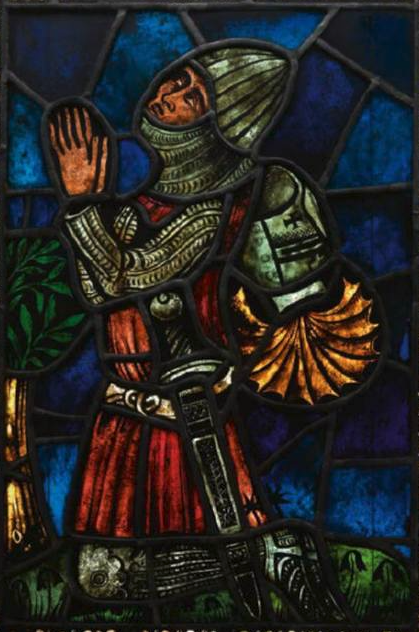
praying knightJ.R.R. Tolkien and C.S. Lewis practiced what they preached.

While most people are content to sit back while others battle for just causes. Sadly, cowardice appears to outweigh bravery in our modern age. We have, Lewis says, “having grown up among the ruins of the chivalrous tradition . . .” (“The Necessity of Chivalry”).

Lewis and Tolkien, by contrast, were genuine heroes. Peaceful academics by nature, each of them responded to their nation’s call to defend their homeland against the Huns.

In the world of the modern university—inhospitable to those who would defend the veracity of the Scriptures—each man counted the cost, and willingly bore the ridicule of skeptics and secularists.

Not only were these two Inklings paragons of courage, they engaged in their battles with a code of chivalry. Neither desired the destruction of their foes. Instead, they sought the preservation of truth, justice, peace and mercy.

Chivalry is a concept alien to the modern era. In an age when there is so little mercy and forgiveness, it seems a more and more archaic notion each day.

Yet, chivalry is not dead.

Both of these men not only modeled the virtue, they imbued their works with its spirit. The heroes of Middle Earth and Narnia are chivalrous almost to a fault. And the spiritual heirs of both fictional domains, still yearn to be chivalrous in their own lives.

So, precisely what is it? As Lewis begins his essay on the subject, he writes, “The word chivalry has meant at different times a good many different things—from heavy cavalry to giving a woman a seat in a train.”

Lewis considers the “double demand it makes on human nature” through an exploration of the Middle Ages.

The knight is a man of blood and iron, a man familiar with the sight of smashed faces and the ragged stumps of lopped-off limbs; he is also a demure, almost a maidenlike, guest in hall, a gentle, modest, unobtrusive man. He is not a compromise or happy mean between ferocity and meekness; he is fierce to the nth and meek to the nth.

Gentle toward the innocent and vulnerable. Relentless versus evil.

What, you may ask, is the relevance of this ideal to the modern world? It is terribly relevant. It may or may not be practicable—the Middle Ages notoriously failed to obey it—but it is certainly practical; practical as the fact that men in a desert must find water or die.

We live in a violent world, and the beheading of even children suggest things are growing worse. So, more than ever, Lewis tells us, we need chivalrous people like Lancelot, who combined these conflicting qualities. We need gentle men, like Lewis and Tolkien, who are willing to lay aside their books to face the specter of war on the front lines.

Lewis forcefully describes the three divisions of humanity bereft of chivalry.

If we cannot produce Launcelots, humanity falls into two sections—those who can deal in blood and iron but cannot be “meek in hall”, and those who are “meek in hall” but useless in battle—for the third class, who are both brutal in peace and cowardly in war, need not here be discussed. When this dissociation of the two halves of Launcelot occurs, history becomes a horribly simple affair.

Lewis wrote the essay during the Second World War. He and others among the Inklings had stood in the gap during the “war to end all wars.” Now he was observing a glimmer of hope in the witness of a successive generation doing its part.

Launcelot is not yet irrecoverable. To some of us this war brought a glorious surprise in the discovery that after twenty years of cynicism and cocktails the heroic virtues were still unimpaired in the younger generation and ready for exercise the moment they were called upon.

In the face of the contemporary ferocity of global terrorism, we see many young men and women following their example. Surely, they are a minority among the population, but we are all deeply fortunate they exist.

Our prayers should accompany those of all nationalities who are courageous enough to face the blade of modern barbarians. And our prayer should be that they are not merely brave, but also meek.

Oxymoronic Misunderstanding

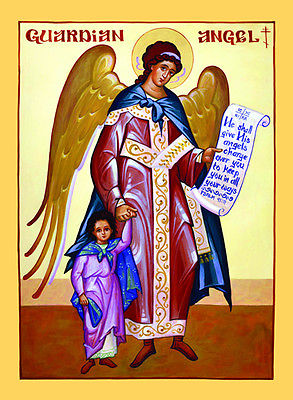
guardian angelOxymoron is a great word. Too bad so few people understand what it means.

In America, at least, nine times out of ten you will hear it misused. Most folks seem to think it means a “contradiction in terms.”

One common example is “military intelligence.” Perhaps I am sensitive to it, being a veteran, but I would enjoy never again hearing people guffaw at that term.

In actuality, the oxymoron is a much more sophisticated rhetorical device.

An oxymoron is the combination of two incongruous words or images to create a unique effect. Often it hints of irony. For example, “she was a poor little rich girl.”

Further examples suggest complex circumstances. “Cruel kindness” and “making haste slowly,” are quite intriguing. The context would provide greater illumination, but these phrases suggest a painful treatment given in love . . . and urgency, tempered by caution.

Another example, apropos for an age in which zombies have become so popular, is the phrase “living death.” Reanimated corpses aside, this oxymoron is extremely powerful.

It evokes the sense of a person’s life having become deathlike in some way. Perhaps it is physical, emotional, psychological or spiritual. In any case, drawing together life and death in this epigram is provocative.

In his most vulnerable work, A Grief Observed, C.S. Lewis describes humanity itself as an oxymoron. Most certainly, he uses the word appropriately.

Sometimes, Lord, one is tempted to say that if you wanted us to behave like the lilies of the field you might have given us an organization more like theirs. But that, I suppose, is just your grand experiment. Or no; not an experiment, for you have no need to find things out. Rather, your grand enterprise. To make an organism which is also a spirit; to make that terrible oxymoron, a ‘spiritual animal.’

Lewis’ point is well taken. That the Creator of the cosmos would make flesh bound human beings with a spiritual nature that allows him to describe as made in his own image, is incomprehensible.

Animals are animals. That is what modern secularists argue that we are. Yet it is evident to the vast majority of humans throughout all times and cultures, that we are unlike beasts. For we possess a spirit. And we are, accordingly, that unique thing among all beings—a spiritual animal.

So peculiar are we in the universe that even the angels themselves—spirits, never “animals”—are curious about the nature of our redemption. As Peter writes in his first epistle:

Concerning this salvation, the prophets who prophesied about the grace that was to be yours searched and inquired carefully, inquiring what person or time the Spirit of Christ in them was indicating when he predicted the sufferings of Christ and the subsequent glories.

It was revealed to them that they were serving not themselves but you, in the things that have now been announced to you through those who preached the good news to you by the Holy Spirit sent from heaven, things into which angels long to look.

From one oxymoron to another, I hope that this new year brings you many blessings. Most especially, I pray that if you have not already experienced this wondrous miracle which amazes even the angels of heaven . . . that you would come to know God’s love.

Sanctified Languages

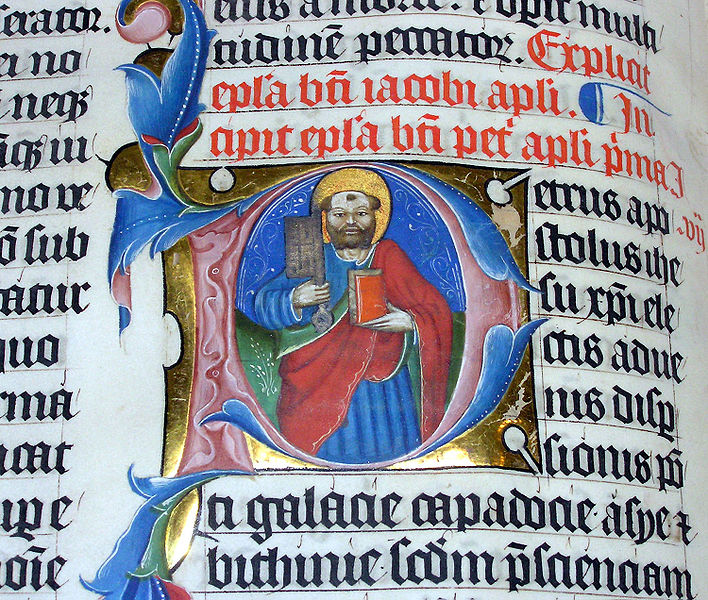
petrusOne major difference between Christianity and Islam is their view of language. For the Muslim, Arabic is the language by which the Quran is to be known. For the Christian, there is a great impulse to translate the Scriptures into every tongue in the world.

In Islamic worship, the Quran is properly recited only in Arabic, whether the individual understands Arabic or not. This is similar to the way that most Hindus chant mantras in ancient Sanskrit.

A parallel can be drawn with the medieval practice in the Western branches of Christianity where Latin continued to be used for worship, even after it lost its role as the shared language.

The fact, however, that the Bible had even been translated into Latin was due to the Christian desire to make God’s word accessible to all people. Jerome, an early Christian theologian, became a linguistic scholar with the goal of translating the Vulgate, into the common language of his day.

It would have been a great shock to him, and to Pope Damasus I who commissioned his effort, to see the Latin so ingrained in the church’s usage that their heirs in leadership lost sight of the desire to bring the Lord’s words directly to the people so that all could understand them.

One of the great successes of the Reformation was the successful translation and distribution of the Scriptures into the vernacular of various language groups. Martin Luther’s translation, in fact, standardized the German language which had evolved into several different dialects.

Coincidentally, Lutherans have remained at the forefront of Bible translation, and Lutheran Bible Translators continue that vital work today. They currently have twenty-two Bible translations in process. LBT works in conjunction with Wycliffe Bible Translators, which is an even larger organization.

C.S. Lewis delivered a lecture at the University of London entitled “The Literary Impact of The Authorised Version.” In one portion he addressed the influence of the King James translation on the English language. While not nearly so pronounced as Luther’s on German, it is measurable.

The history of the Authorised Version has been told so often that I will not attempt to re-tell it, and its beauties praised so lavishly that I will not praise them. Instead, I will proceed at once to its influence as an English book. I shall attempt to define that influence, for I think there has been misunderstanding about it and even a little exaggeration.

Lewis’ argument is that the Bible has a profound influence on English literature, the particular translation, less so.

Ideally, all Christians would understand Hebrew and Greek, and be able to read the Scriptures in their original languages. However, there is no stigma in reading a translation. In fact, there are small pockets of people who do not understand the history of the Bible who believe that one particular translation (i.e. the King James Version) is the only authoritative text.

Sadly, I once saw an advertisement in a newspaper inviting worshipers that read: “Are you tired of people changing the Authorized Version of God’s Word with Greek and other languages? If so, come and join us at . . .”

Fortunately, the vast majority of Jesus’ disciples celebrate the translation of God’s word of life into every language spoken today.

Meanwhile, memorization of the Quran in Arabic (even when that is not the reciter’s actual language) remains highly regarded in Islam. Arabic has been regarded as so holy, in fact, that there was great reluctance to contaminate the Quran by using a printing press.

During the Ottoman Empire, until 1729, printing anything in Arabic was a crime. Somewhat ironically, the first printing utilizing Arabic movable type was done by Pope Julius II in the first decade of the sixteenth century. It was created for the benefit of Christians living in Arabic lands.

To provide a powerful illustration of a Christian validation of the authentic inspiration and power of God’s words—in any language—we turn once again to the German reformer.

Since it becomes Christians then to make good use of the Holy Scriptures as their one and only book and it is a sin and a shame not to know our own book or to understand the speech and words of our God, it is a still greater sin and loss that we do not study languages, especially in these days when God is offering and giving us men and books and every facility and inducement to this study, and desires his Bible to be an open book. . . .

In proportion then as we value the gospel, let us zealously hold to the languages. For it was not without purpose that God caused his Scriptures to be set down in these two languages alone—the Old Testament in Hebrew, the New in Greek. Now if God did not despise them but chose them above all others for his word, then we too ought to honor them above all others. St. Paul declared it to be the peculiar glory and distinction of Hebrew that God’s word was given in that language, when he said in Romans 3, “What advantage or profit have those who are circumcised? Much indeed. To begin with, God’s speech is entrusted to them. . . .”

Similarly, the Greek language too may be called sacred, because it was chosen above all others as the language in which the New Testament was to be written, and because by it other languages too have been sanctified as it spilled over into them like a fountain through the medium of translation. (Martin Luther, “To the Councilmen of Germany”).

_____

The image above is an illuminated “P” which begins the name Petrus (Peter). The manuscript is displayed in Malmesbury Abbey in England, but was originally transcribed in Belgium circa 1400.

Similes & Metaphors

agdeiSimiles are wonderful literary tools. Being able to compare two dissimilar things in a way that brings out subtle nuances and insights is quite enjoyable.

Here are a couple of examples off the top of my head. (I don’t pretend others haven’t written these things, but I didn’t plagiarize them.).

A politician is like a weathervane.

Arguing theology is like having indigestion.

Disliking Narnia is like hating a feast.

Metaphors, of course, are far more powerful than similes. When we consider a metaphor we are pondering how two different things actually share some fundamental quality.

Comprehending metaphors requires the ability to think abstractly. A child—confined to a world of concrete concepts—cannot begin to think of their nation as a “motherland” or “fatherland,” as the case may be. Yet, those are powerful nurturing and bonding words that countless patriots have embraced throughout the centuries.

A simile might say “our country is like a family.” A metaphor suggests far more. In this case, it might convey that one’s allegiance to their nation should exceed their loyalty to their biological kin.

Nowhere is the magnificence of metaphors more manifest than in the way we talk about God. One of the most famous biblical passages is a straight forward example. “God is love” (1 John 4:8).

Jesus the Christ said of himself, “I am the Way, the Truth and the Life” (John 14:6). He also called himself the “Light of the world. Whoever follows me,” he added, “will not walk in darkness, but will have the light of life” (John 8:12).

It is a sad thing when a symbol loses its meaning. There is a prime example of that phenomenon in Oxford. And you can see it in the sign that hangs above a pub frequented by the Inklings.

No, not the Eagle and Child, which they affectionately referred to as the Bird and Baby.

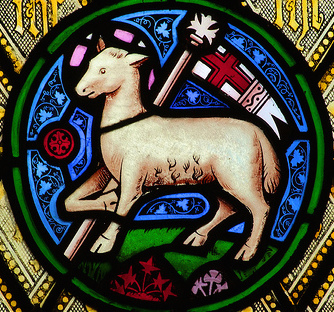
After renovations to the Eagle and Child eliminated their privacy, the writers transitioned across the street to the Lamb and Flag. Both pubs trace their history back to the seventeenth century, and the latter is actually owned by St. John’s College. (It’s profits fund student scholarships.) In a 1963 letter, Lewis colorfully described the move thusly:

Mon 11 March it is. But note that our causeries de lundi are now permanently transferred to the Lamb & Flag. We were sorry to break with tradition, but the B & B had become too intolerably cold, dark, noisy, and child-pestered.

Sadly, when many people look at the Lamb on the pub’s sign, they fail to recognize it’s significance. The lamb carrying a cross-emblazoned banner is nothing other than the Agnus Dei, the Lamb of God.

What, some may wonder, is the Lamb of God? The better question is “who” is the lamb. The symbol represents Jesus Christ himself. It hearkens to the declaration of John the Baptizer as Jesus approached the Jordan: “Behold, the Lamb of God, who takes away the sin of the world!” (John 1:29).

To understand what it means to say “Jesus is the Lamb,” requires two things. First, a recognition that it is more than a simile; it is not simply that he possesses some of the attributes we would naturally associate with a lamb, such as gentleness. The second requisite is that we understand something about the Jewish sacrificial system.

For, Jesus being the Lamb of God means nothing less than that he is the true, complete, ultimate and final sacrifice for the sins of humanity.

And that is a wonder definitely worth pondering during this Christmas season.

Bill Cosby Redux

Bill & CamilleIn light of recent revelations, my daughter urged me to delete my recent post about Bill Cosby.

As the extensive evidence of a sordid past have been coming to light, albeit accusations rather than substantiated facts, the propriety of that original post falls into question.

For the time being, I am disposed to leaving it up. For several reasons. I could say one is the notion of “innocent until proven guilty,” but that’s not true. Despite statutes of limitations, the accumulating evidence, quite sadly, appears indisputable.

On the subject of innocence, I admit to confused sentiments. As a Christian, who accepts the historic doctrine of “original sin,” I confess at every worship service that I too am a hopeless sinner, in dire need of God’s grace and mercy. What’s more, as a Christian who believes we cannot earn forgiveness, I point not to my own ragged good works, but rely wholly on the grace—the undeserved love—of God.

C.S. Lewis recognized that mercy is the only solution for our guilt. In “The Humanitarian Theory of Punishment,” he wrote these words:

The essential act of mercy was to pardon; and pardon in its very essence involves the recognition of guilt and ill-desert in the recipient. If crime is only a disease which needs cure, not sin which deserves punishment, it cannot be pardoned.

I am quite conscious of my own deep need for pardon. Thus, I am ever wary of condemning those whose heart I cannot know.

The second reason for my reticence in removing this post, is that much of it remains true. The Bill Cosby who offered our family genuine laughter and wholesome entertainment, was apparently not identical with the real man.

But then I pause to wonder how many celebrities are truly consistent with their public persona? And, in light of the fact that we all have our failures and sometimes grievous sins, why should we expect them to be transparent and vulnerable to greater emotional violence than they all already receive?

My comments below were written with the understanding I possessed two short months ago. They were heartfelt at that time, and they illustrate in a clear way how perception is not always reality. Perhaps they can serve as a sort of a caution to others who are prone to investing too much trust in people they do not genuinely know.

Another reason I am inclined to leave the post up for the time being, is that there may be a value in preserving the quality of the artist’s work, even when we have been disappointed by the artist himself.

As an example of this, during a sketch on the last episode of Saturday Night Live, Michael Che criticized the actor’s vile behavior, but ended his scripted “newscast” with a thought that I believe represents the view of many.

“I don’t know how to feel about [networks cancelling The Cosby Show] because I don’t know Bill Cosby, but Cliff Huxtable practically raised me. I love that dude, and the only thing he ever tried to sneak while people were asleep is a hoagie. So while I may never forgive Bill Cosby, hopefully someday I can forgive Dr. Huxtable.”

It’s that Bill Cosby, the idealized, honorable, ever-witty, and doting father, that I remind my wife of. And I remain flattered by that.

Meanwhile, I pray for Bill and Camille Cosby. I pray for the victims of his offenses. I pray for the victims of some of those very women who, in likely turn, have wounded others because of their own emotional and spiritual injuries.

Sin is powerful. It’s effects cascade from life to life. But sin and evil do not have the final word. That is left to the Word incarnate, who has redeemed this fallen world. The Lord who heals our wounds and offers the glorious promise that one day . . .

He will wipe away every tear from their eyes, and death shall be no more, neither shall there be mourning, nor crying, nor pain anymore, for the former things have passed away. (Revelation 21.4).

The World’s End

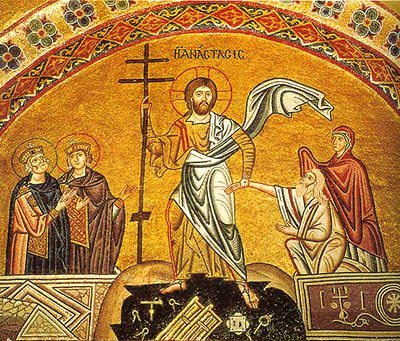
christ arisenMany years ago, while attending seminary, I was invited to preach at a Pentecostal congregation in my home town. One of the conversations I had that day taught me more about the importance of sound biblical preaching than every homiletics course I ever took (combined).

Lutherans, I must admit, are not big advocates of “end times” concerns. The reasons for this are far too complicated to address in a brief column now. Ironically, however, although we confess our confidence that Jesus “will come again to judge the living and the dead” every week, we seldom talk about the details of that arrival.

At the aforementioned service, I did preach on the second coming of the Messiah. And, to distill it down to a single message, I suggested that the Scriptures teach us to live in a sort of tension. We should live with a conscious awareness and urgency that the parousia could happen at any moment . . . and, prepare for the future as though the return of Christ (and subsequent new creation) will not take place for another thousand years.

Shortly after the service ended, a woman approached me and shared how she “wished she could have heard that sermon thirty years earlier.” She related how different her life would have been.

She said in her youth she had longed to attend college, but she never did . . . because she knew Jesus would return before she graduated.

When she and her husband bought a home, she wished the property had some fruit trees, but she never planted any . . . because she knew Jesus would return before they bore fruit.

Saddest of all, she told me that when her children were born, she never raised them to become mature adults . . . because she knew Jesus would return before they grew into the men and women they became.

Nearly forty years later I am more convinced than ever that living with the “tension” I described is the proper course of disciples of Jesus.

So, how does this work out in reality?

While a few of us know people who become so preoccupied with the end of the world that their lives go askew, it’s the other error to which most of us are prone. We tend to think that the return of Christ bears little or no connection to the age in which we live.

We are so preoccupied with our present responsibilities and dreams that we invest precious little time in contemplating how these things will matter in the scope of eternity.

I highly recommend to you a recent article on this subject that will remedy this dilemma. Andrée Seu Peterson, a gifted writer I have commended before at Mere Inkling, reminds us all of the fact that Jesus’ second coming may be just around the corner. Andrée writes:

Who would have thought that after centuries of modernity, beheading would once again be a means of persecuting the people of God? Does it not send a chill up our spine to read all about it in Revelation 20:4 even as we hear about it on CNN? “Then I saw thrones, and seated on them were those to whom the authority to judge was committed. Also I saw the souls of those who had been beheaded for the testimony of Jesus.”

C.S. Lewis famously described two errors people fall into when considering the occult. Either we get caught up in unhealthy expressions of the supernatural, or we dismiss the reality of demons and their destructive agenda altogether.

I believe humanity’s impulsive nature makes us vulnerable to the same extremes when it comes to the final days of the world we call home.

I strongly encourage you to read Peterson’s article here, as a timely reminder that you were created for far more wonderful and amazing things than we can ever know in this life. Even the best this world offers is but a hint and a foretaste of what awaits those who trust in God.

A Symbol of Death & Life

nن – Arabic letter nun (n)

You may never have seen this symbol or, if you did, its foreign context may not have impressed it on your mind.

This Arabic letter is now being used to mark people for persecution and death. Yet, at the very same moment, this same symbol is also being transformed into an emblem that stands for courage and life.

The Islamic State has martyred or enslaved many Christians. Survivors have had all of their property stolen from them and been marked for death if they do not reject Christ and embrace the Muslim religion.

They have gone throughout the neighborhoods of their new conquests and placed this mark, the nun, on homes to mark them for evacuation or death. The “N” stands for “Nazarene,” referring to Jesus’ home town.

With the passage of time, we will likely see once again the truth proclaimed by Tertullian, that the blood of the martyrs is the seed of the church. In the meantime, everyone of good will (Christian, Jew, Muslim, Agnostic alike) should rally to the support of the suffering.

We do not yet know the magnitude of the atrocities committed by ISIS/ISIL. Like Nazi concentration camps, the complete story will not be revealed until the sites of the horror are liberated from their vile control. And, like the Mogen David (Star of David) which marked its bearers as Jews, the nun marks its bearers as Christians and targets of militant Islam.

C.S. Lewis recognized the horror of Nazism early on. In 1933 he wrote about the cruelty, and stupidity of Hitler’s attack on Judaism.

Did you see that [Hitler] said “The Jews have made no contribution to human culture and in crushing them I am doing the will of the Lord.” Now as the whole idea of the “Will of the Lord” is precisely what the world owes to the Jews, the blaspheming tyrant has just fixed his absurdity for all to see in a single sentence, and shown that he is as contemptible for his stupidity as he is detestable for his cruelty.

One can only imagine what Lewis would write about the leaders of Islamofascism today.

There are a number of organizations that support Christians currently experiencing violent persecution. None, however, approaches this work from the same perspective of Voice of the Martyrs. I wholeheartedly commend their labors to you.

They are currently offering shirts emblazoned with the letter nun. They are even more important as a witnessing tool, than as a fundraiser. Please read more about them here and share the link with your friends. Also, please take a few minutes to explore their website once you are there.

To boldly state “I am N” is to identify with the oppressed. It is to show the world you understand that each disciple of Jesus must be prepared to take up his or her own cross. Dying for one’s faith in Jesus is not a myth; it is a daily reality.

The ن symbol, intended as a mark of derision, humiliation and rejection, has assumed a new meaning. It has become a mark of hope, courage, and deliverance.

What the persecutors in Iraq and Syria intended to be a label of death has been transformed by the Holy Spirit and the faithfulness of Christians into a symbol of life.

A Caveat about Caveats

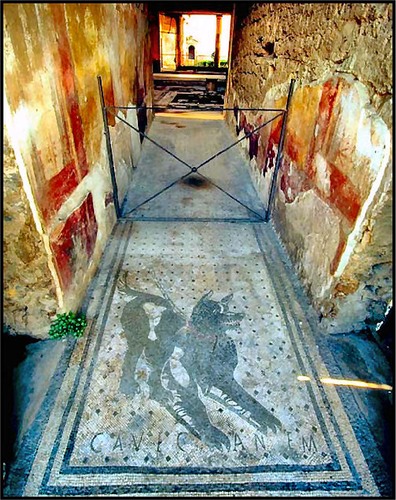
cave canemA caveat, most readers will know, is a warning. One of my favorite usages comes from ancient Rome, where many villa owners procured guard dogs to protect their property. Cave Canem–beware of the dog–became a common motif for entryway mosaics.

One of the most familiar caveats is caveat emptor—buyer beware. Not only is this warning well known, it is absolutely true. Without an express warranty, you may have little hope recouping your loss when something you purchase fails.

Caveats, however, need not infer that the subjects they refer to are dangerous.

For example, the guard dog may well be an affectionate “member of the family,” who warms up quickly, even to strangers who have been invited into the home. Likewise, the new car I’m contemplating purchasing may be ideal for me. Fairly priced, economical to drive, and not so dated in appearance that it shouts, “yes, I’m a grandpa.”

Caveats don’t mean “stay away.” They merely advise us all to think before we act. (And, as universal rules go, this is a very good one.) Caveats, and good parenting, remind us to read the “fine print” before signing anything.

I want to encourage all readers of Mere Inkling to use their God-given intelligence to evaluate what you read on these pages. In the same way, I hope you will all apply your God-instilled conscience to measure my words.

In light of this sincere desire, I encourage you to read the gentle caveats offered below.

General Caveats for Readers

What should readers of Mere Inkling keep in mind as they peruse these posts? First of all, there are a number of general considerations—applicable to everything each of us reads and hears.

1.  Understand the perspective of the writer. What are the assumptions and worldview of the person who wrote the piece? It can be hazardous to simply assume that a writer shares your own values—or even definitions. Many people would be shocked at the diversity of definitions for a word like “church” that roam the internet.

2.  Ensure we read what we think we did. By this I mean that we should reread sections that we find confusing or offensive. It may be we have misread what the author intended. (This is especially true when a writer seeks to play with the English language, and uses phrasing unfamiliar to our ear.) In cases where we have normally enjoyed the writing, but now find ourselves bothered by something, it is always good to ask the writer to clarify what they meant. More often than not, I’ve found this opportunity to elaborate dispels the problem.

3.  Reject the myth that anything you read is absolutely objective. Objectivity, except for mathematics, is essentially impossible. Our education, values, experiences and mood all affect the words we write. The best we can hope for in what we read—something Mere Inkling strives for—is personal honesty and fairness.

Mere Inkling Caveats

1.  Mere Inkling’s author is a fallen human being. By definition, that means that I am imperfect. Not all-knowing, nor always gracious. Imperfect though I am, I try my best to speak here in a forthright, considerate, modestly entertaining and, most importantly, a truthful way. When I fall short of that, feel free to write to me about it.

2.  I am a Christian. I certainly don’t apologize for this. Nor do I apologize for the wish of all disciples of Jesus that everyone might know the joy, forgiveness and peace that comes from abiding in the Vine (a metaphor for Jesus, as described in John 15).

3.  Your host at Mere Inkling is an evangelical Christian. This is a hazy adjective, often used in mutually contradictory ways. I apply it here to myself in the context of holding fast to the basic Christian truths, including the aforementioned desire of God that all people might come to him through his only begotten Son.

4.  I am a catholic Christian. Not a Roman Catholic (with a capital C), but catholic in the word’s creedal sense—a member of the one universal Church. As a catholic Christian, I subscribe to the ecumenical creeds, agreed upon as the fundamental doctrines of the faith during its earliest years. These include the Triune nature of God, the Incarnation miracle, and the atonement. Like my mentor, C.S. Lewis, here at Mere Inkling we focus on “Mere Christianity,” the common core of the faith. I consistently attempt to qualify my words on subjects where there is not a clear consensus.

Each of us has his individual emphasis: each holds, in addition to the Faith, many opinions which seem to him to be consistent with it and true and important. And so perhaps they are. But as apologists it is not our business to defend them. We are defending Christianity; not “my religion.” When we mention our personal opinions we must always make quite clear the difference between them and the Faith itself. (C.S. Lewis, “Christian Apologetics”).

5.  I am a Lutheran Christian. Again, I do not apologize. Lutherans understand we are only a small part of the “one holy catholic and apostolic faith.” Each denomination (indeed, each individual) possesses a distinctive interpretation of the Christian faith. We are free, of course, to associate with that community we believe follows God’s leading most faithfully. (It is a given that no community is without flaw, since no human being is.) I have written more on this aspect of my identity in the next point, and on the “Mercy” tab you will find at the top of the page.

6.  I am an evangelical Lutheran Christian. This is not a formal category, but means that I subscribe to historic Lutheranism as it has been taught and held since the Reformation, rather than some of the current expressions of “religion” that may be labeled Lutheran. In essence, this can be summarized in the “solas” of Lutheran doctrine.

Sola Scripture – Scripture Alone meaning that the Bible, the Jewish and Christian Scriptures, are the ultimate authority for determining true faith.

Sola Gratia – Grace Alone meaning salvation is an unearned gift of God, given not because we have earned it.

Sola Fides – Faith Alone meaning that God’s grace is apprehended not through wisdom, good works, or any means other than a simple trust in the promise. Ironically, this faith itself is also a gift of God.

7.  I am a pastor. While pastors with seminary educations do study Greek, Hebrew, Theology and assorted other subjects, we are not the same as what most people mean by the word “theologians.” Pastoral Theology is distinct from Systematic Theology. The former focuses on practical ministry to individuals, while the latter is most concerned with abstract matters. While I also possess a second graduate degree, my Master of Theology degree (much different than an M.A. in theology) was earned in the study of Early Church History. My concern remained the work of God among everyday human beings, rather than scholastic philosophy.

8.  While I never intentionally write anything with the goal of offending any reader, I recognize it is impossible to avoid all offense. (Even the least controversial prose is capable of offending.)

Allow me to illustrate how simple truths can elicit dramatically different responses, with two simple declarations.

God loves all people. This is true, and inoffensive. Most people today, and all orthodox (biblical) Christians would agree with the statement.

Not all people will go to heaven. This too is true. However, it provokes great outcries from many quarters, including some religious organizations that arise out of the Judeo-Christian tradition. Jesus himself offered “hard sayings” that elicited grumbling. John’s Gospel records a powerful account of this, occurring immediately after the Feeding of the Five Thousand.

When many of his disciples heard it, they said, “This is a hard saying; who can listen to it?” But Jesus, knowing in himself that his disciples were grumbling about this, said to them, “Do you take offense at this? . . . The words that I have spoken to you are spirit and life. But there are some of you who do not believe.” . . . “This is why I told you that no one can come to me unless it is granted him by the Father.” After this many of his disciples turned back and no longer walked with him.

C.S. Lewis referred to the alienating nature of some truths when he wrote the essay, “Cross-Examination.”

I believe that there are many accommodating preachers, and too many practitioners in the church who are not believers. Jesus Christ did not say “Go into all the world and tell the world that it is quite right.” The Gospel is something completely different. In fact, it is directly opposed to the world.

9.  I am an American. Again, no apologies. I applaud much of what this nation has valued and shared during its history. I regret many of the mistakes the United States has made, and continues to make. I recognize how fortunate I have been to live in a nation with access to educational and medical resources not available to all. I genuinely appreciate other cultures and have been privileged to live in Europe, Asia and the Pacific. The right I treasure most—and one I pray will be extended to all people—is freedom of religion.

10.  I welcome offline correspondence. I recognize many people are reluctant to post a comment on a blog, which is visible to the public. I also realize that some readers would appreciate privately offering a comment or posing a question. I welcome this, and encourage you to use the form below to write to me. I will respond from my personal email account and we can discuss sensitive matters in greater depth. I must say in advance, however, that I do not have the leisure time to aid with any research. Similarly, while I am happy to offer general pastoral advice, only a fool or con artist would presume to conduct serious counseling or therapy via email. (You need a local pastor or counselor for that.) That said, I do enjoy spirited and honest discourse, so d feel free to contact me.

← Back

Thank you for your response. ✨

_____

The picture at the top of the page comes from the entryway to the “House of the Tragic Poet” in Pompeii.