Civilized Savages

civilization-and-savageryWhat are the proper criteria for determining who is civilized? If you asked a score of people, you would probably end up with twenty different opinions.

In continuing my research about America’s first woman chaplain, I encountered an early American teaching resource that offered great insight into education during the early nineteenth century.

Some of it was quaint—“goats were made as profitable to the farmer as sheep.”

Some of it was insightful—“In America the Grecian architecture is prevailing, as it is better adapted than the Gothic to small buildings, and does not require splendid edifices to display its beauty.”

The text, Peter Parley’s Universal History, on the Basis of Geography, was used in schools and homes.

After finding confirmation of the point I was researching, I couldn’t resist skimming through the volume. Out of its myriad lessons, the one that got me thinking most seriously was a discussion of relative levels of civilization.

At the end of each lesson, several questions are posed. In this case:

Questions: What would you observe in traveling through other countries? What of people in a savage state? What of people in the barbarous state? What of people in the civilized state? What of people in the highest state of civilization?

Preceding these questions is the lesson proper, from which I now quote passages that correspond to the questions just listed.

In some countries the people live in huts built of mud or sticks, and subsist by hunting with bow and arrow. These are said to be in the savage state . . .

In some countries the people live in houses partly of stone and mud. They have few books, no churches or meeting-houses, and worship idols. . . . These are said to be in the barbarous state . . .

In some countries the inhabitants live in tolerable houses, and the rich have fine palaces. The people have many ingenious arts, but the schools are poor, and but a small portion are taught to read and write. . . . which may be called a civilized state.

In many parts of Europe, and in the United States, the people live in good houses; they have good furniture, many books, good schools, churches, meeting-houses, steamboats and railroads. These are in the highest state of civilization.

It appears that Peter Parley (the pseudonym of Samuel Griswold Goodrich) considered two factors to be the clearest measures of civilization—the quality of a society’s domiciles, and the access to learning and increase in literacy.

These are not inappropriate measures, although the latter dwarfs the former in significance.

I realize these lessons are intended for elementary education, so I don’t fault Goodrich for failing to address the subject from a more philosophical or mature angle. Nevertheless, I could not help wondering whether the societies that have attained the “highest state of civilization” are truly the least barbaric.

In some ways, the societies that have attained the loftiest technological levels might also be considered among the most savage.

I don’t have the time or inclination to pursue this thought any further in Mere Inkling, but I offer it to you. Some readers will agree that it merits reflections and others will consider it absurd.

Before moving on the Inklings, though, I wish to share a pertinent bit of wisdom from economist Thomas Sowell. “Each new generation born is in effect an invasion of civilization by little barbarians, who must be civilized before it is too late.”

C.S. Lewis thought, and wrote, a great deal about civilization. In English Literature in the Sixteenth Century there is a delightful remark, made in passing, that it is possible to retreat from civilization, once attained.

From the varied excellence of the fourteenth century to the work of the early sixteenth it is a history of decay; so that in turning from the Scotch poetry of the age to the English we pass from civilization to barbarism.

I end with a longer citation from C.S. Lewis which connects uniquely with the mindset with which Goodrich penned his textbook. Lewis also affirms true education, and the advancement of humanity towards that for which it was created, as the genuine mark of civilization.

One of the most dangerous errors instilled into us by nineteenth-century progressive optimism is the idea that civilization is automatically bound to increase and spread. The lesson of history is the opposite; civilization is a rarity, attained with difficulty and easily lost. The normal state of humanity is barbarism, just as the normal surface of our planet is salt water. Land looms large in our imagination of the planet and civilization in our history books, only because sea and savagery are, to us, less interesting.

And if you press to know what I mean by civilization, I reply “Humanity,” by which I do not mean kindness so much as the realization of the human idea. Human life means to me the life of beings for whom the leisured activities of thought, art, literature, conversation are the end, and the preservation and propagation of life merely the means. That is why education seems to me so important: it actualizes that potentiality for leisure, if you like for amateurishness, which is man’s prerogative.

You have noticed, I hope, that man is the only amateur animal; all the others are professionals. They have no leisure and do not desire it. When the cow has finished eating she chews the cud; when she has finished chewing she sleeps; when she has finished sleeping she eats again. She is a machine for turning grass into calves and milk—in other words, for producing more cows. The lion cannot stop hunting, nor the beaver building dams, nor the bee making honey. When God made the beasts dumb He saved the world from infinite boredom, for if they could speak they would all of them, all day, talk nothing but shop. (“Our English Syllabus”).

_____

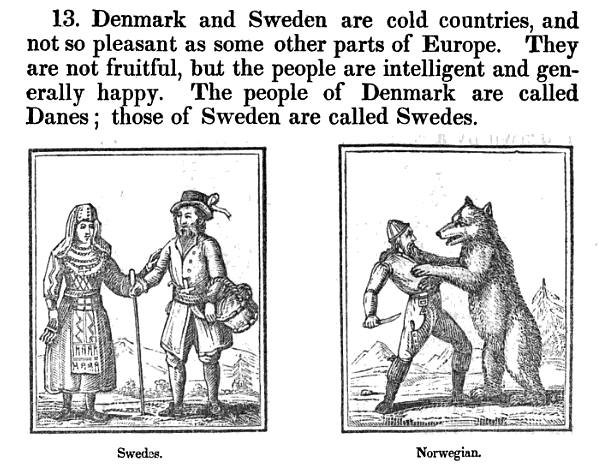
An illustration from the book, which taught generations of Americans that the heirs of the Vikings were still a picturesque and virile people.

scandinavians

The Lion’s Command

crowned lionI recently had a few free moments while waiting for a flight, and I decided to revisit that enjoyable childhood treasure, Aesop’s Fables. It had been many years since I explored them, and I found the following tale particularly entertaining.

Aesop may have been a fable himself. Aristotle refers to him as an historical figure, but since Aesop supposedly lived three centuries before the philosopher’s day, he had already transformed into a legend.

Plutarch describes Aesop’s death as occurring when he was thrown from a cliff during a failed diplomatic mission. Presumably after insulting the city of Delphi, they accused him of stealing some temple items. (Perhaps he tried to be too witty for his own good.)

Whether he was an actual person or not, the anecdotes that have accreted around his name have entertained countless generations. On now to the story that captured my imagination.

The Kingdom of the Lion

The beasts of the field and forest had a Lion as their king. He was neither wrathful, cruel, nor tyrannical, but just and gentle as a king could be. During his reign he made a royal proclamation for a general assembly of all the birds and beasts, and drew up conditions for a universal league, in which the Wolf and the Lamb, the Panther and the Kid, the Tiger and the Stag, the Dog and the Hare, should live together in perfect peace and amity.

The Hare said, “Oh, how I have longed to see this day, in which the weak shall take their place with impunity by the side of the strong.” And after the Hare said this, he ran for his life.

The Moral: Saying something does not make it so. (Aesop’s Fables).

Although Aesop’s Lion bears a resemblance to C.S. Lewis’ own vision, he is no Aslan. Both are the kings of their respective domains. Both dictate that there be peace among their subjects.

Aslan alone, though, can make this pacific vision reality. And, because sin had entered Narnia, he had to do it by creating a new Narnia. The amazing story of the conclusion of the temporary and inauguration of the eternal is told in The Last Battle. The original plan, recorded in The Magician’s Nephew, was that the creatures live in divine harmony.

The chosen beasts who remained were now utterly silent, all with their eyes fixed intently upon the Lion. The cat-like ones gave an occasional twitch of the tail but otherwise all were still. For the first time that day there was complete silence . . .

The Lion, whose eyes never blinked, stared at the animals as hard as if he was going to burn them up with his mere stare. And gradually a change came over them. The smaller ones— the rabbits, moles, and such-like— grew a good deal larger. The very big ones— you noticed it most with the elephants— grew a little smaller. Many animals sat up on their hind legs. Most put their heads on one side as if they were trying very hard to understand.

The Lion opened his mouth, but no sound came from it; he was breathing out, a long, warm breath; it seemed to sway all the beasts as the wind sways a line of trees. Far overhead from beyond the veil of blue sky which hid them the stars sang again; a pure, cold, difficult music. Then there came a swift flash like fire (but it burnt nobody) either from the sky or from the Lion itself, and every drop of blood tingled in the children’s bodies, and the deepest, wildest voice they had ever heard was saying:

“Narnia, Narnia, Narnia, awake. Love. Think. Speak. Be walking trees. Be talking beasts.”

Such love and harmony would not last. Just as in our own world, selfishness and idolatry came to reign. Lewis recognized sin’s corruption cannot be bandaged. It needs to be excised. A broken vessel can be repaired, but it can never regain the purity of its origin without miraculous intervention.

That’s why Christians—who believe in the “resurrection of the (physical) body”—know that these restored bodies will be new.

There are heavenly bodies and earthly bodies, but the glory of the heavenly is of one kind, and the glory of the earthly is of another. There is one glory of the sun, and another glory of the moon, and another glory of the stars; for star differs from star in glory.

So is it with the resurrection of the dead. What is sown is perishable; what is raised is imperishable. It is sown in dishonor; it is raised in glory. It is sown in weakness; it is raised in power. It is sown a natural body; it is raised a spiritual body. . . . The first man [Adam] was from the earth, a man of dust; the second man [Christ] is from heaven.

As was the man of dust, so also are those who are of the dust, and as is the man of heaven, so also are those who are of heaven. Just as we have borne the image of the man of dust, we shall also bear the image of the man of heaven. (First Corinthians 15:40f).

Just as Aesop’s lion commanded, and Lewis’ Aslan ordained, the Messianic age will one day arrive. And when it does, “The wolf and the lamb shall graze together; the lion shall eat straw like the ox, and dust shall be the serpent’s food” (Isaiah 65:25).

The Moral: When God says something, that does make it so.

Up in Smoke

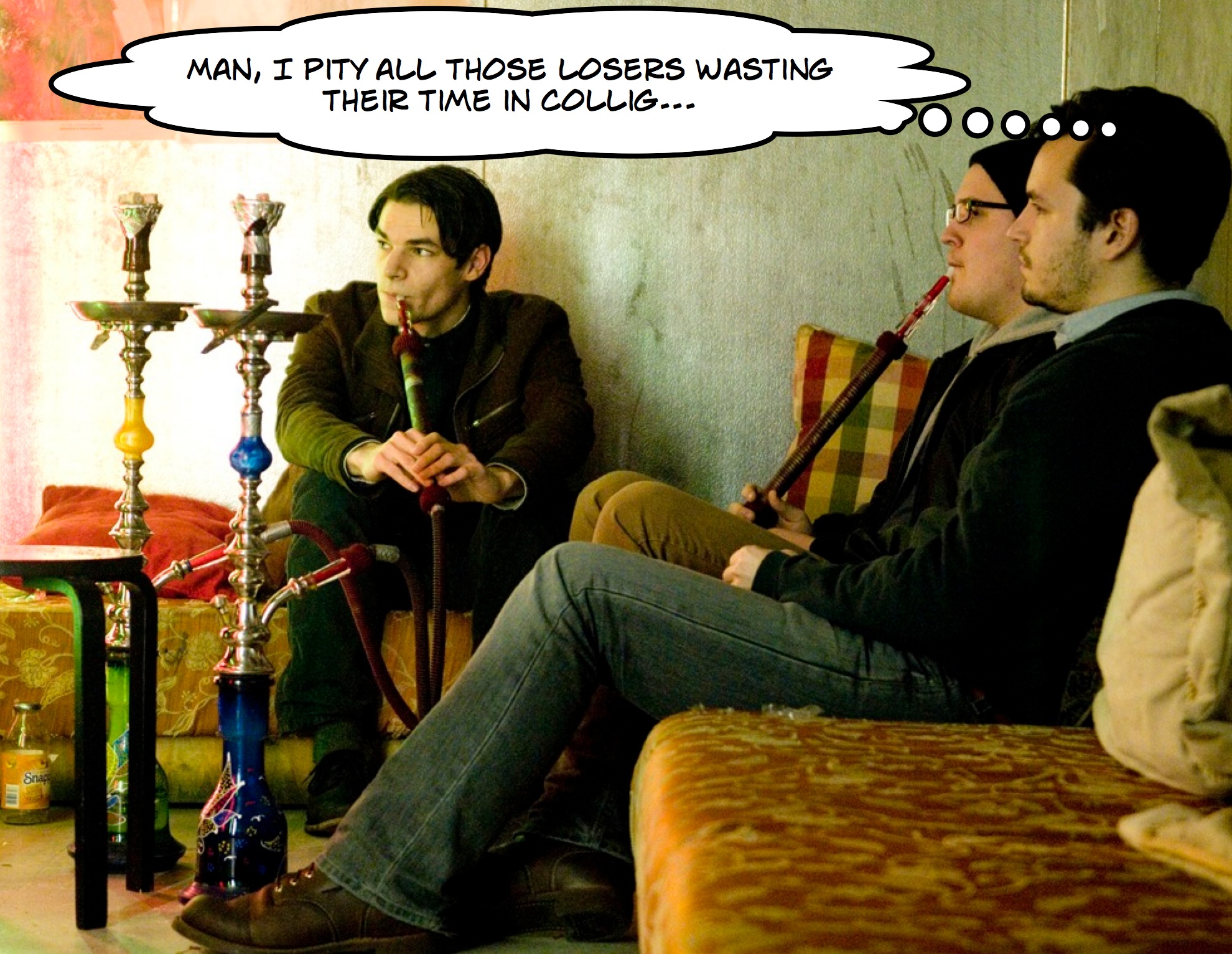
hookahsI have the misfortune of living in one of the two states that has legalized the growing, distribution, use and promotion of marijuana.

The fauna and (natural) flora of Washington are scenic beyond compare. But in order to enjoy them, I am forced to live in a location where what was inconceivable a decade ago has become commonplace.

This week, in my small town of nine thousand, they opened our first “hookah lounge.” Although the owner’s initial license only allows the sale and on premises use of various tobaccos and other weeds, it’s no secret the owner is eager to expand his offerings.

My purpose here is not, however, to debate the merits of legalizing cannabis. I want to share with you the utterly apropos name of this hookah palace. It is called “Up in Smoke.”

While I’m sure the entrepreneur thought he concocted a brilliant play on words for his establishment, I cannot help but shake my head at the irony.

After all, what does the phrase actually mean? The expression isn’t truly an “idiom,” since the words are quite straight forward. It means what it says, referring to something of potential value that has been burned and is now lost, spoiled or wasted. Of course, the last of those synonyms also has another connection to the world of drugs.

I suspect the actual meaning of the phrases pass right over the head of the owner. He certainly misses the irony, or he would not adorn his establishment with that moniker.

I assume the purveyor of lung destroying inhalants is consciously referencing the 1978 film by this name, that glorifies the drugged induced stupors of Cheech and Chong. (Not a pinnacle of cinematic achievement.)

The saddest thing about using drugs for “recreation,” or distraction from the responsibilities of life, is that it often results in lives going up in smoke. While marijuana itself is apparently used “recreationally” by many successful people, with little negative impact, that’s far from true for all who “inhale.”

As I try to recall every individual I’ve personally known who used the drug, I’m unable to think of a single person who stopped there and did not at least experiment with some other drug. From my subjective experience, it definitely proved to be a “gateway” drug.

While none of these acquaintances became what would traditionally be labeled an “addict,” I can think of several tremendously talented and gifted people who never lived up to their potential. And I attribute at least part of that regret to being distracted from school and employment as young adults.

Similarly, of all of the people I’ve counseled regarding drug-related struggles during the past three decades, I’m hard-pressed to recall a single one who did not begin his or her narcotic journey with the ubiquitous weed.

Drugs, of course, are not the only diversions that cause us to miss out on the full experience that life offers. As C.S. Lewis wrote:

We are half-hearted creatures, fooling about with drink and sex and ambition when infinite joy is offered us, like an ignorant child who wants to go on making mud pies in a slum because he cannot imagine what is meant by the offer of a holiday at the sea. We are far too easily pleased. (The Weight of Glory)

I’m not casting stones here. I too waste far too much time and energy with fruitless distractions. In doing so, I watch part of my own life go up in smoke. Still, I doubt I’ll ever experience the slightest temptation to waste the briefest moment of my life . . . in an ill-named hookah den.

Interplanetary Life

death valley stars

How many galaxies exist out there? How many stars? How many planets? Billions upon billions, apparently.

Of all of those myriad worlds, how many boast life?

C.S. Lewis pondered that subject in an essay entitled “Religion and Rocketry.” He said that either result—an absence of life, or an abundance of living creatures throughout the cosmos—can be used by atheists to deny the existence of our Creator.

In my time I have heard two quite different arguments against my religion put forward in the name of science. When I was a youngster, people used to say that the universe was not only not friendly to life but positively hostile to it.

Life had appeared on this planet by a millionth chance, as if at one point there had been a breakdown of the elaborate defenses generally enforced against it. We should be rash to assume that such a leak had occurred more than once. Probably life was a purely terrestrial abnormality. We were alone in an infinite desert. Which just showed the absurdity of the Christian idea that there was a Creator who was interested in living creatures.

But then came Professor F.B. Hoyle, the Cambridge cosmologist, and in a fortnight or so everyone I met seemed to have decided that the universe was probably quite well provided with habitable globes and with livestock to inhabit them. Which just showed (equally well) the absurdity of Christianity with its parochial idea that Man could be important to God.

Lewis, brilliant and honest, then predicts the future. Believers and cynics alike, he says, will seek to interpret all new data in a fashion that proves their own, preexisting beliefs.

This is a warning of what we may expect if we ever do discover animal life (vegetable does not matter) on another planet. Each new discovery, even every new theory, is held at first to have the most wide-reaching theological and philosophical consequences.

It is seized by unbelievers as the basis for a new attack on Christianity; it is often, and more embarrassingly, seized by injudicious believers as the basis for a new defence.

Fascinating as these comments are, they merely represent Lewis’ introduction to the subject. The heart of his concern is this—what would it mean if we should one day encounter alien beings created by God on a distant world?

In a moment I’ll share with you one of the most provocative thoughts Lewis expresses in this essay, but first take a moment to watch this amazing reminder of the vastness of our universe and the power of its Creator.

A video presentation like this can leave us feeling rather small, lost in the abyss of an immeasurable vastness. Or, it can inspire us. It can baptize us with an increased appreciation for the majesty of the One who loved each of us so profoundly that he sent his only begotten Son into the world to redeem us from destruction. I hope your reaction is the latter.

I promised another fascinating observation from Lewis, and here it is. He poses the question of precisely what might transpire if humanity encounters another sentient race. His Christian interpretation may shock some readers, but I believe he is right.

It sets one dreaming—to interchange thoughts with beings whose thinking had an organic background wholly different from ours (other senses, other appetites), to be unenviously humbled by intellects possibly superior to our own yet able for that very reason to descend to our level, to descend lovingly ourselves if we met innocent and childlike creatures who could never be as strong or as clever as we, to exchange with the inhabitants of other worlds that especially keen and rich affection which exists between unlikes; it is a glorious dream.

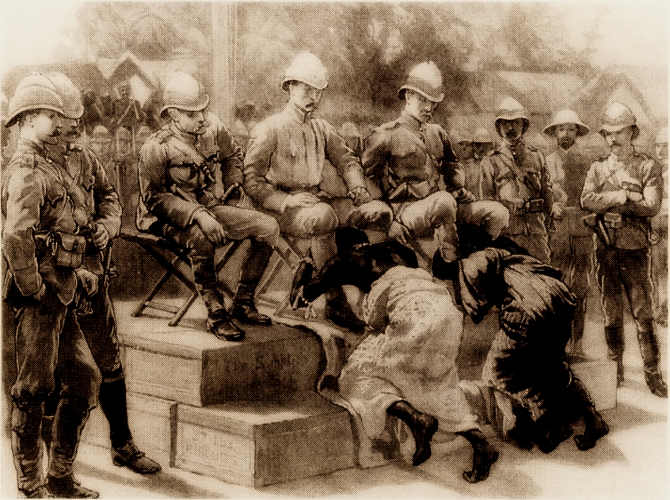
But make no mistake. It is a dream. We are fallen. We know what our race does to strangers. Man destroys or enslaves every species he can. Civilized man murders, enslaves, cheats, and corrupts savage man. Even inanimate nature he turns into dust bowls and slag-heaps. There are individuals who don’t. But they are not the sort who are likely to be our pioneers in space.

Our ambassador to new worlds will be the needy and greedy adventurer or the ruthless technical expert. They will do as their kind has always done. What that will be if they meet things weaker than themselves, the black man and the red man can tell. If they meet things stronger, they will be, very properly, destroyed.

Lewis continues, addressing related themes in this amazing work that seems more prescient each year. He next compares our encounters with fallen, and unfallen races. I highly commend the essay, which appears in The World’s Last Night and Other Essays.

If you prefer a fictional consideration of these same topics, I encourage you to read C.S. Lewis’ Cosmic Trilogy (Out of the Silent Planet, Perelandra, and That Hideous Strength).

_____

Appreciation goes to a retired USAF chaplain colleague of mine, Chuck McGathy, for bringing this Hubble video to my attention.