C.S. Lewis & Iran’s Nuclear Program

Connecting C.S. Lewis to the pursuit of nuclear weapons by Iran’s mullahs admittedly sounds like a protracted stretch. Yet the current conflict between Iran and Israel does have one astonishing element that does link the great Oxbridge professor with the conflict.

If you’re familiar with Lewis’ writings, you might logically assume the connection relates to his writing on nuclear weapons. After all, in 1948 he wrote an essay entitled “On Living in an Atomic Age.” The matter is even more acute since we moved from the era of relatively minuscule A-bombs into a time when humanity’s H-bombs, employing fusion rather than mere fission, are thousands of times more deadly.

Lewis discusses some interesting philosophical (and theological) questions in his article. He begins by placing the question within the context of our inherent physical mortality. He writes, “do not let us begin by exaggerating the novelty of our situation.”

Believe me, dear sir or madam, you and all whom you love were already sentenced to death before the atomic bomb was invented: and quite a high percentage of us were going to die in unpleasant ways. . . .

It is perfectly ridiculous to go about whimpering and drawing long faces because the scientists have added one more chance of painful and premature death to a world which already bristled with such chances and in which death itself was not a chance at all, but a certainty.

Don’t let the stoic beginning of his thoughts deter you from reading the essay itself, because C.S. Lewis does not leave us despairing. On the contrary, he offers hope and practical advice for maximizing the meaning of our lives. 

Although C.S. Lewis lived into the beginning of the MAD (Mutually Assured Destruction) era, he chose not to inject himself into political subjects, lest it detract from his advocacy for the simple Gospel.

Nevertheless, the brief note “C.S. Lewis and Nuclear Weapons,”penned forty years ago by a “peace activist” pastor, conjectures on what the author’s opinion may have been. It is thought-provoking, especially in mentioning a possible link between nuclear destruction and the “deplorable word” referred to in The Chronicles of Narnia. 

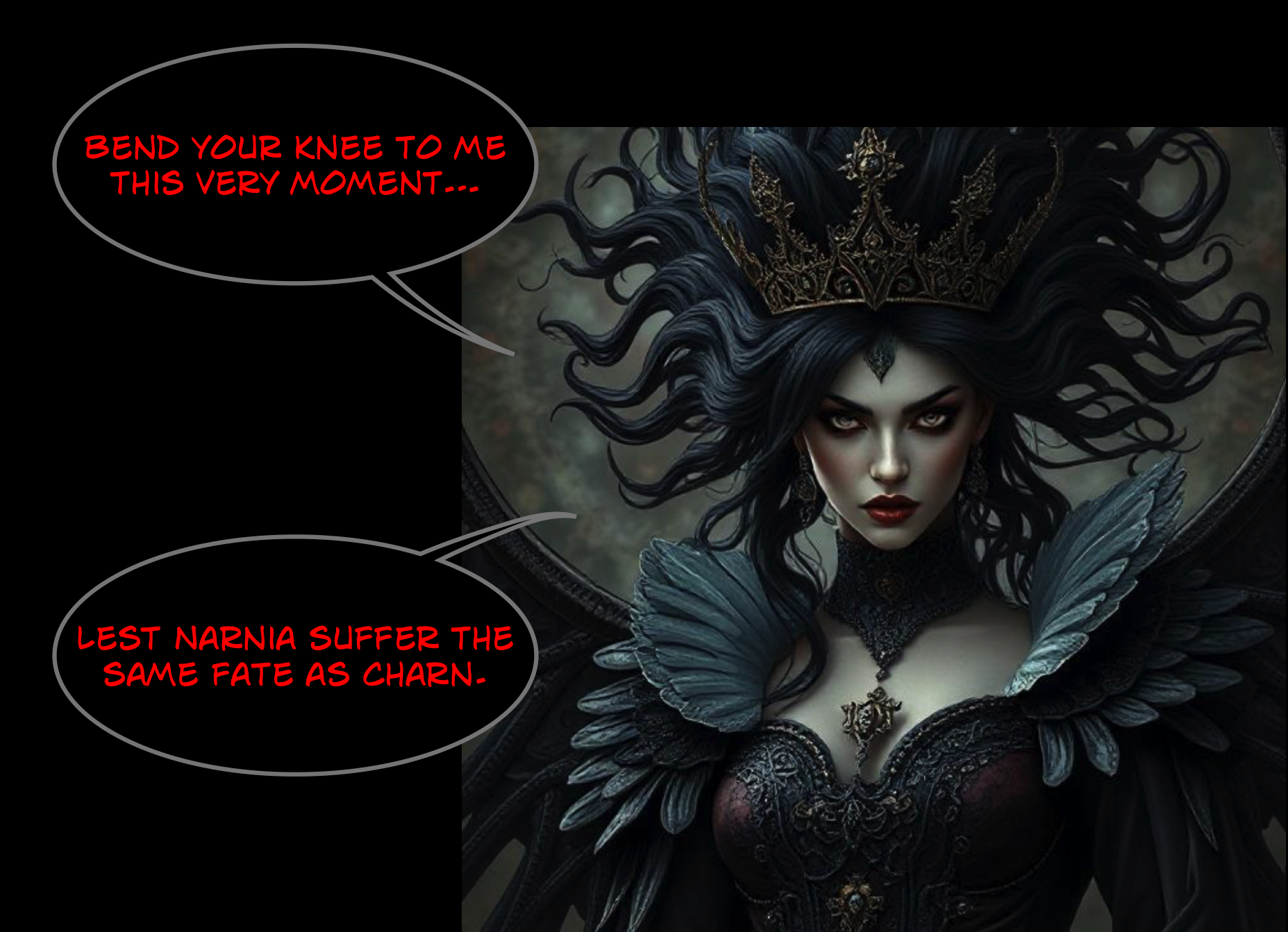
In The Magician’s Nephew, Lewis’ child protagonists encounter a witch queen on the devasted world of Charn. Queen Jadis, when denied the power to rule over the planet, chose to invoke a curse that destroyed every living thing other than herself. “Then I spoke the Deplorable Word. A moment later I was the only living thing beneath the sun.”

While Lewis does not elaborate on the nature of the destructive nature of this most deplorable of powers, Aslan does offer the following caution near the end of the novel.

It is not certain that some wicked one of your race will not find out a secret as evil as the Deplorable Word and use it to destroy all living things. And soon, very soon, before you are an old man and an old woman, great nations in your world will be ruled by tyrants who care no more for joy and justice and mercy than the Empress Jadis. Let your world beware.

So, what does this have to do with Iran & Israel?

Frankly, I find the connection to be especially odd. As you may know, military entities have a propensity to apply nicknames or euphemisms to various things, such as their weapon systems.

This is true for military campaigns or discrete operations. For example, the United States has employed labels like Operation Linebacker (in Vietnam) and Operation Crossroads (for 1946 nuclear weapons tests).

Sadly, Operation Enduring Freedom (in which I personally took part) did not live up to its name. Under the Taliban, Afghanistan has degenerated once again into a primitive morass which abuses its women and children.

A number of distinct operations have taken place during the current war between Iran (and its proxies) and Israel. Operation Rising Lion is Israel’s nomenclature for the various elements of their direct attack on Iran. One independent Jewish news site points out how Benjamin Netanyahu foreshadowed the campaign in May when he said, “the verse in the Tanach that most fits with an existential war? That’s our war – a war of existence . . . A people that rises like a lion, leaps up like the king of beasts.”

Every Israeli military operation has a name, and the Iran attack is now called Am K’lavi, or “a people like a lion” – the exact wording Netanyahu used six weeks ago. English-language publications now refer to the operation as “Rising Lion.”

While this is quite interesting, it is the name assigned to one of the subsidiary operations encompassed by Rising Lion which possesses a genuinely shocking designation.

One initial focus of Israel’s campaign was to eliminate the leading scientists leading Iran’s efforts to pursue a nuclear arsenal. They named this particular facet Operation Narnia.

When I first saw that, I immediately thought I must have misread the title. But no, they actually chose Narnia as the name for the assassinations. At that point I thought they might be referring to some other Narnia. Alas, it doesn’t appear they were alluding to the medieval Italian city whose name inspired C.S. Lewis.

The reason for choosing Narnia as the operation’s title was apparently an intentional reference to the amazing world where so many of us met the awesome and compassionate Aslan. In “‘Operation Narnia:’ How Israeli Intelligence Targeted Key Iranian Nuclear Scientists,” we read:

Israel kicked off Operation “Rising Lion” last Friday, launching a sweeping military assault that dealt a major blow to Iran’s leadership and nuclear infrastructure. . . .

In a surprising detail, the Jerusalem Post reports, the component of the mission aimed at Iran’s nuclear scientists was codenamed “Narnia” by Israeli forces – a reference to the fantasy realm, underscoring how bold and unlikely such a strike might have seemed before it was executed.

Another intriguing rationale for entitling the Operation after C.S. Lewis’ creation is even more provocative. The Substack blog Wardrobe Door proposes a supernatural consideration for the choice of “Narnia.”

The [Jerusalem] Post says the name “reflects the operation’s improbable nature, like something out of a fantasy tale rather than a real-world event.” One could also imagine it involved deep espionage tactics that may have had soldiers sneaking in areas as if through a magical wardrobe.

Whatever tactics may have been used in Operation Narnia, it is intriguing to consider how the power of C.S. Lewis’ vision has spread across national boundaries. May all people heed Lewis’ witness to humanity’s Savior, for surely,

God cannot give us a happiness and peace apart from Himself, because it is not there. There is no such thing (Mere Christianity).
Gathering Palms & Preparing for War

The Christian church has just celebrated Palm Sunday, and I recalled one of my favorite memories in preparing for the journey through Holy Week.

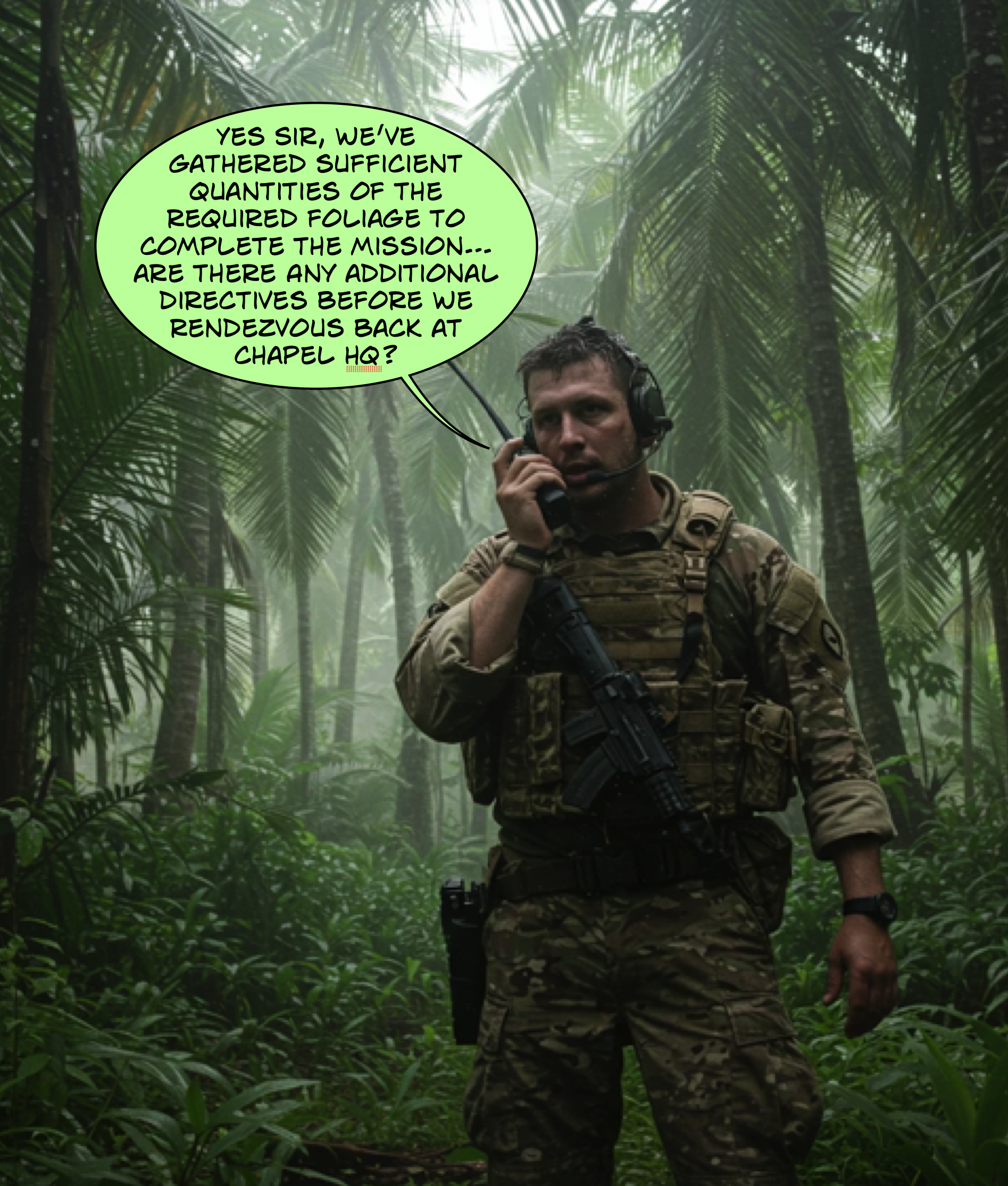
When I was stationed in Guam a few years ago (in the nineties), I enjoyed the annual tradition of gathering all of the palms to decorate the chapel and provide for worshippers in our very own jungle. Each year the chaplains and chaplain assistants, our whole team, would spend half a day gathering leaves that would put to shame any stateside palms.

Taking place in a tropical jungle, the event was sweaty, but fun. Good fellowship and even some seasonal early-Easter music. Fortunately, this didn’t take place during the typhoon season, as when the island was smashed by Super Typhoon Paka during our residency.

Jungles are fascinating places. Because the word possesses some rather ominous and even threatening overtones, a number of years ago they were rechristened “rainforests.” Even though most are tropical, there are temperate rainforests, such as in the Olympic National Forest, whose mountains I admire daily from our backyard.

C.S. Lewis alluded to the negative connotation of jungles in his study of “Vivisection,” with its repudiation of animal cruelty.

In justifying cruelty to animals we put ourselves also on the animal level. We choose the jungle and must abide by our choice.

A Modern Use for Jungles

In recent years, the jungles of Guam have been put to a military use. Unsurprisingly, soldiers and their Marine, Navy and Air Force cousins, must be prepared to do their jobs in a wide range of environments. That results in the existence of a variety of training settings, tuned to the specific needs of particular career fields.

For example, I served as the Wing Chaplain at Fairchild AFB where the USAF trains its pilots and aircrew members how to survive when they find themselves in unfriendly settings. Survival, Evasion, Resistance and Escape (SERE) training saves lives.

Anyway, not long ago the Air Force established a Jungle Agile Combat Employment (JACE) Course in, of all places, Guam.

This new course took knowledge from the U.S. Marine Corps Jungle Warfare Training Center and the Lightning Academy in Hawaii and tweaked it for non-combatant career fields to be prepared under the USAF’s Agile Combat Employment (ACE) concept.

This is part of America’s shift in focus to the threats in the Pacific theater. China has never renounced, and constantly proclaims, its intent to force the Republic of China (Taiwan) into their fascist empire. Of course, the fate of Hong Kong reveals just how unbenevolent the so-called People’s Republic is when it comes to maintaining any semblance of democratic freedoms. 

C.S. Lewis, of course, had much to say about the tragedies of fascism and war. However, that is not the focus of this reflection. Instead, the theme of this post reflects two thoughts. 

The less important idea, to which I have paradoxically devoted the most space, is the value of memories. Guam occupies a very special place in my family’s history, in part because all three of our kids were there during their teens. Lifechanging events occurred there.

And it was the wonderful people, military friends and wonderful Chamorro residents that made the most lasting impressions. Remembering the harvesting of palms, and recently learning about the jungle training course turned my thoughts back to that Micronesian paradise.

What’s Truly Vital

The infinitely more important message in this post is to acknowledge the holiest of seasons in which we find ourselves. Beginning with Palm Sunday’s celebration of the joy experienced by God’s people as they welcomed their Messiah into Jerusalem, we have the opportunity now to also join together with Jesus and our brothers and sisters in the faith as we:
~ commemorate the institution of the Lord’s Supper on Maundy Thursday,
~ contemplate the despair of the disciples as they stood at the foot of the cross as Jesus breathed his last mortal breath on Good Friday, and
~ celebrate in awe and wonder how our Savior rose from the grave and encouraged his disciples before ascending to Heaven and resuming his place at the right hand of God the Father. 

Christ’s atoning death, and his glorious resurrection, give us hope in the depths of our despair. And his promised return ensures us that there truly will come a day when we need never again prepare for war – or ever taste the pain of death.

We do well to heed C.S. Lewis’ encouragement to his friend Don Giovanni Calabria in 1948, when the priest was distraught over the troubles transpiring around the world.

Tomorrow [Easter] we shall celebrate the glorious Resurrection of Christ. I shall be remembering you in the Holy Communion. Away with tears and fears and troubles!

United in wedlock with the eternal Godhead Itself, our nature ascends into the Heaven of Heaven. So it would be impious to call ourselves “miserable.”

On the contrary, Man is a creature whom the Angels – were they capable of envy – would envy. Let us lift up our hearts! At some future time perhaps even these things it will be a joy to recall.

C.S. Lewis, Stereotypes & Polarization

Do you think in terms of stereotypes? Be careful before answering, since nary an adult is free of them. (Case in point, you may well have preconceptions or prejudices about a writer who would use the word “nary” in an opening sentence.)

Stereotyping is common, despite the fact most of us would disavow its use. Most of us would agree with C.S. Lewis who described how stereotypes bar us from embracing new knowledge. In his inaugural lecture on the faculty of Cambridge University, he cautioned that “a stereotyped image can obliterate a man’s own experience” (“De Desciptione Temporum”).

Oddly, while most of us would intuit that thinking stereotypically is a pattern for “the less intelligent,” it appears the reverse is true. According to one study,

Superior cognitive abilities are often associated with positive outcomes, such as academic achievement and social mobility . . . However, our work shows that some cognitive abilities can have negative consequences – specifically, that people who are adept at detecting patterns are especially quick to learn and apply social stereotypes.

Fortunately, although “people with better pattern detection abilities are at greater risk of picking up on and applying stereotypes about social groups,” there is still hope for those “afflicted” with cognitive skill. Fortunately, “these individuals are better able to diminish their stereotyping when presented with new patterns that challenge existing stereotypical associations.”

Another study argues that “our brains want our expectations to be supported . . . Because of that reward engagement, we can start becoming addicted, in a way, to stereotyping.” The researchers offer this suggestion for combatting the addiction: “simply understanding that this happens is an important way to check those assumptions and not let them influence your judgment.”

Generalizing by way of stereotypes can indeed be addictive, if its endemic presence in western culture is any indication. In America, for example, if there is ever a season when nasty stereotypes run unbridled, it is during political campaigns. Especially during presidential elections, where a person of faith would hope to witness the greatest amount of compassion and earnest intercession for God’s guidance.

Stereotypes give way to even uglier projections when we come to despise others. Several years ago I wrote an article about how wartime propaganda often strives to portray a nation’s enemies as evil, and unworthy of treatment in a humane way. It is titled “Demonizing Our Enemies & Dehumanizing Ourselves.”

When nations war, it is in the interests of the leaders of the opposing causes to engage their people in that effort heart, mind and (if possible) soul. A soldier who cognitively recognizes the need for fighting, but does not  possess a visceral animus for the foe, will only be a half-hearted warrior.

On the other hand, if rulers can generate a mental and emotional disgust, or even hatred, for the enemy, they have a winning formula. Soldiers who not only understand their cause, but also desire the utter destruction of their opponent, are single-minded in their purpose. Such fighters win wars.

You can see this sort of us/them polarization during peacetime too, even in non-election years. Sadly, it seems to be manifesting more and more frequently. And, surprisingly, it appears to have become just as common within national populations, as in international contexts. The results can be catastrophic, which is why First Lady Eleanor Roosevelt pled: 

Pit race against race, religion against religion, prejudice against prejudice. Divide and conquer! We must not let that happen here.

Stereotyping the Inklings

Although none of the Inklings have been spared, I believe C.S. Lewis has been the subject of the worst stereotyping. (I have an educated suspicion why that is true.)

Diana Pavlac Glyer has an excellent article which addresses this injustice head on.

There’s a rumor going around that C. S. Lewis was an irritable introvert, isolated and lonely and scared to death of girls. Maybe it all comes from some grim stereotype of smart people or college professors or, maybe, published writers.

That whole image is completely wrong. Lewis wasn’t an introvert. Or a loner. No – he was a large man with a booming voice, a hearty laugh, a robust enjoyment of everyday life. And that is why he was a man with friends.

At A Pilgrim in Narnia, Brenton Dickieson dispels another common misperception of the great author – that he was narrow-minded. 

So much of C.S. Lewis’ uniqueness comes down to his sheer love of diversity. He loved variability, colour, the exchange, the alienation of encounter and unity with others. His weird dystopia That Hideous Strength was, in many ways, a protest against the tendency of totalitarianism to create monoculture by erasing the individual. . . .

Lewis loved difference and diversity and freedom of expression–doctrines in danger in today’s culture war. It doesn’t take long within any of today’s major social movements to find out that diversity is fine and great as long as everyone acts like us or looks like us or thinks like us or uses the same secret words we use.

Most readers of Mere Inkling would be exceptions to the rule that human beings (especially those with “superior cognitive abilities”) default to stereotyping. Most of you, I sincerely believe, share my appreciation for respectful conversation and debate with others who do not share my opinions. 

Such interaction – with unique individuals, and not cardboard caricatures – often result in my own growth. And I dare to hope that those with whom I dialog might also feel the same.

C.S. Lewis & Assassinations

The brilliant author C.S. Lewis died on the same day that an American president was assassinated. The violent death of John F. Kennedy in November of 1963 eclipsed Lewis’ own passing, so many people were unaware of it for some time. Yet on that autumn day, both Camelot and Narnia lost their inspirations.

Unfortunately, Kennedy’s shooting was not the only political assassination that was connected in a manner to C.S. Lewis’ life. Archduke Franz Ferdinand Carl Ludwig Joseph Maria of Austria was the heir apparent to the throne of Austria-Hungary. A nineteen year old political activist cold-bloodedly murdered the archduke and his wife, Sofie.

Franz and Sophie had married for love, despite her inadequate social rank, which resulted in a morganatic marriage. In recent years such unions have become more common, but at the time, it was a serious matter. The archduke was forced by his uncle, the emperor, to accept that their descendants would never have a right to the throne.

In a convoluted fashion, Ferdinand’s death nearly led to C.S. Lewis’ own. The 1914 assassination was the spark that set the globe on fire during the First World War. And, during that grim conflict, C.S. Lewis was severely wounded by an artillery shell that killed friends standing nearby.

The Causes and Impact of Political Assassinations” was published by the Combating Terrorism Center at West Point. It begins with the fact that “political assassinations have been part of social reality since the emergence of communal social frameworks . . .” And so, since social frameworks will forever exist, they continue.

Humanity’s Violent History

Assassination has been a relatively common practice throughout human history. This shouldn’t surprise anyone who knows the sad story of Abel and his angry brother, Cain. 

Philip II of Macedon, the father of Alexander the Great, was killed attending the wedding of his daughter Cleopatra (no, not that Cleopatra). Later Cleopatra, as a widow, would be assassinated herself by one of her unsuccessful suitors.

Three centuries later, Julius Caesar was murdered by the political elite of Rome, who feared his growing influence. And in 453, one of Rome’s greatest enemies, Attila the Hun, was arguably murdered on his wedding night by his new bride, Ildico.

Several assassinations are recorded in the Bible. Over such a lengthy and turbulent historical period, that is unsurprising. The two excerpts below have links to the fuller accounts.

[Canaanite general] Sisera fled away on foot to the tent of Jael, the wife of Heber the Kenite, for there was peace between Jabin the king of Hazor and the house of Heber the Kenite. And Jael came out to meet Sisera and said to him, “Turn aside, my lord; turn aside to me; do not be afraid.” So he [entered] the tent, and she covered him with a rug. . . . And he said to her, “Stand at the opening of the tent, and if any man comes and asks you, ‘Is anyone here?’ say, ‘No.’” But Jael the wife of Heber took a tent peg, and took a hammer in her hand. Then she went softly to him and drove the peg into his temple until it went down into the ground while he was lying fast asleep from weariness (Judges 4).

Joab took Amasa by the beard with his right hand to kiss him. But Amasa did not observe the sword that was in Joab’s hand. So Joab struck him with it in the stomach and spilled his entrails to the ground without striking a second blow, and he died (2 Samuel 20).

As a sort of counterbalance to these “positive” instances – elimination of Israel’s enemies – you may want to read about King David’s condemnation of the assassinations of his political rivals, men to whom he would have extended mercy. When two brothers sought a reward for murdering King Ish-bosheth, Saul’s son, David declared “when wicked men have killed a righteous man in his own house on his bed, shall I not now require his blood at your hand and destroy you from the earth?” (2 Samuel 4).

All told, however, there was much violence in the ancient world. As C.S. Lewis’ wife, Joy Davidman, wrote in Smoke on the Mountain: An Interpretation of the Ten Commandments in Terms of Today:

How the ancient Jews did slaughter! They killed in hot blood and in cold; they killed for loot, for God, and for fun. . . . The tribes killed . . . by political assassination as when Ehud stabbed King Eglon in his fat belly . . . [The graphic story of Eglon’s assassination is detailed in Judges 3.]

Another historically consequential assassination occurred in the year 661, when Muhammad’s son-in-law Ali ibn Abi Talib was slain with a poison-coated sword while praying in the Great Mosque of Kufa. This incident caused Islam to separate into two major denominations, and Sunni-Shia relations continue to be contentious.

In the modern era, political murders remain unabated. Vladimir Putin  may be the current master of the deadly art. Even discounting the growing number of “suicides” among his advisers and generals following his ill-advised invasion of Ukraine, we have the case of Alexei Navalny. Navalny was one of Putin’s critics who in 2020 survived poisoning with Novichok nerve agent. Nevertheless, imprisoned in the arctic, he later died under extremely suspicious circumstances. 

In the western hemisphere, the recent attempted assassination of former President Donald Trump invites a review of the danger of serving in that particular office. Despite the (obvious) risk of inviting non-Americans to mock the United States, consider a few facts.

  • Since 1789 (when the office was established) we have had 45 presidents
  • Four sitting presidents have been assassinated while in office
  • Three other presidents (one while in office) were wounded in assassination attempts

Assassination During the Protestant Reformation

In C.S. Lewis’ landmark tome English Literature in the Sixteenth Century, recalls a peculiar passage from the History of the Reformation of Religion within the Realm of Scotland. The author, John Knox refers to the murder of Scotland’s last pre-Reformation Roman Catholic cardinal. It would be more than four centuries before the Pope appointed another.

In the cast of [Knox’s] mind, too, there is something not unlike Tacitus’ sombre pungency, though Knox’s humour, as becomes a countryman of Dunbar, is more boisterous and ferocious.

Sometimes, indeed, it is so ferocious that we should not recognize it at all if we were not told; as when after describing the murder of Cardinal Beaton down to the last grim detail of packing the corpse in salt (‘the wether was hote’) he proceeds, ‘These things we wreat mearelie: but we wold that the reader should observe Goddis just judgementis.’

He was apparently afraid lest the fun of the thing might lead us to forget that even an assassination may have its serious side.

Quite true. An assassination, even of a despised ruler such as Adolf Hitler, remains a serious matter.

Military Hymns & Ents

The United States is schizophrenic about its religious heritage, and the armed forces provide us with today’s example. Most people, including veterans themselves, are unaware of the fact that while we have official songs for the different branches of the armed forces, we don’t have any official hymns.

C.S. Lewis and J.R.R. Tolkien, both combat veterans, were quite familiar with martial music. However, as members of a (nominally) Christian kingdom, neither would have been uncomfortable with explicitly Christian elements in their military’s hymnody. Across the ocean in the former colonies, it’s a different matter. 

Here, the confusion about the “official” status of religious military hymns abounds because spiritual hymnody has been part of our nation’s martial history ever since the colonies decided to band together and seek independence. Yet, some consider that to be unlawful.

The rejection of music expressing faith in God can be attributed to the modern crusade against such hymns by strident anti-theists. Many in this camp are practicing atheists, who misinterpret the two clauses of the First Amendment which the nation’s founders did not consider mutually exclusive. 

Congress shall make no law respecting an establishment of religion, or prohibiting the free exercise thereof . . .

Since most of the creators of the Constitution – and the majority of American citizens up to this day – have been theists (believing in a Supreme Being), it is self-evident that they did not intend to exorcise all expressions of faith from the public forum. Some states, in fact, already had their own “established churches when the First Amendment was ratified.”

Up until this generation, generic references to a heavenly Father or a benevolent Creator have traditionally remained welcome at civic events.

Even the non-Christian Thomas Jefferson (who argued against religious establishment) was essentially a Deist, acknowledging “the god who gave us life, gave us liberty at the same time . . .”

Jefferson even edited the New Testament Gospels, deleting “objectionable passages” and producing his personally-sanctioned Life and Morals of Jesus of Nazareth

So, What about the Music?

My goal is not to discuss the First Amendment per se – though I included the introductory note above for the benefit of the many international readers who find their way to Mere Inkling.

Rather, I wish to discuss the premise above, that America celebrates generally secular martial music, while remaining wary of military hymnody with religious themes. 

Ironically, soldiers throughout the nation’s history passively assumed that the songs they heard at rallies and civic events had the government’s tacit imprimatur, that was questionable. Take the “Battle Hymn of the Republic,” for example. Composed in 1861 by abolitionist Julia Ward Howe, Union soldiers would have been shocked to learn that some would deem its use in the ranks as a violation of the First Amendment.

Mine eyes have seen the glory of the coming of the Lord;
He is trampling out the vintage where the grapes of wrath are stored;
He hath loosed the fateful lightning of His terrible swift sword:
His truth is marching on.

I have read a fiery gospel writ in burnished rows of steel:
“As ye deal with My contemners, so with you My grace shall deal;”
Let the Hero, born of woman, crush the serpent with His heel,
Since God is marching on.

Modern Military Hymns

The Department of Defense hosts a website titled Guide to U.S. Military Bands and Music. It describes the wide repertoire of military musicians. 

Whether you like jazz music, a marching band or orchestra music, the U.S. military has you covered. Each branch of the military boasts a diverse offering of musical talent that serves for ceremonial purposes but also for entertainment and outreach. Check out these bands to stay in tune with military music.

One Christian hymn has deep roots in the military community. The song traditionally referred to as “The Navy Hymn” in America, originated in Britain. It is also used by the French. Its maritime themes make it popular in civilian communities as well. 

Eternal Father, strong to save,
Whose arm does bind the restless wave,
Who bids the mighty ocean deep
Its own appointed limits keep;
O hear us when we cry to Thee
For those in peril on the sea.

O Savior, whose almighty word
The winds and waves submissive heard,
Who walked upon the foaming deep,
And calm amid the rage did sleep;
O hear us when we cry to Thee
For those in peril on the sea.

“There exist a myriad of alternate verses to the hymn. One, for example, was written by David B. Miller in 1965 and specially dedicated to naval submariners.”

Musicians were not just present for official ceremonies and off-duty entertainment. They could also inspire the troops in the violent din of battle. More common in distant ages, even in twentieth century Europe, we find a dramatic illustration.

In the military archives of the Irish Republican Army, Michael J. Crowley described the inspiration provided by the brigade’s musician in the heat of the battle called the “Battle of Crossbarry” and the “Crossbarry Ambush,” by the IRA and the Brits respectively.

From the opening shot of the engagement, our piper, Florrie Begley of Brandon, played warlike airs on the bagpipes until the last shot was fired.

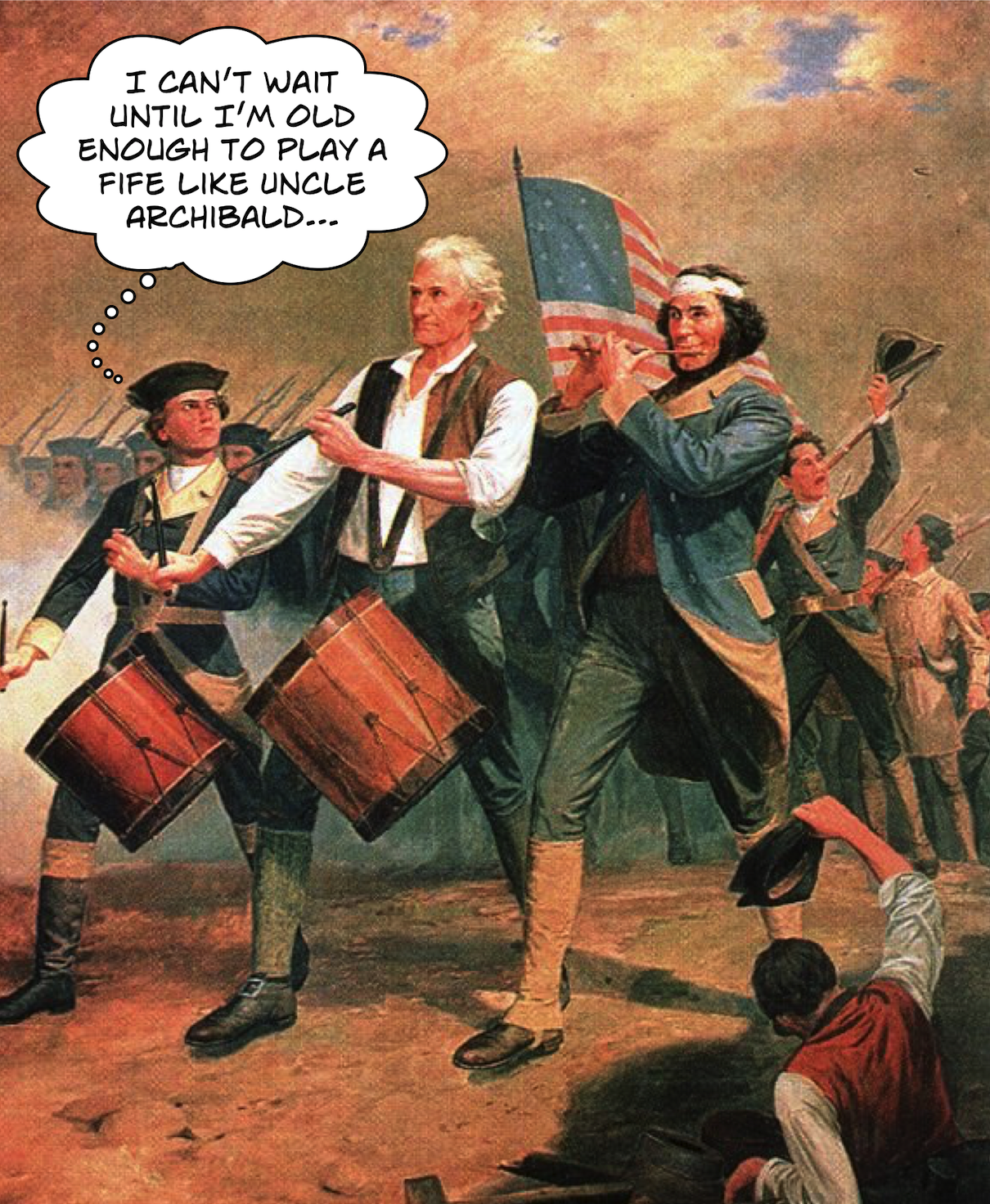
The illustration above provides an idealized portrait of military musicians bravely facing enemy fire. “The Spirit of ’76,” painted for the centenary of the American Revolution, met with tepid enthusiasm during the 1876 Centennial Exposition in Philadelphia. However, it rose in popularity when it subsequently toured the country.

For centuries, armies used music as the means to communicate the military orders of the day to soldiers. The high pitch of the fife and the sharp sound of the drum allowed messages to be heard at great distance . . .

Leaping from the Revolution to the twenty-first century, the recently birthed United States Space Force now has a hymn. Well, sort of. It is an unsolicited hymn composed by a former Air Force officer. You can hear “Creator of the Universe” here.

For more space music, check out the official anthem of “the mighty watchful eye.” Some consider this proposed anthem far more inspiring.

My personal favorite is the version of the Space Force Anthem proposed by its original, cinematic commander, General Naird, played by Steve Carell. (Carell even plays his own fife in the episode.)

The Middle Earth Military March

Howard Shore composed a powerful soundtrack for Lord of the Rings. Yet he wasn’t the first to create music for the great saga. One Tolkienist writes:

My first contact with Tolkien-inspired music dates back to the late 1980s . . . I was watching TV with my parents seeing a performance of Military Bands. Later I would discover that it was the Dutch composer Johan de Meij’s Symphony No. 1 (The Lord of the Rings) I’d heard.

From among the ranks of the Inklings, only one writer wrote an explicit military song. J.R.R. Tolkien provided the timeless Ents with a somber marching song as they face the powers of Isengard.

We come, we come with roll of drum: ta-runda runda runda rom!
We come, we come with horn and drum: ta-rūna rūna rūna rom!

To Isengard! Though Isengard be ringed and barred with doors of stone;
Though Isengard be strong and hard, as cold as stone and bare as bone,
We go, we go, we go to war, to hew the stone and break the door;
For bole and bough are burning now, the furnace roars – we go to war!
To land of gloom with tramp of doom, with roll of drum, we come, we come;
To Isengard with doom we come!
With doom we come, with doom we come!

If you have a moment, you will likely enjoy the performance of this song as arranged by Clamavi De Profundis.

Individualism, License Plates & C.S. Lewis

One of the peculiar things about the United States is the extreme degree to which people are driven to stand out from the crowd. We are able to do this with our automobiles, for example, in a rather odd way.

C.S. Lewis was immune to the temptation discussed here, since he was never a fan of cars, as I discussed in “C.S. Lewis & Automobiles.”

In his autobiography, Lewis declared “I number it among my blessings that my father had no car, while yet most of my friends had, and sometimes took me for a drive.” Those who are curious about Lewis’ dichotomy concerning vehicles, should refer to that post.

I don’t know how many other countries do this, but in most of the United States states, people have the option of getting random numbers and letters on their license plates – or opting for so-called vanity plates.

These individually emblazoned metallic placards perform a sort of Third Estate heraldic device. They often include variations on surnames or words significant to the bearer.

Obviously, offensive words are prohibited, but they are frequently quite creative. Here are a few examples: SO 4CHN8 and its opposite, EN-V ~  GONA B L8 which is probably an insufficient excuse to the cop who pulls you over ~ IBMEUBU with its live and let live philosophy versus URAMESS ~ UH AS IF from California, of course ~ IOU DAD from a grateful child ~ BWAHAHA and the clearer message from Vermont, BBRRRR ~ TWOCUTE can either refer to attractive twins, or to an illiterate narcissist ~ BBQ=LUV celebrates a common American favorite ~ and, this provocative phrase ITS A SIN. Hundreds more examples are online if you’re curious.

It’s fascinating that Americans will pay often exorbitant surcharges to individuate their auto plates. Especially in light of the fact that we already have different plates for each of the 50 states and a Federal District (for our national capital), as well as others for Territories and Protectorates. Prepare yourself. Seriously, prepare for a shock.

All of the 8,331 License Plates in America

States now offer a vast menu of personalized plate options for a dizzying array of organizations, professions, sports teams, causes and other groups.

Such plates typically include a surcharge to support the theme identified on each choice, as for Maryland’s Beekeepers, Barbershop Quartet Singers, or the Baltimore Bicycling Club. And we mustn’t forget their plate promoting the museum of the B&O Railroad (of Monopoly fame).

How can we arrive at that unbelievable number? Well, consider Illinois, for example. They boast no fewer than forty different options related to military alone. Hawaii has the fewest overall varieties at fourteen. Maryland, likely desperate for revenue, actually has nine hundred and eighty-nine. I am curious why they bothered to stop short of an even thousand.

Add to that the fact that nineteen states do not require a license on the front of the car, which invites the substitution of an individualized alternative. Consequently, there are statutes ensuring “most states also require that you do not mount your plate upside down.” In many of these, you would be legally allowed to mount decorative or business plates, but not alternative license plates, misleadingly different from your true registration.

Individuality run amok. The chaos sadly seems strikingly American.

Which brings me to the reason I was thinking about this unusual topic. Heading to church on Sunday I saw a plate with a curious message. It was one of my state’s options for Fire Fighters. The message it bore consisted of just three letters: UGH.

What does that convey to you? Since it appeared on a vocational emblem, my thought is that it reflects the feelings of someone who has grown tired of their profession. The best construction I can imagine is someone frustrated by the fact that after every fire they suppress there will come another. Resulting in a sense of futility or ennui. If you interpret it differently, please let me know.

I mean, we’ve all had ugh-days. But to feel ugh enough about life to indelibly express it this way . . . well, all I could do was hope it was an unconventional joke, and offer a quick prayer for the driver, in case it wasn’t.

C.S. Lewis offered many insights about our God-given individuality and uniqueness. Individualism, as a driving force, however, is something different. I recently read a wonderful article about how Lewis assessed individualism’ interplay with collectivism – two relentless forces in many Western cultures. “C.S. Lewis on Individualism, Equality and the Church” focuses on a World War Two speech delivered at Oxford and published as “Membership.”

Our personal uniqueness is not accidental. As C.S. Lewis wrote in The Problem of Pain,”

[God] makes each soul unique. If He had no use for all these differences, I do not see why He should have created more souls than one. Be sure that the ins and outs of your individuality are no mystery to Him; and one day they will no longer be a mystery to you.

In contrast, hyper-individualism is normally deleterious. Yet, the fact that God regards us as precious, irreplaceable beings, and calls each of us by our personal name, is wondrous news. It can accomplish two things related to the discussion above: (1) it puts personalized license plates in their proper perspective, and (2) it reminds us that even though we occasionally feel frustrated or despondent, our overall life attitude should never be summed up with an ugh.


Editor’s Note: In the interest of journalistic transparency, yours truly, while experiencing many moves, has participated in the automotive bacchanalia described above. Twice I secured military-related plates, Alabama’s Desert Shield/Desert Storm veterans and Illinois’ POW/MIA remembrance commemorations. In addition, while stationed in Guam, I secured plates with my surname.

I have asked my children to have me hospitalized for dementia should I ever decide to order our Washington State J.P. Patches Pal license plate. The reasons for that decision are obvious.

Following C.S. Lewis’ Military Example

Like his friend J.R.R. Tolkien, and many of the British men of their generation, C.S. Lewis served in the grim battlefields of the First World War. (However, since Lewis was actually Irish, he could not be drafted, and instead volunteered to serve.)

In recent years a number of books have appeared related to the military service of the Inklings. In A Hobbit, a Wardrobe, and a Great War, the author introduces his discussion with a succinct summary.

For a generation of men and women, [WWI] brought the end of innocence – and the end of faith. Yet for two extraordinary authors and friends, J.R.R. Tolkien and C.S. Lewis, the Great War deepened their spiritual quest. Both men served as soldiers on the Western Front, survived the trenches, and used the experience of that conflict to shape their Christian imagination. . . .

By the time of the Armistice, more than nine million soldiers lay dead and roughly thirty-seven million wounded. On average, there were about 6,046 men killed every day of the war, a war that lasted 1,566 days. In Great Britain, almost six million men—a quarter of Britain’s adult male population – passed through the ranks of the army. About one in eight perished. Tolkien and Lewis might easily have been among their number.

In 1939, a correspondent inquired if Lewis was going to reassume his commission in the army for the new conflict, and he responded with sentiments I have heard voiced by a number of other combat veterans.

No, I haven’t joined the Territorials. I am too old. It would be hypocrisy to say that I regret this. My memories of the last war haunted my dreams for years.

C.S. Lewis proceeded to graphically explain the cost of serving under such pressure. 

Military service, to be plain, includes the threat of every temporal evil: pain and death which is what we fear from sickness: isolation from those we love which is what we fear from exile: toil under arbitrary masters, injustice and humiliation, which is what we fear from slavery: hunger, thirst, cold and exposure which is what we fear from poverty.

I’m not a pacifist. If it’s got to be, it’s got to be. But the flesh is weak and selfish and I think death would be much better than to live through another war.

A new announcement from the United States’ Department of Defense brought Lewis’ situation to mind. It appears that due to a number of factors – not least of which the emphasis on Diversity, Equity and Inclusion,* which (imo) has discouraged veterans from encouraging their children to serve in the armed forces – some services are repeatedly falling short of their recruiting goals. 

In light of the fact that the world is inarguably growing more dangerous – the Doomsday Clock is set at “90 seconds to midnight” – it is alarming that we are unable to fully staff our shrunken military.

Just today my sixteen year old grandson expressed concerns about the resumption of a draft. I could not muster a persuasive argument that it won’t happen. Ironically, the last time the U.S. involuntarily conscripted troops was 1972, the year I turned eighteen. Oh, in the process of including a link to the Selective Service Sytem, I was surprised to learn that a “Medical Draft is in Standby Mode.” 

It is designed to be implemented in connection with a national mobilization in an emergency, and then only if Congress and the President approve the plan and pass and sign legislation to enact it. . . .

[The plan will] provide a fair and equitable draft of doctors, nurses, medical technicians and those with certain other health care skills if, in some future emergency, the military’s existing medical capability proved insufficient and there is a shortage of volunteers. . . .

[If implemented, the plan will] begin a mass registration of male and female health care workers between the ages of 20 and 45. . . . HCPDS [the innocuously named Health Care Personnel Delivery System] would provide medical personnel from a pool of 3.4 million doctors, nurses, specialists and allied health professionals in more than 60 fields of medicine.

No Draft Yet

Since we are not currently at war, the specter of a draft remains ephemeral. Still, the shortage of volunteers has led to a variety of initiatives, such as lowering service qualification standards. These efforts have proven inadequate, resulting in the aforementioned announcement.

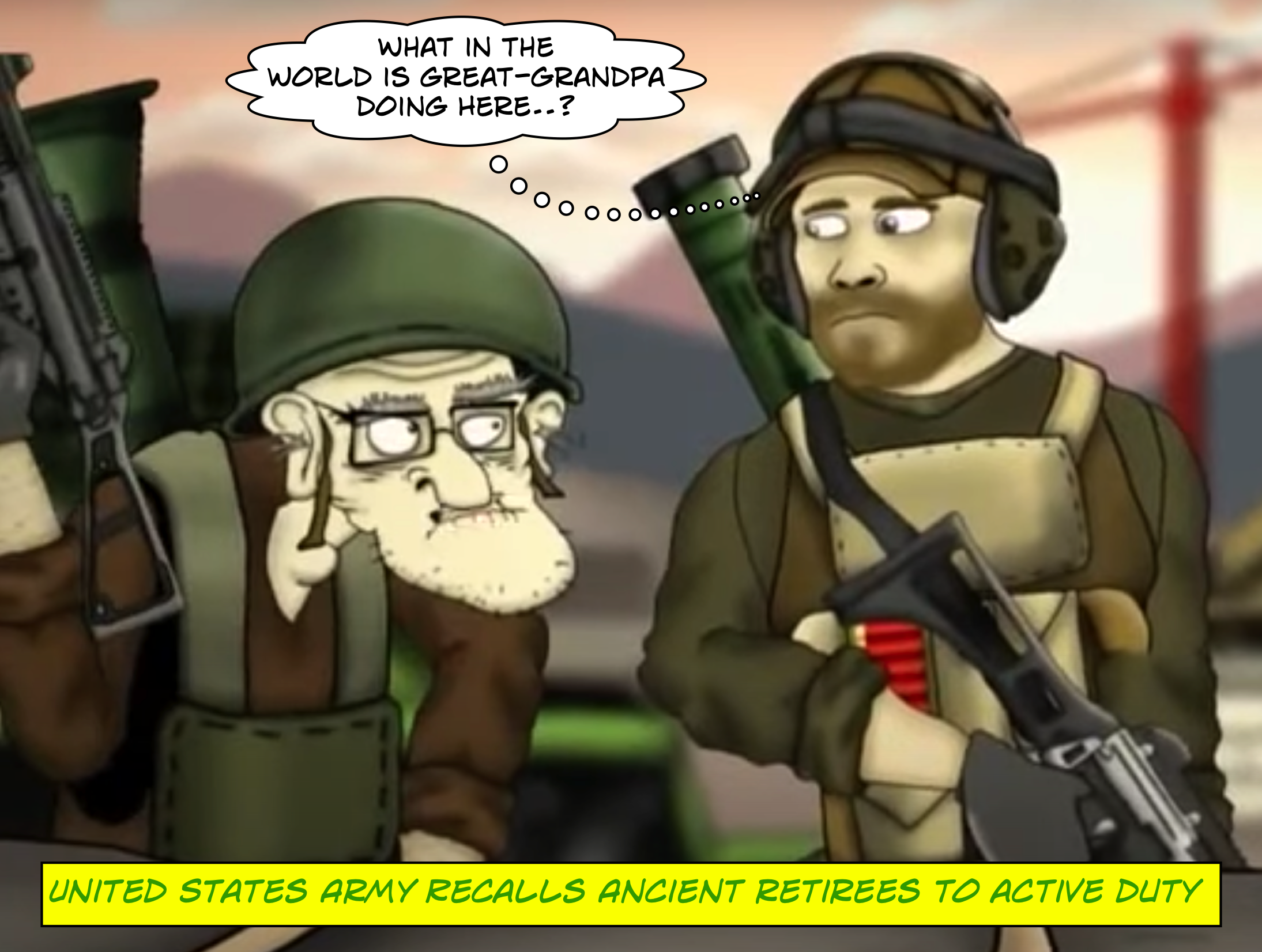
Both the Army and the Air Force have begun Retiree Recalls. Yes, that is just what it sounds like. People who have actually retired from the armed forces, normally after 20+ years of active duty, are being recalled to serve again. 

When I heard this news I was stunned. It is legally possible for the military to recall former members via a tiered process, but the first thing that came to my mind was my favorite high school teacher. He had served in Viet Nam as a draftee and finished his enlistment. He once told me that he felt safe, having survived, because now he was in the same call-up status as a “pregnant nun.” (Rather hyperbolic, but comforting to him.)

Fortunately, the current recalls are all voluntary. Only retirees whose personal circumstances make the offer appealing, will respond. As the Air Force Times reports, “Regret retiring? Here’s your shot at a second chance in the Air Force.”

I suspect that even vets who enjoyed their military service will be inclined to consider redonning the uniform as “too much of a good thing.” And if they witnessed the bloody horrors of war, as seen by C.S. Lewis, returning to the ranks would be even less tempting.

Since I, myself, have no desire to resume the demands of military life, I haven’t researched the age requirements for the Air Force recall program. Like Lewis, “I am too old.” 

But amazingly, depending on individual factors, the Army is willing to recall retired volunteers up to the age of seventy. That’s not a typo. As someone reaching that very milestone this summer, I can’t imagine returning to work side-by-side with troops half a century younger than me. 

Now, I pray for peace, knowing that being prepared for war is one way to increase that likelihood. So, I hope the military can throw off some of its political shackles and return to its necessary focus.

Furthermore, like C.S. Lewis, I have a pragmatic view of the effects of war. In “Learning in War-Time,” Lewis summarized the effects of military service during a war. As always, his insights are profound.

What does war do to death? It certainly does not make it more frequent: 100 per cent of us die, and the percentage cannot be increased. . . . Does it increase our chances of painful death? I doubt it. . . .

Does it decrease our chances of dying at peace with God? I cannot believe it. If active service does not persuade a man to prepare for death, what conceivable concatenation of circumstances would?


* This reference is to the convoluted and inequitable DEI philosophy and program(s) being mandated today. In truth, most people value diversity, and all people of goodwill believe in the importance of equity and inclusion. Along with Martin Luther King, Jr., they long for a day when people are not “judged by the color of their skin, but by the content of their character.”

Can We Ignore Modern Slavery?

I can’t answer this question for you, but I know how I want to be able to answer when I stand before our Creator. 

Many Christians include corporate confession and absolution (forgiveness) as part of their regular worship. We often ask forgiveness our sins of commission and omission – the wrongs we do, and the wrongs we are responsible for when we fail to do what we should.

God forbid that any of us would actively support slavery, but . . . how little most of us do to reduce it or free people from its deadly grasp.

In Britain, the National Society for the Prevention of Cruelty to Children, founded in 1884, recognizes modern slavery as one of the world’s greatest challenges. As they say: “Any child is at risk of child trafficking.”

Save the Children states that “children account for 27% of all the human trafficking victims worldwide, and two out of every three child victims are girls.”

Sometimes sold by a family member or an acquaintance, sometimes lured by false promises of education and a “better” life – the reality is that these trafficked and exploited children are held in slave-like conditions without enough food, shelter or clothing, and are often severely abused and cut off from all contact with their families.

The children’s condition is not “slave-like;” these precious victims literally are slaves, in every cruel sense of the word. While no unenslaved person would be so ignorant as to presume they understand slavery, C.S. Lewis mentioned in a 1939 letter several torments it inflicts. At the break of the Second World War, he was reflecting on his experiences in the First.

My memories of the last war haunted my dreams for years. Military service, to be plain, includes the threat of every temporal evil; pain and death which is what we fear from sickness; isolation from those we love which is what we fear from exile: toil under arbitrary masters, injustice, humiliation, which is what we fear from slavery: hunger, thirst and exposure which is what we fear from poverty.

The most shocking part of this description from Save the Children, is the acknowledgment that the children are “sometimes sold by a family member . . .” I discussed this grim truth in my 2014 post, “Loving Prostitutes.”

In that article I express a sentiment I hope you share: “I love prostitutes because God has granted me the vision to see them as he does.”

What You & I Can Do Today

Obviously, if this subject is new to you, you can become informed. The links I’ve provided offer a good starting point.

At the present moment we have a truly unique opportunity to make a contribution toward addressing this massive horror. We can support a superb, first-class film that is currently showing in hundreds of cinemas. 

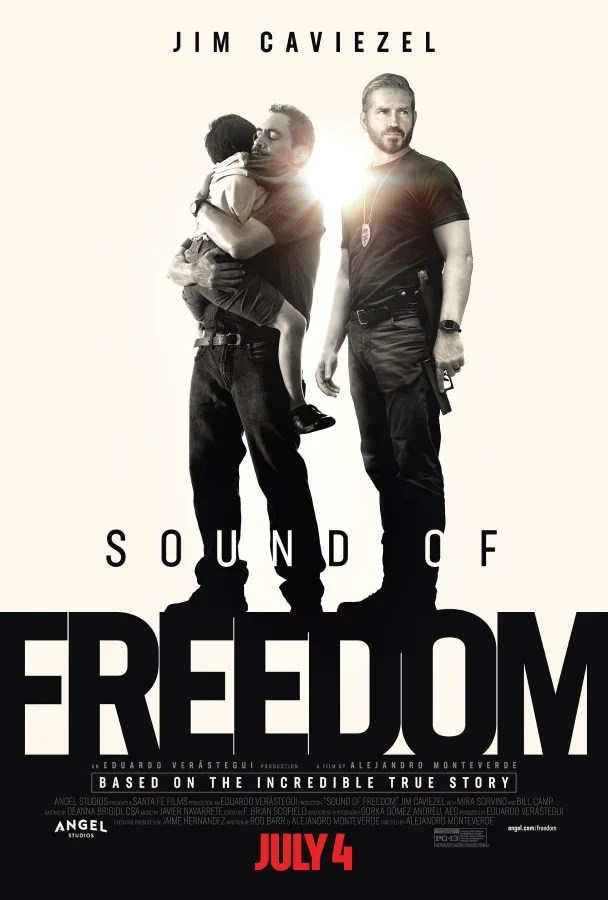
Sound of Freedom is a true story with a superb cast and excellent cinematography. Despite its serious subject, the film is well worth viewing while it is still in theaters. Simply by attending, and even more by encouraging family and friends to join you, we can raise the awareness of this tragedy.

Together, you and I truly can help rescue people from this fate, and promoting this message of hope and deliverance is a small step in that journey. 

When faced with ugly things, the timid response is to turn away and pretend it doesn’t exist. In cases like this, particularly involving children, a cowardly response in ignoring the evil constitutes nothing less than a sin of omission. 

Check with your local theaters today, and reserve a seat at a showing of Sound of Freedom. (And, for those who see this suggestion months or years after the film’s 2023 release, check it out soon on a streaming service.)

Postscript & Resources:

While I was still on active duty, the United States Department of Defense initiated a long-overdue program. In recognition that military members are literally on the “front lines” of encountering modern slavery, Combating Trafficking in Persons is an official program established to confront the crime.

The program includes provisions requiring training for all DoD personnel, civilian as well as uniformed. This site describes the various levels of training required. To actually “take” the training and testing requires login privileges. However, various resources – including some very informative videos – are available to the public.

Similarly, agencies such as INTERPOL restrict their courses to members. Nevertheless, they offer a variety of educational resources and updates on current efforts to battle this crime around the globe.

While I haven’t personally vetted the following, a number of public and governmental organizations offer free training for interested individuals. Among them are: 

the U.S. Department of Homeland Security, and the Office for Victims of Crime. The U.S. Institute Against Human Trafficking lists six free classes, several of which offer certificates of completion.

The Home Office in the United Kingdom hosts a site with a number of related resources. One is “A typology of modern slavery offences in the UK” which breaks “down the broad categories of modern slavery into 17 distinct types of offences identified in the UK.” No doubt, most other enlightened nations promote similar materials.

In a 1943 essay entitled “Equality,” C.S. Lewis discusses the subject of the nature of Democracy, as a form of government. His argument includes the clearest possible reason why slavery never has been, and never could be a good, or morally neutral, thing.

I am a democrat because I believe in the Fall of Man. I think most people are democrats for the opposite reason. A great deal of democratic enthusiasm descends from the ideas of people like Rousseau, who believed in democracy because they thought mankind so wise and good that everyone deserved a share in the government.

The danger of defending democracy on those grounds is that they’re not true. . . . I find that they’re not true without looking further than myself. I don’t deserve a share in governing a hen-roost, much less a nation. . . .

The real reason for democracy is . . . Mankind is so fallen that no man can be trusted with unchecked power over his fellows. Aristotle said that some people were only fit to be slaves. I do not contradict him. But I reject slavery because I see no men fit to be masters.

I know that C.S. Lewis would add his “amen” to my challenge today that each of us might look for ways to help eradicate this plague of slavery, which has cursed humanity for millennia.

Chocolate Fuels Armies

“An army marches on its stomach.”* Military leaders have long recognized that it is difficult to arouse soldiers weakened by deprivation. Sadly, though, even a king of Israel could be foolish enough to ignore that and order his soldiers to fast before a battle.

While logisticians rarely receive the accolades of their peers who serve directly in combat, they have always been vital members of successful military ventures.

While they are concerned with securing and transporting all requirements, such as ammunition and medical supplies, there is a single necessary requirement for all campaigns. Without sustenance, soldiers will desert the flag and even the most steadfast will fall.

Nutritional value is the first priority. Palatability has historically been a distant afterthought. This has given rise to innumerable jokes made by veterans about the “combat rations” provided to them. While these “menus” have vastly improved in recent years, they remain fodder for much humor.

And even the most delicious food choices become monotonous when they are limited to a small range. In 2002, I visited a remote military detachment supplied with adequate pallets of Meals Ready to Eat, but begging for variety. They had hundreds of meals available, but only two or three different meal options! Civilians, in contrast, can readily purchase a far wider range of entrees.

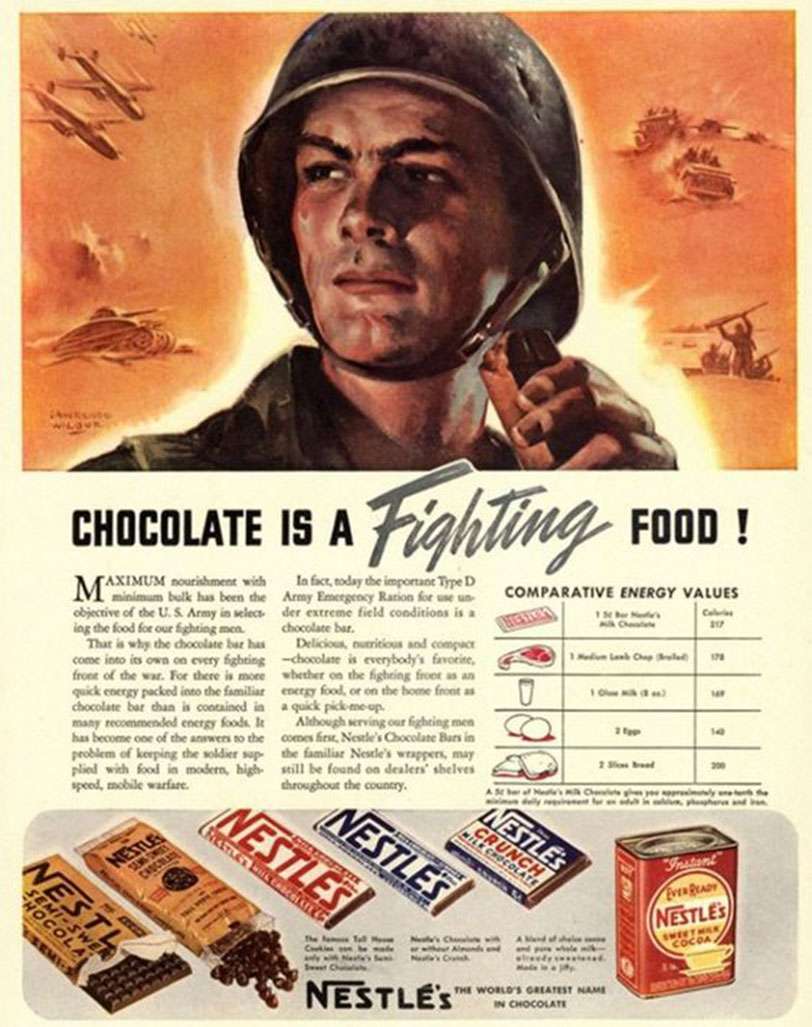
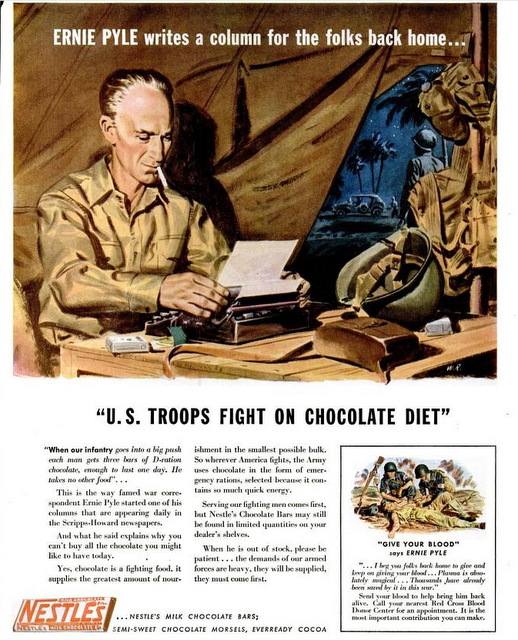
During the Second World War, the United States invested major efforts in making the combat meals more appealing. Various candies found their way into K-rations, in addition to necessities like toilet paper and cigarettes. In a comprehensive overview of the history of rations, the U.S. Army Quartermaster Foundation points to the main reason for complaint during WWII.

Like other unpopular items, misuse was a contributing factor to the waning popularity of the K ration. Although designed to be used for a period of two or three days only, the ration occasionally subsisted troops for weeks on end. . . . Continued use reduced the acceptability and diminished the value of the ration.

Adding confectionaries to rations made the meals more welcome. Chocolate was always a favorite, but the initial American versions left much to be desired.

My research was, in fact, prompted by a recent post on “Chocolate in WWII” in Pacific Paratrooper. (It is one of the very best military blogs on the internet.) They describe how the military approached a major American confectioner with a simple list of requirements (the last one is best appreciated by older veterans).

The Hershey Chocolate company was approached back in 1937 about creating a specially designed bar just for U.S. Army emergency rations. According to Hershey’s chief chemist, Sam Hinkle, the U.S. government had just four requests about their new chocolate bars: (1) they had to weigh 4 ounces; (2) be high in energy; (3) withstand high temperatures; (4) “taste a little better than a boiled potato.”

Sadly, many “who tried it said they would rather have eaten the boiled potato.” Well, it was the thought that counted, right?

There is a legend that during the war a German officer was confronted with American desserts and determined that the abundant resources of the United States signaled doom for the Nazi cause. The story likely has a fictional origin.

In the 1965 film Battle of the Bulge, Wehrmacht Colonel Hessler, shows his commanding general a treasure confiscated from American soldiers.

Hessler: “General, before you go, may I show you something?”

General: “What is it?”

Hessler: “A chocolate cake.”

Kohler: “Well?”

Hessler: “It was taken from a captured American private. It’s still fresh. If you will look at the wrapping, general, you will see it comes from Boston.”

Kohler: “And?”

Hessler: “General, do you realize what this means? It means that the Americans have fuel and planes to fly cake across the Atlantic Ocean. They have no conception of defeat.”

C.S. Lewis & Rations

Military rations during the First World War were more primitive than those provided twenty years later. One difference for the British is that they were granted a half gill of rum (or a pint of porter) each day.

This alcohol distribution was at the discretion of the commanding general, which meant that it was not available in the trenches. This was in the spirit of the American “General Order Number 1,” which typically applies to alcohol, and sometimes prohibits its presence throughout an entire theater. (I can personally attest to the ability of some elements, such as Special Ops, to circumvent such restrictions.)

C.S. Lewis wrote with some frequency about the rationing endured by the British public, during and after the world wars.⁑

Unfortunately, I’ve only uncovered one Lewisian reference to his own experience with military cuisine. In a 1917 letter to his father, he reveals that meals were not always appealing, even during training, prior to deploying to the war zone.

First of all came the week at Warwick, which was a nightmare. I was billeted with five others in the house of an undertaker and memorial sculptor. We had three beds between six of us, there was of course no bath, and the feeding was execrable.

The little back yard full of tomb stones, which we christened ‘the quadrangle,’ was infinitely preferable to the tiny dining room with its horse hair sofa and family photos.

When all six of us sat down to meals there together, there was scarcely room to eat, let alone swing the traditional cat round. Altogether it was a memorable experience.

A Hobbit, a Wardrobe, and a Great War describes how WWI affected C.S. Lewis and J.R.R. Tolkien. After relating a passage following Miraz’s defeat of Caspian’s force, when the momentarily defeated were “a gloomy company that huddled under the dripping trees to eat their scanty supper,” the author observes:

The military blunders, the fruitless acts of bravery, the bone-chilling rain, the meager rations: there were many days and nights just like these along the Western Front. Imaginary beasts aside, such scenes could have been lifted from the journal of any front-line soldier.

Like Tolkien, though, Lewis includes these images not for their own sake, but to provide the matrix for the moral and spiritual development of his characters . . .

Rations in Ukraine

Although the eyes of the world are riveted today on the war in Ukraine, there are currently 110 armed conflicts being monitored by the Geneva Academy. However, since Ukraine is in the news daily, it is worth noting both modern armies are employing military rations.

Apparently, Ukrainian troops have great Meals Ready to Eat (MREs). “Most importantly, when making, eating, or even talking about the food, the men seem to be genuinely happy.” The MRE link in this paragraph contains the details, including the note that “among the contents, you’ll find a small packet of dried apricots and a dark chocolate bar.”

There is also a vendor on ebay who sells what are purported to be captured Russian supplies, including a confiscated chocolate bar. The candy appears to be conventionally purchased, but could be part of an illicit chocolate conspiracy finding its way to the Russians from Latvia. “The Russian confectionery company ‘Pobeda’ ПОБЕДА has been producing chocolates, truffles, waffles and other types of sweets for more than six years in Ventspils, via a Latvian subsidiary.”

A month ago in Russia, “Pobeda” received thanks from an organization called the “Battle Brotherhood” for the fact that since the beginning of the Ukrainian war, the company has sent at least 15 tonnes of its products to Russian soldiers.

Chocolate does indeed appear to fuel armies. For a fascinating article on how chocolate can also be used to promote propaganda, check out this Ukrainian site.

Russian propaganda continues to dehumanize Ukrainians with the help of outright fakes.

Another “proof” of our apparent bloodthirstiness was the image of a chocolate bar with a remarkable name “Death of Alyoshka.” A portrait of a boy in a helmet with a mourning ribbon is placed on the wrapper of the confectionery. Propagandists claim that Ukrainians wish Russian children dead.

Become an MRE Connoisseur

If you are curious about the contents of various international MREs that are available for purchase by civilians, visit MREmountain, which began “in 2017 when people discovered the hobby of trying army rations.”

Most veterans, I suspect, would find the “hobby” of eating military rations rather peculiar. But then again, you can check out the French options, which the site labels “The best MRE in the world.” Only there, I imagine, could one discover “meals not found in any other MRE like Kebob Meatballs, Duck Confit, Deer Pate, Wild Boar.”

And, of course, France’s 24-hour ration also includes chocolat müesli, chocolate biscuits, five snack bars (at least one of which is pure chocolate), and a hot cacao packet. Yummy. It appears that les Français also consider chocolate to be a staple of modern soldiers.


* This quotation has been attributed to Napoleon and Frederick the Great. Whatever its modern origin, it is obvious starvation and its frequent companion, disease, have crippled as many armies as blade and shot.

⁑ “Mock Goose and Other Dishes of the War-Rations Diet” offers some interesting thoughts on this subject.

The Church at War

Why would Christian Scriptures commend people for waging war? War, after all, is nearly universally condemned – even as it remains a relentless curse in various corners of our world.

One young pastor was “charged” with a duty that belongs, by biblical extension, to all believers. “This charge I entrust to you [that] you may wage the good warfare, holding faith and a good conscience” (1 Timothy 1).

The reason followers of Jesus are encouraged to actively train for and engage in war is because our enemies are not other human beings. We discussed this fact in our last conversation, as we considered the theological concept of the Church Militant.

To call the Body of Christ “militant” is misleading to those who don’t understand spiritual warfare, the fact that “we do not wrestle against flesh and blood, but against . . . the cosmic powers over this present darkness . . .” (Ephesians 6).

Unfortunately, because all of us are imperfect (i.e. fallen), Christians can sometimes fail to distinguish between our true enemies and those who witlessly follow their banner. For an excellent discussion of this, from a Roman Catholic perspective, I recommend you read “The Church Militant or the Church Belligerent?

Another worthwhile read is “G.K. Chesterton and the March of the Church Militant.” There, Joseph Pearce shares Chesterton’s vivid description about how Gothic cathedrals visualize the martial aspect of the Christian Church.

The truth about Gothic [architecture] is, first, that it is alive, and second, that it is on the march. It is the Church Militant; it is the only fighting architecture.

All its spires are spears at rest; and all its stones are stones asleep in a catapult. In that instant of illusion, I could hear the arches clash like swords as they crossed each other. The might and numberless columns seemed to go swinging by like the huge feet of imperial elephants.

The graven foliage wreathed and blew like banners going into battle; the silence was deafening with all the mingled noises of a military march; the great bell shook down, as the organ shook up its thunder.

The thirsty-throated gargoyles shouted like trumpets from all the roofs and pinnacles as they passed; and from the lectern in the core of the cathedral the eagle of the awful evangelist crashed his wings of brass (“The Architect of Spears”).

As a master of words and wit, Chesterton’s writing rarely disappoints. You can download a free copy of The Man Who was Chesterton, which includes this essay, from Internet Archive.

C.S. Lewis did more to equip us for spiritual warfare with The Screwtape Letters than a thousand clergy with a hundred thousand sermons. As one Baptist theologian summed it up in an article about spiritual warfare:

On the subject of spiritual warfare, Lewis is a helpful guide. I’ll remember what he taught: There is an enemy. He seeks my destruction. And this is war.

There is a brilliant quote about this supernatural confrontation, ascribed (apparently in error) to the historical Martin Luther.

If I profess, with the loudest voice and the clearest exposition, every portion of the truth of God except precisely that little point which the world and the devil are at that moment attacking, I am not confessing Christ, however boldly I may be professing Christianity.

Where the battle rages the loyalty of the soldier is proved; and to be steady on all the battle-field besides is mere flight and disgrace to him if he flinches at that one point.

C.S. Lewis echoes this sentiment in The Magician’s Nephew. When Aslan questions the humble man whom he would crown the first King of Narnia, he poses a query which reveals the man’s courage and humility.

“And if enemies came against the land (for enemies will arise) and there was war, would you be the first in the charge and the last in the retreat?”

“Well, sir,” said the Cabby very slowly, “a chap don’t exactly know till he’s been tried. I dare say I might turn out ever such a soft ’un. Never did no fighting except with my fists. I’d try – that is, I ’ope I’d try – to do my bit.”

“Then,” said Aslan, “you will have done all that a King should do.”

If anyone would follow Christ, neutrality is not an option. Though some temporary retreats are inevitable, in God’s strength, we are empowered to continue our (in reality, the Lord’s) advance.

The battlelines are drawn, and they are real. As C.S. Lewis proclaimed in “Christianity and Culture” – “There is no neutral ground in the universe. Every square inch, every split second is claimed by God, and counterclaimed by Satan.”


The image above, “Livonian Sword Brother” (a member of a military monastic order) was created by JLazarusEB and is used here in compliance with the Creative Commons CC BY-NC-ND 3.0 License.