Adopting a Puppy

calliI recently described Henri III’s torture of puppies during his reign. The clown actually wore them, as an adornment!

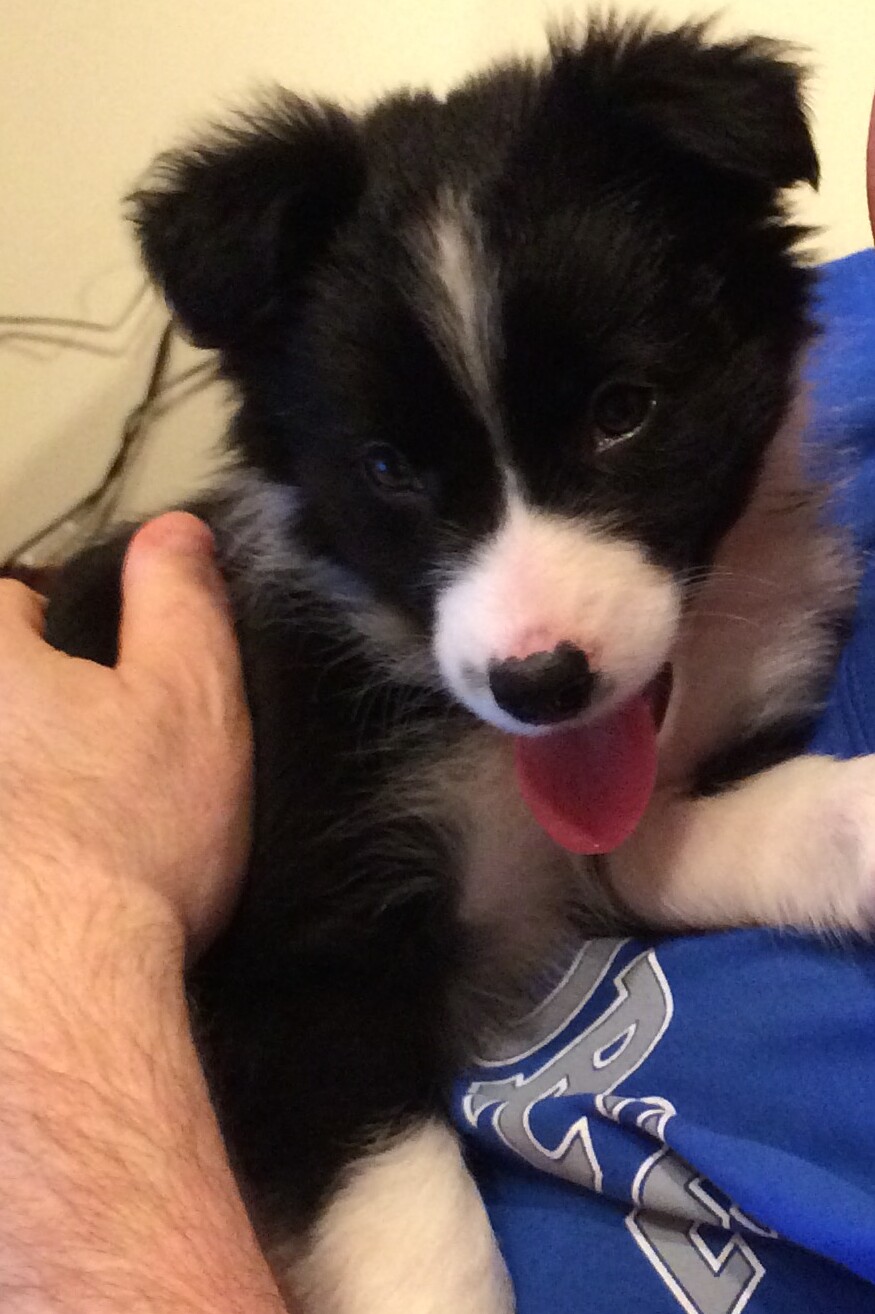
In that same column, I mentioned that we were adopting a new puppy . . . and she has arrived in our home!

Getting a puppy marks a departure from our normal pattern. Our last three border collies (including the mature lady who still graces our manse) were all “rescues.”

However, we did not feel that Foxy was up to adjusting to another mature dog, since she lost Lyric last winter and her other (long-lived) sister, Tanner.

In my post about Henri III, I shared comments from two letters that C.S. Lewis wrote a century ago to one of his closest friends. Arthur Greeves had gotten a puppy, and Lewis reminded him of the responsibilities of the human member of that relationship.

Lewis wrote that it was cruel, “Unless you are a person with plenty of spare time and real knowledge, it is a mistake to keep dogs . . .”

In a subsequent letter, Lewis advised Greeves on how to choose a name for his puppy.

How’s the poor, miserable, ill-fated, star-crossed, hapless, lonely, neglected, misunderstood puppy getting along? What are you going to call him, or rather, to speak properly, how hight he? Don’t give him any commonplace name, and above all let it suit his character & appearance. Something like Sigurd, Pelleas or Mars if he is brisk and warlike, or Mime, Bickernocker or Knutt if he is ugly and quaint.

We had already chosen the name for our puppy before I found this quotation. But I think Lewis would have approved.

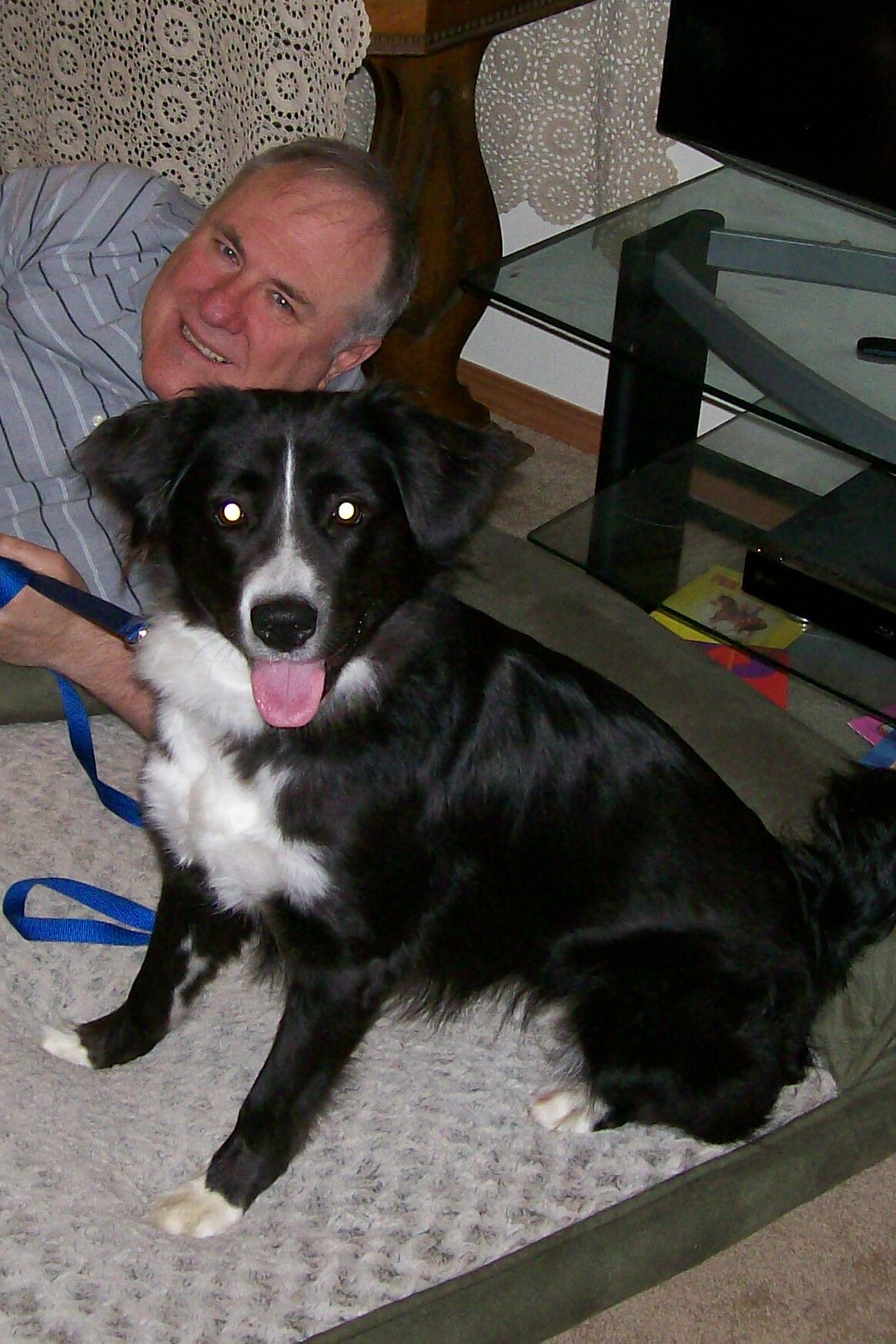
We named our new little girl after one of the Greek Muses, who inspired literature and the arts. Her name is Calli.

If you’re knowledgeable in mythological matters, you will recognize that it’s our nickname for Calliope, the Muse of epic poetry.

Being more of a historian than a poet, I wanted to use the name Clio, who is the Muse of History. Calli fits her better though.

Calliope is a wonderful, musical name though, since she was the chief Muse, and her name literally means “beautiful-voiced.” What a lovely name. I hope Calli learns to sing, like our first border collie, Lady. Lady would accompany my wife as she played the piano. It was quite entertaining.

If you have read this far, you too are likely a pet lover. If you have a dog, cat, rabbit, lemur or whatever, of your own, may the Lord bless it with a long and healthy life . . . just as we pray for our own little Calli.

Abusing Puppies

henriPuppies are cute and cuddly, but leave it to a French king to carry that fact to absurd lengths.

One might think owning 2,000 lap dogs is a bit overmuch. Not so Henri III (1551-1589). It would seem that after the first thousand, it might become difficult to recall all of their names, but that didn’t deter Henri.

He so loved his puppies that he used them as a form of adornment, regularly wearing them in a small basket suspended around his neck.

And, amazingly, it appears none of his courtiers mentioned that it looked quite silly. Who knows, he may have established a temporary fad, not unlike the purse puppies used by some modern celebrities to increase attention to themselves.

Puppies are on my mind now, because my wife and I have “reserved” a border collie from a recent litter.

Some readers will recall the grief we experienced when a dog we rescued a year ago, died due to an onslaught of seizures, one after the other. Lyric’s tragic passing, at a young age, was so much more difficult than the loss of our previous three who had lived well into their geriatric years.

It’s taken us a year to be willing to consider adding another dog to our family. We still have Foxy, who we rescued about eight years ago, during our final military tour in California. We decided it would be much easier for her if we added a puppy to our family this time.

I’ll write more about our puppy in the future. For now I’ll end with the “teaser” that we’re naming her after one of the Greek Muses.

C.S. Lewis loved dogs, although apparently not enough to wear them like jewelry.

In 1916, he corresponded with his friend Arthur Greeves about adding a puppy to the latter’s family. His first mention, as Greeves was contemplating the decision, reveals Lewis’ emphasis on the wellbeing of the dog over its master’s preferences.

I think you are very wise not to take that puppy from K. Unless you are a person with plenty of spare time and real knowledge, it is a mistake to keep dogs–and cruel to them.

Greeves proceeded with the adoption, as Lewis appends a postscript to his next letter, written a week later.

Poor puppy!! What a life it’ll have! I shall poison it in kindness when I come home!

In a subsequent letter, the same month, Lewis offers advice about naming the puppy that I was delighted to read. It suggests that he would approve of our decision for the name of the new addition to our family.

In the meantime, whatever name we bestowed on our new puppy, she would never need to worry about being traipsed around on display like a fashion accessory. We’ll leave that to French kings and egocentric divas.

Beware of Overtoun Bridge

overtounDo not take your dog to Scotland. And, if perchance you do, by all means avoid the Overtoun Estate.

Its relatively short span masks its danger. The waters flow fifty feet below it’s arch, and they carry echoes of a terrible mystery.

What is it about the Overtoun Bridge that causes dogs to leap over its parapet to their deaths on the rocks below?

Before considering that question, it is worth noting how dearly dogs love to go for walks with their people. This comes as no surprise to those who have had dogs as members of their families.

Some people who have never lived with dogs, however, are unaware of just how powerful this drive is. There is but one thing a dog loves more than a good walk—and that is a good meal. (For a dog, a “good” meal is any and all meals.) In fact, some canines love walking so very much that they would willingly delay their repast if able to precede it with a vigorous hike.

C.S. Lewis was an avid walker. He often undertook long sight-seeing hikes with friends. And, during different periods of his life, he enjoyed the company of a canine companion.

In January of 1940 Lewis describes one such trek to his brother. Warnie, a “regular” officer in the British military had been recalled to active duty and dispatched to France. He describes an inter-species encounter his dog Bruce had recently experienced during an Oxford walk.

It seems almost brutal to describe a January walk taken without you in a letter to you, but I suppose “concealment is in vain. . . .” I was coming home from a walk and had just reached the Bourdillon’s hedge when I saw Bruce standing across the path with his head erect and his tail wagging furiously.

There is a very slight bend to the right in that path just after the Bourdillon’s, so that I could not see what he was looking at. Presently a cloud of steam in the frosty air appeared to descend towards him-to be followed by the long grave face of the mushroom-white horse who lives in that field.

Dog continued looking up and horse’s head leaned down till their noses almost touched: then they withdrew with every mark of mutual esteem. Now that I have at last written it down it hardly seems worth much: but it was an odd sight at the time.

Curiously, two months earlier (writing to Warnie) he had alluded in passing to the fact he was frequently accompanied by a pet on his walks.

Wednesday I lunched in College and attended a College Meeting, which was over by about 3.30-after that the rare pleasure of a dogless stroll & tea in our own rooms, glancing through Mammy’s old copy of the Water Babies, and after dinner the unusual pleasure of an evening to myself.

There is something about having a dog accompany one on a walk that makes it an even richer experience. Observing their frenetic joy at discovering some new scent is vicariously exhilarating.

When walking in certain locales, leashes may be required. Certain impetuous dogs demand their use even when not mandated. However, most people who accompany dogs on their explorations would prefer to leave them free to range a bit, if given a choice.

And it precisely this freedom that poses such a danger to those who enjoy the Scottish countryside and dare to cross the Overtoun Bridge.

Apparently, since the 1950s, more than fifty dogs have lunged to their deaths over the edge of the bridge. A 2006 article in the Daily Mail reports that during a six month period the previous year “Five dogs jumped to their deaths. All of the deaths have occurred at virtually the same spot, between the final two parapets on the right-hand side of the bridge, and almost all have been on clear, sunny days.”

Strangely, there are even several cases where dogs who had survived the terrible fall proceeded to dive from the same location during a subsequent crossing. Lacking nine lives, it is assumed their luck did not hold on the second occasion.

Due to the frequency of these “suicides,” the Scottish Society for the Prevention of Cruelty to Animals sent a scientist to investigate the cause of the heartbreaking phenomenon. He determined it was nothing that the dogs could see or hear that would account for their fatal actions.

Various theories have been posed. Some attribute it to ghosts or the fact that “In Celtic mythology, Overtoun is known as ‘the thin place’—an area in which heaven and earth are reputed to be close.”

Psychic Mary Armour took her own [psychic?] labrador for a walk along the bridge to test the theory. However, she reported no unusual sensations. “Animals are hyper-sensitive to the spirit world, but I didn’t feel any adverse energy.” In fact, Mary said she experienced a feeling of “pure calmness and serenity” but admitted that her dog did pull her towards the right-hand side of the structure. (Daily Mail, 17 October 2006).

The SPCA investigator eventually concluded the most likely cause for the suicidal impulses of the canines was the scent of mink musk from the valley below. Apparently to some dogs the lure is irresistible, and they cast aside their normal wariness to leap into the unknown.

Whether or not this is the true cause of the mishaps or not remains debated. Some, for example, attribute the suicidal impulses to “picking up on suicidal or depressed feelings of their owners.”

Whatever the cause, it is probably wise to avoid the risk and steer very clear of Overtoun Bridge if you value the life of your dog. Still, when traveling to Scotland it may well be wise to leave your dog in the care of a family member or an approved kennel.

A Song has Ended

lyric christmasSix months of life with someone you love, is too brief. Far too brief.

Only last June I invited you to share our joy with the adoption into our family of Lyric, a border collie mix.

Tragically, last night the precious girl passed away. And our family is now dealing with the shock and grief that are such a painful (but inescapable) part of loving the pets who join our families.

After Lyric had been with us for several months, we saw evidence (excessive salivation and frantic, happy racing around the house) of a health concern. When we later witnessed a seizure that lasted just a minute or two, it was nearly as traumatic to us as it was to her. That feeling of helplessness is horrible, isn’t it?

Visits to the vet resulted in the suspicion that it may have been caused by the mushrooms that grow abundantly in the Pacific Northwest forest where we live. (This has been a particularly favorable year to all forms of fungi, and this is a fairly common cause of canine seizures.)

We took precautions to minimize her exposure to that source, but she had several more seizures, weeks apart. Our two vets said that if she experienced a “cluster” of seizures, there were some drugs we could try. However, we never saw any indications of that, so we remained in a monitoring status.

Tragically, late last night, while lying beside me as I was writing, she began what became a relentless series of attacks on her system. She briefly stabilized between each seizure, but they grew longer and more severe. Finally, her strong heart (mercifully) surrendered, and she was gone.

C.S. Lewis was writing about the death (and resurrection) of human beings in his essay “Some Thoughts,” but his words about the alien nature of death resonate with what I am feeling today.

Of all men, we hope most of death [as in, not being the end of all, but a passage to an even more real life]; yet nothing will reconcile us to—well, its unnaturalness. We know that we were not made for it; we know how it crept into our destiny as an intruder; and we know Who has defeated it.

Because Our Lord is risen we know that on one level it is an enemy already disarmed; but because we know that the natural level also is God’s creation we cannot cease to fight against the death which mars it, as against all those other blemishes upon it, against pain and poverty, barbarism and ignorance. Because we love something else more than this world we love even this world better than those who know no other.

Animals, of course, don’t share humanity’s souls. But when you gaze into those love-filled, adoring eyes of your dog, only someone spiritually blind would fail to recognize there is a precious spark within.

I have written in the past about the possibility of God restoring our pets to us in heaven. I won’t belabor that possibility here. After all, it’s merely conjecture. But, in these moments of grief, many find some small comfort in the possibility of God restoring to life these beloved, and innocent, victims of humanity’s disobedience in the Garden.

I began my first post about Lyric with these words:

Last night a new member joined our family. Her name is musical. We didn’t choose it; her previous family did. But we think it fits and she’ll live up to it.

It was for far too short a time, but Lyric definitely did live up to the beauty of her name.

Newest Pet Craze

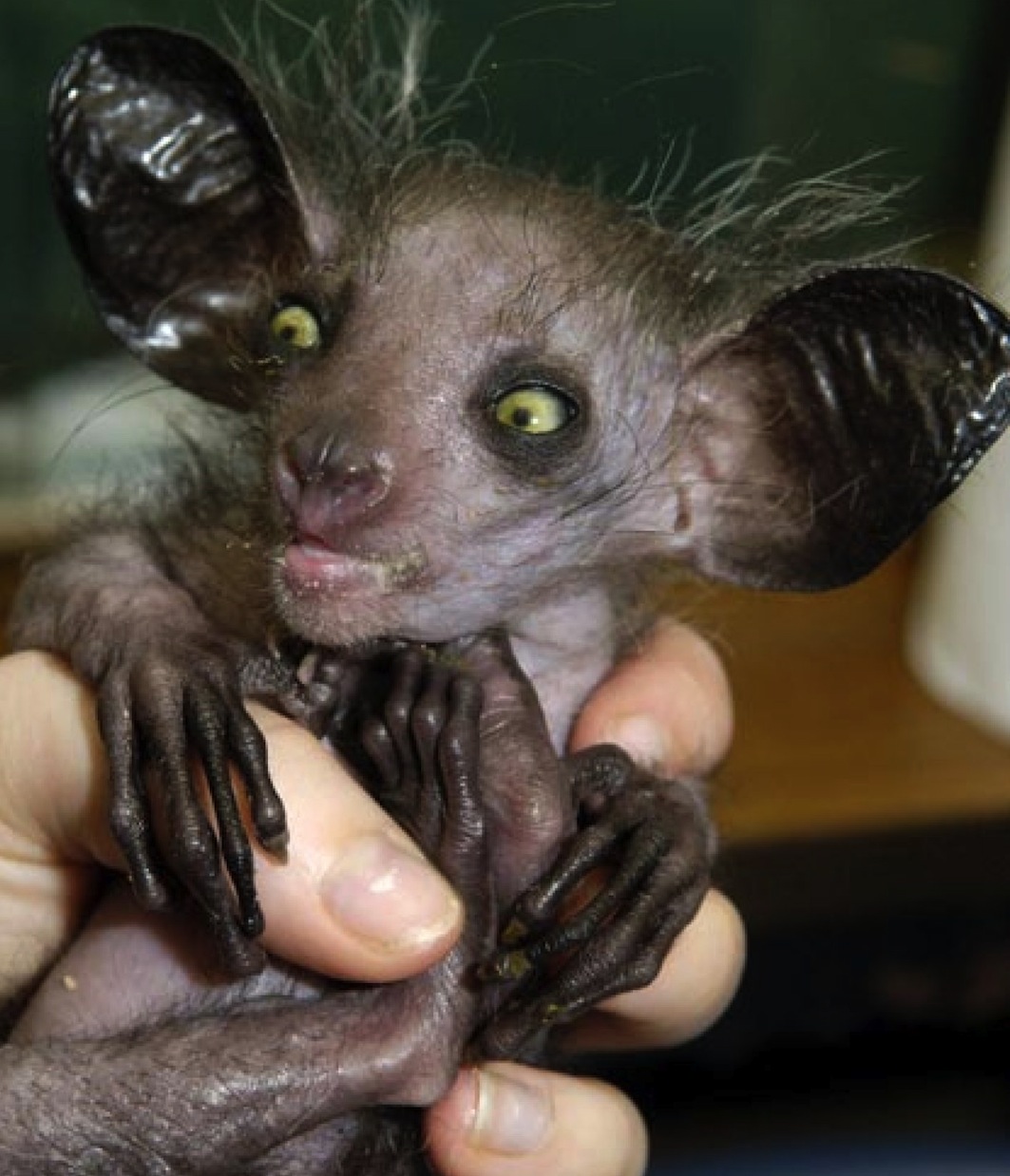
aye-aye 1Have you seen pictures of these delightful little creatures? They’re called Aye-ayes, and they are widely distributed across the jungles of Madagascar. (Any genetic link between aye-ayes and Gollum remains unconfirmed.)

The International Union for Conservation of Nature has classified these harmless mammals as “Near Threatened.” So, helping them reproduce, as an aye-aye breeder, may also keep the species from becoming extinct.

Actually, I don’t believe you can import Aye-ayes as pets—unless you’re one of those rich or famous people to whom the laws for regular people don’t apply. But, if it is possible to adopt an aye-aye, I offer the following pros and cons for your consideration.

Pro: Some people think they look cuddly.

Con: Some people think they look creepy.

Pro: They don’t demand attention all day long.

Con: They’re nocturnal and might keep you up at night.

Pro: People will think you’re on the cutting edge.

Con: People will think you’re one odd cookie.

Pro: They have tiny mouths.

Con: They are omnivores, and eat other animals.

Pro: Most people consider them exotic animals.

Con: They clearly resemble devilish gremlins.

Pro: Daubentonia madagascariensis are lemurs.

Con: They’re not nearly as cute as their lemur cousins.

Pro: In an emergency, they’re edible.

Con: In an emergency, they’re edible.

Pro: Aye-ayes may reveal God’s imagination & humor.

Con: Aye-ayes just may have a less heavenly origin.

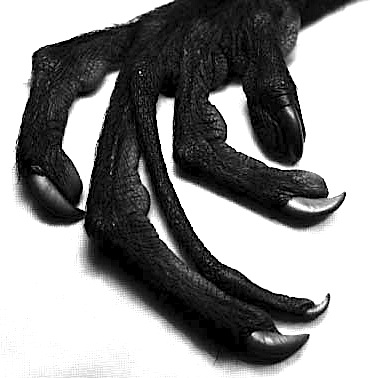
aye-aye 3The picture to the right, a close up view of the aye-aye’s “hand” lends credence to the last conjecture, above. It also evokes nightmarish memories of a story that traumatized my youth, “The Monkey’s Paw.”

You can either read it here, or view a recent treatment of it here.

C.S. Lewis acknowledges the danger posed by possessing too much love—an idolatrous affection—for pets. Of course, there are other things we can love that way with even less justification than an animal.

There is a reaction at present going on against the excessive love of pet animals. We have been taught to despise the rich, barren woman who loves her lap dog too much and her neighbor too little. It may be that when once the true impulse is inhibited, a dead poet is a nobler substitute than a live Peke, but this is by no means obvious.

You can do something for the Peke, and it can make some response to you. It is at least sentient; but most poetolaters hold that a dead man has no consciousness, and few indeed suppose that he has any which we are likely to modify. Unless you hold beliefs which enable you to obey the colophons of the old books by praying for the authors’ souls, there is nothing that you can do for a dead poet: and certainly he will do nothing for you.

He did all he could for you while he lived: nothing more will ever come. I do not say that a personal emotion towards the author will not sometimes arise spontaneously while we read; but if it does we should let it pass swiftly over the mind like a ripple that leaves no trace. If we retain it we are cosseting with substitutes an emotion whose true object is our neighbour.

Hence it is not surprising that those who most amuse themselves with personality after this ghostly fashion often show little respect for it in their parents, their servants, or their wives. (“The Personal Heresy: A Controversy”).

Yes, as Lewis so ably points out, it’s far more important to care about the personhood of our neighbor today . . . rather than a departed writer. (Coincidentally, Lewis would object with equal eloquence to Lewisolatry.)

If we cannot express our goodwill to other people, it’s better directed towards dogs and aye-ayes than someone departed from this world.

Which brings us back to the subject at hand. These furry little creature may not be the objects of the latest pet craze now, but it may be possible for you to initiate a new fad!

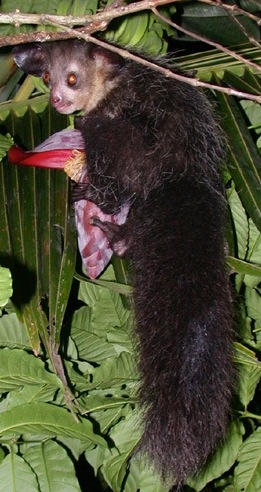
To make that possibility a bit more likely, allow me to close this column with a picture of a lovely aye-aye in its natural habitat. Now, that’s an animal one could easily consider cute and cuddly (as long as it keeps its paws to itself).

Ksukol ocasatý (Daubentonia madagascariensis)

A Song Joined Our Family

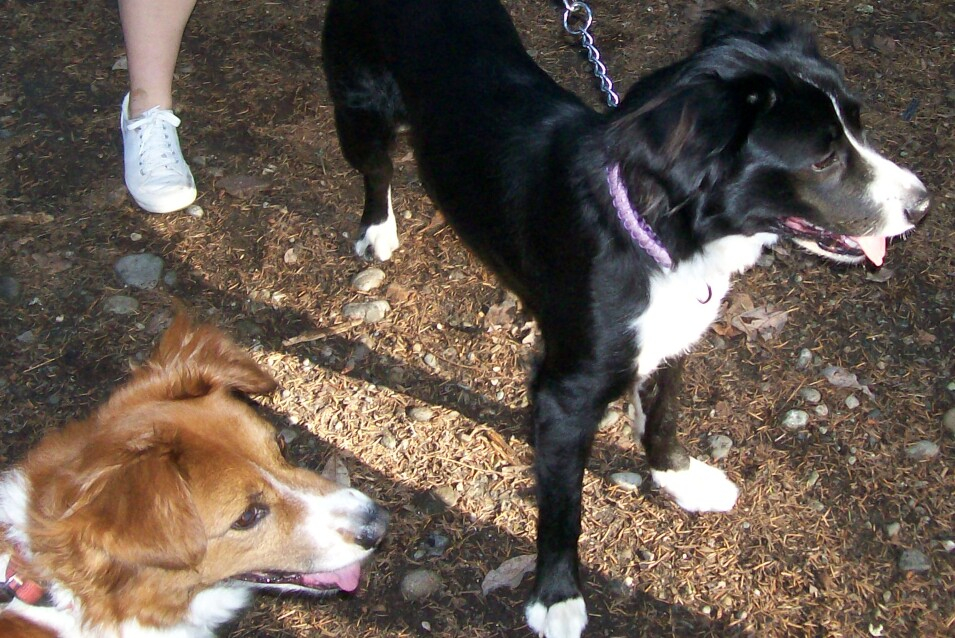
lyricLast night a new member joined our family. Her name is musical. We didn’t choose it; her previous family did. But we think it fits and she’ll live up to it.

Her name is Lyric.

We adopted Lyric through the agency of DRAW Rescue.

The picture above shows black and white Lyric at her first meeting with her new sister, Foxy. (We didn’t name Foxy either; she joined our family when we “rescued” her from a California shelter six years ago.)

The two girls are getting along quite well their first full day together, but those of you with more than one pet know that it takes a little bit of time to sort things out when a new member joins the family.

Lyric is our third consecutive rescue pet. Although she’s younger than the others who came to us in the past, adopting a rescue dog isn’t the same thing as getting a puppy. You don’t enjoy the same cuddly acceptance. Many rescued dogs are quite wary of human beings—especially men.

It takes time and patience to bond. To let them know that they’re safe and they are now in their “forever home.” Some, like Lyric, benefit from interim stays with gracious foster parents. But their move to your home is still just part of their unstable life until the day when they “forget” about all the previous transitions and just know they are home.

C.S. Lewis talks about this longing for a home in Till We Have Faces. Psyche is describing her desire to find that place where she truly belongs.

Somewhere else there must be more of it. Everything seemed to be saying, Psyche come! But I couldn’t (not yet) come and I didn’t know where I was to come to. It almost hurt me. I felt like a bird in a cage when the other birds of its kind are flying home. . . .”

The sweetest thing in all my life has been the longing— to reach the Mountain, to find the place where all the beauty came from . . . my country, the place where I ought to have been born. Do you think it all meant nothing, all the longing? The longing for home? For indeed it now feels not like going, but like going back.”

Although the myth he’s retelling in this book has nothing to do with adopting pets, the following passage also relates (by dramatic extension) to the situation of “rescued” animals who join you with a legacy of previous relationships (not all of them good).

“Where shall we ever be safe if we’re not safe here? This is my home, Maia. And you won’t understand the wonder and glory of my adventure unless you listen to the bad part.

If you are in a position to share your home with a pet, I probably don’t need to tell you there are many, very many of them who need homes today. If you’re up to the extra challenge of adopting a rescued animal who comes with often unknown “baggage,” just contact one of your local rescue agencies.

These organizations are almost always run by volunteers who are motivated solely by their compassion for these innocent creatures who can no longer be cared for by their owners or—more tragically, have been discarded by those who should have cared for them. (Some, of course, are strays who were never in a human family.) I’m proud to say my nephew and his wife provide a foster home for rescued dogs in Seattle.

Whatever their background . . . the “bad part” of their story, you can be instrumental in “rehabilitating” them. And, trust me, they will reward you with more love than you could ever imagine.

Now, even if you’re not prepared to take in one of these lovely creatures, you can still help. Your local rescue organizations and shelters welcome any contributions you make—either in kind or in cash. You can check your phonebook for local rescues. Or, check out one of these websites which can connect you to many of these groups.

Adopt a Pet

Petfinder

Rescue Me (Dogs)

This column turned into more than I intended it to be. Originally I set out to simply celebrate Lyric’s entrance to our family. Now I realize that her blessing just may encourage the adoption of another cat or dog. And that would be a wonderful thing indeed.

In closing, let’s consider another passage from C.S. Lewis, the creator of Narnia. In a letter he wrote in 1955, he mentions the importance of home.

As Dr. [Samuel] Johnson said, “To be happy at home is the end of all human endeavour.” (1st to be happy to prepare for being happy in our own real home hereafter; 2nd in the meantime to be happy in our houses.)

These words remind us that the happiness we know in our earthly homes is only a foretaste of the joy we can know when we ultimately take our place in the eternal home prepared for us by our Creator.

Perhaps on that day we’ll be welcomed not only by our loved ones who have preceded us, but also by the pets we have loved during this mortal life. That would certainly be a magnificent thing . . . but that’s a discussion for another day.

Crimes Against Animals

ferretYou may already have seen this picture which has spread like wildfire across the internet. I’m ashamed to say I shared the common initial response to the story—laughter at the foolishness of consumers looking for bargains. Fortunately, as I learned more of the facts of the deeper crime committed here became apparent, and the humor was displaced by sympathy.

So, just what does this image show? Apparently in Argentina, some criminals have devised a very profitable type of deception. They sell cute toy poodles at a fraction of typical prices.

The only problem with this transaction, is that when owners take their puppies in for vaccinations, the veterinarians have to break the news to them that what they really purchased is not a poodle . . . but a ferret.

How in the world could someone confuse the two, you doubtless wonder. After all, one is Canis lupus familiaris (canine) and the other is Mustela putorius furo (weasel)!

The thieves go to extremes to camouflage their crime. In addition to grooming their fur in similar ways, apparently they abbreviate the poor creatures lives by loading them with steroids as soon as they are born. This adds bulk to disguise the slinky build of these crepuscular mammals that are closely related to polecats. [Don’t feel bad, I had to look up “crepuscular” myself; it refers to animals most active during dawn and twilight hours.]

From the photo you can see the “subtle” differences. I suppose the vendor could explain some of them away with comments like “the muzzle of really young puppies always looks slightly pointed, until they mature.”

While I despise theft, I can chuckle at the thought of someone’s jaw dropping at the news of how they were duped—but I do not regard as at all humorous the suffering inflicted on those innocent creatures.

I don’t own one of the estimated 800,000 domestic ferrets that are part of American families. That doesn’t prevent me, though, from being angered by the cruelty of man toward a species with which humanity has enjoyed a cooperative relationship since before the days of Caesar Augustus. (Augustus shipped ferrets to the Balearic Islands to control a rabbit infestation in 6 BC.)

Some readers might consider my concern for mere weasels as misguided. I believe they are wrong. As C.S. Lewis wrote to a correspondent in 1956:

I think God wants us to love Him more, not to love creatures (even animals) less. We love everything in one way too much (i.e. at the expense of our love for Him) but in another way we love everything too little. No person, animal, flower, or even pebble, has ever been loved too much—i.e. more than every one of God’s works deserves.

It should come as no surprise that the creator of Narnia gave much thought to humanity’s relationship with the other creatures with which the Lord has populated our world. God in the Dock includes his fine essay on “Vivisection.”

After weighing the arguments for and against experimentation on animals, Lewis suggests that our justifications for doing so are often dehumanizing.

The reason why we do not dare [to strongly object to experimentation on higher life forms in the animal kingdom] is that the other side has in fact won. And though cruelty even to beasts is an important matter, their victory is symptomatic of matters more important still.

The victory of vivisection marks a great advance in the triumph of ruthless, non-moral utilitarianism over the old world of ethical law; a triumph in which we, as well as animals, are already the victims, and of which Dachau and Hiroshima mark the more recent achievements. In justifying cruelty to animals we put ourselves also on the animal level. We choose the jungle and must abide by our choice.

I pray that the Argentinean authorities are able to dismantle this abominable trade. And I also hope they will not only prosecute the perpetrators of the crime for theft . . . but for the far more morally corrupt crime of cruelty to animals as well.

C.S. Lewis’ Beloved Dogs

When the internet throws unsolicited information at me, I do my best to ignore it. Yesterday I failed to duck at the right moment and Wikipedia suggested to me a “featured article” I found irresistible. It featured the earliest reference to a named dog—Abuwtiyuwwho died more than four thousand years ago and was buried in Giza in accordance with the wishes of the unknown pharaoh he guarded.

He was almost certainly a Tesem (“hunting dog”), an ancient breed resembling modern greyhounds. (Curiously, a 2004 DNA study found greyhounds are more closely related to herding breeds.)

We contemporary dog lovers understand how a pharaoh could love one of his canine companions enough to have him mummified and buried in an elaborate ceremony. In the image above, our border collie mix is juxtaposed to a hieroglyph tesem. If you’re interested in the subject, you might enjoy one of my February blogs entitled “Pets in Heaven.”

C.S. Lewis was also a dog lover. Pastor Bruce Johnson wrote a delightful article about eight of his dogs, entitled “All My Dogs Before Me.” You can read the brief but thorough article here.

Johnson walks us from Jacksie (who provided Lewis with his “adopted” name of Jack) to the friendly Ricky who was ever “anxious to be friendly.” In between, the author’s family included Tim, Pat, Mr. Papworth, Troddles, Bruce and Susie. Lewis spoke fondly of all of them, with the exception of Bruce, who possessed a predilection for barking through the night and was terribly spoiled by Mrs. Moore.

I also recommend a fine post about one of Lewis’ dogs which appeared on A Pilgrim in Narnia. It’s entitled “The Society of Tim.” The author of the blog is Brenton Dickieson, a Canadian professor and Lewisian scholar.

Pets in Heaven?

One of my favorite features in the Wittenburg Door of the 1980s was a running account of “Dogs Who Know the Lord.” Having witnessed more Christlike traits in some pets than I’ve seen in many human lives, I considered the tongue in cheek title a definite possibility.

This week we bid farewell to a gentle and loving border collie who had been part of our family for more than a decade. She lived a long and full life, and like her our previous border collie, she enjoyed her family and the outdoors (both gifts of God) right up until the end. (Both had been “rescued” by us.) Then, when Tanner and Lady were each over 15 years old, simply remained on their blankets when the day arrived that they knew they had not the strength to rise.

There are two kinds of people. Pet lovers, and those whose hearts are desensitized to their affections. The latter group has already stopped reading this post. But pet lovers, yes you, can empathize with my family’s current grief. You understand our loss because you’ve suffered the same pain. And, some of you may even pause to say a short prayer for us.

As a pastor, I’ve had numerous conversations with people about the question of whether or not we’ll see our pets in heaven. It’s a provocative subject, and the fact that such questions persist is a tribute to the significance of these animals in our lives.

Contrary to what some would allege, posing questions about this matter does not trivialize faith; it reveals how our restored relationship with our Creator affects every dimension of our existence.

We cannot know, of course, the answer to the question. That’s something that those who respond with a snide “of course not!” should take care to realize.

Over the years my own views on this have broadened, and far from seeing the deliverance (i.e. not “salvation”) of animals as something unlikely . . . I now consider it likely that we will be greeted by our beloved pets in the new creation. Here are some reasons I consider this a definite possibility:

  1. First, it is true that Jesus died to redeem (save) human beings (not animals).
  2. Animals are “innocent” sufferers of humanity’s disobedience and fall.
  3. Some animals are uniquely precious and beloved by God’s children.
  4. Their presence in heaven would enhance our joy.
  5. The same God who created them would have no difficulty re-creating or restoring them.
  6. If the lion and the lamb will lie together in harmony, why should there not be room for our much-loved pets to frolic alongside them?

And, lest you consider the words above merely the sentimental ramblings of a grieving man, I take comfort in the fact that C.S. Lewis too regarded this as a possibility. In a 1962 letter, he wrote:

. . . in The Problem of Pain I ventured the supposal—it could be nothing more—that as we are raised in Christ, so at least some animals are raised in us. Who knows, indeed, but that a great deal even of the inanimate creation is raised in the redeemed souls who have, during this life, taken its beauty into themselves? That may be the way in which the “new heaven and the new earth” are formed. Of course we can only guess and wonder. But these particular guesses arise in me, I trust, from taking seriously the resurrection of the body.