New Life Continues to Blossom

After the seriousness of my last couple of posts, I hoped to come up with an “uplifting” theme for my latest reflection. And, lo and behold, God provided a perfect picture.

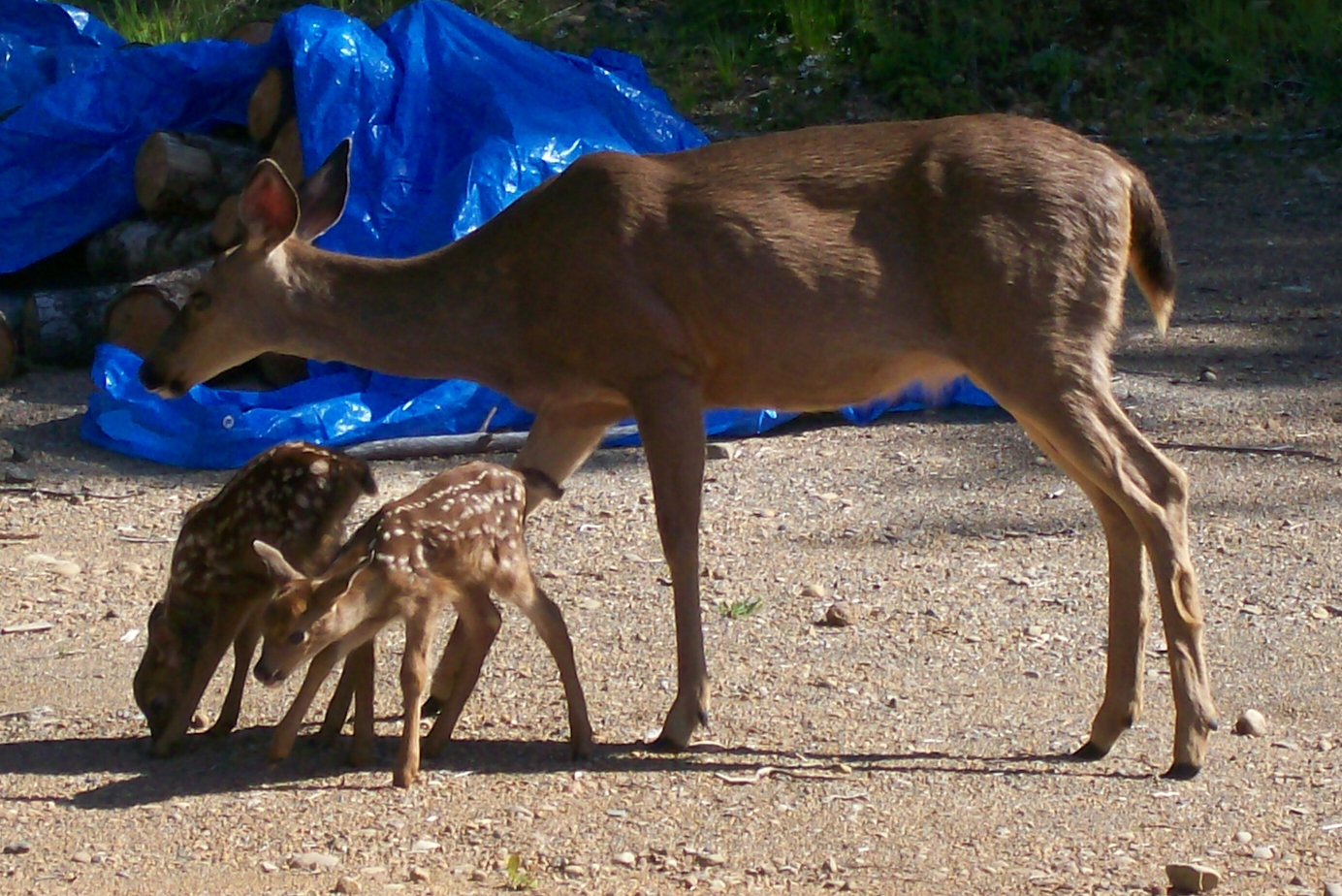
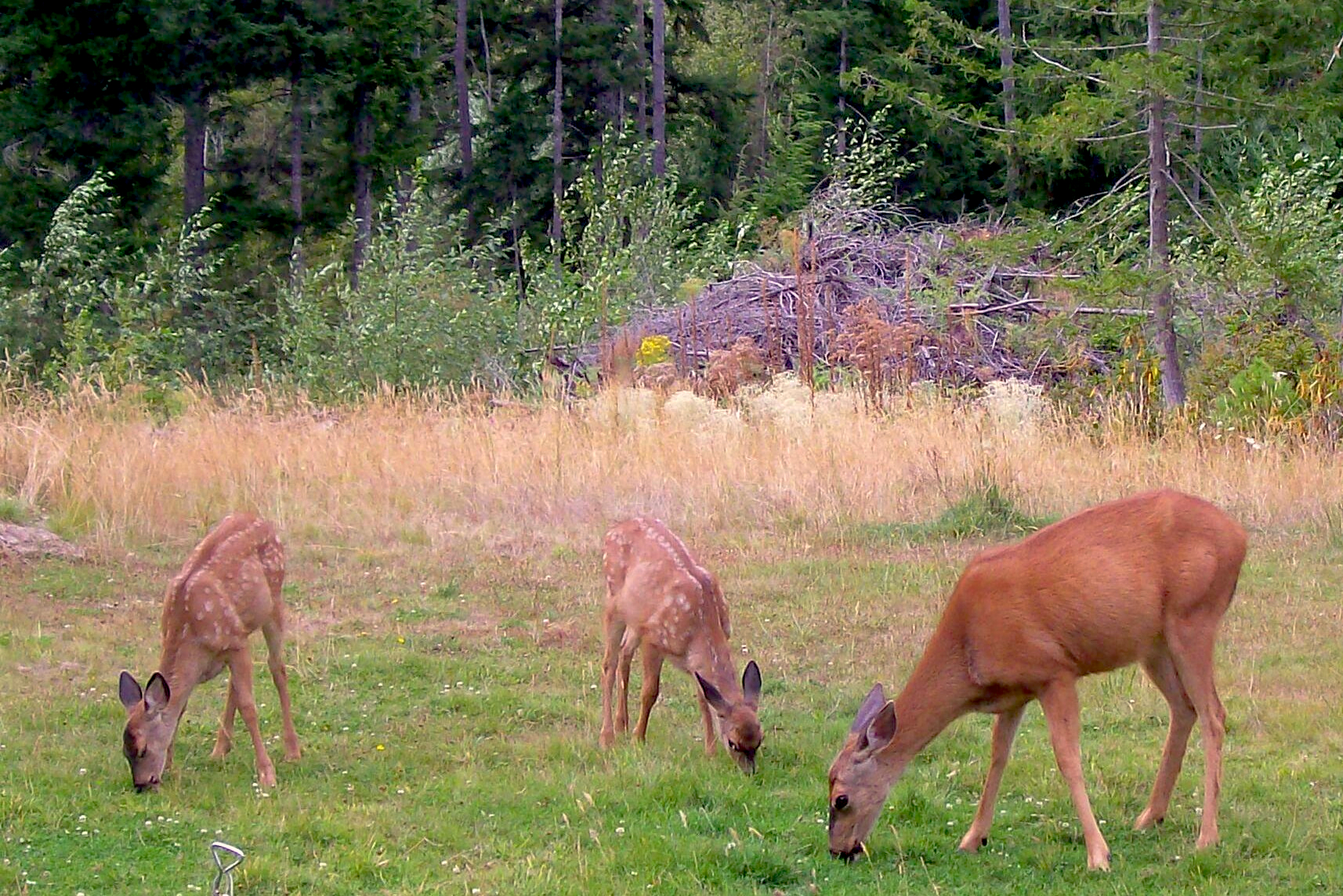
My photograph (through a glass door) doesn’t do justice to his living portrait of peace. Still, I thought some of you who recalled my initial post on the brand new fawns that pranced past my office months ago would enjoy seeing how they have grown.

Mom has them munching on the overgrown grass and clover in our back yard. (My wife says we can alternate mowing the yard, one-half each week. I argue that the deer may want to bring along friends and we wouldn’t want them disappointed by a mower-stunted banquet.)

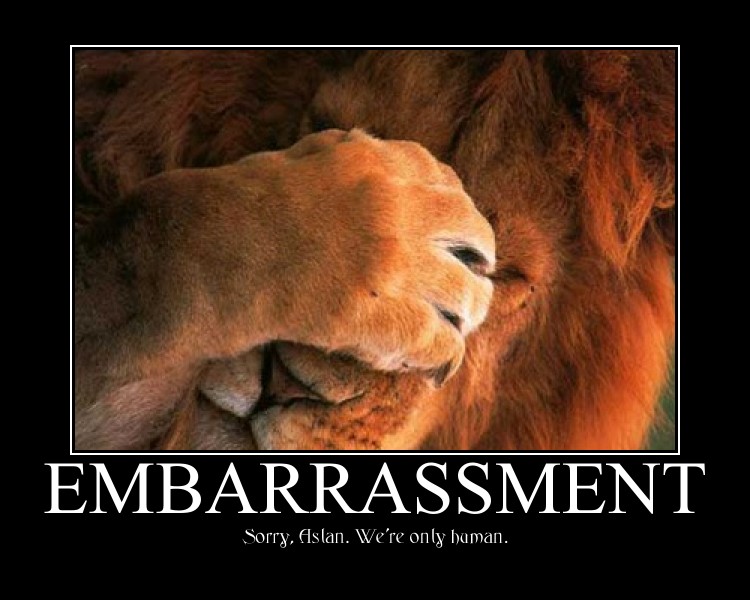
When I see such peaceful creatures, I long for the new heaven and earth when the lion shall like down with the lamb. To see the harmony God originally designed—to touch and to taste it—is one of the reasons that Narnia resonates to strongly with many of our souls.

C.S. Lewis was a lover of nature. Nature walks were a fundamental part of his life’s regimen. And, Lewis recognized there is a danger in looking to Nature herself for life’s meaning. In The Four Loves he wrote “Nature cannot satisfy the desires she arouses nor answer theological questions nor sanctify us.”

In the same essay he elaborates on how the bliss communicated by Nature is only fully experienced by those who look beyond it, to its divine Source.

Say your prayers in a garden early, ignoring steadfastly the dew, the birds and the flowers, and you will come away overwhelmed by its freshness and joy; go there in order to be overwhelmed and, after a certain age, nine times out of ten nothing will happen to you. (The Four Loves).

I looked out the window today, grateful to God for the majesty of the mountains that grace the horizon. With that prayerful, thankful and receptive heart, I found my expectations in that moment far exceeded . . . swept aside as a trifle in a maelstrom . . . as I gazed upon the purity and peace of our three precious visitors.

Mastering the Anacoluthon

Allow me to once again display my grammatical ignorance. I was reading an online book review and the author used lots of multisyllabic words. (That’s something I actually enjoy.) But then he went and threw in one of those words I had to rush to dictionary.com to define. (That’s another thing I love—learning new words.)

Naturally, I could partially decipher the definition from the context. However, whenever I have a dictionary within reach, that shortcut doesn’t satisfy me.

In this case, the word was anacolutha, the plural form of anacoluthon. It is defined as “a construction involving a break in grammatical sequence, as ‘It makes me so—I just get angry.’” Well, we can all agree that is not a good sentence; it’s a fine example of what a writer should avoid.

Not all grammar rules make sense. Take for example the notion that one cannot end a sentence with a preposition. Some of us literally had our knuckles rapped for scribbling such grammatical “obscenities.” While it’s true that you can avoid using prepositions in this manner, it’s not the great sin we were taught it was. In his Letters to an American Lady, C.S. Lewis writes:

[Regarding] a sentence ending with a preposition. The silly “rule” against it was invented by Dryden. I think he disliked it only because you can’t do it in either French or Latin which he thought more “polite” languages than English.

Well, isn’t that an interesting historical note to become aware of?

But, back to anacolutha . . . let’s see if it’s difficult for a trained pen to sever the ties of logic, and compose this sort of literary construction.

Reepicheep was a great swordsman who, “a tail is the honor and glory of a Mouse” was his creed.

Frodo pondered his options while—the Nazgûl loathed bathing more than once each fortnight.

Wow, that’s a lot harder than it looks. If you can think of better examples (not difficult, I’m sure), feel free to share them in a comment! But only write them here, and don’t allow any anacolutha to slip into your real writing!

The Road Taken

They are both important. Where we are going, and how we get there.

It’s quite common for analogies about our lives to assume the form of journeys. The journey, in fact, is a fitting metaphor for all human life.

Aging is a journey. Maturing is a journey that should run parallel to aging (though it seldom seems to do so). Learning is a journey. And the image of the “lifelong learner” is something that appeals to most readers and to all who hunger for daily intellectual growth.

Our spiritual lives are journeys of a sort. They follow “paths,” with branches that invite us to travel in myriad directions. Yet all roads are not “equal.” David, the anointed Psalmist prayed, “Make me to know your ways, O Lord;
 teach me your paths” (Psalm 25:4, ESV).

Even secular poets have recognized the power of this concept. One of the most memorable lines ever penned in English is: “Two roads diverged in a wood and I . . . I took the one less traveled by, and that has made all the difference” (“The Road Not Taken,” Robert Frost).

The Inklings expertly used the metaphor of journey to frame their works. Tolkien’s The Hobbit and Lord of the Rings are both propelled, in fact, by vivid journeys. Likewise, Narnia’s Chronicles contain a number of momentous journeys, which ultimately culminate in the final journey which just begins with the close of The Last Battle.

These journeys are, of course, literal trips. Physical traveling from one place to another. Of course, these physical passages occur simultaneously with far more meaningful changes.

The typical contemporary journey of life may take us to varying locales—but it’s possible to savor a rich life journey without ever traveling far from the home of our youth. Indeed, one could be bedridden from birth, and travel the world in terms of experiencing Life. Thanks to God’s gifts of imagination, dream, wonder and faith.

C.S. Lewis also employs this journeying metaphor in his nonfiction works. In The Problem of Pain, he paints a fascinating panorama of our life in this world. He reveals that suffering is actually a blessing, in that it prevents us from growing too attached to this world. Although God graces us with pleasing moments in this life, they are interrupted by moments of insecurity . . . lest we mistakenly believe this finite world is our true home.

Christian doctrine of suffering explains, I believe, a very curious fact about the world we live in. The settled happiness and security which we all desire, God withholds from us by the very nature of the world: but joy, pleasure, and merriment, He has scattered broadcast. We are never safe, but we have plenty of fun, and some ecstasy. It is not hard to see why. The security we crave would teach us to rest our hearts in this world and pose an obstacle to our return to God: a few moments of happy love, a landscape, a symphony, a merry meeting with our friends, a bathe or a football match, have no such tendency. Our Father refreshes us on the journey with some pleasant inns, but will not encourage us to mistake them for home.

May the roads we choose to follow bring us safely to the wonderful home our heavenly Father has prepared for each of us.

___

The beautiful, copyrighted photograph above appears compliments of Craig Sterken Photography at craigsterken.com. Check out his exceptional gallery!

Our Eagle Allies

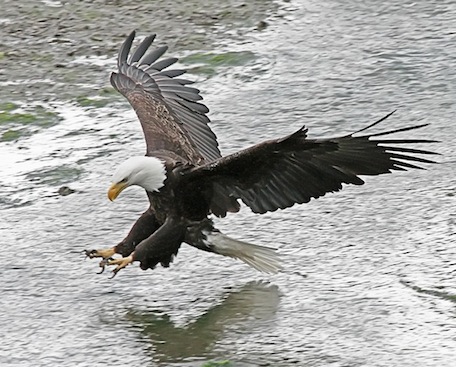
Eagles are majestic creatures. Living in the midst of a large bald eagle nesting area is something my wife and I don’t take for granted. Each year we see scores of the graceful raptors courting and then raising their young right here on Hood Canal.

Hood Canal is actually an 80 kilometer long fjord, which lies just to the east of the Olympic National Forest. It features deep blue waters at the foot of an impressive mountain range.

Eagles make a significant impression on nearly everyone fortunate enough to see them. Even though they are birds of prey, they look extremely noble. In light of that fact, it’s no accident many nations include an eagle as part of their coat of arms or national seal. These include: Albania, Armenia, Austria, Germany, Ghana, Iceland, Indonesia, Iraq, Mexico, Moldova, Montenegro, Nigeria, Panama, Russia, the United States and at least ten additional countries.

Eagles have also figured prominently in literature. For example, both of the preeminent Inklings, J.R.R. Tolkien and C.S. Lewis, featured eagles as heroes in their fictional classics.

Eagles in the Work of C.S. Lewis

Eagles are among those granted speech by Aslan at the dawn of Narnia’s creation. They reward their Creator’s gift by serving faithfully throughout the entire history of the land. Eagles play a role in virtually every battle that occurs in Narnia. They are always on the side of good.

In addition to fighting in the campaign against the White Witch, eagles are responsible for the rescue of Edmund from her camp. When Aslan calls his army to rush toward the climactic battle in The Lion, the Witch and the Wardrobe, he says:

And now! Those who can’t keep up—that is, children, dwarfs, and small animals—must ride on the backs of those who can—that is, lions, centaurs, unicorns, horses, giants and eagles. Those who are good with their noses must come in the front with us lions to smell out where the battle is.

The most noteworthy passages relate to Farsight, who is a prominent eagle during the final days of Narnia. He it is who brings to King Tirian the sad news that Narnia’s capital has fallen.

“Sire,” said the Eagle, “when you have heard my news you will be sorrier of my coming than of the greatest woe that ever befell you.” Tirian’s heart seemed to stop beating at these words, but he set his teeth and said, “Tell on.” “Two sights have I seen,” said Farsight. “One was Cair Paravel filled with dead Narnians and living Calormenes . . . And the other sight, five leagues nearer than Cair Paravel, was Roonwit the Centaur lying dead with a Calormene arrow in his side. I was with him in his last hour and he gave me this message to your Majesty: to remember that all worlds draw to an end and that noble death is a treasure which no one is too poor to buy.” “So,” said the King, after a long silence, “Narnia is no more.” (The Last Battle)

After this sad entrance, and following the “Last Battle,” Farsight is one of the leaders as the victor’s army enters into the foothills of heaven.

. . . the dogs barked, “Faster, faster!” So they ran faster and faster till it was more like flying than running, and even the Eagle overhead was going no faster than they. And they went through winding valley after winding valley and up the steep sides of hills and, faster than ever, down the other side, following the river and sometimes crossing it and skimming across mountain lakes as if they were living speedboats . . . “Further up and further in!” roared the Unicorn, and no one
held back. . . .

Only when they had reached the very top did they slow up; that was because they found themselves facing great golden gates. And for a moment none of them was bold enough to try if the gates would open. . . . “Dare we? Is it right? Can it be meant for us?” But while they were standing thus a great horn, wonderfully loud and sweet, blew from somewhere inside that walled garden and the gates swung open. (The Last Battle)

Eagles in the Work of J.R.R. Tolkien

Similar to Lewis’ distinction between dumb and speaking eagles, Tolkien distinguishes between “common” and Great Eagles. In The Hobbit he writes, “Eagles are not kindly birds. Some are cowardly and cruel. But the ancient race of the northern mountains were the greatest of all birds; they were proud and strong and noble-hearted.”

It is these noble mountain eagles who populate the six books (three volumes) of the Lord of the Rings and Tolkien’s other fiction.

At the end of the First Age, eagles fight alongside the Valar, Elves and Men in the War of Wrath. They especially contend against the dragons of Morgoth as recounted in The Silmarillion. The eagles emerge victorious, destroying most of their enemy during an aerial battle.

Near the end of the Third Age, the eagles from the Misty Mountains rescue Thorin’s troop from goblins and wargs, as related in The Hobbit. Without their aid, the Dwarves, Elves and Humans would likely have met defeat at the Battle of Five Armies.

In The Lord of the Rings (including the cinematic version) the eagles feature prominently. They are even capable of clashing head-to-head with the fearsome Nazgûl-mounted dragons.

And, of course, several of them rescued Frodo Baggins and Samwise Gamgee following the destruction of the One Ring.

Two named eagles should be mentioned. Thorondor was the initial Lord of Eagles and according to The Silmarillion was the “mightiest of all birds that have ever been.”

His descendant Gwaihir is the leader of those who aid Gandalf throughout the events of The Lord of the Rings. Not only does he rescue the wizard from the tower, but he returns him after his “resurrection” which followed the battle with the Balrog.

“Naked I was sent back—for a brief time, until my task is done. And naked I lay upon the mountain-top. . . . I was alone, forgotten, without escape upon the hard horn of the world. . . . And so at the last Gwaihir the Windlord found me again, and he took me up and bore me away. ‘Ever am I fated to be your burden, friend at need,’ I said.”

“A burden you have been,” the Eagle answered, “but not so now. Light as a swan’s feather in my claw you are. The Sun shines through you. Indeed I do not think you need me any more: were I to let you fall, you would float upon the wind.” (The Two Towers)

It may be that for this life we must remain content with seeing only the common and mute eagles that populate this mortal world. But even they, are glorious to behold.

The Dearest of Deer

Thank you, Lord, for allowing us to live in a home surrounded by a forest!

When I was driving home this afternoon I was stunned by the majestic flight of a dozen bald eagles as they danced in the sky above our small community of Seabeck, Washington. I pulled to the side of the road and enjoyed their ballet for some time before deciding that I would blog about eagles when I returned home.

Then I saw something even more precious. Just outside the window of my study a doe and her two (very) young fawns walked past. I grabbed my camera and snapped no fewer than fifty photos as they grazed on the nearby lawn. (I decided as they wandered on down another trail that the post on the eagles would wait.)

The fawns were so tiny I don’t think they could have been fourteen inches tall. (Sorry, we older Americans are still metric-impaired.) They stood as though they were still getting the feel of their tiny legs. It was a glorious scene.

C.S. Lewis graced the land of Narnia with a stunning array of creatures. Some are not found in this world, apart from myths. Unicorns and centaurs would be of that ilk.

I happen to find the others even more fascinating. The horses, dogs and bears that are familiar to us, but different. Different because they have been gifted with speech, and with it, the ability to know and follow their Maker.

As he wrote in his description of Narnia’s creation in The Magician’s Nephew:

And now, for the first time, the Lion [Aslan] was quite silent. He was going to and fro among the animals. And every now and then he would go up to two of them (always two at a time) and touch their noses with his. He would touch two beavers among all the beavers, two leopards among all the leopards, one stag and one deer among all the deer, and leave the rest. . . . The creatures whom he had touched came and stood in a wide circle around him. . . .

The Lion, whose eyes never blinked, stared at the animals as hard as if he was going to burn them up with his mere stare. And gradually a change came over them. The smaller ones—the rabbits, moles, and such-like—grew a good deal larger. The very big ones—you noticed it most with the elephants—grew a little smaller. Many animals sat up on their hind legs. Most put their heads on one side as if they were trying very hard to understand. The Lion opened his mouth, but no sound came from it; he was breathing out, a long, warm breath; it seemed to sway all the beasts as the wind sways a line of trees.

Far overhead from beyond the veil of blue sky which hid them the stars sang again; a pure, cold, difficult music. Then there came a swift flash like fire (but it burnt nobody) either from the sky or from the Lion itself, and every drop of blood tingled in the children’s bodies, and the deepest, wildest voice they had ever heard was saying: “Narnia, Narnia, Narnia, awake. Love. Think. Speak. Be walking trees. Be talking beasts. Be divine waters.”

The scene I was privileged to observe today reminded me of the innocence of nature, prior to humanity’s disobedience. It also reminded me of the Messianic promises that restored “nature” will enable lions to lie in harmony beside sheep.

In his book Miracles, Lewis discusses this from the perspective of redemption, as contrasted with simply understanding it as a consequence of a “new” creation.

The doctrine of a universal redemption spreading outwards from the redemption of Man, mythological as it will seem to modern minds, is in reality far more philosophical than any theory which holds that God, having once entered Nature, should leave her, and leave her substantially unchanged, or that the glorification of one creature [humanity] could be realised without the glorification of the whole system.

God never undoes anything but evil, never does good to undo it again. The union between God and Nature in the Person of Christ admits no divorce. He will not go out of Nature again and she must be glorified in all ways which this miraculous union demands. When spring comes it “leaves no corner of the land untouched;” even a pebble dropped in a pond sends circles to the margin.

I said a prayer this evening that the Lord would bless that lovely doe and her precious offspring with long, healthy, safe, peaceful, and even, happy lives.

Beware Your Personal Dragon

Readers of C.S. Lewis possess differing opinions on the film adaptations of the Chronicles of Narnia. One element from the latest film that is presented quite faithfully, is Eustace’s transformation into a dragon.

“He had turned into a dragon while he was asleep. Sleeping on a dragon’s hoard with greedy, dragonish thoughts in his heart, he had become a dragon himself.” (Voyage of the Dawn Treader).

With his brilliant insight and typical mirth, Lewis reveals for us a powerful dynamic of human existence. Two, in fact.

First, what we are inside—our genuine essence or spirit—will ultimately be revealed. This is true for most of us during this life. And, it will be experienced by all humanity as we stand before our Creator.

Second, what we desire—the longings upon which we focus our hearts and energies—shape that very essence. In a sense, Lewis is saying, we become what we covet!

What a wonderful lesson for us. It resounds with echoes of the Scriptures.

The title of this column suggests that we beware of the dragons to which we are particularly vulnerable. They vary from person to person, of course. And, they frequently shift, dependent on our biological age circumstances.

Martin Luther alludes to this in his broader comments about temptation and spiritual maturity:

To feel temptation is therefore a far different thing from consenting or yielding to it. We must all feel it, although not all in the same manner, but some in a greater degree and more severely than others; as, the young suffer especially from the flesh, afterwards, they that attain to middle life and old age, from the world, but others who are occupied with spiritual matters, that is, strong Christians, from the devil. But such feeling, as long as it is against our will and we would rather be rid of it, can harm no one. For if we did not feel it, it could not be called a temptation. But to consent thereto is when we give it the reins and do not resist or pray against it. (Luther’s Large Catechism).

Lewis reveals vividly what becomes of us when we surrender to our dragons. It’s not a pretty sight. And, sometimes it’s terminal. It would have been so, in Eustace’s own case, had not Aslan come to him with his healing grace

And so it is with us. No matter how dragonish you and I have grown, we can be healed of the affliction by the same Aslan, who is known in our world by a different name . . . Yeshua (Jesus).

One Glorious View

This is what brought us home to Washington State, at the end of our military career. This is the amazing view of the Olympic Mountain range we enjoy from our back door. Despite living most of my life in California, and having resided in nearly every region of the U.S. (not to mention several overseas locales) . . . this is what has always come to mind whenever someone said “God’s country.”

Lush green forests and abundant wildlife. Rushing rivers and magnificent mountain peaks. (In the center of our view, in fact, is a double peak called “The Brothers.”)

As C.S. Lewis wrote in The Horse and His Boy: “Onward and Upward! To Narnia and the North!”

Even if I don’t receive a single Christmas present this year, living here is more than enough to make me a happy man.

Addendum:

In truth, Robert, it was proximity to your family that brought you home to the Pacific Northwest. You would have chosen to live by our children and grandchildren even if it were back there in the Mojave Desert. But, I know you are not complaining that, in God’s grace, all of your children live in lovely Washington!

C.S. Lewis’ Lion

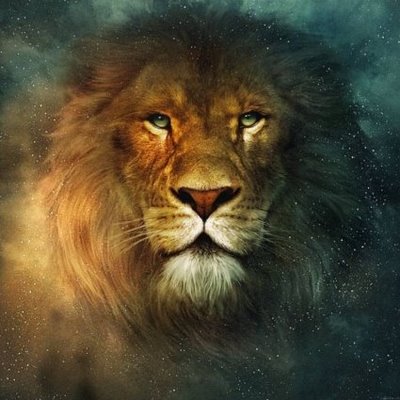
The Chronicles of Narnia rank among the finest children’s literature ever written. And the introduction of the noble Aslan in The Lion, the Witch and the Wardrobe is a wondrous highlight of the series.

In 1951, Lewis wrote a letter to some fans of his “new” book. He said:

I am glad you all liked The Lion. A number of mothers, and still more, schoolmistresses, have decided that it is likely to frighten children, so it is not selling very well. But the real children like it, and I am astonished how some very young ones seem to understand it. I think it frightens some adults, but very few children.

As usual, the Oxford don was astute. There are those who have considered some of the themes in The Chronicles to be overly mature for some children. But that is a more insidious reason for some objections leveled against the books. More on that momentarily.

The stories are admired by many secular readers, and they are beloved by Christian readers of all ages. Some liberal readers object to what they consider to be “dated” (i.e. traditional) attitudes in the books. Honest literary critics recognize that literature written more than a half century ago would reflect the mores of their era and provenance. Lewis’ skepticism about “public” schools (i.e. in American parlance, “private” academies) is one such example.

But behind some objections to Lewis’ children’s books lies a more sinister agenda. Some secularists believe that only their own agnostic faith should be promoted, and they object to any expression of Christianity in the public forum. Some such activists have even advocated that The Chronicles barred from schools because they recognize that Aslan has a “different name” in our world.

Fortunately, The Chronicles of Narnia overflow with so much intrinsic merit that only the most cynical object to them. They are popular today, and that is likely to remain true in the foreseeable future. They have translated well to digital, audio and cinematic formats. But, for most of us, the soft caress of the printed page remains the medium of choice . . . when we cross through the wardrobe door into this land of awe.

A Font for All Seasons

There are a variety of ailments that disproportionately affect writers. Mundane disorders such as Repetitive Stress Injury, Computer Eyestrain and assorted carbuncles arise as no surprise. But there is another, psychological malady that can cripple an author’s creativity and savage his time schedule.

A fascination with fonts is a logical curiosity among people who love words. You can find stylized fonts reflecting for almost any special interest. In fact, just four months ago the total number of fonts surpassed the population of the planet. An affection for different fonts is one thing . . . but an obsession is quite another. Addicts are commonly referred to as “fontaholics.”

There truly are fonts for all seasons . . . too many versions to number. As an example of a unique font, you can check out Narnia BLL.

This lovely lettering is inspired by the recent films about the land of C.S. Lewis’ anointed Chronicles.

And It’s Not Just about Aesthetics

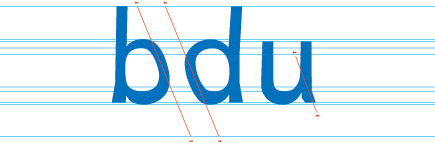
Recently a Dutch scholar devised a nefont specifically for people suffering from dyslexia.

Their approach, based on “weighting” the various letters and symbols, has been shown to improve readability for dyslexics. (Truth is, it would probably make reading easier for anyone.) Some see this new font as reinforcing prior studies which show serif fonts to be more legible than sans serif versions.

Whether you consider yourself immune to the lure of fonts, or are a self-confessed fontaholic, it’s a field about which every writer should understand the basics.