Literary Martial Arts

nonficOne of the lowest moments in my writing life occurred when a creative writing professor advised me to “stick with nonfiction.” Oh, she said it gently, but it still struck me with the power of a mixed martial arts (MMA) hammerfist.

I was majoring in editorial journalism at the University of Washington. Attempting to expand my scope, I took a short story writing course. It was a mistake.

I thought I had done adequately during the course. I was even moderately pleased with a couple of my stories. The instructor, on the other hand, well let’s just say she was not impressed with my effort.

She was right. At the time, my ear for good fiction was quite immature. I do not claim that it’s particularly well developed today, but I have written a story about a medieval pilgrimage that I hope to unveil in a year or two.

I was reminded of my literature professor’s grim assessment as I recently read an interview with a pastor, who is also a lawyer, and happens to be a writer as well. His name is Randy Singer.

Singer describes the similarity of his professions by saying “They all require skills in persuasion, in telling stories to illustrate things.” I guess he’s right.

The difference being that pastors tell true stories, authors of fiction write imaginary stories, and attorneys weave tales that lie somewhere in between.

The part of the interview, which appeared in World Magazine, that I found particularly insightful was this:

When your only desire is to tell the story so people don’t even notice the wording, at that point you’ve become a fiction author.

Singer’s description struck me with the force of an MMA ridge hand (a reverse knife-hand). When I came to, I finally knew why composing fiction does not come naturally to me.

I love words too much. Too much to sacrifice them simply for the sake of the story. Oh, I value the message also, but getting there is half the fun.

Although I don’t love words to the degree many poets lust after them, I still possess an affection that does not allow me to view them through purely utilitarian lenses.

To add insult to his literary injury, Singer adds the following, in response to the question of what he learned while writing several successful novels.

Third, to be less verbose and let the action carry the story instead of thinking, “What are some really flowery and cool phrases and words that I can weave into this?”

That’s enough, friend. You made your point. I would have responded a bit more colorfully and fragrantly, but I hear you.

Singer doesn’t cite C.S. Lewis in the interview, but his counsel is consistent with that of the Oxford don. Lewis advised using clear and concrete language, “so as to make quite clear what you mean and make sure your sentence couldn’t mean anything else.” (Personal Correspondence, 1956).

Similarly, Lewis would always argue for the words not to draw attention to themselves. Essentially, they need to get out of the way so the message can come through. “Don’t use adjectives which merely tell us how you want us to feel about the things you are describing. I mean, instead of telling us a thing was “terrible,” describe it so that we’ll be terrified.”

It’s wisdom like that which causes us to recognize C.S. Lewis as the brilliant, gifted, creative, versatile and anointed writer that he was.

As for Singer, perhaps I’ll have to check out one of his legal thrillers. The latest is set in antiquity, with a Roman jurist defending Paul before Nero. Should be quite interesting. Not so good as a nonfiction account of such a trial would be . . . but probably worth reading.
Similes & Metaphors

agdeiSimiles are wonderful literary tools. Being able to compare two dissimilar things in a way that brings out subtle nuances and insights is quite enjoyable.

Here are a couple of examples off the top of my head. (I don’t pretend others haven’t written these things, but I didn’t plagiarize them.).

A politician is like a weathervane.

Arguing theology is like having indigestion.

Disliking Narnia is like hating a feast.

Metaphors, of course, are far more powerful than similes. When we consider a metaphor we are pondering how two different things actually share some fundamental quality.

Comprehending metaphors requires the ability to think abstractly. A child—confined to a world of concrete concepts—cannot begin to think of their nation as a “motherland” or “fatherland,” as the case may be. Yet, those are powerful nurturing and bonding words that countless patriots have embraced throughout the centuries.

A simile might say “our country is like a family.” A metaphor suggests far more. In this case, it might convey that one’s allegiance to their nation should exceed their loyalty to their biological kin.

Nowhere is the magnificence of metaphors more manifest than in the way we talk about God. One of the most famous biblical passages is a straight forward example. “God is love” (1 John 4:8).

Jesus the Christ said of himself, “I am the Way, the Truth and the Life” (John 14:6). He also called himself the “Light of the world. Whoever follows me,” he added, “will not walk in darkness, but will have the light of life” (John 8:12).

It is a sad thing when a symbol loses its meaning. There is a prime example of that phenomenon in Oxford. And you can see it in the sign that hangs above a pub frequented by the Inklings.

No, not the Eagle and Child, which they affectionately referred to as the Bird and Baby.

After renovations to the Eagle and Child eliminated their privacy, the writers transitioned across the street to the Lamb and Flag. Both pubs trace their history back to the seventeenth century, and the latter is actually owned by St. John’s College. (It’s profits fund student scholarships.) In a 1963 letter, Lewis colorfully described the move thusly:

Mon 11 March it is. But note that our causeries de lundi are now permanently transferred to the Lamb & Flag. We were sorry to break with tradition, but the B & B had become too intolerably cold, dark, noisy, and child-pestered.

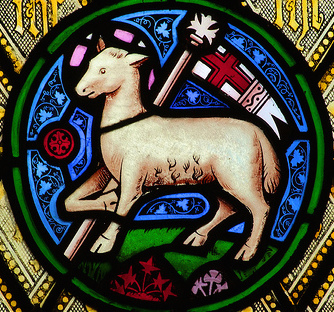
Sadly, when many people look at the Lamb on the pub’s sign, they fail to recognize it’s significance. The lamb carrying a cross-emblazoned banner is nothing other than the Agnus Dei, the Lamb of God.

What, some may wonder, is the Lamb of God? The better question is “who” is the lamb. The symbol represents Jesus Christ himself. It hearkens to the declaration of John the Baptizer as Jesus approached the Jordan: “Behold, the Lamb of God, who takes away the sin of the world!” (John 1:29).

To understand what it means to say “Jesus is the Lamb,” requires two things. First, a recognition that it is more than a simile; it is not simply that he possesses some of the attributes we would naturally associate with a lamb, such as gentleness. The second requisite is that we understand something about the Jewish sacrificial system.

For, Jesus being the Lamb of God means nothing less than that he is the true, complete, ultimate and final sacrifice for the sins of humanity.

And that is a wonder definitely worth pondering during this Christmas season.

Martian Tribute to C.S. Lewis

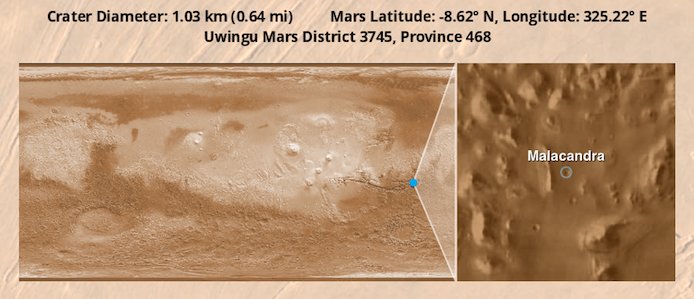
Malacandra CraterMere Inkling recently named a crater on Mars, in honor of C.S. Lewis. The crater’s name is Malacandra, which was the name for the red planet in the first volume of Lewis’ Space Trilogy, Out of the Silent Planet.

The naming of Malacandra Crater was done through an organization preparing the map which will be used by the Mars One Mission. Mars One is the optimistic international effort to establish a permanent human settlement on the red planet, beginning in 2024.

The über-adventurous (or foolhardy) are able to apply today for consideration to become an astronaut.

The crater naming project is not sponsored by the International Astronomical Union (IAU). Instead, it is coordinated by Uwingu, a for profit company that has a goal of raising $10,000,000 for grants to scientists and educators promoting space exploration.

Due to its limited* budget, Mere Inkling was only able to name a small crater. However, it’s not the expense, it’s the thought that counts.

In addition to Malacandra Crater, I named the impact mark directly to its south in honor of my grandchildren. The process allows one to include a dedication for each named crater. For theirs, I wrote:

Stroud Crater is named in honor of the brilliant grandchildren of Rob & Delores Stroud. Andrew, Ariana, Dominic, Arabelle, Rachel, Rebecca, Kaelyn & Asher. Whether they grow up to be astrophysicists, veterinarians or educators, we know they will all make this world a better place. Soli Deo Gloria.

The tiny basins named above lie in Aurorae Chaos. It’s a rugged neighborhood, but there are surprisingly few craters in the immediate vicinity. I’m always seeking opportunities to encourage my grandchildren to study science, and I hope this will pique their interests, both now and in the years to come.

C.S. Lewis is not primarily known today as a writer of science fiction, but his series (also known as the Cosmic Trilogy, or the Ransom Trilogy, after its protagonist) is quite good. In fact, it was the very first of Lewis’ works I ever read. I was introduced to them by a Christian friend during my college years.

Several influences converged to move Lewis to venture into science fiction. In 1938, he thanked a friend for his praise of Out of the Silent Planet, and wrote:

You are obviously much better informed than I about this type of literature and the only one I can add to your list is Voyage to Arcturus by David Lyndsay (Methuen) which is out of print but a good bookseller will probably get you a copy for about 5 to 6 shillings. It is entirely on the imaginative and not at all on the scientific wing.

What immediately spurred me to write was Olaf Stapledon’s Last and First Men and an essay in J. B. S. Haldane’s Possible Worlds both of which seemed to take the idea of such travel seriously and to have the desperately immoral outlook which I try to pillory in Weston.

I like the whole interplanetary idea as a mythology and simply wished to conquer for my own (Christian) point of view what has always hitherto been used by the opposite side. I think Wells’ 1st Men in the Moon the best of the sort I have read.**

Lewis then appends a comment referring to the other planets in our solar system, but intriguing in light of the recent discovery of numerous planets throughout the galaxy. “The more astronomy we know the less likely it seems that other planets are inhabited: even Mars has practically no oxygen.”

One of Lewis often overlooked science fiction short stories, “Ministering Angels,” is set on Mars. It begins in the following way.

The Monk, as they called him, settled himself on the camp chair beside his bunk and stared through the window at the harsh sand and black-blue sky of Mars. He did not mean to begin his ‘work’ for ten minutes yet. Not, of course, the work he had been brought there to do. He was the meteorologist of the party, and his work in that capacity was largely done; he had found out whatever could be found out.

There was nothing more, within the limited radius he could investigate, to be observed for at least twenty-five days. And meteorology had not been his real motive. He had chosen three years on Mars as the nearest modern equivalent to a hermitage in the desert.

He had come there to meditate: to continue the slow, perpetual rebuilding of that inner structure which, in his view, it was the main purpose of life to rebuild. And now his ten minutes’ rest was over. He began with his well-used formula. ‘Gentle and patient Master, teach me to need men less and to love thee more.’ Then to it. There was no time to waste.

There were barely six months of this lifeless, sinless, unsuffering wilderness ahead of him. Three years were short . . . but when the shout came he rose out of his chair with the practised alertness of a sailor.

The Botanist in the next cabin responded to the same shout with a curse. His eye had been at the microscope when it came. It was maddening. Constant interruption. A man might as well try to work in the middle of Piccadilly as in this infernal camp. And his work was already a race against time. Six months more . . . and he had hardly begun.

The flora of Mars, these tiny, miraculously hardy organisms, the ingenuity of their contrivances to live under all but impossible conditions—it was a feast for a lifetime. He would ignore the shout. But then came the bell. All hands to the main room.
(“Ministering Angels,” Of Other Worlds: Essays and Stories).

Malacandra Crater may be a small feature on a vast and curious planet, but it is a tribute to an author of immense and lasting talent.

_____

* i.e. nonexistent

** The following titles mentioned by Lewis are available for free digital download:

Voyage to Arcturus

Last and First Men

The First Men in the Moon

Marrying a Writer

museA recent episode of the series Castle illustrated something all of the spouses of writers know—they are wed to peculiar people.

The premise for the program, currently in its seventh season, is that a mystery novelist accompanies homicide detectives in New York City on their investigations.

Despite his frequently outlandish theories, Richard Castle often contributes significantly to solving the crimes. His counterpart is Kate Beckett, the senior detective who leads the team.

The two of them recently wed, which led to the following exchange while they were on their honeymoon, which doubled as a homicide investigation at a frontier “dude ranch.”

Faced with complex evidence, Castle says, “That’s why we approach this as writers.”

Beckett responds with a comment representative of literary spouses. “So we procrastinate and we make things up?”

Ouch.

That strikes a bit close to home. The second element—making things up—can be construed by our nimble minds as an actual compliment. Yes, we do think creatively and out of the mundane box. Thank you very much.

On the other hand, the procrastination label . . . well, speaking for myself, it fits far too well.

Writing, after all, is not simple. Even poor writing requires effort. And, if one hopes to write well . . . it requires time, skill and practice.

Few can sit down at the keyboard and imperiously command their “muse” or inspiration to be at hand. This is true for all authors, including Christian writers who seek guidance from the Holy Spirit.

The simple fact is, however, that if we waited until we felt fully inspired, most of us would accomplish little.

In my own case, I sincerely attribute anything good that I might write to the Lord. The chaff comes from me. I won’t presume to guess what small percentage of the words are wheat, but I will confess that I am most productive when I discipline myself to write. And, this discipline typically involves a self-imposed deadline.

Thus the reason for the graphic at the head of the page. I have recognized in the fall of life, as I seek to pursue my writing avocation more seriously, that “The deadline is my Muse.”

Beckett knows very well that her fictional husband often requires a deadline to complete his novels.

My wife sees the same principle at work when I request her urgent proofreading of something I’ve waited too long to complete.

C.S. Lewis had ample experience with deadlines himself. And he knew well that even a required submission date could not guarantee literary production. In 1958 he wrote to his editor, Jocelyn Gibb, saying that he may, or may not, be able to provide a contribution to an upcoming edition of The Psalms as Poetry.

Dear Gibb, Thanks for the book, a very nice bit of work. I’ll try to re-read Miracles for mis-prints while I’m in Ireland, where my wife and I go tomorrow. When is deadline for your Fifty-Two? Not that I’m sure I can pump anything up anyway.

He did manage to provide a contribution, which he later included as part of the introductory chapter for Reflections on the Psalms.

I’m not certain whether Lewis wrote those pages simply because inspiration compelled him to . . . or if the issue deadline provided a little supplemental motivation. I suspect it was the latter.

To any writers out there who never require the encouragement of a deadline—consider yourself uniquely blessed!

To the masses who share my battle with the plague of procrastination, you have my sympathy. Still, after pausing for just a moment to commiserate, let’s get back to the pleasant labor of writing, and the thrill of “making things up.”

Bach’s Lost Classics

csl bach


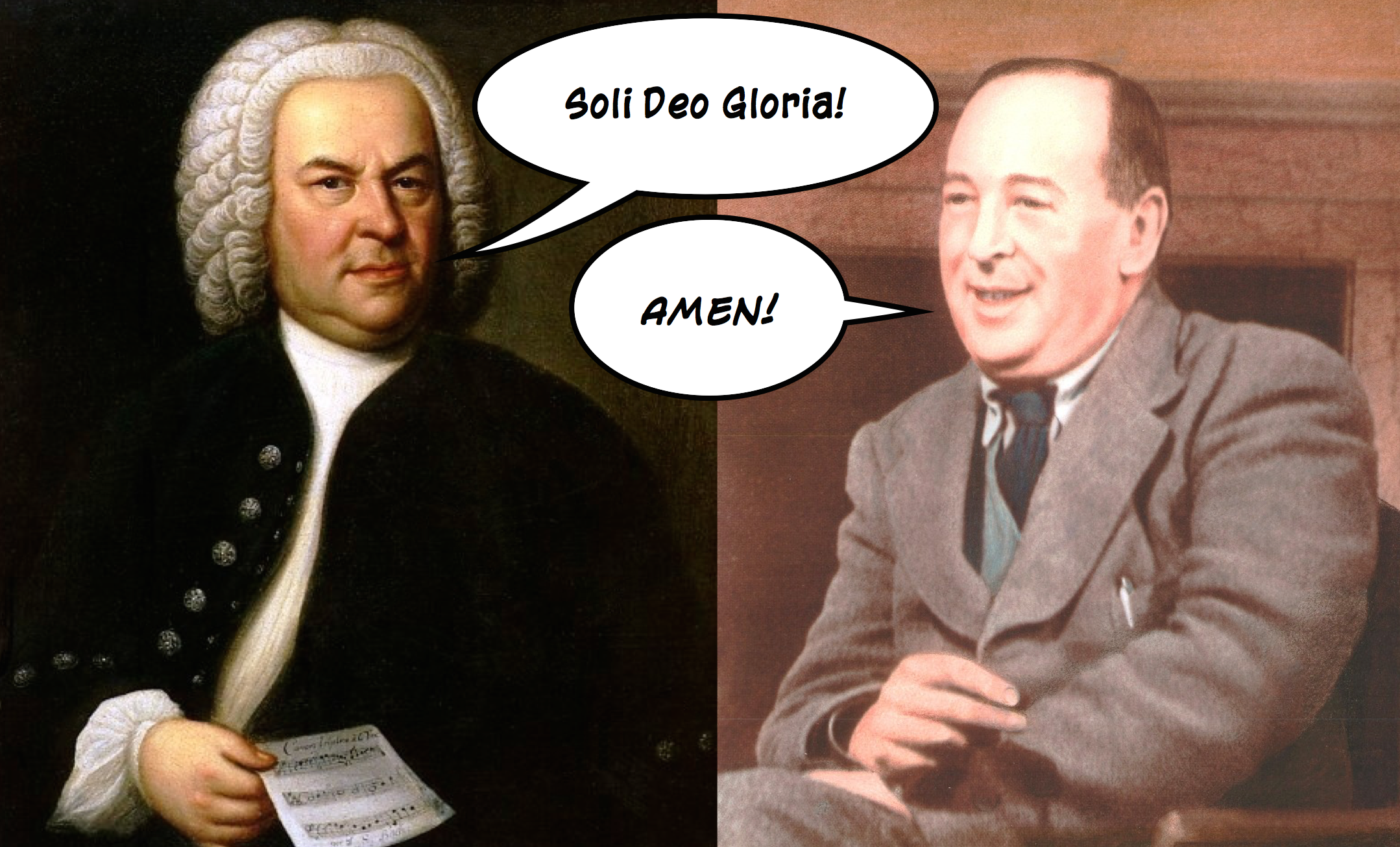
Were you aware that scholars believe half of Johann Sebastian Bach’s music has been lost to the world due to the carelessness of his relatives?

I was unaware of that sad fact until recently.

J.S. Bach was the preeminent prodigy of a gifted musical family. His father, Johann Ambrosius Bach, was the leader of the musicians in their German city. All of his uncles were professional musicians. Two of Bach’s sons also became noteworthy composers.

Bach (1685-1750) held a number of important posts. These included serving the courts of Leopold, Prince of Anhalt-Köthen and Augustus III, King of Poland and Grand Duke of Lithuania.

It is not uncommon for gifted men and women to remain unrecognized during their lifetimes. In such cases, it is not surprising that many of their works would be lost.

Bach, on the other hand, was appreciated during his own lifetime. Despite that fact, many of his creations would pass into oblivion. Why?

Amazing, only a single early cantata was published during his lifetime.

Upon his death, all of his precious musical manuscripts—chorales, motets, arias, sonatas, suites, fugues, concertos, canons and more—were divided among his family. Some of the manuscripts were sold, and others presumably were saved and eventually lost to time. Perhaps someday more pieces will be rediscovered, but that remains to be seen.

Bach was a devout Christian (of Lutheran persuasion). While the Cantor of St. Thomas Church in Leipzig he wrote more than 300 cantatas inspired by the Gospel readings for Sundays and church festivals. One hundred of these musical gems have not survived.

C.S. Lewis enjoyed Bach. In An Experiment in Criticism, he uses the composer’s music as an example of something so profound that it continues to satisfy.

Many people enjoy popular music in a way which is compatible with humming the tune, stamping in time, talking, and eating. And when the popular tune has once gone out of fashion they enjoy it no more. Those who enjoy Bach react quite differently.

In his Diary, Lewis’ brother Warnie describes the inauguration of a new record player in 1933. “This after my long expected new gramophone arrived . . . I am delighted with it . . . After supper Jack, Minto and I sat cozily in the study and I played them the Pastoral Symphony and a sonata of Bach.”

In our modern world, the increase in leisure time has allowed many people to pursue their creative dreams. Some write, others paint, and a smaller number compose music.

Bach’s tale makes one wonder what will happen to their labors of love once they are gone. Will our family or friends divide them among themselves? Will they ever be read?

Rather than be depressed by these questions, let me encourage you to share your work with others now. Perhaps a blog would be a suitable avenue for publishing your thoughts? There are also a number of options for publishing ebooks, including some that do so at no cost.

Of course, not everything we write merits publication. We should strive to write something worthwhile, and edit it to the point where we can be suitably “proud” of our literary offspring. No doubt Bach spent many hours revising his compositions until they sounded perfect to his own ear.

And, for those of us who share the faith of Bach, it is worth noting the words he wrote at the close of each of his religious works (and many of his secular pieces): Soli Deo Gloria . . . Glory to God Alone.

British Weather

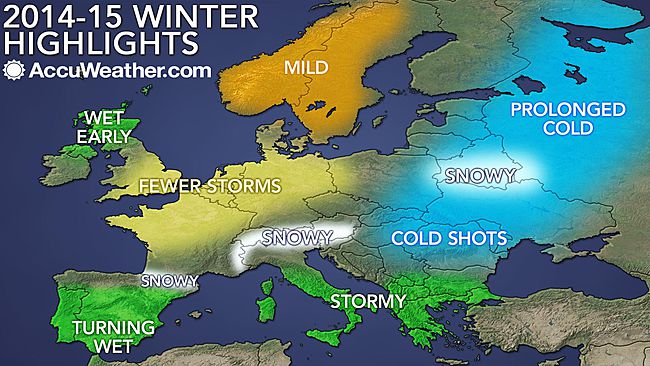
euro weatherWinter arrived early. The current “arctic outbreak” has brought subzero temperatures to Canada and the United States. It proves once again that the demarcation of seasons is capricious.

“Meteorological winter” reckoning makes much more sense than relying on a solstice, which actually occurs in the midst of the season.

Prior to the arrival of this polar cold front, the shortening of the days had been the only sign of winter’s approach where we live. Our summer in Puget Sound was wonderful, and lasted long into the fall.

Although the United States Air Force preferred to assign me to hot climates, I’m really a temperate (climate) person. I enjoy seeing four separate seasons, and seek the unique joys that arrive with each of them.

I don’t enjoy any of them in excess. The record-setting snowfalls we survived during several years in Minnesota were a bit much. The relentless heat of the Mojave Desert was even worse.

We did enjoy the weather of England, when we spent three wonderful years there. I guess it takes a true Washingtonian to say they genuinely enjoyed the weather in Britain—but we did.

C.S. Lewis recognized the perceived shortcomings of England’s weather. In the eyes of many, of course, the rain that keeps everything lush and green is considered a dreary imposition on their activities. In 1950 he wrote the following to one of his American correspondents.

Here we are enjoying the dubious delights of early English spring, and I often wonder what visiting Americans make of it: for they are already arriving in surprisingly large numbers considering the time of year. I can only suppose that they all come from Northern Alaska, and find our climate a nice change! If you have any friends who think of coming over, tell them that the English summer generally falls in the third week in June.

This delightful paragraph brings to mind the apocryphal Mark Twain comment that, “The coldest winter I ever spent was a summer in San Francisco.”

The great thing about the pseudo-Twain quote is its versatility. It is easily edited for any locale.

One last thought about winter. We Northern Hemisphereans reveal our hemisphere-centric prejudices when we fail to realize that these colder months don’t represent winter to half of the globe.

And I suspect the folks who live on that side of the world are not subject to “Antarctic outbreaks” of polar cold, due to the oceans . . . but that’s a question to research on another day.

Free Books

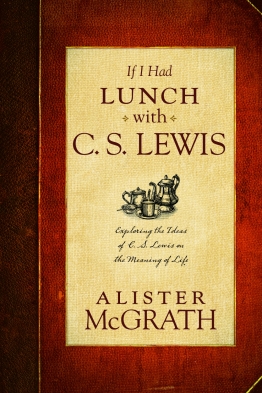
lunchIf you would like to pick up a free kindle copy of a very recent book on C.S. Lewis, you need to hurry. No telling how long the offer will last.

If I Had Lunch with C. S. Lewis by Alister McGrath has a normal (U.S.) price of $17.99, so it’s quite an offer.

But read on for another great deal. Ugh, that sounded like what a shill—which I am not—might say. Allow me to rephrase.

But keep reading. That’s not the only special offer for kindle readers right now. (And remember, even if you don’t own a kindle reader, Amazon offers a free program for use on your computer.)

I rarely look for free kindle titles, since it’s a genuine effort to sort through the chaff to find the grains of wheat. Today, however, I took a quick look, and I’m glad I did.

When this book was first released, just this year, I thought it looked interesting. Only last year, McGrath wrote the biography, C.S. Lewis A Life: Eccentric Genius, Reluctant Prophet.

The free title offers a thematic introduction to Lewis. It’s subtitle reads, Exploring the Ideas of C.S. Lewis on the Meaning of Life. It may be something you might want to suggest to your acquaintances unfamiliar with the Oxford Inkling.

Often, when items or services are offered without cost, it indicates a lack of value. This is why the maxim “you get what you pay for” arose.

However, the rapidly morphing publishing business contradicts the usual accuracy of that principle.

In order to promote their work, and expand their paying audience, a new distribution model has writers offering their books for free. And, alert readers can take advantage of the opportunities.

In light of that, allow me to share with you another time sensitive offer that I found as I browsed further. Right now you can purchase the kindle version of volume three of Lewis’ correspondence for a mere ninety-nine cents. I can’t recall now what I paid for my hardback and kindle copies of the volume, but trust me . . . this is an amazing deal.

Free Bonus Book

Students of C.S. Lewis will recall the significant impression that George MacDonald (1824-1905) made on his life. Right now you can download a collection of 365 quotations from MacDonald’s works for free.

365 Meditations from George MacDonald’s Fiction is edited by David Wilson-Okamura. This work, he writes, “was inspired by George MacDonald, An Anthology: 365 Readings, edited by C. S. Lewis (1946).”

Plagiarizing Screwtape

breigHow many letters have you read that were penned in the tradition of C.S. Lewis’ groundbreaking Screwtape Letters?

If you’re a fan of the collection, you’ve probably read similar correspondence that owed its very existence to Lewis’ work.

Now a more sensitive question—have you ever written anything similar to The Screwtape Letters? I must confess that I have. In fact, I’m currently working on a similar collection I hope to finish during the coming year.

Many writers have tried their hand at writing angelic letters, with varying degrees of skill and success. After you finish this column, you might want to check out two examples right here at Mere Inkling: Screwtape Letters Anniversary and Screwtape Goes to War.

Some letters have been composed from the perspective of a heavenly angel (often perceived of as a “guardian” angel). Others have been, like Lewis’ innovative example, written from a diabolical angle. Demons, we recognize, have been cast out of the heavens for which they were created, but they still remain angels, albeit fallen angels.

One of the lures that motivates those who emulate the Screwtape Letters is found in C.S. Lewis’ statement that they were rather easy to compose, once he had undergone the uncomfortable process of placing himself in the mind of an enemy of God.

It is disorienting, to reverse reality. For example, to hate what God loves (i.e. his creation, and especially humanity). And it is this discomfort that Lewis alludes to in describing his reluctance to pursue the genre any further than he did.

Considering Copyrights

For writers, copyrights are precious. It is good news, unknown to many, that current law (at least in the United States) protects everything we write. As soon as it is created (the words are arranged in their unique order), our work is protected by copyright whether or not we use the © symbol.

I say this because the arrangement of words can be protected by law, but “ideas” cannot. (I’m not talking about patents here, but literary ideas or techniques.)

Thus, it’s possible to freely follow Lewis’ example. However, quotations should only be used with permission. (There are, of course, “fair use laws” that describe the acceptable use of quotations in various contexts.)

There was a bit of a scandal a few years after Lewis wrote The Screwtape Letters. Well, “scandal” is too serious a word. More like an awkward and uncertain moment, when an American journalist wrote a book that was clearly inspired by Lewis.

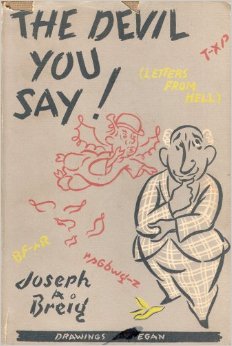
I’ve only recently received my copy of The Devil You Say by Joseph A. Breig. It was published in 1952, and the introduction echoes Lewis’ own. While the letters themselves appear to be independent of Lewis, I suspect the following parallel from the two prefaces shocked Lewis when he saw it.

I have no intention of explaining how the correspondence which I now offer to the public fell into my hands. (Lewis)

I have not the remotest intention of disclosing to anyone—not even my confessor—how these choice tidbits of demonology fell into my hands. (Breig)

Following its publication, one of Lewis’ correspondents, Idrisyn Oliver Evans, sent him a copy. Lewis’ response follows.

Magdalen College Oxford

27/ 4/ 53

Dear Evans I am really very sorry. The Devil you Say got put on a pile of ‘books received’– most of them (I don’t include yours) a major plague of my life–and I forgot all about it. I have now read a few pages: there was nothing to tempt one to go on. It certainly seems to be a gross plagiarism: I am writing to New York Macmillan to draw their attention to it. Thanks very much for sending it. With all good wishes, and thanks also to your American friend. Yours C.S. Lewis

I cannot find any record of whether or not Macmillan challenged the publication of the new volume.

Lewis had no objection to another writer developing his idea about devilish correspondence in their own creative direction. He simply desired to ensure his own work was not usurped.

Before ending, I would not want to leave a negative impression about Mr. Breig. In looking further into the work, one sees just how little resemblance it bears to The Screwtape Letters. It clearly is not plagiaristic. In fact, it’s quite possible that the line cited above was actually intended to be an homage to Lewis.

It turns out that Joseph Anthony Breig (1905-1982) was an accomplished and well respected Roman Catholic journalist.

Breig stayed at the Universe Bulletin until his retirement in March 1975. He continued to write his columns after 1975. They appeared not only in the Universe Bulletin but also in several other Catholic newspapers in the USA. Besides being a newspaper writer, Breig also wrote for many magazines (Ave Maria, Our Lady’s Digest, The Family Digest, Crozier, and others) and published eight books and several short stories and plays.

In honor of his work he received two honorary doctorates (St. Vincent College, Latrobe, Pennsylvania, 1954, and Carroll College, Helena, Montana, 1967). He also won several awards, one of which was the St. Francis de Sales Award from the Catholic Press Association in 1966. (The Book of Catholic Authors).

I’ll close with a final quotation from the same biographical source. When writers gaze at a blank sheet of paper they see many things. Some see it as naked canvas, and others as a challenge. I enjoyed the compliment offered by one of Breig’s editors, who praised his prolific literary production.

“Douglas Roche of Sign magazine . . . holds that Breig cannot endure the sight of a sheet of paper not covered with words.”

Convoluted Language

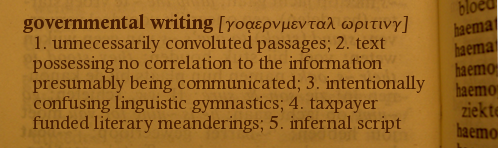
govwritingAre you a skilled reader? Do you pride yourself on possessing a knack for making sense of challenging prose?

Even if you consider yourself a proficient interpreter of text, there is one genre of literature that may still cause you to tremble. Government documents.

Even the most experienced lexical navigators find it challenging to traverse governmental communications. This despite the fact that in 2010 the United States actually passed the Plain Writing Act.

And I’m not even referring to legislation—where seeking sanity and clarity is virtually hopeless. And, it doesn’t matter how simple the source message is. Government scribes are capable of making a document about how to obtain a building permit read like a manual for constructing an orbital weapons platform.

I am not sure whether or not the United States is typical of other nations when it comes to this literary tradition. However, I suspect every nation, aside perhaps from those with populations under 10,000, is plagued by convoluted governmental documents. (There are thirteen such, potentially exempt, communities.*)

A prime example of institutional gobbledygook comes from this question, posed to the Chicago Manual of Style:

Q. Can you please help settle a disagreement? In the following sentence, should “instead of” be replaced with “rather than”? Overpayments occurred because facility purchased care staff processed payments using the local VA Fee schedule instead of the technical component of RBRVS.

A. Let me get this straight: in that nearly unreadable sentence (“because facility purchased care staff processed payments”?), the disagreement centers on whether to use “instead of” or “rather than”?  (Oh, wait—I see from your e-mail address that this is a government office.) Replace the phrase if you are certain that (1) there is a significant difference in meaning, and (2) the current wording does not express the meaning intended. If you cannot reach agreement on these points, you might have to fund a study.

C.S. Lewis offered much sage advice about writing. Sadly, nearly every principle he proposed is utterly alien to governmental documents. His 1956 advice (to a child) should be the required background and screen saver for all government computers:

“Always try to use the language so as to make quite clear what you mean and make sure your sentence couldn’t mean anything else.”

It’s not that I don’t have sympathy for civil servants who write official documents. After all, I edited Air Force Recurring Periodical 52-1 for three years. But I sometimes wonder whether there might be an eccentric psychological disorder that afflicts many government-funded writers . . .

So, it appears, I have made an unintentional confession. The regular readers of Mere Inkling may now know the source of some of the peculiar aspects of these columns.

I have asked my children to have me institutionalized if I ever use the phrase “care staff processed payments.” Short of that, however, these brief conversations are likely to continue for many years to come.

_____

* The following nations and “dependent territories” boast populations under ten thousand, in ascending order:

Pitcairn Islands

Cocos Islands

Vatican City

Tokelau

Niue

Christmas Island

Norfolk Island

Svalbard and Jan Mayen

Falkland Islands

Saint Helena, Ascension and Tristan da Cunha

Montserrat

Saint Pierre and Miquelon

Saint Barthelemy

Nauru barely misses the list due to an excess of eighty-four citizens, according to their 2011 census.

Getting Fresh

freshenIt’s possible for blogs to get stale. That’s no surprise, to regular readers.

Like everything else in life, same old same old (American slang) gets old.

I’ve never been one to desire change for its own sake. C.S. Lewis satirizes such notions in his poem, “Evolutionary Hymn.”

Lead us, Evolution, lead us

     Up the future’s endless stair:

Chop us, change us, prod us, weed us.

     For stagnation is despair:

Groping, guessing, yet progressing

     Lead us nobody knows where.

Still, for some time I have felt like I wanted to freshen up the look of Mere Inkling.

I’ve taken the plunge and purchased the package where I can tailor colors and fonts. I’ve also decided to move some of my old websites here to Mere Inkling.

First of all, I have added The Odes of Solomon. If you’re interested in learning about the most ancient Christian hymnal, check it out. I have included paraphrases of five of the Odes.

Next I will either move my C.S. Lewis Chronicles pages here, or the information that I’ve assembled online for two of our family’s ancestors who served in the American Civil War. I have also added a link to the military chaplaincy journal I edit.

Those will all be static pages, of course. The main feature of Mere Inkling will continue to be the regular columns, or posts.

I hope you enjoy the new format. I think it is an improvement, and enabling me to get all of these efforts under a single digital “roof,” will certainly help me stay better organized.

In expanding the offerings of Mere Inkling, I have maintained the valued past and am importing material that will be of interest to some. My goal has been to have the site “grow,” in the sense used by C.S. Lewis in “Hamlet: The Prince or the Poem.”

Mere change is not growth. Growth is the synthesis of change and continuity, and where there is no continuity there is no growth.