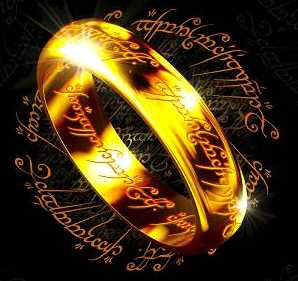
Discovering Your Elvish Name

Most readers of Mere Inkling are either fans of C.S. Lewis and his fellow Inklings, or writers interested in similar topics such as adventure, virtue, imagination, and spirituality. In light of that, and the fact that the finale of the trilogy won Oscar for Best Film, I assume the vast majority have seen “The Lord of the Rings.”

When you watched the films, with whom did you most identify? Ladies had options from warriors, to counselors, to royalty. Likewise for the men. Then there were the different races of Middle Earth . . . did you cast yourself as human, elf or dwarf? Or perhaps, as a modest, earthy hobbit? (I hope there weren’t too many who identified with the orcs, and if you did, I’d suggest an appointment with your local therapist.)

If the notion of living a long, peaceful life, studying the arts and enjoying God’s creation inspires you, then it may be you possess a kinship with the Elvish soul. And if you do (or even if you’re merely curious) there is a wonderful website where you can learn not only how to speak your name in the Elf tongue, but also to write it in the Elf script.

J.R.R. Tolkien, C.S. Lewis’ treasured friend, was at heart a philologist. Few people have ever lived who shared the intensity of his love for language. Not everyone knows though, that the matchless realm of Middle Earth with its timeless sagas grew neither from a vision for the heroic story nor out of the visualization of any of its vibrant inhabitants. No, the seeds of the most renowned fantasy realm ever envisioned, were planted and watered by Tolkien’s love of language.

It was primarily linguistic in inspiration and was begun in order to provide the necessary background of ‘history’ for Elvish tongues. (J.R.R. Tolkien, Forward to the Second Edition of The Lord of the Rings).

Tolkien’s passion for the languages of Middle Earth is legend. Today, other linguists continue to study, document and teach the sophisticated system. Tolkien’s creation was so complex that it resulted in the creation (and evolution) of several languages—distinguished by both history and geography. In the same way, Tolkien was not content to settle for a single version of text with which to pen these musical dialects. He created no fewer than three styles, with Tengwar being most familiar. (You can download these and related fonts here.)

So, how exactly do you discover your Elvish name?

There have long been “random generators” for Middle Earth-sounding names. The generator at one site renders my Elvish name as Eöl Séregon, which does sound fairly distinguished. (Who knows whether or not it means anything?) These programs may satisfy the curiosity of the passing surfer seeking random oddities. However, for those who respect the love Tolkien invested in his linguistic progeny, this will never suffice.

Fortunately, there is an amazing website, overseen by a bona fide lover of languages. Moreover, his site is devoted to maintaining the integrity of Tolkien’s Elvish tongues. (And many of us who are writers are similarly enamored with language itself, making this a worthwhile domain to visit.)

The host of Quenya101 embraced the tongue so completely that in college he even took lecture notes in the language! Today he teaches Quenya through his website and other means. Although there’s a long waiting list (that can be circumvented, I believe, by donating to the site) he will actually translate names into Quenya. Note that I said “translate.” This is no mere transposing of letters.

He does not waste his time with transliterations. He actually applies the etymology of your given name to rendering the very same meaning in the Elvish language. For good measure, he provides a Tengwar rendition of your Elvish name. (It may be that he has already translated your name and has it posted at the site.)

Here’s how it works, as illustrated by my own name. Fortunately, my father’s name has also been translated, so I am seeking the Quenya for “Robert (son of) Charles.”

Robert

From: Germanic name Hrodebert.

Meaning: Bright fame, derived from the Germanic elements

     hrod ”fame” and beraht “bright”.

Quenya: Calialcaro

     (calima+alcar+[o] = bright+splendour, glory+[masculine names suffix])

Charles

From: Germanic name Karl, which was derived from the same Germanic word. However, an alternative theory states that it is derived from the common Germanic element hari

Meaning: Karl means “man” & hari means “army, warrior”

Quenya: Nér (nér = man) or Ohtatyaro (ohtatyaro = warrior)

So, henceforth you may address me as Calialcaro Ohtatyaro!

It is encouraging to see people keeping alive the vision and wonder of Middle Earth. The same is true for Narnia, of course, though you cannot really compare the purpose. These magical realms were both created by geniuses. It is a divine coincidence that these men, with major differences in their temperaments and imaginations, were lifelong friends.

Discovering your unique Elvish name can establish a dramatic connection with an imaginary, but at the same time gloriously real, realm.
Your Writing Style

Each of us writes in a unique manner.

You can study writing patterns in various ways, by considering vocabulary, changes in sentence lengths, repeated phrases, and various other measurable elements.

Then there are more subjective aspects of our writing, but these too are recognizable. They would include tone and more abstract things like pacing.

When you add them all together, you arrive at an amorphous quality called the writer’s “voice.” And, as I said above, each of our “voices” are different.

It may be that we dabble in a variety of forms and genres. For example, in addition to these casual blog posts, I also write about theology and military ministry from a much more “professional” perspective. And, shockingly (to my own writing identity) I’ve recently received encouragement related to poetry with which I’ve been experimenting.

Even when we write in various literary forms, and they clearly differ from one another in their voice, the truth is that for each of these documents we develop a personal, inimitable voice.

Now, after emphasizing our literary uniqueness, I want to switch perspectives and consider that our various styles and voice resemble those of others. Occasionally, when reading someone’s work it strikes you as familiar. You may even recall the author that the work reminds you of. (I’m not referring to plagiarism, of course, although the internet has apparently made that particular plague even more common now than in the past.)

It would be vanity to claim that our own writing voice resembles that of no one else. Yes, some voices are so peculiar that they are clearly “rarities,” but others have shared even those odd personalities in the past. I suspect that’s even true for the senseless ramblings with which some self-styled “artists” assail the public. (Even insanities can resemble one another.)

In any case, if you ponder this subject it’s natural to wonder: who do I write like?

Today, through the amazing processing abilities of the computer, you may be able to get an answer to that very question. It’s not a definitive answer, because as I said above, our writing voice possesses both material (words and syntax) and spiritual (ephemeral and aesthetic) dimensions. And, while a computer may be without peer in comparing the former, I believe it to be quite deficient in discerning the latter.

Nevertheless, a rudimentary program is available online to compare your writing with that of a number of writers of varying reputation. The program has a number of limitations, but I think there may be something to it. It requires an extensive section of your writing (several paragraphs, at least). I assume more would be better, in terms of promoting accuracy.

As I just mentioned, it includes a limited number of authors currently entered into the database, and I suspect that the gifted C.S. Lewis is not among them. (I say this not because I expected to be aligned with him, but because of some of the included authors I am aware of. In addition, the program’s creator is actually Russian, so I would be curious to learn how the represented English authors were selected.)

It would limit the program’s value, for example, if I only input data on three writers and you were matched with the one you resembled most closely. Would you prefer, for example, to be told you write like Edward Bulwer-Lytton, Georgette Heyer, or Fabius Planciades Fulgentius?

Even with a significant number of writers included, the program’s accuracy will be affected by the quantity (and specific choice) of what is included to represent each. For example, the programmer properly included Stephen King. How valuable would that be, however, if he had only used King’s poetry and excluded his prose works? (Yes, the horror master has also penned poetry—now, that’s a scary thought!)

Well, despite the limitations of the “I Write Like” program, it is fun to try out. And it sounds impressive, in that it relies upon a naive Bayesian classifier. (Well, the “naive” part doesn’t sound especially remarkable, but the formula looks pretty imposing to someone who never took calculus.

You can use take the “test” at this site.

Make sure you include lengthy selections from your work. Also, testing the program with different genres (assuming you write in different styles) will actually give you new matches. (That is, of course, as it should be.)

If you do decide to experiment with it, a comment below about your results would be interesting for others. And now, for the moment that you have been awaiting . . . with whose writing did the program match mine?

I tried a number of times (no—not fishing for results I wanted, but using a variety of types of my writing) and here were the repeated results:

For my blog posts: H.P. Lovecraft or J.R.R. Tolkien

For my more formal essays: J.R.R. Tolkien or Jonathan Swift

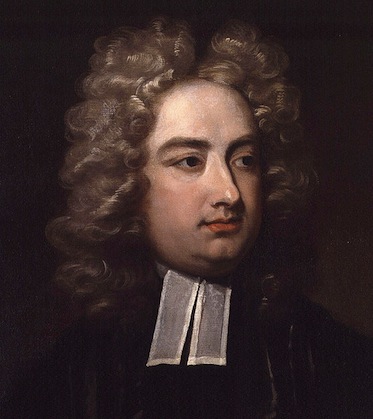
(It’s Swift’s picture, you’ll note, that begins this post.) Actually, the majority of the results linked to Swift, whose work I don’t recall ever reading in full, not even Gulliver’s Travels. However, our shared emphasis on wit, advocacy and satire account for what I deem a genuinely accurate assessment. And it does not hurt that Swift was Anglo-Irish, like my favorite author!

So, until Dmitry Chestnykh adds C.S. Lewis to the writers included in the “classifier,” I’m quite content to rest on my matches. Because even if I don’t share Lovecraft’s worldview, I can still respect his literary skill. And being identified with the other gentlemen, is a grand compliment.

[Special thanks to Julie Catherine who introduced me to the site via her post on the subject.]

Mastering the Anacoluthon

Allow me to once again display my grammatical ignorance. I was reading an online book review and the author used lots of multisyllabic words. (That’s something I actually enjoy.) But then he went and threw in one of those words I had to rush to dictionary.com to define. (That’s another thing I love—learning new words.)

Naturally, I could partially decipher the definition from the context. However, whenever I have a dictionary within reach, that shortcut doesn’t satisfy me.

In this case, the word was anacolutha, the plural form of anacoluthon. It is defined as “a construction involving a break in grammatical sequence, as ‘It makes me so—I just get angry.’” Well, we can all agree that is not a good sentence; it’s a fine example of what a writer should avoid.

Not all grammar rules make sense. Take for example the notion that one cannot end a sentence with a preposition. Some of us literally had our knuckles rapped for scribbling such grammatical “obscenities.” While it’s true that you can avoid using prepositions in this manner, it’s not the great sin we were taught it was. In his Letters to an American Lady, C.S. Lewis writes:

[Regarding] a sentence ending with a preposition. The silly “rule” against it was invented by Dryden. I think he disliked it only because you can’t do it in either French or Latin which he thought more “polite” languages than English.

Well, isn’t that an interesting historical note to become aware of?

But, back to anacolutha . . . let’s see if it’s difficult for a trained pen to sever the ties of logic, and compose this sort of literary construction.

Reepicheep was a great swordsman who, “a tail is the honor and glory of a Mouse” was his creed.

Frodo pondered his options while—the Nazgûl loathed bathing more than once each fortnight.

Wow, that’s a lot harder than it looks. If you can think of better examples (not difficult, I’m sure), feel free to share them in a comment! But only write them here, and don’t allow any anacolutha to slip into your real writing!

Mastering the Contranym

English is a fascinating language. Certainly not the simplest to learn, but extremely versatile. You might say that among the circus of languages, English is the contortionist. (That analogy might make German the strong man and Romani the fortune teller.  As for the bearded lady . . . I’ll leave that to your personal conjecture.)

I’ve formally studied several other languages, yet I consider myself a master of none. Nevertheless, when it comes to English, I do take some pride in my skills, and would be willing to claim for myself the status of journeyman. Among other credentials I have my “verbal” score on the Graduate Record Exam, which placed me in the 97th percentile.

It goes without saying that C.S. Lewis (along with most of his fellow Inklings) was a Master of English. One of his many insights warned of language’s occasional tendency to confuse rather than illuminate.

Language exists to communicate whatever it can communicate. Some things it communicates so badly that we never attempt to communicate them by words if any other medium is available. (C.S. Lewis, Studies in Words).

As much as I discover about English, I find there is still more to learn. This week I enjoyed thinking about contranyms. It’s uncommon enough a word that you know your spell checker won’t recognize it. One of those words only an English major is expected to know.

We all know, of course, what synonyms and antonyms are. Useful little tools for playful manipulation of language. A contranym is a word that possesses two “contradictory” meanings. For example a “citation” which can be awarded for either good or issued for bad behavior. Or, consider “literally,” which has its literal meaning as well as its recently developed and contradictory definition of “figuratively.” For lovers of words that’s a particularly discomforting contranym, and it literally makes my head explode. (No, seriously, please don’t ever write or say something like that unless it is in the form of dialog you’re composing for a semi-literate character.)

There are many more examples.

“They left for London, without a thought as to the luggage they left at the station.”

“He was certainly bound for jail if they discovered the Internal Revenue agent he had left bound in his basement.”

“He buckled his belt a mere moment before his legs buckled beneath him as he was struck by the errant meteorite.”

“Apparently there are many thoughtless oversights when programs are left to governmental oversight.”

Homophonic contranyms are not spelled alike, but they are pronounced similarly. “My aural test is scheduled tomorrow, immediately before the oral defense of my dissertation.”

There are actually a couple of alternative names for contranyms. They can be called antagonyms or autoantonyms, which only serves to make the hazy water that much murkier.

Our next lesson will feature that amazing category of words that are “polysemy.” (Not really, I think this has been enough linguistic thinking to cover us for at least a week.)

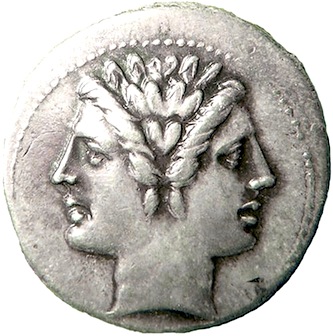
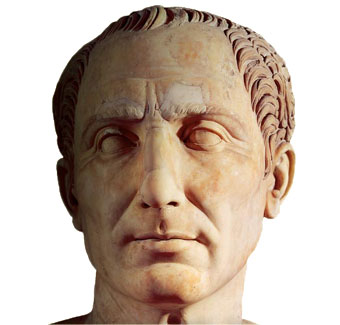
Oh, one final note, for those who were curious about the choice of the image above for this column. Contranyms are also referred to as “Janus words,” in honor of the Roman deity who constantly gazes in two directions. Very fitting.

Roman Realism

There are many things about ancient Rome that fascinate me. My love for the era finds its roots in the wonderful books of Rosemary Sutcliff and the spectacular cinematic epics like “Ben Hur” that were released during my childhood.

Over the years I’ve studied the Roman world in great depth. I shifted my numismatic interested to coins of the Constantinian era. (You can still purchase the genuine articles relatively inexpensively. Thanks to the tragic individuals who buried their hoards during troubled times and never returned to recover them.)

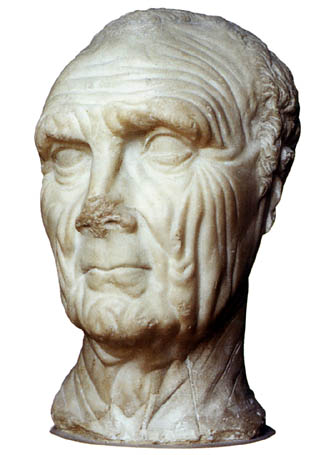
One of my favorite things about the Romans was their realism which manifested itself even in the busts they carved. Unlike the Greeks who strove to idealize everything, the Romans were pragmatic. If the honoree’s face lacked character (or suffered from an excess of the same), then the artist was expected to reflect that fact.

Just look at all the character in the face of the unknown Roman portrayed above. Or, how about this one. So vivid. Imagine just how difficult life must have been for this thirty-two year citizen.* Yes, they did an impressively faithful job portraying the subjects of their artistic studies.

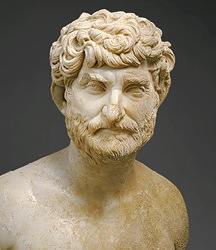
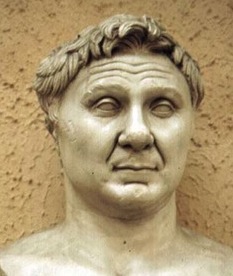
I’m not naïve enough to think that the emperors’ likenesses weren’t “airbrushed” just a tad. But take a look at the image to the left. It was made of an extremely important person, Pompey the Great, and it’s obviously intended to be a true likeness. This image always reminds me of a troubled chaplain assistant who served with me during my isolated tour in Korea. That sergeant’s tussled coiffure witnessed to a nasty hangover. I cannot attribute Pompey’s unruly mane to the same cause.

C.S. Lewis said the first requirement of art is to engage, to connect in some fashion with the interests of the viewer. He wrote this in his essay “Hamlet: The Prince or the Poem,” which he wrote in 1942.

To interest is the first duty of art; no other excellence will even begin to compensate for failure in this, and very serious faults will be covered by this, as by charity.

If I lined up a dozen beautiful and stylized Grecian busts against one wall and the same number of Roman examples against another, I have no doubt which would merit and receive the greatest attention. Idealized portraiture can be appreciated. But realistic likenesses, that celebrate the uniqueness of each human being, these are truly engaging.

Oh, and in closing let me say that I’m just vain enough—should anyone undertake to create a bust of me—to want it crafted in the Greek style, rather than the Roman . . .

* True age unknown . . . but you already knew that, right?

It’s Tough being a Colony

During the early 1990s I was stationed at RAF Greenham Common and RAF Alconbury in the United Kingdom. Our family loved our three brief years in that inspiring land. One of the quaint things I recall was the relatively frequent question I was asked when meeting someone new. They would inquire as to “how things were going in the colonies.” It was actually a pleasant ice-breaker, and never said maliciously.

The comment offered no cause for offense. It’s been too long since the United States was a British colony for it to be more than a historical comment. The heated issues that once led to bloodshed have become historical trivia. There are, of course, many “younger” nations in our world that are still struggling to discover their post-colonial identities. This has been notoriously difficult where occidental powers established arbitrary boundaries that failed to recognize ethnic, religious or cultural considerations.

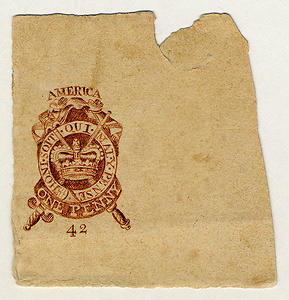
So, why is today’s post pondering the concept of colonialism? It just so happens that today is the anniversary of the imposition of the Stamp Act (tax) on her colonies by the British. It became law in 1765, a full decade before the War of Independence, but it was one of the alienating actions that laid the foundation for the upcoming rebellion.

Apparently, our paternalistic government in Europe regarded North America as a sort of bank from which they could make continuous withdrawals without ever repaying the funds. (“No taxation without representation” was a common battle cry.) The Stamp Act directly taxed all commercially published colonial materials, including newspapers and pamphlets. The Stamp Act would have been burdensome enough by itself, but the colonies were still reeling from three other onerous taxes that had recently been levied:

Sugar Act (1764)

…which covered textiles, wines, and coffee, in addition to sugar.

Currency Act (1764)

…which undermined colonial mercantilism and freedom.

Quartering Act (1765)

…which transformed every American home into a free bed & breakfast for British soldiers.

You get the idea. Georgia, Pennsylvania, Maryland and their like were merely colonies, so why should their concerns be factored into the equation? Extremely shortsighted. Not to mention, quite selfish.

C.S. Lewis addressed this subject in his major historical work.

The best European minds were ashamed of Europe’s exploits in America. Montaigne passionately asks why so noble a discovery could not have fallen to the Ancients who might have spread civility where we have spread only corruption. (English Literature in the Sixteenth Century).

We recognize that Montaigne’s notion is just a tad idealistic. If the Romans had colonized the Americas, for example, the indigenous people would hardly have been treated any differently. And the introduction of gladiatorial arenas would have presented an arguable civic improvement.

Still, Lewis’ point is completely valid. Whenever humans conquer or “colonize” their fellows, the colonies always get the proverbial “short end of the stick.” Thus, we recognize that it’s tough being a colony.

So, where does that leave us? Historically informed, perhaps we can make better decisions in the future. Weaker nations and peoples should never be exploited. It’s not just a matter of justice. Ethics aside, history teaches that sowing seeds of alienation and discontent invariably reap an unwelcome harvest.

One word of hope that we see in this historical snippet is that despite a combative history, lands (and people) can lay aside their animosity and become sincere allies. Which brings me back to the place where I began this column . . . living in an era when these nations that fought not one, but two wars, are steadfast friends.

The Ides of March

I was introduced to ancient Rome as a young reader. Rosemary Sutcliff (1920-1992) wrote such fine historical fiction that it appeals to young readers and adults alike. A film version of The Eagle of the Ninth was made just last year. And I’m a sucker for a good Roman movie (wherein “good” excludes all of the so-called spaghetti gladiator films made in the fifties and sixties).

As a student of Rome, I find it worth noting today’s date. Even those who know “nothing” about Rome should understand its significance. You don’t need to have studied Latin or the classics to understand the warning “Beware the Ides of March.” The Ides is the fifteenth day of the month. And it was on this day that Julius Caesar was murdered by members of the Roman Senate.

It was left to his adopted son, Caesar Augustus, to transform the Republic into an autocratic Empire. It was this Caesar who ruled Rome at the time of Jesus’ birth, and he bequeathed the title of “Caesar” to his heirs. When Jesus requested that the Pharisees and Herodians “show him the coin for the tax,” we do not know whether Augustus or Caesar Tiberius adorned it. It matters not, since the image of Caesar was tantamount to representing Rome itself.

Jesus taught his disciples to be discerning in the loyalties we offer. We are to be responsible citizens. But we are also required to remember our true citizenship rests in the New Jerusalem.

C.S. Lewis astutely illustrated this truth. He lived during two global conflicts, and served in combat defending his homeland. Yet Lewis recognized the dangers of placing our trust (faith) in even the “noble” things of this world.

A man may have to die for our country: but no man must, in any exclusive sense, live for his country. He who surrenders himself without reservation to the temporal claims of a nation, or a party, or a class is rendering to Caesar that which, of all things, most emphatically belongs to God: himself. (“Learning in War-Time” – a sermon preached in Oxford in 1939).

So, on this day when Julius’ dreams of glory bled out in Rome . . . may you and I find refuge, hope, peace and meaning in the One who bled and died for each of us on Calvary.

Pets in Heaven?

One of my favorite features in the Wittenburg Door of the 1980s was a running account of “Dogs Who Know the Lord.” Having witnessed more Christlike traits in some pets than I’ve seen in many human lives, I considered the tongue in cheek title a definite possibility.

This week we bid farewell to a gentle and loving border collie who had been part of our family for more than a decade. She lived a long and full life, and like her our previous border collie, she enjoyed her family and the outdoors (both gifts of God) right up until the end. (Both had been “rescued” by us.) Then, when Tanner and Lady were each over 15 years old, simply remained on their blankets when the day arrived that they knew they had not the strength to rise.

There are two kinds of people. Pet lovers, and those whose hearts are desensitized to their affections. The latter group has already stopped reading this post. But pet lovers, yes you, can empathize with my family’s current grief. You understand our loss because you’ve suffered the same pain. And, some of you may even pause to say a short prayer for us.

As a pastor, I’ve had numerous conversations with people about the question of whether or not we’ll see our pets in heaven. It’s a provocative subject, and the fact that such questions persist is a tribute to the significance of these animals in our lives.

Contrary to what some would allege, posing questions about this matter does not trivialize faith; it reveals how our restored relationship with our Creator affects every dimension of our existence.

We cannot know, of course, the answer to the question. That’s something that those who respond with a snide “of course not!” should take care to realize.

Over the years my own views on this have broadened, and far from seeing the deliverance (i.e. not “salvation”) of animals as something unlikely . . . I now consider it likely that we will be greeted by our beloved pets in the new creation. Here are some reasons I consider this a definite possibility:

  1. First, it is true that Jesus died to redeem (save) human beings (not animals).
  2. Animals are “innocent” sufferers of humanity’s disobedience and fall.
  3. Some animals are uniquely precious and beloved by God’s children.
  4. Their presence in heaven would enhance our joy.
  5. The same God who created them would have no difficulty re-creating or restoring them.
  6. If the lion and the lamb will lie together in harmony, why should there not be room for our much-loved pets to frolic alongside them?

And, lest you consider the words above merely the sentimental ramblings of a grieving man, I take comfort in the fact that C.S. Lewis too regarded this as a possibility. In a 1962 letter, he wrote:

. . . in The Problem of Pain I ventured the supposal—it could be nothing more—that as we are raised in Christ, so at least some animals are raised in us. Who knows, indeed, but that a great deal even of the inanimate creation is raised in the redeemed souls who have, during this life, taken its beauty into themselves? That may be the way in which the “new heaven and the new earth” are formed. Of course we can only guess and wonder. But these particular guesses arise in me, I trust, from taking seriously the resurrection of the body.

Replacing Exonyms

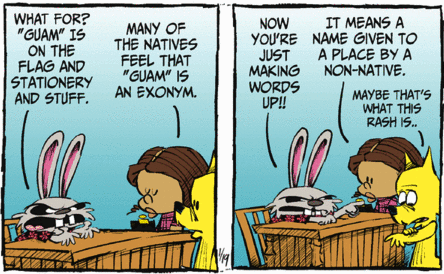
Scott Stantis has illustrated once again how educational some current comic strips can be. His current story arc takes place in Guam. (Guam’s a lovely United States Territory where my family and I lived for two wonderful years in the nineties.)

The story line involves a presidential candidate who has taken refuge there and was asked his opinion about formally changing the island’s name. (There is a movement seeking to replace “Guam” with “Guahon,” the island’s name in the Chamorro language.) You can follow the entire series at Prickly City.

As the panel shows, the (rabbit) senator is unaware that “Guam” is actually an exonym. As such, there is a valid reason to consider its replacement.

Kids today are growing up knowing prominent international cities by names that still seem “foreign” to many of us adults. Beijing has been around just long enough to sound right. But it will always be remembered as Peking to some. Mumbai, as a more recent adjustment, rings alien in the ears of those who still think of the most populous city in India as Bombay.

Still, it makes sense to attempt to refer to cities and nations as the residents of those locales do. For one thing, it is a sign of respect.

And this kind of transition is not an example of thoughtless or random “verbicide” which C.S. Lewis described in “Studies in Words.” There he wrote:

Verbicide, the murder of a word, happens in many ways. Inflation is one of the commonest; those who taught us to say awfully for “very,” tremendous for “great,” sadism for “cruelty,” and unthinkable for “undesirable,” were verbicides.

Replacing exonyms is meaningful to those it directly affects. And it is little more than an inconvenience to the rest of us. So, I’m in favor of it.

Just as I’m always in favor of comic strips that educate as well as entertain!

DC’s Absurd Educational Policies

Most Americans are sadly disappointed with the deplorable state of our current federal government. (Many of us feel the same about our state governments, but that’s another matter.)

When we talk about (Washington) DC, we are almost always referring to the foibles of our national government . . .  but we often ignore the bizarre machinations of the “municipal” government which oversees the city itself.

Some of the city’s foolishness makes the federal government appear wise in comparison.

Case in point. DC public schools are in shambles. Rather than improve the schools themselves, lawmakers have come up with an innovative solution: Require all of the students to apply for higher education!

Yes, that’s what Kwame Brown and his fellow bureaucrats have proposed.

Forcing students unable to complete high school requirements to apply for college. Right. One brilliant solution to a failed educational system.

Since it’s doubtful that diverting time and energy from actual studies to this questionable exercise will solve the underlying problems, we can hope that the proposed legislation dies an swift death.

In 1868 Samuel Clemens (Mark Twain) judged Washington, D.C. with his razor-bladed pen:

This everlasting compelling of honesty, morality, justice and the law to bend the knee to policy, is the rottenest thing in a republican form of government. It is cowardly, degraded and mischievous; and in its own good time it will bring destruction upon this broad-shouldered fabric of ours. I believe the Prince of Darkness could start a branch hell in the District of Columbia (if he has not already done it), and carry it on unimpeached by the Congress of the United States, even though the Constitution were bristling with articles forbidding hells in this country. And if there were moneyed offices in it, Congress would take stock in the concern, too . . .

God, spare us from the whims of those in political authority over us!

The brilliant C.S. Lewis identified one aspect of the faulty thinking exemplified by this proposed statute. He placed on the lips of the devil Screwtape this sure way to cripple a nation.

The basic principal of the new education is to be that dunces and idlers must not be made to feel inferior to intelligent and industrious pupils. That would be “undemocratic.”