Give Yourself a Holiday Gift

space trilogyChristmas is the season of giving, and as a grandfather I can truly say it’s more wonderful to give than to receive. Those little smiles and squeals of joy are precious indeed.

Sadly, many children (and adults) will be forgotten this season. Worthwhile programs to reach out to the overlooked are sponsored by countless churches and communities. One of the most highly regarded, Angel Tree, provides gifts to the children of men and women who are incarcerated. These innocent children are already suffering due to the poor choices of adults; God alone knows how special the most modest Christmas gift might be to these little ones.

That is one end of the spectrum—those who have little. Equally sadly, many children (and adults) will overindulge this season. They will bury themselves under piles of soon-to-be-forgotten presents. Most will also bury themselves further under mounds of debt.

C.S. Lewis colorfully captured this quandary in “Xmas and Christmas.”

And they buy as gifts for one another such things as no man ever bought for himself. For the sellers, understanding the custom, put forth all kinds of trumpery, and whatever, being useless and ridiculous, they have been unable to sell throughout the year they now sell as an Exmas gift. And though the Niatirbians [British] profess themselves to lack sufficient necessary things, such as metal, leather, wood and paper, yet an incredible quantity of these things is wasted every year, being made into the gifts.

Striving for balance in gift exchanging is important. For years now my father has said it’s unnecessary to give him Christmas or birthday gifts. It’s true. He’s able to purchase whatever he wants, and even the most thoughtful gifts are either redundant or undesired. He’s grateful, of course, but only out of courtesy. Last month, for his birthday, I took him up on his words. Instead of spending money on a gift, we made a special donation to the Gideons in his honor. He was delighted. I’ve known others who made the same request, that gifts intended for them be diverted to the benefit of others. It’s a grand custom.

After the homily on selflessness above, it may sound strange to hear that there is a Christmas gift I would like to suggest you consider giving to yourself. Actually, I’d advise a friend or loved one to purchase it for you, but since you probably haven’t encouraged them to subscribe to Mere Inkling (yet), I must satisfy myself with advising you to check out this special offer.

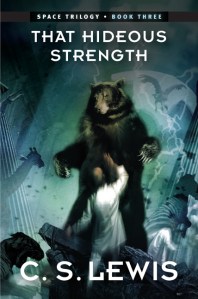
During the holiday season, HarperOne is running a special on C.S. Lewis’ Cosmic Trilogy (often referred to as the Space Trilogy). You can get them in various digital editions for only $1.99 each. Quite a bargain. And it leaves you plenty of resources to practice the truth that it’s better to give than receive.

Out of the Silent Planet, the first of these science fiction works, was the first Lewis book I read. A friend in a college fellowship group suggested it, and it introduced me to one of the greatest mentors a person could ever have! The books are available through this link: Cosmic Trilogy.

Oh, and if the Cosmic Trilogy is already in your library, or not your cup of tea, they are also discounting an illustrated edition of The Screwtape Letters.

The Trilogy is suitable for Christian and secular readers alike. It’s not overtly “religious.” In fact, in his C.S. Lewis: Companion and Guide, Walter Hooper says many of the intial reviewers of the title were rather confused about its intended meaning. (This despite offering positive reviews.) One person who did comprehend its significance was an Anglican theologian named Eric Mascall. In a 1939 issue of Theology he wrote:

This is an altogether satisfactory story, in which fiction and theology are so skillfully blended that the non-Christian will not realize that he is being instructed until it is too late. It is excellent propaganda and first-rate entertainment.

I’m certain he meant “propaganda” in the most positive, pre-war sense. Actually, one does not need to be a follower of Jesus of Nazareth to appreciate the series. If you’ve never read it before—and you don’t have a 100% aversion to the science fiction genre—the two dollar price means you’ll rarely have a better opportunity.

Avoid Living in Fear

nuclear blast

Nuclear war. It’s an extremely unpleasant subject, and its grim specter still haunts the world. Oddly, though—even as we anticipate the day when Iran’s lunatic Mullah’s develop them and North Korea’s deranged generals learn how to deliver them—the world is in a sort of “nuclear hiatus” at this very moment.

The Mutual Assured Destruction apparently worked, as the former Soviet Union and the United States decided against nuclear suicide. At the present moment the three world powers show little appetite for total war, so today’s children don’t have to learn the Civil Defense precautions that kept an earlier generation safe.

I was one of those young Americans indoctrinated in the sophisticated “duck and cover” method of nuclear blast survival. This video provides a nostalgic look at the paramilitary training we received. (A link to the full training film appears below.)

C.S. Lewis lived during the height of nuclear paranoia. Yet he retained his composed Northern Irish demeanor as he reflected on the threat. In an essay entitled “On Living in an Atomic Age” he wisely advised:

If we are all going to be destroyed by an atomic bomb, let that bomb when it comes find us doing sensible and human things—praying, working, teaching, reading, listening to music, bathing the children, playing tennis, chatting to our friends over a pint and a game of darts—not huddled together like frightened sheep and thinking about bombs. They may break our bodies (any microbe can do that) but they need not dominate our minds.

In his essay “Is Progress Possible,” Lewis addresses those who used the uncertainty of the future as an excuse for making irresponsible life choices. His words ring just as true today, when so many youth turn to nihilism and self-destructive behaviors.

As a Christian I take it for granted that human history will some day end; and I am offering Omniscience no advice as to the best date for that consummation. I am more concerned by what the Bomb is doing already. One meets young people who make the threat of it a reason for poisoning every pleasure and evading every duty in the present. Didn’t they know that, Bomb or no Bomb, all men die (many in horrible ways)? There’s no good moping and sulking about it.

If only remaining safe in this fallen world was as simple as dropping to the ground and sheltering one’s head. It isn’t, of course, but we need not live our lives under the shadow of fear.

Returning to “On Living in an Atomic Age,” Lewis adroitly places the entire menace—and all perils to human life—in their proper perspective. It may not be the most comforting words we will ever read, but they are certainly true.

In one way we think a great deal too much of the atomic bomb. “How are we to live in an atomic age?” I am tempted to reply: “Why, as you would have lived in the sixteenth century when the plague visited London almost every year, or as you would have lived in a Viking age when raiders from Scandinavia might land and cut your throat any night; or indeed, as you are already living in an age of cancer, an age of syphilis, an age of paralysis, an age of air raids, an age of railway accidents, an age of motor accidents.”

In other words, do not let us begin by exaggerating the novelty of our situation. Believe me, dear sir or madam, you and all whom you love were already sentenced to death before the atomic bomb was invented: and quite a high percentage of us were going to die in unpleasant ways. We had, indeed, one very great advantage over our ancestors—anaesthetics; but we have that still. It is perfectly ridiculous to go about whimpering and drawing long faces because the scientists have added one more chance of painful and premature death to a world which already bristled with such chances and in which death itself was not a chance at all, but a certainty.

_____

You can watch the entire “Stop and Drop” Civil Defense Video here.

Fatherhood as Modeled by Two Historical Giants

Thanksgiving is a very special holiday. In truth, it’s a “holy-day” for all those who offer their thanks to a benevolent God.

Like all holidays, it can be good or bad, depending on the way it is perceived by each individual, and the unique circumstances in which they find themselves. Most of us are thankful, for example, for our loving families. And, even if we can’t be together at these special times, we draw warmth and strength from their love. Tragically, others have been victimized by those who should have protected them, and “family” in their eyes is not something to be thankful for at all.

I was not a perfect son. I strove to be a better father. And, now that I’m blessed with seven grandchildren, I’m trying to be the best grandfather I can be

Many years ago, shortly after having our first child, I gave myself a Father’s Day gift. (That’s not a typo. I purchased for myself a modest plaque with a priceless message.) It reads: “the greatest gift a man can ever give his children is to love their mother.”

I displayed this proverb in my office through the years, as a reminder to myself and others of this profound truth. It’s easy to love one’s spouse as a newlywed in the hot flush of youth. It’s also easy, I’m learning, to love my wife in the snug and warm autumn of life. For many, however, the trials and tribulations that are a natural part of all relationships appear insurmountable. Between the newlywed and maturelywed days, it’s not all easy. While our hormones still surge and familiarity breeds corrosive contempt, we may take for granted the person we once vowed to cherish above all others.

The desire to be a decent father greatly amplifies the importance of being a devoted husband. Knowing this made my reading of a recent article quite painful. I had known for years that President John F. Kennedy was rather promiscuous. Yet a recent article in The Atlantic reveals just how debauched the man was. The article, if you have the stomach for it, praises the strength of his wife Jackie, and is available online here.

It describes just a few of his disease spawning liaisons, and noted that he often traveled with one of his so-called secretaries, should there be “any trouble scaring up local talent.” One imagines the dirtiness felt by the Secret Service agents tasked with protecting him during his sordid escapades in the White House pool. The saddest tale for me was his deflowering of a sophomore intern from Wheaton “right there on his wife’s bed.” I won’t sully you with any more accounts.

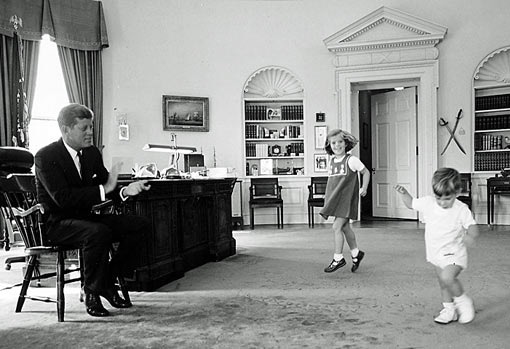
When I read the article, it nearly made me sick. He was a vile husband. I recalled the numerous famous pictures of him playing with his children—the doting father, one would think. Yet, in reality, just because he was such a malignant husband, he was also an appalling father. To mistreat his wife so badly, was to dishonor his children as well.

The image that came to me as I looked again at the pictures of Kennedy’s glorious Camelot brought to mind Jesus’ words about whitewashed sepulchers “which outwardly appear beautiful, but within are full of dead people’s bones and all uncleanness.” (Matthew 23:26-28, ESV). The verse which follows could be JFK’s epitaph: “So you also outwardly appear righteous to others, but within you are full of hypocrisy and lawlessness.”

A More Godly Alternative

C.S. Lewis experienced neither the normal, nor ideal, form of fatherhood. While he loved and respected his own father, theirs was not a close relationship. And then, at the end of his life, the death of his beloved Joy caused him to transition from the already tentative role of stepfather into the fullest demands of single parenthood. Lewis loved his two sons. He was the best father he knew how to be.

Despite being ill equipped, he did the honorable and right thing—he could do no other. He provided for all the physical needs of his sons, and did his best to meet their emotional needs as well. In Lenten Lands, his son Douglas Gresham describes how painful it was to be at The Kilns following his mother’s passing.

In cowardice and self-pity, I deserted the home and the two men whose company and loving support had for so long been all that had preserved my sanity. When at home from school, I was rarely at home. I know now that I could have done far more than I did to help both Jack and Warnie to bear the burdens which were their lot, but with the blind selfishness which is characteristic of egocentric teen-aged boys, I was too wrapped up in myself to spare time for others.

Strangely, Jack and I had, through these difficult years, become very close, and I think that he understood quite well the reasons for my reluctance to be a part of The Kilns at that time. At first, after Mother’s death, with almost unbelievably naïve complacency, I never doubted that The Kilns and Jack would always be there for as long as I needed them. Then, when it began to dawn on me that there was an increasing likelihood of Jack being snatched away, and with him The Kilns, I reacted by rejecting The Kilns entirely and by not daring to love Jack any more than I already irrevocably did.

For his part, Lewis comprehended just how important understanding fatherhood was. In his tribute George MacDonald: An Anthology, he says this about his mentor:

An almost perfect relationship with his father was the earthly root of all his wisdom. From his own father, he said, he first learned that Fatherhood must be at the core of the universe. He was thus prepared in an unusual way to teach that religion in which the relation of Father and Son is of all relations the most central.

Lewis concurred with MacDonald that “Fatherhood must be at the core of the universe.” And, if this is indeed true, our emulation of it in this life possesses even more importance than I ever imagined.

C.S. Lewis’ Beloved Dogs

When the internet throws unsolicited information at me, I do my best to ignore it. Yesterday I failed to duck at the right moment and Wikipedia suggested to me a “featured article” I found irresistible. It featured the earliest reference to a named dog—Abuwtiyuwwho died more than four thousand years ago and was buried in Giza in accordance with the wishes of the unknown pharaoh he guarded.

He was almost certainly a Tesem (“hunting dog”), an ancient breed resembling modern greyhounds. (Curiously, a 2004 DNA study found greyhounds are more closely related to herding breeds.)

We contemporary dog lovers understand how a pharaoh could love one of his canine companions enough to have him mummified and buried in an elaborate ceremony. In the image above, our border collie mix is juxtaposed to a hieroglyph tesem. If you’re interested in the subject, you might enjoy one of my February blogs entitled “Pets in Heaven.”

C.S. Lewis was also a dog lover. Pastor Bruce Johnson wrote a delightful article about eight of his dogs, entitled “All My Dogs Before Me.” You can read the brief but thorough article here.

Johnson walks us from Jacksie (who provided Lewis with his “adopted” name of Jack) to the friendly Ricky who was ever “anxious to be friendly.” In between, the author’s family included Tim, Pat, Mr. Papworth, Troddles, Bruce and Susie. Lewis spoke fondly of all of them, with the exception of Bruce, who possessed a predilection for barking through the night and was terribly spoiled by Mrs. Moore.

I also recommend a fine post about one of Lewis’ dogs which appeared on A Pilgrim in Narnia. It’s entitled “The Society of Tim.” The author of the blog is Brenton Dickieson, a Canadian professor and Lewisian scholar.

A Multiplicity of Polls

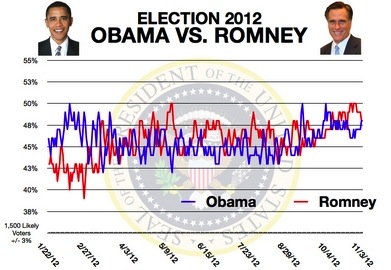
Here in the United States, our presidential election season is nearing its end. This is something people on both sides of the political spectrum are anticipating with joy. It’s been a grim process, grimmer than usual. The nation’s financial woes appear to have ramped up the vitriol. Christian values, especially, are maligned by many candidates and the partisan press that ingenuously professes objectivity. Yes, it will be a relief when it ends.

One of the features of modern elections that continues to grow in importance is polling. Scores of different pollsters—with widely varying results—compete for the public’s attention. Some of it is quite interesting, but the dizzying whirlwind of contradictory results creates confusion about their accuracy.

That, however, doesn’t slow their multiplication. Polling as we know it today is a fairly recent invention. It was 1958, when George Gallup gathered all of his nascent polling operations into a single organization. Gallup founded the American Institute of Public Opinion, the precursor of The Gallup Organization, in 1935. Gallup has maintained its reputation for integrity by refusing to accept any funding from political parties or candidates. Today, the company conducts opinion polls in more than 140 countries around the world.

As I was pondering the surplus of polls, I grew curious as to whether or not C.S. Lewis had ever commented on their like. I’m no expert on British politics, but I imagine they had occasional surveys, projections or prognostications. C.S. Lewis and his works have been the subject of innumerable contemporary polls . . . but did the Oxford don ever discuss such matters?

Desiring to avoid superficial attachments that might prove distracting to his literary goals, Lewis maintained a distance from political issues. It was for this reason he declined the well-deserved honor of becoming a “Commander of the British Empire.”

Lewis’ thoughts about politics reflect those of all who have grown tired of empty promises and venomous threats related to the election of “the opposition.” He would have longed, like many of us, for a reasonable and respectful conversation about charting the best course for his country.

Lewis longed for peace, in the spirit of Paul’s exhortation in his epistle to the young pastor, Timothy: “I urge that supplications, prayers, intercessions, and thanksgivings be made for all people, for kings and all who are in high positions, that we may lead a peaceful and quiet life, godly and dignified in every way.” (I Timothy 2:1-2, ESV).

In that spirit he wrote to his brother Warnie in 1940 about the tragedy of living in an epic era, wracked by not one, but two global conflicts.

Lord! How I loathe great issues! ‘Dynamic’ I think is one of the words invented by this age which sums up what it likes and I abominate. Could one start a Stagnation Party—which at General Elections would boast that during its term of office no event of the least importance had taken place? (Maundy Thursday, 21 March 1940).

Lewis’ collected Poems include the following delightful reflection on political campaigning.

Lines During a General Election

Their threats are terrible enough, but we could bear

All that; it is their promises that bring despair.

If beauty, that anomaly, is left us still,

The cause lies in their poverty, not in their will.

If they had power (‘amenities are bunk’), conceive

How their insatiate gadgetry by this would leave

No green, nor growth, nor quietude, no sap at all

In England from The Land’s-End to the Roman Wall.

Think of their roads—broad as the road to Hell—by now

Murdering a million acres that demand the plough,

. . .

And all our coasts one Camp till not the tiniest wave

Stole from the beach unburdened with its festal scum

Of cigarette-ends, orange-peel, and chewing-gum.

Nor would one island’s rape suffice. Their visions are

Global; they mean the desecration of a Star;

Their happiest fancies dwell upon a time when Earth,

Flickering with sky-signs, gibbering with mechanic mirth,

One huge celestial charabanc [tour bus], will stink and roll

Through patient heaven, subtopianized from pole to pole.

As I mentioned above, there are an abundance of polls about Lewis and his writings. It’s fitting to close this post with a related discussion from the introduction to The Quotable C.S. Lewis.

A quick survey of the Encyclopedia Britannica’s great books of the Western world reveals that an average of approximately three authors per century have been included in that august collection. This being so, what authors from this century will be read in the next? Of course, we can no more than guess; only time will tell. If votes are going to be cast, however, the name C. S. Lewis ought at least to be on the ballot.

The influence of his pen can hardly be overestimated. One observer noted that Lewis “is read with enormous affection and loyalty by a wide and diversified audience today. . . . In fact, more of his books are sold today than those of any other Christian writer in history.” Indeed, with over sixty of his books in print, Lewis has for many in this century become the dominant exponent and champion of thoughtful Christianity. Lewis wrote on a wide variety of subjects in many literary forms.

These words were written during the twentieth century. A decade into the new century they ring just as true. Lewis’ contributions to literature and faith are passing the test of time. And I suspect that will remain true at the close of this century, whether polls anticipate it or not.

Those of you with extra time on your hands may wish to participate in Mere Inkling’s nonscientific poll, below.

The Glory of Storge (Love)

Storge, noun: Parental affection; the instinctive affection which animals have for their young.

Some of you will recall when I wrote about attending my wife as her nurse while she recuperated from surgery this past summer. Well, I just completed a remotely similar familial duty with my daughter and her husband the past two weeks.

We’ve all been anticipating the arrival of their fourth child and Grandpa is the on call childcare provider of choice. Well, Grandma is actually first choice . . . but since she’s a teacher, that’s not feasible. (She’ll be down here for a week to help out soon, while her husband is home recuperating from two exhausting but wonderful weeks with our inexhaustible grandchildren!)

A few days ago, our newest granddaughter breathed her first breath. I contemplated writing “entered the world,” but far less accurate. She’s beautiful, of course. And we’ll continue to pray that her inner and spiritual beauty, rather than her external appearance, will define her life.

This has gotten me thinking about C.S. Lewis’ wonderful book, The Four Loves. The following passage describes humanity’s natural love for family.

I begin with the humblest and most widely diffused of loves, the love in which our experience seems to differ least from that of the animals. Let me add at once that I do not on that account give it a lower value. Nothing in Man is either worse or better for being shared with the beasts. When we blame a man for being ‘a mere animal’, we mean not that he displays animal characteristics (we all do) but that he displays these, and only these, on occasions where the specifically human was demanded. (When we call him ‘brutal’ we usually mean that he commits cruelties impossible to most real brutes; they’re not clever enough.)

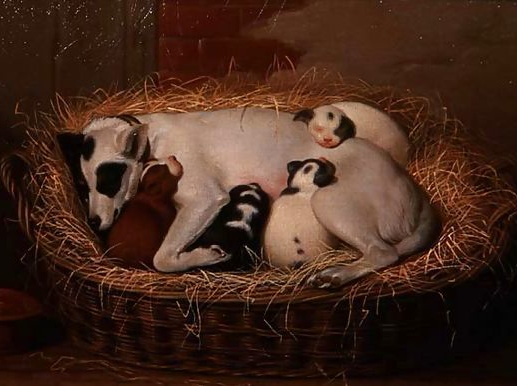
The Greeks called this love storge (two syllables and the g is ‘hard’). I shall here call it simply Affection. My Greek Lexicon defines storge as ‘affection, especially of parents to offspring’; but also of offspring to parents. And that, I have no doubt, is the original form of the thing as well as the central meaning of the word. The image we must start with is that of a mother nursing a baby, a [dog] or a cat with a basketful of puppies or kittens; all in a squeaking, nuzzling heap together; purrings, lickings, baby-talk, milk, warmth, the smell of young life.

The importance of this image is that it presents us at the very outset with a certain paradox. The Need and Need-love of the young is obvious; so is the Gift-love of the mother. She gives birth, gives suck, gives protection. On the other hand, she must give birth or die. She must give suck or suffer. That way, her Affection too is a Need-love. There is the paradox. It is a Need-love but what it needs is to give. It is a Gift-love but it needs to be needed.

As Lewis says, this storge love is a natural affection, instilled within the entire animal kingdom. That is what makes reports of people’s crimes against their own children so terribly shocking. These barbaric acts go against natural law itself. They are inhuman in the absolute sense. And witnessing them among humanity and various animal species reminds us of just how far we have fallen.

By God’s grace, such outrageous acts are the rare exception. Storge is so deeply engrained in nature’s order that we see it in nearly every direction we look. No family is perfect, but most of us are blessed with parents, siblings or other relatives who love us by virtue of our innate bonds.

However, if you are one of the unfortunates who were not loved by your father or mother . . . if you were rejected by your family, I am praying for you. Praying that you will come to know storge in its wonderful fullness through surrogate parents and siblings. After all, it’s not blood that forges these bonds—it is love. Storge is something we readily share with our spouses and our intimate friends. It is a sort of “kinship by choice.”

As I thank God for the most recent addition to our family’s number, I encourage you to thank the Lord as well for the storge love he allows you to give, and receive.

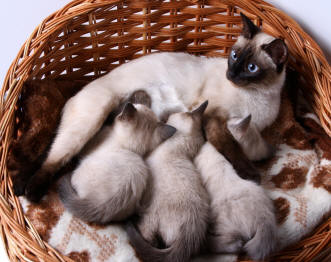
The painting above was created by Samuel De Wilde (1751-1832). And for you cat lovers who were disappointed by my selection of an image of puppies, enjoy this fine portrait of feline storge.

Travel Weary

I enjoy traveling. Cross country car trips are exciting adventures that have created some of my fondest memories. Flying to other countries has been the equivalent of stepping through a looking-glass; one moment you’re surrounded by the familiar and only a “few moments” after, you are immersed in utterly foreign environs.

Admittedly, traveling by air is a bit less enjoyable now, given the necessary security precautions. And, my 75 inch frame has never savored being wedged into the standard airline seat. Still, being able to cross to the opposite slide of the planet within a day borders on the amazing. I would have used the word “unbelievable,” but for the fact that imminent breakthroughs in low orbit travel will likely make today’s flight durations seem protracted.

While travel is often invigorating, there is an annual journey that I do not look forward to. Each year I travel to Saint Louis—a lovely city in America’s heartland—as a member of my church’s commission for military ministry. The problem arises from the fact that we fly in on a Thursday, begin with an informal gathering around dinner, and then rise early for business meetings that last into the late afternoon. Then, we fly home on an early evening flight that gets us home (in my case) about midnight.

While the clock says midnight, that is on a day when we got up in a different time zone, which means we’ve been on the run for twenty hours . . . and a ninety minute drive home from the airport is still ahead. It becomes a bit of a safety concern when you haven’t napped at all. Why not, you might wonder? Well, the truth is that I am one of the many people with sleep apnea, and the decibel level of my snoring could constitute assault. My exhaustion is an inevitable consequence of my consideration of others.

I know I’m not alone in having to take trips like this. What I’m describing is probably familiar to many of you. It’s just that spending nearly twenty-four hours over two days traveling to and from approximately eight hours of meetings leaves me exhausted.

Then there is the consideration that we don’t always make the best decisions when we are tired. There’s an intriguing passage in Prince Caspian where C.S. Lewis describes a decision facing the Narnian heroes. Young Lucy, pure of heart, has informed the group that Aslan would have them follow a particular route. However, in a wonderful portrayal of religious democracy, the band decides to put the matter to a vote! And, just as in church bodies today, we learn that not all ballots result in divinely inspired decisions.

There’s nothing for it but a vote,” said Edmund.

“All right,” replied Peter. “You’re the eldest, D.L.F. What do you vote for? Up or down?”

“Down,” said the Dwarf. “I know nothing about Aslan. But I do know that if we turn left and follow the gorge up, it might lead us all day before we found a place where we could cross it. Whereas if we turn right and go down, we’re bound to reach the Great River in about a couple of hours. And if there are any real lions about, we want to go away from them, not toward them.”

“What do you say, Susan?”

“Don’t be angry, Lu,” said Susan, “but I do think we should go down. I’m dead tired. Do let’s get out of this wretched wood into the open as quick as we can. And none of us except you saw anything.”

“Edmund?” said Peter.

“Well, there’s just this,” said Edmund, speaking quickly and turning a little red. “When we first discovered Narnia a year ago—or a thousand years ago, whichever it is—it was Lucy who discovered it first and none of us would believe her. I was the worst of the lot, I know. Yet she was right after all. Wouldn’t it be fair to believe her this time? I vote for going up.”

“Oh, Ed!” said Lucy and seized his hand.

“And now it’s your turn, Peter,” said Susan, “and I do hope—”

“Oh, shut up, shut up and let a chap think,” interrupted Peter. “I’d much rather not have to vote.”

“You’re the High King,” said Trumpkin sternly. “Down,” said Peter after a long pause. “I know Lucy may be right after all, but I can’t help it. We must do one or the other.”

At many times in our life journeys we may find ourselves “dead tired” like Susan. But we need to keep our wits about us so we don’t make decisions that lead us down paths destined to bring even more suffering and fatigue.

The following passage from Lewis’ Mere Christianity illustrates how we often justify our poor decisions and inconsiderate actions with our tiredness. I certainly do. Perhaps you’ll see a little of yourself in the following words.

I hope you will not misunderstand what I am going to say. I am not preaching, and Heaven knows I do not pretend to be better than anyone else. I am only trying to call attention to a fact; the fact that this year, or this month, or, more likely, this very day, we have failed to practise ourselves the kind of behaviour we expect from other people. There may be all sorts of excuses for us. That time you were so unfair to the children was when you were very tired. That slightly shady business about the money—the one you have almost forgotten—came when you were very hard-up. And what you promised to do for old So-and-so and have never done—well, you never would have promised if you had known how frightfully busy you were going to be. And as for your behaviour to your wife (or husband) or sister (or brother) if I knew how irritating they could be, I would not wonder at it—and who the dickens am I, anyway? I am just the same.

That is to say, I do not succeed in keeping the Law of Nature very well, and the moment anyone tells me I am not keeping it, there starts up in my mind a string of excuses as long as your arm. The question at the moment is not whether they are good excuses. The point is that they are one more proof of how deeply, whether we like it or not, we believe in the Law of Nature. If we do not believe in decent behaviour, why should we be so anxious to make excuses for not having behaved decently? The truth is, we believe in decency so much—we feel the Rule of Law pressing on us so—that we cannot bear to face the fact that we are breaking it, and consequently we try to shift the responsibility. For you notice that it is only for our bad behaviour that we find all these explanations. It is only our
temper that we put down to being tired or worried or hungry; we put our good temper down to ourselves.

Well, I’m too tired to write any more on this subject now, so those of you who have remained with me to this point, can count yourselves blessed!

Recycling Seasons

Fall has arrived, and with it (in many nations) a new “school year.” The traditional academic year has been modified in various locales, but for most the end of summer and beginning of fall herald the beginning of the latest season of learning.

The irony is, of course, that even those long “graduated” from any personal learning goals remain subject to this academic cycle. The “back to school” advertising is pervasive, and simultaneous “commencements” such as football and new television programming also reinforce that sensation that something familiar is returning for a fresh beginning.

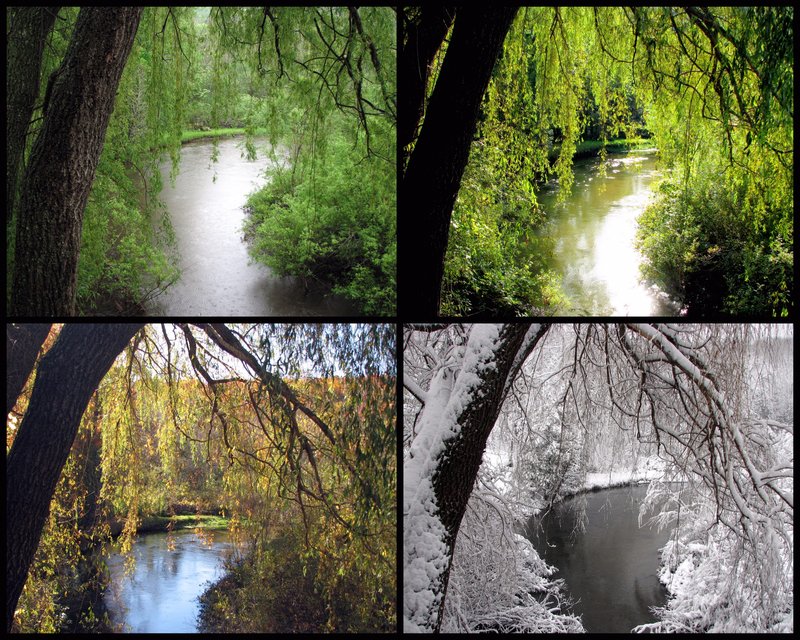
Families with children in traditional schools are anchored in this academic cycle. It is so intimately an aspect of life that the world would be disorienting without it. Fall, winter, spring and summer—each with their unique traits and holidays—create an ongoing cycle that is as comfortingly familiar as it is renewed and invigorating.

This is particularly true in families such as my own where my wife and son teach in public and private schools, respectively. We also have children embracing the challenges and potential rewards of homeschooling. Yet, even after my immediate family retires from teaching and our youngest grandchild (due to be born in less than a month) has received her college diploma . . . the academic cycle will still be part our lives.

As Christians, the significance of this annual cycle is reinforced by the celebration of the Church Year. It begins in the winter, on the first Sunday of December, with the season of Advent. Then we are carried delightfully through the momentous “white water” events in the life of Jesus Christ until the current slows and we drift serenely through the long season of Pentecost which spans the summer months.

As I wrote above, this cycle is wonderfully familiar and remarkably new. It is a gift of God. And, like all divine beneficences, the Adversary desires to corrupt its meaning and destroy its value. C.S. Lewis addresses this expertly in The Screwtape Letters, where the tempter is advising a fellow devil to make his “patient” bored with the recurring nature of this pattern. In the passage which follows, Screwtape is complaining how God (whom he refers to as “the Enemy”) has so skillfully balanced creation to meet the needs of his children.

The horror of the Same Old Thing is one of the most valuable passions we have produced in the human heart—an endless source of heresies in religion, folly in counsel, infidelity in marriage, and inconstancy in friendship. The humans live in time, and experience reality successively. To experience much of it, therefore, they must experience many different things; in other words, they must experience change. And since they need change, the Enemy (being a hedonist at heart) has made change pleasurable to them, just as He has made eating pleasurable.

But since He does not wish them to make change, any more than eating, an end in itself, He has balanced the love of change in them by a love of permanence. He has contrived to gratify both tastes together in the very world He has made, by that union of change and permanence which we call Rhythm. He gives them the seasons, each season different yet every year the same, so that spring is always felt as a novelty yet always as the recurrence of an immemorial theme. He gives them in His Church a spiritual year; they change from a fast to a feast, but it is the same feast as before. . . . We pick out this natural pleasantness of change and twist it into a demand for absolute novelty.

“Absolute novelty,” can never satisfy the human heart. Ultimately, if each moment is new and possesses no connection with the past, we would be living in chaos. Sadly, some people do choose that path. But, as for me and my household (as Joshua once alluded), we choose to bask in the rich cycle of life that God has designed for us. And, if your own life has been short on predictability, stability and joy, I commend this choice to you as well.

Nursing Those We Love

This week I became a nurse. No, I didn’t complete a degreed or certificated program, I simply assumed the duties of being my wife’s post-surgical caregiver.

She had very serious knee surgery, which will require her to place no weight at all on her right leg for at least a month and a half. This first week she’s required an escort and assistance for virtually everything. And I’ve offered this service gladly, and lovingly . . . even when it’s interrupted my sleep apnea crippled rest.

Obviously, over three and a half decades of marriage, she has needed modest nursing in the past. But this is more serious. It is sustained. She has seen me through a number of serious illnesses and surgeries, but then she (like so many other women I’ve been privileged to know) is a natural nurse and caregiver.

C.S. Lewis was a man not vastly different from me. He was not terribly comfortable when placed in such a role . . . yet he too discovered great meaning in caring for the needs of his wife during her illness. His precious Joy was dying, so the intensity of his labors, and their corresponding emotional investment dwarf my own. And yet the “framework” of our circumstances bears a marked similarity.

In his wonderful book Lenten Lands, Lewis’ son Douglas Gresham relates how Lewis and his brother Warnie provided exceptional care to his mother during her illness. He writes:

[Lewis] spent most of each day with [Joy] at the hospital, but they both agreed Mother should be brought home to The Kilns to die—in Jack’s home—her husband’s home—with him at her side. The “common room” was converted to a hospital ward, complete with a system of bells by which Mother would summon a nurse, or later Jack, if she needed help, as she often did.

I’ll make a confession. Although most men can adequately perform familial nursing duties when there is no alternative caregiver, most of us are quite content to step aside and let our wives or sisters attend to whatever nursing procedures are called for. Actually, I was quite gifted at removing slivers, but when it comes to bodily discharges, I’m no sexist to admit I and most of my gender display a serious weakness.

And yet, even in these cases, when changing the soiled diaper of an infant (or someone old enough to feel shame for having such needs) . . . even such unpleasant acts are possible for us to do for those we love. So the key to being able to care for others is not to pinch our nose and do it as quickly as humanly possible. The key, instead, is to learn to love those placed in our care.

In our grandparents day, it wasn’t uncommon for an elderly great-grandparent to reside with the family of one of their children. My father, for example, grew up with his blind grandfather as a member of their household. Similarly, my mother enjoyed the daily presence of her grandmother in her own home throughout her life. Not only was it expected that children would “take in” their elderly parents, it was natural. After all, they were family.

But, how does one transfer this familial affection to the stranger? After all, as Jesus said, “If you love those who love you, what benefit is that to you? For even sinners love those who love them. And if you do good to those who do good to you, what benefit is that to you? For even sinners do the same” (John 6).

Mother Teresa and the many thousands of saints throughout history who have cared for the leper, the outcasts, and the dying know this truth. They do everything as though they were caring for the Lord himself, just as he asked his disciples to do. Medicines are not their only balms—nor their most important. Their compassionate touch and tender encouragements are often far more healing.

When I compare myself to these caregivers, I realize just how inadequate a nurse I am. As a pastor, a core aspect of my vocation has been to bind the injuries of the sheep entrusted to my care. But I do this in a “spiritual” manner, and it has been rare to ever help one of them replace a bloodied bandage. Spiritual, emotional and social wounds are those that most pastors feel comfortable treating. Providing for the “baser” physical needs of the diseased is quite another matter.

And this brings us to the end of today’s reflection. When next I write, I’ll carry this final thought a bit farther forward.

Nature’s Melodies

Recently we were walking our five year old granddaughter home after a visit to our house, and she said something remarkable. (Our son’s family lives on a forested parcel adjacent to our own near Puget Sound.)

This precious little girl gazed to the top of the tall pine and fir lining the path and said, “I love the music the woods make.” She went on to describe various elements of nature’s orchestra, including the whistling wind in the treetops, the croaking of innumerable frogs drumming down by the pond, and, of course, the varied melodies of the birds who also call this glorious place “home.”

It was a wonderful moment.

When we pause to appreciate nature, it reminds us of the beneficent God who created it. Nature, especially when it is pristine and untouched by human hand, is truly wondrous. There are, I recognize, some “natural” settings that might actually be improved by human intervention . . . but these are few.

Unspoiled nature is beautiful. And that is a crucial distinction to make—because nature too has been corrupted by humanity’s fall from grace. Its capricious temperament is manifested in storms and other disasters.

So we, as Sons of Adam and Daughters of Eve must be content to savor this blurred image of God’s original creation. For, even this corrupted world, is surely magnificent.

C.S. Lewis appreciated this truth. He and his close friends enjoyed many a long walk across the English countryside.

Nature is an awe-inspiring thing, but she is incapable of communicating ultimate joy. To find that, we must look beyond the forest to see who wrote the music it so eloquently sings.

In The Four Loves, Lewis emphasizes this truth:

Nature cannot satisfy the desires she arouses nor answer theological questions nor sanctify us. Our real journey to God involves constantly turning our backs on her; passing from the dawn-lit fields into some pokey little church, or (it might be) going to work in an East End parish. But the love of her has been a valuable and, for some people, indispensable initiation.

May our Creator grant us the opportunity to enjoy his unfathomable creation—even as we recognize that it is only by his boundless grace we are capable of doing so.