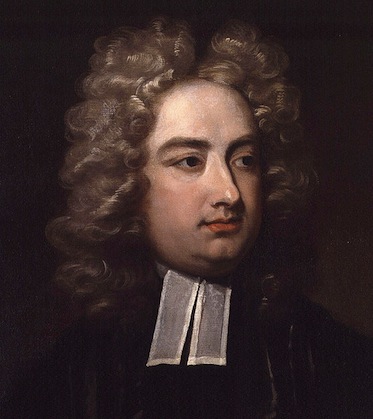
Your Writing Style

Each of us writes in a unique manner.

You can study writing patterns in various ways, by considering vocabulary, changes in sentence lengths, repeated phrases, and various other measurable elements.

Then there are more subjective aspects of our writing, but these too are recognizable. They would include tone and more abstract things like pacing.

When you add them all together, you arrive at an amorphous quality called the writer’s “voice.” And, as I said above, each of our “voices” are different.

It may be that we dabble in a variety of forms and genres. For example, in addition to these casual blog posts, I also write about theology and military ministry from a much more “professional” perspective. And, shockingly (to my own writing identity) I’ve recently received encouragement related to poetry with which I’ve been experimenting.

Even when we write in various literary forms, and they clearly differ from one another in their voice, the truth is that for each of these documents we develop a personal, inimitable voice.

Now, after emphasizing our literary uniqueness, I want to switch perspectives and consider that our various styles and voice resemble those of others. Occasionally, when reading someone’s work it strikes you as familiar. You may even recall the author that the work reminds you of. (I’m not referring to plagiarism, of course, although the internet has apparently made that particular plague even more common now than in the past.)

It would be vanity to claim that our own writing voice resembles that of no one else. Yes, some voices are so peculiar that they are clearly “rarities,” but others have shared even those odd personalities in the past. I suspect that’s even true for the senseless ramblings with which some self-styled “artists” assail the public. (Even insanities can resemble one another.)

In any case, if you ponder this subject it’s natural to wonder: who do I write like?

Today, through the amazing processing abilities of the computer, you may be able to get an answer to that very question. It’s not a definitive answer, because as I said above, our writing voice possesses both material (words and syntax) and spiritual (ephemeral and aesthetic) dimensions. And, while a computer may be without peer in comparing the former, I believe it to be quite deficient in discerning the latter.

Nevertheless, a rudimentary program is available online to compare your writing with that of a number of writers of varying reputation. The program has a number of limitations, but I think there may be something to it. It requires an extensive section of your writing (several paragraphs, at least). I assume more would be better, in terms of promoting accuracy.

As I just mentioned, it includes a limited number of authors currently entered into the database, and I suspect that the gifted C.S. Lewis is not among them. (I say this not because I expected to be aligned with him, but because of some of the included authors I am aware of. In addition, the program’s creator is actually Russian, so I would be curious to learn how the represented English authors were selected.)

It would limit the program’s value, for example, if I only input data on three writers and you were matched with the one you resembled most closely. Would you prefer, for example, to be told you write like Edward Bulwer-Lytton, Georgette Heyer, or Fabius Planciades Fulgentius?

Even with a significant number of writers included, the program’s accuracy will be affected by the quantity (and specific choice) of what is included to represent each. For example, the programmer properly included Stephen King. How valuable would that be, however, if he had only used King’s poetry and excluded his prose works? (Yes, the horror master has also penned poetry—now, that’s a scary thought!)

Well, despite the limitations of the “I Write Like” program, it is fun to try out. And it sounds impressive, in that it relies upon a naive Bayesian classifier. (Well, the “naive” part doesn’t sound especially remarkable, but the formula looks pretty imposing to someone who never took calculus.

You can use take the “test” at this site.

Make sure you include lengthy selections from your work. Also, testing the program with different genres (assuming you write in different styles) will actually give you new matches. (That is, of course, as it should be.)

If you do decide to experiment with it, a comment below about your results would be interesting for others. And now, for the moment that you have been awaiting . . . with whose writing did the program match mine?

I tried a number of times (no—not fishing for results I wanted, but using a variety of types of my writing) and here were the repeated results:

For my blog posts: H.P. Lovecraft or J.R.R. Tolkien

For my more formal essays: J.R.R. Tolkien or Jonathan Swift

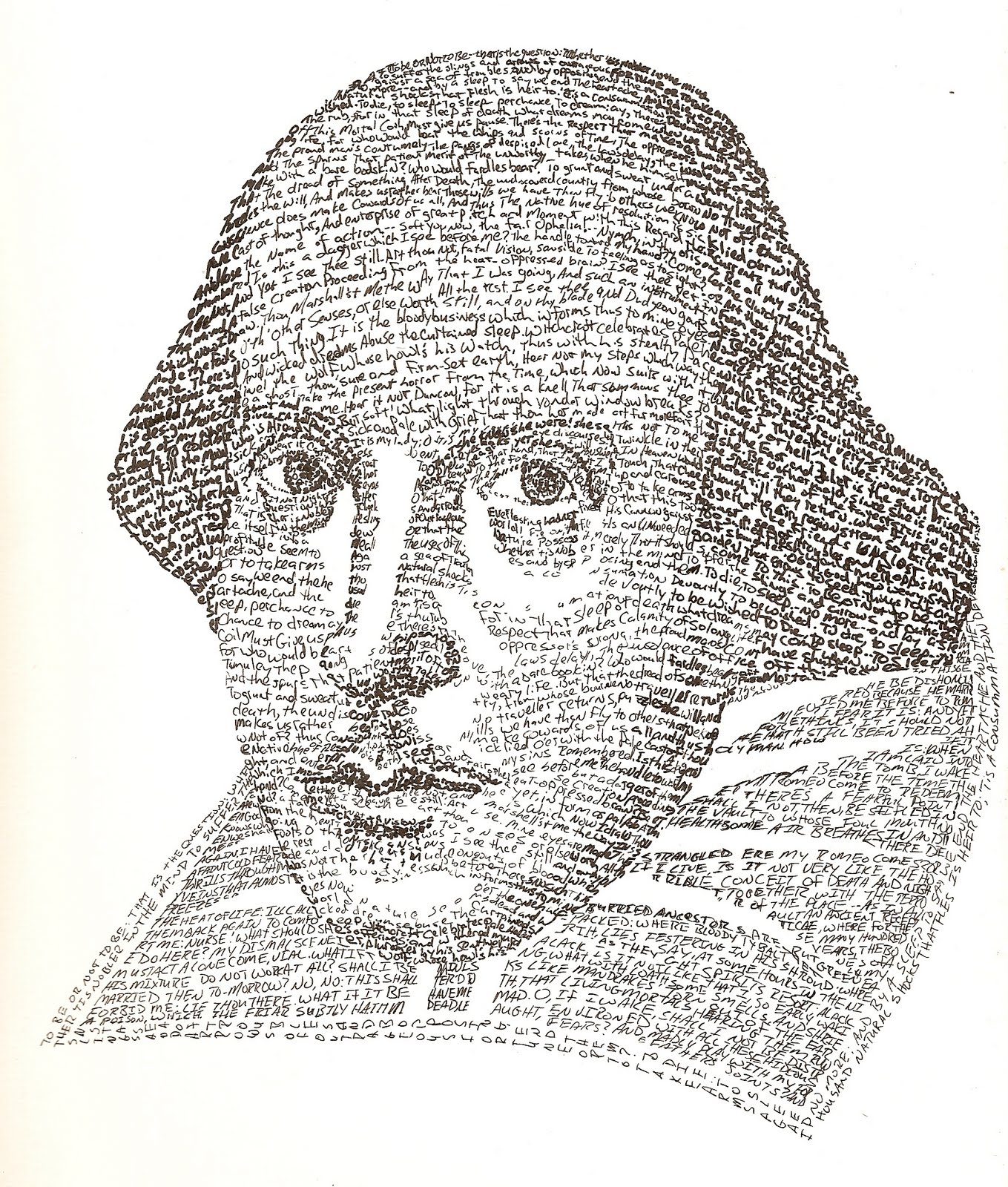
(It’s Swift’s picture, you’ll note, that begins this post.) Actually, the majority of the results linked to Swift, whose work I don’t recall ever reading in full, not even Gulliver’s Travels. However, our shared emphasis on wit, advocacy and satire account for what I deem a genuinely accurate assessment. And it does not hurt that Swift was Anglo-Irish, like my favorite author!

So, until Dmitry Chestnykh adds C.S. Lewis to the writers included in the “classifier,” I’m quite content to rest on my matches. Because even if I don’t share Lovecraft’s worldview, I can still respect his literary skill. And being identified with the other gentlemen, is a grand compliment.

[Special thanks to Julie Catherine who introduced me to the site via her post on the subject.]

Mastering the Anacoluthon

Allow me to once again display my grammatical ignorance. I was reading an online book review and the author used lots of multisyllabic words. (That’s something I actually enjoy.) But then he went and threw in one of those words I had to rush to dictionary.com to define. (That’s another thing I love—learning new words.)

Naturally, I could partially decipher the definition from the context. However, whenever I have a dictionary within reach, that shortcut doesn’t satisfy me.

In this case, the word was anacolutha, the plural form of anacoluthon. It is defined as “a construction involving a break in grammatical sequence, as ‘It makes me so—I just get angry.’” Well, we can all agree that is not a good sentence; it’s a fine example of what a writer should avoid.

Not all grammar rules make sense. Take for example the notion that one cannot end a sentence with a preposition. Some of us literally had our knuckles rapped for scribbling such grammatical “obscenities.” While it’s true that you can avoid using prepositions in this manner, it’s not the great sin we were taught it was. In his Letters to an American Lady, C.S. Lewis writes:

[Regarding] a sentence ending with a preposition. The silly “rule” against it was invented by Dryden. I think he disliked it only because you can’t do it in either French or Latin which he thought more “polite” languages than English.

Well, isn’t that an interesting historical note to become aware of?

But, back to anacolutha . . . let’s see if it’s difficult for a trained pen to sever the ties of logic, and compose this sort of literary construction.

Reepicheep was a great swordsman who, “a tail is the honor and glory of a Mouse” was his creed.

Frodo pondered his options while—the Nazgûl loathed bathing more than once each fortnight.

Wow, that’s a lot harder than it looks. If you can think of better examples (not difficult, I’m sure), feel free to share them in a comment! But only write them here, and don’t allow any anacolutha to slip into your real writing!

Generalizations (& Those Who Criticize Them)

“That’s the worst of girls,” said Edmund to Peter and the Dwarf. “They never can carry a map in their heads.”

“That’s because our heads have something inside them,” said Lucy. (C.S. Lewis, Prince Caspian).

It seems that if an author wishes to alienate vast swaths of readers today, they need do no more than “generalize.” Thus, C.S. Lewis has received unjust criticism due to some passages such as this.

To make a judgment such as Edmund’s leaves unmentioned the implied fact that there are, indeed, many useful things that are manifestly present in the heads of girls. But this example of difficulty in reading maps refers to a common perception . . . and if you’ve never heard it voiced before you read it here, you have led a shockingly sheltered life.

No one believes that there are no women capable of defeating even well-trained men in rigorous navigational competitions. Likewise, I have no doubt there are many gifted female cartographers. But please reseal the tar barrel and restuff the pillows; Lewis’ use of this dialog is not intended to be offensive!

I long for the days when a reader gave the writer the proverbial “benefit of the doubt.” A time when our assumption was that they meant something other than the meaning which offended us . . . or, at least, that they intended no malice.

I can’t speak for the rest of the world, but in most of the United States, such days of literary curtesy are long behind us. Today we often read things with an eye to finding the “problem” (ignorance, prejudice, or political viewpoint foreign to our own).

My wife and I attempted to raise our children with critical minds. (Critical in the best sense of the word.) We taught them that there are absolute truths. We informed them that, while people are entitled to hold to all sorts of notions and beliefs, that fact does not make the contending concepts “true.”

At the same time, we did our best to teach our children to respect others. To recognize that all human beings are created in the image of God. To understand that not even the basest man or woman is beyond redemption and restoration.

One practical element of this education in basic virtues took the shape of an adage we taught our kids. I’m sure others have advised this throughout history, and that many have voiced it far more eloquently, but we simply said: Judge everyone and everything by their best cases, rather than their worst.

In practice, this would mean that when a teenager compliments his dad on his wisdom, the dad does not immediately assume his prodigy is attempting to manipulate him. Now, further conversation and “investigation” may certainly prove that manipulation is indeed the goal, but it should not be the very first suspicion of the father.

As a pastor, one of your greatest challenges (and joys) comes in the pulpit. One major difficulty is discussing some extremely complex subjects in a relatively brief period of time. Pastors sometimes lapse into a sort of theological shorthand—which can be confusing or troubling to those unfamiliar with the underlying presuppositions. Taken out of context, individual statements may sound strange, or even heterodox.

I have always encouraged the members of my congregations and (especially) visitors to specifically ask me about what was meant by any statement or phrase that left them uneasy. It is no exaggeration to say that 98% of the time, that has cleared the air in and of itself, as I’ve had an opportunity to elaborate and clarify. (Of course, the other 2% of the occasions constitute a second pastoral “joy.”)

It saddens me when I hear people berate C.S. Lewis for a handful of passages that critics deem to be misogynistic or racist. They fail to extend toward him the goodwill he strove to offer to others. Most of these very few passages can simply be explained by the age in which he lived. It is disingenuous to judge by today’s standards someone who died a half century ago.

Like Lewis’ peers (and, in fact, all human beings), on occasion Lewis himself generalized. Let those who have never done the same cast the first stone. I confess that I’m guilty of it. In fact, returning to the quotation with which we began, I could most definitely echo Edmund’s words in reference to my wife. Ironically, they would be utterly inaccurate in reference to my daughter. For many years she was my “official navigator” as our family often drove across country (relying upon those seven foot by seven foot paper maps that are nearly impossible to refold.)

So, in my own nuclear family I’m batting .500 in terms of the accuracy of this generalization. The next generation may decide. Four of my six grandchildren are girls, and since the oldest girl just turned five, it’s about time to set them out in the woods with a map and a compass to see how they do!

Literary Words

I must confess that I like words. In fact, it’s not excessive to say that I delight in brilliantly witty “turns of phrase” and elegantly painted landscapes that allow me to clearly see what the author is painting with his or her words.

I’ve grown convinced that loving words is a handicap to becoming an excellent writer. Yes, scribblers like me can become adequate or even appreciated writers . . . but to stand in the highest ranks a writer must be willing to ruthlessly slash and slay excess words that impede their perfect vision.

Self-editing is a discipline. It’s something that can be learned and refined through practice. That it forever remains a bit painful for some of us is clear evidence we are overly attached to the words we have put to paper.

C.S. Lewis addressed this general subject in a 1932 letter to his good friend Arthur Greeves. While he was not a slave to the number of words required, he aimed for simplicity and clarity. Lewis wrote:

I think I see, from your criticisms, that you like a much more correct, classical, and elaborate manner than I. I aim chiefly at being idiomatic and racy, basing myself on Malory, Bunyan, and Morris, tho’ without archaisms: and would usually prefer to use ten words, provided they are honest native words and idiomatically ordered, than one “literary word.” To put the thing in a nutshell you want “The man of whom I told you,” and I want “The man I told you of.”

I smiled as I typed Lewis’ remark about “ten words.” He used that to illustrate his willingness to use excessive verbiage to communicate clearly. Brevity was, however, an admirable goal. And brevity is a virtue I’ve seldom been accused of possessing.

In the military, comrades and associates are frequently presenting plaques and remembrances to those who are “rotating” to new assignments. Having served in a dozen different “permanent” assignments, I have boxes full of such memorabilia.

Two of the few I display are genuinely precious. The first is an icon of Saint Athanasius, presented to me by the best “boss” I ever had, an Orthodox priest by the name of John Stefero. The reasons for the personal gift were theological and I accepted it with genuine appreciation and humility.

The second prized gift is a gracefully curved etched glass keepsake featuring the seal of the United States Air Force Chaplain School where I served for three wonderful years. The commandant was speechless as he presented the plaque to me, reading for the first time the inscription that my closest companions had composed for me.

He says in a book what others say in a sentence.

The commandant (later our Chief of Chaplains) was stunned. I was delighted. I led the gathering’s laughter and bellowed, “Yes, and it’s a book well worth reading!”

Jack Lewis may have chided me a bit for the underlying reason for the accolade, but I am confident he would have delighted in the affectionate friendship and esprit de corps with which it was presented.

So much for my shortcomings. For all other writers (including, perhaps, you?) . . . I would recommend following the master’s example, rather than my own.

The Satisfaction of Writing

Many people who don’t write live a bit in awe of those who do. Even in this POD age, an almost mystical aura surrounds those who “successfully” write. This is especially true for those who are published, but not restricted to them.

Over the years, many friends and family members have asked why I “like to write.” Some years ago, the vague responses I once offered assumed clarity. It was, in a sense, due to a personal epiphany. I now answer such queries with the words, “it’s not that I enjoy writing itself . . . but I find the satisfaction of having written to be deeply rewarding.” (Well, that’s not a verbatim quote of how I respond, but you get the idea.)

One of my driving desires when I retired from the Air Force was to spend more time pursuing my lifelong avocation. Toward that end, I’ve devoted a serious amount of time to publishing a free online journal about the military chaplaincy. It is semi-annual, and even at that, it’s currently behind its publication schedule. (Mea culpa.)

I’m happy to share that the latest issue of the journal is now ready for free download. You can find it here. In fact, all four issues of the journal are available for download in PDF.

Curtana features new articles, editorials, poetry and reviews. In addition, since a major purpose of the journal is to gather chaplaincy history from disparate sources, we also compile biographical notes and other material.

As Curtana’s editor, I’m proud of the international scope of the journal. We’ve received contributions from Australia, Bangladesh, Canada, Great Britain, Haiti, Ireland, and even the United States. Most articles have been written by chaplains, but that’s not a requirement. Skim the contents of the issues and you’ll note the breadth and depth that characterize Curtana.

C.S. Lewis recognized the value of thoughtful literary works. Good literature might be fiction or nonfiction, but it bears the mark of genuine reflection.

Literature adds to reality, it does not simply describe it. It enriches the necessary competencies that daily life requires and provides; and in this respect, it irrigates the deserts that our lives have already become.

I hope that in some small way Curtana: Sword of Mercy helps irrigate the arid minds of modern men and women. Please share news of its existence with your acquaintances who may be interested in ministry within the armed forces.

Literary Dementia & Hope

When we’re young we look forward to growing up. However, once we reach adulthood, the “benefits” of aging begin to pay diminishing returns. Ultimately, aging becomes an unwelcome corollary to being human. When our bodies—and our minds—begin to fail us, we long for the days of our youth.

In 1942, C.S. Lewis wrote to a friend about their similar ailments.

I have had neuralgia to-day but am otherwise alright—except for rheumatism which has prevented me from sleeping on my right side for nearly a year now. (What a series of rediscoveries life is. All the things which one used to regard as simply the nonsense grown-ups talk have one by one come true—draughts, rheumatism, Christianity. The best one of all remains to be verified.)

A recent study of aging writers considered a new technique for assessing dementia, specifially Alzheimer’s. Agatha Christie, a talented and prolific author who wrote over a lengthy period of time, provided the prime candidate for the study. You can read more about it here.

They analyzed how her final two volumes (penned when she was in her eighties) compared to her earlier work, in terms of “vocabulary size and richness.” The decline was significant. They also noted an increase in repeated phrases and the use of indefinite words such as “anything.”

In a sense, this result is not surprising. It is illogical to assume our writing skills would not decline as we reach our senior years. Fewer brain cells means, after all, fewer brain cells. One potential value of this study is to provide a means for identifying illness while it is treatable. The investigation continues.

In a later letter to another of his correspondents, C.S. Lewis wrote again about aging.

We must both, I’m afraid, recognise that, as we grow older, we become like old cars—more repairs and replacements are necessary. We must just look forward to the fine new machines (latest Resurrection model) which are waiting for us, we hope, in the Divine garage!

Uninhibited Fonts

Tonight as we prepared to begin our monthly Christian Writers meeting, our leader mentioned one of his favorite subjects for scribbling. As an unreformed doodler myself, the conversation immediately seized my wandering attention.

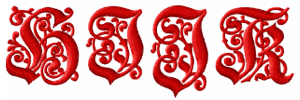
He said something to the effect that he “likes to see how complex or ornate he can draw letters while still maintaining their legibility.” It reminded me of some of the flowery medieval versions of fonts where it is determining precisely what a given letter is, becomes a mystery. (I made the challenge simple above, by bracketing the “I” and “J” with adjacent letters . . . but without the “H” and “K” their identities may have been quite difficult to ascertain.)

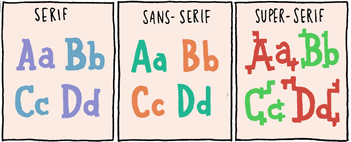
The image to the left comes from a witty strip called “Incidental Comics.” It is penned by Grant Snider, whose cartoons are quite often as entertaining as they are absurd. In this small element from his broader treatment entitled “Design Like Nobody’s Watching,” he expands on the two styles traditionally identified for letter forms.

I’ve written earlier about font lovers, who will especially enjoy the humor here. But all word lovers can appreciate the importance of the letter styles which clothe the words we read and write.

It’s good to be reminded. The fonts we use truly do make a difference.

UAVs and Manuscripts

Iran’s capture of an extremely sophisticated (and classified) drone is a huge disaster. Now the enemies of democracy will be able to duplicate our technology without having to spend a penny on research. As too often happens (usually through espionage), our fascist enemies have stolen advances that make them much greater threats. (I use the plural here, because there’s no doubt Iran will share/sell much of what they learn with mainland China, North Korea and various other dangerous regimes.)

Unmanned Aerial Vehicles (UAVs) are particularly cutting edge. Some voices in the Department of Defense already advocate creating an entirely unmanned Air Force. What used to be science fiction sometimes becomes science fact.

Nearly a decade ago, on the first anniversary of the September 11 attacks, I found myself serving as a chaplain in one of the “-stans” on the other side of the globe. It was during the early days of Operation Enduring Freedom, and there was an intense commitment to the mission. A price was being paid in Coalition lives, but virtually everyone there believed the steep cost would be worth it, as the world became a safer place.

One of the major activities at our air base involved supporting the Predator mission. It was novel. It was exciting. One can only imagine how advanced these platforms have become during the intervening decade. Well, you don’t need to merely “imagine;” many of the innovations are public knowledge. And yet, wisdom suggests that the most amazing advancements are not publicly acknowledged. Most civilians can’t understand just how serious a setback it is for this surveillance and/or weapon system to be captured by extremists.

Turning from the world of current affairs to a subject far less threatening . . . how might this relate to writing? We’re told to “write about what you know,” so our past experiences provide a rich resource for both our factual and fictional efforts. Unless we are simply allowing our thoughts to flow as they may, we find that research remains an essential part of writing even about that which we know.

Case in point. I have served with Predator drones. Watched them being launched and then gracefully land. I’ve touched them. Even though I’m retired from active duty, I belong to several military professional organizations and I subscribe to a variety of military publications. I’ve read a lot about UAVs over the years—but before I would ever attempt to compose a story featuring one, I’d plan to do a significant amount of research.

And that may be one of the few things I have in common with truly good writers. They pay attention to the details, and they get them right. It’s dangerous to assume that we are ever familiar enough with a subject to write off the proverbial “cuff.” Nothing destroys a story’s (or author’s) credibility than surely than getting facts wrong. And that’s certainly one fact worth being reminded of.

A Font for All Seasons

There are a variety of ailments that disproportionately affect writers. Mundane disorders such as Repetitive Stress Injury, Computer Eyestrain and assorted carbuncles arise as no surprise. But there is another, psychological malady that can cripple an author’s creativity and savage his time schedule.

A fascination with fonts is a logical curiosity among people who love words. You can find stylized fonts reflecting for almost any special interest. In fact, just four months ago the total number of fonts surpassed the population of the planet. An affection for different fonts is one thing . . . but an obsession is quite another. Addicts are commonly referred to as “fontaholics.”

There truly are fonts for all seasons . . . too many versions to number. As an example of a unique font, you can check out Narnia BLL.

This lovely lettering is inspired by the recent films about the land of C.S. Lewis’ anointed Chronicles.

And It’s Not Just about Aesthetics

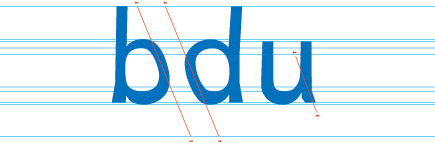
Recently a Dutch scholar devised a nefont specifically for people suffering from dyslexia.

Their approach, based on “weighting” the various letters and symbols, has been shown to improve readability for dyslexics. (Truth is, it would probably make reading easier for anyone.) Some see this new font as reinforcing prior studies which show serif fonts to be more legible than sans serif versions.

Whether you consider yourself immune to the lure of fonts, or are a self-confessed fontaholic, it’s a field about which every writer should understand the basics.

The Bane of Blogging

In today’s “Pearls Before Swine” comic strip, Rat says, “Hey, Goat. In an effort to improve the readership of your blog, I’ve been studying the google analytics for it.”

“What are those?” asks Goat, who is seated at his computer, presumably typing his latest post.

“A comprehensive series of stats about page views, unique visitors and how viewers find your blog. Anyways, from all that, I think I’ve ascertained the problem.”

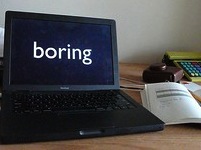
“You’re boring.”

The final panel reveals Goat’s reaction to that painful assertion.

Truth be told, many individual blog posts are boring. And, not a few blogs in toto are tedious as well.

Boredom, though, lies in the perception of the reader. What weighs down the eyelids of one drowsy reader may be precisely the message that invigorates another. So, I don’t worry too much about the natural ebb and flow of responses to various things I write.

Many years of preaching has doubtless influenced me. The sermon one person regards as “okay,” may be used by God to create a genuine epiphany in the life of another.

Of course, the overall flavor or voice of an author is something a reader recognizes only after sampling a fair amount of their work. Taking just a bite here or a nibble there doesn’t allow a reader to adequately assess whether someone’s work is truly nourishing.

Sadly, our busy age doesn’t allow for terribly thorough examinations . . . and with millions of blogs to be sampled, we’re lucky to have a reader stumble upon even one of our posts. Then, in the briefest of moments, an assessment is made and a judgment passed.

Is this column boring . . . or is it informative and perhaps even entertaining? It’s not enough to hint at the promise of gratification. Bloggers must deliver. And they must deliver every time they post. Of course, that’s not humanly possible. Striving for an unattainable goal can be quite disheartening. And we all have “rats” out there ever ready to discourage us.

If you write, I encourage you to take genuine comfort in the fact that some readers will be pleased by what you write. Some will even be blessed. Not all of them. But remember that even the prophets and poets of the Scriptures did not delight all of the members of their audiences.

Do your best to write something worthy of being read. And rest in the knowledge that some of those who see your words will be refreshed and encouraged by them.