
This title, “History in Retrospect,” is of course redundant. There is no other way to consider history than by looking back at the past – from our current vantage point.
That is why it’s impossible to view history completely objectively. Since each of us measures things from our personal worldview, the same event means vastly dissimilar things to different people.
When people are hyper-partisan, they are incapable of reasoning with others who view events differently. The history of the United States is currently the subject of intense (too often extremist) debate by its citizens. Balanced people, the type I prefer talking to, admit the shortcomings in our history, and praise the accomplishments.
There are those, sadly, who believe their nation can have done no wrong. There are others who relish condemning the country’s imperfections. Those in the latter camp remind me of the prejudice exhibited by Nathanael, one of Jesus’ future disciples, when he dismissed his brother’s enthusiasm about the Messiah with the words “can anything good come out of Nazareth?” (John 1).
C.S. Lewis was a gifted writer and academic. He was also a historian, especially an expert in literary history. His volume in the Oxford History of English Literature reflects that fact quite clearly.
Lewis was not only brilliant, in many ways he revealed great wisdom. Listen to these remarks about history from a letter he wrote to one of his casual correspondents in 1952.
You are not the kind of correspondent who is a ‘nuisance:’ if you were you would not be now thinking you are one – That kind never does.
But don’t send me any newspaper cuttings. I never believe a word said in the papers.
The real history of a period (as we always discover a few years later) has very little to do with all that, and private people like you and me are never allowed to know it while it is going on.
Educated originally as a “journalist,” I’m forced to agree completely with Lewis. Every word in print today is suspect. Those who do not read critically are on dangerous ground. And, of course, it’s not just newspapers and journals that demand caution. Digital media are even worse.
For that reason, we should never pretend any publication is 100% reliable. However, one magazine that I believe honestly strives toward that goal, is World Magazine. I appreciate the fact that it approaches subjects from my own theistic (Christian) worldview. By default, that makes it makes it untrustworthy to those who possess an anti-Christian worldview.
The open-minded individuals I referred to above, ever a minority, are willing (even eager) to read articles written by people from a range of perspectives. And it is for you, the honest and inquisitive people, that I suggest you consider adding World to your reading list.
Andrée Seu Peterson, recently wrote a provocative article discussing a recurrent historical phenomenon. It is entitled “A gathering in Switzerland: Little-known meetings can have massive outcomes.”
Down through history there have been little conferences attended by small numbers of elites that have quietly changed the world while the rest of mankind was going about its mundane business unawares. . . .
In June of 1494 King Ferdinand II of Aragon, Queen Isabella I of Castille, and King John II of Portugal drew a demarcation line like a vertical knife edge running from North to South poles, trampling established communities as it divided the Western world between Spain and Portugal.
People falling on one side of the line would henceforth speak Spanish and people on the other side would speak Portuguese.
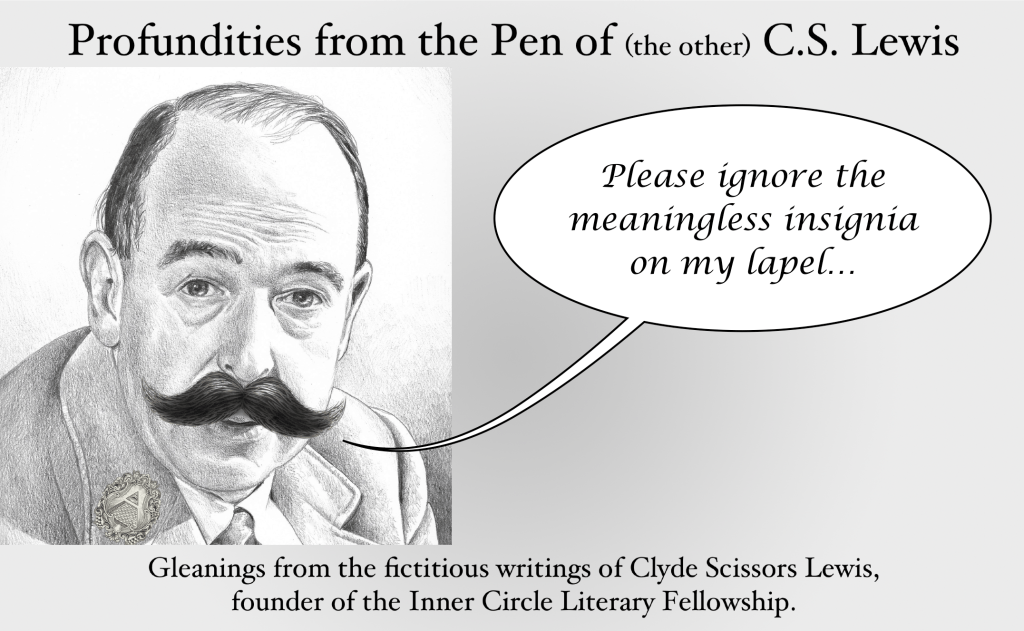
Echoes of C.S. Lewis’ cautions about the “inner ring!”
Considering the “End of History”
History is defined in a variety of ways. To avoid politically charged definitions, let’s turn to a source in that most-neutral nation, Switzerland. In the description of their doctoral program in the field, the Universität Basel says “history examines past events, processes and structures [and] is both a cultural studies and a social sciences discipline.”
The point being that history relates to humanity, rather than our planet as an entirety. Thus, history won’t end with death of our solar system “in about 5 billion years [when] the sun will run out of hydrogen.” Even the most optimistic advocates of a starfaring future for humanity would likely admit history will end long before that.
Christians, on the other hand, foresee a future history without end. Yes, this earth will pass away, but our Creator has promised a new heaven and a new earth that will not echo the perishable nature of our fallen world.
In light of this conviction, Peterson includes a sobering observation in her essay about history.
People living in the Stone Age didn’t know they were living in the Stone Age. People alive at the time the monks in Ireland furiously copied Greek and Latin Bible manuscripts as fast as the Huns and Visigoths could torch the libraries of Europe didn’t know they were living through the near destruction of Western civilization. Such things are clear only in hindsight.
No Christian pretends to know the day of Christ’s return. In fact, Jesus expressly said “concerning that day and hour no one knows, not even the angels of heaven . . . Therefore you also must be ready, for the Son of Man is coming at an hour you do not expect” (Matthew 24).
Speculation about the Day of the Lord has rarely been beneficial. Suffice it to know that we should remain, at every possible moment, “ready.”
C.S. Lewis wrote another letter in 1952 which addresses this principle. His friend Don Giovanni Calabria (1873-1954), who was canonized by John Paul II in 1999, had written to Lewis sharing his impression that the day of the Lord’s return was drawing nearer.
Lewis reminded the priest of something Calabria already knew quite well. And it’s something well worth being reminded of today.
The times we live in are, as you say, grave: whether ‘graver than all others in history’ I do not know. But the evil that is closest always seems to be the most serious: for as with the eye so with the heart, it is a matter of one’s own perspective.
However, if our times are indeed the worst, if That Day is indeed now approaching, what remains but that we should rejoice because our redemption is now nearer and say with St John: ‘Amen; come quickly, Lord Jesus.’
Meanwhile our only security is that The Day may find us working each one in his own station and especially (giving up dissensions) fulfilling that supreme command that we love one another.
Lewis closes his letter with an affectionate prayer and promise, worthy of emulation in our own lives. “Let us ever pray for each other.” A sentiment I share with you.

 Mere Inkling Press