
C.S. Lewis, Stereotypes & Polarization

Do you think in terms of stereotypes? Be careful before answering, since nary an adult is free of them. (Case in point, you may well have preconceptions or prejudices about a writer who would use the word “nary” in an opening sentence.)

Stereotyping is common, despite the fact most of us would disavow its use. Most of us would agree with C.S. Lewis who described how stereotypes bar us from embracing new knowledge. In his inaugural lecture on the faculty of Cambridge University, he cautioned that “a stereotyped image can obliterate a man’s own experience” (“De Desciptione Temporum”).

Oddly, while most of us would intuit that thinking stereotypically is a pattern for “the less intelligent,” it appears the reverse is true. According to one study,

Superior cognitive abilities are often associated with positive outcomes, such as academic achievement and social mobility . . . However, our work shows that some cognitive abilities can have negative consequences – specifically, that people who are adept at detecting patterns are especially quick to learn and apply social stereotypes.

Fortunately, although “people with better pattern detection abilities are at greater risk of picking up on and applying stereotypes about social groups,” there is still hope for those “afflicted” with cognitive skill. Fortunately, “these individuals are better able to diminish their stereotyping when presented with new patterns that challenge existing stereotypical associations.”

Another study argues that “our brains want our expectations to be supported . . . Because of that reward engagement, we can start becoming addicted, in a way, to stereotyping.” The researchers offer this suggestion for combatting the addiction: “simply understanding that this happens is an important way to check those assumptions and not let them influence your judgment.”

Generalizing by way of stereotypes can indeed be addictive, if its endemic presence in western culture is any indication. In America, for example, if there is ever a season when nasty stereotypes run unbridled, it is during political campaigns. Especially during presidential elections, where a person of faith would hope to witness the greatest amount of compassion and earnest intercession for God’s guidance.

Stereotypes give way to even uglier projections when we come to despise others. Several years ago I wrote an article about how wartime propaganda often strives to portray a nation’s enemies as evil, and unworthy of treatment in a humane way. It is titled “Demonizing Our Enemies & Dehumanizing Ourselves.”

When nations war, it is in the interests of the leaders of the opposing causes to engage their people in that effort heart, mind and (if possible) soul. A soldier who cognitively recognizes the need for fighting, but does not  possess a visceral animus for the foe, will only be a half-hearted warrior.

On the other hand, if rulers can generate a mental and emotional disgust, or even hatred, for the enemy, they have a winning formula. Soldiers who not only understand their cause, but also desire the utter destruction of their opponent, are single-minded in their purpose. Such fighters win wars.

You can see this sort of us/them polarization during peacetime too, even in non-election years. Sadly, it seems to be manifesting more and more frequently. And, surprisingly, it appears to have become just as common within national populations, as in international contexts. The results can be catastrophic, which is why First Lady Eleanor Roosevelt pled: 

Pit race against race, religion against religion, prejudice against prejudice. Divide and conquer! We must not let that happen here.

Stereotyping the Inklings

Although none of the Inklings have been spared, I believe C.S. Lewis has been the subject of the worst stereotyping. (I have an educated suspicion why that is true.)

Diana Pavlac Glyer has an excellent article which addresses this injustice head on.

There’s a rumor going around that C. S. Lewis was an irritable introvert, isolated and lonely and scared to death of girls. Maybe it all comes from some grim stereotype of smart people or college professors or, maybe, published writers.

That whole image is completely wrong. Lewis wasn’t an introvert. Or a loner. No – he was a large man with a booming voice, a hearty laugh, a robust enjoyment of everyday life. And that is why he was a man with friends.

At A Pilgrim in Narnia, Brenton Dickieson dispels another common misperception of the great author – that he was narrow-minded. 

So much of C.S. Lewis’ uniqueness comes down to his sheer love of diversity. He loved variability, colour, the exchange, the alienation of encounter and unity with others. His weird dystopia That Hideous Strength was, in many ways, a protest against the tendency of totalitarianism to create monoculture by erasing the individual. . . .

Lewis loved difference and diversity and freedom of expression–doctrines in danger in today’s culture war. It doesn’t take long within any of today’s major social movements to find out that diversity is fine and great as long as everyone acts like us or looks like us or thinks like us or uses the same secret words we use.

Most readers of Mere Inkling would be exceptions to the rule that human beings (especially those with “superior cognitive abilities”) default to stereotyping. Most of you, I sincerely believe, share my appreciation for respectful conversation and debate with others who do not share my opinions. 

Such interaction – with unique individuals, and not cardboard caricatures – often result in my own growth. And I dare to hope that those with whom I dialog might also feel the same.
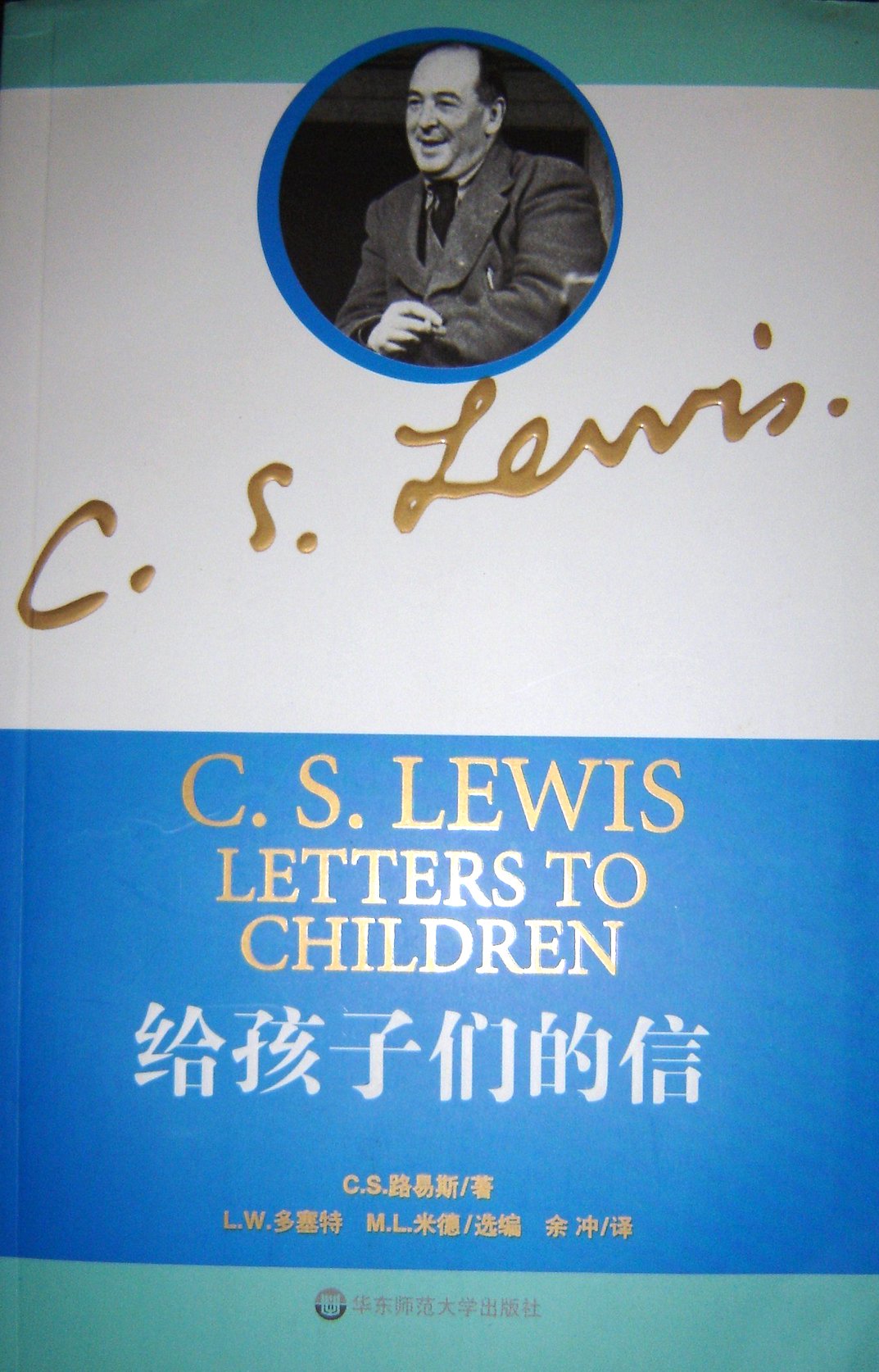
Teaching English in China

CSL China

If C.S. Lewis had desired to teach English in China he would probably have succeeded. However, due to some rather peculiar requirements, he may not have passed muster.

In that Asian nation, you need four years of college to become a teacher. At 山西师范大学 (Shaanxi Normal University) they include another odd requirement. Shaanxi has a minimal height standard. Men must be at least 5-foot-1 and women must be no shorter than 4-foot-7.

C.S. Lewis would have passed this mandate; he was just shy of 5-foot-11. But who knows what other arbitrary dictates may have barred him from sharing his brilliant mind.

The university’s policy came to international attention when the plight of a young student who completed her studies only to be informed that she was four inches too short to receive her diploma. As the BBC reports, there is a waiver for those who wish to teach the very young.

Those wanting to teach at nursery are able to apply for special accreditation if they are five centimetres shorter.

The school’s, albeit flimsy, rationale is that teachers may need to reach high on blackboards when they are teaching their students. (So much for using modern technology to compensate.)*

It would be bad enough if they failed to admit such candidates to their program, but obviously some are not informed of the standard until they have completed their university studies. One can hardly imagine how that unfortunate graduate felt.

C.S. Lewis spent his academic life at Oxford and Cambridge. Although he lectured in a variety of venues, no international university was blessed to have him serve as a visiting scholar.

Fortunately, however, his words reached far beyond the campuses of Oxbridge. And, even though Lewis never taught in China (or in Chinese), his words are available today via translation. At Wheaton College, the Marion E. Wade Center preserves a great deal of information about the Inklings, including some original material.

The Wade’s translation collection has a diverse amount of languages represented, even if only by one book. The languages at the Wade include: Afrikaans, Albanian, Arabic, Bulgarian, Catalan, Chinese, Croatian, Czech,  Danish, Dutch, Esperanto, Estonian, Faroese, Finnish, French, Gaelic, German, Greek, Hebrew, Hungarian, Indonesian, Italian, Japanese, Korean, Latin, Latvian, Lithuanian, Norwegian, Polish, Portuguese, Romanian, Russian, Serbian, Slovak, Slovenian, Spanish, Swedish, Thai, Turkish, Ukrainian, and Welsh.

A Two-Way Street

Those of us who have taught realize better than others that teachers often learn as much from their students as they offer to them. Preparing to teach demands that we study to know the subject matter as intimately as we can, so we might convey it effectively to others.

Although he was a brilliant teacher, C.S. Lewis was also a diligent lifelong learner.

Lewis held great respect for Chinese civilization. He was interested in the Chinese philosophical concept of the Tao. I’ve written about his thoughts on this subject before.

Lewis viewed the Tao as being similar to what Christian theologians traditionally refer to as Natural Law.

The Tao, which others may call Natural Law or Traditional Morality or the First Principles of Practical Reason or the First Platitudes, is not one among a series of possible systems of value. It is the sole source of all value judgments.

If it is rejected, all value is rejected. If any value is retained, it is retained. The effort to refute it and raise a new system of value in its place is self-contradictory. There has never been, and never will be, a radically new judgment of value in the history of the world.

What purport to be new systems or . . . ideologies . . . all consist of fragments from the Tao itself, arbitrarily wrenched from their context in the whole and then swollen to madness in their isolation, yet still owing to the Tao and to it alone such validity as they possess. (The Abolition of Man)

Lewis was an advocate of what some refer to as Classical Education. It involves loftier goals than simply communicating data. In his essay “Our English Syllabus,” Lewis “propagated education’s end, rather than as the filling of students’ heads with information or their muscles with habits, as the inculcation of virtue.”

Lewis treasured the essence of knowledge rather than its trappings. He was patient with those genuinely hungry for knowledge. But you could also readily apply to him the maxim that he did not suffer fools gladly.

It does not take a genius to discern what C.S. Lewis would have thought about this Chinese height requirement. To prevent a motivated and capable educator from pursuing her vocation simply because she may lack the reach of someone taller, does not pass the test of common sense.


* “The first interactive whiteboard was released in 1991,” and I assume The People’s Republic “magically” secured that very technology no later than 1992.


Sinister Initiations

fumieSomething unbelievable just happened in America. Something offensive, abusive, and utterly intolerant.

At Florida Atlantic University, one of the professors taught a lesson so distasteful that, had it maligned any faith other than Christianity, it would have led to his dismissal. Instead, the student who challenged it was suspended from the course.

The class is entitled “Intercultural Communication,” and the instructor happens to be the county vice-chair of one America’s major political parties.

So, what was the malicious class exercise? The students were instructed to write the name “Jesus” in large letters on a piece of paper which they laid on the floor in front of them. Then, they were directed to stomp—yes, stomp—on the name of the person millions of people throughout the world regard as their Savior.

It’s difficult to comprehend anyone would design such an offensive “lesson,” let alone that they would actually attempt to implement it. And, since lessons are created to teach someone, one wonders precisely what Deandre Poole wanted his students to learn by encouraging their blasphemy . . .

C.S. Lewis would not be surprised by this event. He foresaw precisely where the wholesale rejection of God within academia would lead. There is a passage in his book That Hideous Strength that seems almost prescient. In this scene the protagonist, a sociology professor named Mark Studdock, is being initiated into an elite and secretive inner circle at the Institute where he has come to work. The organization has global plans and great influence. Studdock is a confirmed agnostic, yet he is disturbed by something his mentors describe as a “minor” portion of the initiation process.

Meanwhile, in the Objective Room [where candidates are taught to think properly], something like a crisis had developed between Mark and Professor Frost. As soon as they arrived there Mark saw that the table had been drawn back. On the floor lay a large crucifix, almost life size, a work of art in the Spanish tradition, ghastly and realistic.

“We have half an hour to pursue our exercises,” said Frost looking at his watch. Then he instructed Mark to trample on it and insult it in other ways.

Now whereas Jane had abandoned Christianity in early childhood, along with her belief in fairies and Santa Claus, Mark had never believed in it at all.

At this moment, therefore, it crossed his mind for the very first time that there might conceivably be something in it. Frost who was watching him carefully knew perfectly well that this might be the result of the present experiment. He knew it for the very good reason that [he had briefly experienced, and dismissed, the same thought during his own initiation].

“But, look here,” said Mark.

“What is it?” said Frost. “Pray be quick. We have only a limited time at our disposal.”

“This,” said Mark, pointing with an undefined reluctance to the horrible white figure on the cross. “This is all surely a pure superstition.”

“Well?”

“Well, if so, what is there objective about stamping on the face? Isn’t it just as subjective to spit on a thing like this as to worship it? I mean— damn it all— if it’s only a bit of wood, why do anything about it?”

“That is superficial. If you had been brought up in a non-Christian society, you would not be asked to do this. Of course, it is a superstition; but it is that particular superstition which has pressed upon our society for a great many centuries. It can be experimentally shown that it still forms a dominant system in the subconscious of many individuals whose conscious thought appears to be wholly liberated. An explicit action in the reverse direction is therefore a necessary step towards complete objectivity. It is not a question for a priori discussion. We find it in practice that it cannot be dispensed with.”

The parallels are evident. I can readily imagine Dr. Poole justifying his own exercise in similar language. However, that something like this could happen in a civilized land is sobering indeed.

This incident reminded me of powerful scene in the book and miniseries Shogun. [Appended below.]

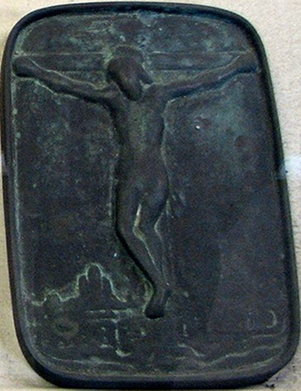
Christianity had been embraced by a number of provinces early in Japan’s history, but the rising ruler had vowed to extinguish it. The Shogun required that samurai suspected of being “Kirishitan” prove they were not by stepping on holy images of Christ or Mary. The Christians (all Roman Catholic in the seventeenth century) would not abuse holy images and were arrested on the spot. Fumi-e were images created for the sole purpose of desecrating, and some examples (like the tile shown above) have survived to this day.

If the individual failed to recant their faith in Jesus, they would be tortured and ultimately martyred. As recently as 2008, the Roman Catholic Church beatified a new group of 188 Japanese Christians. They joined 45 saints and 395 previously beatified martyrs. They represent only a small segment of the estimated 35,000 believers who accepted death rather than denying their Lord.

The newly beatified include 183 lay people, four priests and one monk. The laity included thirty samurai warriors, as well as farmers, artisans, civil servants, teachers, painters, writers, former slaves, pregnant women and even children as young as three.

If Dr. Poole was historically-informed, he would recognize that the odious ritual he thrust upon his vulnerable students carried a significant deal of baggage. And that’s not to mention the direct affront it poses to those who believe Jesus’ claim that he “is the way, the truth, and the life.” Ultimately, all people of goodwill—believers and atheists alike—will find his behavior repugnant.

Excerpt from Shogun:

In James Clavell’s book, it is the English protagonist who ironically desires to weed the [Roman Catholic] Christians out of his samurai contingent. (Their loyalties rest in a cause other than his own.)

. . .

“Can’t it wait until tomorrow?”

“No, Sire, so sorry.” Uraga was looking up at him in front of the assembled samurai vassals, the Dutch crew gathering into a nervous knot near the quarterdeck railing. “Please excuse me, but it is most important you find out at once. You are their most enemy. Therefore you must know, for your protection. I only wish to protect you. Not take long, neh?”

“Are they all on deck?”

“Yes, Sire.”

Blackthorne went closer to the railing and called out in Japanese, “Is anyone Christian?” There was no answer. “I order any Christian come forward.” No one moved. So he turned back to Uraga. “Set ten deck guards, then dismiss them.”

“With your permission, Anjin-san.” From under his kimono Uraga brought out a small painted icon that he had brought from Yedo and threw it face upward on the deck. Then, deliberately, he stamped on it. Blackthorne and the crew were greatly disquieted by the desecration. Except Jan Roper. “Please. Make every vassal do same,” Uraga said.

“Why?”

“I know Christians.” Uraga’s eyes were half hidden by the brim of his hat. “Please, Sire. Important every man do same. Now, tonight.”

“All right,” Blackthorne agreed reluctantly.

Uraga turned to the assembled vassals. “At my suggestion our Master requires each of us to do this.”

The samurai were grumbling among themselves and one interrupted, “We’ve already said that we’re not Christians, neh? What does stamping on a barbarian god picture prove? Nothing!”

“Christians are our Master’s enemy. Christians are treacherous—but Christians are Christian. Please excuse me, I know Christians—to my shame I forsook our real gods. So sorry, but I believe this is necessary for our Master’s safety.”

At once a samurai in front declared, “In that case, there’s nothing more to be said.” He came forward and stamped on the picture. “I worship no barbarian religion! Come on, the rest of you, do what’s asked!”

They came forward one by one. Blackthorne watched, despising the ceremony.

Van Nekk said worriedly, “Doesn’t seem right.”

Vinck looked up at the quarterdeck. “Sodding bastards. They’ll all cut our throats with never a thought. You sure you can trust ’em, Pilot?”

“Yes.”

Ginsel said, “No Catholic’d ever do that, eh, Johann? That Uraga-sama’s clever.”

“What’s it matter if those buggers’re Papist or not, they’re all . . . samurai.”

“Yes,” Croocq said.

“Even so, it’s not right to do that,” van Nekk repeated.

The samurai continued to stamp the icon into the deck one by one, and moved into loose groups. It was a tedious affair and Blackthorne was sorry he had agreed to it, for there were more important things to do before dusk. His eyes went to the village and the headlands. Hundreds of the thatch lean-tos of the Musket Regiment camp spotted the foothills. So much to do, he thought, anxious to go ashore, wanting to see the land, glorying in the fief Toranaga had given him which contained Yokohama. Lord God on high, he told himself, I’m lord of one of the greatest harbors in the world.

Abruptly a man bypassed the icon, tore out his sword, and leaped at Blackthorne. A dozen startled samurai jumped courageously in his way, screening the quarterdeck as Blackthorne spun around, a pistol cocked and aimed. Others scattered, shoving, stumbling, milling in the uproar. The samurai skidded to a halt, howling with rage, then changed direction and hacked at Uraga, who somehow managed to avoid the thrust. The man whirled as other samurai lunged at him, fought them off ferociously for a moment, then rushed for the side and threw himself overboard.

Four who could swim dropped their killing swords, put their short stabbing knives in their mouths, and jumped after him, the rest and the Dutchmen crowding the side.

Blackthorne jumped for the gunwale. He could see nothing below; then he caught sight of swirling shadows in the water. A man came up for air and went down again. Soon four heads surfaced. Between them was the corpse, a knife in his throat.

“So sorry, Anjin-san, it was his own knife,” one called up over the roars of the others.

“Uraga-san, tell them to search him, then leave him to the fish.”

The search revealed nothing. When all were back on deck, Blackthorne pointed at the icon with his cocked pistol. “All samurai-once more!” He was obeyed instantly and he made sure that every man passed the test.

Then, because of Uraga, and to praise him, he ordered his crew to do the same.