Uninhibited Fonts

Tonight as we prepared to begin our monthly Christian Writers meeting, our leader mentioned one of his favorite subjects for scribbling. As an unreformed doodler myself, the conversation immediately seized my wandering attention.

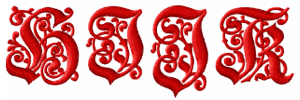
He said something to the effect that he “likes to see how complex or ornate he can draw letters while still maintaining their legibility.” It reminded me of some of the flowery medieval versions of fonts where it is determining precisely what a given letter is, becomes a mystery. (I made the challenge simple above, by bracketing the “I” and “J” with adjacent letters . . . but without the “H” and “K” their identities may have been quite difficult to ascertain.)
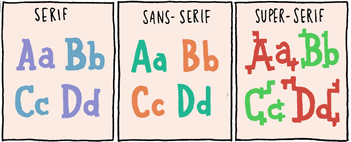
The image to the left comes from a witty strip called “Incidental Comics.” It is penned by Grant Snider, whose cartoons are quite often as entertaining as they are absurd. In this small element from his broader treatment entitled “Design Like Nobody’s Watching,” he expands on the two styles traditionally identified for letter forms.

I’ve written earlier about font lovers, who will especially enjoy the humor here. But all word lovers can appreciate the importance of the letter styles which clothe the words we read and write.

It’s good to be reminded. The fonts we use truly do make a difference.

One Glorious View

This is what brought us home to Washington State, at the end of our military career. This is the amazing view of the Olympic Mountain range we enjoy from our back door. Despite living most of my life in California, and having resided in nearly every region of the U.S. (not to mention several overseas locales) . . . this is what has always come to mind whenever someone said “God’s country.”

Lush green forests and abundant wildlife. Rushing rivers and magnificent mountain peaks. (In the center of our view, in fact, is a double peak called “The Brothers.”)

As C.S. Lewis wrote in The Horse and His Boy: “Onward and Upward! To Narnia and the North!”

Even if I don’t receive a single Christmas present this year, living here is more than enough to make me a happy man.

Addendum:

In truth, Robert, it was proximity to your family that brought you home to the Pacific Northwest. You would have chosen to live by our children and grandchildren even if it were back there in the Mojave Desert. But, I know you are not complaining that, in God’s grace, all of your children live in lovely Washington!

UAVs and Manuscripts

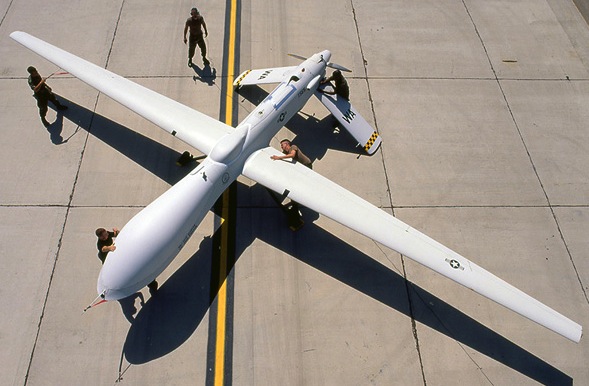
Iran’s capture of an extremely sophisticated (and classified) drone is a huge disaster. Now the enemies of democracy will be able to duplicate our technology without having to spend a penny on research. As too often happens (usually through espionage), our fascist enemies have stolen advances that make them much greater threats. (I use the plural here, because there’s no doubt Iran will share/sell much of what they learn with mainland China, North Korea and various other dangerous regimes.)

Unmanned Aerial Vehicles (UAVs) are particularly cutting edge. Some voices in the Department of Defense already advocate creating an entirely unmanned Air Force. What used to be science fiction sometimes becomes science fact.

Nearly a decade ago, on the first anniversary of the September 11 attacks, I found myself serving as a chaplain in one of the “-stans” on the other side of the globe. It was during the early days of Operation Enduring Freedom, and there was an intense commitment to the mission. A price was being paid in Coalition lives, but virtually everyone there believed the steep cost would be worth it, as the world became a safer place.

One of the major activities at our air base involved supporting the Predator mission. It was novel. It was exciting. One can only imagine how advanced these platforms have become during the intervening decade. Well, you don’t need to merely “imagine;” many of the innovations are public knowledge. And yet, wisdom suggests that the most amazing advancements are not publicly acknowledged. Most civilians can’t understand just how serious a setback it is for this surveillance and/or weapon system to be captured by extremists.

Turning from the world of current affairs to a subject far less threatening . . . how might this relate to writing? We’re told to “write about what you know,” so our past experiences provide a rich resource for both our factual and fictional efforts. Unless we are simply allowing our thoughts to flow as they may, we find that research remains an essential part of writing even about that which we know.

Case in point. I have served with Predator drones. Watched them being launched and then gracefully land. I’ve touched them. Even though I’m retired from active duty, I belong to several military professional organizations and I subscribe to a variety of military publications. I’ve read a lot about UAVs over the years—but before I would ever attempt to compose a story featuring one, I’d plan to do a significant amount of research.

And that may be one of the few things I have in common with truly good writers. They pay attention to the details, and they get them right. It’s dangerous to assume that we are ever familiar enough with a subject to write off the proverbial “cuff.” Nothing destroys a story’s (or author’s) credibility than surely than getting facts wrong. And that’s certainly one fact worth being reminded of.

C.S. Lewis’ Lion

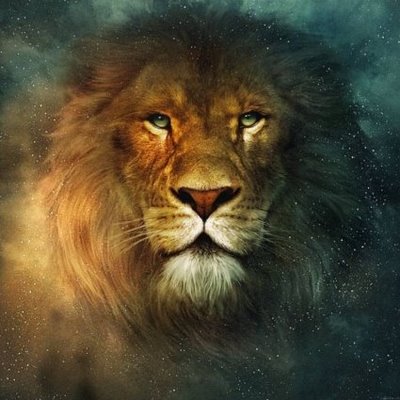
The Chronicles of Narnia rank among the finest children’s literature ever written. And the introduction of the noble Aslan in The Lion, the Witch and the Wardrobe is a wondrous highlight of the series.

In 1951, Lewis wrote a letter to some fans of his “new” book. He said:

I am glad you all liked The Lion. A number of mothers, and still more, schoolmistresses, have decided that it is likely to frighten children, so it is not selling very well. But the real children like it, and I am astonished how some very young ones seem to understand it. I think it frightens some adults, but very few children.

As usual, the Oxford don was astute. There are those who have considered some of the themes in The Chronicles to be overly mature for some children. But that is a more insidious reason for some objections leveled against the books. More on that momentarily.

The stories are admired by many secular readers, and they are beloved by Christian readers of all ages. Some liberal readers object to what they consider to be “dated” (i.e. traditional) attitudes in the books. Honest literary critics recognize that literature written more than a half century ago would reflect the mores of their era and provenance. Lewis’ skepticism about “public” schools (i.e. in American parlance, “private” academies) is one such example.

But behind some objections to Lewis’ children’s books lies a more sinister agenda. Some secularists believe that only their own agnostic faith should be promoted, and they object to any expression of Christianity in the public forum. Some such activists have even advocated that The Chronicles barred from schools because they recognize that Aslan has a “different name” in our world.

Fortunately, The Chronicles of Narnia overflow with so much intrinsic merit that only the most cynical object to them. They are popular today, and that is likely to remain true in the foreseeable future. They have translated well to digital, audio and cinematic formats. But, for most of us, the soft caress of the printed page remains the medium of choice . . . when we cross through the wardrobe door into this land of awe.

Discerning Good

Some years ago a comedy program used to scan their audience during applause and segment transitions. They would stop on a random individual and superimpose an absurd comment below their image on the screen. It was quite funny, and my favorite adage was “who are you to judge this man?”

Our society has certainly grown timid when it comes to judging the (mis)behavior of people. It seems you can’t make any observations about others without having some misguided soul—too dimwitted to understand they’re guilty of the very thing they condemn—declaring that you shouldn’t judge others.

Actually, the Scriptures repeatedly tell Christians they are supposed to judge the difference between good and evil (actions and people). Jesus asks the crowds on a number of occasions, most notably in response to his parable about the Good Samaritan, which of the choices were right and which were wrong.

Followers of God are not only enjoined to do good. They are also directed to avoid doing what is wrong. Psalm 36 describes the disposition of the wicked: “He plots trouble while on his bed; he sets himself in a way that is not good; he does not reject evil.”

C.S. Lewis provides an insightful juxtaposition of good and evil. “If we find a man giving pleasure it is for us to prove (if we criticise him) that his action is wrong. But if we find a man inflicting pain it is for him to prove that his action is right. If he cannot, he is a wicked man.”

The Church has a responsibility to call sin “sin.” And to influence people to choose better paths which will lead to healing and wholeness. Helping people make choices which lead to life rather than death is the essence of the Great Commission.  So, far from being something we should avoid—discerning or judging is an activity central to Christian life.

The key is remembering that our judgments should always be given in love. Genuine compassion for the victims of sin (which include the perpetrators themselves) is a hallmark of Christ-like judgment.

A Font for All Seasons

There are a variety of ailments that disproportionately affect writers. Mundane disorders such as Repetitive Stress Injury, Computer Eyestrain and assorted carbuncles arise as no surprise. But there is another, psychological malady that can cripple an author’s creativity and savage his time schedule.

A fascination with fonts is a logical curiosity among people who love words. You can find stylized fonts reflecting for almost any special interest. In fact, just four months ago the total number of fonts surpassed the population of the planet. An affection for different fonts is one thing . . . but an obsession is quite another. Addicts are commonly referred to as “fontaholics.”

There truly are fonts for all seasons . . . too many versions to number. As an example of a unique font, you can check out Narnia BLL.

This lovely lettering is inspired by the recent films about the land of C.S. Lewis’ anointed Chronicles.

And It’s Not Just about Aesthetics

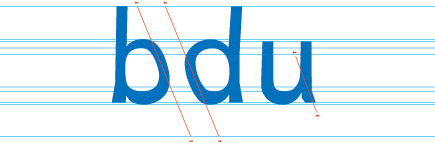
Recently a Dutch scholar devised a nefont specifically for people suffering from dyslexia.

Their approach, based on “weighting” the various letters and symbols, has been shown to improve readability for dyslexics. (Truth is, it would probably make reading easier for anyone.) Some see this new font as reinforcing prior studies which show serif fonts to be more legible than sans serif versions.

Whether you consider yourself immune to the lure of fonts, or are a self-confessed fontaholic, it’s a field about which every writer should understand the basics.

C.S. Lewis on Xmas

Advent has begun! As the Christian Church celebrates its “New Year,” it’s fun to look at C.S. Lewis’ essay, “Xmas and Christmas: A Lost Chapter from Herodotus.” He describes the predicament of secularized western civilization. Reversing the spelling of “Britain,” Lewis points out how a new holiday has displaced a profound holy-day.

In the middle of winter when fogs and rains most abound, [the Niatirbians] have a great festival called Exmas, and for 50 days they prepare for it (in the manner which is called,) in their barbarian speech, the Exmas Rush.

When the day of the festival comes, most of the citizens, being exhausted from the (frenzies of the) Rush, lie in bed till noon. But in the evening they eat five times as much as on other days, and crowning themselves with crowns of paper, they become intoxicated. And on the day after Exmas, they are very grave, being internally disordered by the supper and the drinking and the reckoning of how much they have spent on gifts and on the wine.

A few among the Niatirbians have also a festival, separate and to themselves, called Crissmas, which is on the same day as Exmas. And those who keep Crissmas, doing the opposite to the majority of Niatirbians, rise early on that day with shining faces and go before sunrise to certain temples where they partake of a sacred feast.

But as for what Hecataeus says, that Exmas and Crissmas are the same, this is not credible. It is not likely that men, even being barbarians, should suffer so many and so great things (as those involved in the Exmas Rush), in honor of a god they do not believe in.

Niatirb might just as well be the Setats Detinu. We see the same signs all around us. One shocking fact is how the secular seasonal movies now do not even feel compelled to offer the slightest nod to the true meaning of the season. Santa, for many, has utterly eclipsed the Babe in the manger. And “Christ” has literally been crossed out of Xmas.

May this entertaining portrait remind each of us of the true significance of the approaching season. And, may God also use the season of Advent to prepare our individual hearts to receive the most priceless and precious Christmas gift ever given.

The Bane of Blogging

In today’s “Pearls Before Swine” comic strip, Rat says, “Hey, Goat. In an effort to improve the readership of your blog, I’ve been studying the google analytics for it.”

“What are those?” asks Goat, who is seated at his computer, presumably typing his latest post.

“A comprehensive series of stats about page views, unique visitors and how viewers find your blog. Anyways, from all that, I think I’ve ascertained the problem.”

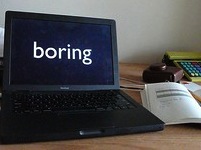
“You’re boring.”

The final panel reveals Goat’s reaction to that painful assertion.

Truth be told, many individual blog posts are boring. And, not a few blogs in toto are tedious as well.

Boredom, though, lies in the perception of the reader. What weighs down the eyelids of one drowsy reader may be precisely the message that invigorates another. So, I don’t worry too much about the natural ebb and flow of responses to various things I write.

Many years of preaching has doubtless influenced me. The sermon one person regards as “okay,” may be used by God to create a genuine epiphany in the life of another.

Of course, the overall flavor or voice of an author is something a reader recognizes only after sampling a fair amount of their work. Taking just a bite here or a nibble there doesn’t allow a reader to adequately assess whether someone’s work is truly nourishing.

Sadly, our busy age doesn’t allow for terribly thorough examinations . . . and with millions of blogs to be sampled, we’re lucky to have a reader stumble upon even one of our posts. Then, in the briefest of moments, an assessment is made and a judgment passed.

Is this column boring . . . or is it informative and perhaps even entertaining? It’s not enough to hint at the promise of gratification. Bloggers must deliver. And they must deliver every time they post. Of course, that’s not humanly possible. Striving for an unattainable goal can be quite disheartening. And we all have “rats” out there ever ready to discourage us.

If you write, I encourage you to take genuine comfort in the fact that some readers will be pleased by what you write. Some will even be blessed. Not all of them. But remember that even the prophets and poets of the Scriptures did not delight all of the members of their audiences.

Do your best to write something worthy of being read. And rest in the knowledge that some of those who see your words will be refreshed and encouraged by them.

Alone—With God

“In prayer God shows himself to us. That he answers prayers is a corollary—not necessarily the most important one—from that revelation.” (C.S. Lewis, “The Efficacy of Prayer”)

Most people think of prayer primarily as a (frequently formal) conversation in which we appeal to God for particular blessings—followed by his response with a “yes,” “no,” or “not yet.” The formulation might look like this: Human Petition = Divine Response.

While prayer truly is a conversation with our Creator . . . this simplistic view is incomplete. In focusing on the answer, it misses out on the holy awe of being in the presence of God itself. C.S. Lewis grasps this precious truth. “In prayer God shows Himself to us.”

I was chatting with my grandson the other day. He’s home on leave from his assignment at Kadena Air Base in Okinawa. Andrew was describing how his Christian lifestyle has isolated him from many of his fellow airmen. They sometimes ridicule him for his chastity and can’t fathom his choice not to squander his time at the club.

But Andrew also shared with me how the ostracism has positively impacted his spiritual life. He’s discovered deep joy in spending time alone with the Lord. He’s active in church worship too, of course, but he also enjoys his time alone. And that is a spiritual epiphany for a gregarious young man who is intensely social by nature.

He shared with me this verse from a song by a contemporary Christian band we both enjoy:

“Loneliness and solitude are two things not to get confused ’cause I spend my solitude with You.” (Reliant K, Lyrics from “Therapy”)

I hear in these words an echo of Lewis’ insight. As Christians, we are never alone. And sometimes in “solitude” we experience the most amazing intimacy a human being can ever know.

Addendum:

True . . . God is ever with us. As Saint John Chrysostom, Patriarch of Constantinople, said: “Quietude in solitude is no small teacher of virtue.”

Stained Glass Fiasco

It’s shocking, what you come across on the internet. You see many things that were never meant to be. I place this stained glass window of Mr. T in that category.

Yes, I recognize that he is a Christian, and his gold (24 carat) cross is prominently displayed. But still . . .

I was surfing in search of a good portrayal of Saint Martin of Tours. Not quite sure how the most distinctive member of the A-Team appeared in the list.

At least it provides an excellent reminder that a person should be prepared for the unexpected whenever they enter the worldwide web. (It’s not likened to a spider’s domain without reason.)

Addendum:

I realize that you are not comparing Mr. Tureaud to an arachnid, but you really should be much more careful in how you jump from thought to thought.