Dangerous Slang

toilet 2When we moved to Alabama, my wife innocently offended some of her young students by using a slang word that in our family simply meant “stuff,” but apparently is used elsewhere for more vulgar purposes.

In a reference to something such as things being in the way, she said the word “crap.” Obviously she was definitely not using it in the Thomas Crapper sense. But some of the Southern kids had never heard it applied in an innocent way, so they naturally assumed she was using it in a crasser sense.

She wasn’t. I grew up with the word meaning “junk, stuff or clutter” with the connotation that they were unwelcome, and “in the way.” My sainted mother—from whose lips I do not ever once recall hearing a vulgar word pass—used the word “crap” often.

And because the source of the word’s usage was so pure and unadulterated (my mom), I mistakenly assumed I fully understood the word’s meaning.

Still, old habits are hard to change, and I find myself occasionally using that very word. And, I must confess, I sometimes even use it as a minor expression of irritation. For example, I just used it in the subject line of an email I sent to some fellow students of ancient Roman history. “Crap, I Just Missed This” was the exact phrase, and the body of the message consisted only of a link to a fascinating conference held in Rome just a few days before I learned about it.

The link was to this site. . . and if you don’t have the time or inclination to check it out, allow me to share the fascinating subject it addressed:

It was sponsored by the Royal Netherlands Institute in Rome, quite a prestigious organization. No fewer than seven scholars who have been excavating Rome’s ancient latrines were slated to speak—I’m eager to learn whether or not their presentations will be published for the benefit of those of us unable to attend.* They generously offered “free seating” to members of the public desiring to attend the historic programme.**

C.S. Lewis apparently respected the Roman Empire enough to take the Roman name of an ancient Italian city for the name of fabled “Narnia.” While I’ve yet to find any references in Lewis’ corpus to Roman plumbing, I found this appraisal of a History of Rome which he noted in his diary (16 March 1924). During an extended country walk with two friends, he dined at an inn and browsed through its public library.

After some time we went on to Stanton Harcourt where we were to lunch. Before we reached it the sun suddenly disappeared and the sky got white and a cold wind sprang up. In the inn parlour we consumed large quantities of bread and cheese and draft cider. Harwood found a delightful book here—a History of Rome “related in conversations by a father to his children with instructive comments”. The children made such comments as “How pleasing is filial piety, Papa!” and “My dear Sir, surely you have been too indulgent in describing the vices of Honorius as weakness.”

One wonders what sort of refined comments the children would have made about the recent conference. Perhaps something like, “Most honored patriarch, it is enlightening to learn just how elaborate was the attention the Romans devoted to the facilities dedicated to their private bodily functions.”

Well, enough about such matters. We have terribly digressed in a post originally intended to serve as a warning about the dangers of using slang. I guess I am just so disappointed about missing the conference that I needed to vent that here.

_____

* One wonders how they were able to adequately address this complex subject in a one-day seminar.
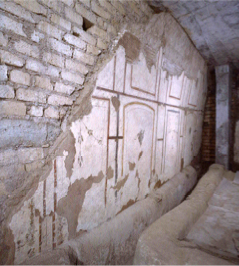
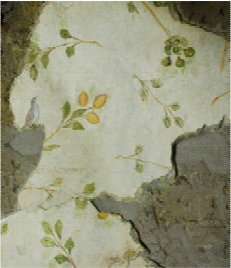
toilet 1** The invitation does not expressly say whether it would consist of individual seats, or in a bench design, similar to that pictured below, from the workshop’s brochure. Speaking of pictures, the one at the top of the column, also from the promotional publication, is a fresco from the ceiling of a toilet on the Palatine. (And we think our bathrooms are fancy!)
A Song Joined Our Family

lyricLast night a new member joined our family. Her name is musical. We didn’t choose it; her previous family did. But we think it fits and she’ll live up to it.

Her name is Lyric.

We adopted Lyric through the agency of DRAW Rescue.

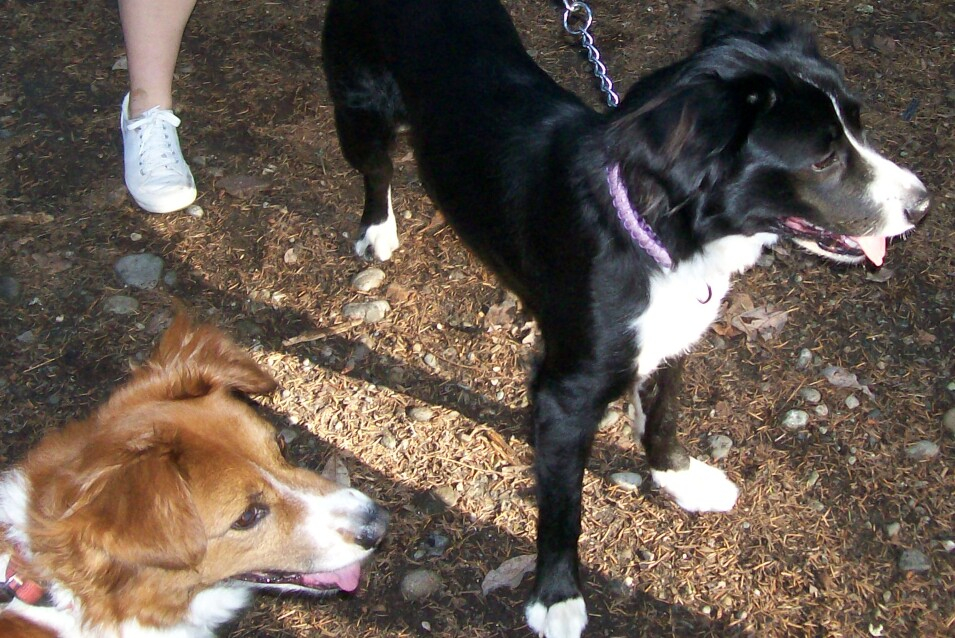
The picture above shows black and white Lyric at her first meeting with her new sister, Foxy. (We didn’t name Foxy either; she joined our family when we “rescued” her from a California shelter six years ago.)

The two girls are getting along quite well their first full day together, but those of you with more than one pet know that it takes a little bit of time to sort things out when a new member joins the family.

Lyric is our third consecutive rescue pet. Although she’s younger than the others who came to us in the past, adopting a rescue dog isn’t the same thing as getting a puppy. You don’t enjoy the same cuddly acceptance. Many rescued dogs are quite wary of human beings—especially men.

It takes time and patience to bond. To let them know that they’re safe and they are now in their “forever home.” Some, like Lyric, benefit from interim stays with gracious foster parents. But their move to your home is still just part of their unstable life until the day when they “forget” about all the previous transitions and just know they are home.

C.S. Lewis talks about this longing for a home in Till We Have Faces. Psyche is describing her desire to find that place where she truly belongs.

Somewhere else there must be more of it. Everything seemed to be saying, Psyche come! But I couldn’t (not yet) come and I didn’t know where I was to come to. It almost hurt me. I felt like a bird in a cage when the other birds of its kind are flying home. . . .”

The sweetest thing in all my life has been the longing— to reach the Mountain, to find the place where all the beauty came from . . . my country, the place where I ought to have been born. Do you think it all meant nothing, all the longing? The longing for home? For indeed it now feels not like going, but like going back.”

Although the myth he’s retelling in this book has nothing to do with adopting pets, the following passage also relates (by dramatic extension) to the situation of “rescued” animals who join you with a legacy of previous relationships (not all of them good).

“Where shall we ever be safe if we’re not safe here? This is my home, Maia. And you won’t understand the wonder and glory of my adventure unless you listen to the bad part.

If you are in a position to share your home with a pet, I probably don’t need to tell you there are many, very many of them who need homes today. If you’re up to the extra challenge of adopting a rescued animal who comes with often unknown “baggage,” just contact one of your local rescue agencies.

These organizations are almost always run by volunteers who are motivated solely by their compassion for these innocent creatures who can no longer be cared for by their owners or—more tragically, have been discarded by those who should have cared for them. (Some, of course, are strays who were never in a human family.) I’m proud to say my nephew and his wife provide a foster home for rescued dogs in Seattle.

Whatever their background . . . the “bad part” of their story, you can be instrumental in “rehabilitating” them. And, trust me, they will reward you with more love than you could ever imagine.

Now, even if you’re not prepared to take in one of these lovely creatures, you can still help. Your local rescue organizations and shelters welcome any contributions you make—either in kind or in cash. You can check your phonebook for local rescues. Or, check out one of these websites which can connect you to many of these groups.

Adopt a Pet

Petfinder

Rescue Me (Dogs)

This column turned into more than I intended it to be. Originally I set out to simply celebrate Lyric’s entrance to our family. Now I realize that her blessing just may encourage the adoption of another cat or dog. And that would be a wonderful thing indeed.

In closing, let’s consider another passage from C.S. Lewis, the creator of Narnia. In a letter he wrote in 1955, he mentions the importance of home.

As Dr. [Samuel] Johnson said, “To be happy at home is the end of all human endeavour.” (1st to be happy to prepare for being happy in our own real home hereafter; 2nd in the meantime to be happy in our houses.)

These words remind us that the happiness we know in our earthly homes is only a foretaste of the joy we can know when we ultimately take our place in the eternal home prepared for us by our Creator.

Perhaps on that day we’ll be welcomed not only by our loved ones who have preceded us, but also by the pets we have loved during this mortal life. That would certainly be a magnificent thing . . . but that’s a discussion for another day.

Nature’s Hazards

tumbleweedsNo matter where in the world you live, you are vulnerable to dangers uniquely associated with that locale. Some of us have moved around and weathered a variety of these threats.

My own family has survived earthquakes in our home state of Washington, ice storms in Oklahoma, nearby tornadoes in Texas, record-setting freezes in Minnesota, both droughts and failed levees in two different California cities along with a Super Typhoon in Guam. (Sometimes we’ve even been assailed by disasters that had no place occurring where they did, like a hurricane that knocked out our power for a full month in England, of all places!)

It’s quite possible that you too have experienced near misses when it comes to suffering Nature’s wrath. (I’d much rather attribute these things to fallen Nature than refer to them as “acts of God.”)

C.S. Lewis offers a wonderful description of Nature in Miracles.

You must have tasted, however briefly, the pure water from beyond the world before you can be distinctly conscious of the hot, salty tang of Nature’s current. To treat her as God, or as Everything, is to lose the whole pith and pleasure of her. Come out, look back, and then you will see . . . this astonishing cataract of bears, babies, and bananas: this immoderate deluge of atoms, orchids, oranges, cancers, canaries, fleas, gases, tornadoes and toads. How could you ever have thought that this was the ultimate reality? How could you ever have thought that it was merely a stage-set for the moral drama of men and women? She is herself.

Offer her neither worship nor contempt. Meet her and know her. If we are immortal, and if she is doomed (as the scientists tell us) to run down and die, we shall miss this half-shy and half-flamboyant creature, this ogress, this hoyden, this incorrigible fairy, this dumb witch. But the theologians tell us that she, like ourselves, is to be redeemed. The “vanity” to which she was subjected was her disease, not her essence. She will be cured, but cured in character: not tamed (Heaven forbid) nor sterilised. We shall still be able to recognise our old enemy, friend, play-fellow and foster-mother, so perfected as to be not less, but more, herself. And that will be a merry meeting.

But, until that glorious day when Nature has been reborn in the culmination of the event that took place on Calvary . . . until that day, Nature remains a capricious neighbor. It’s best to know what she is likely to throw at you based on where you reside—and be prepared. Disaster preparedness is something that the wise will concern themselves before catastrophe strikes.

There are some dangers, however, for which one cannot adequately prepare. The prospects of mega-tsunamis terrify me (and I don’t even live by the sea). Then there are zombie outbreaks, which are apparently taking place on a frequent basis, if the plethora of media on that ghoulish subject is any indication.

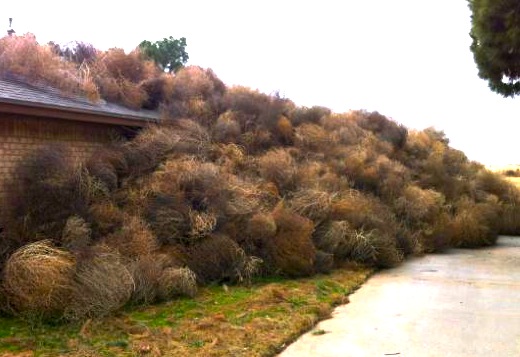
The photograph at the top of this page reveals a grim threat to life on the American plains. There may be a few other places where these merciless creatures wreak havoc (the arid portions of Australia, perhaps), but I hope most of those reading this have been spared the visage of plagues of tumbleweeds racing across the horizon in search of victims to overrun, scar, and bury. As the picture shows, sometimes it is not even safe to shelter in a home during a particularly virulent attack.

I’ve seen many a wayward tumbleweed, while I’ve driven across barren desert terrains. Occasionally you’ll see them alone, scouting ahead of the mass for weak prey. If you see an entire horde, well . . . it’s probably already to late to flee.

This picture makes me shiver. It’s one reason I’m so happy to have moved home to Puget Sound, where the incessant rain* keeps everything green. I can put up with an occasional tectonic jiggle, if it means I don’t have to worry about being buried alive beneath a mountain of desiccated thorns.

_____

* The rainfall in western Washington is highly exaggerated. It’s true that for half of the year it receives more rain than the national average, but the other six months it receives less than average of the rest of the nation.

Also, I don’t believe it is an accident that one of the most commonly encountered tumbleweeds in the United States is Salsola tragus, an utterly humorless thistle that invaded from Russia at the end of the nineteenth century. Despite occasional eruptions, it seems to be lying in wait, for the most part, growing in strength for the final conflagration between humanity and noxious weeds and their allies, the triffids.

Promoting Our Writing

blog promoOne of the common frustrations online writers face is the question: “is anyone out there reading what I write?”

I suspect that’s been the plaintive lament of all authors, since the dawn of written languages. Just as a conversation can’t occur when one of the parties ignores the other, no “communication” takes place when something is written, but never read.

Blogs provide an excellent framework for exploring this phenomenon. Bloggers don’t write merely for themselves. (If they wanted to do that, they’d simply “journal.”) Bloggers long to have others read their words. And the commonest disappointment of new online writers is just how few people actually visit their sites.

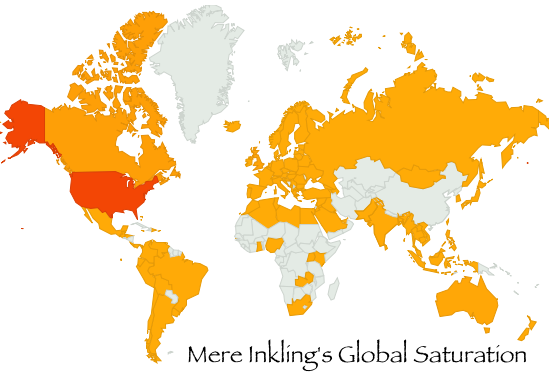
Fortunately, communities such as wordpress include features that allow us to track statistics in an accurate manner. Even when visitors fail to comment or formally “like” a post, they still leave digital footprints. I’ve written before about how enjoyable it is to see how frequently your page has been visited by people from all around the world.

At that time I shared my statistical world map, (directly below). Today I follow it with my current status . . . which reveals that I have finally penetrated the Great Wall and accessed the vast population of the People’s Republic of China! (Of course, I have long suspected the Chinese military of spying on my column, in an effort to glean military secrets about the Inklings’ military service during WWI.)

countries

countries 2

Methods of Increasing Visits to Our Sites

There are a number of concrete ways to expose others to our words. A few appear below. Still, it’s good to remain realistic in our expectations.

I recently read that it’s worthwhile being listed in the Technorati blog directories. As part of the verification process for inclusion there, I need to include in one of my blogs the code RFQE8T2R48RG. (I just hope their verification search engine isn’t confused by the numerous occasions when I’ve used that very same code in my previous blogs.)

As promised, here are a handful of nearly universal recommendations for increasing the number of visitors to our websites.

  • Write on subjects we feel passionate about.
  • Write well.
  • Be as unique as possible (in our personal publishing niche).
  • Encourage people to leave comments.
  • Dialog with the readers who do.
  • Create intriguing titles for our posts.
  • Write regularly (at least weekly, but not hourly).
  • Offer RSS and email subscription options.
  • Visit other blogs & offer encouraging comments.
  • Tell everyone you know to read Mere Inkling.

Truly sorry about that last plug. I’m simply trying extra hard to ensure my words don’t drop into the obsidian darkness of digital anonymity. Blessings in your own efforts to ensure the same!

To Tweet or Not to Tweet

platypusI have a twitter account I’ve never used. I had attended a ministry conference where the featured speaker encouraged all of the pastors to harness the power of this cutting edge technology.

I dutifully returned home, established an account, and realized there were very few things I wanted to say in 140 characters or less. One hundred and forty words . . . now you’re talking. But a mere seven score letters . . . I don’t think so.

I know there are many positive things about brevity. In our hectic world, it’s become an absolute necessity. Still, some things—to be expressed more clearly and (dare I say it, “entertainingly”)—demand more than two and a half sentences.

I was recently reading an article entitled “Tweets Before Twitter,” and it gave me cause to reconsider the prospect of using twitter to share worthwhile ideas. It described “ingenious brevity inspired 150 years ago by telegrams. . . . when people had to pay as much as $1 per Morse-coded word to dispatch a cable overseas, only a robber baron could afford to be loquacious.”

Now, that’s a sobering thought, especially since one of the dollars of that era would likely translate into about $214.17 today (by rough estimate). With that incentive, many telegraphs employed cryptic shorthand similar to the increasingly familiar terminology of the tweetworld.

However, one example they cited was different. It did not rely on learning a new language of contemporary abbreviations. Instead, it appealed to a much older language, Latin. Here’s the example they reported.

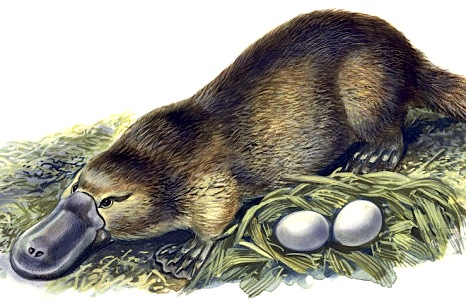
Monotremes oviparous, ovum meroblastic.

Translation: In the 19th century one of the greatest scientific debates was whether the platypus laid eggs, a fact that zoologist William Hay Caldwell was finally able to confirm in 1884. Here he uses Latin to cable his discovery from Australia to the British Association for the Advancement of Science. Since Latin had words for high-level scientific concepts, Caldwell could condense an entire paper into one brief sentence, letting colleagues know that platypus embryos develop like birds instead of mammals.

If I could remember the Latin I studied back in high school . . . And, if the people I was tweeting could read what I was saying . . . I just might reconsider my decision not to tweet. But I regard that event highly unlikely.

For now I’ll remain more than content to post a couple of times a week to Mere Inkling, in the hopes that a few of my words prove helpful or entertaining.

Finally, although the great unknown of platypus parenting was discovered in 1884, I’ve been pondering another mystery of the Ornithorhynchus anatinus. Why was it, that C.S. Lewis failed to include these wondrous creatures in Narnia? Perhaps it was because their semi-aquatic nature meant they would be of little value in the battles that marked the events recorded in the Chronicles? I have little doubt that despite the absence of their mention, Narnia’s waters teemed with their frolicking duck bills, otter feet and beaver tails.

The Power of Names

babyC.S. Lewis was a man who recognized the power of a name. In fact, that awareness made the opening line of The Voyage of the Dawn Treader one of the most memorable in all of Christian literature: “There was a boy called Eustace Clarence Scrubb, and he almost deserved it.”

Names are used, of course, for identification. Throughout history, different countries have had different naming conventions. A rather common one featured the giving of a personal name to a child, with the patronym added to distinguish between individuals of the same name.

This led to distinctions such as James ben Zebedee of the Christian gospels or Leifr Eiríksson the first millennium explorer of North America. Hearkening back to my own Scandinavian roots, I favor the innovative example Ole Olson, or more commonly Ole Olsen. (The only problem with this name was that it failed to distinguish one Ole from the thousands of other Ole Olsons who dotted the steep coastlines of the Viking fjords.)

God too reveals the importance of names. In the Gospel according to Matthew we read:

But as he considered these things, behold, an angel of the Lord appeared to him in a dream, saying, “Joseph, son of David, do not fear to take Mary as your wife, for that which is conceived in her is from the Holy Spirit. She will bear a son, and you shall call his name Jesus, for he will save his people from their sins. (Matthew 1:20-21).

In one of the most powerful prophecies ever recorded, we hear various titles—in essence, names—of the Messiah Jesus.

For to us a child is born,

   to us a son is given;

and the government shall be upon his shoulder,

    and his name shall be called

Wonderful Counselor, Mighty God,

   Everlasting Father, Prince of Peace.

                                                             (Isaiah 9:6).

The reason that names are on my mind is because recent research has revealed that in America (well, California precisely, and assuming that data can be applied to the entire country) . . . the choice of baby names can even evidence the political leanings of the parents. Now, we’re not talking about parents who name their children directly in honor of a particular politician; it’s much more subtle than that.

Here are a couple of interesting facts gleaned from the study.

The results revealed that overall, the less educated the parent, the more likely they were to give their child either an uncommon name (meaning fewer than 20 children got the same name that year in California), or a unique name (meaning only one child got that name in 2004 in California). When parents had less than a college education, there were no major ideological differences in naming choice.

However, among college-educated whites, politics made a difference. College-educated moms and dads in the most liberal neighborhoods were twice as likely as college-educated parents in the most conservative neighborhoods to give their kids an uncommon name. Educated conservatives were more likely to favor popular names, which were defined as names in the top 100 in California that year.

The sounds of liberal and conservative names varied, too. For both boys and girls, liberals tended to pick more feminine-sounding choices, such as Liam, Ely and Leila names that include lots of L sounds and soft-A endings, including popular choices Ella and Sophia. Conservatives, on the other hand, tend to pick names with more masculine-sounding Ks, Bs, Ds and Ts, such as Kurt.

Beware of the temptation of attempting to jump aboard a naming fad. “Unique baby names can sometimes grate, however. In 2011 . . . an informal survey of hated baby names found that Nevaeh, or ‘heaven’ spelled backward, was the most commonly cited as a hated name. The name was invented in the 1990s and became the 31st most popular in the United States in 2007.”

My wife and I are surely in a minority. We chose the names for all three of our children based upon their meanings . . . a practice quite common in the Scriptures.

C.S. Lewis knew well the power of a name.

Perhaps it has sometimes happened to you in a dream that someone says something which you don’t understand but in the dream it feels as if it had some enormous meaning—either a terrifying one which turns the whole dream into a nightmare or else a lovely meaning too lovely to put into words, which makes the dream so beautiful that you remember it all your life and are always wishing you could get into that dream again. It was like that now.

At the name of Aslan each one of the children felt something jump in his inside. . . . Susan felt as if some delicious smell or some delightful strain of music had just floated by her. And Lucy got the feeling you have when you wake up in the morning and realise that it is the beginning of the holidays or the beginning of summer. (The Lion, the Witch and the Wardrobe).

It comes as no surprise to any Narnian sojourner that the very name of Aslan should so move his followers. After all, we too understand Who the great Lion is. For, as he once said to Lucy and Edmund, when asked if he was here in our world as well,

“Are—are you there too, Sir?” said Edmund.

“I am,” said Aslan. “But there I have another name. You must learn to know me by that name. This was the very reason why you were brought to Narnia, that by knowing me here for a little, you may know me better there.” (Voyage of the Dawn Treader).

Human Filth

washI’m writing this from lovely Saint Louis. It’s a “far piece” from my home in Puget Sound, but I love it here. My wife and I spent two years just across the Mississippi, at Scott Air Force Base.

I’m here to begin study for my Doctor of Ministry degree, and it’s off to a grand beginning. As I said, I like Saint Louis, and Concordia Seminary has a first class faculty.

The only problem about coming here was precisely that . . . the process of getting here.

I hate flying these days. This trip was particularly trying. I wasn’t troubled by the fact that both my first flight and my connection were more than an hour behind their scheduled departures. (Although they were.) Nor was I troubled by being selected (once again) for a full body scan. (Must be due to using my military ID rather than a driver’s license that could more easily be counterfeited.)

Nor was it because the airline misplaced my luggage and was reluctant to give me an overnight toiletry kit until I insisted that although a hotel would offer me a toothbrush, what I really wanted to ensure I had the first day of class was deodorant. (They got the last laugh by giving me a bar of Lady Speed Stick; let me assure you that the elegant Powder Fresh scent turned more than one head that day in class.)

No, what really disturbed me as I traveled was encountering filthy people in the restrooms I used as I traveled across the continent. By filthy, I mean those disgusting people who choose not to wash their hands. When I observe 50% of the men exiting the bathroom without pausing to use one of the many available sinks, it’s all I can do not to say something. It makes me want to call up their aged parents and ask how they managed to raise such a disgusting son.

I love animals, and just this week I’ve seen dogs, cats, rabbits and deer grooming themselves. They have better manners and hygiene than the pigs I’m talking about here. Yes, they are disgusting enough for me to refer to them as swine . . .  although pigs are only being true to their nature, when homo sapiens are supposed to possess a higher character.

C.S. Lewis was writing about the shortcomings of only doing what is right because it is mandated, but it has a slight bearing on the disgust I’ve described above.

We do not wish either to be, or to live among, people who are clean or honest or kind as a matter of duty: we want to be, and to associate with, people who like being clean and honest and kind. The mere suspicion that what seemed an act of spontaneous friendliness or generosity was really done as a duty subtly poisons it. (English Literature in the Sixteenth Century).

While Lewis is certainly correct that insincerity strips kindness and honesty of their virtuous essence—when it comes to cleanliness, I’m willing to settle for the “forced” variety!

Well, enough about human filth. I just needed to get that out of my system. Parents, please teach your children better than this. And ladies, please don’t dispel my naïve notion that 100% of women clean up after using their facilities.

Please forgive me for this disgusting post, and I promise that my next column will be much more pleasant and edifying.

Beware of Beavers

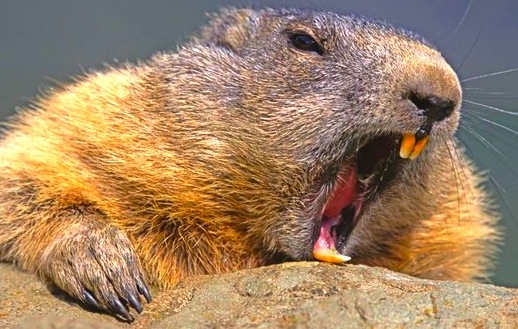
beaverIt’s rather ironic that after my last post on the peaceful harmony of wildlife I would choose to post on the subject of increasing violence among once peaceful forest mammals.

Beavers—of all the unlikely creatures—have apparently been growing more aggressive.

That’s a far cry from the gentle domestic rodents C.S. Lewis introduced us to in The Lion, the Witch and the Wardrobe. Just consider the politeness of Mr. and Mrs. Beaver when the Pevensie children are meeting Aslan for the first time:

“Go on,” whispered Mr. Beaver.

“No,” whispered Peter, “you first.”

“No, Sons of Adam before animals,” whispered Mr. Beaver back again.

As if we needed another reminder that we’re not in Narnia, reports out of Belarus indicate that beaver attacks are on the rise. In the most serious attack, a sixty year old man was actually slain by one of the web-footed amphibians. Accounts said a major artery in his leg was sliced by its “razor-sharp teeth.”

A frightening picture indeed.

Well, worrisome certainly . . . until we hear the rest of the story.

It turns out the fisherman was assaulting the poor little animal. While we must remain considerate of the grief of the sportsman’s family, it appears he was driving past the beaver—which was presumably minding its own woodland business—when he decided it would be fun to grab it and force it to pose for a picture with him.

Apparently—make note of this lest you inadvertently arouse a beaver’s ire—since they are predominantly nocturnal, beavers become disoriented and irritable when forced to pose for portraits during the daytime.

It’s one thing to enjoy nature’s wildness from a distance. Quite another to interpose ourselves and expect undomesticated beasts to behave with good manners. After all, as we learned when Aslan created Narnia, he didn’t civilize all of the furry beavers:

He was going to and fro among the animals. And every now and then he would go up to two of them (always two at a time) and touch their noses with his. He would touch two beavers among all the beavers, two leopards among all the leopards, one stag and one deer among all the deer, and leave the rest. (The Magician’s Nephew).

New Beauty Each Day

fawnI woke this morning to a scene from Disney.

Looking out the window, with my coffee perking in the background, God blessed me with fabulous scene. A pregnant doe, lying on the ground to rest her weary legs, was peacefully grazing on our lawn. (Echoes of gentle Faline.)

As if that vision were not spectacular enough, a few yards to her side a small bunny hopped about, nibbling on the same grass. (We seeded our lawn with clover to provide a welcoming meal for just such visitors.) The rabbit was alone, although we watched it frolic with its siblings just the other day. (Might they be the children of carefree Thumper?)

Completing the scene were a bevy robins and sparrows. They hopped around the pair, in a wonderful display of original nature’s harmony, which will one day be restored.

The wolf shall dwell with the lamb,

   and the leopard shall lie down with the young goat,

and the calf and the lion and the fattened calf together;

   and a little child shall lead them.

The cow and the bear shall graze;

   their young shall lie down together;

   and the lion shall eat straw like the ox.

                     Isaiah 11:6-7, ESV

The Creator of Narnia understood the essence of this peace as well as anyone. C.S. Lewis revealed that just as nature was created at peace, so too the new creation would mark a restoration of that purity. As Lewis writes in Miracles, Nature “is to be redeemed. The ‘vanity’ to
which she was subjected was her disease, not her essence. She will be cured, but cured in character: not tamed (Heaven forbid) . . .”

For the present time, however, we must be content to appreciate brief glimpses of that promise . . . just as I am now, as I write. (Yes, the doe is still resting mere feet from my window.)

Precious moments like this are something to be savored. A sweet foretaste of the feast to come.

_____

The full context of Lewis’ words from Miracles follows. In this passage he warns us not to worship what is created, but only its Creator.

You must have tasted, however briefly, the pure water from beyond the world before you can be distinctly conscious of the hot, salty tang of Nature’s current. To treat her as God, or as Everything, is to lose the whole pith and pleasure of her. Come out, look back, and then you will see . . . this astonishing cataract of bears, babies, and bananas: this immoderate deluge of atoms, orchids, oranges, cancers, canaries, fleas, gases, tornadoes and toads.

How could you ever have thought that this was the ultimate reality? How could you ever have thought that it was merely a stage-set for the moral drama of men and women? She is herself. Offer her neither worship nor contempt. Meet her and know her. If we are immortal, and if she is doomed (as the scientists tell us) to run down and die, we shall miss this half-shy and half-flamboyant creature, this ogress, this hoyden, this incorrigible fairy, this dumb witch.

But the theologians tell us that she, like ourselves, is to be redeemed. The “vanity” to which she was subjected was her disease, not her essence. She will be cured, but cured in character: not tamed (Heaven forbid) nor sterilised. We shall still be able to recognise our old enemy, friend, play-fellow and foster-mother, so perfected as to be not less, but more, herself. And that will be a merry meeting.

Unflattering Likenesses

Nero 1We tend to caricature those we dislike. We usually do it with words, either dismissive or insulting. Sometimes we do it with images.

I wrote an essay once entitled “Demonizing Our Enemies,” and in this world of constant turmoil it includes a message we cannot afford to forget. If you’re interested in reading it, it’s on page fifty-four of the first issue of Curtana: Sword of Mercy, and you can read (or download) it for free here.

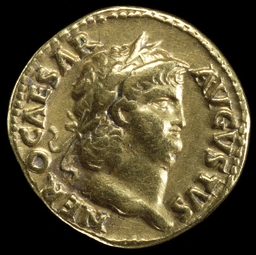
Sometimes, however, what appears on the surface to be an insult . . . may simply be a reflection of accuracy. That, I think, is the case in the coin pictured above. It displays a portrait of the Emperor Nero, in all of his porcine grandeur. It is, in a single word, grotesque.

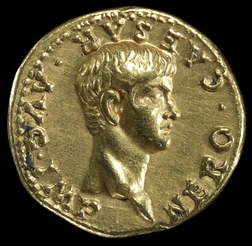
Nero 2Consider this image, of the emperor in his youth. It’s rather disgusting to see what he had become. But the fruits of unrelenting debauchery and murder do take a toll.

Still, one wonders how an image like this ever came to be. What emperor, in his right mind, would allow us a graphic reproduction of his ugliness? Especially when it would have been a simple thing to circulate at the mints an idealized portrait for official use. (That, of course, has been a common practice throughout history.)

As a bit of a numismatist, I was curious as to how it came to be. My first impression upon seeing the bizarre likeness of the imperator was that it must be a “barbarous” imitation of a Roman coin. Such counterfeits became fairly common in the fourth century, and they are usually identified by terribly garbled legends (inscriptions).

After doing enough research to determine this was a genuine imperial issue, I wondered if the celator (die-carver) might have been put to death for his presumption. No evidence of that, though it may have happened.

I have to assume that Nero was so self-consumed that he was oblivious to the way the corpulent image must have invited silent ridicule. He was, after all, despised by virtually everyone for his countless excesses.

So, ultimately, the doomed emperor unintentionally played the proverbial joke upon himself. By allowing an accurate portrayal of the imperial profile, he preserved for all time a true testimony to himself. He may have falsely blamed the Christians for Rome’s terrible fire, but he had no one other than himself to indict for his metallic legacy.

For those curious as to how I might work a Lewisian theme into this unusual post, allow me to include the following passing reference to the self-acclaimed master of the lyre. It appears in the essay “Learning in War-Time”

A University is a society for the pursuit of learning. . . . At first sight this seems to be an odd thing to do during a great war. What is the use of beginning a task which we have so little chance of finishing. . . Is it not like fiddling while Rome burns?

Now it seems to me that we shall not be able to answer these questions until we have put them by the side of certain other questions which every Christian ought to have asked himself in peace-time. I spoke just now of fiddling while Rome burns. But to a Christian the true tragedy of Nero must be not that he fiddled while the city was on fire but that he fiddled on the brink of hell.

And—lest any of us smugly nod in agreement that such an evil man most assuredly deserved his searing fate—here is another passage from Lewis that offers a sobering truth.

In the long run the answer to all those who object to the doctrine of hell, is itself a question: “What are you asking God to do?” To wipe out their past sins and, at all costs, to give them a fresh start, smoothing every difficulty and offering every miraculous help? But He has done so, on Calvary. To forgive them? They will not be forgiven [editor: they will not accept God’s forgiveness]. To leave them alone? Alas, I am afraid that is what He does.

One caution, and I have done. In order to rouse modern minds to an understanding of the issues, I ventured to introduce in this chapter a picture of the sort of bad man whom we most easily perceive to be truly bad. But when the picture has done that work, the sooner it is forgotten the better.

In all discussions of Hell we should keep steadily before our eyes the possible damnation, not of our enemies nor our friends (since both these disturb the reason) but of ourselves. This chapter is not about your wife or son, nor about Nero or Judas Iscariot; it is about you and me. (The Problem of Pain).