
Avoiding Bad Influences

In our last conversation, we considered the importance of friendship. It is truly a precious treasure. And it soothes the loneliness that scars our souls as a result of humanity’s fall.

Choosing to live our own lives, apart from our heavenly Father, has damaged every other relationship we experience. Our bonds with other human beings, even our own families, are twisted and stretched . . . sometimes beyond the breaking point. Even our relationship with nature has suffered, but that’s a subject for consideration some other day.

One of the temptations that arises from our desire for companionship, is that we settle for having it on the wrong terms, with the wrong people. As C.S. Lewis says in Mere Christianity, “vices may sometimes bring people together: you may find good fellowship and jokes and friendliness among drunken people or unchaste people.”

In such circumstances, it seems to me you experience the trappings of “friendship,” without touching its essence. It’s hollow. For the moment, it may appear and sound similar to the real thing, but when the alcohol wears off and the consequences of our poor choices cascade upon us, it becomes evident this version of friendship was merely a façade.

Simply put, we are wise to avoid bad “friendships.”

It dawned on me when I was teaching at the USAF Chaplain School just how much other people influence my behavior. No one who knows me would call me weak or pliable. And anyone attempting to manipulate me would likely fail. (Aside from my grandchildren, of course.)

Yet, when I spend lots of time around people with worldly values and behaviors, it very subtlety influences my own actions. I recognize it most clearly when it comes to language. As a military veteran who used to work in construction, my tongue knows how to utter a worldly phrase or two. Normally, it’s reined in fairly well in that regard, but if I’m immersed for very long in an “earthy” environment, some of those words unconsciously slip back into my own conversation.

I realize that “cussing” or cursing may seem a small sin to some, but let’s consider a more substantial example. When someone is delivered from addiction to drugs—a process that frequently requires lengthy treatment—one of the critical ways to protect them from returning to the slavery of addiction, is by keeping them away from their so-called friends who remain captive to drugs.

If they restore those destructive bonds, they are like apostates, who have known the truth but later denied their Savior. As the Apostle Peter says, “it would have been better for them never to have known the way of righteousness than after knowing it to turn back from the holy commandment delivered to them. What the true proverb says has happened to them: “The dog returns to its own vomit, and the sow, after washing herself, returns to wallow in the mire.” (2 Peter 2:21-22, ESV).

When I realized how susceptible I was to the behavior of others, I determined to seek out people who were better than me. Men and women who would bring out the best in me. People, especially, who excelled in virtues and traits in which I was conscious of my own shortcomings.

This is a principle I wholeheartedly recommend to everyone. Choose as friends those who are noble, virtuous, selfless, loving, and godly. You will never regret it.

Lewis provides for us an insightful description of how our friendships or overall community of relationships influence us. He is discussing here our universal tendency to justify bad behavior because “everyone is doing it.”

We must guard against the feeling that there is “safety in numbers.” It is natural to feel that if all men are as bad as the Christians say, then badness must be very excusable. If all the boys plough [fail] in the examination, surely the papers must have been too hard? And so the masters at that school feel till they learn that there are other schools where ninety per cent of the boys passed on the same papers. Then they begin to suspect that the fault did not lie with the examiners. Again, many of us have had the experience of living in some local pocket of human society—some particular school, college, regiment or profession where the tone was bad. And inside that pocket certain actions were regarded as merely normal (“Everyone does it”) and certain others as impracticably virtuous and Quixotic [chivalrous].

But when we emerged from that bad society we made the horrible discovery that in the outer world our “normal” was the kind of thing that no decent person ever dreamed of doing, and our “Quixotic” was taken for granted as the minimum standard of decency. What had seemed to us morbid and fantastic scruples so long as we were in the “pocket” now turned out to be the only moments of sanity we there enjoyed. It is wise to face the possibility that the whole human race (being a small thing in the universe) is, in fact, just such a local pocket of evil—an isolated bad school or regiment inside which minimum decency passes for heroic virtue and utter corruption for pardonable imperfection. (C.S. Lewis, The Problem of Pain).

Here is an interesting and valuable exercise: pause and conduct a mental and spiritual survey of the influences your individual friends exert on you. If you find they help you grow in ways that are positive, you are fortunate. If they influence you in ways that are unhealthy, maybe it’s time for some relationship pruning.

All of this discussion leaves unconsidered the role we play in bringing out the best (or worst) in our friends. Then again, if they truly are our friends, there is nothing else we could ever wish for them than the very, very best.

On Death’s Specter

Death is an unpleasant subject. And the knowledge that each of us is destined to face our own, has the potential to overshadow the countless joys this life offers.

Virtually everyone reading this has lost a loved one to death . . . and some reading this may have been informed by doctors that their own days may be limited. If you find yourself counting down in years, months, or weeks, may God strengthen you and pour upon you an overflowing portion of his divine peace. The Scriptures refer to God’s peace in circumstances of great personal trial as a “peace which passes understanding.” And that is precisely what I pray he provides for you.

Those of us who are Christians find ourselves in a bit of a tension. We believe in Jesus’ resurrection, and his promise to raise us to new life as well. So, in that sense death is a defeated “enemy.” It no longer has the final word. In fact, passing through the portal of death actually allows us to enter into the presence of the Lord! Nevertheless, we dread the prospect of dying. Too seldom do people pass peacefully in their sleep.

C.S. Lewis experienced an illness which brought him near to death. Yet he recovered . . . with mixed feelings. Five weeks before his death he wrote to his friend Arthur Greeves:

Tho’ I am by no means unhappy I can’t help feeling it was rather a pity I did revive in July. I mean, having been glided so painlessly up to the Gate it seems hard to have it shut in one’s face and know that the whole process must some day be gone thro’ again, and perhaps far less pleasantly! Poor Lazarus! But God knows best.

The reason we should no longer fear death is because it has no power over those whose sins have been borne by the Messiah. Those who have not experienced this grace may rightfully fear the day of accounting that awaits humanity. Jesus invites all people—even the most sinful and vile people we can imagine—to yield to him and trade their inheritance of death for his righteousness and the gift of eternal life.

That means there is nothing that you have done that is so evil God cannot forgive it. Simply ask him to.

One way this experience of salvation is described in the Bible is as a resurrection. Jesus said to one of his disciples, “I am the resurrection and the life ‘Whoever believes in me, though he die, yet shall he live, and everyone who lives and believes in me shall never die.’” (John 11:25). Jesus is distinguishing between the two deaths. Physical, where this finite body fails . . . and spiritual death, where those who have ignored God’s mercy spend eternity separated from it.

Another aspect of this transformation is found in the fact that through conversion we die to the power of sin over us, and participate (even in this physical life) in Christ’s resurrected life. (Baptism is a “sign” of this, as the immersion is “burial” and rising from the waters is rebirth.) As Paul of Tarsus assures believers: “For if we live, we live to the Lord, and if we die, we die to the Lord. So then, whether we live or whether we die, we are the Lord’s.” (Romans 14:8).

C.S. Lewis bluntly put it this way: “Die before you die. There is no chance after that.” (Till We Have Faces).

Which brings us to the peculiar image above. It comes from some classical text and whenever I’ve encountered it over the years, I’ve always considered it rather odd that the illustrator decided to portray this skeleton in the posture of prayer. It’s actually a bit disconcerting, since death and decay have nothing to do with our Lord who is the way, the truth and the life.

If we haven’t said our prayers in this mortal life, as Lewis reminds us, we will lack the voice and opportunity to do so in the next.

Besides, knowing Christ is not something with benefits only in the next life. Walking through life in his light makes our days here all the more pleasant and joyful. As I look back on my own life I recognize numerous ways in which his hand directed my path. Had I lived for my own selfish appetites the person I would be today would little resemble the Christian me. Thank God that he delivered me from becoming that man.

The Single Source of All Good

“There is but one good; that is God. Everything else is good when it looks to Him and bad when it turns from Him.” (C.S. Lewis, The Great Divorce).

I believe this thesis. I don’t expect agnostics and humanists to, though. Still, I believe the statement is true, even for them. Consider my explanation below.

What Lewis is saying is that God is the Source of all good. In the Scriptures, in fact, some of the attributes of God can be viewed as so intimately a part of his divine nature that the particular virtue is, in its purity, a facet of the Lord’s identity. Thus God the Father and God the Son are said to truly be: Love, Light, and Truth.

Christians are inclined to attribute any good fruit we see as coming from the Source of good. Thus, when secularists do something inarguably good or altruistic, we have no problem attributing its inspiration to God. Yes, they may see through the glass dimly, and may for example recognize only the beauty of nature or the magnificence of the cosmos. But these are God’s handiwork, and so we return to where we began.

It is actually the second portion of this quotation that most intrigues me. “Everything else is . . . bad when it turns from Him.”

I suppose I can illustrate this truth more effectively than I can explain it.

Patriotism is a good thing. It results in cohesive communities where individuals are willing to make sacrifices on behalf of their fellow citizens. Focus is on the common welfare. However, run amuck, patriotism can become a deformed thing. The Third Reich united and inspired a weak and demoralized nation, but at a bloody price.

Love of Family is a good thing. Most of us experience the joy of this fact. However, carried to obsessive bounds, it can result in horrendous acts. Not a week passes without the news relaying accounts of parents murdering their own children in the face of a divorce, incarceration or some other form of separation. In their depraved minds, the thought of not being together warped into something uglier than death itself.

Human Freedom is a good thing. If that weren’t so, God wouldn’t have created us with free will. It allows human to say “yes” to him and live in a relationship with our Creator as his children rather than as mindless automata. But, apart from God, is there any question that this most wonderful gift becomes a curse? Proof overflows from the pages of our newspapers.

So, Lewis reminds us that the things of this world possess no intrinsic good. When things such as generosity, courage, and creativity are imbued with a divine element, only then do they become capable of being truly good.

The strongest challenge to this belief comes in the notion that even those who do not acknowledge God are capable of doing things we all consider “good.” As I said above, Christians have no problem celebrating selfless acts of their unbelieving neighbors. The reason for this is actually quite simple. Even though secular humanitarian efforts do not look to God, since they are altruistic, they consciously look away from self. In other words, they are not intentionally turning away from God, but, ignorant of his presence, they still transcend selfish or carnal interests. And, insofar as they are free of these sinful considerations, they possess the capacity for actions rightly deemed “good.”

Ultimately I believe this is due to the truth that all women and men are created in the image of our God. Whether we acknowledge it or not, the echoes of that truth resound throughout our being.

Lessons Taught by Onions

This column has been written backwards. Not sdrawkcab literally, but in the opposite direction of its natural order. Usually I find something illuminating (most commonly in C.S. Lewis’ work), and then I offer some reflections on that insight. Occasionally, the post’s subject arises from a different source, and in my subsequent thoughts, I consciously consider what Lewis might have thought about the matter.

This is the first time when something utterly bizarre struck me as a valid starting point. And, only later did I find a suitable “proof text” or two from Lewis to validate discussing the odiferous subject at hand.

There’s a show I’ve been enjoying called “Parks and Recreation.” While I can’t recommend it to others, due to the casual portrayal of promiscuity which is endemic to American “entertainment.” Nevertheless, they often have quite witty writing that satirizes the crazy nature of life in our world today. This episode features a political debate between candidates for mayor of a small town.

One of the candidates responds to a question with, “No, I’m not a Vegan. I’m an Onionarian. I only eat onions and onion-based juices.”

I wonder how many other cultures can garb their dietary preferences in the robes of religious faith and devotion? Now, I love an onion more than the average person, but the notion of narrowing our diet down from God’s vast table to a single item just strikes me as a bit humorous (see Acts 10:9f).

As I enjoyed a chuckle, the thought flashed that I might relate this dialog for others who share my peculiar sense of humor . . . and I immediately wondered whether or not a Lewisian connection would be possible. Oh me of little faith. Lewis was so prolific that it doesn’t even require me to stretch.

You see, onions can teach us many lessons.

For example, look at this demonic advice offered by Screwtape to his protégé Wormword. He says Tempters should persuade human beings to care overly about what others think of them. The entire advertising world seems to be established on this principle. And how terribly vulnerable we are to this whisper. But, by the grace of God, it appears some are immune.

The man who truly and disinterestedly enjoys any one thing in the world, for its own sake, and without caring two pence what other people say about it, is by that very fact forearmed against some of our subtlest modes of attack. You should always try to make the patient abandon the people or food or books he really likes in favor of the “best” people, the “right” food, the “important” books. I have known a human defended from strong temptations to social ambition by a still stronger taste for tripe and onions. (C.S. Lewis, Screwtape Letters)

Thus we see that onions can, in some contexts, possess salvific influences. (Well, that might be pushing the lesson just a wee bit . . . but there is an important truth to be found in this epistle.)

Lewis’ arguably most famous discussion of onions is found in his discussion of concentric rings of secrecy, power, intimacy and knowledge described in his 1944 address entitled “The Inner Ring.” Rather than paraphrase his fine argument, I shall allow the following portions of his talk to speak eloquently for themselves.

Badly as I may have described it, I hope you will all have recognized the thing I am describing. Not, of course, that you have been in the Russian Army or perhaps in any army. But you have met the phenomenon of an Inner Ring. You discovered one in your house at school before the end of the first term. And when you had climbed up to somewhere near it by the end of your second year, perhaps you discovered that within the Ring there was a Ring yet more inner, which in its turn was the fringe of the great school Ring to which the house Rings were only satellites. It is even possible that the School Ring was almost in touch with a Masters’ Ring. You were beginning, in fact, to pierce through the skins of the onion. And here, too, at your university-shall I be wrong in assuming that at this very moment, invisible to me, there are several rings-independent systems or concentric rings-present in this room? And I can assure you that in whatever hospital, inn of court, diocese, school, business, or college you arrive after going down, you will find the Rings—what Tolstoy calls the second or unwritten systems. . . .

Of all the passions the passion for the Inner Ring is most skilful in making a man who is not yet a very bad man do very bad things. My second reason is this. The torture allotted to the Danaids in the classical underworld, that of attempting to fill sieves with water, is the symbol not of one vice but of all vices. It is the very mark of a perverse desire that it seeks what is not to be had. The desire to be inside the invisible line illustrates this rule. As long as you are governed by that desire you will never get what you want. You are trying to peel an onion: if you succeed there will be nothing left. Until you conquer the fear of being an outsider, an outsider you will remain. . . .

I must now make a distinction. I am not going to say that the existence of Inner Rings is an evil. It is certainly unavoidable. There must be confidential discussions: and it is not only not a bad thing, it is (in itself) a good thing, that personal friendship should grow up between those who work together. And it is perhaps impossible that the official hierarchy of any organization should quite coincide with its actual workings. If the wisest and most energetic people invariably held the highest posts, it might coincide; since they often do not, there must be people in high positions who are really deadweights and people in lower positions who are more important than their rank and seniority would lead you to suppose. In that way the second, unwritten system is bound to grow up. It is necessary; and perhaps it is not a necessary evil. But the desire which draws us into Inner Rings is another matter. A thing may be morally neutral and yet the desire for that thing may be dangerous.

While I have no doubt a number of other worthwhile onion-lessons are waiting to be found in the Inklings corpus, I would like to close now with my personal favorite. In the following passage, Lewis reverses the analogy, with each peeling away of a layer revealing ever more of reality.

In the closing paragraphs of the final Narnia Chronicle, The Last Battle, Lewis transforms the savory bulb into a metaphor for never ending epiphany.

[Lucy said:] “I see now. This garden is like the stable. It is far bigger inside than it was outside.”

“Of course, Daughter of Eve,” said the Faun. “The further up and the further in you go, the bigger everything gets. The inside is larger than the outside.”

Lucy looked hard at the garden and saw that it was not really a garden but a whole world, with its own rivers and woods and sea and mountains. But they were not strange: she knew them all.

“I see,” she said. “This is still Narnia, and more real and more beautiful than the Narnia down below, just as it was more real and more beautiful than the Narnia outside the stable door! I see . . . world within world, Narnia within Narnia. . . .”

“Yes,” said Mr. Tumnus, “like an onion: except that as you continue to go in and in, each circle is larger than the last.”

What a glorious description. And, like our Lord who elevated the humble mustard seed to literary immortality, Lewis has lifted the modest genus Allium, and secured for it a lasting place in English literature.

Agnostic or Atheist: Does It Matter?

I haven’t forgotten. Well, I have forgotten far too many things in recent years, but I didn’t forget my recent “promise” to address the challenging subject of the distinction between agnosticism and atheism. Last week I wrote: “I suspect that the intimately personal nature of God’s love for us is one of the things that moves some people from agnosticism to atheism.”

It’s not my desire to offend anyone with the discussion which follows. After all, God loves the “lost” just as much as he loves those who have surrendered their lives to him. In fact, there’s an amazing passage that hints at how the rescue of one of those who has “strayed” is even more exciting to the hosts of heaven than the faithfulness of his dedicated disciples. (Check out verses 12-14 in chapter 18 of the Gospel according to Matthew . . . and remember what I have said in the past about how eager any of your Christian acquaintances will be to provide you with a copy of the Bible if you don’t already have one.)

Every soul is precious to God. And yet, many don’t recognize that fact. Many worship false gods (religious and secular). Among those who deny the existence of supernatural deities, there are essentially two camps. Agnostics who (technically) do not deny God’s existence, but merely profess that it is unknowable. Thus they personally remain unpersuaded. Atheists, on the alternative hand, are more adamant about denying God’s existence. Some, in fact, make a living by stridently refuting God himself and all things holy.

Intuitively, most people assume agnostics are not quite as distant from faith as are atheists. After all, agnostics are generally more polite and respectful toward those of us who naively cling to such superstitions . . . right? Atheists, by contrast, tend to ridicule those who would worship a God who laid down his very life, and died a human death.

Take, for example, what is arguably the earliest surviving illustration of Christ’s crucifixion. The illustration above was carved on an ancient plaster wall near Palatine Hill.

It’s a bit difficult to discern, but historical consensus sees the graffito as a pagan insult directed towards a Greek Christian. The scribbled inscription reads: “Alexamenos worships [his] god.” The crucified figure on the cross clearly bears the head of a donkey. The Church Father Tertullian wrote in the second century of slanders alleging Christians followed just such a deity.

Would something like this be likelier to come from the mind of an agnostic, or an atheist?

Agnostics would rarely summon the energy to rail against God like this. However, atheists sometimes feel so imposed upon by God’s children that they lash out with invectives.

So, as I noted above, the gut feeling of most observers would be to say vocal atheists are farther from God than their kindred disbelievers. However—I am convinced that is not the case!

Ironically, it is the tepid individual who lacks any serious conviction who is in greater danger of perishing without seeing God. This is due to the fact that agnostics have, as a rule, come to grips with the fact that there may or may not be a God . . . but they are content to proceed through life without caring much either way. To them the issue is rather trivial, in a sense, since they rarely lose sleep over it.

This is not true of the atheist, who recognizes that the matter is of the utmost importance; that’s why he is not content to simply ignore it. If God truly exists—they comprehend in the core of their being—nothing could be of greater significance.

Agnostics typically have an unreasoned impression that if there is a God, he is probably benevolent, and most likely more concerned with other elements of the universe he created than their small life. They echo the thinking of liberal “Deists” who imagined God as a distant “watchmaker” who set creation in motion and then left it forgotten on the shelf. This Great Watchmaker is not threatening. He isn’t angry at us, because he doesn’t even deign to notice us. He remains oblivious to humanity, just as we presumably live out our lives anonymous to him.

Atheists don’t want to believe in God, because of their overwhelming doubt. Simultaneously, they recognize that the stakes of the gamble are enormous. Eternal, in fact. And they resent God for placing them in this difficult predicament. Why can’t he just make his existence undeniably evident? Faith is the leap they are unwilling to take. But, by the same rational premise, the wise among them realize that in opting against theism, they are actually placing their faith in an equally unprovable tenet. And this has a tendency to make some of them mildly cranky.

Which brings us back to my suspicion that “the intimately personal nature of God’s love for us is one of the things that moves some people from agnosticism to atheism.” You see, when someone deeply ponders the mystery of whether there is a Creator, they understand he would never have created a sentient being with this yearning to cleave to him, without possessing a compassion for them in return.

Agnostics walk about like spiritual zombies, pursuing their various interests. Atheists, though, are tormented by the nagging “fear” that a loving God just may exist. Certainly, they do whatever they can to exorcize the notion, and they publicly celebrate their liberation from ancient and medieval superstitions, but unlike their unaffected agnostic relations, they have recognized the enormity of their choice. Oh to be a blissfully ignorant agnostic, the more thoughtful might muse.

Sadly (from their present perspective), the lot of the atheist is to be closer to God than the agnostic. Atheists may rail against their Maker, but the agnostic’s spiritual indifference causes them to drift farther and farther from the Truth.

The Scriptures offer a parallel to this distinction in the description of one of the early Christian churches. Apparently the believer in Laodicea had grown lackadaisical about their faith and lived lives that differed little from their pagan and agnostic neighbors. The Lord’s judgment of them begins: “I know your works: you are neither cold nor hot. Would that you were either cold or hot! So, because you are lukewarm, and neither hot nor cold, I will spit you out of my mouth.”

Strange, it seems to us, that God might prefer a militant atheistic mindset to an aimless agnostic worldview. But the amazing truth is that, in most cases, atheists are closer to the kingdom of God than their disinterested peers.

In Surprised by Joy, C.S. Lewis describes his own pre-Christian disposition. The grandson of an Anglican priest, he had consciously rejected the faith. Yet, as the possibility of its truth grew more real to him as an adult, he reacted against it. He clearly describes his condition as differing from that of the lukewarm agnostics I’ve described above.

Amiable agnostics will talk cheerfully about “man’s search for God.” To me, as I was then, they might as well have talked about the mouse’s search for the cat.

In the same volume he elaborates on the sentiments I’ve been describing.

I was at this time living, like so many Atheists or Antitheists, in a whirl of contradictions. I maintained that God did not exist. I was also very angry with God for not existing. I was equally angry with Him for creating a world.

So, if you consider yourself “angry with God for not existing,” you may be closer to meeting him than you ever imagined. If you do follow C.S. Lewis’ example, heaven will host a more resounding celebration for you than it does for the ninety-nine who have always remained part of his flock. And, if you’re a dispassionate agnostic who is weakly amused by this thought . . . my sincere prayer is that you, my friend, would become either hot or cold!

Compassion Fatigue

Jesus at GethsemaneI just returned from a weeklong gathering with a group of armed forces chaplains. They represented all the branches—Army, Navy & Air Force. (The Navy provides the chaplains for the Marine Corps and the Coast Guard in the United States.)

I retired four years ago, after nearly a quarter century as a chaplain in the Air Force. I miss the people, the esprit de corps, and the awareness of doing something truly important.

On the other hand, I miss neither the innumerable meetings nor the rank consciousness of some chaplains. (Sadly, to some chaplains their rank insignia is more important than the religious symbol they bear.)

I’ve been privileged, in my semi-retirement, to serve my denomination on our national Ministry to the Armed Forces committee. We determine which of our pastors should be allowed to serve as military chaplains. It was in that capacity I attended our annual conference for “our” chaplains.

As always, we offered a first-class program. This one was conducted by Doxology and our speakers were a veteran pastor and a gifted psychologist. They covered a lot of ground during the week, but one of the subjects they began with was helping us assess our own degrees of “compassion fatigue.”

Compassion fatigue is experienced by many people in the so-called helping professions. Medical personnel, first responders and (especially) those in the ministry give so much of themselves without adequate replenishment, that they often end up spiritually exhausted.

It’s easy for critics to judge someone who is genuinely fatigued, because they can become impatient and irritable. People may accuse them of trying to do everything “in their own strength,” rather than relying on God’s grace and anointing.

In his famous prayer, Francis of Assisi asked, “Lord, make me an instrument of your peace . . .” This is precisely how most clergy view themselves. But, to more precisely focus the petition, we might pray, “Lord, make me a conduit of your grace.”

If you understand the distinction . . . you can see how even regarding ourselves as God’s instruments or hands or voice in the world, can compel those in the ministry to serve until they drop. So much for the Puritan work ethic. Few of us pause adequately for the rest and renewal we require.

C.S. Lewis described just how costly this love for others can be.

To love at all is to be vulnerable. Love anything, and your heart will certainly be wrung and possibly be broken. If you want to make sure of keeping it intact, you must give your heart to no one. . . . It will not be broken; it will become unbreakable, impenetrable, irredeemable. The alternative to tragedy, or at least the risk of tragedy, is damnation. The only place outside Heaven where you can be perfectly safe from all the dangers and perturbations of love is Hell. (The Four Loves.)

You may well be on the verge of compassion fatigue yourself, assuming you care deeply about the suffering of others. If you are, I encourage you to join me in identifying times and places to pause and rest in the presence of God. Scheduling opportunities to meditate on his word and listen for his still small voice as we communicate with him in prayer, will refresh and strengthen each of us.

These precious moments won’t occur accidentally. We need to be intentional in carving them out of our too-busy schedules. But, when we do so, we are spared the pain and numbness of compassion fatigue. We can continue to love others, despite the vulnerability, and still remain healthy and whole.

How Precious You Are

God loves you.

It doesn’t matter how loveable, or unloveable you are, he loves you.

It doesn’t matter whether you praise his Name or deny his existence, he loves you.

It doesn’t matter whether or not you love him. You can even hate him . . . but he still loves you.

Doesn’t make sense to our fallen human reason, but it’s true. One of the amazing revelations of the Christian Scriptures is that God loves each and every one of the people he has created.

Every human being is unique, and each is precious to God. Whether you feel like it or not . . . whether you feel undeserving or (far more dangerously) you think you are a pretty “good” person . . . you are precious to him.

I find it intriguing how some manmade religions and philosophies consciously downplay the uniqueness of each person. What is clearly evidence of God’s infinite creativity—the glorious diversity of men and women the world over—is seen as something odd. A cosmic fluke to be remedied when all essence returns to the amorphous and undifferentiated “whole.”

The elimination of what makes you and me precisely who we are, seems to be the goal of some of these worldviews. But deep within each of our souls we know that this pursuit is wrong. It’s alien to the core of our existence. Loss of identity is, in a phrase, not that for which we were created. You and I were made for a different purpose. And our distinctive personalities (and even our quirks) in this one-time-in-all-creation combination, are no accident.

In his treatise on why suffering exists, C.S. Lewis offers a powerful glimpse into the singularity of our souls. He argues that Christ’s sacrifice was no generic or blanket wonder. Rather, it was a divinely individualized miracle. Listen to Lewis:

The signature on each soul may be a product of heredity and environment, but that only means that heredity and environment are among the instruments whereby God creates a soul. I am considering not how, but why, He makes each soul unique. If He had no use for all these differences, I do not see why He should have created more souls than one. Be sure that the ins and outs of your individuality are no mystery to Him; and one day they will no longer be a mystery to you. The mould in which a key is made would be a strange thing, if you had never seen a key: and the key itself a strange thing if you had never seen a lock. Your soul has a curious shape because it is a hollow made to fit a particular swelling in the infinite contours of the Divine substance, or a key to unlock one of the doors in the house with many mansions.

For it is not humanity in the abstract that is to be saved, but you—you, the individual reader, John Stubbs or Janet Smith. Blessed and fortunate creature, your eyes shall behold Him and not another’s. All that you are, sins apart, is destined, if you will let God have His good way, to utter satisfaction. The Brocken spectre ‘looked to every man like his first love’, because she was a cheat. But God will look to every soul like its first love because He is its first love. Your place in heaven will seem to be made for you and you alone, because you were made for it—made for it stitch by stitch as a glove is made for a hand. (C.S. Lewis, The Problem of Pain.)

I suspect that the intimately personal nature of God’s love for us is one of the things that moves some people from agnosticism to atheism. And I think I just may address that distinction in my next post.

Christians may cease reading here.

A personal and sincere note to any unbelievers reading this column. I’m not writing this to offend you, or to push any of the buttons that may be holdovers from your days in restrictive or destructive religious settings.

If you’ve never believed, I encourage you to tune out the voices (on both sides of the issue). Go directly to the primary account(s) of Jesus’ life and read them. (There are four “Gospel” accounts of his ministry, but I encourage you to first read the Gospel according to Saint John.) Any of your Christian friends would be eager to offer you a copy of the Bible for no cost, but it’s also available for free download at various sites. For example, here you can download an entire Bible in English Standard Version (ESV) for free.

If you once believed, but have laid your faith aside, I don’t want to offer guilt. Instead, listen to this promise of grace. Just as the father of the Prodigal Son was always awaiting the return of his child, the same joyous welcome home awaits you. If ever you desire to return home, know with certainty that he’ll welcome you again, not as a servant or second class citizen, but as his son or daughter. And you’ll hear the words from that parable proclaimed over you: “It is fitting to celebrate and be glad, for this your brother [or sister] was dead, and is alive; they were lost, and are found.” (Luke 15:32).

The Ides of March

I was introduced to ancient Rome as a young reader. Rosemary Sutcliff (1920-1992) wrote such fine historical fiction that it appeals to young readers and adults alike. A film version of The Eagle of the Ninth was made just last year. And I’m a sucker for a good Roman movie (wherein “good” excludes all of the so-called spaghetti gladiator films made in the fifties and sixties).

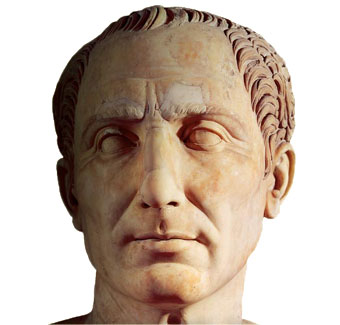
As a student of Rome, I find it worth noting today’s date. Even those who know “nothing” about Rome should understand its significance. You don’t need to have studied Latin or the classics to understand the warning “Beware the Ides of March.” The Ides is the fifteenth day of the month. And it was on this day that Julius Caesar was murdered by members of the Roman Senate.

It was left to his adopted son, Caesar Augustus, to transform the Republic into an autocratic Empire. It was this Caesar who ruled Rome at the time of Jesus’ birth, and he bequeathed the title of “Caesar” to his heirs. When Jesus requested that the Pharisees and Herodians “show him the coin for the tax,” we do not know whether Augustus or Caesar Tiberius adorned it. It matters not, since the image of Caesar was tantamount to representing Rome itself.

Jesus taught his disciples to be discerning in the loyalties we offer. We are to be responsible citizens. But we are also required to remember our true citizenship rests in the New Jerusalem.

C.S. Lewis astutely illustrated this truth. He lived during two global conflicts, and served in combat defending his homeland. Yet Lewis recognized the dangers of placing our trust (faith) in even the “noble” things of this world.

A man may have to die for our country: but no man must, in any exclusive sense, live for his country. He who surrenders himself without reservation to the temporal claims of a nation, or a party, or a class is rendering to Caesar that which, of all things, most emphatically belongs to God: himself. (“Learning in War-Time” – a sermon preached in Oxford in 1939).

So, on this day when Julius’ dreams of glory bled out in Rome . . . may you and I find refuge, hope, peace and meaning in the One who bled and died for each of us on Calvary.

Beware Your Personal Dragon

Readers of C.S. Lewis possess differing opinions on the film adaptations of the Chronicles of Narnia. One element from the latest film that is presented quite faithfully, is Eustace’s transformation into a dragon.

“He had turned into a dragon while he was asleep. Sleeping on a dragon’s hoard with greedy, dragonish thoughts in his heart, he had become a dragon himself.” (Voyage of the Dawn Treader).

With his brilliant insight and typical mirth, Lewis reveals for us a powerful dynamic of human existence. Two, in fact.

First, what we are inside—our genuine essence or spirit—will ultimately be revealed. This is true for most of us during this life. And, it will be experienced by all humanity as we stand before our Creator.

Second, what we desire—the longings upon which we focus our hearts and energies—shape that very essence. In a sense, Lewis is saying, we become what we covet!

What a wonderful lesson for us. It resounds with echoes of the Scriptures.

The title of this column suggests that we beware of the dragons to which we are particularly vulnerable. They vary from person to person, of course. And, they frequently shift, dependent on our biological age circumstances.

Martin Luther alludes to this in his broader comments about temptation and spiritual maturity:

To feel temptation is therefore a far different thing from consenting or yielding to it. We must all feel it, although not all in the same manner, but some in a greater degree and more severely than others; as, the young suffer especially from the flesh, afterwards, they that attain to middle life and old age, from the world, but others who are occupied with spiritual matters, that is, strong Christians, from the devil. But such feeling, as long as it is against our will and we would rather be rid of it, can harm no one. For if we did not feel it, it could not be called a temptation. But to consent thereto is when we give it the reins and do not resist or pray against it. (Luther’s Large Catechism).

Lewis reveals vividly what becomes of us when we surrender to our dragons. It’s not a pretty sight. And, sometimes it’s terminal. It would have been so, in Eustace’s own case, had not Aslan come to him with his healing grace

And so it is with us. No matter how dragonish you and I have grown, we can be healed of the affliction by the same Aslan, who is known in our world by a different name . . . Yeshua (Jesus).

Happy Leap Day Birthday!

When our daughter-in-law was given a due date for her third child around the end of February, she decided to have her daughter on February 29, Leap Day. This was not a “scheduled” delivery with an inducement of labor. Katie simply chose to give birth to her baby on that day. And, she did.

After we sang “Happy Birthday” to that precious angel today, she immediately volunteered “I’m four!” It’s so nice that she’s not confused by the fact her actual birthday has only appeared on the calendar twice during her brief life.

Age is an interesting subject. We understand its relative applications (e.g. being old enough to begin formal schooling or drive an automobile), but what is its ultimate significance?

In his novel That Hideous Strength, C.S. Lewis says “Youth and age touch only the surface of our lives.” Quite an insight.

Like this body of ours, which we inhabit only for a limited time, in the scope of eternity our age means less than we typically think. Jesus, for example, encouraged his adult followers to receive God’s message with the simple faith “of a child.” I’ve learned firsthand that what passes for “maturity” is sometimes merely a calcification of our hearts and minds.

Our relationship with our Creator is intended to be a dynamic, living, growing thing. And, I suspect that when we’ve been in the Lord’s presence for a thousand eons it will still pulse with the vigor of youth and newness.

As Lewis wrote in The Silver Chair, “People have no particular ages in Aslan’s country.” Ages are something meant for here, for this transitory world.

Thus it’s fitting that we celebrate such transitions for those who mark birthday milestones of four, forty or fourscore. May God bless each and every child until we enter that Place where we no longer care to keep track of such concerns.