C.S. Lewis’ Beloved Dogs

When the internet throws unsolicited information at me, I do my best to ignore it. Yesterday I failed to duck at the right moment and Wikipedia suggested to me a “featured article” I found irresistible. It featured the earliest reference to a named dog—Abuwtiyuwwho died more than four thousand years ago and was buried in Giza in accordance with the wishes of the unknown pharaoh he guarded.

He was almost certainly a Tesem (“hunting dog”), an ancient breed resembling modern greyhounds. (Curiously, a 2004 DNA study found greyhounds are more closely related to herding breeds.)

We contemporary dog lovers understand how a pharaoh could love one of his canine companions enough to have him mummified and buried in an elaborate ceremony. In the image above, our border collie mix is juxtaposed to a hieroglyph tesem. If you’re interested in the subject, you might enjoy one of my February blogs entitled “Pets in Heaven.”

C.S. Lewis was also a dog lover. Pastor Bruce Johnson wrote a delightful article about eight of his dogs, entitled “All My Dogs Before Me.” You can read the brief but thorough article here.

Johnson walks us from Jacksie (who provided Lewis with his “adopted” name of Jack) to the friendly Ricky who was ever “anxious to be friendly.” In between, the author’s family included Tim, Pat, Mr. Papworth, Troddles, Bruce and Susie. Lewis spoke fondly of all of them, with the exception of Bruce, who possessed a predilection for barking through the night and was terribly spoiled by Mrs. Moore.

I also recommend a fine post about one of Lewis’ dogs which appeared on A Pilgrim in Narnia. It’s entitled “The Society of Tim.” The author of the blog is Brenton Dickieson, a Canadian professor and Lewisian scholar.

The Glory of Storge (Love)

Storge, noun: Parental affection; the instinctive affection which animals have for their young.

Some of you will recall when I wrote about attending my wife as her nurse while she recuperated from surgery this past summer. Well, I just completed a remotely similar familial duty with my daughter and her husband the past two weeks.

We’ve all been anticipating the arrival of their fourth child and Grandpa is the on call childcare provider of choice. Well, Grandma is actually first choice . . . but since she’s a teacher, that’s not feasible. (She’ll be down here for a week to help out soon, while her husband is home recuperating from two exhausting but wonderful weeks with our inexhaustible grandchildren!)

A few days ago, our newest granddaughter breathed her first breath. I contemplated writing “entered the world,” but far less accurate. She’s beautiful, of course. And we’ll continue to pray that her inner and spiritual beauty, rather than her external appearance, will define her life.

This has gotten me thinking about C.S. Lewis’ wonderful book, The Four Loves. The following passage describes humanity’s natural love for family.

I begin with the humblest and most widely diffused of loves, the love in which our experience seems to differ least from that of the animals. Let me add at once that I do not on that account give it a lower value. Nothing in Man is either worse or better for being shared with the beasts. When we blame a man for being ‘a mere animal’, we mean not that he displays animal characteristics (we all do) but that he displays these, and only these, on occasions where the specifically human was demanded. (When we call him ‘brutal’ we usually mean that he commits cruelties impossible to most real brutes; they’re not clever enough.)

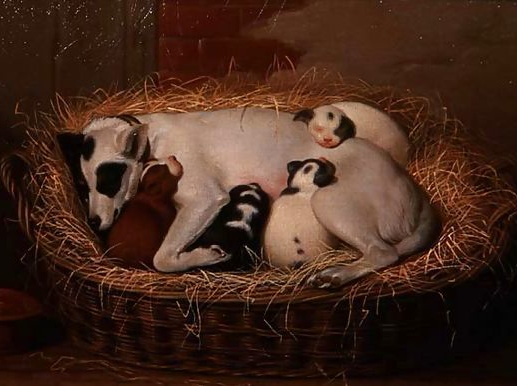
The Greeks called this love storge (two syllables and the g is ‘hard’). I shall here call it simply Affection. My Greek Lexicon defines storge as ‘affection, especially of parents to offspring’; but also of offspring to parents. And that, I have no doubt, is the original form of the thing as well as the central meaning of the word. The image we must start with is that of a mother nursing a baby, a [dog] or a cat with a basketful of puppies or kittens; all in a squeaking, nuzzling heap together; purrings, lickings, baby-talk, milk, warmth, the smell of young life.

The importance of this image is that it presents us at the very outset with a certain paradox. The Need and Need-love of the young is obvious; so is the Gift-love of the mother. She gives birth, gives suck, gives protection. On the other hand, she must give birth or die. She must give suck or suffer. That way, her Affection too is a Need-love. There is the paradox. It is a Need-love but what it needs is to give. It is a Gift-love but it needs to be needed.

As Lewis says, this storge love is a natural affection, instilled within the entire animal kingdom. That is what makes reports of people’s crimes against their own children so terribly shocking. These barbaric acts go against natural law itself. They are inhuman in the absolute sense. And witnessing them among humanity and various animal species reminds us of just how far we have fallen.

By God’s grace, such outrageous acts are the rare exception. Storge is so deeply engrained in nature’s order that we see it in nearly every direction we look. No family is perfect, but most of us are blessed with parents, siblings or other relatives who love us by virtue of our innate bonds.

However, if you are one of the unfortunates who were not loved by your father or mother . . . if you were rejected by your family, I am praying for you. Praying that you will come to know storge in its wonderful fullness through surrogate parents and siblings. After all, it’s not blood that forges these bonds—it is love. Storge is something we readily share with our spouses and our intimate friends. It is a sort of “kinship by choice.”

As I thank God for the most recent addition to our family’s number, I encourage you to thank the Lord as well for the storge love he allows you to give, and receive.

The painting above was created by Samuel De Wilde (1751-1832). And for you cat lovers who were disappointed by my selection of an image of puppies, enjoy this fine portrait of feline storge.

Recycling Seasons

Fall has arrived, and with it (in many nations) a new “school year.” The traditional academic year has been modified in various locales, but for most the end of summer and beginning of fall herald the beginning of the latest season of learning.

The irony is, of course, that even those long “graduated” from any personal learning goals remain subject to this academic cycle. The “back to school” advertising is pervasive, and simultaneous “commencements” such as football and new television programming also reinforce that sensation that something familiar is returning for a fresh beginning.

Families with children in traditional schools are anchored in this academic cycle. It is so intimately an aspect of life that the world would be disorienting without it. Fall, winter, spring and summer—each with their unique traits and holidays—create an ongoing cycle that is as comfortingly familiar as it is renewed and invigorating.

This is particularly true in families such as my own where my wife and son teach in public and private schools, respectively. We also have children embracing the challenges and potential rewards of homeschooling. Yet, even after my immediate family retires from teaching and our youngest grandchild (due to be born in less than a month) has received her college diploma . . . the academic cycle will still be part our lives.

As Christians, the significance of this annual cycle is reinforced by the celebration of the Church Year. It begins in the winter, on the first Sunday of December, with the season of Advent. Then we are carried delightfully through the momentous “white water” events in the life of Jesus Christ until the current slows and we drift serenely through the long season of Pentecost which spans the summer months.

As I wrote above, this cycle is wonderfully familiar and remarkably new. It is a gift of God. And, like all divine beneficences, the Adversary desires to corrupt its meaning and destroy its value. C.S. Lewis addresses this expertly in The Screwtape Letters, where the tempter is advising a fellow devil to make his “patient” bored with the recurring nature of this pattern. In the passage which follows, Screwtape is complaining how God (whom he refers to as “the Enemy”) has so skillfully balanced creation to meet the needs of his children.

The horror of the Same Old Thing is one of the most valuable passions we have produced in the human heart—an endless source of heresies in religion, folly in counsel, infidelity in marriage, and inconstancy in friendship. The humans live in time, and experience reality successively. To experience much of it, therefore, they must experience many different things; in other words, they must experience change. And since they need change, the Enemy (being a hedonist at heart) has made change pleasurable to them, just as He has made eating pleasurable.

But since He does not wish them to make change, any more than eating, an end in itself, He has balanced the love of change in them by a love of permanence. He has contrived to gratify both tastes together in the very world He has made, by that union of change and permanence which we call Rhythm. He gives them the seasons, each season different yet every year the same, so that spring is always felt as a novelty yet always as the recurrence of an immemorial theme. He gives them in His Church a spiritual year; they change from a fast to a feast, but it is the same feast as before. . . . We pick out this natural pleasantness of change and twist it into a demand for absolute novelty.

“Absolute novelty,” can never satisfy the human heart. Ultimately, if each moment is new and possesses no connection with the past, we would be living in chaos. Sadly, some people do choose that path. But, as for me and my household (as Joshua once alluded), we choose to bask in the rich cycle of life that God has designed for us. And, if your own life has been short on predictability, stability and joy, I commend this choice to you as well.

Nursing Those We Love

This week I became a nurse. No, I didn’t complete a degreed or certificated program, I simply assumed the duties of being my wife’s post-surgical caregiver.

She had very serious knee surgery, which will require her to place no weight at all on her right leg for at least a month and a half. This first week she’s required an escort and assistance for virtually everything. And I’ve offered this service gladly, and lovingly . . . even when it’s interrupted my sleep apnea crippled rest.

Obviously, over three and a half decades of marriage, she has needed modest nursing in the past. But this is more serious. It is sustained. She has seen me through a number of serious illnesses and surgeries, but then she (like so many other women I’ve been privileged to know) is a natural nurse and caregiver.

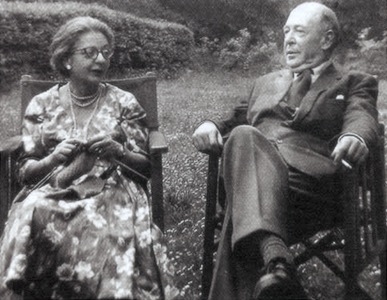
C.S. Lewis was a man not vastly different from me. He was not terribly comfortable when placed in such a role . . . yet he too discovered great meaning in caring for the needs of his wife during her illness. His precious Joy was dying, so the intensity of his labors, and their corresponding emotional investment dwarf my own. And yet the “framework” of our circumstances bears a marked similarity.

In his wonderful book Lenten Lands, Lewis’ son Douglas Gresham relates how Lewis and his brother Warnie provided exceptional care to his mother during her illness. He writes:

[Lewis] spent most of each day with [Joy] at the hospital, but they both agreed Mother should be brought home to The Kilns to die—in Jack’s home—her husband’s home—with him at her side. The “common room” was converted to a hospital ward, complete with a system of bells by which Mother would summon a nurse, or later Jack, if she needed help, as she often did.

I’ll make a confession. Although most men can adequately perform familial nursing duties when there is no alternative caregiver, most of us are quite content to step aside and let our wives or sisters attend to whatever nursing procedures are called for. Actually, I was quite gifted at removing slivers, but when it comes to bodily discharges, I’m no sexist to admit I and most of my gender display a serious weakness.

And yet, even in these cases, when changing the soiled diaper of an infant (or someone old enough to feel shame for having such needs) . . . even such unpleasant acts are possible for us to do for those we love. So the key to being able to care for others is not to pinch our nose and do it as quickly as humanly possible. The key, instead, is to learn to love those placed in our care.

In our grandparents day, it wasn’t uncommon for an elderly great-grandparent to reside with the family of one of their children. My father, for example, grew up with his blind grandfather as a member of their household. Similarly, my mother enjoyed the daily presence of her grandmother in her own home throughout her life. Not only was it expected that children would “take in” their elderly parents, it was natural. After all, they were family.

But, how does one transfer this familial affection to the stranger? After all, as Jesus said, “If you love those who love you, what benefit is that to you? For even sinners love those who love them. And if you do good to those who do good to you, what benefit is that to you? For even sinners do the same” (John 6).

Mother Teresa and the many thousands of saints throughout history who have cared for the leper, the outcasts, and the dying know this truth. They do everything as though they were caring for the Lord himself, just as he asked his disciples to do. Medicines are not their only balms—nor their most important. Their compassionate touch and tender encouragements are often far more healing.

When I compare myself to these caregivers, I realize just how inadequate a nurse I am. As a pastor, a core aspect of my vocation has been to bind the injuries of the sheep entrusted to my care. But I do this in a “spiritual” manner, and it has been rare to ever help one of them replace a bloodied bandage. Spiritual, emotional and social wounds are those that most pastors feel comfortable treating. Providing for the “baser” physical needs of the diseased is quite another matter.

And this brings us to the end of today’s reflection. When next I write, I’ll carry this final thought a bit farther forward.

Nature’s Melodies

Recently we were walking our five year old granddaughter home after a visit to our house, and she said something remarkable. (Our son’s family lives on a forested parcel adjacent to our own near Puget Sound.)

This precious little girl gazed to the top of the tall pine and fir lining the path and said, “I love the music the woods make.” She went on to describe various elements of nature’s orchestra, including the whistling wind in the treetops, the croaking of innumerable frogs drumming down by the pond, and, of course, the varied melodies of the birds who also call this glorious place “home.”

It was a wonderful moment.

When we pause to appreciate nature, it reminds us of the beneficent God who created it. Nature, especially when it is pristine and untouched by human hand, is truly wondrous. There are, I recognize, some “natural” settings that might actually be improved by human intervention . . . but these are few.

Unspoiled nature is beautiful. And that is a crucial distinction to make—because nature too has been corrupted by humanity’s fall from grace. Its capricious temperament is manifested in storms and other disasters.

So we, as Sons of Adam and Daughters of Eve must be content to savor this blurred image of God’s original creation. For, even this corrupted world, is surely magnificent.

C.S. Lewis appreciated this truth. He and his close friends enjoyed many a long walk across the English countryside.

Nature is an awe-inspiring thing, but she is incapable of communicating ultimate joy. To find that, we must look beyond the forest to see who wrote the music it so eloquently sings.

In The Four Loves, Lewis emphasizes this truth:

Nature cannot satisfy the desires she arouses nor answer theological questions nor sanctify us. Our real journey to God involves constantly turning our backs on her; passing from the dawn-lit fields into some pokey little church, or (it might be) going to work in an East End parish. But the love of her has been a valuable and, for some people, indispensable initiation.

May our Creator grant us the opportunity to enjoy his unfathomable creation—even as we recognize that it is only by his boundless grace we are capable of doing so.

Avoiding Bad Influences

In our last conversation, we considered the importance of friendship. It is truly a precious treasure. And it soothes the loneliness that scars our souls as a result of humanity’s fall.

Choosing to live our own lives, apart from our heavenly Father, has damaged every other relationship we experience. Our bonds with other human beings, even our own families, are twisted and stretched . . . sometimes beyond the breaking point. Even our relationship with nature has suffered, but that’s a subject for consideration some other day.

One of the temptations that arises from our desire for companionship, is that we settle for having it on the wrong terms, with the wrong people. As C.S. Lewis says in Mere Christianity, “vices may sometimes bring people together: you may find good fellowship and jokes and friendliness among drunken people or unchaste people.”

In such circumstances, it seems to me you experience the trappings of “friendship,” without touching its essence. It’s hollow. For the moment, it may appear and sound similar to the real thing, but when the alcohol wears off and the consequences of our poor choices cascade upon us, it becomes evident this version of friendship was merely a façade.

Simply put, we are wise to avoid bad “friendships.”

It dawned on me when I was teaching at the USAF Chaplain School just how much other people influence my behavior. No one who knows me would call me weak or pliable. And anyone attempting to manipulate me would likely fail. (Aside from my grandchildren, of course.)

Yet, when I spend lots of time around people with worldly values and behaviors, it very subtlety influences my own actions. I recognize it most clearly when it comes to language. As a military veteran who used to work in construction, my tongue knows how to utter a worldly phrase or two. Normally, it’s reined in fairly well in that regard, but if I’m immersed for very long in an “earthy” environment, some of those words unconsciously slip back into my own conversation.

I realize that “cussing” or cursing may seem a small sin to some, but let’s consider a more substantial example. When someone is delivered from addiction to drugs—a process that frequently requires lengthy treatment—one of the critical ways to protect them from returning to the slavery of addiction, is by keeping them away from their so-called friends who remain captive to drugs.

If they restore those destructive bonds, they are like apostates, who have known the truth but later denied their Savior. As the Apostle Peter says, “it would have been better for them never to have known the way of righteousness than after knowing it to turn back from the holy commandment delivered to them. What the true proverb says has happened to them: “The dog returns to its own vomit, and the sow, after washing herself, returns to wallow in the mire.” (2 Peter 2:21-22, ESV).

When I realized how susceptible I was to the behavior of others, I determined to seek out people who were better than me. Men and women who would bring out the best in me. People, especially, who excelled in virtues and traits in which I was conscious of my own shortcomings.

This is a principle I wholeheartedly recommend to everyone. Choose as friends those who are noble, virtuous, selfless, loving, and godly. You will never regret it.

Lewis provides for us an insightful description of how our friendships or overall community of relationships influence us. He is discussing here our universal tendency to justify bad behavior because “everyone is doing it.”

We must guard against the feeling that there is “safety in numbers.” It is natural to feel that if all men are as bad as the Christians say, then badness must be very excusable. If all the boys plough [fail] in the examination, surely the papers must have been too hard? And so the masters at that school feel till they learn that there are other schools where ninety per cent of the boys passed on the same papers. Then they begin to suspect that the fault did not lie with the examiners. Again, many of us have had the experience of living in some local pocket of human society—some particular school, college, regiment or profession where the tone was bad. And inside that pocket certain actions were regarded as merely normal (“Everyone does it”) and certain others as impracticably virtuous and Quixotic [chivalrous].

But when we emerged from that bad society we made the horrible discovery that in the outer world our “normal” was the kind of thing that no decent person ever dreamed of doing, and our “Quixotic” was taken for granted as the minimum standard of decency. What had seemed to us morbid and fantastic scruples so long as we were in the “pocket” now turned out to be the only moments of sanity we there enjoyed. It is wise to face the possibility that the whole human race (being a small thing in the universe) is, in fact, just such a local pocket of evil—an isolated bad school or regiment inside which minimum decency passes for heroic virtue and utter corruption for pardonable imperfection. (C.S. Lewis, The Problem of Pain).

Here is an interesting and valuable exercise: pause and conduct a mental and spiritual survey of the influences your individual friends exert on you. If you find they help you grow in ways that are positive, you are fortunate. If they influence you in ways that are unhealthy, maybe it’s time for some relationship pruning.

All of this discussion leaves unconsidered the role we play in bringing out the best (or worst) in our friends. Then again, if they truly are our friends, there is nothing else we could ever wish for them than the very, very best.

Life With Few Friends

Human beings were not created to live solitary lives. From the very outset, God recognized “it is not good that [Adam] is alone,” and he created for him the perfect companion, Eve. She was, of course, his bride, but more than that, she was his intimate friend.

The power and joy derived from true friendship are awe inspiring. And, the absence of friendship strips life of those same blessings. We are weaker, when we stand alone—the strength of our friends empowers us to live courageously. We know more sorrow when we are alone—the pleasant company of friends dispels many discouragements and we all know the comfort that comes from a warm shoulder to cry on.

As a “military brat,” moving every year or two, I experienced the challenge of constantly needing to make new friends. When I raised my own children in that same context, I was acutely aware of the hardship this presents to kids (especially during their teens).

C.S. Lewis, in describing just how precious friendship is, emphasizes the value of proximity to those who support and encourage you. In a 1935 letter to Arthur Greeves he writes:

Friendship is the greatest of worldly goods. Certainly to me it is the chief happiness of life. If I had to give a piece of advice to a young man about a place to live, I think I should say, “sacrifice almost everything to live where you can be near your friends.” I know I am very fortunate in that respect.

Over the years I talked with many other military parents about the price paid by our family members as we serve. Certainly there are benefits as well. After all, most military families see parts of the world that their peers can only dream of. But, they do make great sacrifices. The careers of military spouses, for example, are often severely disrupted by family moves. There are other costs, but the one we’re considering here is the price paid in friendships.

Some of my friends have argued that frequent moves taught their children to quickly make many new friends. I disagree with that. This contention is frequently voiced, it seems to me, as a subconscious means of expiating the veteran for the hardships their children suffered. Giving them the benefit of the doubt, I prefer to attribute the statement to a very shallow understanding of what friendship truly is. This definition is terribly distant from Lewis’ “greatest of worldly goods.”

My response to these claims is that frequent military moves have a detrimental effect on friendships but they do indeed train our children to be adaptable. The lesson most of them learn is how to quickly establish interpersonal relationships. These “friendships,” I argue, are more accurately described as acquaintances.

Their lack of depth is seldom a conscious choice. Imminent moves mean the relationships lack the time necessary to mature. Sort of like a vintner pulling the cork out of a bottle of grape juice that was pressed only a week before, and expecting it to already be wine. If the vintage of a relationship is a mere three months, it’s rare for it to have “fermented” into a profound friendship.

There are certainly exceptions, of course, as in the case of my sister. She and one of her girlfriends from junior high school still visit each other each year, as they have for four decades. But such bonds are as rare as they are precious.

While I’m sharply attuned to the circumstances of military families, I’ve been thinking recently about the lack of roots experienced by many people living in contemporary Western society. Modern families move much more frequently than their parents did. So it dawns on me that this instability has probably exerted a detrimental effect on many more individuals than I had previously considered.

All it takes is the pain from the abrupt termination of a few budding friendships, to teach many children it’s not worth the effort to make real friends. We long for friendship, we truly do, but most relationships don’t survive geographic separations for very long. And the natural grace of God, friendship, becomes distorted as we begin to withhold ourselves, because we know that we’ll be moving away soon anyway.

Friendships deceased. Friendships aborted. Friendships deferred. Deceased as we move apart and they wither. Aborted as we bid farewell before they’ve been fully born. And deferred as we consciously wait until we imagine we’ll be somewhere long enough to make the effort worth it.

It strikes me that the itinerancy of this age is fostering an explosion of acquaintances (for example, the hordes of Facebook “friends” it’s so easy to accumulate) . . . with a corresponding decrease in the number of people we genuinely trust to care about our wellbeing.

Lewis described this shift in an academic context. In The Weight of Glory he described the exchange of numbers for depth.

When I first went to Oxford the typical undergraduate society consisted of a dozen men, who knew one another intimately, hearing a paper by one of their own number in a small sitting-room and hammering out their problem till one or two in the morning. Before the war the typical undergraduate society had come to be a mixed audience of one or two hundred students assembled in a public hall to hear a lecture from some visiting celebrity. Even on those rare occasions when a modern undergraduate is not attending some such society he is seldom engaged in those solitary walks, or walks with a single companion, which built the minds of the previous generations. He lives in a crowd; caucus has replaced friendship.

The benefits of having numerous acquaintances is real. We rightly appreciate them. But we cannot forego our innate need for friends and still maintain our humanity. We need others who know the true “us,” as contrasted with our public masks, and still care about us.

I’ve read that we only know several truly intimate friends during the course of our entire life. And many of those who marry are blessed to genuinely know their spouse is the best friend (even though it usually sounds trite when they say it). Still, I doubt that there’s a living human being who would not benefit from having another genuine friend. And that, my “friends,” is my hope and prayer for each of you—that even though we all live within a crowd, you may be able to single out those wonderful few who can become and remain your lifelong friends.

The Single Source of All Good

“There is but one good; that is God. Everything else is good when it looks to Him and bad when it turns from Him.” (C.S. Lewis, The Great Divorce).

I believe this thesis. I don’t expect agnostics and humanists to, though. Still, I believe the statement is true, even for them. Consider my explanation below.

What Lewis is saying is that God is the Source of all good. In the Scriptures, in fact, some of the attributes of God can be viewed as so intimately a part of his divine nature that the particular virtue is, in its purity, a facet of the Lord’s identity. Thus God the Father and God the Son are said to truly be: Love, Light, and Truth.

Christians are inclined to attribute any good fruit we see as coming from the Source of good. Thus, when secularists do something inarguably good or altruistic, we have no problem attributing its inspiration to God. Yes, they may see through the glass dimly, and may for example recognize only the beauty of nature or the magnificence of the cosmos. But these are God’s handiwork, and so we return to where we began.

It is actually the second portion of this quotation that most intrigues me. “Everything else is . . . bad when it turns from Him.”

I suppose I can illustrate this truth more effectively than I can explain it.

Patriotism is a good thing. It results in cohesive communities where individuals are willing to make sacrifices on behalf of their fellow citizens. Focus is on the common welfare. However, run amuck, patriotism can become a deformed thing. The Third Reich united and inspired a weak and demoralized nation, but at a bloody price.

Love of Family is a good thing. Most of us experience the joy of this fact. However, carried to obsessive bounds, it can result in horrendous acts. Not a week passes without the news relaying accounts of parents murdering their own children in the face of a divorce, incarceration or some other form of separation. In their depraved minds, the thought of not being together warped into something uglier than death itself.

Human Freedom is a good thing. If that weren’t so, God wouldn’t have created us with free will. It allows human to say “yes” to him and live in a relationship with our Creator as his children rather than as mindless automata. But, apart from God, is there any question that this most wonderful gift becomes a curse? Proof overflows from the pages of our newspapers.

So, Lewis reminds us that the things of this world possess no intrinsic good. When things such as generosity, courage, and creativity are imbued with a divine element, only then do they become capable of being truly good.

The strongest challenge to this belief comes in the notion that even those who do not acknowledge God are capable of doing things we all consider “good.” As I said above, Christians have no problem celebrating selfless acts of their unbelieving neighbors. The reason for this is actually quite simple. Even though secular humanitarian efforts do not look to God, since they are altruistic, they consciously look away from self. In other words, they are not intentionally turning away from God, but, ignorant of his presence, they still transcend selfish or carnal interests. And, insofar as they are free of these sinful considerations, they possess the capacity for actions rightly deemed “good.”

Ultimately I believe this is due to the truth that all women and men are created in the image of our God. Whether we acknowledge it or not, the echoes of that truth resound throughout our being.

Happy Leap Day Birthday!

When our daughter-in-law was given a due date for her third child around the end of February, she decided to have her daughter on February 29, Leap Day. This was not a “scheduled” delivery with an inducement of labor. Katie simply chose to give birth to her baby on that day. And, she did.

After we sang “Happy Birthday” to that precious angel today, she immediately volunteered “I’m four!” It’s so nice that she’s not confused by the fact her actual birthday has only appeared on the calendar twice during her brief life.

Age is an interesting subject. We understand its relative applications (e.g. being old enough to begin formal schooling or drive an automobile), but what is its ultimate significance?

In his novel That Hideous Strength, C.S. Lewis says “Youth and age touch only the surface of our lives.” Quite an insight.

Like this body of ours, which we inhabit only for a limited time, in the scope of eternity our age means less than we typically think. Jesus, for example, encouraged his adult followers to receive God’s message with the simple faith “of a child.” I’ve learned firsthand that what passes for “maturity” is sometimes merely a calcification of our hearts and minds.

Our relationship with our Creator is intended to be a dynamic, living, growing thing. And, I suspect that when we’ve been in the Lord’s presence for a thousand eons it will still pulse with the vigor of youth and newness.

As Lewis wrote in The Silver Chair, “People have no particular ages in Aslan’s country.” Ages are something meant for here, for this transitory world.

Thus it’s fitting that we celebrate such transitions for those who mark birthday milestones of four, forty or fourscore. May God bless each and every child until we enter that Place where we no longer care to keep track of such concerns.