Writing Life Scripts

ben hurI was shaped by the heroic religious films of the 1950s and 60s. The powerful messages of epic movies like Ben Hur, Quo Vadis and The Robe planted within my young Christian heart an awareness of nobility and radical self-sacrifice.

About twenty years ago, I spent a year doing graduate work in education. One of my Educational Psychology classes was taught by a professor who was a devotee of Transactional Analysis. I don’t recall too much about TA, aside from one of its principles that resonated with me.

It’s a concept called Life Scripts. Without going into great detail, it is an often subconscious notion of how we “think” our lives will or should play out. It’s adjusted throughout our lives, but the basic theme is established when we are quite young.*

A recent article says “script is broadly understood as a series of decisions, formed as coping strategies in childhood, which continue to shape the life course outside of awareness.”**

It was only as an adult that I realized just how significant an impression these virtuous stories made on me. I recalled the countless times I lay in bed at night rehearsing the story of The Robe. I was the unbelieving Roman soldier, converted by the gentle witness of the wrongfully persecuted Christians.*** Ultimately, I took my stand with them, defending them and voluntarily laying down my life for Christ.

That same plot line still echoes through my mind and soul.

I consider myself blessed to have been exposed to such positive influences while my self identity was being shaped. And I pray for children today whose parents allow them to be exposed (at terribly vulnerable ages!) to violent, fearful and morally ambiguous influences.

Those precious minds and hearts are scarred by the vulgarity and immorality that are endemic in modern cinema, television and music. May God have mercy on them.

C.S. Lewis lived during the era when the virtuous dramas such as those named above were at the peak of their influence.

In a diary entry from the mid-1920s, he mentions Quo Vadis in passing. He is describing his weekend schedule.

Saturday 22 April: Got up about 6.30 and did the same jobs as yesterday. Was settled to work by 9.5 o’clock and put in an excellent morning . . . Sheila Gonner—jolly child—came to tea. Dorothy is to come back tomorrow: so we shall no longer be servantless. At her request I lent her my crib to Tacitus’ History for her sister Rose— I wonder what makes her imagine that she would like it? Possibly early Christian novels of the Quo Vadis type. Worked again after tea, and from supper till ten o’clock, finishing Herodotus. The last few pages of the IXth Book I now read for the first time, having got tired of it on my first reading . . .

I find this diary passage intriguing, in the way that Lewis posits a reader’s potential interest in classical literature as arising from their exposure to ancient Rome via contemporary novels. That’s precisely where my own lifelong fascination with the Roman empire was born.

If you’ve never seen these three movies, I commend them to you. I would also encourage you to consider reading one or all of the novels. They are available for free download in various digital formats.

Quo Vadis

Ben Hur

The Robe

_____

* I’m a pastor and historian, not a psychologist, so I don’t pretend to understand all of the implications. Because of that, I don’t endorse TA as a fully valid theory. What’s more, in our fallen world it’s obvious that many early “life scripts” can be based on wounds inflicted on neglected or abused children. In such cases, particularly where the scripts are destructive, we are not “destined” to live out a tragedy. By the grace of God, even the saddest of stories can be redeemed and “rewritten” into tales of hope and wonder.

** From “Script or Scripture?” by Jo Stuthridge in Life Scripts edited by Richard Erskine (Karnac Books, 2010).

*** It didn’t hurt that the main Christian disciple in the film was the lovely and chaste Diana, played by the British actress Jean Simmons. But that’s another story, and it’s important to note that these life scripts are pre-pubescent creations, so they are motivated by much deeper impulses than hormones. As the previously footnoted quotation referred to them, they are fundamentally “coping strategies” for survival in the calm (or frequently turbulent) world in which children find themselves.
Claiming Divine Inspiration

inspirationSome Christian writers face a terrifying dilemma. They think God has inspired their work. That may be true. But then they proceed a step further and assume that “if God has given these words to me, they can’t be changed.”

The inference, of course, is that the message is essentially inspired in the same sense as Christians normally view the Holy Scriptures themselves. They become, in a word, inviolate.

It’s almost as though the author has appropriated the words of the Apostle John, who in his Revelation was inspired to write:

I warn everyone who hears the words of the prophecy of this book: if anyone adds to them, God will add to him the plagues described in this book, and if anyone takes away from the words of the book of this prophecy, God will take away his share in the tree of life and in the holy city, which are described in this book. (Revelation 22:18-19, ESV).

Naturally, this mindset can cause a bit of a problem when it rears its head in a writing critique group. I’ve witnessed it more times than I can recall, having been a member of such groups on several continents.

I’ve learned to be extremely cautious in how I attempt to explain to the person that while they may rightly feel that their work is inspired by their faith, it doesn’t necessarily follow that it remains in an unblemished condition . . . as it was received by our imperfect human senses, processed by our imperfect minds, and put into words via our imperfect skills and finite vocabulary.

No matter how gently this is said, most of these individuals don’t last long in writers groups. They drop out when others offer suggestions on how to improve their work, seemingly stunned that everyone else doesn’t simply fall prostrate in adoration at their words. It’s quite sad.

That’s why it was so refreshing to read the following in the preface to J. Budziszewski’s What We Can’t Not Know, which I highly recommend.

It seems to me that every writer should end with gratitude to the one who was in the beginning, and whose very name is Word. A reviewer—a friendly one—once remarked that it seemed strange to see that sort of thanks in a book, as though the author were claiming divine inspiration. Of course, for whatever is amiss in these pages (and there will be much), the blame is mine. But permit me to be grateful if anything in them is true.

I love this paragraph. In part, because I share his sentiments. It echoes my own words, spoken at my military retirement, “attribute to me all of the failings and disappointments in my work, and to God any positive or healing results that followed my ministry.”

This worldview proclaims Soli Deo Gloria,* and simultaneously acknowledges that I am not God. It is good for writers to occasionally be reminded of that fact.

It should come as no surprise that our friend C.S. Lewis offers worthwhile insight into inspiration. In his essay, “The Vision of John Bunyan,” he considers that writer’s comments about how the classic Pilgrim’s Progress came to be.

Lewis begins with a quotation, and offers his own wise insights, with which I will close.

For having now my Method by the end;

Still as I pull’d, it came.

It came. I doubt if we shall ever know more of the process called “inspiration” than those two monosyllables tell us.

Perhaps we may hazard a guess as to why it came at just that moment. My own guess is that the scheme of a journey with adventures suddenly reunited two things in Bunyan’s mind which had hitherto lain far apart.

One was his present and lifelong preoccupation with the spiritual life. The other, far further away and longer ago, left behind (he had supposed) in childhood, was his delight in old wives’ tales and such last remnants of chivalric romance as he had found in chap-books. The one fitted the other like a glove. Now, as never before, the whole man was engaged.

_____

* Glory to God alone or all glory be to God.

Shut Up He Explained

LardnerMy wife and I love that phrase, and we often recall it when we encounter particularly over-strained (or “broken”) grammar. When I encountered it as the title of a book, I was unaware of its original source.

This is where I reveal that I wasn’t an American Lit major in college. (Well, regular readers probably figured that out long ago.)

I had never heard of Ring Lardner until today. (If you don’t recognize his name either, you needn’t feel embarrassed . . . he died eighty years ago.)

Lardner was a well regarded humorist who considered himself a sports writer. One of his satires was entitled The Young Immigrunts. It was a parody of a popular English book, The Young Visitors, which was allegedly written by a young girl.

The Young Immigrunts is fictitiously ascribed to Lardner’s son, Ringgold Wilmer Lardner, Jr. His son was only four, at the time. Later he would become a successful screenwriter, winning an Academy Award for the film M*A*S*H. He also wrote prolifically for the television series.

Perhaps Lardner Junior is best remembered as one of the Communist writers blacklisted in Hollywood. But we need not go into that, since his father was merely using his young son as a surrogate author for the work.

The book takes the form of the ramblings of a child, and its quaintness will appeal to many readers. You can download a copy of it here.

It’s not my own preferred genre, so I won’t be reading it in its entirety, but in small doses, I find it rather entertaining.

A little later who should come out on the porch and set themselfs ner us but the bride and glum [pictured above].

Oh I said to myself I hope they will talk so as I can hear them as I have always wandered what newlyweds talk about on their way to Niagara Falls and soon my wishs was realized.

Some night said the young glum are you warm enough.

I am perfectly comfertible replid the fare bride tho her looks belid her words what time do we arrive in Buffalo.

9 oclock said the lordly glum are you warm enough.

I am perfectly comfertible replid the fare bride what time do we arive in Buffalo.

9 oclock said the lordly glum I am afrade it is too cold for you out here.

Well maybe it is replid the fare bride and without farther adieu they went in the spacius parlers.

I wander will he be arsking her 8 years from now is she warm enough said my mother with a faint grimace.

The weather may change before then replid my father.

Are you warm enough said my father after a slite pause.

No was my mothers catchy reply.

And now the phrase that always makes me smile.

The lease said about my and my fathers trip from the Bureau of Manhattan to our new home the soonest mended. In some way ether I or he got balled up on the grand concorpse and next thing you know we was thretning to swoop down on Pittsfield.

Are you lost daddy I arsked tenderly.

Shut up he explained.

I am curious as to whether or not C.S. Lewis was acquainted with Lardner’s work. It doesn’t quite conform to his literary tastes, but Lewis was so widely read that I think it’s possible he was at least acquainted with who he was.

My research on the matter did produce an interesting juxtaposition between the two authors. I discovered it in a book by Sherwood Wirt, perhaps the last reporter to interview C.S. Lewis (for Decision magazine, of which he was editor). I was privileged to know “Woody,” so I enjoyed finding that he mentioned both men in his book I Don’t Know what Old is, But Old is Older than Me.

With twentieth century fiction we have to be quite selective. In limiting my comments to the American scene, I will pass by many of the great names of fiction — Henry James, Stephen Crane, Edith Wharton, Jack London, Theodore Dreiser, Ring Lardner, William Faulkner, Sherwood Anderson, Sinclair Lewis, Scott Fitzgerald, Ernest Hemingway, James Baldwin, John Steinbeck, Vladimir Nabokov, Norman Mailer, and Truman Capote.

While most of these are excellent writers, I doubt whether they have much to say to today’s older readers that would make life more pleasant, more interesting, or more fruitful in the closing stretches of life’s journey. Nor do I think that these authors have anything worthwhile to say about what lies beyond death. We might better spend our reading hours riding off into the sunset with Louis L’Amour or Zane Grey, rather than punish ourselves with a ghastly tale like In Cold Blood.

We old boys and girls have been around a long time. We know what the world is like. We know sleaze when we see it, and we don’t need contemporary authors to embellish it or explain it to us.

The reading tastes of the American public have been corrupted almost beyond redemption by blasphemy, vulgarity, and scatology, all for the sake of increased book sales to prurient minds. There are, however, many twentieth-century American novels worth reading, such as Margaret Mitchell’s Gone With the Wind, Thornton Wilder’s The Bridge of San Luis Rey, Harper Lee’s To Kill a Mockingbird, Tom Clancy’s The Hunt for Red October, the Savannah quartet of Eugenia Price, and the Sebastian series of James L. Johnson, to name only a few.

Earlier in the century the Christian novels of Lloyd C. Douglas—The Magnificent Obsession, The Robe, and The Big Fisherman—inspired thousands of readers young and old, but no American has since matched his popular appeal.

The demand for detective fiction continues unabated, and no one needs my advice to read Agatha Christie. I would, therefore, limit my remarks to a reference to two British creations, G.K. Chesterton’s Father Brown and Dorothy Sayers’ Lord Peter Wimsey, since both are written from Christian backgrounds. My two favorite Wimsey stories are Busman’s Honeymoon and The Nine Tailors.

In contrast there is a wealth of devotional literature that makes wonderful reading for older people. One can start with the sermons of D.L. Moody, Charles Spurgeon, Samuel P. Jones, Joseph Parker, and T. DeWitt Talmage of the nineteenth century. The early twentieth century gave us Andrew Murray, Ole Hallesby, P.T. Forsyth, and Oswald Chambers, whose writings are hard to surpass. Amy Carmichael’s poetry and prose written in India, have blessed millions of readers. More contemporary are the writings of C.S. Lewis and A.W. Tozer, which carry seeds of greatness.

The passage above comes from the book’s chapter on “Reading.” If you would like to see more, the entire book (although published as recently as 1992) is legally available for your review online.

“Shut up he explained” may not be proper English, but literature doesn’t need to be proper to be entertaining. And even though Lardner is no longer a familiar name, perhaps his writings are worth visiting.

For the moment, knowing the context of this delightful phrase makes the words all the more entertaining to me. After all, like many others, my dad often “explained” the same thing to me!

Honor Your Parents . . . Or Else!

parentsThere are a variety of reasons for expressing affection and care for one’s parents. Many feel gratitude for the sacrifices their parents made while providing for them. Others treasure memories of never doubting their parents’ love for them. Some enjoyed less idyllic childhoods, but honor their parents out of a sense of duty.

C.S. Lewis described the last type of family in The Four Loves. Rather than giving cause for their children to appreciate them, some parents raise obstacles to their affections.

We hear a great deal about the rudeness of the rising generation. I am an oldster myself and might be expected to take the oldsters’ side, but in fact I have been far more impressed by the bad manners of parents to children than by those of children to parents.

Who has not been the embarrassed guest at family meals where the father or mother treated their grown-up offspring with an incivility which, offered to any other young people, would simply have terminated the acquaintance?

Dogmatic assertions of matters which the children understand and their elders don’t, ruthless interruptions, flat contradictions, ridicule of things the young take seriously—sometimes of their religion—insulting references to their friends, all provide an easy answer to the question “Why are they always out? Why do they like every house better than their home?” Who does not prefer civility to barbarism?

Yes, there are several reasons for honoring our parents, even when they have not “earned” that respect. And now we can add another incentive to do so—because you might be sued in court if you do not honor them! While this statute has not arrived in the Western world, it is a relatively new law in the world’s most populous nation.

The recently revised law requires that adult children visit their parents “often” . . . without defining the specific frequency. Apparently, too many children have become preoccupied with their own concerns. (Shades of Harry Chapin’s “Cats in the Cradle.”)

Traditional Chinese culture is renowned for the value it places on revering elders in general, and parents specifically. In the Analects of the philosopher Confucius, an entire section is devoted to “filial piety.”

58. Confucius said: “When at home, a young man should serve his parents; when away from home, he should be respectful to his elders. He should always be earnest and truthful, express love to all, and follow men of virtue. Then, if he has the time and energy, he should study literature and the arts.” [1.6]

71. Confucius said: “When your father is alive, obey him. When your father has passed on, live as he did. If you do so for [at least] three years after your father’s death, then you are a true son.” [1.11]

72. Tzu Lu asked about the meaning of filial piety. Confucius said: “Nowadays filial piety means being able to support your parents. But we support even our horses and dogs. Without respect, what’s the difference between the two kinds of support?” [2.7]

73. Tzu Hsia asked about filial piety. Confucius said: “What matters is the expression you show on your face. ‘Filial piety’ doesn’t mean merely doing physical tasks for your parents, or merely providing them with food and wine.” [2.8]

74. Confucius said: “In serving your parents, you may disagree with them from time to time and seek to correct them gently. But if they will not go along with you, you must continue to respect and serve them without complaining.” [4.18]

75. Confucius said: “Never ignore your parents’ ages, which are both a source of joy (because they are still living) and a source of anxiety (because their deaths are coming nearer).” [4.21]

The Judeo-Christian tradition, of course, also demands respect for one’s parents. “Honor your father and your mother, that your days may be long in the land that the Lord your God is giving you (Exodus 20:12, ESV). And from the Letter to the Church in Ephesus: “Children, obey your parents in the Lord, for this is right. ‘Honor your father and mother’ (this is the first commandment with a promise), “that it may go well with you and that you may live long in the land.”

It is challenging to discern what it means to honor a parent who does not merit gratitude. Indeed, destructive (abusive) parents may well disqualify themselves from receiving honor, since they tacitly reject the very essence of what it means to be a mother or father.

Aside from these extreme cases, where only a biological relationship exists, we must be honest. None of our parents are perfect. But then the corollary is also true—none of their children are, either. It is in these common, shaded cases where our own character is tested.

C.S. Lewis lost his mother at a young age. His father remained distant, and sent his sons to distant boarding schools. During the First World War, Lewis was severely wounded and shipped from the front lines to a London hospital where he recuperated. While a patient he wrote the following to his father in Ireland.

Wherever I am I know that you will come and see me. You know I have some difficulty in talking of the greatest things; it is the fault of our generation and of the English schools. But at least you will believe that I was never before so eager to cling to every bit of our old home life and to see you.

I know I have often been far from what I should be in my relation to you, and have undervalued an affection and generosity which an experience of “other people’s parents” has shown me in a new light. But, please God, I shall do better in the future. Come and see me, I am homesick, that is the long and the short of it.

Sadly, Lewis’ father did not make the trip to visit his son at the hospital. Such is the nature of real life relationships . . . and such is the reason why honoring our parents sometimes needs to assume the form of a law, or even a Commandment.

May it not be so in your family. If your parents still live, I pray God will grant you great joy in honoring them. And, if you have children, I pray that the Lord will fill them with well-deserved affection for you.

_____

If you have never heard the song “Cats in the Cradle,” you owe it to yourself to ponder its powerful message today. You can view it here.

Books C.S. Lewis Loved

csl booksThose of us who admire C.S. Lewis respect his words on many subjects, not least of which would include literary matters. He was, after all, both a gifted writer and a professor teaching related subjects at two of the world’s most prestigious universities.

In 1962 The Christian Century asked him to list the ten titles most influential in his professional and philosophical life. (Most of these are available as free downloads on the internet.)

1. Phantastes by George MacDonald

2. The Everlasting Man by G. K. Chesterton.

3. The Aeneid by Virgil

4. The Temple by George Herbert

5. The Prelude by William Wordsworth

6. The Idea of the Holy by Rudolf Otto

7. The Consolation of Philosophy by Boethius

8. Life of Samuel Johnson by James Boswell

9. Descent into Hell by Charles Williams

10. Theism and Humanism by Arthur James Balfour

The following year Lewis was interviewed by Sherwood Wirt, longtime editor of Decision magazine. (Decision is published by the Billy Graham Evangelistic Association, and you can learn more about the publication here.)

During his interview, Wirt focused on spiritual rather than professional benefits from books Lewis had found beneficial.

Sherwood Wirt: What Christian writers have helped you?

C.S. Lewis: The contemporary book that has helped me the most is Chesterton’s The Everlasting Man. Others are Edwyn Bevan’s book, Symbolism and Belief, and Rudolf Otto’s The Idea of the Holy, and the plays of Dorothy Sayers.

Fortunately all of these titles are readily available for those who would like to explore works that influenced Lewis’ conversion and Christian growth. Let’s briefly consider them in the order Lewis cited them.

Gilbert Keith Chesterton (1874-1936) was a prolific English writer. Just how prolific, one might ask. Well, he wrote approximately eighty books, hundreds of poems, hundreds of short stories and about 4,000 essays. His works continue to inspire many today, and merit contemporary reading.

Chesterton shared many of the same values as Lewis, and preferred calling himself an “orthodox” Christian rather than adhering to denominational labels. (In this he foreshadows Lewis’ invaluable emphasis on “mere” Christianity.)

The Everlasting Man was published in 1925 and ponders the universal significance of Jesus Christ. It was composed in reaction to The Outline of History, in which H.G. Wells paints Jesus as just one more political agitator in a political backwater of the Roman empire. Honestly, he does describe him as being remarkable, but mostly in terms of having a charismatic persona.

Lewis said that Chesterton’s Everlasting Man “baptised” his intellect, which is no small expression of praise.

You can purchase The Everlasting Man through normal channels or download a free text format version at this site. If you enjoy listening to audiobooks, you can obtain a free audio copy of the volume here.

Edwyn Robert Bevan (1870-1943) was an English philosopher and historian who specialized in the Hellenistic world.

In Symbolism and Belief, based on a series of lectures presented in 1933-34, Bevan discusses major religious symbols and metaphors. He illustrates how figurative language is best capable of describing spiritual truth. He argues that the greater precision offered by philosophical terminology is actually counterproductive in this quest.

The volume offers insight into the rationality of religious faith, although it concludes with his conviction that it ultimately boils down to a genuine encounter with God—“what actually causes anyone to believe in God is direct perception of the Divine.”

Symbolism and Belief is available for free download in a variety of formats at this site.

Rudolf Otto (1869-1937) was a German Lutheran theologian. He spent most of his ministry teaching at one of the most prominent seminaries in the world, the University of Marburg Divinity School.

In The Idea of the Holy Otto espoused the concept that the things of God were “numinous.” He defined this as a “non-rational, non-sensory experience or feeling whose primary and immediate object is outside the self.” The word itself was derived from the Latin numen which refers to divine power.

Otto explains how the numinous is a mystery (mysterium) that is simultaneously terrifying (tremendum) and fascinating (fascinans). C.S. Lewis found the notion of the numinous particularly useful in his book, The Problem of Pain.

The Idea of the Holy: an Inquiry into the Non-rational Factor in the Idea of the Divine and Its Relation to the Rational is available in multiple formats here.

Dorothy Leigh Sayers (1893-1957) was a personal friend of C.S. Lewis. In a 1963 letter he wrote: “She was the first person of importance whoever wrote me a fan letter. I liked her, originally, because she liked me; later, for the extraordinary zest and edge of her conversation—as I like a high wind. She was a friend, not an ally.”

Sayers was an extremely successful English writer. Her versatility allowed her renown to grow as a poet, playwright, essayist and as a writer of popular detective mysteries. She was also a classicist, and regarded her translation of Dante’s Divine Comedy as her finest work.

Fortunately, four of her plays are available in a collection available here. They include “The Zeal of Thy House,” “The Devil to Pay,” “He That Should Come,” and “The Just Vengeance.” And, although you can’t download the file, if you would like to stream the recording, an audio version of her famous “The Man Born to be King” is available here.

Literary Criticism, Inklings Style

bandersnatchIf you’re a writer and you’ve never been part of a critique group, you’ve missed out on some beneficial (and occasionally annoying) experiences.

Critiquing is, of course, the process of providing constructive criticism to someone, in the hopes of improving their work. Good criticism is priceless. The problem is that it takes true skill to offer useful advice . . . and it requires the proper degree of self-assurance to receive the criticism itself.

Those who have been burned by scathing criticism are reticent to “invite” more of the same. However, when the criticism begins with affirmation (about positive aspects of the work), that tiny spoonful of sugar certainly helps the more difficult parts of the evaluation easier to swallow.

And yet, for some, even expertly delivered criticism—covered by a chocolate layer of affirmation and accolades—remains nearly impossible to accept.

A fine example of this truth comes in C.S. Lewis’ description of a prominent member of the Inklings writing fellowship. J.R.R. Tolkien was a virtual perfectionist when it came to all things Middle Earth. Because of this “flaw,” Lewis and the other Inklings were frustrated when it came time to review the progress of The Hobbit and elements of Lord of the Rings. As Lewis described it in a 1959 letter:

No one ever influenced Tolkien—you might as well try to influence a bander-snatch. We listened to his work, but could affect it only by encouragement. He has only two reactions to criticism; either he begins the whole work over again from the beginning or else takes no notice at all.

To learn the nature of a bandersnatch, we must travel Through the Looking Glass into Lewis Carroll’s 1872 novel. Carroll coined the word and introduced it to the world in a poem called “Jabberwocky,” which appears in Alice’s wonderful adventures.

Lewis, of course, was not likening his dear friend to a frumious* bandersnatch in terms of it’s overall personality. Rather, he was describing the severity of Tolkien’s inability to positively process criticism of his work, to the bandersnatch’s incapacity to do the same. It is similar to the sense in which the White King alludes to the creature’s swiftness in describing his wife: “She runs so fearfully quick. You might as well try to catch a Bandersnatch!”

Although few of us are destined to be members of so illustrious a critique community as the Inklings, I highly commend joining one of your local parallels. While you may encounter a bandersnatch or two, on the whole you’ll likely find the process quite beneficial.

____

* “Frumious,” like bandersnatch itself, was coined by Lewis Carroll and is a blending of the words “fuming” and “furious.”

The bandersnatch, as envisioned above, is used with the permission of New Zealand illustrator David Elliot.

Literature is the Lifeblood

BonnevilleAs an American, I find there is something distinctive about British programs. When my family lived in the United Kingdom we enjoyed access to all the offerings of the BBC and the commercial network or two that existed twenty-two years ago.

Returning to the States, we had to become content with viewing the occasional British import, mostly through the auspices of PBS. Since I watch far less television than I used to, I haven’t seen one of the current offerings that’s become quite popular.

Downton Abbey is essentially a soap opera which examines the lives of a noble family, and the myriad servants who attend to their needs. Contrasting their culturally different lifestyles is doubtless quite intriguing.

The reason I’m mentioning a program I’ve never seen, is because I read an interview with one of its co-stars, Hugh Bonneville. His response to the question “Did you make a New Year’s resolution?” was wonderful.

I’ve had the same resolutions for about 20 years, which is to read The Complete Works of Charles Dickens, and I’m only on about book number three. I’m a terrible reader, which is a great shame because literature is the lifeblood of everything, really, in terms of inspiration and nourishment of the soul.

C.S. Lewis often speaks about the value of reading the “classics.” One benefit he describes in “The Reading of Old Books,” is that they provide us with a grounded perspective in a rapidly shifting world. “Every age has its own outlook. It is specially good at seeing certain truths and specially liable to make certain mistakes. We all, therefore, need the books that will correct the characteristic mistakes of our own period. And that means the old books.”

Lewis apparently enjoyed Dickens. Below are a couple of passages where he refers to him in very good company. In his essay “Sir Walter Scott,” he writes:

. . . there are two things of which I feel certain. One is, that if we do overvalue art, then art itself will be the greatest sufferer; when second things are put first, they are corrupted. The other is that, even if we of all generations have first valued art aright, yet there will certainly be loss as well as gain. We shall lose the fine careless, prodigal artists. For, if not all art, yet some art, flows best from men who treat their work as a kind of play. I at any rate cannot conceive how the exuberance, the elbow-room, the heart-easing quality of Dickens, or Chaucer, or Cervantes, could co-exist with that self-probing literary conscience we find in [Walter Horatio] Pater or Henry James.

And, again, in  Studies in Medieval and Renaissance Literature he praises Edmund Spenser’s The Faerie Princess, saying:

From the time of its publication down to about 1914 it was everyone’s poem—the book in which many and many a boy first discovered that he liked poetry; a book which spoke at once, like Homer or Shakespeare or Dickens, to every reader’s imagination.

Ironically, Lewis’ own writings have become classics, to which many of us return over and over. And, even though a month has passed since the traditional day for making New Year resolutions, I can’t think of a better one than planning to read the “complete works” of C.S. Lewis himself.

It’s Still Christmas

nativity iconMerry Christmas!

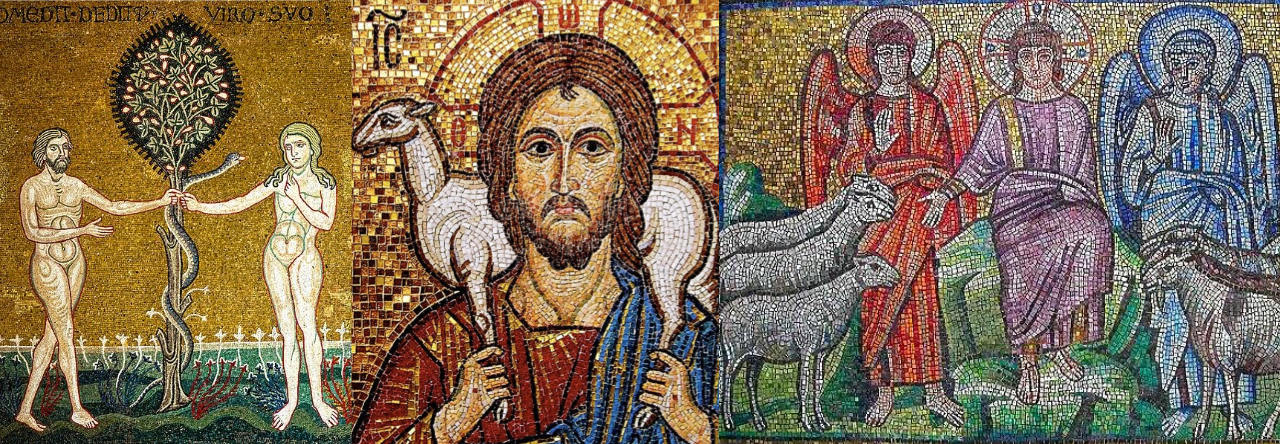
One of the sad things about living in a secular nation is that people understand very little about the real meaning of Christmas. For example, many people take their trees down on 26 December, mistakenly thinking Christmas is “over.” In reality, the Christian celebration of the Nativity of Jesus only begins on Christmas Day!

The commercial world celebrates the season of Advent and deceptively calls it “Christmas.” These weeks, which should mark a spiritual preparation akin to Lent, are instead transformed into a frantic race to accumulate the perfect gifts to show others just how much we value each of them. And, since we love our family and close friends, there is a constant temptation to be far more extravagant in our gift giving than we can afford.

Returning to the season of Christmas, in which we find ourselves this day . . . we discover a brief occasion to focus our spiritual reflections on the singular Christmas miracle, the Incarnation. God becoming a human being. The Word through whom all things were created, becoming a mortal like the sons of Adam and daughters of Eve fashioned in his own likeness.

Christmas is, indeed, a glorious season.

C.S. Lewis had many insights into the Incarnation miracle. It is most certainly worthy of our serious attention. If it did not actually happen, Jesus should be dismissed altogether, for he claimed to be one with our heavenly Father. However, as Lewis declared in Miracles, “If the thing happened, it was the central event in the history of the Earth.”

One of the great literary treasures of the world is a precious book written before the year Anno Domini 318. Athanasius of Alexandria wrote a treatise called “On the Incarnation,” which makes great reading and is readily available online. A fairly modern translation was written by Sister Penelope Lawson, an Anglican nun.

Sister Penelope prevailed upon C.S. Lewis to write an introduction to her translation, in which he said, “This is a good translation of a very great book.” The full volume, complete with Lewis’ outstanding preface, is available. Here is just one of his gems:

Every age has its own outlook. It is specially good at seeing certain truths and specially liable to make certain mistakes. We all, therefore, need the books that will correct the characteristic mistakes of our own period. And that means the old books. All contemporary writers share to some extent the contemporary outlook—even those, like myself, who seem most opposed to it. Nothing strikes me more when I read the controversies of past ages than the fact that both sides were usually assuming without question a good deal which we should now absolutely deny. They thought that they were as completely opposed as two sides could be, but in fact they were all the time secretly united—united with each other and against earlier and later ages—by a great mass of common assumptions.

Still, as wonderful as Lewis’ introductory comments are, the greatest treasures here are the bishop’s teachings about Jesus. To whet your appetite, taste the following wisdom from Athanasius’ own introduction to his work:

You must understand why it is that the Word of the Father, so great and so high, has been made manifest in bodily form. He has not assumed a body as proper to His own nature, far from it, for as the Word He is without body. He has been manifested in a human body for this reason only, out of the love and goodness of His Father, for the salvation of us men. We will begin, then, with the creation of the world and with God its Maker, for the first fact that you must grasp is this: the renewal of creation has been wrought by the Self-same Word Who made it in the beginning. There is thus no inconsistency between creation and salvation for the One Father has employed the same Agent for both works, effecting the salvation of the world through the same Word Who made it in the beginning.

You can read the entire work at this site. Have a blessed Christmas season!

Knowing Our ABCs

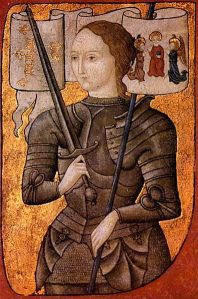
Most readers are familiar with the amazing story of Jeanne D’ Arc (Joan of Arc). She was a French peasant who received visions which proved accurate. She foresaw victory for a humbled nation which had not experienced a major military victory for an entire generation.

Jeanne led the army of the Dauphin (the heir to France’s throne who would reign as Charles VII) to unimaginable victories. She was seriously wounded but inspired her troops with her swift return to battle. She counseled, and prayed for mercy, but recognized England could only be repulsed from French shores by force.

Tragically, she was captured and the English, following a sham trial, judged her guilty of heresy. Jeanne was only nineteen when she perished in flames in an English blaze. Just twenty-five years later, a special court convened by the Pope found her “not guilty” of the crime, and proceeded to declare her a martyr. She was canonized in 1920, nearly five centuries after her brief but brilliant life.

Recently, while reading more about her life I was reminded of something startling she said during her first “inquisition.” When she originally presented herself to the Dauphin, no one could believe a modest young farm girl could be France’s rescuer. A commission of inquiry, comprised of a number of senior clergy, offered the Dauphin a “favorable presumption” that she might, indeed, have divine sanction.

During that “trial,” she was vigorously questioned. The following account comes from Medieval History by Israel Smith Clare.

It is very interesting to see how she evaded the difficulties, overcame the objections, and quietly set aside the learned cavils of the doctors by the simplicity and directness of her replies. They first asked her what signs she could show them to prove her mission. She answered: “I have not come to Poitiers to show a sign. Give me some men-at-arms and lead me to Orleans, and I will then show you signs. The sign I am to give is to raise the siege of Orleans.” One of the [theological] doctors responded thus: “But if God wished to deliver the city he could do it without soldiers.” Jeanne replied: “The soldiers will fight, and God will give them the victory.” Brother Seguin of Limousin asked her, in his provincial dialect, in what idiom her angels spoke. She answered: “In a better idiom than yours.” Said he, somewhat angrily: “Do you believe in God?” Jeanne replied: “I have more faith in God than you have.” The sharp man was thus silenced.

Still the doctors proceeded with their examinations, asking repeated questions and suggesting many learned difficulties. Said Jeanne: “Why do you ask me all these things? I do not know even my A, B, C; but I have come, by God’s command, to raise the siege of Orleans and crown the king.” Having nothing more to say, the doctors finally decided in the maiden’s favor, to which they were somewhat influenced by the great reverence which she inspired among the people of Poitiers by her holiness and piety . . .

Jeanne’s final comment which stands out. The fact that she was illiterate was, to her, no disgrace. She was confident God had chosen her to accomplish the historic events which surely followed.

We live in an era where nearly all adults in the industrialized world are literate. Even in less privileged lands, literacy rates hover around fifty percent.

We—especially those of us who love words and write—tend to look down on those who are not as eloquent as we consider ourselves to be. A woman like Jeanne reminds us that one need not be educated to be truly eloquent. She put the ecclesiastical patricians in their proper place. And rubbed their proverbial noses in it, when she emphasized her illiteracy. Devout, courageous, humble . . . and sarcastic toward condescending clerics—I’m eager to one day meet her!

While knowing one’s ABCs bears little correlation to personal virtue or merit, literacy is essentially a good thing. How impoverished our lives would be if books were sealed to us and we could not be transported to novel places and new epiphanies in their pages.

C.S. Lewis shared this awareness that illiteracy was something that could bar some from experiencing life’s most important treasures. In The Pilgrim’s Regress, he draws a wonderful picture of the relationship between the image and the word. In this allegory, the Landlord represents God.

“. . . The Landlord has circulated other things besides the Rules. What use are Rules to people who cannot read?”

“But nearly everyone can.”

“No one is born able to read: so that the starting point for all of us must be a picture and not the Rules. And there are more than you suppose who are illiterate all their lives, or who, at the best, never learn to read well.”

“And for those people the pictures are the right thing?”

“I would not quite say that. The pictures alone are dangerous, and the Rules alone are dangerous. That is why the best thing of all is to find Mother Kirk at the beginning, and to live from infancy with a third thing which is neither the Rules nor the pictures and which was brought into the country by the Landlord’s Son. That, I say, is the best: never to have known the quarrel between the Rules and the pictures. But it very rarely happens. The Enemy’s agents are everywhere at work, spreading illiteracy in one district and blinding men to the pictures in another. . . . As often as men become Pagans again, the Landlord again sends them pictures and stirs up sweet desire and so leads them back to Mother Kirk even as he led the actual Pagans long ago. There is, indeed, no other way.”

“. . . The Landlord succeeded in getting a lot of
messages through.”

“. . . These pictures woke desire.”

“. . . And then the Pagans made mistakes. They would keep on trying to get the same picture again: and if it didn’t come, they would make copies of it for themselves. Or even if it did come they would try to get out of it not desire but satisfaction.”

Elsewhere, in the essay “Some Thoughts” in God in the Dock, Lewis expressly (and correctly) declares literacy itself as one of the things for which Europe should be grateful to the Church.

[One looking at] Christian activities which are, in a sense directed toward this present world . . . would find that this religion had, as a mere matter of historical fact, been the agent which preserved such secular civilisation as survived the fall of the Roman Empire; that to it Europe owes the salvation, in those perilous ages, of civilised agriculture, architecture, laws, and literacy itself. He would find that this same religion has always been healing the sick and caring for the poor; that it has, more than any other, blessed marriage; and that arts and philosophy tend to flourish in its neighbourhood.

Avoiding Fantasy Clichés

We’re all familiar with that classic paradigm of suspenseful introductions: “It was a dark and stormy night.” While this is not intrinsically poor writing, it has been parroted and ridiculed for so long as a lightweight cliché, that the author’s name has become a byword for writing “purple prose.”

In the same way, there are certain plotlines or story devices that are overused, particularly in genre literature. For example, J.R.R. Tolkien’s genius in creating Middle Earth cannot be exaggerated. Yet, since his epic, dwarves, elves and orcs innumerable have been written about in chronicles ad nauseum by lesser poets. Many of Tolkien’s inventions seem rather tired when repeated by contemporary writers for the hundredth time. (Hundred thousandth time, if you count fan fiction.)

This literary dilemma has led to the creation of “The Fantasy Novelist’s Exam,” designed to be taken by aspiring authors before submitting their manuscripts for publication. (The link for the exam will be found below.)

The purpose of the test is to determine how derivative your storytelling is. If you use too many of the listed elements, you are in danger of composing a parody rather than a masterpiece. Some of the questions posed in the exam are astute, many are glib, and most are humorous. Here’s a sampling, with my responses (speculative, of course, since I haven’t written any fantasy proper).

Is your main character the heir to the throne but doesn’t know it?

How about an anonymous member of minor nobility?

Do inns in your book exist solely so your main characters can have brawl?

I never visit bars, but isn’t hosting altercations a primary purpose of all drinking establishments?

Do you think you know how feudalism worked but really don’t?

Ah, a conundrum. If I know I don’t really know . . .

Do any of your female characters exist solely to be captured and rescued?

You mean they have another role they can perform? (Wait, I’m just joking!)

Do you think that “mead” is just a fancy name for “beer?”

My Viking ancestors would never forgive me if I did!

Do you think horses can gallop all day long without rest?

I wasn’t raised on a ranch, but I’m not that stupid.

Is this the first book in a planned trilogy?

Whoops.

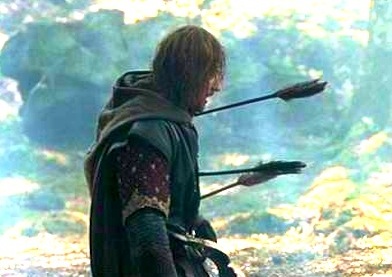
As you see, the questions are fun to read, but there’s one that bothered me a bit. Well, not the question itself. It’s innocent enough. But it alludes to a particular scene in The Lord of the Rings films which I find stunning—in the original sense of the word. It strikes me viscerally, almost leaving me breathless.

Do you really think it frequently takes more than one arrow in the chest to kill a man?

Generally, no . . . but if that hero is Boromir, most certainly!

The Death of Boromir

One of the most moving scenes in The Lord of the Rings involves the death of Boromir as he sacrifices his life in a futile battle to allow the hobbits time to escape the Uruk-hai. It’s impact is magnified by the fact that it immediately follows Boromir’s near-betrayal, under the corrupting influence of the Ring.

The irony is that this spectacular scene is not described in detail in Tolkien’s book. It is a tribute to director Peter Jackson’s cinematic brilliance. This is the original telling:

Even as [Aragorn] gazed his quick ears caught sounds in the woodlands below, on the west side of the River. He stiffened. There were cries, and among them, to his horror, he could distinguish the harsh voices of Orcs. Then suddenly with a deep-throated call a great horn blew, and the blasts of it smote the hills and echoed in the hollows, rising in a mighty shout above the roaring of the falls.

“The horn of Boromir!” he cried. “He is in need!” He sprang down the steps and away, leaping down the path. “Alas! An ill fate is on me this day, and all that I do goes amiss. Where is Sam?”

As he ran the cries came louder, but fainter now and desperately the horn was blowing. Fierce and shrill rose the yells of the Orcs, and suddenly the horn-calls ceased. Aragorn raced down the last slope, but before he could reach the hill’s foot, the sounds died away; and as he turned to the left and ran towards them they retreated, until at last he could hear them no more. Drawing his bright sword and crying Elendil! Elendil! he crashed through the trees.

A mile, maybe, from Parth Galen in a little glade not far from the lake he found Boromir. He was sitting with his back to a great tree, as if he was resting. But Aragorn saw that he was pierced with many black-feathered arrows; his sword was still in his hand, but it was broken near the hilt; his horn cloven in two was at his side. Many Orcs lay slain, piled all about him and at his feet.

Aragorn knelt beside him. Boromir opened his eyes and strove to speak. At last slow words came. “I tried to take the Ring from Frodo” he said. “I am sorry. I have paid.” His glance strayed to his fallen enemies; twenty at least lay there. “They have gone: the Halflings: the Orcs have taken them. I think they are not dead. Orcs bound them.” He paused and his eyes closed wearily. After a moment he spoke again. “Farewell, Aragorn! Go to Minas Tirith and save my people! I have failed.”

“No!” said Aragorn, taking his hand and kissing his brow. “You have conquered. Few have gained such a victory. Be at peace! Minas Tirith shall not fall!” Boromir smiled.

“Which way did they go? Was Frodo there?” said Aragorn.

But Boromir did not speak again.

“Alas!” said Aragorn. “Thus passes the heir of Denethor, Lord of the Tower of Guard! This is a bitter end. Now the Company is all in ruin. It is I that have failed. Vain was Gandalf’s trust in me. What shall I do now? Boromir has laid it on me to go to Minas Tirith, and my heart desires it; but where are the Ring and the Bearer? How shall I find them and save the Quest from disaster?”

He knelt for a while, bent with weeping, still clasping Boromir’s hand. So it was that Legolas and Gimli found him. (Lord of the Rings, Book III Chapter 1).

So, we understand that while a single arrow might slay a common warrior, it could well take a quiver full to lay low a champion such as this.

___

If you would like to review “The Fantasy Novelist’s Exam,” simply follow this link.