

Interplanetary Life

death valley stars

How many galaxies exist out there? How many stars? How many planets? Billions upon billions, apparently.

Of all of those myriad worlds, how many boast life?

C.S. Lewis pondered that subject in an essay entitled “Religion and Rocketry.” He said that either result—an absence of life, or an abundance of living creatures throughout the cosmos—can be used by atheists to deny the existence of our Creator.

In my time I have heard two quite different arguments against my religion put forward in the name of science. When I was a youngster, people used to say that the universe was not only not friendly to life but positively hostile to it.

Life had appeared on this planet by a millionth chance, as if at one point there had been a breakdown of the elaborate defenses generally enforced against it. We should be rash to assume that such a leak had occurred more than once. Probably life was a purely terrestrial abnormality. We were alone in an infinite desert. Which just showed the absurdity of the Christian idea that there was a Creator who was interested in living creatures.

But then came Professor F.B. Hoyle, the Cambridge cosmologist, and in a fortnight or so everyone I met seemed to have decided that the universe was probably quite well provided with habitable globes and with livestock to inhabit them. Which just showed (equally well) the absurdity of Christianity with its parochial idea that Man could be important to God.

Lewis, brilliant and honest, then predicts the future. Believers and cynics alike, he says, will seek to interpret all new data in a fashion that proves their own, preexisting beliefs.

This is a warning of what we may expect if we ever do discover animal life (vegetable does not matter) on another planet. Each new discovery, even every new theory, is held at first to have the most wide-reaching theological and philosophical consequences.

It is seized by unbelievers as the basis for a new attack on Christianity; it is often, and more embarrassingly, seized by injudicious believers as the basis for a new defence.

Fascinating as these comments are, they merely represent Lewis’ introduction to the subject. The heart of his concern is this—what would it mean if we should one day encounter alien beings created by God on a distant world?

In a moment I’ll share with you one of the most provocative thoughts Lewis expresses in this essay, but first take a moment to watch this amazing reminder of the vastness of our universe and the power of its Creator.

A video presentation like this can leave us feeling rather small, lost in the abyss of an immeasurable vastness. Or, it can inspire us. It can baptize us with an increased appreciation for the majesty of the One who loved each of us so profoundly that he sent his only begotten Son into the world to redeem us from destruction. I hope your reaction is the latter.

I promised another fascinating observation from Lewis, and here it is. He poses the question of precisely what might transpire if humanity encounters another sentient race. His Christian interpretation may shock some readers, but I believe he is right.

It sets one dreaming—to interchange thoughts with beings whose thinking had an organic background wholly different from ours (other senses, other appetites), to be unenviously humbled by intellects possibly superior to our own yet able for that very reason to descend to our level, to descend lovingly ourselves if we met innocent and childlike creatures who could never be as strong or as clever as we, to exchange with the inhabitants of other worlds that especially keen and rich affection which exists between unlikes; it is a glorious dream.

But make no mistake. It is a dream. We are fallen. We know what our race does to strangers. Man destroys or enslaves every species he can. Civilized man murders, enslaves, cheats, and corrupts savage man. Even inanimate nature he turns into dust bowls and slag-heaps. There are individuals who don’t. But they are not the sort who are likely to be our pioneers in space.

Our ambassador to new worlds will be the needy and greedy adventurer or the ruthless technical expert. They will do as their kind has always done. What that will be if they meet things weaker than themselves, the black man and the red man can tell. If they meet things stronger, they will be, very properly, destroyed.

Lewis continues, addressing related themes in this amazing work that seems more prescient each year. He next compares our encounters with fallen, and unfallen races. I highly commend the essay, which appears in The World’s Last Night and Other Essays.

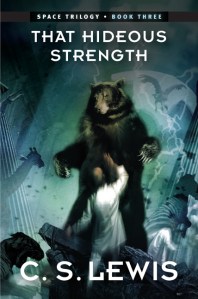
If you prefer a fictional consideration of these same topics, I encourage you to read C.S. Lewis’ Cosmic Trilogy (Out of the Silent Planet, Perelandra, and That Hideous Strength).

_____

Appreciation goes to a retired USAF chaplain colleague of mine, Chuck McGathy, for bringing this Hubble video to my attention.
Autistic Considerations

Bill & Barbara ChristopherMost of us have a friend, loved one, or acquaintance affected by autism. I’m not sure if this would have been accurate a generation ago.

And I’m not merely referring to the lack of proper diagnosis of the problem. There are numerous reports that its frequency is increasing.

Autism is not necessarily debilitating. In minor cases it’s barely noticeable. Like many problems, its severity is manifested across a wide spectrum.

I have autism on my mind now, as the new school year approaches and my wife sets up her special education classroom. She’s excited about the return of her precious kids. It’s wonderful how so many of them make amazing process both in academics and social abilities.

The return of school, however, is not the primary reason for my current thoughts. I’m writing an article I hope to submit to an Autism magazine, inspired by a recent interview I conducted.

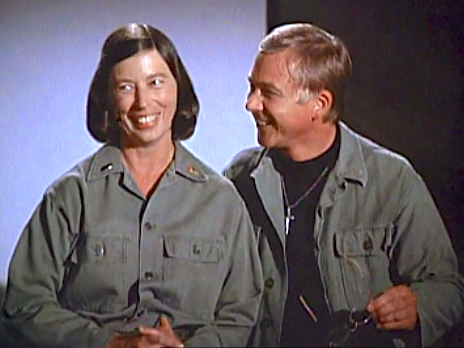
I was privileged to speak at length with the father of a severely autistic son who will be known to many readers of Mere Inkling. William Christopher, who played Father Mulcahy on M*A*S*H, has been a prominent spokesman for autism concerns for many years. (A link to the article appears below.)

Along with his wife Barbara, Christopher wrote a book entitled Mixed Blessings. It recounted their early struggles providing Ned with everything he needed to make his life as full as it could possibly be. Due to their diligence and deep love for their son, Ned continues to enjoy his active life today.

They embody the noble type of earnest love C.S. Lewis describes in The Four Loves. There he says that true love is gift-love, not seeking increased dependence on itself, but liberating the beloved to become as independent as they possibly can.

The maternal instinct . . . is a Gift-love, but one that needs to give; therefore needs to be needed. But the proper aim of giving is to put the recipient in a state where he no longer needs our gift. We feed children in order that they may soon be able to feed themselves; we teach them in order that they may soon not need our teaching.

Thus a heavy task is laid upon this Gift-love. It must work towards its own abdication. We must aim at making ourselves superfluous. The hour when we can say “They need me no longer” should be our reward. But the instinct, simply in its own nature, has no power to fulfil this law.

The instinct desires the good of its object, but not simply; only the good it can itself give. A much higher love—a love which desires the good of the object as such, from whatever source that good comes—must step in and help or tame the instinct before it can make the abdication.

This despite the counsel of one early specialist who advised them that since Ned was adopted they should just take him and trade him in for a child who wasn’t defective. Yes, someone really said that to them.

If I end up publishing the article, I’ll mention it again for those who might be interested in reading it. In the meantime, the extensive interview appears in the current issue of a journal I edit for military chaplains, called Curtana: Sword of Mercy.

When we look at a list of autistic traits, it’s normal to recognize some of them in ourselves. That shouldn’t surprise us, since most of these traits are completely “normal” in various degrees.

It is a commonplace practice to perform posthumous diagnoses of well known figures, based upon detailed descriptions of their behaviors. In that vein, I found online lists that included the following personages as possibly autistic: Thomas Jefferson, Albert Einstein, James Joyce, Stanley Kubrick, Lewis Carroll, and Hans Christian Andersen.

Oh, and there’s another name I discovered in one article. The writer suggested that C.S. Lewis’ social preferences suggest that he too suffered the mild version of autism, typically called “Asperger’s Syndrome.”

I don’t intend to discuss that now, but I wanted to share a fascinating concept I encountered while researching for this column. In Autism, Art and Children: The Stories We Draw, I read the following about imaginary worlds like Narnia and Middle Earth:

It is this element of world building that forms a bridge between the impersonal character of research and clinical observations and the individual young artists with autism in whom our interest especially lies.

Sacks (1995) points out the importance of fantasy worlds to some individuals with autism . . . this predilection for alternate worlds is frequently encountered in many high-functioning people with autism . . . such high-functioning individuals with autism “describe a great fondness for, almost an addiction to, alternative worlds, imaginary worlds such as those of C.S. Lewis and Tolkien, or worlds they imagine themselves.”

Illustrating such world-building activities by an entire family (two parents and their son), all of whom have autism, Sacks remarks, “They have spent years constructing an imaginary world with its own landscapes and geography (endlessly mapped and drawn), its own languages, currency, laws, and customs—a world in which fantasy and rigidity play equal parts.”

This creative activity is of particular interest, for many of the children we have met have individual fantasies in alternative worlds that play major roles in their lives and activities.

I find this analysis captivating. I am utterly fascinated by the construction of imaginary settings. That’s one reason I love the alternate history genre, as it combines the familiar with elements that have transformed them into something inherently different.

I must confess I’ve occupied many an idle hour imaging new worlds. I’ve even invested a fair amount of time in world-building myself—for an alternative history for which I still compile notes and ideas, despite the fact it’s unlikely to ever be written. I don’t attribute this to autism, but it serves as another example of just how much all of us have in common.

The fact is none of us is perfectly healthy—physically, emotionally, psychologically, or spiritually. We are who we are. We can strive to improve many aspects of our lives (and the wellbeing of others), but attaining perfection is impossible in this life.

In the meantime, we can be grateful for wonderful people like Barbara and Bill Christopher, who have courageously shared their own journey to aid us in ours. Their willingness to forsake their rightful shield of privacy and step out into the glare of the public—for our benefit—reveals both their love for their children and their generosity towards strangers.

_____

The wonderful photograph at the top of the column features Bill and Barbara Christopher. Barbara had a guest role as a nurse in “Dear Mildred,” during which the two of them sang a duet.

The interview with Bill Christopher can be downloaded for free in the current issue of Curtana: Sword of Mercy, which is available here.

Give Yourself a Holiday Gift

space trilogyChristmas is the season of giving, and as a grandfather I can truly say it’s more wonderful to give than to receive. Those little smiles and squeals of joy are precious indeed.

Sadly, many children (and adults) will be forgotten this season. Worthwhile programs to reach out to the overlooked are sponsored by countless churches and communities. One of the most highly regarded, Angel Tree, provides gifts to the children of men and women who are incarcerated. These innocent children are already suffering due to the poor choices of adults; God alone knows how special the most modest Christmas gift might be to these little ones.

That is one end of the spectrum—those who have little. Equally sadly, many children (and adults) will overindulge this season. They will bury themselves under piles of soon-to-be-forgotten presents. Most will also bury themselves further under mounds of debt.

C.S. Lewis colorfully captured this quandary in “Xmas and Christmas.”

And they buy as gifts for one another such things as no man ever bought for himself. For the sellers, understanding the custom, put forth all kinds of trumpery, and whatever, being useless and ridiculous, they have been unable to sell throughout the year they now sell as an Exmas gift. And though the Niatirbians [British] profess themselves to lack sufficient necessary things, such as metal, leather, wood and paper, yet an incredible quantity of these things is wasted every year, being made into the gifts.

Striving for balance in gift exchanging is important. For years now my father has said it’s unnecessary to give him Christmas or birthday gifts. It’s true. He’s able to purchase whatever he wants, and even the most thoughtful gifts are either redundant or undesired. He’s grateful, of course, but only out of courtesy. Last month, for his birthday, I took him up on his words. Instead of spending money on a gift, we made a special donation to the Gideons in his honor. He was delighted. I’ve known others who made the same request, that gifts intended for them be diverted to the benefit of others. It’s a grand custom.

After the homily on selflessness above, it may sound strange to hear that there is a Christmas gift I would like to suggest you consider giving to yourself. Actually, I’d advise a friend or loved one to purchase it for you, but since you probably haven’t encouraged them to subscribe to Mere Inkling (yet), I must satisfy myself with advising you to check out this special offer.

During the holiday season, HarperOne is running a special on C.S. Lewis’ Cosmic Trilogy (often referred to as the Space Trilogy). You can get them in various digital editions for only $1.99 each. Quite a bargain. And it leaves you plenty of resources to practice the truth that it’s better to give than receive.

Out of the Silent Planet, the first of these science fiction works, was the first Lewis book I read. A friend in a college fellowship group suggested it, and it introduced me to one of the greatest mentors a person could ever have! The books are available through this link: Cosmic Trilogy.

Oh, and if the Cosmic Trilogy is already in your library, or not your cup of tea, they are also discounting an illustrated edition of The Screwtape Letters.

The Trilogy is suitable for Christian and secular readers alike. It’s not overtly “religious.” In fact, in his C.S. Lewis: Companion and Guide, Walter Hooper says many of the intial reviewers of the title were rather confused about its intended meaning. (This despite offering positive reviews.) One person who did comprehend its significance was an Anglican theologian named Eric Mascall. In a 1939 issue of Theology he wrote:

This is an altogether satisfactory story, in which fiction and theology are so skillfully blended that the non-Christian will not realize that he is being instructed until it is too late. It is excellent propaganda and first-rate entertainment.

I’m certain he meant “propaganda” in the most positive, pre-war sense. Actually, one does not need to be a follower of Jesus of Nazareth to appreciate the series. If you’ve never read it before—and you don’t have a 100% aversion to the science fiction genre—the two dollar price means you’ll rarely have a better opportunity.