New Life Continues to Blossom

After the seriousness of my last couple of posts, I hoped to come up with an “uplifting” theme for my latest reflection. And, lo and behold, God provided a perfect picture.

My photograph (through a glass door) doesn’t do justice to his living portrait of peace. Still, I thought some of you who recalled my initial post on the brand new fawns that pranced past my office months ago would enjoy seeing how they have grown.

Mom has them munching on the overgrown grass and clover in our back yard. (My wife says we can alternate mowing the yard, one-half each week. I argue that the deer may want to bring along friends and we wouldn’t want them disappointed by a mower-stunted banquet.)

When I see such peaceful creatures, I long for the new heaven and earth when the lion shall like down with the lamb. To see the harmony God originally designed—to touch and to taste it—is one of the reasons that Narnia resonates to strongly with many of our souls.

C.S. Lewis was a lover of nature. Nature walks were a fundamental part of his life’s regimen. And, Lewis recognized there is a danger in looking to Nature herself for life’s meaning. In The Four Loves he wrote “Nature cannot satisfy the desires she arouses nor answer theological questions nor sanctify us.”

In the same essay he elaborates on how the bliss communicated by Nature is only fully experienced by those who look beyond it, to its divine Source.

Say your prayers in a garden early, ignoring steadfastly the dew, the birds and the flowers, and you will come away overwhelmed by its freshness and joy; go there in order to be overwhelmed and, after a certain age, nine times out of ten nothing will happen to you. (The Four Loves).

I looked out the window today, grateful to God for the majesty of the mountains that grace the horizon. With that prayerful, thankful and receptive heart, I found my expectations in that moment far exceeded . . . swept aside as a trifle in a maelstrom . . . as I gazed upon the purity and peace of our three precious visitors.

On Death’s Specter

Death is an unpleasant subject. And the knowledge that each of us is destined to face our own, has the potential to overshadow the countless joys this life offers.

Virtually everyone reading this has lost a loved one to death . . . and some reading this may have been informed by doctors that their own days may be limited. If you find yourself counting down in years, months, or weeks, may God strengthen you and pour upon you an overflowing portion of his divine peace. The Scriptures refer to God’s peace in circumstances of great personal trial as a “peace which passes understanding.” And that is precisely what I pray he provides for you.

Those of us who are Christians find ourselves in a bit of a tension. We believe in Jesus’ resurrection, and his promise to raise us to new life as well. So, in that sense death is a defeated “enemy.” It no longer has the final word. In fact, passing through the portal of death actually allows us to enter into the presence of the Lord! Nevertheless, we dread the prospect of dying. Too seldom do people pass peacefully in their sleep.

C.S. Lewis experienced an illness which brought him near to death. Yet he recovered . . . with mixed feelings. Five weeks before his death he wrote to his friend Arthur Greeves:

Tho’ I am by no means unhappy I can’t help feeling it was rather a pity I did revive in July. I mean, having been glided so painlessly up to the Gate it seems hard to have it shut in one’s face and know that the whole process must some day be gone thro’ again, and perhaps far less pleasantly! Poor Lazarus! But God knows best.

The reason we should no longer fear death is because it has no power over those whose sins have been borne by the Messiah. Those who have not experienced this grace may rightfully fear the day of accounting that awaits humanity. Jesus invites all people—even the most sinful and vile people we can imagine—to yield to him and trade their inheritance of death for his righteousness and the gift of eternal life.

That means there is nothing that you have done that is so evil God cannot forgive it. Simply ask him to.

One way this experience of salvation is described in the Bible is as a resurrection. Jesus said to one of his disciples, “I am the resurrection and the life ‘Whoever believes in me, though he die, yet shall he live, and everyone who lives and believes in me shall never die.’” (John 11:25). Jesus is distinguishing between the two deaths. Physical, where this finite body fails . . . and spiritual death, where those who have ignored God’s mercy spend eternity separated from it.

Another aspect of this transformation is found in the fact that through conversion we die to the power of sin over us, and participate (even in this physical life) in Christ’s resurrected life. (Baptism is a “sign” of this, as the immersion is “burial” and rising from the waters is rebirth.) As Paul of Tarsus assures believers: “For if we live, we live to the Lord, and if we die, we die to the Lord. So then, whether we live or whether we die, we are the Lord’s.” (Romans 14:8).

C.S. Lewis bluntly put it this way: “Die before you die. There is no chance after that.” (Till We Have Faces).

Which brings us to the peculiar image above. It comes from some classical text and whenever I’ve encountered it over the years, I’ve always considered it rather odd that the illustrator decided to portray this skeleton in the posture of prayer. It’s actually a bit disconcerting, since death and decay have nothing to do with our Lord who is the way, the truth and the life.

If we haven’t said our prayers in this mortal life, as Lewis reminds us, we will lack the voice and opportunity to do so in the next.

Besides, knowing Christ is not something with benefits only in the next life. Walking through life in his light makes our days here all the more pleasant and joyful. As I look back on my own life I recognize numerous ways in which his hand directed my path. Had I lived for my own selfish appetites the person I would be today would little resemble the Christian me. Thank God that he delivered me from becoming that man.

The Single Source of All Good

“There is but one good; that is God. Everything else is good when it looks to Him and bad when it turns from Him.” (C.S. Lewis, The Great Divorce).

I believe this thesis. I don’t expect agnostics and humanists to, though. Still, I believe the statement is true, even for them. Consider my explanation below.

What Lewis is saying is that God is the Source of all good. In the Scriptures, in fact, some of the attributes of God can be viewed as so intimately a part of his divine nature that the particular virtue is, in its purity, a facet of the Lord’s identity. Thus God the Father and God the Son are said to truly be: Love, Light, and Truth.

Christians are inclined to attribute any good fruit we see as coming from the Source of good. Thus, when secularists do something inarguably good or altruistic, we have no problem attributing its inspiration to God. Yes, they may see through the glass dimly, and may for example recognize only the beauty of nature or the magnificence of the cosmos. But these are God’s handiwork, and so we return to where we began.

It is actually the second portion of this quotation that most intrigues me. “Everything else is . . . bad when it turns from Him.”

I suppose I can illustrate this truth more effectively than I can explain it.

Patriotism is a good thing. It results in cohesive communities where individuals are willing to make sacrifices on behalf of their fellow citizens. Focus is on the common welfare. However, run amuck, patriotism can become a deformed thing. The Third Reich united and inspired a weak and demoralized nation, but at a bloody price.

Love of Family is a good thing. Most of us experience the joy of this fact. However, carried to obsessive bounds, it can result in horrendous acts. Not a week passes without the news relaying accounts of parents murdering their own children in the face of a divorce, incarceration or some other form of separation. In their depraved minds, the thought of not being together warped into something uglier than death itself.

Human Freedom is a good thing. If that weren’t so, God wouldn’t have created us with free will. It allows human to say “yes” to him and live in a relationship with our Creator as his children rather than as mindless automata. But, apart from God, is there any question that this most wonderful gift becomes a curse? Proof overflows from the pages of our newspapers.

So, Lewis reminds us that the things of this world possess no intrinsic good. When things such as generosity, courage, and creativity are imbued with a divine element, only then do they become capable of being truly good.

The strongest challenge to this belief comes in the notion that even those who do not acknowledge God are capable of doing things we all consider “good.” As I said above, Christians have no problem celebrating selfless acts of their unbelieving neighbors. The reason for this is actually quite simple. Even though secular humanitarian efforts do not look to God, since they are altruistic, they consciously look away from self. In other words, they are not intentionally turning away from God, but, ignorant of his presence, they still transcend selfish or carnal interests. And, insofar as they are free of these sinful considerations, they possess the capacity for actions rightly deemed “good.”

Ultimately I believe this is due to the truth that all women and men are created in the image of our God. Whether we acknowledge it or not, the echoes of that truth resound throughout our being.

Agnostic or Atheist: Does It Matter?

I haven’t forgotten. Well, I have forgotten far too many things in recent years, but I didn’t forget my recent “promise” to address the challenging subject of the distinction between agnosticism and atheism. Last week I wrote: “I suspect that the intimately personal nature of God’s love for us is one of the things that moves some people from agnosticism to atheism.”

It’s not my desire to offend anyone with the discussion which follows. After all, God loves the “lost” just as much as he loves those who have surrendered their lives to him. In fact, there’s an amazing passage that hints at how the rescue of one of those who has “strayed” is even more exciting to the hosts of heaven than the faithfulness of his dedicated disciples. (Check out verses 12-14 in chapter 18 of the Gospel according to Matthew . . . and remember what I have said in the past about how eager any of your Christian acquaintances will be to provide you with a copy of the Bible if you don’t already have one.)

Every soul is precious to God. And yet, many don’t recognize that fact. Many worship false gods (religious and secular). Among those who deny the existence of supernatural deities, there are essentially two camps. Agnostics who (technically) do not deny God’s existence, but merely profess that it is unknowable. Thus they personally remain unpersuaded. Atheists, on the alternative hand, are more adamant about denying God’s existence. Some, in fact, make a living by stridently refuting God himself and all things holy.

Intuitively, most people assume agnostics are not quite as distant from faith as are atheists. After all, agnostics are generally more polite and respectful toward those of us who naively cling to such superstitions . . . right? Atheists, by contrast, tend to ridicule those who would worship a God who laid down his very life, and died a human death.

Take, for example, what is arguably the earliest surviving illustration of Christ’s crucifixion. The illustration above was carved on an ancient plaster wall near Palatine Hill.

It’s a bit difficult to discern, but historical consensus sees the graffito as a pagan insult directed towards a Greek Christian. The scribbled inscription reads: “Alexamenos worships [his] god.” The crucified figure on the cross clearly bears the head of a donkey. The Church Father Tertullian wrote in the second century of slanders alleging Christians followed just such a deity.

Would something like this be likelier to come from the mind of an agnostic, or an atheist?

Agnostics would rarely summon the energy to rail against God like this. However, atheists sometimes feel so imposed upon by God’s children that they lash out with invectives.

So, as I noted above, the gut feeling of most observers would be to say vocal atheists are farther from God than their kindred disbelievers. However—I am convinced that is not the case!

Ironically, it is the tepid individual who lacks any serious conviction who is in greater danger of perishing without seeing God. This is due to the fact that agnostics have, as a rule, come to grips with the fact that there may or may not be a God . . . but they are content to proceed through life without caring much either way. To them the issue is rather trivial, in a sense, since they rarely lose sleep over it.

This is not true of the atheist, who recognizes that the matter is of the utmost importance; that’s why he is not content to simply ignore it. If God truly exists—they comprehend in the core of their being—nothing could be of greater significance.

Agnostics typically have an unreasoned impression that if there is a God, he is probably benevolent, and most likely more concerned with other elements of the universe he created than their small life. They echo the thinking of liberal “Deists” who imagined God as a distant “watchmaker” who set creation in motion and then left it forgotten on the shelf. This Great Watchmaker is not threatening. He isn’t angry at us, because he doesn’t even deign to notice us. He remains oblivious to humanity, just as we presumably live out our lives anonymous to him.

Atheists don’t want to believe in God, because of their overwhelming doubt. Simultaneously, they recognize that the stakes of the gamble are enormous. Eternal, in fact. And they resent God for placing them in this difficult predicament. Why can’t he just make his existence undeniably evident? Faith is the leap they are unwilling to take. But, by the same rational premise, the wise among them realize that in opting against theism, they are actually placing their faith in an equally unprovable tenet. And this has a tendency to make some of them mildly cranky.

Which brings us back to my suspicion that “the intimately personal nature of God’s love for us is one of the things that moves some people from agnosticism to atheism.” You see, when someone deeply ponders the mystery of whether there is a Creator, they understand he would never have created a sentient being with this yearning to cleave to him, without possessing a compassion for them in return.

Agnostics walk about like spiritual zombies, pursuing their various interests. Atheists, though, are tormented by the nagging “fear” that a loving God just may exist. Certainly, they do whatever they can to exorcize the notion, and they publicly celebrate their liberation from ancient and medieval superstitions, but unlike their unaffected agnostic relations, they have recognized the enormity of their choice. Oh to be a blissfully ignorant agnostic, the more thoughtful might muse.

Sadly (from their present perspective), the lot of the atheist is to be closer to God than the agnostic. Atheists may rail against their Maker, but the agnostic’s spiritual indifference causes them to drift farther and farther from the Truth.

The Scriptures offer a parallel to this distinction in the description of one of the early Christian churches. Apparently the believer in Laodicea had grown lackadaisical about their faith and lived lives that differed little from their pagan and agnostic neighbors. The Lord’s judgment of them begins: “I know your works: you are neither cold nor hot. Would that you were either cold or hot! So, because you are lukewarm, and neither hot nor cold, I will spit you out of my mouth.”

Strange, it seems to us, that God might prefer a militant atheistic mindset to an aimless agnostic worldview. But the amazing truth is that, in most cases, atheists are closer to the kingdom of God than their disinterested peers.

In Surprised by Joy, C.S. Lewis describes his own pre-Christian disposition. The grandson of an Anglican priest, he had consciously rejected the faith. Yet, as the possibility of its truth grew more real to him as an adult, he reacted against it. He clearly describes his condition as differing from that of the lukewarm agnostics I’ve described above.

Amiable agnostics will talk cheerfully about “man’s search for God.” To me, as I was then, they might as well have talked about the mouse’s search for the cat.

In the same volume he elaborates on the sentiments I’ve been describing.

I was at this time living, like so many Atheists or Antitheists, in a whirl of contradictions. I maintained that God did not exist. I was also very angry with God for not existing. I was equally angry with Him for creating a world.

So, if you consider yourself “angry with God for not existing,” you may be closer to meeting him than you ever imagined. If you do follow C.S. Lewis’ example, heaven will host a more resounding celebration for you than it does for the ninety-nine who have always remained part of his flock. And, if you’re a dispassionate agnostic who is weakly amused by this thought . . . my sincere prayer is that you, my friend, would become either hot or cold!


How Precious You Are

God loves you.

It doesn’t matter how loveable, or unloveable you are, he loves you.

It doesn’t matter whether you praise his Name or deny his existence, he loves you.

It doesn’t matter whether or not you love him. You can even hate him . . . but he still loves you.

Doesn’t make sense to our fallen human reason, but it’s true. One of the amazing revelations of the Christian Scriptures is that God loves each and every one of the people he has created.

Every human being is unique, and each is precious to God. Whether you feel like it or not . . . whether you feel undeserving or (far more dangerously) you think you are a pretty “good” person . . . you are precious to him.

I find it intriguing how some manmade religions and philosophies consciously downplay the uniqueness of each person. What is clearly evidence of God’s infinite creativity—the glorious diversity of men and women the world over—is seen as something odd. A cosmic fluke to be remedied when all essence returns to the amorphous and undifferentiated “whole.”

The elimination of what makes you and me precisely who we are, seems to be the goal of some of these worldviews. But deep within each of our souls we know that this pursuit is wrong. It’s alien to the core of our existence. Loss of identity is, in a phrase, not that for which we were created. You and I were made for a different purpose. And our distinctive personalities (and even our quirks) in this one-time-in-all-creation combination, are no accident.

In his treatise on why suffering exists, C.S. Lewis offers a powerful glimpse into the singularity of our souls. He argues that Christ’s sacrifice was no generic or blanket wonder. Rather, it was a divinely individualized miracle. Listen to Lewis:

The signature on each soul may be a product of heredity and environment, but that only means that heredity and environment are among the instruments whereby God creates a soul. I am considering not how, but why, He makes each soul unique. If He had no use for all these differences, I do not see why He should have created more souls than one. Be sure that the ins and outs of your individuality are no mystery to Him; and one day they will no longer be a mystery to you. The mould in which a key is made would be a strange thing, if you had never seen a key: and the key itself a strange thing if you had never seen a lock. Your soul has a curious shape because it is a hollow made to fit a particular swelling in the infinite contours of the Divine substance, or a key to unlock one of the doors in the house with many mansions.

For it is not humanity in the abstract that is to be saved, but you—you, the individual reader, John Stubbs or Janet Smith. Blessed and fortunate creature, your eyes shall behold Him and not another’s. All that you are, sins apart, is destined, if you will let God have His good way, to utter satisfaction. The Brocken spectre ‘looked to every man like his first love’, because she was a cheat. But God will look to every soul like its first love because He is its first love. Your place in heaven will seem to be made for you and you alone, because you were made for it—made for it stitch by stitch as a glove is made for a hand. (C.S. Lewis, The Problem of Pain.)

I suspect that the intimately personal nature of God’s love for us is one of the things that moves some people from agnosticism to atheism. And I think I just may address that distinction in my next post.

Christians may cease reading here.

A personal and sincere note to any unbelievers reading this column. I’m not writing this to offend you, or to push any of the buttons that may be holdovers from your days in restrictive or destructive religious settings.

If you’ve never believed, I encourage you to tune out the voices (on both sides of the issue). Go directly to the primary account(s) of Jesus’ life and read them. (There are four “Gospel” accounts of his ministry, but I encourage you to first read the Gospel according to Saint John.) Any of your Christian friends would be eager to offer you a copy of the Bible for no cost, but it’s also available for free download at various sites. For example, here you can download an entire Bible in English Standard Version (ESV) for free.

If you once believed, but have laid your faith aside, I don’t want to offer guilt. Instead, listen to this promise of grace. Just as the father of the Prodigal Son was always awaiting the return of his child, the same joyous welcome home awaits you. If ever you desire to return home, know with certainty that he’ll welcome you again, not as a servant or second class citizen, but as his son or daughter. And you’ll hear the words from that parable proclaimed over you: “It is fitting to celebrate and be glad, for this your brother [or sister] was dead, and is alive; they were lost, and are found.” (Luke 15:32).

Human Transformation

Some of us aren’t really happy with the person we are. We’d like to be better than the man or woman who squanders their life in the pursuit of the trivial . . . while we neglect what is truly important.

Fortunately, when we look to God as he has revealed himself in his only, begotten Son, we are transformed. As we place our trust—our faith—in Jesus the Messiah, what was dying is reborn. Instead of aligning our eternal fate with a decaying world, we are embraced by the Giver of eternal life.

By the grace of God, through the work of his Holy Spirit, we are transformed. This is a lifelong process that doesn’t experience its culmination until we stand in the presence of our Lord. In the meantime, however, we are engaged in the process of “sanctification,” becoming holy (like our God is holy!).

Not only is this a lifelong process, it’s a daily, ongoing progression. C.S. Lewis provides an excellent illustration of the daily aspect of our spiritual growth:

The real problem of the Christian life comes where people do not usually look for it. It comes the very moment you wake up each morning. All your wishes and hopes for the day rush at you like wild animals. And the first job each morning consists simply in shoving them all back; in listening to that other voice, taking that other point of view, letting that other larger, stronger, quieter life come flowing in. And so on, all day. Standing back from all your natural fussings and frettings; coming in out of the wind. We can only do it for moments at first. But from those moments the new sort of life will be spreading through our system: because now we are letting Him work at the right part of us. It is the difference between paint, which is merely laid on the surface, and a dye or stain which soaks right through. (C.S. Lewis, Mere Christianity).

What a wonderful adventure we are on!

May the grace, mercy, peace and glory of God seep deep into your heart, mind and spirit.

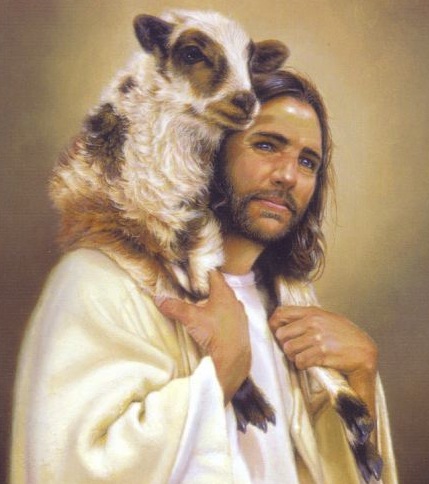
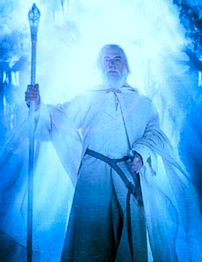
Jesus & Gandalf

Today Christians celebrated our Lord’s Transfiguration. (If you attend a church that doesn’t follow the historic “Church Year,” ask your pastor about it. It can be a healthy and educational spiritual discipline.)

The Transfiguration took place on a mountaintop where God the Father brought Moses and Elijah to speak with Jesus. During this encounter, Jesus and his garments shined with a pure, clear light that dazzled the eyes.

It was quite likely the Transfiguration that inspired J.R.R. Tolkien to include one powerful image in his Lord of the Rings tale. (The Lord of the Rings is often referred to as a trilogy, although it is actually a single intricate novel which consists of six “books” plus appendices.)

In the Middle Earth myth, the heroic Gandalf dies in battle with a champion of evil . . . only to be resurrected with even greater power and focus. In this point, the two events differ, since Jesus’ nature never changed. He was incarnate and born as both God and human being. The Transfiguration merely revealed momentarily a portion of his divine identity which was masked, in a sense, by his human flesh.

The aspect in which the accounts are similar comes in the appearance of the glorified Savior and the resurrected Wizard . . . they exude a holy radiance so powerful it even affects their garb.

Thus, Tolkien’s beloved Gandalf the Grey is transformed into the triumphant Gandalf the White.

The Transfiguration of Jesus was one small piece of evidence that he was who he claimed to be. It wasn’t given to the disciples to persuade them of his divinity; in fact, those who witnessed it were enjoined not to share the miracle with others until much later.

Ultimately, what one believes about Jesus does not come down to adding up his miracles and weighing them against the claims of other faiths. Jesus claimed to be the Son of God, the promised Messiah, and humanity’s Savior. If he wasn’t exactly that, he should be condemned and his memory forgotten. As the brilliant C.S. Lewis wrote:

Christians believe that Jesus Christ is the Son of God because He said so. The other evidence about Him has convinced them that He was neither a lunatic nor a quack. (C.S. Lewis, “The Language of Religion”)

Those familiar with Lewis’ writings may recognize how this quotation echoes others where he discusses his divine trilemma.

The world is full of hypocrites who want to force Jesus into their warped pantheons as a “prophet” or “teacher.” Jesus doesn’t allow himself to be embraced as anything other than who he is—God’s Son. Since he made that claim so clearly, he is either precisely that, or he is a liar. Or, it’s possible as Lewis points out, that he may have been insane. In which case he also falls short of being someone who should be followed.

For those who do not presently know Christ, simply pray in humility that God would open your eyes in a personal epiphany. God desires that no one would remain separated from him. And then, one day we can all look forward to seeing our Lord in the fullness of his glory.