Discerning Your Personality

How has your personality been changing through the years? Over the years I’ve noticed some gentle shifts in my own personality, particularly as it relates to my attitudes toward interacting with others.

C.S. Lewis records an intriguing comment about personalities in his early diary, published now as All My Road Before Me. After WWI, he fulfilled his promise to a friend who perished in the conflict, by providing for the soldier’s mother and young sister. Lewis’ relationship with Janie Moore has been debated, but he referred to her as “his mother,” his birth mother having died when he was young. 

Lewis refers to Mrs. Moore as “D” in the diary, and Maureen, her daughter, would have been a teenager at the time (January of 1923).

At supper the subject of personality arose – I said that it made one giddy to think that oneself might not have been.

Maureen said, “Yes – I was wishing the other day that you had married someone else (to D) and then I thought, Oh, it wouldn’t make any difference to me, I shouldn’t have been there.” This shows me that she thinks more than I had hoped.

The three people seated at that dinner experienced personality changes during the following years. Many of these attitudes and behaviors have been recorded for posterity. 

Some change is natural. Healthy change should be considered “growth.” People who remain rigidly static are the exception. Nevertheless, normal temperament modifications are usually quite gradual. Major alterations usually precipitated by significant emotional events. And, it’s important to recognize these SEMs can be positive – such as the birth of a child – despite our human tendency to focus on those which are traumatic.

So, how does one asess their personality? There are a variety of accessible personality inventories. One of the most accessible identifies sixteen basic personality types, as popularized by Katherine Cook Briggs and Isabel Briggs Myers in the Myers Briggs Type Indicator. Using questionnaires of various length and detail, individuals discover their core personality attributes. 

It is quite common for people using one of these MBTI-based inventories to be truly surprised at the accuracy of the instrument. Many choose to embark on a quest to learn more about themselves – and others. There are resources for using these insights to improve interaction with people of other types, and even to find a compatible type of career.

I recently stumbled across a simple-to-use website that I offer for your consideration. Sixteen Personalities not only aids you in identifying your “type,” it offers a number of additional types of supplemental data – many of them for free. One clearly outlines the strengths and weaknesses of people with your personality. 

Readers will notice I’m careful to refer to the tools used as assessments or inventories, not tests. That’s because the word “test” implies that there are right and wrong answers. The fact is that there are no invalid personality types.

Each combination possesses its own strengths, and its inevitable weaknesses. Often they are two sides of the same coin. For example, the 16 Personalities site includes ten such traits for the Protagonist (ENFJ). Here are two of the examples.

A Strength – Reliable – Few things bother Protagonists more than the prospect of letting down a person or cause that they believe in. People with this personality type can be counted on to see their promises and responsibilities through – even when it’s difficult to do so.

A Weakness – Overly Empathetic – Compassion is among this personality type’s greatest strengths. But Protagonists have a tendency to take on other people’s problems as their own – a habit that can leave them emotionally and physically exhausted.

The Reality of Personality Drift

It isn’t uncommon that over a period of years, personality type (as identified by these sixteen options) can change. This is particularly true when we are near equilibrium between two competing attributes. For example, as a young pastor, I was slightly Extravert. Today, I am modestly Introverted. Some of this is due to being “worn out” by excessive interpersonal interactions. Some, I suspect, is because I’m assessing my preferences more honestly. I really do draw more positive energy from small groups, than crowds.

But pastors, of course, are expected to be people people. So many of us do consciously push ourselves to become more of an Extravert than we truly are. (And many people would be quite surprised to learn how many of the pastors they’ve admired for their personability are actually Introverts.)

In my own situation I have a pair of weak preferences – Introvert over Extravert and Thinking over Feeling – and two quite strong preferences – iNtuitive over Sensing and Judging over Perceiving. Due to the balanced aspect of two characteristics, I possess a sort of blend of four different personalities. And, I could be fairly perceived by others as any of them.
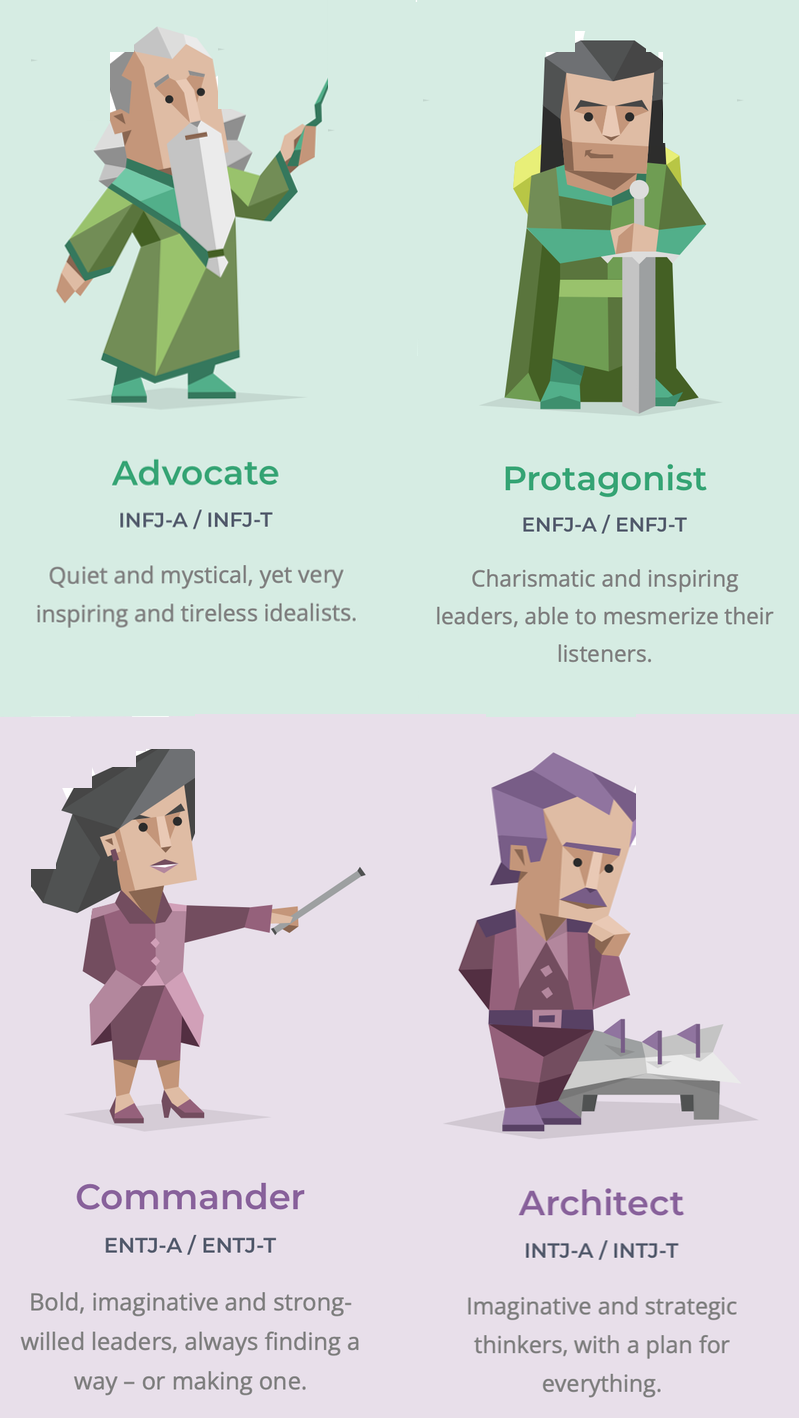
One last element of the 16 Personalities version of the MBTI, is that it includes a measurement of one’s Assertive versus Turbulent nature.

Assertive and turbulent refer to opposing personality traits sometimes added to the Myers-Briggs Type Indicator (MBTI), a personality inventory. An assertive person is more calm, confident, and laid-back, while a turbulent person is more anxious, self-conscious, and perfectionist.

The labels, when used, are appended to the standard four-letter MBTI codes to lend further nuance to the psychological types. 

No one who knows me would be surprised to learn that I peg out as Assertive. One clear evidence is that no one has ever accused me of being a Perfectionist.

Was C.S. Lewis an ESFP?

Seven years ago I wrote about this subject, and I researched the question of which personality C.S. Lewis possessed.

The consensus seemed to be that he was an INTJ. One current discussion concurs with that assessment, although it also makes the subject a bit more complex by including the “Harold Grant cognitive function stack,” something I’ve never studied.

Lewis’ identity as an INTF remains most reasonable to me. Feel free to share your thoughts on the matter.

Remember, a personality inventory is not intended to put you in some sort of restrictive box. If the tool is not helpful to you, just ignore it. And, if you are wary of how such revelations might be used “against” you, share those concerns with any authorities (e.g. educators or employers) who want you to participate in a group process.

[You might dismiss such a concern, but I can personally attest to a situation where a senior military chaplain attempted to twist the MBTI results of a Roman Catholic chaplain to suggest he had “issues.” Suffice it to say it was really the colonel who had psychological problems, not the captain.]

That sad episode was, fortunately, unique in my experience. In any case, it should not prevent someone from personally discovering their personality type. It’s free, only takes a few minutes, and the dividends could well surprise you.

And, if you are curious about what type characterizes a particular breed of dog or cat . . . I think this site was right on in labeling our border collie an ENFJ.

A Song has Ended

lyric christmasSix months of life with someone you love, is too brief. Far too brief.

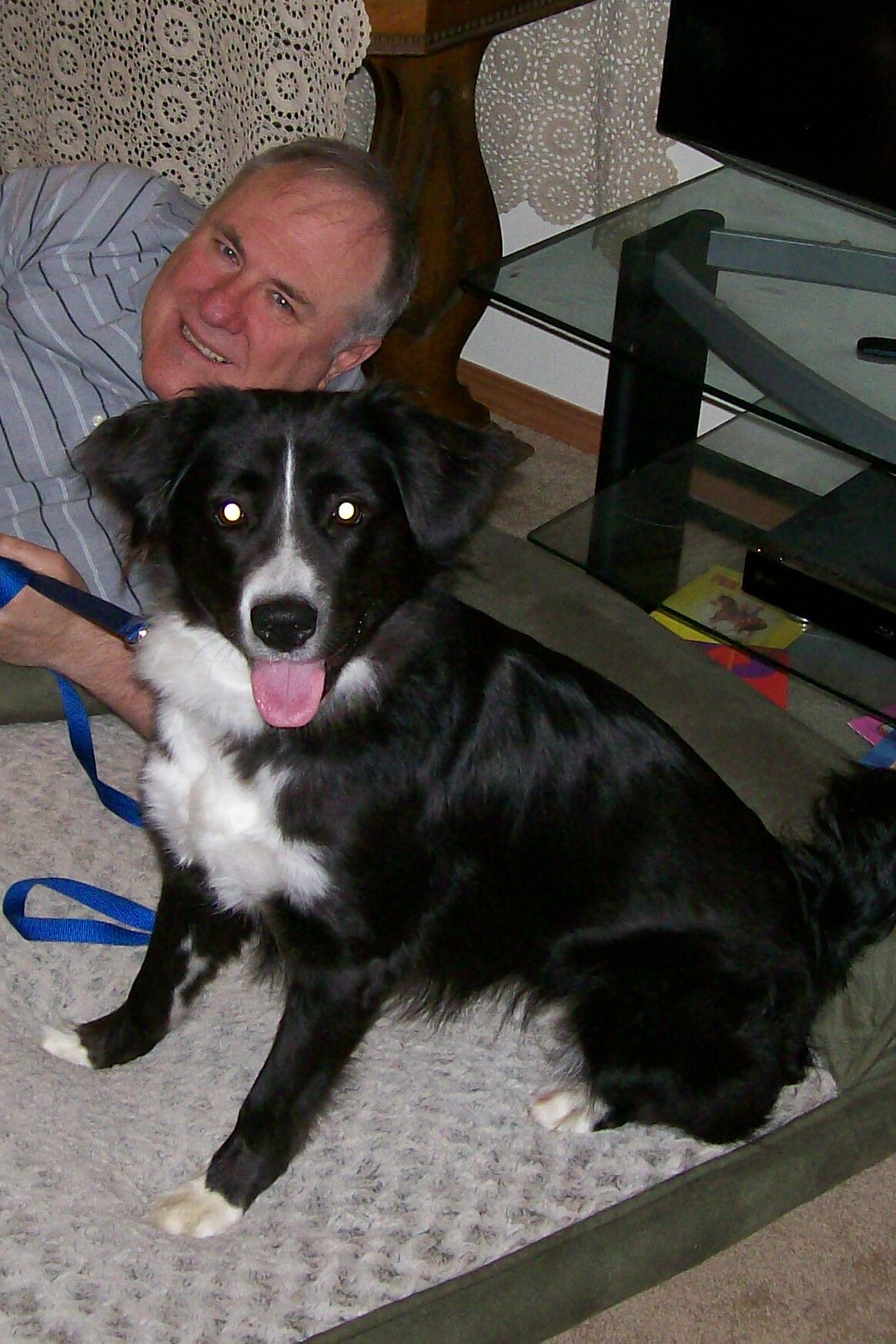
Only last June I invited you to share our joy with the adoption into our family of Lyric, a border collie mix.

Tragically, last night the precious girl passed away. And our family is now dealing with the shock and grief that are such a painful (but inescapable) part of loving the pets who join our families.

After Lyric had been with us for several months, we saw evidence (excessive salivation and frantic, happy racing around the house) of a health concern. When we later witnessed a seizure that lasted just a minute or two, it was nearly as traumatic to us as it was to her. That feeling of helplessness is horrible, isn’t it?

Visits to the vet resulted in the suspicion that it may have been caused by the mushrooms that grow abundantly in the Pacific Northwest forest where we live. (This has been a particularly favorable year to all forms of fungi, and this is a fairly common cause of canine seizures.)

We took precautions to minimize her exposure to that source, but she had several more seizures, weeks apart. Our two vets said that if she experienced a “cluster” of seizures, there were some drugs we could try. However, we never saw any indications of that, so we remained in a monitoring status.

Tragically, late last night, while lying beside me as I was writing, she began what became a relentless series of attacks on her system. She briefly stabilized between each seizure, but they grew longer and more severe. Finally, her strong heart (mercifully) surrendered, and she was gone.

C.S. Lewis was writing about the death (and resurrection) of human beings in his essay “Some Thoughts,” but his words about the alien nature of death resonate with what I am feeling today.

Of all men, we hope most of death [as in, not being the end of all, but a passage to an even more real life]; yet nothing will reconcile us to—well, its unnaturalness. We know that we were not made for it; we know how it crept into our destiny as an intruder; and we know Who has defeated it.

Because Our Lord is risen we know that on one level it is an enemy already disarmed; but because we know that the natural level also is God’s creation we cannot cease to fight against the death which mars it, as against all those other blemishes upon it, against pain and poverty, barbarism and ignorance. Because we love something else more than this world we love even this world better than those who know no other.

Animals, of course, don’t share humanity’s souls. But when you gaze into those love-filled, adoring eyes of your dog, only someone spiritually blind would fail to recognize there is a precious spark within.

I have written in the past about the possibility of God restoring our pets to us in heaven. I won’t belabor that possibility here. After all, it’s merely conjecture. But, in these moments of grief, many find some small comfort in the possibility of God restoring to life these beloved, and innocent, victims of humanity’s disobedience in the Garden.

I began my first post about Lyric with these words:

Last night a new member joined our family. Her name is musical. We didn’t choose it; her previous family did. But we think it fits and she’ll live up to it.

It was for far too short a time, but Lyric definitely did live up to the beauty of her name.

A Song Joined Our Family

lyricLast night a new member joined our family. Her name is musical. We didn’t choose it; her previous family did. But we think it fits and she’ll live up to it.

Her name is Lyric.

We adopted Lyric through the agency of DRAW Rescue.

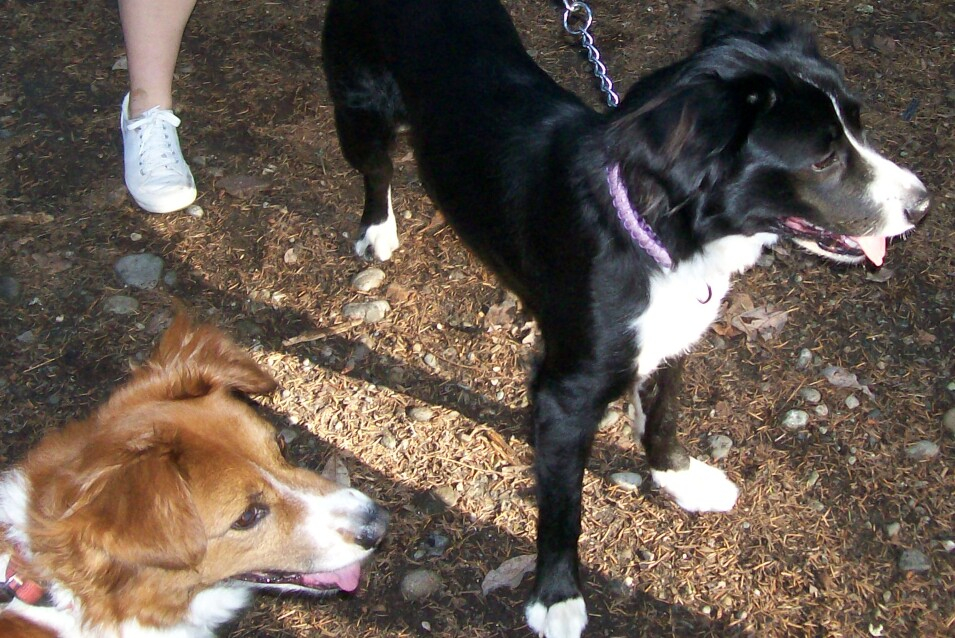
The picture above shows black and white Lyric at her first meeting with her new sister, Foxy. (We didn’t name Foxy either; she joined our family when we “rescued” her from a California shelter six years ago.)

The two girls are getting along quite well their first full day together, but those of you with more than one pet know that it takes a little bit of time to sort things out when a new member joins the family.

Lyric is our third consecutive rescue pet. Although she’s younger than the others who came to us in the past, adopting a rescue dog isn’t the same thing as getting a puppy. You don’t enjoy the same cuddly acceptance. Many rescued dogs are quite wary of human beings—especially men.

It takes time and patience to bond. To let them know that they’re safe and they are now in their “forever home.” Some, like Lyric, benefit from interim stays with gracious foster parents. But their move to your home is still just part of their unstable life until the day when they “forget” about all the previous transitions and just know they are home.

C.S. Lewis talks about this longing for a home in Till We Have Faces. Psyche is describing her desire to find that place where she truly belongs.

Somewhere else there must be more of it. Everything seemed to be saying, Psyche come! But I couldn’t (not yet) come and I didn’t know where I was to come to. It almost hurt me. I felt like a bird in a cage when the other birds of its kind are flying home. . . .”

The sweetest thing in all my life has been the longing— to reach the Mountain, to find the place where all the beauty came from . . . my country, the place where I ought to have been born. Do you think it all meant nothing, all the longing? The longing for home? For indeed it now feels not like going, but like going back.”

Although the myth he’s retelling in this book has nothing to do with adopting pets, the following passage also relates (by dramatic extension) to the situation of “rescued” animals who join you with a legacy of previous relationships (not all of them good).

“Where shall we ever be safe if we’re not safe here? This is my home, Maia. And you won’t understand the wonder and glory of my adventure unless you listen to the bad part.

If you are in a position to share your home with a pet, I probably don’t need to tell you there are many, very many of them who need homes today. If you’re up to the extra challenge of adopting a rescued animal who comes with often unknown “baggage,” just contact one of your local rescue agencies.

These organizations are almost always run by volunteers who are motivated solely by their compassion for these innocent creatures who can no longer be cared for by their owners or—more tragically, have been discarded by those who should have cared for them. (Some, of course, are strays who were never in a human family.) I’m proud to say my nephew and his wife provide a foster home for rescued dogs in Seattle.

Whatever their background . . . the “bad part” of their story, you can be instrumental in “rehabilitating” them. And, trust me, they will reward you with more love than you could ever imagine.

Now, even if you’re not prepared to take in one of these lovely creatures, you can still help. Your local rescue organizations and shelters welcome any contributions you make—either in kind or in cash. You can check your phonebook for local rescues. Or, check out one of these websites which can connect you to many of these groups.

Adopt a Pet

Petfinder

Rescue Me (Dogs)

This column turned into more than I intended it to be. Originally I set out to simply celebrate Lyric’s entrance to our family. Now I realize that her blessing just may encourage the adoption of another cat or dog. And that would be a wonderful thing indeed.

In closing, let’s consider another passage from C.S. Lewis, the creator of Narnia. In a letter he wrote in 1955, he mentions the importance of home.

As Dr. [Samuel] Johnson said, “To be happy at home is the end of all human endeavour.” (1st to be happy to prepare for being happy in our own real home hereafter; 2nd in the meantime to be happy in our houses.)

These words remind us that the happiness we know in our earthly homes is only a foretaste of the joy we can know when we ultimately take our place in the eternal home prepared for us by our Creator.

Perhaps on that day we’ll be welcomed not only by our loved ones who have preceded us, but also by the pets we have loved during this mortal life. That would certainly be a magnificent thing . . . but that’s a discussion for another day.

Beware of Zoolatry

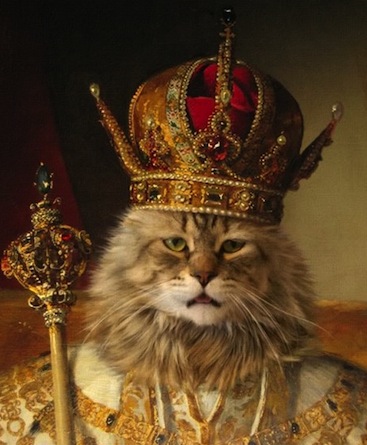
royal catWhen my wife and I dated, I praised her beautiful cat when I visited her home. The cat maintained that imperial posture and attitude that is common in virtually all felines. And that came as no surprise, since she was an Egyptian Mau, one of the most ancient of breeds. She passed on long decades ago, but her haughty, regal bearing is etched in my memory.

I thought of her today when I read the following in the December issue of First Things, in the executive editor’s column.

Wandering around the American Kennel Club’s big “Meet the Breeds” event with my two youngest children recently, I saw a big banner in the cat section proclaiming that a particular breed had been considered a god by an ancient civilization. Of course, our understanding of the genuine religious impulses of ancient religions has increased, but still, one of the gifts the Jewish people have brought the world is that no one who knows about the God of Abraham, Isaac, and Jacob is the least bit tempted to worship cats.

I mean, would you want to worship a murderous narcissistic psychopath? This is not an image of God to make anyone happy. If you’re going to worship an animal, why not the Border Collie, frantically eager to please, or the loving, soulful-eyed Lab? Or the alert and protective German Shepherd? Or the indomitable Saint Bernard? Or the classic loyal and even-tempered mutt?

I don’t intend to offend any cat lovers by repeating this observation—my son has an affectionate tabby he rescued as a kitten while a senior in high school, that’s welcome in our home anytime. Still, as an unrepentant dog person, and “papa” to a rescued border collie, the words above brought a smile to me.

C.S. Lewis painted a graphic image of one animal-headed deity. It was Tash, the god of the Calormenes. In The Last Battle, we see that in Narnia, the reality behind the lifeless image can be most terribly revealed.

In the shadow of the trees on the far side of the clearing something was moving. It was gliding very slowly Northward. At a first glance you might have mistaken it for smoke, for it was grey and you could see things through it. But the deathly smell was not the smell of smoke. Also, this thing kept its shape instead of billowing and curling as smoke would have done. It was roughly the shape of a man but it had the head of a bird; some bird of prey with a cruel, curved beak. It had four arms which it held high above its head, stretching them out Northward as if it wanted to snatch all Narnia in its grip; and its fingers—all twenty of them—were curved like its beak and had long, pointed, bird-like claws instead of nails. It floated on the grass instead of walking, and the grass seemed to wither beneath it. . . .

The others watched it for perhaps a minute, until it streamed away into the thicker trees on their right and disappeared. Then the sun came out again, and the birds once more began to sing. Everyone started breathing properly again and moved. They had all been still as statues while it was in sight. “What was it?” said Eustace in a whisper. “I have seen it once before,” said Tirian. “But that time it was carved in stone and overlaid with gold and had solid diamonds for eyes. It was when I was no older than thou, and had gone as a guest to The Tisroc’s court in Tashbaan. He took me into the great temple of Tash. There I saw it, carved above the altar.”

“Then that—that thing—was Tash?” said Eustace.

In our world, idolatry has certainly evolved since it’s pantheistic and zoolatrous beginnings. Today we are tempted by material indulgences and corruptions aplenty. While few of us impute divinity to animals or objects of stone or wood, we don’t have to look far to find something we deem worthy of adoration.

Our favorite idol is neither beast nor mammon. It is ourselves. As C.S. Lewis wrote in The Problem of Pain:

This act of self-will on the part of the creature, which constitutes an utter falseness to its true creaturely position, is the only sin that can be conceived as the Fall. For the difficulty about the first sin is that it must be very heinous, or its consequences would not be so terrible, and yet it must be something which a being free from the temptations of fallen man could conceivably have committed. The turning from God to self fulfils both conditions. It is a sin possible even to Paradisal man, because the mere existence of a self—the mere fact that we call it “me”—includes, from the first, the danger of self-idolatry. Since I am I, I must make an act of self-surrender, however small or however easy, in living to God rather than to myself. This is, if you like, the “weak spot” in the very nature of creation, the risk which God apparently thinks worth taking.

Now, this is a sin to which I frequently find myself succumbing. I far too often think first about my own desires and appetites . . . only later (if ever) becoming concerned with the needs of my neighbor.

No, it’s neither cat nor dog that needs to be evicted from the throne in my soul reserved for my Creator—it’s me.

C.S. Lewis’ Beloved Dogs

When the internet throws unsolicited information at me, I do my best to ignore it. Yesterday I failed to duck at the right moment and Wikipedia suggested to me a “featured article” I found irresistible. It featured the earliest reference to a named dog—Abuwtiyuwwho died more than four thousand years ago and was buried in Giza in accordance with the wishes of the unknown pharaoh he guarded.

He was almost certainly a Tesem (“hunting dog”), an ancient breed resembling modern greyhounds. (Curiously, a 2004 DNA study found greyhounds are more closely related to herding breeds.)

We contemporary dog lovers understand how a pharaoh could love one of his canine companions enough to have him mummified and buried in an elaborate ceremony. In the image above, our border collie mix is juxtaposed to a hieroglyph tesem. If you’re interested in the subject, you might enjoy one of my February blogs entitled “Pets in Heaven.”

C.S. Lewis was also a dog lover. Pastor Bruce Johnson wrote a delightful article about eight of his dogs, entitled “All My Dogs Before Me.” You can read the brief but thorough article here.

Johnson walks us from Jacksie (who provided Lewis with his “adopted” name of Jack) to the friendly Ricky who was ever “anxious to be friendly.” In between, the author’s family included Tim, Pat, Mr. Papworth, Troddles, Bruce and Susie. Lewis spoke fondly of all of them, with the exception of Bruce, who possessed a predilection for barking through the night and was terribly spoiled by Mrs. Moore.

I also recommend a fine post about one of Lewis’ dogs which appeared on A Pilgrim in Narnia. It’s entitled “The Society of Tim.” The author of the blog is Brenton Dickieson, a Canadian professor and Lewisian scholar.

Pets in Heaven?

One of my favorite features in the Wittenburg Door of the 1980s was a running account of “Dogs Who Know the Lord.” Having witnessed more Christlike traits in some pets than I’ve seen in many human lives, I considered the tongue in cheek title a definite possibility.

This week we bid farewell to a gentle and loving border collie who had been part of our family for more than a decade. She lived a long and full life, and like her our previous border collie, she enjoyed her family and the outdoors (both gifts of God) right up until the end. (Both had been “rescued” by us.) Then, when Tanner and Lady were each over 15 years old, simply remained on their blankets when the day arrived that they knew they had not the strength to rise.

There are two kinds of people. Pet lovers, and those whose hearts are desensitized to their affections. The latter group has already stopped reading this post. But pet lovers, yes you, can empathize with my family’s current grief. You understand our loss because you’ve suffered the same pain. And, some of you may even pause to say a short prayer for us.

As a pastor, I’ve had numerous conversations with people about the question of whether or not we’ll see our pets in heaven. It’s a provocative subject, and the fact that such questions persist is a tribute to the significance of these animals in our lives.

Contrary to what some would allege, posing questions about this matter does not trivialize faith; it reveals how our restored relationship with our Creator affects every dimension of our existence.

We cannot know, of course, the answer to the question. That’s something that those who respond with a snide “of course not!” should take care to realize.

Over the years my own views on this have broadened, and far from seeing the deliverance (i.e. not “salvation”) of animals as something unlikely . . . I now consider it likely that we will be greeted by our beloved pets in the new creation. Here are some reasons I consider this a definite possibility:

  1. First, it is true that Jesus died to redeem (save) human beings (not animals).
  2. Animals are “innocent” sufferers of humanity’s disobedience and fall.
  3. Some animals are uniquely precious and beloved by God’s children.
  4. Their presence in heaven would enhance our joy.
  5. The same God who created them would have no difficulty re-creating or restoring them.
  6. If the lion and the lamb will lie together in harmony, why should there not be room for our much-loved pets to frolic alongside them?

And, lest you consider the words above merely the sentimental ramblings of a grieving man, I take comfort in the fact that C.S. Lewis too regarded this as a possibility. In a 1962 letter, he wrote:

. . . in The Problem of Pain I ventured the supposal—it could be nothing more—that as we are raised in Christ, so at least some animals are raised in us. Who knows, indeed, but that a great deal even of the inanimate creation is raised in the redeemed souls who have, during this life, taken its beauty into themselves? That may be the way in which the “new heaven and the new earth” are formed. Of course we can only guess and wonder. But these particular guesses arise in me, I trust, from taking seriously the resurrection of the body.