
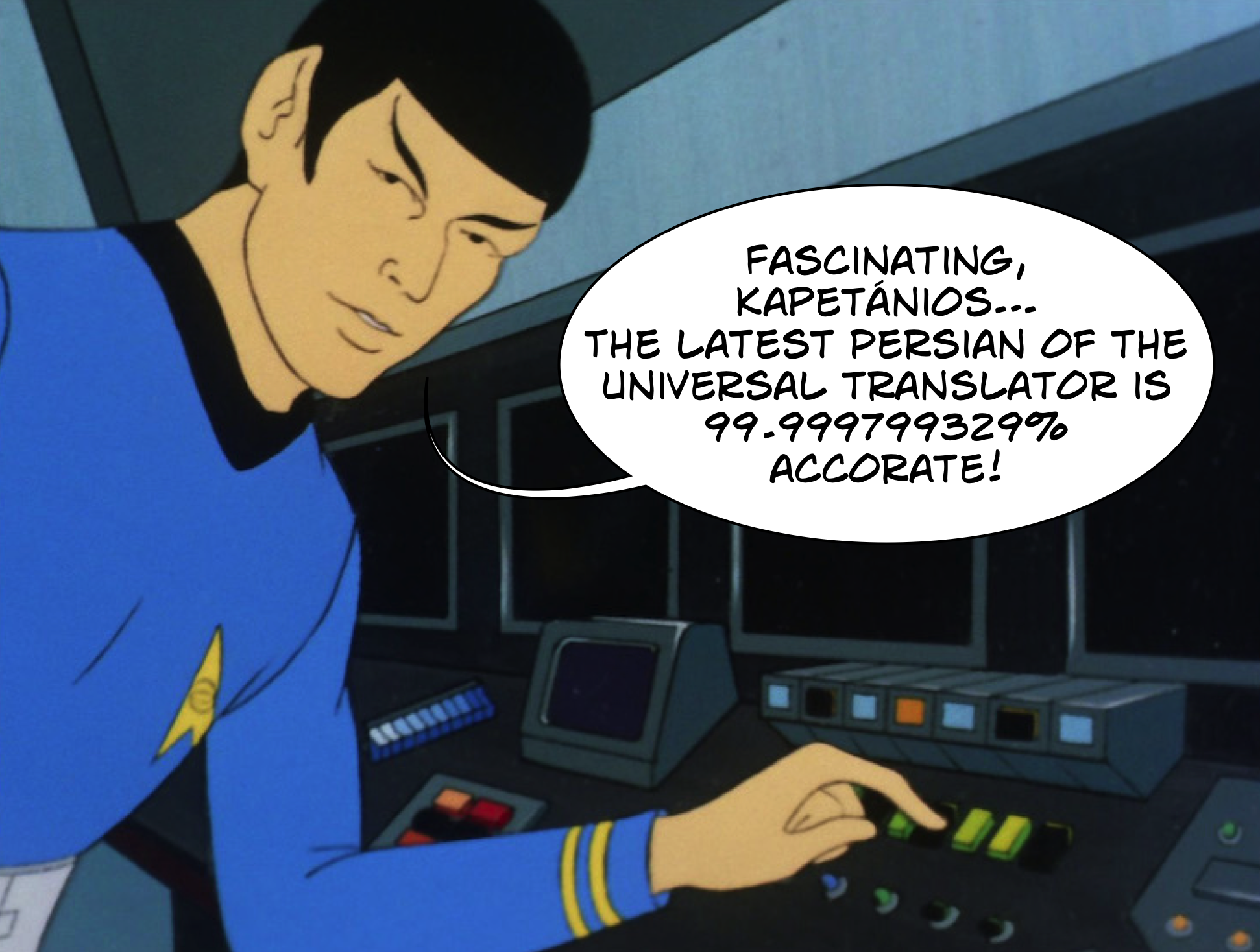
“A poetic translation is always to some extent a new work of art.”
C.S. Lewis
English Literature in the Sixteenth Century
C.S. Lewis was a gifted translator. One who recognized well the challenges of skillful rendition, including the differing requirements imposed by prose and poetry. Thus, in his essay “The Literary Impact of the Authorised Version,” he offers the following insight.
No translation can preserve the qualities of its original unchanged. On the other hand, except where lyrical poetry is in question, the literary effect of any good translation must be more indebted to the original than to anything else.
In his autobiography, Surprised by Joy, C.S. Lewis describes his transformative encounter with translated poetry that introduced him to the “northern sky.” Before he became a skilled translator in his own right, he describes how a major part of his awakening,
. . . came through poetry. I had become fond of Longfellow’s “Saga of King Olaf:” fond of it in a casual, shallow way for its story and its vigorous rhythms.
But then, and quite different from such pleasures, and like a voice from far more distant regions, there came a moment when I idly turned the pages of the book and found the
unrhymed translation of Tegner’s Drapa and read
I heard a voice that cried,
Balder the beautiful
Is dead, is deadI knew nothing about Balder; but instantly I was uplifted into huge regions of northern sky, I desired with almost sickening intensity something never to be described (except that it is cold, spacious, severe, pale, and remote) and then, as in the other examples, found myself at the very same moment already falling out of that desire and wishing I were back in it.
One of Lewis’ most involved explanations of the subject is found in Reflections on the Psalms. As Mere Inkling has noted in the past, C.S. Lewis was a distinguished member of a committee appointed to “revise the Psalter.” Being poetry, the Psalms demanded the proper mindset in their translators.
What must be said, however, is that the Psalms are poems, and poems intended to be sung: not doctrinal treatises, nor even sermons. . . . Most emphatically the Psalms must be read as poems; as lyrics, with all the licences and all the formalities, the hyperboles, the emotional rather than logical connections, which are proper to lyric poetry.
They must be read as poems if they are to be understood; no less than French must be read as French or English as English. Otherwise we shall miss what is in them and think we see what is not.
Some translations, unfortunately, are intentionally corrupted. I described in 2020 the Communist Chinese twisting of the Christian Scriptures. Fortunately, this sort of intentional crime is rare, and most translation efforts are well motivated. That does not mean, however, that even gifted linguists are up to every challenge.
In a letter to the editor of The Christian Century, C.S. Lewis contrasted academic and vernacular translations. Declaring that “any fool can write learned language,” he argues that clergy in particular are faced with the challenge of translating languages into prose which is understandable to the general population. He begins by demurring that he cannot respond to a request for an article written for a popular American audience.
An article on “translation” such as Dr. Pittenger suggests . . . certainly needs doing, but I could not usefully do it for Americans. The vernacular into which they would have to translate is not quite the same as that into which I have translated. Small differences, in addressing proletarians, may be all-important.
In both countries an essential part of the ordination exam ought to be a passage from some recognized theological work set for translation into vulgar English – just like doing Latin prose. Failure on this exam should mean failure on the whole exam.
It is absolutely disgraceful that we expect missionaries to the Bantus to learn Bantu but never ask whether our missionaries to the Americans or English can speak American or English. Any fool can write learned language. The vernacular is the real test.
C.S. Lewis remained an avid reader and critic until his death. In 1961, he received some translations of “modern” Greek poetry from his friend, Muriel Bradbrook (1909-1993), a Professor of English at Cambridge. After thanking her for the gift, he offers his personal response to the intercultural translations.
Dear Muriel,
What a nice thing for a man half drowned in compulsory leisure [due to poor health] . . . It has set me a problem. I find I get a good deal of pleasure out of many of these poems, but am at a loss to say why. One is not getting the “numbers” – and so far as I can judge from the notes the metres of the originals would not much please me.
Nor am I much in sympathy with many of the poets’ moods. The pleasure is like – at least rather like – what I get out of most translations of Chinese lyric. But that isn’t a solution, but merely another problem of the same sort. Anyway, thanks very much indeed.
Advice to Budding Translators
So many good works of literature remain to be translated so they can benefit those unfamiliar with their original tongue. Several years ago, I wrote a column entitled “C.S. Lewis’ School of Translation,” assembling some of the great writer’s wisdom.
I recently encountered a curiously brilliant observation on the subject of translating poetry in C.S. Lewis’ English Literature in the Sixteenth Century. Although he refers here to advising others, it would be wise for any of us who are considering the task to reflect long on Lewis’ acumen.
Most of us, I suspect, would advise a mediocre poet, if he must translate, to avoid the greater originals and choose the less, as if these would be easier. But this is probably a mistake.
The great poets have so much wealth that even if you lose two-thirds of it on the voyage home you can still be rich on the remainder: slighter art, when it loses the perfection of its original form, loses all power of pleasing.
As I think about it, this advice likely applies to prose as well. If you or I someday attempt to translate a work, we should consider working with the richest possible source material. That way, even if it loses value in the process, the quality that remains will still possess value for our translation’s readers.
Even if we do not pen “a new work of art.”
 Mere Inkling Press