Beware of Overtoun Bridge

overtounDo not take your dog to Scotland. And, if perchance you do, by all means avoid the Overtoun Estate.

Its relatively short span masks its danger. The waters flow fifty feet below it’s arch, and they carry echoes of a terrible mystery.

What is it about the Overtoun Bridge that causes dogs to leap over its parapet to their deaths on the rocks below?

Before considering that question, it is worth noting how dearly dogs love to go for walks with their people. This comes as no surprise to those who have had dogs as members of their families.

Some people who have never lived with dogs, however, are unaware of just how powerful this drive is. There is but one thing a dog loves more than a good walk—and that is a good meal. (For a dog, a “good” meal is any and all meals.) In fact, some canines love walking so very much that they would willingly delay their repast if able to precede it with a vigorous hike.

C.S. Lewis was an avid walker. He often undertook long sight-seeing hikes with friends. And, during different periods of his life, he enjoyed the company of a canine companion.

In January of 1940 Lewis describes one such trek to his brother. Warnie, a “regular” officer in the British military had been recalled to active duty and dispatched to France. He describes an inter-species encounter his dog Bruce had recently experienced during an Oxford walk.

It seems almost brutal to describe a January walk taken without you in a letter to you, but I suppose “concealment is in vain. . . .” I was coming home from a walk and had just reached the Bourdillon’s hedge when I saw Bruce standing across the path with his head erect and his tail wagging furiously.

There is a very slight bend to the right in that path just after the Bourdillon’s, so that I could not see what he was looking at. Presently a cloud of steam in the frosty air appeared to descend towards him-to be followed by the long grave face of the mushroom-white horse who lives in that field.

Dog continued looking up and horse’s head leaned down till their noses almost touched: then they withdrew with every mark of mutual esteem. Now that I have at last written it down it hardly seems worth much: but it was an odd sight at the time.

Curiously, two months earlier (writing to Warnie) he had alluded in passing to the fact he was frequently accompanied by a pet on his walks.

Wednesday I lunched in College and attended a College Meeting, which was over by about 3.30-after that the rare pleasure of a dogless stroll & tea in our own rooms, glancing through Mammy’s old copy of the Water Babies, and after dinner the unusual pleasure of an evening to myself.

There is something about having a dog accompany one on a walk that makes it an even richer experience. Observing their frenetic joy at discovering some new scent is vicariously exhilarating.

When walking in certain locales, leashes may be required. Certain impetuous dogs demand their use even when not mandated. However, most people who accompany dogs on their explorations would prefer to leave them free to range a bit, if given a choice.

And it precisely this freedom that poses such a danger to those who enjoy the Scottish countryside and dare to cross the Overtoun Bridge.

Apparently, since the 1950s, more than fifty dogs have lunged to their deaths over the edge of the bridge. A 2006 article in the Daily Mail reports that during a six month period the previous year “Five dogs jumped to their deaths. All of the deaths have occurred at virtually the same spot, between the final two parapets on the right-hand side of the bridge, and almost all have been on clear, sunny days.”

Strangely, there are even several cases where dogs who had survived the terrible fall proceeded to dive from the same location during a subsequent crossing. Lacking nine lives, it is assumed their luck did not hold on the second occasion.

Due to the frequency of these “suicides,” the Scottish Society for the Prevention of Cruelty to Animals sent a scientist to investigate the cause of the heartbreaking phenomenon. He determined it was nothing that the dogs could see or hear that would account for their fatal actions.

Various theories have been posed. Some attribute it to ghosts or the fact that “In Celtic mythology, Overtoun is known as ‘the thin place’—an area in which heaven and earth are reputed to be close.”

Psychic Mary Armour took her own [psychic?] labrador for a walk along the bridge to test the theory. However, she reported no unusual sensations. “Animals are hyper-sensitive to the spirit world, but I didn’t feel any adverse energy.” In fact, Mary said she experienced a feeling of “pure calmness and serenity” but admitted that her dog did pull her towards the right-hand side of the structure. (Daily Mail, 17 October 2006).

The SPCA investigator eventually concluded the most likely cause for the suicidal impulses of the canines was the scent of mink musk from the valley below. Apparently to some dogs the lure is irresistible, and they cast aside their normal wariness to leap into the unknown.

Whether or not this is the true cause of the mishaps or not remains debated. Some, for example, attribute the suicidal impulses to “picking up on suicidal or depressed feelings of their owners.”

Whatever the cause, it is probably wise to avoid the risk and steer very clear of Overtoun Bridge if you value the life of your dog. Still, when traveling to Scotland it may well be wise to leave your dog in the care of a family member or an approved kennel.
Trusting Serpents

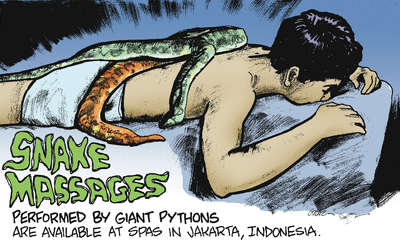
snake massageI try very hard not to be overly critical of foreign practices that initially strike me as rather odd. Instead, I attempt to understand what these activities mean in the culture where they are practiced.

Yet, for the life of me (as my mother would say), I can’t fathom why Indonesians want to have snakes give them “massages.” And, even though only a fraction of their people submit to this peculiar activity, there are apparently enough candidates for spas to offer the serpentine service.

I imagine that the snakes do indeed rub, flex and squeeze their clients, since pythons are “constrictors,” and it’s in their nature to want to circle—suffocate—crush—and devour their prey.

Ironically, this fact, compliments of Ripley’s Believe It or Not, follows in the wake of a recent news report about another man who thought he would be fine getting a shoulder massage from an apparently “undomesticated” python.

BALI, Indonesia (AP) — A python strangled a security guard near a luxury hotel on Indonesia’s resort island of Bali on Friday, and then escaped into nearby bushes following the deadly attack, police and a hotel employee who witnessed the incident said. The incident happened around 3 a.m. as the 15-foot-long python was slithering across a road near the Bali Hyatt hotel . . .

The victim, Ambar Arianto Mulyo, was a 59-year-old security guard at a nearby restaurant. He had offered to help capture the snake, which had apparently been spotted several times before near the hotel . . . Mulyo managed to secure the snake’s head and tail and put it on his shoulders, but the python wrapped itself around his body and strangled him . . .

People watching the incident were unable or unwilling to help and called the police, who came but failed to save the man. The python escaped into nearby bushes, and police were still searching for it.

The Associated Press story ends with the lame attempt to calm those who are inclined to suffer from ophidiophobia. “Deadly attacks on adult humans by pythons are rare, but have been documented before.”

Pardon me, but that’s not quite sufficient reassurance for even those of us without a snake phobia. I remember hearing from my wife about my young daughter’s class being introduced to a sizeable serpent some years ago during a fieldtrip. As everyone watched the handler manipulating its head and frontal coils, it was surreptitiously beginning to caress my little girl with its tail!*

If the Indonesian practice of python-massage crosses the Pacific, you won’t find me visiting the spa for a back rub. I understand they probably only employ well-fed, six-foot-long “baby” pythons, but I still choose to pass.

C.S. Lewis has a wonderful comment about trust. He says the true test of how deeply we believe something is the magnitude of the risk we are willing to take related to our trust in it.

You never know how much you really believe anything until its truth or falsehood becomes a matter of life and death to you. It is easy to believe a rope to be strong and sound as long as you are merely using it to cord a box. But suppose that you had to hang by that rope over a precipice. Wouldn’t you then first discover how much you really trusted it? . . . Only a real risk tests the reality of a belief. (A Grief Observed).

I don’t care how many herpetologists or masseuses assure that pythons can safely massage my bared body . . . I’m learning from the example of that poor Balinese guard who fell for the python’s trick, thinking that he held the upper hand.

_____

* Yes, snakes actually do have tails. It’s only one of their slithering secrets.

Iceland’s Real Elves

warrior elvesI’ve always wanted to visit Iceland.

Not simply because it’s the most sparsely populated country in Europe . . . even though I’m not big on crowds.

Not simply because of its spectacular glaciers and volcanic activity . . . even though these natural wonders inspire genuine awe.

Not simply because it is home to the world’s most ancient parliamentary democracy . . . even though I believe representative democracy is the best sort of government available.

Not simply because they colonized Greenland, from which the Norse were the first Europeans to discover the Americas . . . even though Leif Erikson deserves the accolades rendered to others.

Not simply because 40,000 of my fellow citizens are of Icelandic descent . . . even though I’m pleased they have contributed to our national “melting pot.”

Not simply because Iceland’s tenth largest city is called Fjarðabyggð . . . even though that vivid name is sure to capture the imagination of any writer.

Not simply because the Icelandic alphabet actually includes a runic letter (Þ, þ) named thorn . . . even though this too makes the nation of Iceland unique.

And, not simply because J.R.R. Tolkien and his friend C.S. Lewis established a group called Kolbitar which was devoted to reading Icelandic and Norse sagas. The word itself means “coal biter” and refers to those in a harsh environment drawing so close to the fire’s warmth they can almost bite the coals.

When the Lord of the Rings (as a work in progress) was being in read at meetings of the Inklings, one of the groups members at some point blurted out, “Oh no, not another –– elf!” [I only mention this here because that impetuous comment is often incorrectly attributed to Lewis—a genuine fan of Tolkien’s masterpiece. It was actually voiced by Hugo Dyson, another WWI veteran who taught English at Merton College.]

In the past, all of these reasons have contributed to my curiosity about the Land of Ice, but now I have added one more reason to someday visit.

It turns out that some Icelanders believe that elves, called by them Huldufólk (hidden folk), are real!

The elves have a large enough human constituency, that they are able to block highway construction due to the impact on the local Huldufólk!

Technically, the preservation of the elvish solitude is only the secondary concern in the lawsuits, the first being protection of one of Iceland’s numerous lava fields. Iceland’s Supreme Court has vacillated on the case, which can only raise the ire of any elves that may reside there.

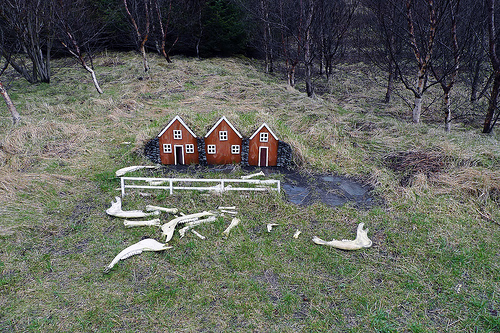
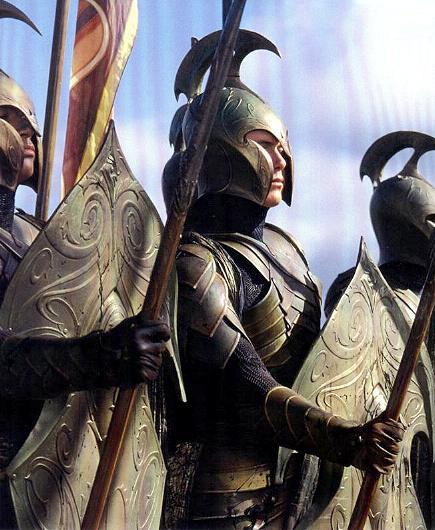
elf houseIf the proponents of the reality of the Huldufólk are right, there remains one shortcoming to the Icelandic elves. Apparently, if the elf homes that dot the countryside are any indication, the northern island breed are a diminutive race. As in tiny, what Americans would think of more as a gnome or perhaps even a fairy.

My problem is that I’ve been spoiled by J.R.R. Tolkien’s version of the elvish races. I see them a tall, noble, and wise. The kind of folk you’d want for a friend, if you could get past the aloofness that is apparently characteristic of beings who live centuries rather than decades.

I fear that these Icelandic elves are (pardon me, any Huldufólk who may be reading this) a rather inferior lot. More like leprechauns than warriors. If you live in Iceland and can correct my errors about the hidden folk there, please contact me. Even better if you happen to know some elves personally.

Posing Like a Corpse

savasanaThere are some things you should never tell an elderly person to do. And, I recently came across a faux pas that certainly belongs in that number.

It may just be me, but I think one should never, ever tell a senior citizen to pose like a corpse.

Nevertheless, in a recent article in a periodical expressly written for “mature” Americans,* readers were advised to assume the “corpse pose.” My discomfort with that directive was not allayed by the description that followed.

Lie flat on your back, pillow under your head, eyes closed. Allow your feet to play to the sides. Rest your arms alongside your body, palms facing up. Then relax, surrender to the floor, and breathe deeply.

Up until being told to “breathe,” one might rightly be confused with precisely how we are emulating a corpse.

While I make no claim to understand what it means to “surrender to the floor,” I can understand how body posture has become a valued part of yoga. After all, even without the counsel of a yogi, I learned at an early age the sheer joy and peace of lying on my back with eyes closed.

I don’t wish to impugn the benefits of yoga; I wish that I were able to master my physical body half as well as many of them do. However, I would like to suggest to the yoga community that they re-label their corpse pose.

Admittedly, advocates for maintaining this verbiage can state it is clearly not intended to refer to a literal cadaver. In arguing this they are simply being human. As C.S. Lewis wrote in “Studies in Words”—“Like all philosophers, Aristotle gives words the definitions which will be most useful for his own purpose.” This approach is not, of course, the domain of philosophers alone.

The fact is that there are perfectly good words that could be substituted which do not reference a lifeless body. “Reclined,” “Reposed,” or even “Resting” or “Sleeping” come readily to mind.

Of course, I may be missing something here. Perhaps the allusion to a corpse is intentional? Perhaps the image of dissipation of energy and effort is expressly intended to be similar to a comatose state? Perhaps that is what becoming one with the floor is hinting at? Flesh to floor . . . ashes to ashes, dust to dust.

In this case, it might be clearer if we were provided with a definition of what the title of the pose actually means. I suppose that practitioners may learn this as part of their lessons, but to those on the “outside,” the label seems slightly off-putting.

As Lewis wrote in the aforementioned essay:

The fact that [writers] define it at all is itself a ground for scepticism. Unless we are writing a dictionary, or a text-book of some technical subject, we define our words only because we are in some measure departing from their real current sense. Otherwise there would be no purpose in doing so.

Thus, if “corpse” here doesn’t mean what we normally understand it to, we might benefit from a brief definition or explanation of the users’ intent.

This matter—the proper use of the precise word that will be clearly understood—is a concern for all communicators. Writers need to remain vigilant that their own vocabulary or metaphors do not confuse.

One last caveat for those who practice yoga. If you seek to master the corpse pose, be cautious in just how well you perfect it. Please stop short of emulating death so well that your resting body is discovered and a crime scene established.

_____

savasana 2* AARP the Magazine is published by the organization formerly known as the American Association of Retired People. Apparently, the sound “AARP” is considered more dignified than the original title. It remains a requirement, however, that members have survived at least a half century before applying for membership.

Powerful Names

missilesIt’s all in the name. The person who succeeds in naming (or labeling) something wields great power.

Whether it be a concrete object, or an idea, the power to name carries the power to shape perceptions.

Philosophically, we might agree that:

“That which we call a rose by any other name would smell as sweet” (Juliet, Romeo and Juliet).

But, if we are perfectly honest, calling it “skunk cabbage” might affect our perception of its aroma.

A classic example of the power of naming comes from the era of Norse exploration. In the ninth century, Vikings began settling in the inhospitably named “Iceland.” The island was majestic, and its spectacular glaciers and volcanoes still allowed room for extremely fertile farmsteads.

Less than a century and a half later, Erik the Red was exiled from Iceland. He sailed west and established the first colony on a much larger island that he enticingly named Greenland. Erik’s brilliant advertising ploy was quite effective, and hundreds of settlers joined him in the much harsher climes to Iceland’s west.

The specific appellations which led me to ponder the power that resides in naming once again,* actually came from a much more modern source—weaponry.

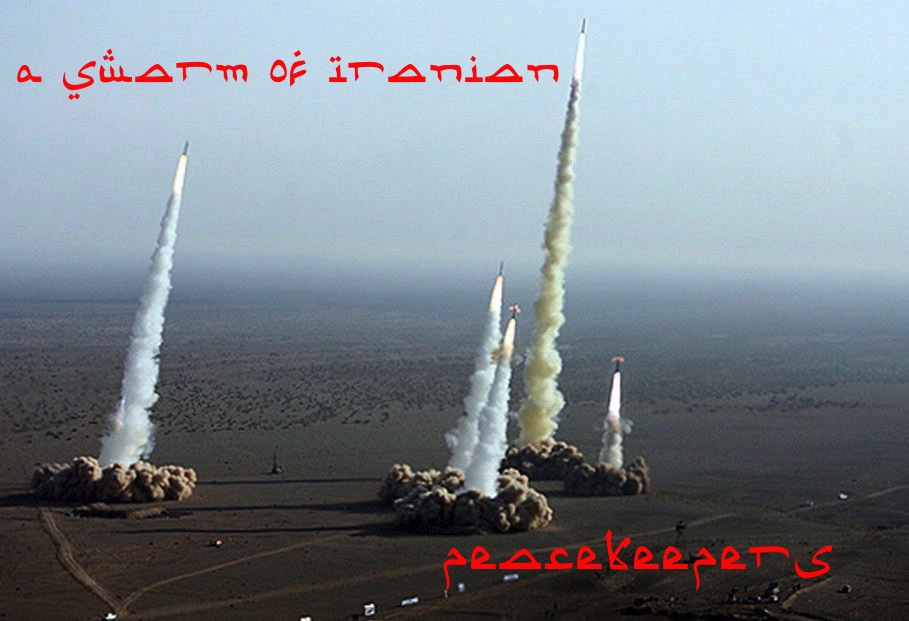
Military leaders have a knack for generating striking names. Often they are brilliant; occasionally they completely miss the mark. In either case, it’s curious to note the message their choice of nomenclature seeks to emphasize. Consider for a moment two different American missiles.

The AGM-114 Hellfire and the LGM-118A Peacekeeper

The reader naturally assumes the purpose of the former is to rain sulfur and brimstone down on the enemy, while the mission of the latter is to benignly maintain peace. One suspects, however, that being at the epicenter of either explosive device would be equally disastrous.

Another example we might consider is a bit more controversial, but fascinating nonetheless. Consider these labels for movements involved in the abortion debate.

Self-Preferred  ||  Used by Opponents  ||  Used by the Media

Pro-Choice  ||  Pro-Abortion  ||  Pro-Choice

Pro-Life  ||  Anti-Choice  ||  Anti-Abortion

It doesn’t require a brilliant intellect to comprehend the tone each of these labels evokes. Nor should it come as a surprise how the mainstream media tends to line up in the debate.

It’s all in the name. The person who succeeds in naming something wields great power.

C.S. Lewis was a master of language. He knew names exercise significant influence on how things are perceived. In the following passage from “The Humanitarian Theory of Punishment,” he describes how a powerful word—in this case “mercy”—can be dangerously misleading when applied to something inimical to itself.

Mercy, detached from Justice, grows unmerciful. That is the important paradox. As there are plants which will flourish only in mountain soil, so it appears that Mercy will flower only when it grows in the crannies of the rock of Justice: transplanted to the marshlands of mere Humanitarianism, it becomes a man-eating weed, all the more dangerous because it is still called by the same name as the mountain variety.

In another essay, “‘Bulverism:’ or, the Foundation of 20th Century Thought,” Lewis actually coins a word which has found favor with a literate subculture. The peculiar word he created conveys a sense of obtuse, opinionated self-smugness. (Yes, I may be reading just a little bit into “Bulverism,” but I really don’t think so. The aristocratic or remote sounding surname “Bulver,” the “ism” suffix and, of course, the “Bul” prefix all combine to engender an odd and unappealing impression.)

The subject Lewis addresses in this work is the unwillingness of disagreeing parties to honestly debate the merits of an issue. Instead, they rush to employ the invalid (and terribly effective) ad hominem approaches that characterize so much of modern politics.

C.S. Lewis is so talented (and ingenious) that he provides us with a biographical note on the fictional creator of the deficient form of “debate” prevalent in the modern era. “The modern method [of argument],” Lewis begins, “is to assume without discussion [your opponent] is wrong and then distract his attention from this (the only real issue) by busily explaining how he became so silly.”

In the course of the last fifteen years I have found this vice so common that I have had to invent a name for it. I call it “Bulverism.” Some day I am going the write the biography of its imaginary inventor, Ezekiel Bulver, whose destiny was determined at the age of five when he heard his mother say to his father—who had been maintaining that two sides of a triangle were together greater than the third—“Oh, you say that because you are a man.”

“At that moment,” E. Bulver assures us, “there flashed across my opening mind the great truth that refutation is no necessary part of argument. Assume your opponent is wrong, and then explain his error, and the world will be at your feet. Attempt to prove that he is wrong or (worse still) try to find out whether he is wrong or right, and the national dynamism of our age will thrust you to the wall.” That is how Bulver became one of the makers of the Twentieth Century.

. . . Bulverism is a truly democratic game in the sense that all can play it all day long, and that it gives no unfair privilege to the small and offensive minority who reason.

Sadly, Bulver’s disciples continue to increase, rather than diminish.

Since it was military missiles that initially got me thinking about the subject of the power of naming, it might be fitting to end with a few more evocative labels. They certainly elicit a wide range of impressions.

Condor: Argentina’s avian contribution

Piranha: Tiny but vicious and straight from Brazil’s Amazon

Velvet Glove: Canada’s mixed message

Sky Sword: China’s blending of the ancient and modern

Apache: French, which confuses this American veteran**

Meteor: A European offering sure to land hard if it doesn’t disappear in the atmosphere

Martel: Anglo-French venture they surely don’t want Islamists to think is a tribute to Charles Martel, Hero of the Battle of Tours***

V-1 Flying Bomb: Got to Hand it to the Germans for straight-forward labeling.

Rhinemaidens (Rheintöchter): There’s apparently Teutonic Poetry as well

Fateh: Iran’s “Conqueror”

Zelzal: Iran’s “Earthquake”

Sejjil: Iran’s “Baked Clay” (well we can’t expect all the Persian names to be winners)

Jericho: From Israel where we know whose walls tumbled down

Spike: Israeli and probably not a reference to Jael and the Book of Judges****

Hatf: Pakistani “Vengeance” (derived from the gentle sword of Muhammad)

Hyunmoo: Korea’s mythical “Guardian of the Northern Sky” (mayhap a reference to their aggressive northern neighbor)

Penguin: Those Norwegians really know how to frighten their enemies

Malakhit (Малахит): Just one of Russia’s curiously named explosives in their “mineral missile series”

Umkhonto: South African “Spear” from the Zulu tongue

The Brits are uniquely creative when it comes to naming missiles. They include: Blowpipe, Brimstone, Green Cheese, Rapier, Sea Skua and, of course, Fairey Fireflash and it’s less intimidating companion Fairey Stooge.

For some reason, I find a missile named “Green Cheese” particularly disconcerting. Whoever named that specific weapon was devilishly clever. If I were a world leader, I’d surrender immediately, rather than face a foe confident enough in their military prowess to use that sort of twisted culinary nomenclature for their armaments.

______

* I have written on the subject of personal names in the past.

** It just may translate as “Ruffian,” but I don’t think I want to go there, since it hints at political incorrectness.

*** It’s actually a combination of the missile’s guidance options: Missile, Anti-Radiation, Television. I’m sure the parallel with the Frankish defender of the Christian Church is a mere coincidence.

**** The fourth chapter of the Book of Judges.

Government & Baboons

I recently read an interesting article about battling terrorism from an international base in Djibouti. Many African nations have joined those from Europe and North America in trying to protect vulnerable villages from the ravages of violent extremism.

However, as readers of Mere Inkling know, we don’t deal with political matters here. Everyday life, yes. Writing and self-expression, of course. Faith, definitely. Imagination, most certainly. Current events are also on the table for consideration, insofar as they relate to the aforementioned subjects.

Politics though, as a subject in and of itself, is not on the Mere Inkling menu.

With that in mind, I want to share a passage from the Air Force magazine article. In a description of “a recent personnel recovery mission in Ethiopia,” it says,

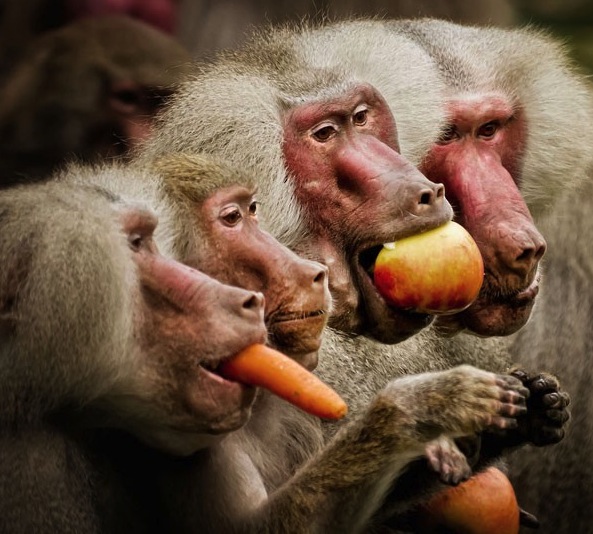
The HC-130s landed at night on a pitch-black airstrip, but first had to make a “clearing pass” to scare a congress of baboons and a pod of hippopotamuses off the runway.

Quite a picture. However, the image itself only made part of the impression left on me by this sentence. More lasting was the reminder of what a group of baboons is called.

C.S. Lewis wrote a fascinating essay about government entitled “Democratic Education.” One of many of its many kernels of wisdom is this: “Democracy demands that little men should not take big ones too seriously; it dies when it is full of little men who think they are big themselves.”

Returning to the subject of animals, the second chapter of Genesis tells us,

Now out of the ground the Lord God had formed[f] every beast of the field and every bird of the heavens and brought them to the man to see what he would call them. And whatever the man called every living creature, that was its name. The man gave names to all livestock and to the birds of the heavens and to every beast of the field.

So, Adam named the animals, and I imagine that after her creation, Eve helped her husband refine some of those appellations. What I don’t know is this—exactly who decided how we label groups of the same species?

I would point out how apropos baboons being referred to as a “congress” is . . . except for two considerations. (1) The connection would be lost on many readers whose governments have parliaments, and (2) It turns out this is actually an error. The actual word for baboon bands is a “troop.” So much for their unfortunate association with an organization that has lost the confidence of nine out of ten Americans.

Here are a few of the familiar and unfamiliar collective nouns for a variety of animals, with some brief comments and questions.

Lions | Pride – Aptly named!

Prairie Dogs | Coterie – I never considered prairie dogs snobbish.

Kittens | Intrigue – I should have learned that from simple observation.

Finches | Charm – They really do, don’t they?

Wombats | Wisdom – Wisdom to Aussies, a mystery to me.

Pekingese | Pomp – Well, perhaps just slightly elitist.

Cobras | Quiver – Logical, given the prospect of meeting a group of vipers.

Peacocks | Ostentation – Much nicer than the “pride” option.

Barracudas | Battery – Same as electric eels, I suppose.

Crows | Murder – A term familiar to most literary folk.

Bullfinches | Bellowing – Huh? Sounds more hippopotamusish.

Cows | Kine – Have to thank the medieval English for this one.

Seabirds | Wreck – Beware when they fly overhead.

Bacteria | Culture – And what kind of civilization have they ever built?

Deer | Gang – Must be the teenagers, before they become a herd.

Cockroaches | Intrusion – Accurate, repulsive and ominous.

Guillemots | Bazaar – What’s a guillemot, and what is it selling?

Cormorants | Gulp – Didn’t their momma’s teach them to chew?

Cheetahs | Coalition – Wouldn’t “a ‘sprint’ of cheetahs” sound better?

Woodpeckers | Descent – Am I missing something here?

Clams | Bed – Not much else to do in the clam-world.

Turtledoves | Pitying – Meaning they take pity on us, not vice versa.

Bobolinks | Chain – Cute, but lost on Americans where they’re known as reedbirds or ricebirds.

Snails | Walk – Someone’s lacking a bit in creativity here.

Ravens | Unkindness – Speaking of unkind, who labeled them this?

Flamingoes | Stand – Come on now, isn’t that a bit obvious?

Giraffe | Tower – I guess the flamingoes aren’t the only ones.

Lice | Flock – That is way too nice a word for those vermin!

Alligators | Congregation – As a pastor, I simply don’t want to go there.

This is way too much fun, but I’d better stop now so I can revisit this theme in a year or so. Until then, if you learn who gave that unkind name to groups of ravens, let me know.

Newest Pet Craze

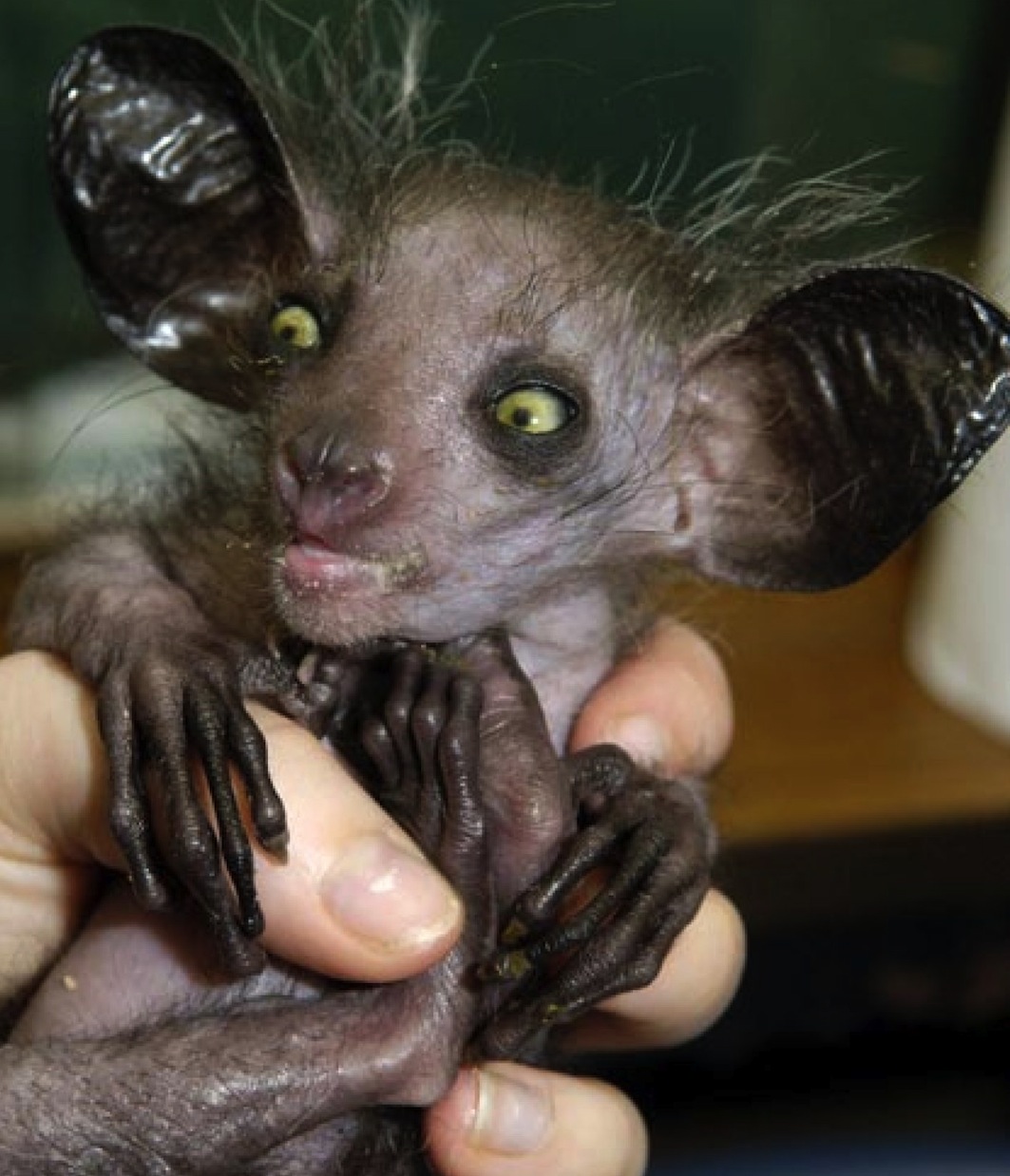
aye-aye 1Have you seen pictures of these delightful little creatures? They’re called Aye-ayes, and they are widely distributed across the jungles of Madagascar. (Any genetic link between aye-ayes and Gollum remains unconfirmed.)

The International Union for Conservation of Nature has classified these harmless mammals as “Near Threatened.” So, helping them reproduce, as an aye-aye breeder, may also keep the species from becoming extinct.

Actually, I don’t believe you can import Aye-ayes as pets—unless you’re one of those rich or famous people to whom the laws for regular people don’t apply. But, if it is possible to adopt an aye-aye, I offer the following pros and cons for your consideration.

Pro: Some people think they look cuddly.

Con: Some people think they look creepy.

Pro: They don’t demand attention all day long.

Con: They’re nocturnal and might keep you up at night.

Pro: People will think you’re on the cutting edge.

Con: People will think you’re one odd cookie.

Pro: They have tiny mouths.

Con: They are omnivores, and eat other animals.

Pro: Most people consider them exotic animals.

Con: They clearly resemble devilish gremlins.

Pro: Daubentonia madagascariensis are lemurs.

Con: They’re not nearly as cute as their lemur cousins.

Pro: In an emergency, they’re edible.

Con: In an emergency, they’re edible.

Pro: Aye-ayes may reveal God’s imagination & humor.

Con: Aye-ayes just may have a less heavenly origin.

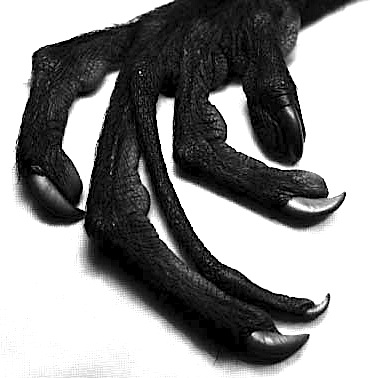
aye-aye 3The picture to the right, a close up view of the aye-aye’s “hand” lends credence to the last conjecture, above. It also evokes nightmarish memories of a story that traumatized my youth, “The Monkey’s Paw.”

You can either read it here, or view a recent treatment of it here.

C.S. Lewis acknowledges the danger posed by possessing too much love—an idolatrous affection—for pets. Of course, there are other things we can love that way with even less justification than an animal.

There is a reaction at present going on against the excessive love of pet animals. We have been taught to despise the rich, barren woman who loves her lap dog too much and her neighbor too little. It may be that when once the true impulse is inhibited, a dead poet is a nobler substitute than a live Peke, but this is by no means obvious.

You can do something for the Peke, and it can make some response to you. It is at least sentient; but most poetolaters hold that a dead man has no consciousness, and few indeed suppose that he has any which we are likely to modify. Unless you hold beliefs which enable you to obey the colophons of the old books by praying for the authors’ souls, there is nothing that you can do for a dead poet: and certainly he will do nothing for you.

He did all he could for you while he lived: nothing more will ever come. I do not say that a personal emotion towards the author will not sometimes arise spontaneously while we read; but if it does we should let it pass swiftly over the mind like a ripple that leaves no trace. If we retain it we are cosseting with substitutes an emotion whose true object is our neighbour.

Hence it is not surprising that those who most amuse themselves with personality after this ghostly fashion often show little respect for it in their parents, their servants, or their wives. (“The Personal Heresy: A Controversy”).

Yes, as Lewis so ably points out, it’s far more important to care about the personhood of our neighbor today . . . rather than a departed writer. (Coincidentally, Lewis would object with equal eloquence to Lewisolatry.)

If we cannot express our goodwill to other people, it’s better directed towards dogs and aye-ayes than someone departed from this world.

Which brings us back to the subject at hand. These furry little creature may not be the objects of the latest pet craze now, but it may be possible for you to initiate a new fad!

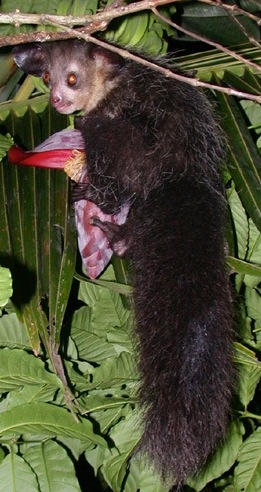
To make that possibility a bit more likely, allow me to close this column with a picture of a lovely aye-aye in its natural habitat. Now, that’s an animal one could easily consider cute and cuddly (as long as it keeps its paws to itself).

Ksukol ocasatý (Daubentonia madagascariensis)

Nature’s Hazards

tumbleweedsNo matter where in the world you live, you are vulnerable to dangers uniquely associated with that locale. Some of us have moved around and weathered a variety of these threats.

My own family has survived earthquakes in our home state of Washington, ice storms in Oklahoma, nearby tornadoes in Texas, record-setting freezes in Minnesota, both droughts and failed levees in two different California cities along with a Super Typhoon in Guam. (Sometimes we’ve even been assailed by disasters that had no place occurring where they did, like a hurricane that knocked out our power for a full month in England, of all places!)

It’s quite possible that you too have experienced near misses when it comes to suffering Nature’s wrath. (I’d much rather attribute these things to fallen Nature than refer to them as “acts of God.”)

C.S. Lewis offers a wonderful description of Nature in Miracles.

You must have tasted, however briefly, the pure water from beyond the world before you can be distinctly conscious of the hot, salty tang of Nature’s current. To treat her as God, or as Everything, is to lose the whole pith and pleasure of her. Come out, look back, and then you will see . . . this astonishing cataract of bears, babies, and bananas: this immoderate deluge of atoms, orchids, oranges, cancers, canaries, fleas, gases, tornadoes and toads. How could you ever have thought that this was the ultimate reality? How could you ever have thought that it was merely a stage-set for the moral drama of men and women? She is herself.

Offer her neither worship nor contempt. Meet her and know her. If we are immortal, and if she is doomed (as the scientists tell us) to run down and die, we shall miss this half-shy and half-flamboyant creature, this ogress, this hoyden, this incorrigible fairy, this dumb witch. But the theologians tell us that she, like ourselves, is to be redeemed. The “vanity” to which she was subjected was her disease, not her essence. She will be cured, but cured in character: not tamed (Heaven forbid) nor sterilised. We shall still be able to recognise our old enemy, friend, play-fellow and foster-mother, so perfected as to be not less, but more, herself. And that will be a merry meeting.

But, until that glorious day when Nature has been reborn in the culmination of the event that took place on Calvary . . . until that day, Nature remains a capricious neighbor. It’s best to know what she is likely to throw at you based on where you reside—and be prepared. Disaster preparedness is something that the wise will concern themselves before catastrophe strikes.

There are some dangers, however, for which one cannot adequately prepare. The prospects of mega-tsunamis terrify me (and I don’t even live by the sea). Then there are zombie outbreaks, which are apparently taking place on a frequent basis, if the plethora of media on that ghoulish subject is any indication.

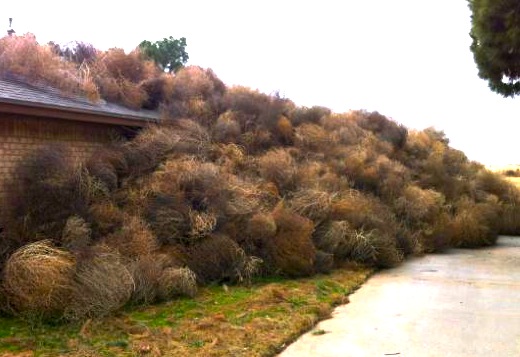
The photograph at the top of this page reveals a grim threat to life on the American plains. There may be a few other places where these merciless creatures wreak havoc (the arid portions of Australia, perhaps), but I hope most of those reading this have been spared the visage of plagues of tumbleweeds racing across the horizon in search of victims to overrun, scar, and bury. As the picture shows, sometimes it is not even safe to shelter in a home during a particularly virulent attack.

I’ve seen many a wayward tumbleweed, while I’ve driven across barren desert terrains. Occasionally you’ll see them alone, scouting ahead of the mass for weak prey. If you see an entire horde, well . . . it’s probably already to late to flee.

This picture makes me shiver. It’s one reason I’m so happy to have moved home to Puget Sound, where the incessant rain* keeps everything green. I can put up with an occasional tectonic jiggle, if it means I don’t have to worry about being buried alive beneath a mountain of desiccated thorns.

_____

* The rainfall in western Washington is highly exaggerated. It’s true that for half of the year it receives more rain than the national average, but the other six months it receives less than average of the rest of the nation.

Also, I don’t believe it is an accident that one of the most commonly encountered tumbleweeds in the United States is Salsola tragus, an utterly humorless thistle that invaded from Russia at the end of the nineteenth century. Despite occasional eruptions, it seems to be lying in wait, for the most part, growing in strength for the final conflagration between humanity and noxious weeds and their allies, the triffids.

To Tweet or Not to Tweet

platypusI have a twitter account I’ve never used. I had attended a ministry conference where the featured speaker encouraged all of the pastors to harness the power of this cutting edge technology.

I dutifully returned home, established an account, and realized there were very few things I wanted to say in 140 characters or less. One hundred and forty words . . . now you’re talking. But a mere seven score letters . . . I don’t think so.

I know there are many positive things about brevity. In our hectic world, it’s become an absolute necessity. Still, some things—to be expressed more clearly and (dare I say it, “entertainingly”)—demand more than two and a half sentences.

I was recently reading an article entitled “Tweets Before Twitter,” and it gave me cause to reconsider the prospect of using twitter to share worthwhile ideas. It described “ingenious brevity inspired 150 years ago by telegrams. . . . when people had to pay as much as $1 per Morse-coded word to dispatch a cable overseas, only a robber baron could afford to be loquacious.”

Now, that’s a sobering thought, especially since one of the dollars of that era would likely translate into about $214.17 today (by rough estimate). With that incentive, many telegraphs employed cryptic shorthand similar to the increasingly familiar terminology of the tweetworld.

However, one example they cited was different. It did not rely on learning a new language of contemporary abbreviations. Instead, it appealed to a much older language, Latin. Here’s the example they reported.

Monotremes oviparous, ovum meroblastic.

Translation: In the 19th century one of the greatest scientific debates was whether the platypus laid eggs, a fact that zoologist William Hay Caldwell was finally able to confirm in 1884. Here he uses Latin to cable his discovery from Australia to the British Association for the Advancement of Science. Since Latin had words for high-level scientific concepts, Caldwell could condense an entire paper into one brief sentence, letting colleagues know that platypus embryos develop like birds instead of mammals.

If I could remember the Latin I studied back in high school . . . And, if the people I was tweeting could read what I was saying . . . I just might reconsider my decision not to tweet. But I regard that event highly unlikely.

For now I’ll remain more than content to post a couple of times a week to Mere Inkling, in the hopes that a few of my words prove helpful or entertaining.

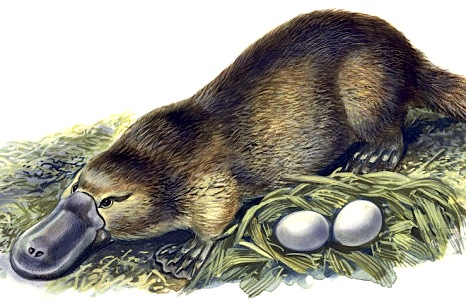
Finally, although the great unknown of platypus parenting was discovered in 1884, I’ve been pondering another mystery of the Ornithorhynchus anatinus. Why was it, that C.S. Lewis failed to include these wondrous creatures in Narnia? Perhaps it was because their semi-aquatic nature meant they would be of little value in the battles that marked the events recorded in the Chronicles? I have little doubt that despite the absence of their mention, Narnia’s waters teemed with their frolicking duck bills, otter feet and beaver tails.

The Power of Names

babyC.S. Lewis was a man who recognized the power of a name. In fact, that awareness made the opening line of The Voyage of the Dawn Treader one of the most memorable in all of Christian literature: “There was a boy called Eustace Clarence Scrubb, and he almost deserved it.”

Names are used, of course, for identification. Throughout history, different countries have had different naming conventions. A rather common one featured the giving of a personal name to a child, with the patronym added to distinguish between individuals of the same name.

This led to distinctions such as James ben Zebedee of the Christian gospels or Leifr Eiríksson the first millennium explorer of North America. Hearkening back to my own Scandinavian roots, I favor the innovative example Ole Olson, or more commonly Ole Olsen. (The only problem with this name was that it failed to distinguish one Ole from the thousands of other Ole Olsons who dotted the steep coastlines of the Viking fjords.)

God too reveals the importance of names. In the Gospel according to Matthew we read:

But as he considered these things, behold, an angel of the Lord appeared to him in a dream, saying, “Joseph, son of David, do not fear to take Mary as your wife, for that which is conceived in her is from the Holy Spirit. She will bear a son, and you shall call his name Jesus, for he will save his people from their sins. (Matthew 1:20-21).

In one of the most powerful prophecies ever recorded, we hear various titles—in essence, names—of the Messiah Jesus.

For to us a child is born,

   to us a son is given;

and the government shall be upon his shoulder,

    and his name shall be called

Wonderful Counselor, Mighty God,

   Everlasting Father, Prince of Peace.

                                                             (Isaiah 9:6).

The reason that names are on my mind is because recent research has revealed that in America (well, California precisely, and assuming that data can be applied to the entire country) . . . the choice of baby names can even evidence the political leanings of the parents. Now, we’re not talking about parents who name their children directly in honor of a particular politician; it’s much more subtle than that.

Here are a couple of interesting facts gleaned from the study.

The results revealed that overall, the less educated the parent, the more likely they were to give their child either an uncommon name (meaning fewer than 20 children got the same name that year in California), or a unique name (meaning only one child got that name in 2004 in California). When parents had less than a college education, there were no major ideological differences in naming choice.

However, among college-educated whites, politics made a difference. College-educated moms and dads in the most liberal neighborhoods were twice as likely as college-educated parents in the most conservative neighborhoods to give their kids an uncommon name. Educated conservatives were more likely to favor popular names, which were defined as names in the top 100 in California that year.

The sounds of liberal and conservative names varied, too. For both boys and girls, liberals tended to pick more feminine-sounding choices, such as Liam, Ely and Leila names that include lots of L sounds and soft-A endings, including popular choices Ella and Sophia. Conservatives, on the other hand, tend to pick names with more masculine-sounding Ks, Bs, Ds and Ts, such as Kurt.

Beware of the temptation of attempting to jump aboard a naming fad. “Unique baby names can sometimes grate, however. In 2011 . . . an informal survey of hated baby names found that Nevaeh, or ‘heaven’ spelled backward, was the most commonly cited as a hated name. The name was invented in the 1990s and became the 31st most popular in the United States in 2007.”

My wife and I are surely in a minority. We chose the names for all three of our children based upon their meanings . . . a practice quite common in the Scriptures.

C.S. Lewis knew well the power of a name.

Perhaps it has sometimes happened to you in a dream that someone says something which you don’t understand but in the dream it feels as if it had some enormous meaning—either a terrifying one which turns the whole dream into a nightmare or else a lovely meaning too lovely to put into words, which makes the dream so beautiful that you remember it all your life and are always wishing you could get into that dream again. It was like that now.

At the name of Aslan each one of the children felt something jump in his inside. . . . Susan felt as if some delicious smell or some delightful strain of music had just floated by her. And Lucy got the feeling you have when you wake up in the morning and realise that it is the beginning of the holidays or the beginning of summer. (The Lion, the Witch and the Wardrobe).

It comes as no surprise to any Narnian sojourner that the very name of Aslan should so move his followers. After all, we too understand Who the great Lion is. For, as he once said to Lucy and Edmund, when asked if he was here in our world as well,

“Are—are you there too, Sir?” said Edmund.

“I am,” said Aslan. “But there I have another name. You must learn to know me by that name. This was the very reason why you were brought to Narnia, that by knowing me here for a little, you may know me better there.” (Voyage of the Dawn Treader).