Pharisaical Cats

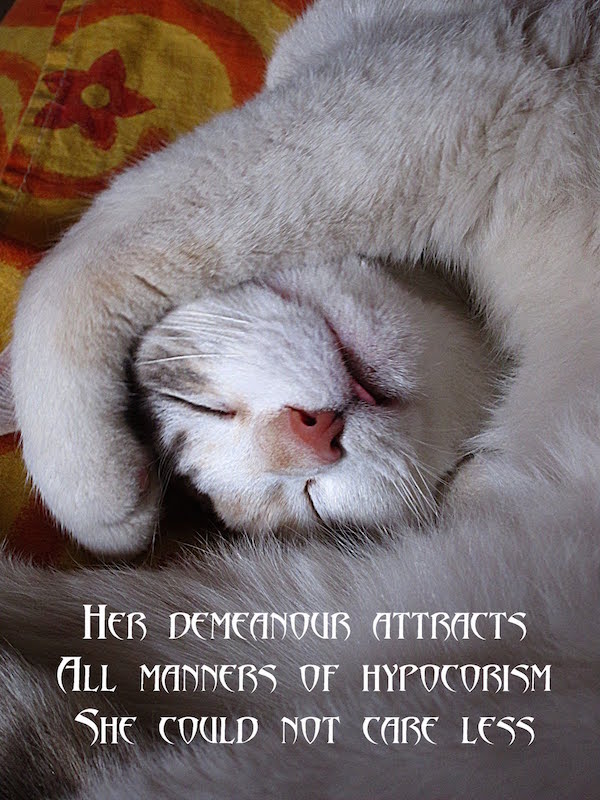
catsCats or dogs? Which makes the best companion? This is one of the few topics guaranteed to arouse arguments as intense as political debates.

The fact is, the first three words already elicited a visceral reaction from most readers. “Cats or dogs” might as well read “cats versus dogs.”

Even though many of our homes welcome both species as residents, we all know they are drastically different. Many dogs eagerly solicit feline playful attention, while most cats choose to remain aloof from them, barely tolerating their canine presence.

The humans who share the habitation may genuinely loves both types of animals, but in the deep recesses of their hearts everyone possesses a (sometimes secret) preference for one or the other.

Of course, if we’re a “cat person” we wouldn’t want our dogs to know that; it would hurt their feelings. And, if we’re a “dog person” we wouldn’t want our cats to know, lest they treat us with even greater disdain than they already do.

C.S. Lewis was an animal lover. He had both dogs and cats during his lifetime. And he recognized well their differences. In a 1955 letter to an American correspondent, he wrote:

We were talking about Cats & Dogs the other day & decided that both have consciences but the dog, being an honest, humble person, always has a bad one, but the Cat is a Pharisee and always has a good one. When he sits and stares you out of countenance he is thanking God that he is not as these dogs, or these humans, or even as these other Cats!

I love Lewis’ comparison of their temperaments. I don’t think I’ve ever met a cat who was not at least a little bit self-righteous. As for canines . . . even disobedient rascals (like our yet-to-be-sufficiently-trained adolescent border collie) are quite aware of the fact that they are being “bad.” Some are even grow remorseful.

In a 1961 missive Lewis addresses the psychoanalysis of a cat. He is responding to a correspondent’s announcement that her veterinarian had diagnosed her cat with some behavioral problem.

I hope your vet is not a charlatan? Psychological diagnoses even about human patients seem to me pretty phoney. They must be even phonier when applied to animals.

You can’t put a cat on a couch and make it tell you its dreams or produce words by ‘free association’. Also—I have a great respect for cats—they are very shrewd people and would probably see through the analyst a good deal better than he’d see through them.

Lewis is quite likely correct in this observation. Our cats obviously see through all of their human “family.” They are not only astute, they act disinterested, but actively observe us all day long. (Well, at least during the ninety-four minutes when they are not napping each day.)

I have written about C.S. Lewis’ dogs in the past. I’ll close now with a passing reference Lewis made in a 1962 letter to a fellow cat-lover.

We [you and I] are also both ruled by cats. Joy’s Siamese—my ‘step-cat’ as I call her—is the most terribly conversational animal I ever knew. She talks all the time and wants doors and windows to be opened for her 1000 times an hour.

So it goes with our pharisaical felines. With majestic posture, they patiently wait for us to fulfill their commands.




Do Dads Matter?

dadsaurusThey most certainly do, if you are discussing the influence of parents on their children’s religious practices.

And, as politically uncomfortable as it may make people, the example of the father appears to exert far more influence than that of the mother.

In 2000, a Swiss study was released that revealed, in part, the way parental faith is transmitted to children. I was reminded of it while reading “Dads Being Dads,” in the current issue of The Lutheran Witness.

A Touchstone article (linked below) analyzed the study. It compared the frequency of worship attendance by parents with the consequential involvement of their children as they matured.

If both father and mother attend regularly, 33 percent of their children will end up as regular churchgoers, and 41 percent will end up attending irregularly. Only a quarter of their children will end up not practicing at all.

If the father is irregular and mother regular, only 3 percent of the children will subsequently become regulars themselves, while a further 59 percent will become irregulars. Thirty-eight percent will be lost.

These numbers sound extreme, don’t they? Some of us will be doing calculations in our minds. In my own family, my mother was a faithful Christian. My father was agnostic. (Actually, he was a practicing atheist who would argue “I believe in God.”)

Of the three kids, I am a regular church attender. Not just because I’m a pastor; since I’m “retired” and have no external obligation to attend. My sister attends occasionally. My brother only for special, family events.

Hmmm, that is merely anecdotal, of course, but my observation of other family histories seems to bear out the findings of the demographic study.

While some readers may wish to challenge the applicability of a Swiss study to other nations, the simple fact that the burden to do so rests on them. The experience in Switzerland is almost certainly common to the rest of Europe and the other increasingly secularized countries of the West.

And, since it is about gender distinctions rather than culture variations per se, it may even correlate to less industrialized contexts.

Just how much more significant is a father’s example than a mother’s?

Even when the father is an irregular attender there are some extraordinary effects. An irregular father and a non-practicing mother will yield 25 percent of their children as regular attenders in their future life and a further 23 percent as irregulars. This is twelve times the yield where the roles are reversed.

Let’s consider that statistic a fluke, and cut it in half . . . no, into quarters. Even if is off by that great a magnitude, it would still mean that in this scenario, a father’s example is three times as significant as mother’s.

The study does not concern itself with the reasons for the disparity, but I have a theory. At the risk of sounding like a traditional dinosaur, as C.S. Lewis described himself, allow me to offer it.

  • Women are inherently more receptive to Christian virtues such as compassion, gentleness, and mercy.
  • Even if their mother discounts worship, the hearts of most girls are still attuned to its song.
  • Christian virtues of forgiveness and meekness resonate less in boys (not just because of their upbringings).
  • If a father goes to church without his wife, daughters will still be inclined to desire to accompany him.
  • If a father stays home, it promotes a boy’s innate suspicion (reinforced by external forces) that “religion is women’s business.”

This doesn’t mean, of course, that single mothers should despair. God is the One who draws us to himself, and he can most definitely do so in the absence of any other positive influences.

This is my prayer of gratitude: God bless faithful mothers.

As a reward for those who read these thoughts to their end, I would like to share one of Lewis’ allusions to himself as a dinosaur. This passage comes from his essay, “De Descriptione Temporum.”

If a live dinosaur dragged its slow length into the laboratory, would we not all look back as we fled? What a chance to know at last how it really moved and looked and smelled and what noises it made!

And if the Neanderthaler could talk, then, though his lecturing technique might leave much to be desired, should we not almost certainly learn from him some things about him which the best modern anthropologist could never have told us? He would tell us without knowing he was telling.

One thing I know: I would give a great deal to hear any ancient Athenian, even a stupid one, talking about Greek tragedy. He would know in his bones so much that we seek in vain. At any moment some chance phrase might, unknown to him, show us where modern scholarship had been on the wrong track for years.

Ladies and gentlemen, I stand before you somewhat as that Athenian might stand. I read as a native texts you must read as foreigners. You see why I said that the claim was not really arrogant; who can be proud of speaking fluently his mother tongue or knowing his way about his father’s house. . .

Where I fail as a critic, I may yet be useful as a specimen. I would even dare to go further. Speaking not only for myself but for all other Old Western men whom you may meet, I would say, use your specimens while you can. There are not going to be many more dinosaurs.

_____

You can read the cited article from Touchstone magazine here.


Great Grandparent or Great-Grandparent?

ggfI have never been more glad to have a birthday than I was this year. After all, at a mere sixty, I would have been far too young to become a great-grandfather. Now, at sixty-one, I feel adequately prepared for the momentous event which transpired just under an hour ago.

Tobin (meaning “God is Good”) is the child of my grandson and his wife, who currently reside in Texas where dad handles munitions for B-1 bombers.

Age and offspring do not always line up the way that we ourselves would plan. Yet every precious child is a miraculous gift from God.

Our grandson was born to our precious daughter-in-law while she was in high school. We didn’t get to meet him until he was ten, but we’ve done our best to make up for lost time. Our grandson, early on began calling us his “great grandparents.” That didn’t make us feel old, just special.

When my wife worked in a residential care facility for severely handicapped children, one of the aides arrived one morning with joyous news. “I’m a great-grandmother!”

Because the woman seemed too young, Delores responded, “Congratulations, you look so young for being a grandmother.”

The lady laughed and said, “No, a great-grandmother!” It turns out she was not yet forty . . . having been 13 when she had a daughter who was 13 when she had her own daughter who now had birthed her own baby. (I don’t recall the gender of the child.)

As I wrote this, it dawned on me that this all took place thirty-seven years ago, so it’s quite possible there are now several more generations in that particular family tree.

Some people will scoff at the thought of celebrating such early and assumedly unintended pregnancies. But, that caregiver knew the truth—every young life is a gift from God.

As an imperfect parent and grandparent, I recognize all too well that I won’t be the great-grandfather Tobin should have. I do pray, though, that God would grant that my mistakes with him would be few, and the memories forged during this life will help this little one grow into the finest man that he can become.

Most importantly, I pray that he will see Christ in my life and recognize the value of faith. Only the Lord knows what the future will bring, and I will not be here to share too many decades of life with my grandchildren and great-grandchildren. But my hope is that the time we do have will leave a lasting legacy of encouragement, faith, and compassion.

The letters of C.S. Lewis provide insights into the influence of his grandparents on his young life.

In a 1905 letter to his brother Warnie, he describes family festivities on Halloween. They even persuaded his grandfather to join in.

On Halow-een we had great fun and had fireworks; rockets, and Catherine wheels, squbes, and a kind of thing that you lit and twirled and then they made stars. We hung up an apple and bit at it. We got [his paternal] Grandfather down to watch and he tried to bite.

In a 1916 letter to his father, he refers to his grandmother’s declining health. (She died two weeks after he wrote.) Lewis refers to the common sentiment that we should have tried harder to spend time with family while they were with us. “I am sorry to hear what you say about [Lewis’ maternal] Grandmother: I feel that we ought to have seen more of her, but it was not easy.”

I should dearly love to get away for a bit, but, as you say, for so short a time, the expense and the interruption of work is hardly worth it. The Colonel must have had an unpleasant journey: I wish he would keep a diary which we could compare with that of Grandfather Hamilton in the same waters. Two generations of sub-tropical Atlantic and Hamilton temperament would be worth studying!

The diaries left by C.S. Lewis’ grandfather, and by his brother Warnie, provide a reminder to us that a written legacy will outlast our voices. If we have something important to say to our descendants, perhaps that is something we should keep in mind.

Pet Names

hypocorismHow many hypocorisms do you have? Which of them are your favorites? Are there any you would sooner never hear again?

I subscribe to one of those “word of the day” emails sent by services such as dictionary.com or thefreedictionary.com.

The truth is, more often than not I’m already familiar with the word they choose to define each day. However, when something hits me out of the proverbial blue—I am amazed and pause to ponder its meaning, history, and reasons why I may never have crossed its path before. (I imagine this behavior is widely replicated among word lovers.)

“Hypocorism” is one of those surprises. It had no place in my lexicon, although the concept of “pet names that are bestowed with affection” is something my family and I have always practiced.

I grew up being called Robbie, and as a young adolescent told my family I preferred to go by Rob. Rob is probably verbal shorthand for Robert, but Robbie is definitely hypocoristic. It is amusing to me that my beloved grandmother never ceased to call me Robbie—even though every precious letter I received from her while serving in the military far from home began, “Dear Robert.”

We’ve already noted the key aspect of a hypocorism. It is a name expressing endearment, not disrespect. That doesn’t mean, of course, that it is not embarrassing. Many people bestow pet names on their loved ones that are best shared only with family.

Some pet names are simply silly. Two of my granddaughters often call me “Bumpa.” That is not a reference to any lumpiness on my part, but to the way the eldest of them began pronouncing “Grandpa” when she was oh so tiny. It was cute, special, and passed on to her younger sister, at first through aural osmosis . . . and later through conscious affection.

C.S. Lewis’ family members were enthusiastic practitioners of hypocorism.

One of the things that new students of Lewis often find confusing is his own name. The fact that he was known to family and friends as “Jack” begs the question of the source of that name. The story, though oft told, remains quite entertaining.

The initial version of Lewis’ adopted name was Jacksie. Lewis loved dogs, and his stepson Douglas Gresham writes that Jacksie was one of these childhood animals.

When he was a small boy, he didn’t like the name [Clive] and soon changed it to “Jacksie” by simply refusing to answer to anything else. It was actually because of a small dog that he was fond of that he picked the name Jacksie, which was what the dog was called. It was run over (probably by a horse and cart as there were almost no cars at the time and place where he was a child), and Jack, as he later became known, just took the name for himself. (Jack’s Life)

I have shared in the past how Lewis’ brother Warnie [Warren] related the event.

Then, in the course of one holiday, my brother made the momentous decision to change his name. Disliking “Clive”, and feeling his various baby-names to be beneath his dignity, he marched up to my mother, put a forefinger on his chest, and announced “He is Jacksie.”

He stuck to this next day and thereafter, refusing to answer to any other name: Jacksie it had to be, a name contracted to Jacks and then to Jack. So to his family and his intimate friends, he was Jack for life: and Jack he will be for the rest of this book.

Lewis’ life was filled with other hypocorisms. One of the most curious was the nick name “Minto,” given to Janie Moore. Mrs. Moore and her daughter were supported in his home by Lewis after her son Paddy had been killed in WWI. The two men had pledged that if only one survived, he would care for the other’s widowed parent. Lewis kept that promise.

As you reflect on the pet names that you share with those you love, you are in good company. An affectionate hypocorism is a truly precious gift.

Dogs are Better than Kids

dressed dogAt least that appears to be the thinking in Seattle. A recent census of the city’s population found that the preference isn’t even close.

While Seattle boasts 107,178 children it is home to about 153,000 dogs.

As a dog-loving Washingtonian, I’m not surprised by this statistic. But I don’t support the odd excesses of some pet owners. These include a woman who uses a baby stroller to keep her Chihuahua safe. “She also owns a basket full of dog clothes, including a few dog necklaces and wigs…”

Seattle Magazine notes the city is becoming a top destination for canine travelers.

Seattle’s dog-mecca status is starting to get noticed nationally; it’s considered one of the top 20 destinations in the United States for people who want to travel with their dogs, according to Melissa Halliburton, the founder of Bring Fido, a dog-focused travel agency out of South Carolina. “Seattle has 45 pet-friendly hotels, 38 [pet-friendly] attractions—including the dog-friendly Fremont Sunday Ice Cream Cruise…”

As delightful as an Ice Cream Cruise for dogs sounds, I’d prefer to invest in my children’s educations and take our Border Collies for a brisk walk. I’m sure they’d enjoy the frozen treat, but they will appreciate the exercise even more.

Why Dogs Instead of Kids?

Obviously, simultaneously enjoying human offspring and doggie kids is possible. They aren’t mutually exclusive. And most of the parents I know understand how having a dog in the family helps children grow up healthier (allergies aside).

The article asks this question and offers insightful thoughts.

Why are we so dog crazy? It could be that the 41 percent of us who are single appreciate the companionship. Maybe our outdoorsy pursuits are more fun with dogs. Or maybe dogs just make us feel good.

I heartily concur with the second and third points. And I find the first suggestion (highlighted in the original article) to be quite provocative.

God created us to desire companionship. “Then the Lord God said, ‘It is not good that the man [or woman] should be alone…”

This companionship need not be restricted to marriage. Some people have the gift of celibacy and can live chastely without marrying. C.S. Lewis would be a good example of this. He found his needs for deep friendships met by a handful of intimate friends. The profound joy he experienced when he married caught him totally off guard.

Unfortunately though, there are many who long to find their life companion and have yet to find that prayer answered. Then there are those tragic cases where illness, accident or war have stolen a spouse far too early. The Christian Church has always possessed an intense compassion for widows.

In either of these cases, the companionship of a dog provides a responsive outlet for our affection. Here too C.S. Lewis provides an example. I’ve written here in the past about his love of dogs.

However, it is not only the still-waiting and the bereaved who find themselves reluctantly single.

Another case that is far more common arises when people have made themselves vulnerable and opened their hearts to another… only to be betrayed.* This betrayal may have been physical, emotional, or psychological. Often it is all of these.

In these cases, replacing our unfaithful partner with a dog is especially apropos. There could be no more faithful and forgiving a friend than a dog. A dog who welcomes you every time you come through the door with passionate enthusiasm and happiness impossible to fake.

The truth is that as special as they are, dogs aren’t better than kids… even in Seattle. But, that said, life is sure a lot more fun with them in the mix.

_____

* Just as most of us know the pain of betrayal, many of us recognize we too may have been betrayers. There have been times—perhaps many—when we have disappointed or wounded those who trusted and loved us. However, it does not need to end here, with us mired in guilt.

If you find yourself in this situation, seek reconciliation or forgiveness from the person(s) you have wronged. Confess what you have done as the sin it is, and receive his promised forgiveness. And finally, as Jesus himself said, “Neither do I condemn you; go, and from now on sin no more.”

Adopting a Puppy

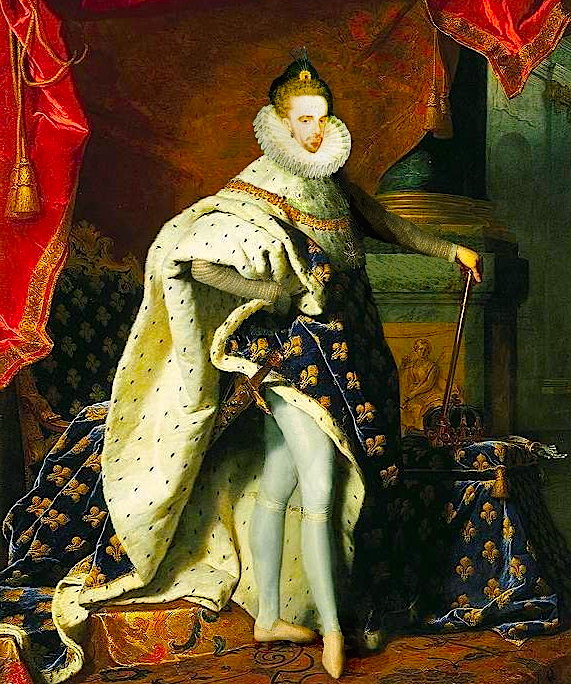
calliI recently described Henri III’s torture of puppies during his reign. The clown actually wore them, as an adornment!

In that same column, I mentioned that we were adopting a new puppy . . . and she has arrived in our home!

Getting a puppy marks a departure from our normal pattern. Our last three border collies (including the mature lady who still graces our manse) were all “rescues.”

However, we did not feel that Foxy was up to adjusting to another mature dog, since she lost Lyric last winter and her other (long-lived) sister, Tanner.

In my post about Henri III, I shared comments from two letters that C.S. Lewis wrote a century ago to one of his closest friends. Arthur Greeves had gotten a puppy, and Lewis reminded him of the responsibilities of the human member of that relationship.

Lewis wrote that it was cruel, “Unless you are a person with plenty of spare time and real knowledge, it is a mistake to keep dogs . . .”

In a subsequent letter, Lewis advised Greeves on how to choose a name for his puppy.

How’s the poor, miserable, ill-fated, star-crossed, hapless, lonely, neglected, misunderstood puppy getting along? What are you going to call him, or rather, to speak properly, how hight he? Don’t give him any commonplace name, and above all let it suit his character & appearance. Something like Sigurd, Pelleas or Mars if he is brisk and warlike, or Mime, Bickernocker or Knutt if he is ugly and quaint.

We had already chosen the name for our puppy before I found this quotation. But I think Lewis would have approved.

We named our new little girl after one of the Greek Muses, who inspired literature and the arts. Her name is Calli.

If you’re knowledgeable in mythological matters, you will recognize that it’s our nickname for Calliope, the Muse of epic poetry.

Being more of a historian than a poet, I wanted to use the name Clio, who is the Muse of History. Calli fits her better though.

Calliope is a wonderful, musical name though, since she was the chief Muse, and her name literally means “beautiful-voiced.” What a lovely name. I hope Calli learns to sing, like our first border collie, Lady. Lady would accompany my wife as she played the piano. It was quite entertaining.

If you have read this far, you too are likely a pet lover. If you have a dog, cat, rabbit, lemur or whatever, of your own, may the Lord bless it with a long and healthy life . . . just as we pray for our own little Calli.

Abusing Puppies

henriPuppies are cute and cuddly, but leave it to a French king to carry that fact to absurd lengths.

One might think owning 2,000 lap dogs is a bit overmuch. Not so Henri III (1551-1589). It would seem that after the first thousand, it might become difficult to recall all of their names, but that didn’t deter Henri.

He so loved his puppies that he used them as a form of adornment, regularly wearing them in a small basket suspended around his neck.

And, amazingly, it appears none of his courtiers mentioned that it looked quite silly. Who knows, he may have established a temporary fad, not unlike the purse puppies used by some modern celebrities to increase attention to themselves.

Puppies are on my mind now, because my wife and I have “reserved” a border collie from a recent litter.

Some readers will recall the grief we experienced when a dog we rescued a year ago, died due to an onslaught of seizures, one after the other. Lyric’s tragic passing, at a young age, was so much more difficult than the loss of our previous three who had lived well into their geriatric years.

It’s taken us a year to be willing to consider adding another dog to our family. We still have Foxy, who we rescued about eight years ago, during our final military tour in California. We decided it would be much easier for her if we added a puppy to our family this time.

I’ll write more about our puppy in the future. For now I’ll end with the “teaser” that we’re naming her after one of the Greek Muses.

C.S. Lewis loved dogs, although apparently not enough to wear them like jewelry.

In 1916, he corresponded with his friend Arthur Greeves about adding a puppy to the latter’s family. His first mention, as Greeves was contemplating the decision, reveals Lewis’ emphasis on the wellbeing of the dog over its master’s preferences.

I think you are very wise not to take that puppy from K. Unless you are a person with plenty of spare time and real knowledge, it is a mistake to keep dogs–and cruel to them.

Greeves proceeded with the adoption, as Lewis appends a postscript to his next letter, written a week later.

Poor puppy!! What a life it’ll have! I shall poison it in kindness when I come home!

In a subsequent letter, the same month, Lewis offers advice about naming the puppy that I was delighted to read. It suggests that he would approve of our decision for the name of the new addition to our family.

In the meantime, whatever name we bestowed on our new puppy, she would never need to worry about being traipsed around on display like a fashion accessory. We’ll leave that to French kings and egocentric divas.

Marrying a Writer

museA recent episode of the series Castle illustrated something all of the spouses of writers know—they are wed to peculiar people.

The premise for the program, currently in its seventh season, is that a mystery novelist accompanies homicide detectives in New York City on their investigations.

Despite his frequently outlandish theories, Richard Castle often contributes significantly to solving the crimes. His counterpart is Kate Beckett, the senior detective who leads the team.

The two of them recently wed, which led to the following exchange while they were on their honeymoon, which doubled as a homicide investigation at a frontier “dude ranch.”

Faced with complex evidence, Castle says, “That’s why we approach this as writers.”

Beckett responds with a comment representative of literary spouses. “So we procrastinate and we make things up?”

Ouch.

That strikes a bit close to home. The second element—making things up—can be construed by our nimble minds as an actual compliment. Yes, we do think creatively and out of the mundane box. Thank you very much.

On the other hand, the procrastination label . . . well, speaking for myself, it fits far too well.

Writing, after all, is not simple. Even poor writing requires effort. And, if one hopes to write well . . . it requires time, skill and practice.

Few can sit down at the keyboard and imperiously command their “muse” or inspiration to be at hand. This is true for all authors, including Christian writers who seek guidance from the Holy Spirit.

The simple fact is, however, that if we waited until we felt fully inspired, most of us would accomplish little.

In my own case, I sincerely attribute anything good that I might write to the Lord. The chaff comes from me. I won’t presume to guess what small percentage of the words are wheat, but I will confess that I am most productive when I discipline myself to write. And, this discipline typically involves a self-imposed deadline.

Thus the reason for the graphic at the head of the page. I have recognized in the fall of life, as I seek to pursue my writing avocation more seriously, that “The deadline is my Muse.”

Beckett knows very well that her fictional husband often requires a deadline to complete his novels.

My wife sees the same principle at work when I request her urgent proofreading of something I’ve waited too long to complete.

C.S. Lewis had ample experience with deadlines himself. And he knew well that even a required submission date could not guarantee literary production. In 1958 he wrote to his editor, Jocelyn Gibb, saying that he may, or may not, be able to provide a contribution to an upcoming edition of The Psalms as Poetry.

Dear Gibb, Thanks for the book, a very nice bit of work. I’ll try to re-read Miracles for mis-prints while I’m in Ireland, where my wife and I go tomorrow. When is deadline for your Fifty-Two? Not that I’m sure I can pump anything up anyway.

He did manage to provide a contribution, which he later included as part of the introductory chapter for Reflections on the Psalms.

I’m not certain whether Lewis wrote those pages simply because inspiration compelled him to . . . or if the issue deadline provided a little supplemental motivation. I suspect it was the latter.

To any writers out there who never require the encouragement of a deadline—consider yourself uniquely blessed!

To the masses who share my battle with the plague of procrastination, you have my sympathy. Still, after pausing for just a moment to commiserate, let’s get back to the pleasant labor of writing, and the thrill of “making things up.”

Bill Cosby Redux

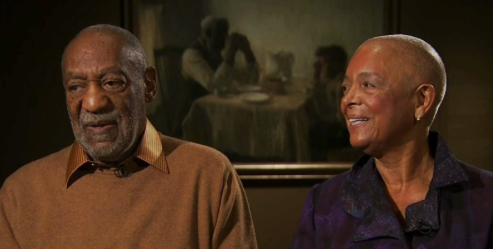
Bill & CamilleIn light of recent revelations, my daughter urged me to delete my recent post about Bill Cosby.

As the extensive evidence of a sordid past have been coming to light, albeit accusations rather than substantiated facts, the propriety of that original post falls into question.

For the time being, I am disposed to leaving it up. For several reasons. I could say one is the notion of “innocent until proven guilty,” but that’s not true. Despite statutes of limitations, the accumulating evidence, quite sadly, appears indisputable.

On the subject of innocence, I admit to confused sentiments. As a Christian, who accepts the historic doctrine of “original sin,” I confess at every worship service that I too am a hopeless sinner, in dire need of God’s grace and mercy. What’s more, as a Christian who believes we cannot earn forgiveness, I point not to my own ragged good works, but rely wholly on the grace—the undeserved love—of God.

C.S. Lewis recognized that mercy is the only solution for our guilt. In “The Humanitarian Theory of Punishment,” he wrote these words:

The essential act of mercy was to pardon; and pardon in its very essence involves the recognition of guilt and ill-desert in the recipient. If crime is only a disease which needs cure, not sin which deserves punishment, it cannot be pardoned.

I am quite conscious of my own deep need for pardon. Thus, I am ever wary of condemning those whose heart I cannot know.

The second reason for my reticence in removing this post, is that much of it remains true. The Bill Cosby who offered our family genuine laughter and wholesome entertainment, was apparently not identical with the real man.

But then I pause to wonder how many celebrities are truly consistent with their public persona? And, in light of the fact that we all have our failures and sometimes grievous sins, why should we expect them to be transparent and vulnerable to greater emotional violence than they all already receive?

My comments below were written with the understanding I possessed two short months ago. They were heartfelt at that time, and they illustrate in a clear way how perception is not always reality. Perhaps they can serve as a sort of a caution to others who are prone to investing too much trust in people they do not genuinely know.

Another reason I am inclined to leave the post up for the time being, is that there may be a value in preserving the quality of the artist’s work, even when we have been disappointed by the artist himself.

As an example of this, during a sketch on the last episode of Saturday Night Live, Michael Che criticized the actor’s vile behavior, but ended his scripted “newscast” with a thought that I believe represents the view of many.

“I don’t know how to feel about [networks cancelling The Cosby Show] because I don’t know Bill Cosby, but Cliff Huxtable practically raised me. I love that dude, and the only thing he ever tried to sneak while people were asleep is a hoagie. So while I may never forgive Bill Cosby, hopefully someday I can forgive Dr. Huxtable.”

It’s that Bill Cosby, the idealized, honorable, ever-witty, and doting father, that I remind my wife of. And I remain flattered by that.

Meanwhile, I pray for Bill and Camille Cosby. I pray for the victims of his offenses. I pray for the victims of some of those very women who, in likely turn, have wounded others because of their own emotional and spiritual injuries.

Sin is powerful. It’s effects cascade from life to life. But sin and evil do not have the final word. That is left to the Word incarnate, who has redeemed this fallen world. The Lord who heals our wounds and offers the glorious promise that one day . . .

He will wipe away every tear from their eyes, and death shall be no more, neither shall there be mourning, nor crying, nor pain anymore, for the former things have passed away. (Revelation 21.4).

Distant Fathers

miceChildren don’t get to choose their parents. They aren’t able to select loving parents in contrast to abusers. They can’t  express any preference about being in a home with a mom and a dad committed to them, and to one another.

But the home into which children are born matters a great deal in the direction and shape of their entire life.

It doesn’t take a genius to acknowledge that some settings are healthier than others. The ideal context (which very few of us are blessed to experience) is a home where mom and dad keep their vows to one another, and devote themselves to placing their children in the forefront of their concerns.

Those of us who are people of faith recognize a third pillar to this structure. There is spousal love, parental love, and love of God. When you have all three, you are fortunate indeed.

Sadly, for many, one or both parents are absent. They may be physically present (as my own alcoholic father was) but they are disengaged . . . unconnected . . . absent. I believe that when they are physically present but not really there, they often teach their children worse lessons than they would have learned if they were literally gone. But that’s a conversation for another day.

A study some months ago reveals that the absence of fathers during childhood can actually affect the brain of the child. Yes, you read that right—it can physically affect their brains.

In the study Dr. Gobbi and her colleagues compared social activity and brain anatomy between the two groups . . . the first, raised with both parents, and the second,  that had been raised only by their mothers. The results showed that mice raised without a father demonstrated abnormal social interactions.

This group of subjects also showed more aggressive patterns of behavior in comparison with their counterparts raised with both parents. In addition, these effects were stronger for female offspring. Interestingly females raised without fathers also had a greater sensitivity to the stimulant drug–amphetamine.*

Before continuing, it’s important to note that these experiments were conducted on animals . . . mice, to be precise. While we don’t normally think of mice as paternalistic creatures, neuroscientists assure us that these results are significant.

“Although we used mice, the findings are extremely relevant to humans,” claims Dr. Gabriella Gobbi, a researcher of the Mental Illness and Addiction Axis at the RI-MUHC, senior author and an associate professor at the Faculty of Medicine at McGill University. “We used California mice which, like in some human populations, are monogamous and raise their offspring together.”

California mice? Monogamous? Who would have thought!

Whether you place much stock in this scientific research or not, most honest individuals acknowledge the significance our father and mother share in our early formation.

C.S. Lewis’ loss of his mother and the great distance between himself and his father greatly impacted the development of his personality. Lewis goes so far as to make this confession in Surprised by Joy: “With the cruelty of youth I allowed myself to be irritated by traits in my father which, in other elderly men, I have since regarded as lovable foibles.”

Elsewhere, Lewis writes longingly of the intimate relationship he longed to have had with his own father. Describing the source of author George MacDonald’s guiding inspiration in life, he writes:

An almost perfect relationship with his father was the earthly root of all his wisdom. From his own father, he said, he first learned that Fatherhood must be at the core of the universe. He was thus prepared in an unusual way to teach that religion in which the relation of Father and Son is of all relations the most central. (George MacDonald: An Anthology).

I did not have that sort of relationship with my own father. I strove to give it as a gift to my children though. And today, while I continue to be their dad, I am acutely aware of the kind of grandfather I am.

Whether it truly affects those developing minds or not, I am committed to caring for each of them as well as is humanly possible.

_____

* You can read the quoted article in The Neuropsychotherapist here. The abstract for the original research is available here.