How Precious You Are

God loves you.

It doesn’t matter how loveable, or unloveable you are, he loves you.

It doesn’t matter whether you praise his Name or deny his existence, he loves you.

It doesn’t matter whether or not you love him. You can even hate him . . . but he still loves you.

Doesn’t make sense to our fallen human reason, but it’s true. One of the amazing revelations of the Christian Scriptures is that God loves each and every one of the people he has created.

Every human being is unique, and each is precious to God. Whether you feel like it or not . . . whether you feel undeserving or (far more dangerously) you think you are a pretty “good” person . . . you are precious to him.

I find it intriguing how some manmade religions and philosophies consciously downplay the uniqueness of each person. What is clearly evidence of God’s infinite creativity—the glorious diversity of men and women the world over—is seen as something odd. A cosmic fluke to be remedied when all essence returns to the amorphous and undifferentiated “whole.”

The elimination of what makes you and me precisely who we are, seems to be the goal of some of these worldviews. But deep within each of our souls we know that this pursuit is wrong. It’s alien to the core of our existence. Loss of identity is, in a phrase, not that for which we were created. You and I were made for a different purpose. And our distinctive personalities (and even our quirks) in this one-time-in-all-creation combination, are no accident.

In his treatise on why suffering exists, C.S. Lewis offers a powerful glimpse into the singularity of our souls. He argues that Christ’s sacrifice was no generic or blanket wonder. Rather, it was a divinely individualized miracle. Listen to Lewis:

The signature on each soul may be a product of heredity and environment, but that only means that heredity and environment are among the instruments whereby God creates a soul. I am considering not how, but why, He makes each soul unique. If He had no use for all these differences, I do not see why He should have created more souls than one. Be sure that the ins and outs of your individuality are no mystery to Him; and one day they will no longer be a mystery to you. The mould in which a key is made would be a strange thing, if you had never seen a key: and the key itself a strange thing if you had never seen a lock. Your soul has a curious shape because it is a hollow made to fit a particular swelling in the infinite contours of the Divine substance, or a key to unlock one of the doors in the house with many mansions.

For it is not humanity in the abstract that is to be saved, but you—you, the individual reader, John Stubbs or Janet Smith. Blessed and fortunate creature, your eyes shall behold Him and not another’s. All that you are, sins apart, is destined, if you will let God have His good way, to utter satisfaction. The Brocken spectre ‘looked to every man like his first love’, because she was a cheat. But God will look to every soul like its first love because He is its first love. Your place in heaven will seem to be made for you and you alone, because you were made for it—made for it stitch by stitch as a glove is made for a hand. (C.S. Lewis, The Problem of Pain.)

I suspect that the intimately personal nature of God’s love for us is one of the things that moves some people from agnosticism to atheism. And I think I just may address that distinction in my next post.

Christians may cease reading here.

A personal and sincere note to any unbelievers reading this column. I’m not writing this to offend you, or to push any of the buttons that may be holdovers from your days in restrictive or destructive religious settings.

If you’ve never believed, I encourage you to tune out the voices (on both sides of the issue). Go directly to the primary account(s) of Jesus’ life and read them. (There are four “Gospel” accounts of his ministry, but I encourage you to first read the Gospel according to Saint John.) Any of your Christian friends would be eager to offer you a copy of the Bible for no cost, but it’s also available for free download at various sites. For example, here you can download an entire Bible in English Standard Version (ESV) for free.

If you once believed, but have laid your faith aside, I don’t want to offer guilt. Instead, listen to this promise of grace. Just as the father of the Prodigal Son was always awaiting the return of his child, the same joyous welcome home awaits you. If ever you desire to return home, know with certainty that he’ll welcome you again, not as a servant or second class citizen, but as his son or daughter. And you’ll hear the words from that parable proclaimed over you: “It is fitting to celebrate and be glad, for this your brother [or sister] was dead, and is alive; they were lost, and are found.” (Luke 15:32).
The Ides of March

I was introduced to ancient Rome as a young reader. Rosemary Sutcliff (1920-1992) wrote such fine historical fiction that it appeals to young readers and adults alike. A film version of The Eagle of the Ninth was made just last year. And I’m a sucker for a good Roman movie (wherein “good” excludes all of the so-called spaghetti gladiator films made in the fifties and sixties).

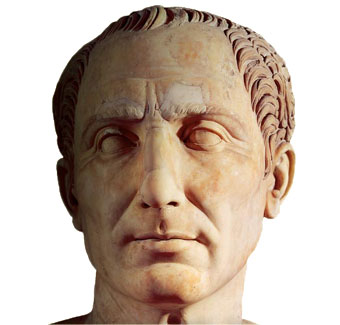
As a student of Rome, I find it worth noting today’s date. Even those who know “nothing” about Rome should understand its significance. You don’t need to have studied Latin or the classics to understand the warning “Beware the Ides of March.” The Ides is the fifteenth day of the month. And it was on this day that Julius Caesar was murdered by members of the Roman Senate.

It was left to his adopted son, Caesar Augustus, to transform the Republic into an autocratic Empire. It was this Caesar who ruled Rome at the time of Jesus’ birth, and he bequeathed the title of “Caesar” to his heirs. When Jesus requested that the Pharisees and Herodians “show him the coin for the tax,” we do not know whether Augustus or Caesar Tiberius adorned it. It matters not, since the image of Caesar was tantamount to representing Rome itself.

Jesus taught his disciples to be discerning in the loyalties we offer. We are to be responsible citizens. But we are also required to remember our true citizenship rests in the New Jerusalem.

C.S. Lewis astutely illustrated this truth. He lived during two global conflicts, and served in combat defending his homeland. Yet Lewis recognized the dangers of placing our trust (faith) in even the “noble” things of this world.

A man may have to die for our country: but no man must, in any exclusive sense, live for his country. He who surrenders himself without reservation to the temporal claims of a nation, or a party, or a class is rendering to Caesar that which, of all things, most emphatically belongs to God: himself. (“Learning in War-Time” – a sermon preached in Oxford in 1939).

So, on this day when Julius’ dreams of glory bled out in Rome . . . may you and I find refuge, hope, peace and meaning in the One who bled and died for each of us on Calvary.

Beware Your Personal Dragon

Readers of C.S. Lewis possess differing opinions on the film adaptations of the Chronicles of Narnia. One element from the latest film that is presented quite faithfully, is Eustace’s transformation into a dragon.

“He had turned into a dragon while he was asleep. Sleeping on a dragon’s hoard with greedy, dragonish thoughts in his heart, he had become a dragon himself.” (Voyage of the Dawn Treader).

With his brilliant insight and typical mirth, Lewis reveals for us a powerful dynamic of human existence. Two, in fact.

First, what we are inside—our genuine essence or spirit—will ultimately be revealed. This is true for most of us during this life. And, it will be experienced by all humanity as we stand before our Creator.

Second, what we desire—the longings upon which we focus our hearts and energies—shape that very essence. In a sense, Lewis is saying, we become what we covet!

What a wonderful lesson for us. It resounds with echoes of the Scriptures.

The title of this column suggests that we beware of the dragons to which we are particularly vulnerable. They vary from person to person, of course. And, they frequently shift, dependent on our biological age circumstances.

Martin Luther alludes to this in his broader comments about temptation and spiritual maturity:

To feel temptation is therefore a far different thing from consenting or yielding to it. We must all feel it, although not all in the same manner, but some in a greater degree and more severely than others; as, the young suffer especially from the flesh, afterwards, they that attain to middle life and old age, from the world, but others who are occupied with spiritual matters, that is, strong Christians, from the devil. But such feeling, as long as it is against our will and we would rather be rid of it, can harm no one. For if we did not feel it, it could not be called a temptation. But to consent thereto is when we give it the reins and do not resist or pray against it. (Luther’s Large Catechism).

Lewis reveals vividly what becomes of us when we surrender to our dragons. It’s not a pretty sight. And, sometimes it’s terminal. It would have been so, in Eustace’s own case, had not Aslan come to him with his healing grace

And so it is with us. No matter how dragonish you and I have grown, we can be healed of the affliction by the same Aslan, who is known in our world by a different name . . . Yeshua (Jesus).

Exercising Your Creativity

If you work in an “institutional” or office setting, you may be acquainted with the ubiquitous motivational posters that adorn offices from sea to shining sea. (I can’t speak for other countries, but here in the United States, these encouraging slogans can be found in government and private businesses across the land.)

They are so common, in fact, that they have been parodied by a company that offers “The Demotivator’s Collection.” They sell entertaining posters such as:

1. [Image of a sinking ship]

MISTAKES

It could be that the purpose of your life is only to serve as a warning to others.

2. [Image of a salmon leaping up a raging river directly into the mouth of a waiting bear]

AMBITION

The journey of a thousand miles sometimes ends very, very badly.

3. [Image of a fast food carton of french fries]

POTENTIAL

Not everyone gets to be an astronaut when they grow up.

Humor is powerful. I image that many of these demotivational posters adorn the walls of companies that recognize this fact. (You know, the ones with young, dynamic, iconoclastic leaders.)

Here’s one I might even have tempted to hang up in a couple offices where I used to work:

4. [Image of five hands linked together.]

COMMITTEES

Just like teamwork. Only without the work.

I agree with C.S. Lewis about the vital role humor plays in the lives of healthy people. As he wrote in Reflections on the Psalms: “A little comic relief in a discussion does no harm, however serious the topic may be. (In my own experience the funniest things have occurred in the gravest and most sincere conversations.)”

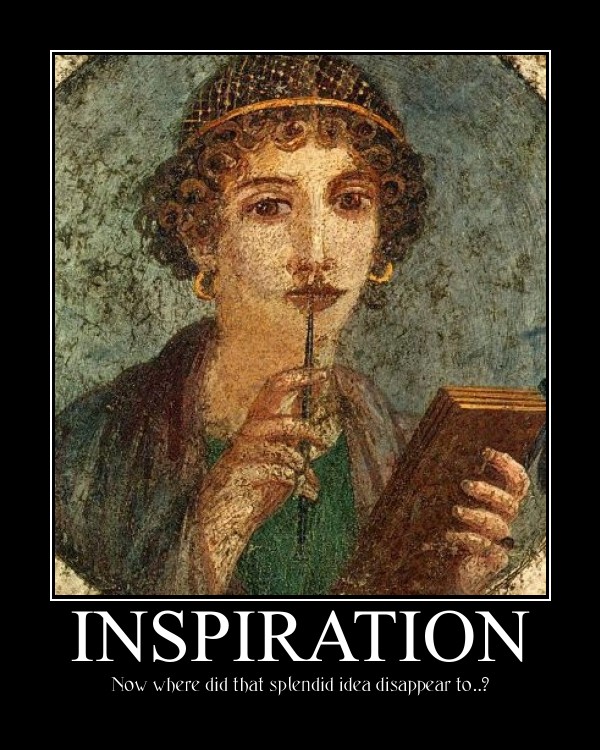
If you feel inspired by the concept of creating thoughtful—or witty—phrases to elaborate on a specific word or brief phrase, you can manufacture these graphics online yourself. Using this free application, you can craft your own (de)motivational posters—just as I did the one displayed above. Yes, that’s my handiwork.

The images you make are yours to download for free. The company needs to turn a profit though, so they offer high quality digital files or posters, for a price. (The free versions are only suitable for smaller applications, like blogs or other websites.)

How’s that for a great way to express your creativity? And it only requires a couple of minutes!

Oh, and if you’re wondering whether my poster about INSPIRATION is a motivator or a demotivator . . . well, I guess that’s in the eye of the beholder.

Happy Leap Day Birthday!

When our daughter-in-law was given a due date for her third child around the end of February, she decided to have her daughter on February 29, Leap Day. This was not a “scheduled” delivery with an inducement of labor. Katie simply chose to give birth to her baby on that day. And, she did.

After we sang “Happy Birthday” to that precious angel today, she immediately volunteered “I’m four!” It’s so nice that she’s not confused by the fact her actual birthday has only appeared on the calendar twice during her brief life.

Age is an interesting subject. We understand its relative applications (e.g. being old enough to begin formal schooling or drive an automobile), but what is its ultimate significance?

In his novel That Hideous Strength, C.S. Lewis says “Youth and age touch only the surface of our lives.” Quite an insight.

Like this body of ours, which we inhabit only for a limited time, in the scope of eternity our age means less than we typically think. Jesus, for example, encouraged his adult followers to receive God’s message with the simple faith “of a child.” I’ve learned firsthand that what passes for “maturity” is sometimes merely a calcification of our hearts and minds.

Our relationship with our Creator is intended to be a dynamic, living, growing thing. And, I suspect that when we’ve been in the Lord’s presence for a thousand eons it will still pulse with the vigor of youth and newness.

As Lewis wrote in The Silver Chair, “People have no particular ages in Aslan’s country.” Ages are something meant for here, for this transitory world.

Thus it’s fitting that we celebrate such transitions for those who mark birthday milestones of four, forty or fourscore. May God bless each and every child until we enter that Place where we no longer care to keep track of such concerns.

Human Transformation

Some of us aren’t really happy with the person we are. We’d like to be better than the man or woman who squanders their life in the pursuit of the trivial . . . while we neglect what is truly important.

Fortunately, when we look to God as he has revealed himself in his only, begotten Son, we are transformed. As we place our trust—our faith—in Jesus the Messiah, what was dying is reborn. Instead of aligning our eternal fate with a decaying world, we are embraced by the Giver of eternal life.

By the grace of God, through the work of his Holy Spirit, we are transformed. This is a lifelong process that doesn’t experience its culmination until we stand in the presence of our Lord. In the meantime, however, we are engaged in the process of “sanctification,” becoming holy (like our God is holy!).

Not only is this a lifelong process, it’s a daily, ongoing progression. C.S. Lewis provides an excellent illustration of the daily aspect of our spiritual growth:

The real problem of the Christian life comes where people do not usually look for it. It comes the very moment you wake up each morning. All your wishes and hopes for the day rush at you like wild animals. And the first job each morning consists simply in shoving them all back; in listening to that other voice, taking that other point of view, letting that other larger, stronger, quieter life come flowing in. And so on, all day. Standing back from all your natural fussings and frettings; coming in out of the wind. We can only do it for moments at first. But from those moments the new sort of life will be spreading through our system: because now we are letting Him work at the right part of us. It is the difference between paint, which is merely laid on the surface, and a dye or stain which soaks right through. (C.S. Lewis, Mere Christianity).

What a wonderful adventure we are on!

May the grace, mercy, peace and glory of God seep deep into your heart, mind and spirit.