
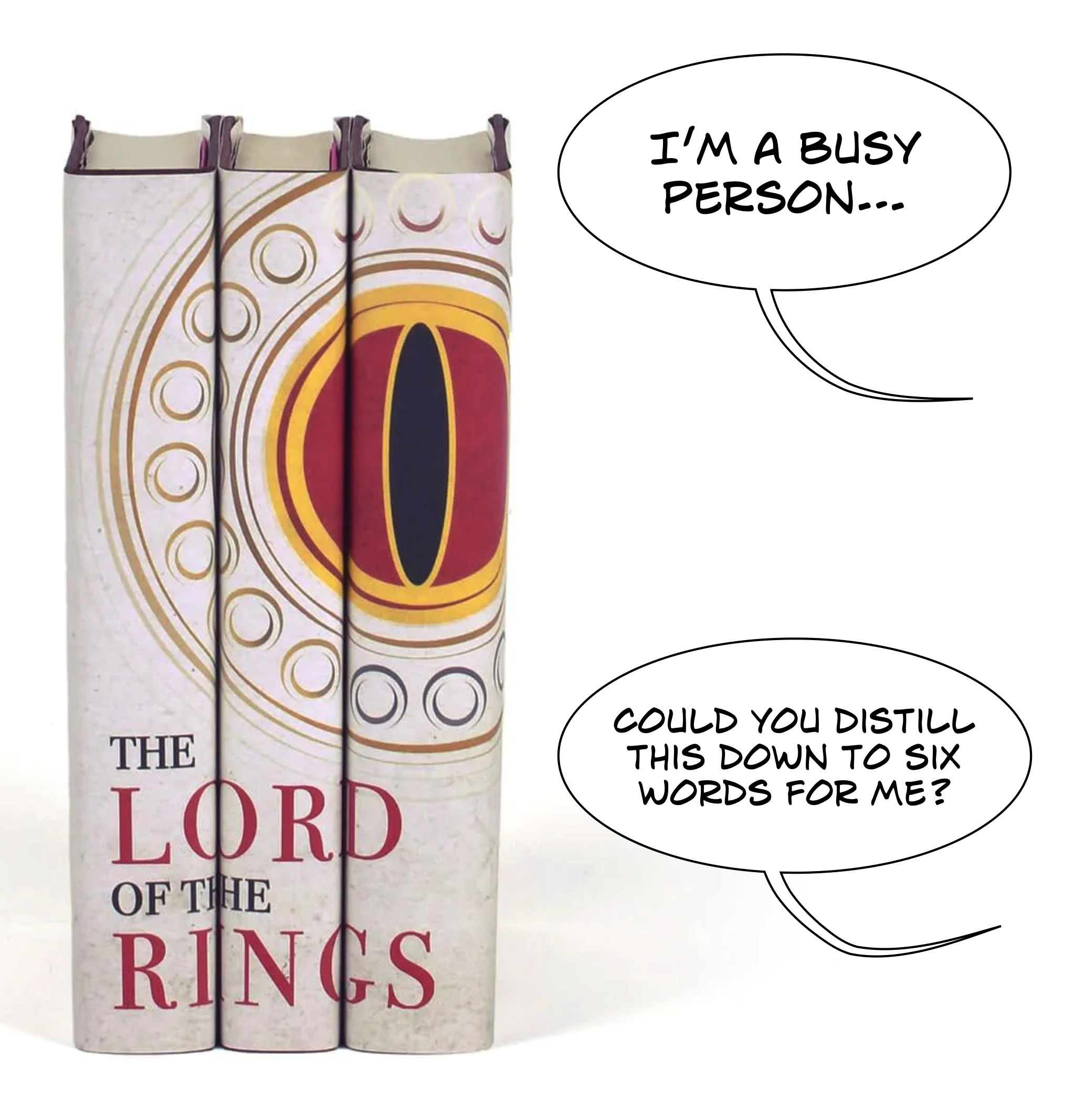
While we are unlikely to become another J.R.R. Tolkien or C.S. Lewis, it is quite possible to improve our literary skills.
There are numerous ways to strengthen our writing. One of my favorites is to “stretch” my abilities by engaging in exercises that push me far beyond my nonfiction comfort zone. More on the details in a moment.
C.S. Lewis prized brevity and clarity. Most readers do. I’ve written about this in “C.S. Lewis on brevity.” Before that, I had discussed brevity as a factor of “clear communication,” while focusing on the value of common semantics to avoid confusion.
I encourage you to read “In Defense of the Fairy Tale: C.S. Lewis’s Argument for the Value and Importance of the Fairy Tale.” The author cites Lewis’ reason for choosing the fairy tale as his genre for Narnia.
[Lewis] describes the invention process for the Chronicles of Narnia as first coming in mental images, “a faun carrying an umbrella, a queen on a sledge, a magnificent lion.” Next came the selection of a form in which to tell the story, one absent of a love interest or close psychology.
The form excluding these was the fairy tale. Lewis tells us that he fell in love with the form itself, “its brevity, its severe restraints on description, its flexible traditionalism, its inflexible hostility to all analysis, digression, reflections and ‘gas’” and the very limitations of the vocabulary.
He concludes, “I wrote fairy tales because the Fairy Tale seemed the ideal Form for the stuff I had to say,” not unlike the stone selected by the sculptor or the sonnet by the poet.
While I share the passage above at some length, my focus here is on Lewis’ observation that fairy tales are inherently “brief.” The fairy tale was, indeed, the “ideal Form” for C.S. Lewis’ classic stories from Narnia.
Even Briefer Genres
As a brevity-challenged individual (common for pastors), I like writing exercises able to make a dent in my innate verbosity. And what shorter option might one explore than a genre limited to a half dozen words?
Before embarking on my current challenge, let me give you a bit of background on the Six Word Story.
As Mark Twain famously wrote, “I didn’t have time to write a short letter, so I wrote a longer one instead.” Intense Minimalism provides similar inspiration from other earlier writers.
“Not that the story need be long, but it will take a long while to make it short.”
Henry David Thoreau,
“It is my ambition to say in ten sentences what others say in a whole book.”
Friedrich Nietzsche
“If I had more time, I would have written a shorter letter.”
Marcus Tullius Cicero (a predecessor of Samuel Clemens)
And back again to Mark Twain:
“If you want me to give you a two-hour presentation, I am ready today. If you want only a five-minute speech, it will take me two weeks to prepare.”
C.S. Lewis was capable of writing long personal tomes to family and intimate friends. His correspondence with casual friends – such as Americans who sometimes sent food gifts during Britain’s post-WWII rationing – tended to be warm, but short. This was particularly true when his brother Warnie was not available to assist with his correspondence, as the following letters attest.
20th. January 1948
Dear Mr. Howard, This is really very handsome of you, and you could hardly have sent a more welcome gift. I have only to call your attention to the so-called ‘Superfine’ paper on which I am replying to give you some idea of the luxury of writing on a decent paper at last. But I’m afraid there is something which even American generosity cannot supply me with: an article called TIME, which was the cause of my previous letter! (its brevity I mean)25th August 1949
Dear Dr. Allen Yet once again hearty thanks for a fine parcel which has arrived in excellent condition to-day. I don’t know how we should get on without you. My brother who drives the typewriter is away and my hand is nearly dropping off from letter writing, so you’ll forgive brevity – and the horrible scrawl! I’m none the less grateful inside!
Six Word Stories were popularized in the United States through association with Ernest Hemingway. However, it is an urban legend to credit him with this poignant example: “For sale, Baby shoes, Never worn.”
MasterClass offers a helpful lesson at “How to Write an Unforgettable Six-Word Story.” They actually suggest that you can drop a few of these into your writing day to renew your energy.
Like other forms of short stories or flash fiction, a six-word story allows a reader to consume an entire narrative in just a moment’s time. If you’re trying to get in some short, but challenging, bursts of writing practice throughout your day, try writing six-word stories. These bite-sized narratives are fast and fun.
As for telling any sort of satisfying “story” in six words, it’s a bit of an hyperbole. However, that hasn’t stopped a number of people from making a literal career of promoting the genre. At the forefront of the movement is Six Word Memoirs.
Christians have likewise joined the club. For example, Six-Word Lessons to Discover Missional Living: 100 Lessons to Align Every Believer with the Mission of Jesus is volume forty-three in “The Six-Word Lessons Series.”
Prior to learning about these companies, I thought it be fun to suggest that one you compose Six Words about the Christian Life. Still, since an idea can’t be copyrighted, you’re still free to market your own works in this genre.
Some of My Modest “Attempts”
One subgenre of Six Word Stories is Six Word Biographies. One website applies this to biblical personages. Among them:
Mary
“Behold the handmaid of the Lord.”
Esther
“For such a time as this.”To which I dare to add:
Jephthah (Judges 11-12)
“Rash vows bring about terrible tragedies.”
Jehosheba (Exodus 1-2)
“Moses’ mother, eclipsed by her daughter.”
Abednego (Daniel 1-3)
“I survived the fiery furnace too.”
Now, allow me to apply the technique to several other people.
Jeanne d’Arc
“Heroic innocent, visionary warrior, martyred saint.”
Walt Disney
“Gifted Kingdom maker, buried, rolling over”
Grigori Rasputin
“Poisoned, shot, drowned, and ultimately, damned.”
George Washington
“Soldier, statesman, who shunned the throne.”
Bozo
“Dated humor, creepy antics, Krusty cosmetics.”
And, I close now with my personal favorite.
Larry Norman
“He was only visiting this planet.”
A half century hasn’t diminished the power of Norman’s message. (The titular lyrics are in the “Reader’s Digest” track on the record linked here.)
 Mere Inkling Press
Nice post
Dear Reverend Stroud,
I concur with vermavkv since I very much enjoyed reading your most recent post here. To resonate with your attempts here, here is my entry for brevity exercise:
This is sourced from my post entitled “👑 Reign not SoundEagle🦅’s Flight, For I seek thy Crested Might ⚜️“, available at
Usually, poets do not bother to explain how they have composed their poems. However, I occasionally make a very good effort at explaining the inner workings of my poems, especially in this said post. I welcome your feedback there.
Wishing both you and vermavkv a productive new season as well as a fruitful March doing or enjoying whatever that satisfies you the most, whether aesthetically, physically, intellectually or spiritually!
Yours sincerely,
SoundEagle
Good to hear from you again. I’m a bit curious as to whose “crested might” you are seeking..?
Dear Reverend Stroud,
I was attending to some errands and took the time to read your comment here before returning to being busy, whilst reminding myself that I need to reply to you as soon as possible. Well, here I am.
Given your background, I was somewhat surprised that even though you have quoted several examples of the six-word brevity technique on biblical personages, you then chose to apply the exercise to mainly celebrities and politicians instead of strictly sticking to saints, sages or religious figures. In any case, what you have done regarding Jeanne d’Arc (Joan of Arc), Walt Disney, Grigori Rasputin, George Washington and Bozo is excellent in encapsulating their respective lives, and in one case, even their notoriety.
Whose “crested might” I am seeking can indeed depend on the moment, context or circumstance. In an enlightenment or epiphany that involves a certain transfiguration or transcendence, then it would entail the “crested might” of (some aspect of) the divine.
I would be very delighted if you could kindly leave your comment in my said post as a token of your visit. Please feel free to opine or elaborate on any salient aspects of its contents. Thank you in anticipation.
I also wonder what you think of the music there. Please turn on your finest speakers or headphones, as the said post will be playing one or more of my musical compositions entitled “Journey of Life” to you automatically.
Yours sincerely,
SoundEagle
My friend, there’s no need to feel rushed in responding to my blog comments. Life is busy for most of us — and that’s not always a bad thing. For example, I’m responding now in between household duties and an impending visit of several teenaged grandchildren for root beer floats and a leisurely board game.
Thanks for the explanation as to the “crested might” imagery.
I appreciate your surprise at my choice of primarily secular figures to use as examples. (Joan, of course, being a national/French saint.) I hadn’t done so consciously, but your insight got me thinking. Overall, because Mere Inkling’s readership includes so many faith perspectives, I tend to steer away from focusing too much on individuals who might promote unnecessary controversy.
I try to follow C.S. Lewis’ example of promoting Mere Christianity. Thus, the Scriptures and ancient Christian leaders are the “safest” in being held in common regard by believers. Here’s one for you now, though:
Albert Schweitzer:
Polymath, Physician, Pastor, Missionary and Humanitarian
Dear Reverend Stroud,
Thank you very much for your reply, though, according to WordPress, you have actually replied to yourself rather than to me. I wonder why.
Your summary of Albert Schweitzer is very well done. I wonder whether you are willing to do the same to the late John Shelby “Jack” Spong (16 June 1931 to 12 September 2021).
It just suddenly occurs to me that you may indeed apply the brevity exercise to yourself!
I have been occupied with other aspects of my life, and so have not been very active at all in the blogosphere. You have correctly sensed my extended absence. I am partially back, and intend to publish a new post in a day or two, should nothing intervene.
In addition, I have become the web designer and co-administrator of the blog of Ray Joseph Cormier, who deals with religious politics as well as social issues and global matters. His blog is available at
https://rayjc.com
Yours sincerely,
SoundEagle
As for the reply direction, once it reaches this third level, in order to respond, I have to click on the button that allows me to reply to the first message on that level. (It still appears in the proper order, though.)
You did a great job with the design of Cormier’s website. I had never heard of him, probably because American news outlets rarely comment on Canadian internal politics. He certainly has some interesting ideas.
You asked about Spong… which surprises me a bit, since you know I am an evangelical/biblical Christian and would hold him in low esteem, accordingly. He was just the sort of heretical bishop (the Episcopal Ghost) that C.S. Lewis described in The Great Divorce.
Thus, my six word summary of his life would prove edifying neither for his fans, nor for the masses who have not, fortunately, been exposed to his tragically deficient theological teachings.
Dear Reverend Stroud,
Since you have conducted the brevity exercise on Grigori Rasputin, one could reasonably think or assume that you would not have too much reservation about doing the same to a person who has been deemed as a theologically controversial and progressive figure, if not even a heretic. Indeed, a lot of Christians would have great difficulty in accepting the messages and teachings of the late John Shelby “Jack” Spong, who was an American bishop of the Episcopal Church, whose “Twelve Points for Reform” were elaborated in his 2001 book entitled A New Christianity for a New World as follows:
Spong was one of the first American bishops to ordain a woman into the clergy, in 1977. He was the first to ordain an openly gay man, Robert Williams, in 1989. In his 1991 book entitled “Rescuing the Bible from Fundamentalism: A Bishop Rethinks the Meaning of Scripture”, Spong argued that St Paul was homosexual.
Should you ever bother to describe Spong in six words, one really wonders whether your task will be much more or less difficult than that which you have done for Rasputin.
Yours sincerely,
SoundEagle
Your elucidation of Spong’s non-Christian teachings speak for themselves. They actually begin (1&2) in a clear and forthright repudiation of God and the Incarnation. He intentionally sets out to advocate a new, alien, non-theistic, religious philosophy.
It would not be difficult to briefly describe this sad apostate… but neither would it be edifying.
Ouch, brevity-challenged!
Alas, some truths are quite painful.
Great advice to write in sixes.
What a grand and concise observation!
Arts creative essence found in nature.
Now there’s a sentence to ponder.
I read others writing to improve myself! But your advice is great ☺️well shared
I read pretty widely for the same reason. Glad you enjoy Mere Inkling!
Great advice about six-word stories. Brevity can be powerful, perhaps even more so in 2024 than in C. S. Lewis’ time. People read the Internet differently than we read books, and you need to make your point quickly or they will click the next link.
I think much of Larry Norman’s music reminds us that we’re all only visiting this planet.
You’re absolutely correct about people reading differently today. And, hand-in-hand with that is the virtual disappearance of any attention span!
Nice to see someone else acquainted with Norman’s music. Before there were Christian music stations (other than old hymnody and the like) albums by Norman, Love Song, Barry. McGuire, Keith Green, etc. offered powerful encouragement to a generation of young believers.
I greatly value clarity in writing and have always been partial to fairy tales. I must have read hundreds. :)
I’m wondering, Anna, if you’ve ever attempted to write a fairy tale? Perhaps you will consider it. I’d love to read it, if you do.