Vampire Poetry

vpoetryI was afraid to read it. I had just listened to the poem during an online newscast, and it included it so many jarring and disturbing images that I thought I must have misheard it.

Then again, it was written by a successful Hollywood star, so it certainly must be worthy of publication.

So, motivated by two impulses, I sought out the text. My first reason was that I did not wish to misjudge the writer, based on my shallow initial impression. The second was that I really did want to discover if it was as odd as I perceived it to be.

It is from the heart and pen of Kristen Stewart, who played the leading role in the Twilight series. It is described as a “love poem,” which is helpful to know in advance . . . since that might not be how one might inadvisably approach it.

I reared digital moonlight

You read its clock, scrawled neon across that black

Kismetly . . . ubiquitously crest fallen

Thrown down to strafe your foothills

. . . I’ll suck the bones pretty.

Your nature perforated the abrasive organ pumps

Spray painted everything known to man,

Stream rushed through and all out into

Something Whilst the crackling stare down sun snuck

Through our windows boarded up

He hit your flint face and it sparked.

And I bellowed and you parked

We reached Marfa.

One honest day up on this freedom pole

Devils not done digging

He’s speaking in tongues all along the pan handle

And this pining erosion is getting dust in

My eyes

And I’m drunk on your morsels

And so I look down the line

Your every twitch hand drum salute

Salutes mine . . .

Overwhelming. I was actually tempted to use the word “pretentious,” until I read the following note about the magazine interview during which she shared the verse.

Before reading the poem, Kristen told the mag, “I don’t want to sound so f—ing utterly pretentious…but after I write something, I go, ‘Holy f—, that’s crazy.’ It’s the same thing with acting: If I do a good scene, I’m always like, ‘Whoa, that’s really dope.’”

After seeing that comment, with its sadly limited vocabulary, I can picture her composing her poetry dictionary and thesaurus in hand.

The poem’s significance takes a moment to sink into one’s mind . . . even if our brains are not clouded by being drunk on someone’s morsels. The poem is, in fact, so rich in meaning that it required two distinct titles: “Freedom Pole” and “My Heart is a Wiffle Ball.”

I dabble in poetry, but don’t consider myself a poet. So, I’m probably not the one to judge.

I would be curious to know what the newest addition to the Poet’s Corner at Westminster Abbey would think of Stewart’s work. C.S. Lewis wrote poetry himself, of course, although he is much better known for his other literary contributions.

In English Literature in the Sixteenth Century, Lewis describes the poetry of Samuel Daniel. “Though Daniel’s poetry is often uninspired, sometimes obscure, and not seldom simply bad, he has two strong claims on our respect.” I wonder if Lewis’ gracious nature might lead him to discern two strengths in Stewart’s poetic corpus.

In contrast to the previous evaluation, Lewis considered the poetry of Dante Alighieri to be masterful. In Studies in Medieval and Renaissance Literature, Lewis writes:

I think Dante’s poetry, on the whole, the greatest of all the poetry I have read: yet when it is at its highest pitch of excellence, I hardly feel that Dante has very much to do. . . . I draw the conclusion that the highest reach of the whole poetic art turns out to be a kind of abdication, and is attained when the whole image of the world the poet sees has entered so deeply into his mind that henceforth he has only to get himself out of the way, to let the seas roll and the mountains shake their leaves or the light shine and the spheres revolve, and all this will be poetry, not things you write poetry about.

Dare I confess that after Dante even Shakespeare seems to me a little factitious? It almost sounds as if he were “just making it up.” But one cannot feel that about Dante even when one has stopped reading him.

That’s the sort of verse that poets should always strive for—“the highest reach of the whole poetic art [which] turns out to be a kind of abdication.” Word dabblers such as myself are unlikely to ever attain such a lofty goal.

It may be that Stewart has kismetly attained these heights. But then again, perhaps she still has a little farther to travel before she reaches Marfa.
Powerful Names

missilesIt’s all in the name. The person who succeeds in naming (or labeling) something wields great power.

Whether it be a concrete object, or an idea, the power to name carries the power to shape perceptions.

Philosophically, we might agree that:

“That which we call a rose by any other name would smell as sweet” (Juliet, Romeo and Juliet).

But, if we are perfectly honest, calling it “skunk cabbage” might affect our perception of its aroma.

A classic example of the power of naming comes from the era of Norse exploration. In the ninth century, Vikings began settling in the inhospitably named “Iceland.” The island was majestic, and its spectacular glaciers and volcanoes still allowed room for extremely fertile farmsteads.

Less than a century and a half later, Erik the Red was exiled from Iceland. He sailed west and established the first colony on a much larger island that he enticingly named Greenland. Erik’s brilliant advertising ploy was quite effective, and hundreds of settlers joined him in the much harsher climes to Iceland’s west.

The specific appellations which led me to ponder the power that resides in naming once again,* actually came from a much more modern source—weaponry.

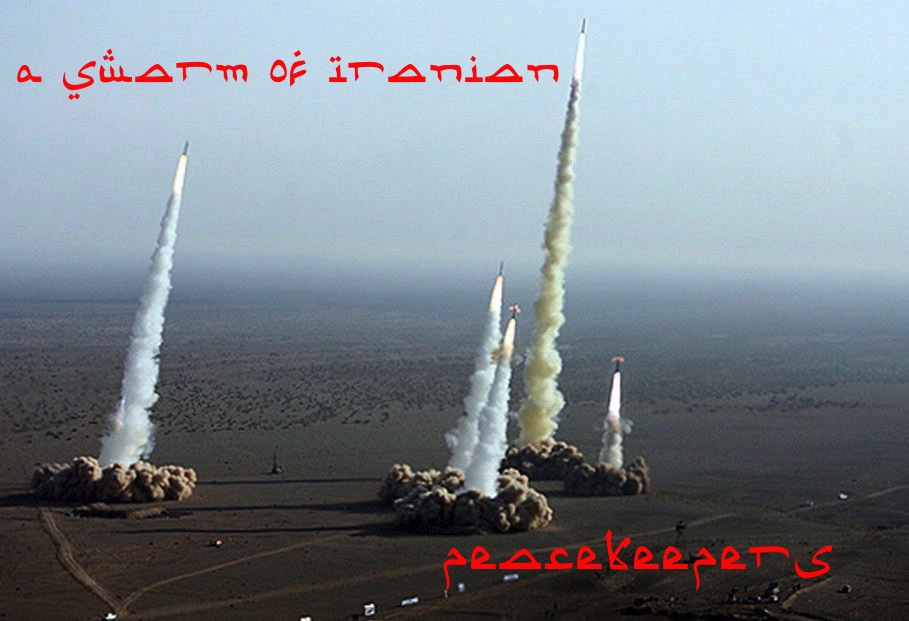
Military leaders have a knack for generating striking names. Often they are brilliant; occasionally they completely miss the mark. In either case, it’s curious to note the message their choice of nomenclature seeks to emphasize. Consider for a moment two different American missiles.

The AGM-114 Hellfire and the LGM-118A Peacekeeper

The reader naturally assumes the purpose of the former is to rain sulfur and brimstone down on the enemy, while the mission of the latter is to benignly maintain peace. One suspects, however, that being at the epicenter of either explosive device would be equally disastrous.

Another example we might consider is a bit more controversial, but fascinating nonetheless. Consider these labels for movements involved in the abortion debate.

Self-Preferred  ||  Used by Opponents  ||  Used by the Media

Pro-Choice  ||  Pro-Abortion  ||  Pro-Choice

Pro-Life  ||  Anti-Choice  ||  Anti-Abortion

It doesn’t require a brilliant intellect to comprehend the tone each of these labels evokes. Nor should it come as a surprise how the mainstream media tends to line up in the debate.

It’s all in the name. The person who succeeds in naming something wields great power.

C.S. Lewis was a master of language. He knew names exercise significant influence on how things are perceived. In the following passage from “The Humanitarian Theory of Punishment,” he describes how a powerful word—in this case “mercy”—can be dangerously misleading when applied to something inimical to itself.

Mercy, detached from Justice, grows unmerciful. That is the important paradox. As there are plants which will flourish only in mountain soil, so it appears that Mercy will flower only when it grows in the crannies of the rock of Justice: transplanted to the marshlands of mere Humanitarianism, it becomes a man-eating weed, all the more dangerous because it is still called by the same name as the mountain variety.

In another essay, “‘Bulverism:’ or, the Foundation of 20th Century Thought,” Lewis actually coins a word which has found favor with a literate subculture. The peculiar word he created conveys a sense of obtuse, opinionated self-smugness. (Yes, I may be reading just a little bit into “Bulverism,” but I really don’t think so. The aristocratic or remote sounding surname “Bulver,” the “ism” suffix and, of course, the “Bul” prefix all combine to engender an odd and unappealing impression.)

The subject Lewis addresses in this work is the unwillingness of disagreeing parties to honestly debate the merits of an issue. Instead, they rush to employ the invalid (and terribly effective) ad hominem approaches that characterize so much of modern politics.

C.S. Lewis is so talented (and ingenious) that he provides us with a biographical note on the fictional creator of the deficient form of “debate” prevalent in the modern era. “The modern method [of argument],” Lewis begins, “is to assume without discussion [your opponent] is wrong and then distract his attention from this (the only real issue) by busily explaining how he became so silly.”

In the course of the last fifteen years I have found this vice so common that I have had to invent a name for it. I call it “Bulverism.” Some day I am going the write the biography of its imaginary inventor, Ezekiel Bulver, whose destiny was determined at the age of five when he heard his mother say to his father—who had been maintaining that two sides of a triangle were together greater than the third—“Oh, you say that because you are a man.”

“At that moment,” E. Bulver assures us, “there flashed across my opening mind the great truth that refutation is no necessary part of argument. Assume your opponent is wrong, and then explain his error, and the world will be at your feet. Attempt to prove that he is wrong or (worse still) try to find out whether he is wrong or right, and the national dynamism of our age will thrust you to the wall.” That is how Bulver became one of the makers of the Twentieth Century.

. . . Bulverism is a truly democratic game in the sense that all can play it all day long, and that it gives no unfair privilege to the small and offensive minority who reason.

Sadly, Bulver’s disciples continue to increase, rather than diminish.

Since it was military missiles that initially got me thinking about the subject of the power of naming, it might be fitting to end with a few more evocative labels. They certainly elicit a wide range of impressions.

Condor: Argentina’s avian contribution

Piranha: Tiny but vicious and straight from Brazil’s Amazon

Velvet Glove: Canada’s mixed message

Sky Sword: China’s blending of the ancient and modern

Apache: French, which confuses this American veteran**

Meteor: A European offering sure to land hard if it doesn’t disappear in the atmosphere

Martel: Anglo-French venture they surely don’t want Islamists to think is a tribute to Charles Martel, Hero of the Battle of Tours***

V-1 Flying Bomb: Got to Hand it to the Germans for straight-forward labeling.

Rhinemaidens (Rheintöchter): There’s apparently Teutonic Poetry as well

Fateh: Iran’s “Conqueror”

Zelzal: Iran’s “Earthquake”

Sejjil: Iran’s “Baked Clay” (well we can’t expect all the Persian names to be winners)

Jericho: From Israel where we know whose walls tumbled down

Spike: Israeli and probably not a reference to Jael and the Book of Judges****

Hatf: Pakistani “Vengeance” (derived from the gentle sword of Muhammad)

Hyunmoo: Korea’s mythical “Guardian of the Northern Sky” (mayhap a reference to their aggressive northern neighbor)

Penguin: Those Norwegians really know how to frighten their enemies

Malakhit (Малахит): Just one of Russia’s curiously named explosives in their “mineral missile series”

Umkhonto: South African “Spear” from the Zulu tongue

The Brits are uniquely creative when it comes to naming missiles. They include: Blowpipe, Brimstone, Green Cheese, Rapier, Sea Skua and, of course, Fairey Fireflash and it’s less intimidating companion Fairey Stooge.

For some reason, I find a missile named “Green Cheese” particularly disconcerting. Whoever named that specific weapon was devilishly clever. If I were a world leader, I’d surrender immediately, rather than face a foe confident enough in their military prowess to use that sort of twisted culinary nomenclature for their armaments.

______

* I have written on the subject of personal names in the past.

** It just may translate as “Ruffian,” but I don’t think I want to go there, since it hints at political incorrectness.

*** It’s actually a combination of the missile’s guidance options: Missile, Anti-Radiation, Television. I’m sure the parallel with the Frankish defender of the Christian Church is a mere coincidence.

**** The fourth chapter of the Book of Judges.

Whose “Best Books” List?

reading awardsMost readers recognize significant differences exist between British and American literature.

Not only do our literary tastes often differ, there are more than a few differences in the English we use . . . for example, whether we include our punctuation inside, or outside, of “quotation marks.”

With that caveat, it’s interesting to ponder the 2008 list of favorite books in the United Kingdom, as reported in The Telegraph. I’m unsure right now whether there’s a more recent list, but it would probably remain fairly stable a lustrum later. (It would, however, be interesting to see how Rowling’s works rank in fifty or seventy years. Not to mention Pullman’s Gnostic series.)

In their balanced compendium of passages from C.S. Lewis’ works, Martindale and Root point out the transitory nature of literary fads.

A book that is number one on the New York Times Best-seller List for several weeks may be all but forgotten a decade later. Popularity in a moment of history does not guarantee that a book will endure beyond its own time. C. S. Lewis once observed that, like fashions, the more up-to-date a book is, the sooner it is out of date.

One of the peculiarities of the list is that only a single book by any particular author was allowed in the top twenty-one titles.

I read somewhere that the average reader had only read an “average” of six of the books. I’m not sure how that is calculated, since I know a fair number who have not read—if they’re being honest—a single book in the survey (those assigned for coursework included).

And, now that I’ve made that seemingly judgmental statement, I need to be particularly truthful in my own list. That means I can’t check off a title because I saw the movie or read the Classics Illustrated edition . . . even though I think it would be fair to get partial credit for either of those options.*

I’ll reproduce the entire British classics canon in a moment, but since everyone will get distracted while they read it (assessing which titles they themselves have read), I’ll share my brief list first.

I’m not too embarrassed by its brevity, since 80% of my reading is nonfiction, and the list is decidedly not that. Also, I can honestly say that there are another ten or so titles here that I have begun to read, without being sufficiently interested to finish.

The truth is that just as less than a quarter of my reading is devoted to fiction, most of that focuses on my favorite genre, alternative history. And, for some reason unknown to me, none of those titles made the list!

Here is my humble account of British must-reads that I have actually finished.

 1) The Lord of the Rings (Ranked #2).

 2) The Bible** (#6)

 3) Nineteen Eighty-Four (#8).

 4) Catch 22 (#13).

 5) The Hobbit (#16).

 6) The Great Gatsby (#22).

 7) The Chronicles of Narnia (#33).

 8) The Lion, the Witch and the Wardrobe (#36)

 — Isn’t that a tad redundant (in the American, not the British, sense)?

 9) Winnie the Pooh (#40).

10) Animal Farm (#41).

11) Lord of the Flies (#49).

12) Dune (#52).

13) Brave New World (#58).

14) Moby Dick (#70).

15) Dracula (#72).

16) A Christmas Carol (#81).

17) Charlotte’s Web (#87).

18) Heart of Darkness (#91).

Interesting—I thought it would be shorter. Their presence on this short list, by the way, doesn’t indicate my recommendation of all of these. Some were assigned reading. I’ve also read some of Shakespeare and Sherlock Holmes, of course, but neither in their entirety.***

The full list follows. Enjoy going through it yourself to see how you stack up. And, don’t be intimidated if the books you favor keep you too busy to read what others deem the most significant.

_____

* Just joking. I would never consider seeing a movie as the equivalent of reading a book; some of them bear little resemblance to their source. That acknowledged, sometimes the cinematic adaptations are better than the books.

** I know it only has a single Author, but shouldn’t this count as 66 books?

*** My lovely wife, who I sometimes compel to proofread for me, could not resist mentioning that she was able to check off many more titles on this list than I did. I chalk that up to her sharp intelligence (valedictorian, 4.0 in college and grad school, etc.), general perfectionism, speed-reading skills, tolerance for boring literature, and “compulsive” personality. All of that, plus her consuming love of reading.

Here’s the British list.

1 Pride and Prejudice – Jane Austen

2 The Lord of the Rings – JRR Tolkien

3 Jane Eyre – Charlotte Bronte

4 Harry Potter series – JK Rowling

5 To Kill a Mockingbird – Harper Lee

6 The Bible

7 Wuthering Heights – Emily Bronte

8 Nineteen Eighty Four – George Orwell

9 His Dark Materials – Philip Pullman

10 Great Expectations – Charles Dickens

11 Little Women – Louisa M Alcott

12 Tess of the D’Urbervilles – Thomas Hardy

13 Catch 22 – Joseph Heller

14 Complete Works of Shakespeare

15 Rebecca – Daphne Du Maurier

16 The Hobbit – JRR Tolkien

17 Birdsong – Sebastian Faulks

18 Catcher in the Rye – JD Salinger

19 The Time Traveller’s Wife – Audrey Niffenegger

20 Middlemarch – George Eliot

21 Gone With The Wind – Margaret Mitchell

22 The Great Gatsby – F Scott Fitzgerald

23 Bleak House – Charles Dickens

24 War and Peace – Leo Tolstoy

25 The Hitch Hiker’s Guide to the Galaxy – Douglas Adams

26 Brideshead Revisited – Evelyn Waugh

27 Crime and Punishment – Fyodor Dostoyevsky

28 Grapes of Wrath – John Steinbeck

29 Alice in Wonderland – Lewis Carroll

30 The Wind in the Willows – Kenneth Grahame

31 Anna Karenina – Leo Tolstoy

32 David Copperfield – Charles Dickens

33 Chronicles of Narnia – CS Lewis

34 Emma – Jane Austen

35 Persuasion – Jane Austen

36 The Lion, The Witch and The Wardrobe – CS Lewis

37 The Kite Runner – Khaled Hosseini

38 Captain Corelli’s Mandolin – Louis De Bernieres

39 Memoirs of a Geisha – Arthur Golden

40 Winnie the Pooh – AA Milne

41 Animal Farm – George Orwell

42 The Da Vinci Code – Dan Brown

43 One Hundred Years of Solitude – Gabriel Garcia Marquez

44 A Prayer for Owen Meaney – John Irving

45 The Woman in White – Wilkie Collins

46 Anne of Green Gables – LM Montgomery

47 Far From The Madding Crowd – Thomas Hardy

48 The Handmaid’s Tale – Margaret Atwood

49 Lord of the Flies – William Golding

50 Atonement – Ian McEwan

51 Life of Pi – Yann Martel

52 Dune – Frank Herbert

53 Cold Comfort Farm – Stella Gibbons

54 Sense and Sensibility – Jane Austen

55 A Suitable Boy – Vikram Seth

56 The Shadow of the Wind – Carlos Ruiz Zafon

57 A Tale Of Two Cities – Charles Dickens

58 Brave New World – Aldous Huxley

59 The Curious Incident of the Dog in the Night-time – Mark Haddon

60 Love In The Time Of Cholera – Gabriel Garcia Marquez

61 Of Mice and Men – John Steinbeck

62 Lolita – Vladimir Nabokov

63 The Secret History – Donna Tartt

64 The Lovely Bones – Alice Sebold

65 Count of Monte Cristo – Alexandre Dumas

66 On The Road – Jack Kerouac

67 Jude the Obscure – Thomas Hardy

68 Bridget Jones’s Diary – Helen Fielding

69 Midnight’s Children – Salman Rushdie

70 Moby Dick – Herman Melville

71 Oliver Twist – Charles Dickens

72 Dracula – Bram Stoker

73 The Secret Garden – Frances Hodgson Burnett

74 Notes From A Small Island – Bill Bryson

75 Ulysses – James Joyce

76 The Bell Jar – Sylvia Plath

77 Swallows and Amazons – Arthur Ransome

78 Germinal – Emile Zola

79 Vanity Fair – William Makepeace Thackeray

80 Possession – AS Byatt

81 A Christmas Carol – Charles Dickens

82 Cloud Atlas – David Mitchell

83 The Color Purple – Alice Walker

84 The Remains of the Day – Kazuo Ishiguro

85 Madame Bovary – Gustave Flaubert

86 A Fine Balance – Rohinton Mistry

87 Charlotte’s Web – EB White

88 The Five People You Meet In Heaven – Mitch Alborn

89 Adventures of Sherlock Holmes – Sir Arthur Conan Doyle

90 The Faraway Tree Collection – Enid Blyton

91 Heart of Darkness – Joseph Conrad

92 The Little Prince – Antoine De Saint-Exupery

93 The Wasp Factory – Iain Banks

94 Watership Down – Richard Adams

95 A Confederacy of Dunces – John Kennedy Toole

96 A Town Like Alice – Nevil Shute

97 The Three Musketeers – Alexandre Dumas

98 Hamlet – William Shakespeare

99 Charlie and the Chocolate Factory – Roald Dahl

100 Les Miserables – Victor Hugo

Vivacious Vocabularies

One reason I love reading C.S. Lewis arises from his adroit use of the English language. His vocabulary is immense. It is pleasant to run into words one seldom encounters on the drab byways of modern journalism and tangled thoroughfares of contemporary “social media.”

Consider the following example. I was exploring The Allegory of Love when I read this: “There is nothing in literature which does not, in some degree, percolate into life.”

What a delightful verb! It evokes for me recollections of my youth when my parents would refer to our coffee pot as the percolator. Simultaneously, it reminds me of more recent—less happy—usages: “I’m sorry, but inadequate soil percolation means you’ll have to install a far more expensive septic system than normally required.”

It’s discouraging when you consider the sad state of modern vocabularies. I read somewhere that people typically only use about 10% of the words they know. So a common vocabulary of 5,000 spoken words would mean they know (i.e. can recognize written or audible forms of) about 50,000 words. Shakespeare used 29,000 words in his plays and sonnets, suggesting an expansive vocabulary. Likewise, brilliant authors like C.S. Lewis would boast a praiseworthy mental dictionary.

I am sometimes curious about my own vocabulary. I consciously attempt—in conversation as well as writing—to utilize at least 15% of the words I know. After all, the English language is so rich, it’s criminal to limit ourselves to pedestrian words. It’s like having all the ingredients for a delicious feast available to us and settling for slapping together a peanut butter sandwich.

I also love the precision that comes from using the exact word that suits the occasion. For example, in a thriller it matters greatly how the hero’s nemesis inflicts injury. A skilled writer would never say “Professor Moriarty cut Holmes.” Instead, we would learn that he slashed . . . stabbed . . . sliced . . . scarred . . . carved . . . or perhaps he merely nicked the detective. Likewise, we would probably know the type of weapon he was using. It would not be a mere “knife.” It might be a saber . . . a dagger . . . a pocketknife . . . scalpel . . . carving knife . . . or perhaps even a bayonet.

Lewis addressed this richness in vocabulary in an essay on “Transposition” which appears in The Weight of Glory.

If the richer system is to be represented in the poorer at all, this can only be by giving each element in the poorer system more than one meaning. The transposition of the richer into the poorer must, so to speak, be algebraical, not arithmetical. If you are to translate from a language which has a large vocabulary into a language that has a small vocabulary, then you must be allowed to use several words in more than one sense. If you are to write a language with twenty-two vowel sounds in an alphabet with only five vowel characters than you must be allowed to give each of those five characters more than one value. If you are making a piano version of a piece originally scored for an orchestra, then the same piano notes which represent flutes in one passage must also represent violins in another.

It is wonderful to be fortunate enough to speak a language with a diverse vocabulary. English is such a tongue. Now, if we could just simplify its complexities and purge its irregularities, we would enjoy the best of all linguistic worlds.

Literary Words

I must confess that I like words. In fact, it’s not excessive to say that I delight in brilliantly witty “turns of phrase” and elegantly painted landscapes that allow me to clearly see what the author is painting with his or her words.

I’ve grown convinced that loving words is a handicap to becoming an excellent writer. Yes, scribblers like me can become adequate or even appreciated writers . . . but to stand in the highest ranks a writer must be willing to ruthlessly slash and slay excess words that impede their perfect vision.

Self-editing is a discipline. It’s something that can be learned and refined through practice. That it forever remains a bit painful for some of us is clear evidence we are overly attached to the words we have put to paper.

C.S. Lewis addressed this general subject in a 1932 letter to his good friend Arthur Greeves. While he was not a slave to the number of words required, he aimed for simplicity and clarity. Lewis wrote:

I think I see, from your criticisms, that you like a much more correct, classical, and elaborate manner than I. I aim chiefly at being idiomatic and racy, basing myself on Malory, Bunyan, and Morris, tho’ without archaisms: and would usually prefer to use ten words, provided they are honest native words and idiomatically ordered, than one “literary word.” To put the thing in a nutshell you want “The man of whom I told you,” and I want “The man I told you of.”

I smiled as I typed Lewis’ remark about “ten words.” He used that to illustrate his willingness to use excessive verbiage to communicate clearly. Brevity was, however, an admirable goal. And brevity is a virtue I’ve seldom been accused of possessing.

In the military, comrades and associates are frequently presenting plaques and remembrances to those who are “rotating” to new assignments. Having served in a dozen different “permanent” assignments, I have boxes full of such memorabilia.

Two of the few I display are genuinely precious. The first is an icon of Saint Athanasius, presented to me by the best “boss” I ever had, an Orthodox priest by the name of John Stefero. The reasons for the personal gift were theological and I accepted it with genuine appreciation and humility.

The second prized gift is a gracefully curved etched glass keepsake featuring the seal of the United States Air Force Chaplain School where I served for three wonderful years. The commandant was speechless as he presented the plaque to me, reading for the first time the inscription that my closest companions had composed for me.

He says in a book what others say in a sentence.

The commandant (later our Chief of Chaplains) was stunned. I was delighted. I led the gathering’s laughter and bellowed, “Yes, and it’s a book well worth reading!”

Jack Lewis may have chided me a bit for the underlying reason for the accolade, but I am confident he would have delighted in the affectionate friendship and esprit de corps with which it was presented.

So much for my shortcomings. For all other writers (including, perhaps, you?) . . . I would recommend following the master’s example, rather than my own.