Must Writing be a Solitary Endeavor?

It’s often said that “writing is a solitary task.” I find that’s only half true.

Sure, each individual is responsible for putting the words on the page (AI-cheats aside), but sharing your work with others before publishing it provides amazing dividends.

Not only can “other eyes” see flaws we are too close to the piece to recognize, good critiques often include suggestions to make our writing stronger.

I’ve occasionally described the benefits I’ve received from being a member of writers [critique] groups around the globe. I titled one of my posts “Be an Inkling,” because this mutual sharing was central to those brilliant minds who gathered together in Oxford.

In 1967, J.R.R. Tolkien described his reason for using that particular word in just such settings. He said he used the word Inkling as “a ‘jest,’ because it was a pleasantly ingenious pun in its way, suggesting people with vague or half-formed intimations and ideas plus those who dabble in ink.”

I too find it “pleasantly ingenious” and have echoed it here in my own domain. 

Conferences can be helpful too, but my experience is that nothing surpasses the encouragement that emanates from the mutual commitment shared by writers who physically gather to share their creations.

I noted above two concrete ways writing friends can contribute to strengthening our work. However, this third element – encouragement – cannot be underestimated. It was precisely this element that brought that masterpiece, The Lord of the Rings, to the world’s attention.

A Pilgrim in Narnia provides a superb account of C.S. Lewis’ essential role in boosting the confidence of his friend J.R.R. Tolkien. He cites a letter in which Tolkien describes how Lewis’ most precious gift was in challenging him to complete his opus.

The unpayable debt that I owe to him was not ‘influence’ as it is ordinarily understood, but sheer encouragement. He was for long my only audience. Only from him did I ever get the idea that my ‘stuff’ could be more than a private hobby. But for his interest and unceasing eagerness for more I should never have brought The L. of the R. to a conclusion.

Melancholy Transitions

Critique groups are weighing on my mind, since the one I’ve been part of for many years has come to its end. The passing of various members during the past decade left too few of us to continue, and we few who were left are mourning the fact that it was not sensible to continue meeting regularly.

It is another reminder of Solomon’s wisdom when he wrote, “For everything there is a season, and a time for every matter under heaven.”

Sadly, I lack the energy to help establish another new writing fellowship at this point in my life. Perhaps I will join one of the online communities. Christian Writers looks promising.

I actually participated in an online critique community back when primitive “bulletin board systems” were giving way to the nascent internet. No doubt the modern equivalent would be far better in every way.

In the meantime, I do have a few readers I trust to review my work before submitting it to an editor. One is my very talented wife. The problem there, however, is that her love (and compassionate nature) make her too gentle when she critiques my work. 

This drawback is one side of the coin to which author Dan Brown refers when he says: “I learned early on not to listen to either critique – the people who love you or the people who don’t like you.”

This does not mean, of course, that those who love us are unsuitable candidates. It simply suggests that we need to (often repeatedly) give them permission to offer genuinely critical comments, especially when they are accompanied by suggestions for how we might improve a given passage.

In essence although people like William Faulkner are correct in stating that “writing is a solitary job,” most of us can benefit from sharing our drafts with others. 

And fortunate are those of us who discover such friendship, where our writing companions are like-minded, trustworthy, self-confident, and honest. (I personally find having a sense of humor an essential trait, as well.)

In a word, we are greatly blessed to personally become part of our own fellowship of Inklings.

An Impious C.S. Lewis

csl glassWhen C.S. Lewis was contacted for permission to publish a recent sermon in a distinguished collection, he confessed an “impious” hope.

Lewis, of course, was not a pastor. He was instead a highly regarded professor. Nevertheless, due to his mastery of public speaking, and his unapologetic faith, he was invited to preach on a number of occasions.

This particular sermon had been delivered at St Mary the Virgin in Oxford, on 22 October 1939. The Student Christian Movement had already published it in pamphlet format with the title The Christian in Danger.*

Lewis ends a lengthy 1940 letter to his brother Warnie by mentioning the request, almost as an afterthought.

Did I tell you that someone wants to include that St Mary’s sermon of mine in a collection of (save the mark**) Famous Sermons?

Famous English Sermons would be published by Thomas Nelson in London later that year. The anthology was edited by Ashley Sampson, who had asked Lewis to write his volume The Problem of Pain.

Lewis’ modest “impiety” was revealed in the rest of his announcement to his brother. He confesses to that common human fear of being upstaged by the other works in the collection.

I am divided between gratification and a fear that I shall be merely made a fool of by appearing in the same book as Bede, Latimer, Donne, Taylor etc. However, let’s hope that I shall be divided from them by some good 19th century duds!—but I grow impious.

How easy it is to relate to Lewis’ concern. As I moved from assignment to assignment during my military career, I subconsciously hoped I was relieving someone who had left room for me to excel . . . and, simultaneously, that as I left my recent assignment my performance would not be outshined by my successor.

Better, in my mind, to be proceeded and followed by 20th century duds. (Forgive me, Lord.)

I doubt C.S. Lewis and I are the only people to have shared that impious thought.

Still, recognizing the impiety is the beginning of purging it. I tried to make it a practice to pray for those who followed in my ministry wake. That they would be successful, and that the men and women entrusted to our spiritual care would be blessed by their ministries.

I must confess, though, that when my literary work has been placed in direct juxtaposition to that of others, I have not been so eager for theirs to be better received than my own contributions. Not that I wish upon anyone that they would be a dud, but merely that their eloquence not put my own humble efforts to shame.

_____

* The sermon is found in The Weight of Glory with the title “Learning in War-Time.”

** “Save the mark” is an exclamation that connotes a sense something is unbelievable. It can even be dismissive, but that would not be the sense in which Lewis uses it here, since it is obvious he regards the request as a humbling honor.

Emphasizing Italics

italicsSermons do not make great books. Sorry, but that’s the opinion of this pastor who has to compel himself to read the sermons of preachers.

Yes, some of them sell decently (when the author has a national “pulpit”). But I suspect many copies of those books are purchased out of support of their broader ministry. I imagine most purchasers try to wade through a few of the homilies, but decide after a while they prefer listening to the sermon “preached.”

As a lifelong student of communication, I continue to be intrigued by the different ways in which aural and printed word can be used to communicate the good news. The subject promises to be a major part of my dissertation research.

Sermons are meant to be delivered orally. Transposing them to the page, without making various accommodations, is (in my personal opinion) a mistake.

C.S. Lewis apparently agreed with me on that—before he came to disagree with the effort.

Ever since the rise of the keyboard, I have celebrated the ability to use italics for emphasis. I consider the availability of italics especially important when we translate spoken messages into text.

C.S. Lewis discussed this process in his preface to Mere Christianity. His focus was on how best to transpose words prepared for oral delivery to a written medium, while still maintaining their original voice.

The contents of this book were first given on the air, and then published in three separate parts as Broadcast Talks (1942), Christian Behaviour (1943) and Beyond Personality (1944).

In the printed versions I made a few additions to what I had said at the microphone, but otherwise left the text much as it had been. A “talk” on the radio should, I think, be as like real talk as possible, and should not sound like an essay being read aloud. In my talks I had therefore used all the contractions and colloquialisms I ordinarily use in conversation.

In the printed version I reproduced this, putting don’t and we’ve for do not and we have. And wherever, in the talks, I had made the importance of a word clear by the emphasis of my voice, I printed it in italics.

I am now inclined to think that this was a mistake—an undesirable hybrid between the art of speaking and the art of writing.

A talker ought to use variations of voice for emphasis because his medium naturally lends itself to that method: but a writer ought not to use italics for the same purpose. He has his own, different, means of bringing out the key words and ought to use them.

In this edition I have expanded the contractions and replaced most of the italics by a recasting of the sentences in which they occurred: but without altering, I hope, the “popular” or “familiar” tone which I had all along intended. I have also added and deleted where I thought I understood any part of my subject better now than ten years ago or where I knew that the original version had been misunderstood by others.

When one’s mentor advises something, it demands thoughtful consideration. Lewis’ opinion that the use of italics for emphasis is not ideal forced me to seriously consider the practice, which I obviously favor.

I agree with Lewis on expanding contractions. I learned that lesson when I wrote a paper during seminary studies and the professor instructed me to make that change.

However, I disagree about the use of italics. They need to be properly applied, of course. And I recognize that the most gifted of writers may be able to consistently avoid using them. (Or “leaning on them” as an anti-italics anarchist would probably say.)

In the end, I guess it is time to ponder again Lewis’ pronouncement that writers have their “own, different, means of bringing out the key words and ought to use them.”

Until I receive a divine mandate, C.S. Lewis notwithstanding, you should continue to expect to occasionally see italics here at Mere Inkling.

_____

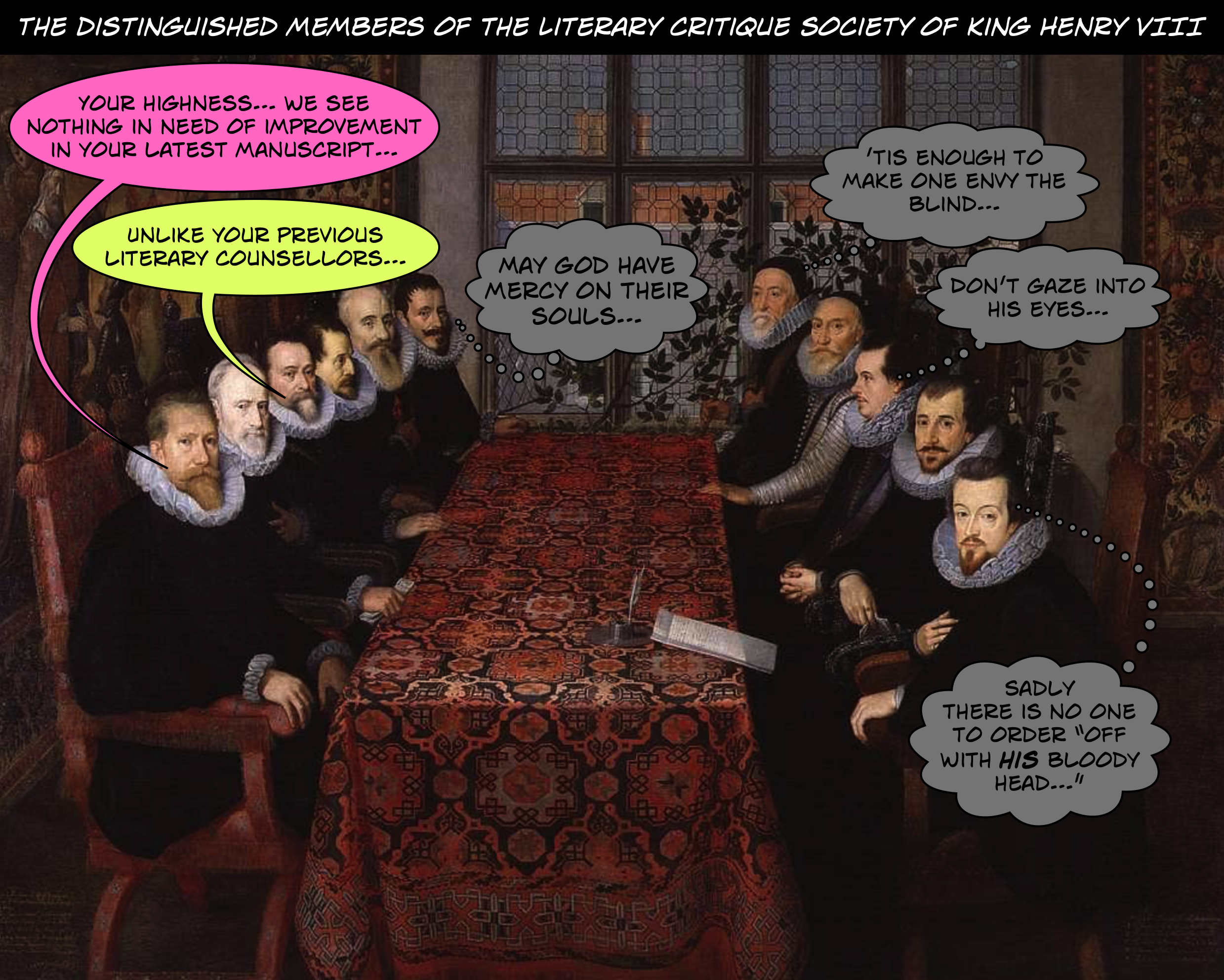
The cartoon at the top of the page comes from an interesting site. You can find the original source for the image here. Just for the record, I hate ALL CAPS, and I absolutely despise underlining.

The Anticipation of Publication

autographThe advent of the internet instigated some confusion about what it means to “be published.” That accolade is, of course, the dream of most women and men who write.

To be published—historically speaking—has meant that your words have been:

  1. Deemed worthy of being placed in print (at least, by one editor’s subjective determination).
  2.  Made available in some number of copies to millions, thousands, hundreds, scores, or perhaps dozens of eager readers.

Writing “online” was initially dismissed by the publishing industry (and many writers themselves). “It’s not the same,” they would say. Of course not. Yet they accomplish the same purpose, making writers’ heartfelt messages available for others. And, in short time we have witnessed a publishing revolution in which many of the most vibrant and thought-provoking “periodicals” are primarily (or exclusively) online entities.

So, it is quite appropriate to consider oneself published, I believe, if our work has been included in an online publication.

The arrival of print-on-demand technology (and ebooks) magnified the confusion. Now, it costs very little to become your very own Publishing House, and anyone with a few dollars can see their word in literal print. This has had two major consequences.

  1. Freed from the arbitrary whim of editorial bottlenecks, first-class literary works have been published. Works that formerly would have been returned to their creators with form letters expressing the editors’ regret that they cannot find a place in their exclusive booklist for them.
  2. Material that should would have greatly benefited from thorough editing and rewrites now look for all intents, just like real books that merit reading. Works the afore-insulted editors would formerly have protected the world from.

So, it is quite appropriate to consider oneself published, I believe, even when we have self-published our work—assuming, of course, that our book falls into the first category described above.

And today we have blog boom. Millions of posts and columns. Some creative sprouts withered before they had a chance to bloom. But many exquisite writers sowed rich gardens of wisdom and fancy that continue to be pruned and expanded.

All writers hope to become published. And most would like to one day see their words appreciated by as large an audience as possible. When we have an article or book we’ve written accepted by a recognized periodical or publisher, we experience the joy of anticipation. As we look forward to receiving a copy of the final product, our eagerness is tempered by a bit of anxiety. I mean, anything could happen, right? The publication could even go out of business—and that’s actually happened to me.

C.S. Lewis shared this same sort of expectation as his work neared the presses. And, being C.S. Lewis, he was able to reflect on his own thoughts in a brilliant manner. In 1918, as his first book, a collection of poetry, was being published, he wrote his close friend, Arthur Greeves:

So at last dreams come to pass and I have sat in the sanctum of a publisher discussing my own book (Notice the hideous vulgarity of success already growing in me). Yet—though it is very pleasant—you will understand me when I say that it has not the utter romance which the promise of it had a year ago. Once a dream has become a fact I suppose it loses something. This isn’t affectation: we long & long for a thing and when it comes it turns out to be just a pleasant incident, very much like others.

Like Lewis, most of us find the accomplishment of publishing our work “very pleasant.” Still, it’s seldom if ever the mountaintop experience it flirts at being. Literary Sirens sing “once you are published all your dreams will be realized . . . all who meet you will bow in respect at your wondrous achievement.”

Reality is different. Becoming a “published writer” is something about which we can justifiably be proud. But it doesn’t make us better than anyone else. After all, is not a mechanic who can make an engine purr just as talented as a wordsmith who composes music out of prose?