Books C.S. Lewis Loved

csl booksThose of us who admire C.S. Lewis respect his words on many subjects, not least of which would include literary matters. He was, after all, both a gifted writer and a professor teaching related subjects at two of the world’s most prestigious universities.

In 1962 The Christian Century asked him to list the ten titles most influential in his professional and philosophical life. (Most of these are available as free downloads on the internet.)

1. Phantastes by George MacDonald

2. The Everlasting Man by G. K. Chesterton.

3. The Aeneid by Virgil

4. The Temple by George Herbert

5. The Prelude by William Wordsworth

6. The Idea of the Holy by Rudolf Otto

7. The Consolation of Philosophy by Boethius

8. Life of Samuel Johnson by James Boswell

9. Descent into Hell by Charles Williams

10. Theism and Humanism by Arthur James Balfour

The following year Lewis was interviewed by Sherwood Wirt, longtime editor of Decision magazine. (Decision is published by the Billy Graham Evangelistic Association, and you can learn more about the publication here.)

During his interview, Wirt focused on spiritual rather than professional benefits from books Lewis had found beneficial.

Sherwood Wirt: What Christian writers have helped you?

C.S. Lewis: The contemporary book that has helped me the most is Chesterton’s The Everlasting Man. Others are Edwyn Bevan’s book, Symbolism and Belief, and Rudolf Otto’s The Idea of the Holy, and the plays of Dorothy Sayers.

Fortunately all of these titles are readily available for those who would like to explore works that influenced Lewis’ conversion and Christian growth. Let’s briefly consider them in the order Lewis cited them.

Gilbert Keith Chesterton (1874-1936) was a prolific English writer. Just how prolific, one might ask. Well, he wrote approximately eighty books, hundreds of poems, hundreds of short stories and about 4,000 essays. His works continue to inspire many today, and merit contemporary reading.

Chesterton shared many of the same values as Lewis, and preferred calling himself an “orthodox” Christian rather than adhering to denominational labels. (In this he foreshadows Lewis’ invaluable emphasis on “mere” Christianity.)

The Everlasting Man was published in 1925 and ponders the universal significance of Jesus Christ. It was composed in reaction to The Outline of History, in which H.G. Wells paints Jesus as just one more political agitator in a political backwater of the Roman empire. Honestly, he does describe him as being remarkable, but mostly in terms of having a charismatic persona.

Lewis said that Chesterton’s Everlasting Man “baptised” his intellect, which is no small expression of praise.

You can purchase The Everlasting Man through normal channels or download a free text format version at this site. If you enjoy listening to audiobooks, you can obtain a free audio copy of the volume here.

Edwyn Robert Bevan (1870-1943) was an English philosopher and historian who specialized in the Hellenistic world.

In Symbolism and Belief, based on a series of lectures presented in 1933-34, Bevan discusses major religious symbols and metaphors. He illustrates how figurative language is best capable of describing spiritual truth. He argues that the greater precision offered by philosophical terminology is actually counterproductive in this quest.

The volume offers insight into the rationality of religious faith, although it concludes with his conviction that it ultimately boils down to a genuine encounter with God—“what actually causes anyone to believe in God is direct perception of the Divine.”

Symbolism and Belief is available for free download in a variety of formats at this site.

Rudolf Otto (1869-1937) was a German Lutheran theologian. He spent most of his ministry teaching at one of the most prominent seminaries in the world, the University of Marburg Divinity School.

In The Idea of the Holy Otto espoused the concept that the things of God were “numinous.” He defined this as a “non-rational, non-sensory experience or feeling whose primary and immediate object is outside the self.” The word itself was derived from the Latin numen which refers to divine power.

Otto explains how the numinous is a mystery (mysterium) that is simultaneously terrifying (tremendum) and fascinating (fascinans). C.S. Lewis found the notion of the numinous particularly useful in his book, The Problem of Pain.

The Idea of the Holy: an Inquiry into the Non-rational Factor in the Idea of the Divine and Its Relation to the Rational is available in multiple formats here.

Dorothy Leigh Sayers (1893-1957) was a personal friend of C.S. Lewis. In a 1963 letter he wrote: “She was the first person of importance whoever wrote me a fan letter. I liked her, originally, because she liked me; later, for the extraordinary zest and edge of her conversation—as I like a high wind. She was a friend, not an ally.”

Sayers was an extremely successful English writer. Her versatility allowed her renown to grow as a poet, playwright, essayist and as a writer of popular detective mysteries. She was also a classicist, and regarded her translation of Dante’s Divine Comedy as her finest work.

Fortunately, four of her plays are available in a collection available here. They include “The Zeal of Thy House,” “The Devil to Pay,” “He That Should Come,” and “The Just Vengeance.” And, although you can’t download the file, if you would like to stream the recording, an audio version of her famous “The Man Born to be King” is available here.

Avoid them Like the Plague

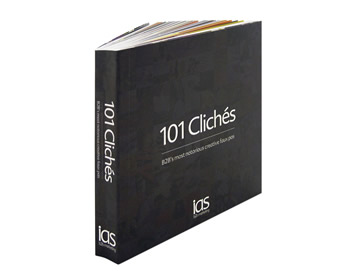
cliche bookAvoiding clichés in one’s writing is such oft-repeated advice it’s nearly become a cliché itself.

Many do not make much sense to people approaching a language from a literal perspective. For example, those new to American English may require a bit of explanation to understand that “hit the books” refers to studying rather than literary pugilism.

Some clichés are easily deciphered, especially when read in context. As an admonition to stop obstructing a view, we can understand why someone would say, “You make a better door than a window.”

“Don’t rain on my parade” adequately warns the hearer to avoid dampening the speaker’s special plans or activities.

Folksy adages are common where clichés are concerned. Take “The acorn doesn’t fall far from the tree.” We all know it references a child who shares numerous traits with a parent.

And we have interchangeable versions of the same notion, in case a lazy writer wishes to alternate your redundancies. He/she is a “chip off the old block” means essentially the same thing. And there’s always the classic “like father, like son,” and its corollary “like mother, like daughter.”

“As snug as a bug in a rug” used to be a favorite of my mother, ever applicable as she tucked little ones into their beds. Today, however, with bedbugs plaguing humanity in epidemic proportions, that cuddly image may have lost a touch of its appeal.

Some clichés have clearly outlived any usefulness they may once have possessed. “Too many chiefs, and not enough Indians,” clearly refers to a situation in which everyone is in charge and there no one is able or willing to actually carry out the project. However, few writers would tempt incurring the wrath of readers by using such a dated and rather prejudiced saying.

A cliché, of course, is a typically trite phrase that has lost its element of ingenuity due to overuse. It is something serious writers strive to avoid at all costs. But the final phrase in my previous sentence reveals how difficult it can be to purge these worn out words from our writing. Whenever used, they should be included consciously; writers might utilize them to establish, for example, a comic tone.

Even the gifted C.S. Lewis recognized the threat of clichés worming their way into one’s work. In a 1922 entry in his diary he wrote:

Tried to work at Dymer [his narrative poem] and covered some paper: but I am very dispirited about my work at present—especially as I find it impossible to invent a new opening for the Wild Hunt. The old one is full of clichés and will never do. I have learned too much on the idea of being able to write poetry and if this is a frost I shall be rather stranded . . .

The word cliché itself originated in France, where it was a printing plate or stereotype cast from an original composed of movable type. (The casting freed the movable type for new projects while maintaining the lettering for possible future printings.) The word came to be applied to ready-made phrases. However, the casting of printing plates is one thing. Recycling exhausted phrases ad nauseum is quite another.

Clichés are generally limited to a particular country or culture. Some are restricted to given regions. When outsiders hear or read these phrases, they often make little sense.

Some gain international esteem. More than a century ago Lord Acton described a universal truth of politics that resonates across boundaries. We have all witnessed the truth that “absolute power corrupts absolutely,” but those wise words are not something we should typically parrot in our own writings.

Not knowing the original source of a cliché is common. It is rather tragic, though, when it comes to texts that should be familiar to writers. For example:

“All’s well that ends well” is one of Shakespeare’s best loved maxims. If most Americans were asked whether it came from the pen of the Bard or Benjamin Franklin, we might be sadly disappointed with the results.

“The writing is on the wall” infers the outcome is already determined. But too few recognize this as a reference to a miracle recorded in the Book of Daniel. (If you’re not familiar with it, you can read the story here.)

Some clichés that relate to the art of writing would include the following [with my modest illustrations attached]:

“You can’t judge a book by its cover.”

     Appearances may be misleading.

Someone who appears wonderful when you first meet them may be just like an ebook with a professionally designed cover that contains a poorly scanned reprint replete with typos.

“It’s nothing to write home about.”

     Something that’s boring and not worth retelling.

While the freedom of POD technology has created democracy within the publishing industry, it’s also led to millions of meandering “books” that should “never have seen the light of day.”

A person is “an open book.”

     Someone who readily reveals their personality through word and action.

The type of character skilled authors will wish to introduce in limited quantities, especially if they are writing mysteries.

“Throw the book at him.”

     Give him the maximum possible judicial punishment.

The well-deserved fate of best-selling authors who rest on their laurels and start “phoning in” their sequels.

We turn now to a non-literary but colorful example of an American colloquialism that has spread far from its origins in the swine-breeding communities where it undoubtedly originated. It’s one of my favorite clichés, and it just may have a few good uses left in it, so feel free to include it in your next column or book . . . and no need to cite me as your source:

“You can’t make a silk purse out of a sow’s ear.”

     A task is impossible, given what you have to work with.

The echoing refrain of editors whose clients expect them to transform a few dusty lumps of coal into diamonds.

Possible Valid Uses for Clichés

While it’s safest for writers to avoid them altogether, there are a handful of occasions where they are not utterly inappropriate.

One suitable place for “chesnuts” like these to appear is in dialogue—especially when it’s written for a character a writer desires to portray as rather shallow-thinking.

It’s incorrect to suggest good writers never use clichés in conversation or composition. They do. The difference is that when they do include such tired phrases in their normally witty banter, they do it with a sense of irony.

C.S. Lewis, master of wordplay that he was, illustrated how we can creatively re-imagine or reword a cliché to reinvigorate it. Only the very best minds are up to this task. Yet, when it’s successfully accomplished, it can prove quite entertaining. The following comes from an informal conversation that was recorded before his retirement, preserved in the collection On Stories. Lewis refers in passing to an overly detailed passage in literature that nearly obscured the storyline.

The only trouble is that Golding writes so well. In one of his other novels, The Inheritors, the detail of every sensuous impression, the light on the leaves and so on, was so good that you couldn’t find out what was happening. I’d say it was almost too well done. All these little details you only notice in real life if you’ve got a high temperature. You couldn’t see the wood for the leaves.

Literature is the Lifeblood

BonnevilleAs an American, I find there is something distinctive about British programs. When my family lived in the United Kingdom we enjoyed access to all the offerings of the BBC and the commercial network or two that existed twenty-two years ago.

Returning to the States, we had to become content with viewing the occasional British import, mostly through the auspices of PBS. Since I watch far less television than I used to, I haven’t seen one of the current offerings that’s become quite popular.

Downton Abbey is essentially a soap opera which examines the lives of a noble family, and the myriad servants who attend to their needs. Contrasting their culturally different lifestyles is doubtless quite intriguing.

The reason I’m mentioning a program I’ve never seen, is because I read an interview with one of its co-stars, Hugh Bonneville. His response to the question “Did you make a New Year’s resolution?” was wonderful.

I’ve had the same resolutions for about 20 years, which is to read The Complete Works of Charles Dickens, and I’m only on about book number three. I’m a terrible reader, which is a great shame because literature is the lifeblood of everything, really, in terms of inspiration and nourishment of the soul.

C.S. Lewis often speaks about the value of reading the “classics.” One benefit he describes in “The Reading of Old Books,” is that they provide us with a grounded perspective in a rapidly shifting world. “Every age has its own outlook. It is specially good at seeing certain truths and specially liable to make certain mistakes. We all, therefore, need the books that will correct the characteristic mistakes of our own period. And that means the old books.”

Lewis apparently enjoyed Dickens. Below are a couple of passages where he refers to him in very good company. In his essay “Sir Walter Scott,” he writes:

. . . there are two things of which I feel certain. One is, that if we do overvalue art, then art itself will be the greatest sufferer; when second things are put first, they are corrupted. The other is that, even if we of all generations have first valued art aright, yet there will certainly be loss as well as gain. We shall lose the fine careless, prodigal artists. For, if not all art, yet some art, flows best from men who treat their work as a kind of play. I at any rate cannot conceive how the exuberance, the elbow-room, the heart-easing quality of Dickens, or Chaucer, or Cervantes, could co-exist with that self-probing literary conscience we find in [Walter Horatio] Pater or Henry James.

And, again, in  Studies in Medieval and Renaissance Literature he praises Edmund Spenser’s The Faerie Princess, saying:

From the time of its publication down to about 1914 it was everyone’s poem—the book in which many and many a boy first discovered that he liked poetry; a book which spoke at once, like Homer or Shakespeare or Dickens, to every reader’s imagination.

Ironically, Lewis’ own writings have become classics, to which many of us return over and over. And, even though a month has passed since the traditional day for making New Year resolutions, I can’t think of a better one than planning to read the “complete works” of C.S. Lewis himself.

Our Personal Libraries

printing lettersWhat a blessing it is to live in an age when even the most modest home can treasure its personal library. Public libraries are a community boon, but because of the printing press, books are no longer restricted to the homes of the wealthy.

Books—or, more properly the reading of books—has a direct correlation to human intelligence, knowledge and (occasionally) even to wisdom itself.

In 1905, at the age of seven, C.S. Lewis moved with his family into a large home in the countryside. It was so spacious, in fact that in his autobiography Surprised by Joy, Lewis says, “to a child it seemed less like a house than a city.”

Lewis proceeds to describe the “mansion,” and its most notable feature . . . the profusion of books.

The New House is almost a major character in my story. I am a product of long corridors, empty sunlit rooms, upstairs indoor silences, attics explored in solitude, distant noises of gurgling cisterns and pipes, and the noise of wind under the tiles.

I am a product . . . of endless books. My father bought all the books he read and never got rid of any of them. There were books in the study, books in the drawing room, books in the cloakroom, books (two deep) in the great bookcase on the landing, books in a bedroom, books piled as high as my shoulder in the cistern attic, books of all kinds reflecting every transient stage of my parents’ interest, books readable and unreadable, books suitable for a child and books most emphatically not. Nothing was forbidden me. In the seemingly endless rainy afternoons I took volume after volume from the shelves. I had always the same certainty of finding a book that was new to me as a man who walks into a field has of finding a new blade of grass.

I’m privileged to own a large library. It’s not a matter of pride. It’s a matter of joy. Like Lewis, and most readers of Mere Inkling, I love books. And, like most bibliophiles, I am fascinated by numerous things related to books.

While attending college I worked for a small publisher. I was able to do a bit of writing, but most of the job involved using an enormous Linotype Phototypesetting machine and pasting up the projects. It was an interesting process, which is now long obsolete.

letterpress

Nevertheless, due to my love for books, reinforced by my own experience as a “printer’s devil,”* I have an affection for items related to publishing. I recently purchased several items from a family business called Type-tiques.

They offer a wide range of reasonably priced letterpress printer’s blocks which look wonderful on bookshelves and literary desktops.**

I also recently accepted an offer for ten free letterpress bookmarks from Peach Farm Studio. You can read about their promotion here. (Since my comment there is still awaiting “moderation,” I’m unsure of the status of the project, but I’ll keep you posted.)

___

* Just a note that, should you be unfamiliar with the term “printer’s devil,” it’s simply trade parlance for the shop’s apprentice or flunkey.

** When my wife proofread this, she asked if I literally meant “literary desktops.” Then she motioned towards my own book-laden desk and queried, “and where will you put them?” Fortunately, I have lots of shelves!

Treasuring Books

Most of us love and respect books, don’t we? We take care of our literary treasures, and the more deeply we are attached to a particular volume, the better we treat it.

Many of us are reluctant to loan out the books which line our shelves like so many gems, resting in a jeweler’s pristine cases. When we do agree to share them, we’re afraid they may never find their way home. And, when they eventually return to our welcoming grasp, they sometimes bear the scars of their sojourn in the paws of others who do not esteem them as they ought to. Page corners may be scored. Coffee or tea stains may have “embellished” the text. Bindings may have been carelessly mistreated. And, unbelievably, the borrowers are likely to be unaware of how they have abused the tome’s dignity and disfigured its beauty.

Speaking honestly, my own bookshelves are in constant disarray, and too many of my books still remain unpacked after our move into our retirement home. But I am absolutely serious about how painful I find it to witness the mistreatment of books by those ignorant of their value.

C.S. Lewis loved books. He recognized their power. He embraced their wonder. And—most wonderfully for us—he penned a number of classics that will continue to inspire readers for generations.

Yet, as much as Lewis treasured books, he took his own creations for granted. This changed in December of 1954, when he received a precious package from his publisher. Among his Christmas gifts that year were specially bound copies of Surprised by Joy and Mere Christianity. Receipt of the thoughtful present opened his eyes to an interesting notion. On the twenty-second day of the month, he wrote:

I never had a handsomer present. . . . Perhaps these two charming volumes will teach me at last to have for the bodies of my own books the same reverence I have for the bodies of all other books. For it is a curious fact that I never can regard them as being really books; the boards and print, in however mint a condition, remain a mere pretense behind which one sees the scratchy, inky old manuscript.

I daresay that those writers among us can relate to Lewis’ mindset. Even with the pride that accompanies having books or articles in print, our work somehow seems “different” than the other published materials we invariably respect. This is due in large part, I believe, to their familiarity. Writers, better than most, understand what familiarity breeds. We know these works that flowed from our own consciousness and sweat . . . we know them intimately. And we are keenly aware that if given another opportunity, there are parts of them we would even now edit to be clearer, sharper, and more eloquent.

I never cease to be surprised by the humility of new writers who almost whisper their accomplishments to others. It’s as though they are embarrassed . . . that they assume their friends would consider them braggarts if they spoke with the pride they genuinely feel about their work. Some of us hold onto our rejection letters. (I do.) How much better though, to print out high quality copies of articles or devotions we’ve written and place them in a prominent binder or display located near our keyboard.

Who knows, I may actually follow my own advice and do something like that. Sadly, I don’t have a grateful publisher eager to prepare special editions for me. Nevertheless, I’m glad Lewis did. I learned from his insight that whenever we release our literary progeny to the world, they merit the same degree of respect and affection that we book-lovers bestow so generously on the works of others.

___

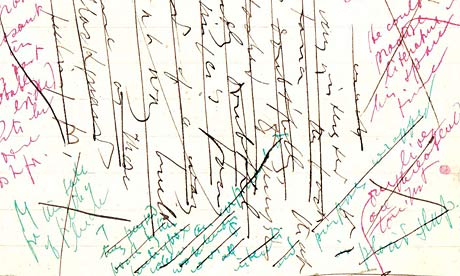
Postscript: The image above is an actual manuscript page from James Joyce’s Ulysses. (It makes me feel much more confident about my own initial scribblings.)