

How has your personality been changing through the years? Over the years I’ve noticed some gentle shifts in my own personality, particularly as it relates to my attitudes toward interacting with others.
C.S. Lewis records an intriguing comment about personalities in his early diary, published now as All My Road Before Me. After WWI, he fulfilled his promise to a friend who perished in the conflict, by providing for the soldier’s mother and young sister. Lewis’ relationship with Janie Moore has been debated, but he referred to her as “his mother,” his birth mother having died when he was young.
Lewis refers to Mrs. Moore as “D” in the diary, and Maureen, her daughter, would have been a teenager at the time (January of 1923).
At supper the subject of personality arose – I said that it made one giddy to think that oneself might not have been.
Maureen said, “Yes – I was wishing the other day that you had married someone else (to D) and then I thought, Oh, it wouldn’t make any difference to me, I shouldn’t have been there.” This shows me that she thinks more than I had hoped.
The three people seated at that dinner experienced personality changes during the following years. Many of these attitudes and behaviors have been recorded for posterity.
Some change is natural. Healthy change should be considered “growth.” People who remain rigidly static are the exception. Nevertheless, normal temperament modifications are usually quite gradual. Major alterations usually precipitated by significant emotional events. And, it’s important to recognize these SEMs can be positive – such as the birth of a child – despite our human tendency to focus on those which are traumatic.
So, how does one asess their personality? There are a variety of accessible personality inventories. One of the most accessible identifies sixteen basic personality types, as popularized by Katherine Cook Briggs and Isabel Briggs Myers in the Myers Briggs Type Indicator. Using questionnaires of various length and detail, individuals discover their core personality attributes.
It is quite common for people using one of these MBTI-based inventories to be truly surprised at the accuracy of the instrument. Many choose to embark on a quest to learn more about themselves – and others. There are resources for using these insights to improve interaction with people of other types, and even to find a compatible type of career.
I recently stumbled across a simple-to-use website that I offer for your consideration. Sixteen Personalities not only aids you in identifying your “type,” it offers a number of additional types of supplemental data – many of them for free. One clearly outlines the strengths and weaknesses of people with your personality.
Readers will notice I’m careful to refer to the tools used as assessments or inventories, not tests. That’s because the word “test” implies that there are right and wrong answers. The fact is that there are no invalid personality types.
Each combination possesses its own strengths, and its inevitable weaknesses. Often they are two sides of the same coin. For example, the 16 Personalities site includes ten such traits for the Protagonist (ENFJ). Here are two of the examples.
A Strength – Reliable – Few things bother Protagonists more than the prospect of letting down a person or cause that they believe in. People with this personality type can be counted on to see their promises and responsibilities through – even when it’s difficult to do so.
A Weakness – Overly Empathetic – Compassion is among this personality type’s greatest strengths. But Protagonists have a tendency to take on other people’s problems as their own – a habit that can leave them emotionally and physically exhausted.
The Reality of Personality Drift
It isn’t uncommon that over a period of years, personality type (as identified by these sixteen options) can change. This is particularly true when we are near equilibrium between two competing attributes. For example, as a young pastor, I was slightly Extravert. Today, I am modestly Introverted. Some of this is due to being “worn out” by excessive interpersonal interactions. Some, I suspect, is because I’m assessing my preferences more honestly. I really do draw more positive energy from small groups, than crowds.
But pastors, of course, are expected to be people people. So many of us do consciously push ourselves to become more of an Extravert than we truly are. (And many people would be quite surprised to learn how many of the pastors they’ve admired for their personability are actually Introverts.)
In my own situation I have a pair of weak preferences – Introvert over Extravert and Thinking over Feeling – and two quite strong preferences – iNtuitive over Sensing and Judging over Perceiving. Due to the balanced aspect of two characteristics, I possess a sort of blend of four different personalities. And, I could be fairly perceived by others as any of them.
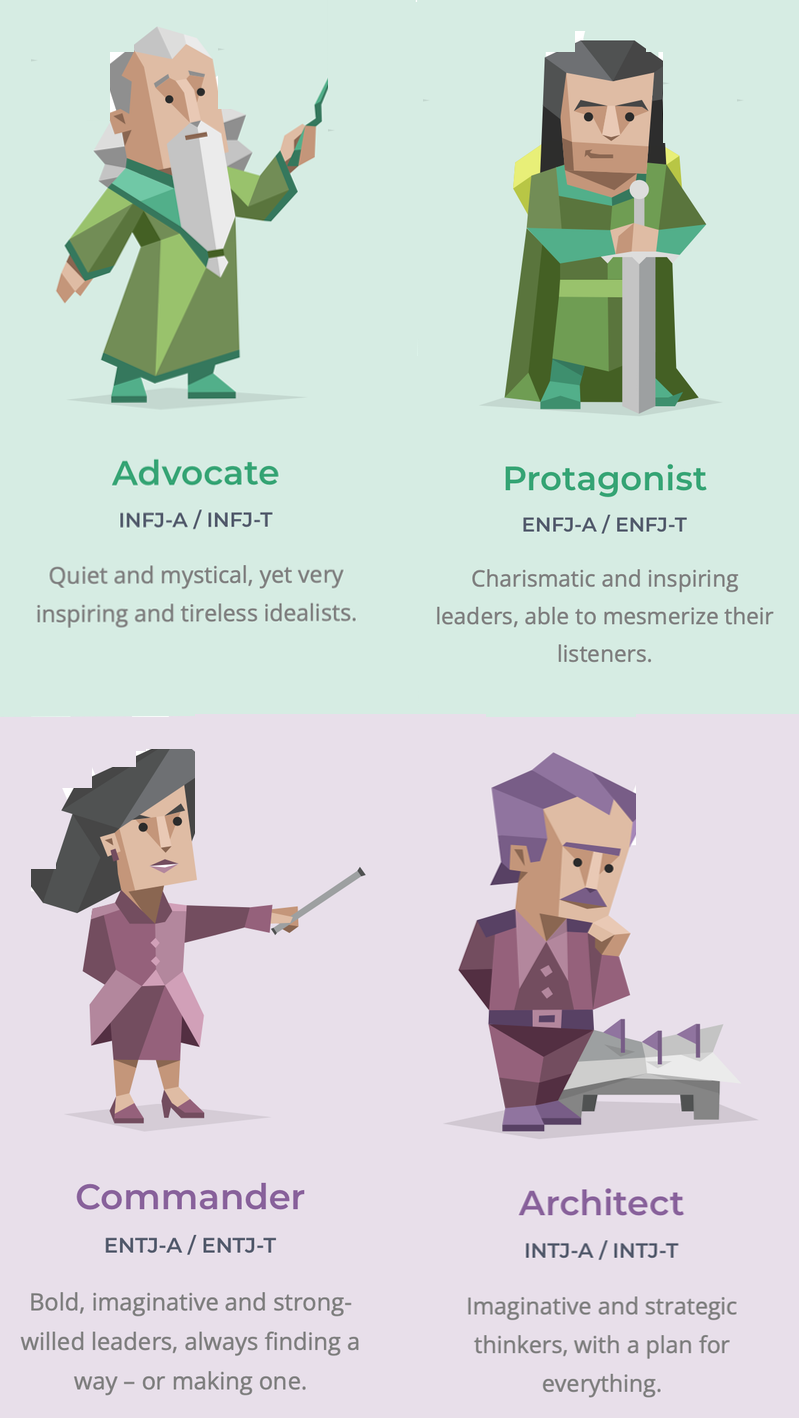
One last element of the 16 Personalities version of the MBTI, is that it includes a measurement of one’s Assertive versus Turbulent nature.
Assertive and turbulent refer to opposing personality traits sometimes added to the Myers-Briggs Type Indicator (MBTI), a personality inventory. An assertive person is more calm, confident, and laid-back, while a turbulent person is more anxious, self-conscious, and perfectionist.
The labels, when used, are appended to the standard four-letter MBTI codes to lend further nuance to the psychological types.
No one who knows me would be surprised to learn that I peg out as Assertive. One clear evidence is that no one has ever accused me of being a Perfectionist.
Was C.S. Lewis an ESFP?
Seven years ago I wrote about this subject, and I researched the question of which personality C.S. Lewis possessed.
The consensus seemed to be that he was an INTJ. One current discussion concurs with that assessment, although it also makes the subject a bit more complex by including the “Harold Grant cognitive function stack,” something I’ve never studied.
Lewis’ identity as an INTF remains most reasonable to me. Feel free to share your thoughts on the matter.
Remember, a personality inventory is not intended to put you in some sort of restrictive box. If the tool is not helpful to you, just ignore it. And, if you are wary of how such revelations might be used “against” you, share those concerns with any authorities (e.g. educators or employers) who want you to participate in a group process.
[You might dismiss such a concern, but I can personally attest to a situation where a senior military chaplain attempted to twist the MBTI results of a Roman Catholic chaplain to suggest he had “issues.” Suffice it to say it was really the colonel who had psychological problems, not the captain.]
That sad episode was, fortunately, unique in my experience. In any case, it should not prevent someone from personally discovering their personality type. It’s free, only takes a few minutes, and the dividends could well surprise you.
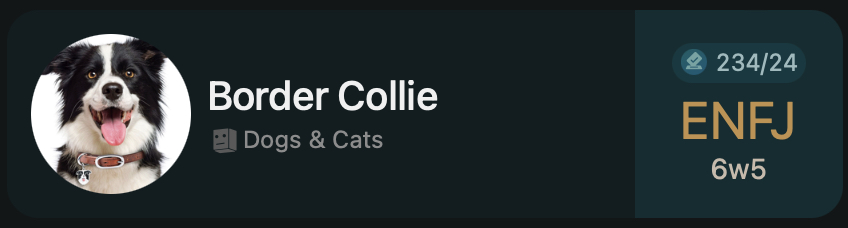
And, if you are curious about what type characterizes a particular breed of dog or cat . . . I think this site was right on in labeling our border collie an ENFJ.

 Mere Inkling Press