
Mickey Mouse Is Now Ours

He’s no Reepicheep, but the earliest iteration of Mickey Mouse just became public property!

One of the little-heralded New Year’s Day events was the entry of the Steamboat Willie version of Mickey into public domain. Now anyone who desires can use the image without infringing on Disney’s copyrights.

Actually, my headline is not 100% accurate. As I just noted, it’s the earliest version of the most famous mouse in the world. However, the rodent’s name, and his subsequent graphic version remains protected. That’s because while copyrights eventually expire, trademarks don’t.

Therefore, as reported in Fortune magazine, “current artists and creators will be able to make use of Mickey, but with major limits. It is only the more mischievous, rat-like, non-speaking boat captain in ‘Steamboat Willie’ that has become public.”

The 1928 poster advertising Mickey’s cinematic debut comes from a great article at Animation Scoop. Without comparing measurements of Mickey’s initial and contemporary snouts, it doesn’t appear to me the public domain version is that much more “rat-like.”
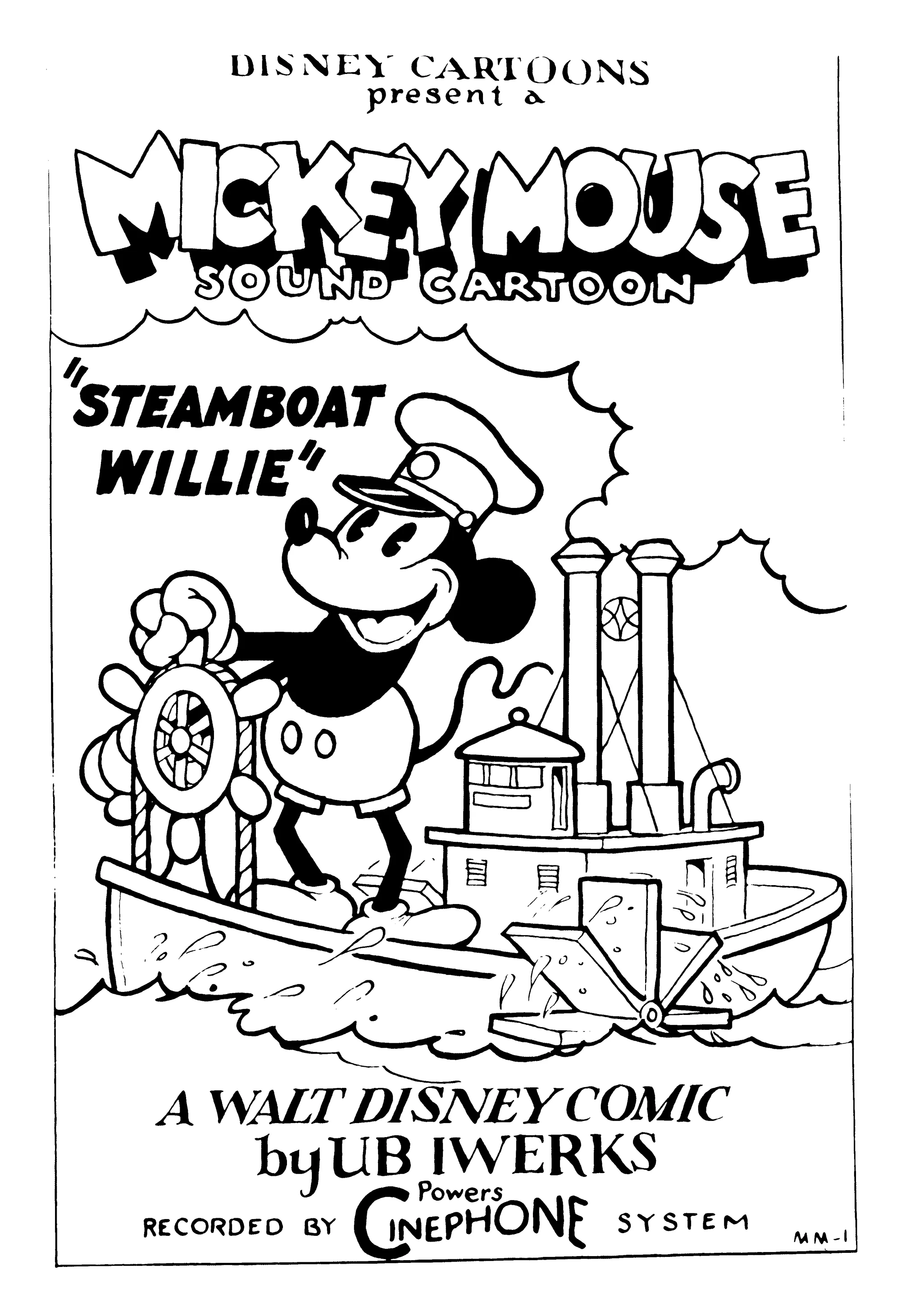
As for differences between the two . . . well, I’m not an attorney, but it appears Mickey’s onscreen persona in 1928 wasn’t wearing his standard white gloves. The poster, nevertheless, shows a Mickey closely resembling the cartoon mouse who was part of many of our childhoods. As noted in the Fortune piece:

Not every feature or personality trait a character displays is necessarily copyrightable, however, and courts could be busy in the coming years determining what’s inside and outside Disney’s ownership.

My question, and perhaps one of you intelligent readers can answer this, is about the image’s “name.” His full name, with his surname “Mouse,” is undebatably trademarked. Can a person legally use the name “Mickey” with the 1928 likeness? My guess is that the first name is not restricted, no matter how much Disney protests.

Speaking of Disney, a company which has become a disappointment in recent years, the Inklings were not big fans. If you are interested in learning more about the Inklings’ opinion about Disney Studios, check out author Jim Denney’s “What C.S. Lewis and J.R.R. Tolkien Thought of Walt Disney.”

After identifying a number of parallels in their lives, he explores the irony that “you might think that, with all that C.S. Lewis and Walt Disney had in common, they might have been mutual admirers—but that was not the case.”

And, there is always another option. As Britannica reminds us, Mickey wasn’t even his original name. Walt’s first choice (vetoed by his wife) was “Mortimer.”

That’s it for today. Now I’m off to write a book about Mickey’s alliance with Reepicheep. Oh wait, Reepicheep won’t be in the public domain until after I’m enjoying heaven with my Lord, and with the Christian members of the Inklings.

And, even if one could pair the two up for an adventure, they wouldn’t prove compatible. The reason should be obvious, but for an enjoyable exploration of that subject, I commend to you, “Reepicheep and Mickey.” 
Distant Fathers

miceChildren don’t get to choose their parents. They aren’t able to select loving parents in contrast to abusers. They can’t  express any preference about being in a home with a mom and a dad committed to them, and to one another.

But the home into which children are born matters a great deal in the direction and shape of their entire life.

It doesn’t take a genius to acknowledge that some settings are healthier than others. The ideal context (which very few of us are blessed to experience) is a home where mom and dad keep their vows to one another, and devote themselves to placing their children in the forefront of their concerns.

Those of us who are people of faith recognize a third pillar to this structure. There is spousal love, parental love, and love of God. When you have all three, you are fortunate indeed.

Sadly, for many, one or both parents are absent. They may be physically present (as my own alcoholic father was) but they are disengaged . . . unconnected . . . absent. I believe that when they are physically present but not really there, they often teach their children worse lessons than they would have learned if they were literally gone. But that’s a conversation for another day.

A study some months ago reveals that the absence of fathers during childhood can actually affect the brain of the child. Yes, you read that right—it can physically affect their brains.

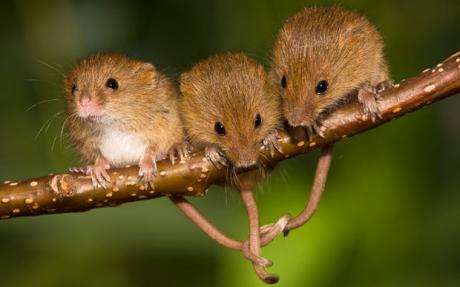
In the study Dr. Gobbi and her colleagues compared social activity and brain anatomy between the two groups . . . the first, raised with both parents, and the second,  that had been raised only by their mothers. The results showed that mice raised without a father demonstrated abnormal social interactions.

This group of subjects also showed more aggressive patterns of behavior in comparison with their counterparts raised with both parents. In addition, these effects were stronger for female offspring. Interestingly females raised without fathers also had a greater sensitivity to the stimulant drug–amphetamine.*

Before continuing, it’s important to note that these experiments were conducted on animals . . . mice, to be precise. While we don’t normally think of mice as paternalistic creatures, neuroscientists assure us that these results are significant.

“Although we used mice, the findings are extremely relevant to humans,” claims Dr. Gabriella Gobbi, a researcher of the Mental Illness and Addiction Axis at the RI-MUHC, senior author and an associate professor at the Faculty of Medicine at McGill University. “We used California mice which, like in some human populations, are monogamous and raise their offspring together.”

California mice? Monogamous? Who would have thought!

Whether you place much stock in this scientific research or not, most honest individuals acknowledge the significance our father and mother share in our early formation.

C.S. Lewis’ loss of his mother and the great distance between himself and his father greatly impacted the development of his personality. Lewis goes so far as to make this confession in Surprised by Joy: “With the cruelty of youth I allowed myself to be irritated by traits in my father which, in other elderly men, I have since regarded as lovable foibles.”

Elsewhere, Lewis writes longingly of the intimate relationship he longed to have had with his own father. Describing the source of author George MacDonald’s guiding inspiration in life, he writes:

An almost perfect relationship with his father was the earthly root of all his wisdom. From his own father, he said, he first learned that Fatherhood must be at the core of the universe. He was thus prepared in an unusual way to teach that religion in which the relation of Father and Son is of all relations the most central. (George MacDonald: An Anthology).

I did not have that sort of relationship with my own father. I strove to give it as a gift to my children though. And today, while I continue to be their dad, I am acutely aware of the kind of grandfather I am.

Whether it truly affects those developing minds or not, I am committed to caring for each of them as well as is humanly possible.

_____

* You can read the quoted article in The Neuropsychotherapist here. The abstract for the original research is available here.