
The Satisfaction of Writing

Many people who don’t write live a bit in awe of those who do. Even in this POD age, an almost mystical aura surrounds those who “successfully” write. This is especially true for those who are published, but not restricted to them.

Over the years, many friends and family members have asked why I “like to write.” Some years ago, the vague responses I once offered assumed clarity. It was, in a sense, due to a personal epiphany. I now answer such queries with the words, “it’s not that I enjoy writing itself . . . but I find the satisfaction of having written to be deeply rewarding.” (Well, that’s not a verbatim quote of how I respond, but you get the idea.)

One of my driving desires when I retired from the Air Force was to spend more time pursuing my lifelong avocation. Toward that end, I’ve devoted a serious amount of time to publishing a free online journal about the military chaplaincy. It is semi-annual, and even at that, it’s currently behind its publication schedule. (Mea culpa.)

I’m happy to share that the latest issue of the journal is now ready for free download. You can find it here. In fact, all four issues of the journal are available for download in PDF.

Curtana features new articles, editorials, poetry and reviews. In addition, since a major purpose of the journal is to gather chaplaincy history from disparate sources, we also compile biographical notes and other material.

As Curtana’s editor, I’m proud of the international scope of the journal. We’ve received contributions from Australia, Bangladesh, Canada, Great Britain, Haiti, Ireland, and even the United States. Most articles have been written by chaplains, but that’s not a requirement. Skim the contents of the issues and you’ll note the breadth and depth that characterize Curtana.

C.S. Lewis recognized the value of thoughtful literary works. Good literature might be fiction or nonfiction, but it bears the mark of genuine reflection.

Literature adds to reality, it does not simply describe it. It enriches the necessary competencies that daily life requires and provides; and in this respect, it irrigates the deserts that our lives have already become.

I hope that in some small way Curtana: Sword of Mercy helps irrigate the arid minds of modern men and women. Please share news of its existence with your acquaintances who may be interested in ministry within the armed forces.

No Child Unwanted

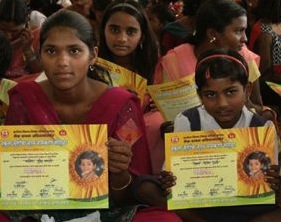
Certificates Bearing Their New NamesIt’s difficult for people who are products of Western civilization to comprehend the different view of the value of life held by many in our world.

An article today described a terrible practice in India, home to more than 1.2 billion human beings. Like many less developed nations, male children are often preferred to female offspring. Sons are viewed as a blessing and daughters (primarily due to dowries, in the case of India) are less welcome.

And because of that sad fact, it has become common for some families to name their innocent daughters Nakusha, which sounds rather pleasant, but means “unwanted.” It would be difficult to imagine an uglier name.

Recently a movement has arisen to rename girls cursed by their parents with this crippling birthright. Yesterday, in fact, just such a renaming ceremony was conducted in Satara District. The girls were allowed to choose their own name to replace the vile one that had shadowed their lives up to this point.

While there are millions of Christians in India, they have hardly made an impact on the Hindu worldview that dominates the land. It is inconceivable that in a Christian land (i.e. one rooted in the biblical documents and principles like most nations in the West), that children would be named “Unwanted.”

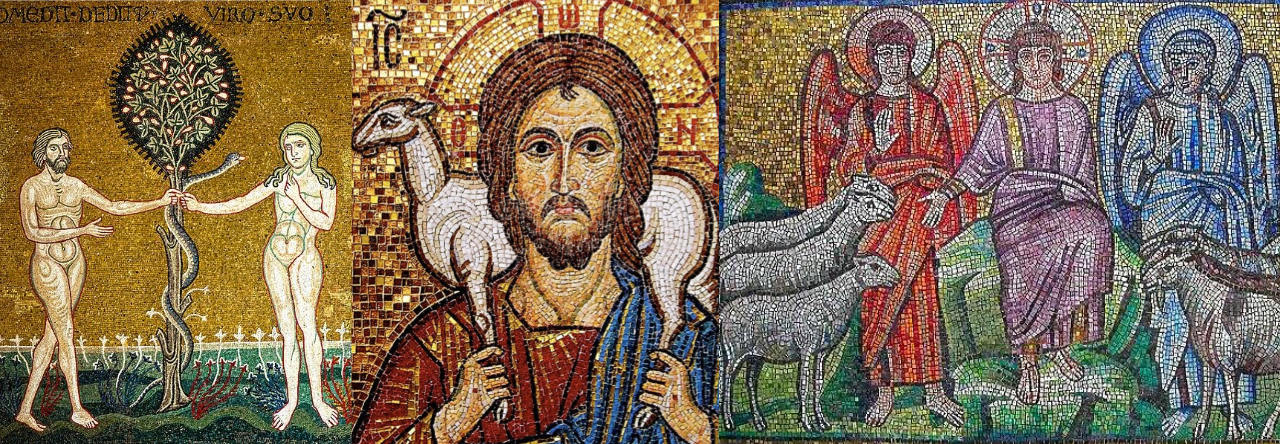
On the contrary, children are esteemed in the Christian context. Listen to these gracious words of Jesus the Christ:

At that time the disciples came to Jesus, saying, “Who is the greatest in the kingdom of heaven?” And calling to him a child, he put him in the midst of them and said, “Truly, I say to you, unless you turn and become like children, you will never enter the kingdom of heaven. Whoever humbles himself like this child is the greatest in the kingdom of heaven.

“Whoever receives one such child in my name receives me, but whoever causes one of these little ones who believe in me to sin, it would be better for him to have a great millstone fastened around his neck and to be drowned in the depth of the sea.”

Let us say a prayer for each little girl and boy—in every land around the globe—who finds themselves unwanted by their family. And let’s support worthwhile agencies that work to rescue them.

Because every child is precious to God.

Addendum:

…and every child is precious to all of those who already know God as their Father, as well.

Biblical Illiteracy

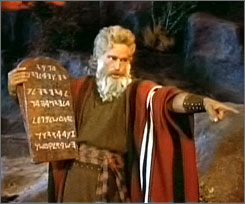
A person does not have to be religious to recognize the importance of the Ten Commandments on western civilization, literature and life. Even when one disregards their intrinsic merit, their literary significance remains. That said, it is important that those who consider themselves well educated should be acquainted with the message of this foundational document.

The statistics reveal a rather surprising picture. It turns out sixty percent of Americans cannot identify even half of the commandments. What I find stunning about that is the fact that since they are mostly prohibitions of destructive behavior, even the illiterate should be able to guess half of them. “Okay . . . we shouldn’t commit murder . . . steal from others . . . or lie about and slander others.” Pretty common sense, and we’re already over halfway there.

“Let’s see . . . the commandments are about God, so there’s probably one that says ‘worship the real God.’” Simple logic, and we’ve nearly arrived. Four out of the five and it wasn’t all that challenging. But how do we arrive at a fifth commandment? Here are two possible paths:

“Oh, doesn’t ‘religion’ believe that it’s sinful to cheat on your spouse . . . that’s probably on the list.”

or

“What’s that weird word the Bible uses about wanting stuff that belongs to others . . . oh yeah, ‘coverting’ or something like that . . . we’re not supposed to desire the possessions of others.”

Since our world has programmed us all with insatiable materialistic desires, it’s probably unlikely that someone would “guess” that coveting our neighbor’s property is wrong, so let’s substitute a more likely alternative.

“Christians get so worked up about swearing, especially when people curse using ‘God’ or ‘Jesus’ . . . so there’s probably something about that in the Ten Commandments.”

Congratulations, we’ve reached our goal of five.

As for the enumeration of the commandments—which varies among Jewish, Roman Catholic and Protestant communions—that’s a subject for another day.

Addendum:

Don’t forget the observance of this commandment which would transform our world: “Honor your father and mother” (this is the first commandment with a promise), “that it may go well with you and that you may live long in the land.”

Follow Jesus, Die

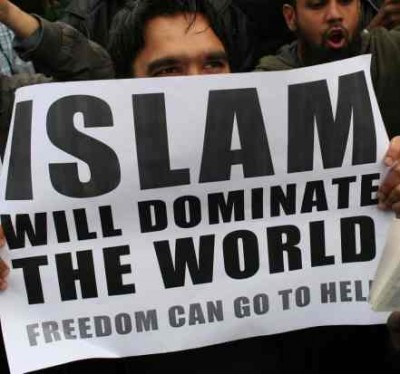
The two go hand in hand.Yesterday Iran surrendered to international outcry and decided to retry one of their citizens condemned to death for the “crime” of being a Christian. Actually, the alleged crime is “converting” to Christianity—and Iran is not the only Muslim nation to make this a capital offense.
 
Pastor Youcef Nadarkhani was arrested two years ago, and has refused to deny his Savior, even when threatened with torture and death. Christians (and other non-Muslims) are by legal definition second- or third-class citizens in all countries governed by Shariah law.
This expressly religious legal system proves each day its incompatibility with democracy. Two days ago more than a score of Coptic Christians were murdered in Egypt, where they have virtually no legal recourse or protection. It is no wonder that countless Christians and enlightened Muslims have fled from the persecution imposed by these religious regimes.

In such nations Christians died yesterday, today and they will die again tomorrow—simply because they follow Jesus. And, after international attention has died away, there is no guaranteed Nadarkhani will ever be allowed to rejoin his family. His life may still be forfeited for his faith.

Please pray for the believers who live under constant threat of the sword.

Addendum:

It truly is a tragic matter, requiring our prayers. But let us not forget the words of the Church father Tertullian, another African saint. As he wrote: Sanguis martyrum semen christianorum. “The blood of the martyrs is the seed of the Church.”