
Aerial Inspiration

C.S. Lewis and J.R.R. Tolkien are two of the countless authors who have immortalized the beauty and majesty of eagles in their books.

In Narnia, talking eagles such as Farsight serve in Aslan’s councils of war, while their speechless brethren go about their instinctual activities. 

There would have been a splendid view . . . but among all those trees you could see nothing – only, every now and then, some huge pinnacle of rock above the tree-tops, and an eagle or two wheeling high up in the blue air.

“They smell battle,” said Corin, pointing at the birds. “They know we’re preparing a feed for them” (The Horse and His Boy).

Eagles feature even more prominently in Middle Earth. The sapient Great Eagles appear at various key moments, including the rescue of doomed heroes. After the One Ring has been destroyed, an eagle bears news of the defeat of Sauron to Minas Tirith. Its proclamation is voiced in poetry.

Sing now, ye people of the Tower of Anor,
for the Realm of Sauron is ended for ever,
and the Dark Tower is thrown down.

Sing and rejoice, ye people of the Tower of Guard,
for your watch hath not been in vain,
and the Black Gate is broken,
and your King hath passed through,
and he is victorious.

Sing and be glad, all ye children of the West,
for your King shall come again,
and he shall dwell among you
all the days of your life.

And the Tree that was withered shall be renewed,
and he shall plant it in the high places,
and the City shall be blessed.

Sing all ye people!

If that sounds biblical, don’t be surprised. Although Tolkien scrupulously avoided Judeo-Christian references, so his work would not be misconstrued as allegory, the Psalms have exerted great influence on Western literature. The Lord’s entrance into the holy city is celebrated in the following words in Psalms 33 and 24.

Rejoice in the Lord, O ye righteous:
for praise is comely for the upright.
. . . 
Lift up your heads, O ye gates; and be ye lifted up, ye everlasting doors;
and the King of glory shall come in.
Who is this King of glory?
The Lord strong and mighty, the Lord mighty in battle.
Lift up your heads, O ye gates; even lift them up, ye everlasting doors;
and the King of glory shall come in.

Eagles in Our Earthly Realm

My thoughts today rose toward the sky because of an eagle I encountered while enjoying nature with my border collie this morning.

I’m blessed to live in a community near the Hood Canal, one of America’s longest fjords, extending about fifty miles. Near my home, is a nesting ground for Bald Eagles, our national bird and one of the world’s grandest raptors. Their aeries, or nests, are massive.

Even after their crowded gathering to raise their young each year, we have eagles who remain in the area. It was one of these that I contemplated today.

I was almost mesmerized as I watched the creature circle around in the sky. Even with its unrivaled vision, it appeared to be above its normal hunting altitude. Rather, it looked for all the world like it was simply enjoying its nature, celebrating its eaglehood. 

Such sightings are impressive, but not rare. However, one thing truly amazed me. As I watched that eagle soar for many long minutes, not once did it flap its wings. It simply danced in the thermals.

During that riveting time it neither departed its unmapped path in pursuit of food, nor tired of its aerial ecstasy. It savored the gifts of its Creator, and I vicariously experienced shalom as I rested and beheld. 

The Lord is the everlasting God,
    the Creator of the ends of the earth.
He does not faint or grow weary;
    his understanding is unsearchable.
He gives power to the faint,
    and to him who has no might he increases strength.
Even youths shall faint and be weary,
    and young men shall fall exhausted;
but they who wait for the Lord shall renew their strength;
    they shall mount up with wings like eagles;
they shall run and not be weary;
    they shall walk and not faint (Isaiah 40).

Thank you, Lord, for granting me this reminder – and experience – of your holy promise this day.
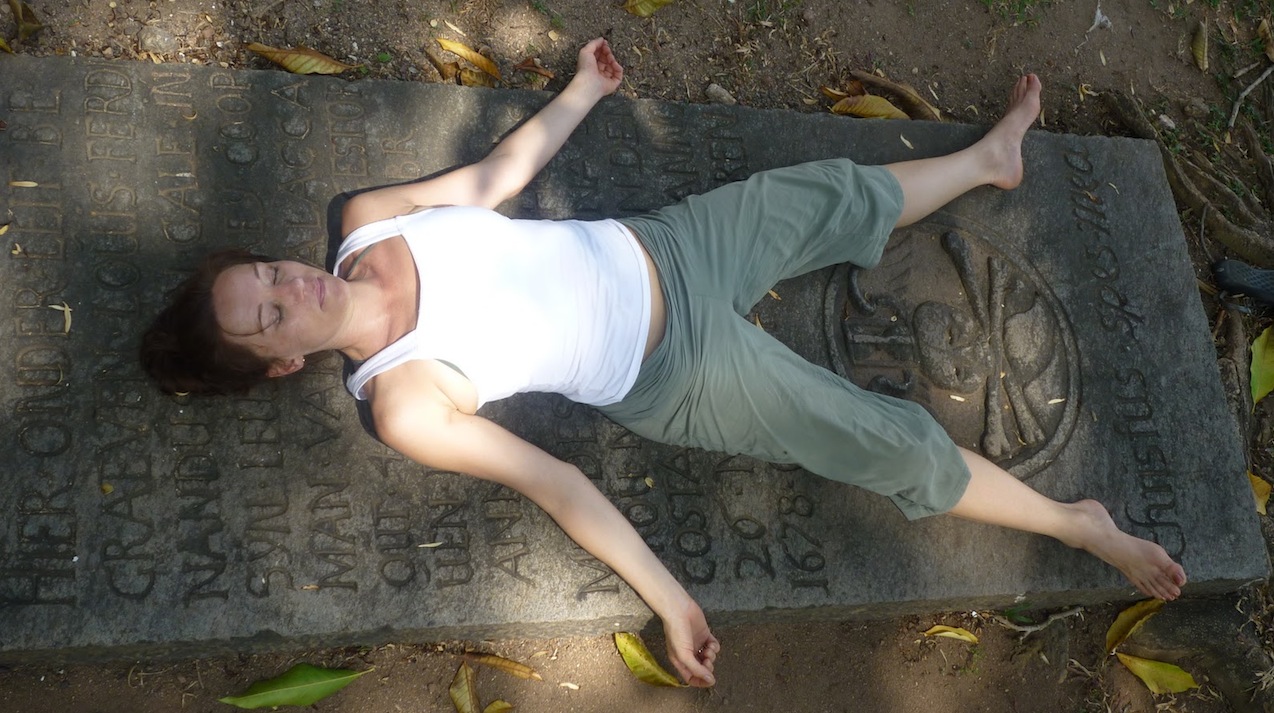
Posing Like a Corpse

savasanaThere are some things you should never tell an elderly person to do. And, I recently came across a faux pas that certainly belongs in that number.

It may just be me, but I think one should never, ever tell a senior citizen to pose like a corpse.

Nevertheless, in a recent article in a periodical expressly written for “mature” Americans,* readers were advised to assume the “corpse pose.” My discomfort with that directive was not allayed by the description that followed.

Lie flat on your back, pillow under your head, eyes closed. Allow your feet to play to the sides. Rest your arms alongside your body, palms facing up. Then relax, surrender to the floor, and breathe deeply.

Up until being told to “breathe,” one might rightly be confused with precisely how we are emulating a corpse.

While I make no claim to understand what it means to “surrender to the floor,” I can understand how body posture has become a valued part of yoga. After all, even without the counsel of a yogi, I learned at an early age the sheer joy and peace of lying on my back with eyes closed.

I don’t wish to impugn the benefits of yoga; I wish that I were able to master my physical body half as well as many of them do. However, I would like to suggest to the yoga community that they re-label their corpse pose.

Admittedly, advocates for maintaining this verbiage can state it is clearly not intended to refer to a literal cadaver. In arguing this they are simply being human. As C.S. Lewis wrote in “Studies in Words”—“Like all philosophers, Aristotle gives words the definitions which will be most useful for his own purpose.” This approach is not, of course, the domain of philosophers alone.

The fact is that there are perfectly good words that could be substituted which do not reference a lifeless body. “Reclined,” “Reposed,” or even “Resting” or “Sleeping” come readily to mind.

Of course, I may be missing something here. Perhaps the allusion to a corpse is intentional? Perhaps the image of dissipation of energy and effort is expressly intended to be similar to a comatose state? Perhaps that is what becoming one with the floor is hinting at? Flesh to floor . . . ashes to ashes, dust to dust.

In this case, it might be clearer if we were provided with a definition of what the title of the pose actually means. I suppose that practitioners may learn this as part of their lessons, but to those on the “outside,” the label seems slightly off-putting.

As Lewis wrote in the aforementioned essay:

The fact that [writers] define it at all is itself a ground for scepticism. Unless we are writing a dictionary, or a text-book of some technical subject, we define our words only because we are in some measure departing from their real current sense. Otherwise there would be no purpose in doing so.

Thus, if “corpse” here doesn’t mean what we normally understand it to, we might benefit from a brief definition or explanation of the users’ intent.

This matter—the proper use of the precise word that will be clearly understood—is a concern for all communicators. Writers need to remain vigilant that their own vocabulary or metaphors do not confuse.

One last caveat for those who practice yoga. If you seek to master the corpse pose, be cautious in just how well you perfect it. Please stop short of emulating death so well that your resting body is discovered and a crime scene established.

_____

savasana 2* AARP the Magazine is published by the organization formerly known as the American Association of Retired People. Apparently, the sound “AARP” is considered more dignified than the original title. It remains a requirement, however, that members have survived at least a half century before applying for membership.

Is Slowing Down Possible?

snailEons ago, when I was attending college, I suffered from that common plague—a chronic lack of time.

Between my studies, my job and romancing my future wife, I never had enough hours in the day.

So I did what everyone in that situation does . . . I worked harder. It didn’t solve my dilemma and probably worsened my exhaustion.

During that indescribably busy season of my life God spoke to me through a song. It was recorded by an early “contemporary” Christian group called “Love Song.” At the end of this column you can listen to a recording of the song “Slow Down,” by Chuck Girard. (Don’t skip to it now though, since the link won’t work unless you read the entire post.)

It sounds a bit dated now, forty years after it was composed, but it still conveys a powerful calming message. I hadn’t heard it for years until I just uncovered it for this column, but listening to it today has stilled my sense of urgency as I rush to complete this post before our four grandkids arrive for a weekend visit, in just an hour.

The importance of slowing down and resting is never far from my consciousness, since I am always overextended. Like many of you, I find it extremely difficult to say “no,” so I end up committed to more things than I feel I’m able to do well.

This week I received word of another song, which is what actually inspired me to write on this subject. It’s by a delightful young artist and is much peppier than Girard’s more prayerful message. I believe you’ll enjoy watching the music video below (after you finish reading, of course).

In light of this human need for being reminded to rest, I wondered where C.S. Lewis lamented his own overburdened state. His courtesy in responding to all correspondence is legendary. In addition to teaching, writing, corresponding and (near the end of his life) husbanding, Lewis was far busier than I am.

So, I explored some of Lewis’ words. (That’s never “work,” by the way, since it never fails to reinvigorate me, just like physical rest.) I found the following passage delivers a brilliant insight into why many of us are so compelled to work—work—work.

In the following passage, from a 1930 letter, Lewis relates how our drive to succeed can be linked to our personal ambitions. He couches the discussion in the context of his own desire for renown as a writer. And, Lewis declares, it is only when those misdirected impulses are quelled that we can truly find rest and peace.

From the age of sixteen onwards I had one single ambition [to succeed as a writer], from which I never wavered, in the prosecution of which I spent every ounce I could, on which I really & deliberately staked my whole contentment: and I recognise myself as having unmistakably failed in it. . . .

The side of me which longs, not to write, for no one can stop us doing that, but to be approved as a writer, is not the side of us that is really worth much. And depend upon it, unless God has abandoned us, he will find means to cauterise that side somehow or other. If we can take the pain well and truly now, and by it forever get over the wish to be distinguished beyond our fellows, well: if not we shall get it again in some other form.

And honestly, the being cured, with all the pain, has pleasure too: one creeps home, tired and bruised, into a state of mind that is really restful, when all one’s ambitions have been given up. Then one can really
for the first time say “Thy Kingdom come:” for in that Kingdom there will be no pre-eminences and a man must have reached the stage of not caring two straws about his own status before he can enter it.

Think how difficult that would be if one succeeded as a writer: how bitter this necessary purgation at the age of sixty, when literary success had made your whole life and you had then got to begin to go through the stage of seeing it all as dust and ashes. Perhaps God has been specially kind to us in forcing us to get over it at the beginning.

At all events, whether we like it or not, we have got to take the shock. As you know so well, we have got to die. Cry, kick, swear, we may: only like Lilith to come in the end and die far more painfully and later. . . . I would have given almost anything—I shudder to think what I would have given if I had been allowed—to be a successful writer. . . . I am writing as I do simply & solely because I think the only thing for you to do is absolutely to kill the part of you that wants success.

Powerful words to ponder. Now, without further delay, the aforementioned songs. Profound lyrics in both. Listen to them in either order, keeping in mind that Myla Smith’s is energetic and Chuck Girard’s is meditative. Enjoy . . . and slow down!

“Slow Down” by Myla Smith

“Slow Down” by Chuck Girard