
I can’t answer this question for you, but I know how I want to be able to answer when I stand before our Creator.
Many Christians include corporate confession and absolution (forgiveness) as part of their regular worship. We often ask forgiveness our sins of commission and omission – the wrongs we do, and the wrongs we are responsible for when we fail to do what we should.
God forbid that any of us would actively support slavery, but . . . how little most of us do to reduce it or free people from its deadly grasp.
In Britain, the National Society for the Prevention of Cruelty to Children, founded in 1884, recognizes modern slavery as one of the world’s greatest challenges. As they say: “Any child is at risk of child trafficking.”
Save the Children states that “children account for 27% of all the human trafficking victims worldwide, and two out of every three child victims are girls.”
Sometimes sold by a family member or an acquaintance, sometimes lured by false promises of education and a “better” life – the reality is that these trafficked and exploited children are held in slave-like conditions without enough food, shelter or clothing, and are often severely abused and cut off from all contact with their families.
The children’s condition is not “slave-like;” these precious victims literally are slaves, in every cruel sense of the word. While no unenslaved person would be so ignorant as to presume they understand slavery, C.S. Lewis mentioned in a 1939 letter several torments it inflicts. At the break of the Second World War, he was reflecting on his experiences in the First.
My memories of the last war haunted my dreams for years. Military service, to be plain, includes the threat of every temporal evil; pain and death which is what we fear from sickness; isolation from those we love which is what we fear from exile: toil under arbitrary masters, injustice, humiliation, which is what we fear from slavery: hunger, thirst and exposure which is what we fear from poverty.
The most shocking part of this description from Save the Children, is the acknowledgment that the children are “sometimes sold by a family member . . .” I discussed this grim truth in my 2014 post, “Loving Prostitutes.”
In that article I express a sentiment I hope you share: “I love prostitutes because God has granted me the vision to see them as he does.”
What You & I Can Do Today
Obviously, if this subject is new to you, you can become informed. The links I’ve provided offer a good starting point.
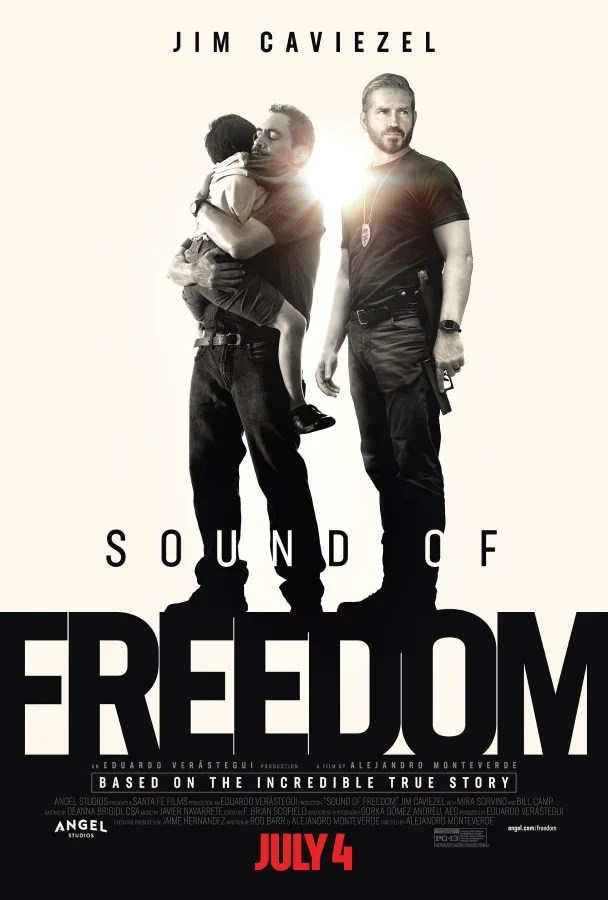
At the present moment we have a truly unique opportunity to make a contribution toward addressing this massive horror. We can support a superb, first-class film that is currently showing in hundreds of cinemas.
Sound of Freedom is a true story with a superb cast and excellent cinematography. Despite its serious subject, the film is well worth viewing while it is still in theaters. Simply by attending, and even more by encouraging family and friends to join you, we can raise the awareness of this tragedy.
Together, you and I truly can help rescue people from this fate, and promoting this message of hope and deliverance is a small step in that journey.
When faced with ugly things, the timid response is to turn away and pretend it doesn’t exist. In cases like this, particularly involving children, a cowardly response in ignoring the evil constitutes nothing less than a sin of omission.
Check with your local theaters today, and reserve a seat at a showing of Sound of Freedom. (And, for those who see this suggestion months or years after the film’s 2023 release, check it out soon on a streaming service.)
Postscript & Resources:
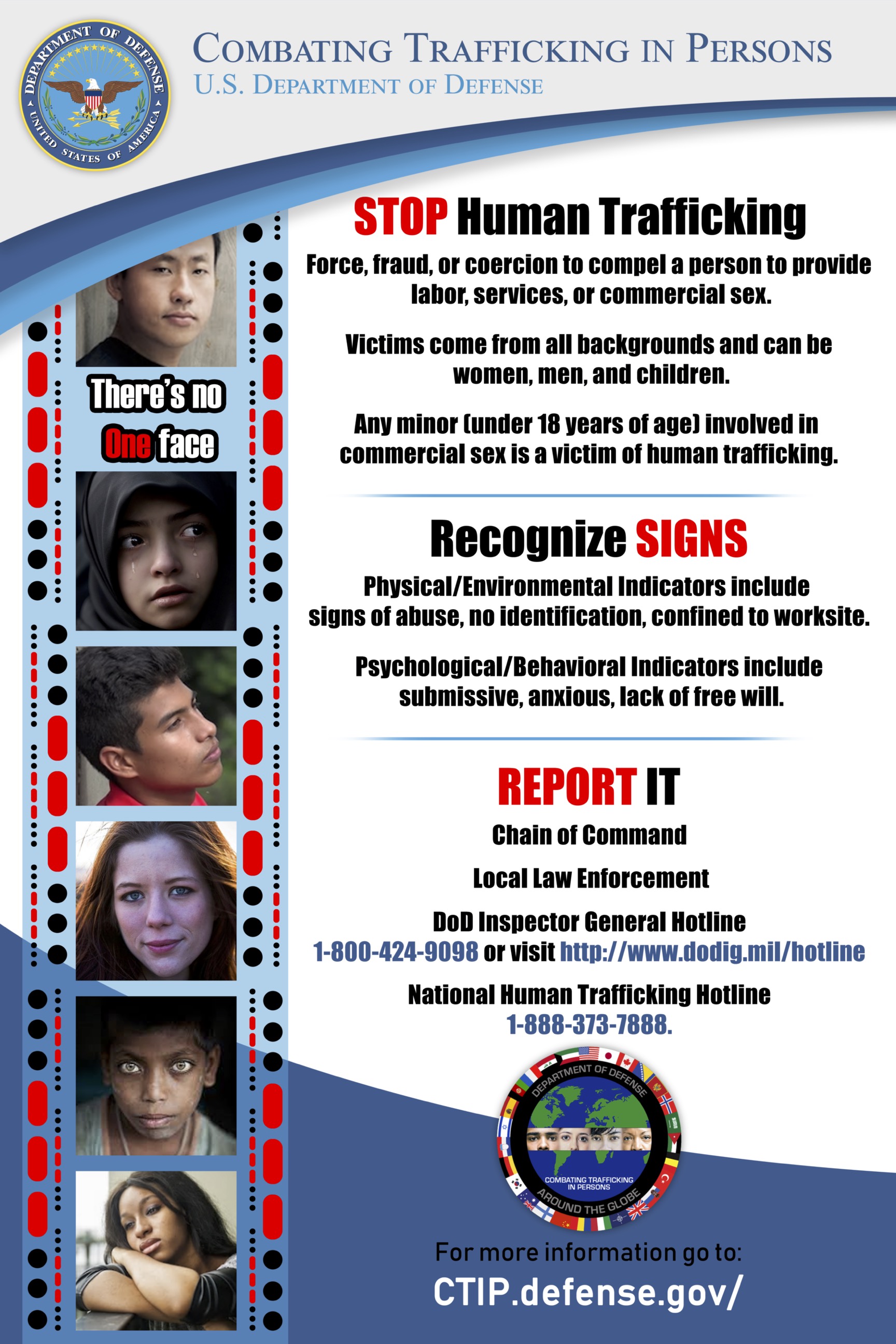
While I was still on active duty, the United States Department of Defense initiated a long-overdue program. In recognition that military members are literally on the “front lines” of encountering modern slavery, Combating Trafficking in Persons is an official program established to confront the crime.
The program includes provisions requiring training for all DoD personnel, civilian as well as uniformed. This site describes the various levels of training required. To actually “take” the training and testing requires login privileges. However, various resources – including some very informative videos – are available to the public.
Similarly, agencies such as INTERPOL restrict their courses to members. Nevertheless, they offer a variety of educational resources and updates on current efforts to battle this crime around the globe.
While I haven’t personally vetted the following, a number of public and governmental organizations offer free training for interested individuals. Among them are:
the U.S. Department of Homeland Security, and the Office for Victims of Crime. The U.S. Institute Against Human Trafficking lists six free classes, several of which offer certificates of completion.
The Home Office in the United Kingdom hosts a site with a number of related resources. One is “A typology of modern slavery offences in the UK” which breaks “down the broad categories of modern slavery into 17 distinct types of offences identified in the UK.” No doubt, most other enlightened nations promote similar materials.
In a 1943 essay entitled “Equality,” C.S. Lewis discusses the subject of the nature of Democracy, as a form of government. His argument includes the clearest possible reason why slavery never has been, and never could be a good, or morally neutral, thing.
I am a democrat because I believe in the Fall of Man. I think most people are democrats for the opposite reason. A great deal of democratic enthusiasm descends from the ideas of people like Rousseau, who believed in democracy because they thought mankind so wise and good that everyone deserved a share in the government.
The danger of defending democracy on those grounds is that they’re not true. . . . I find that they’re not true without looking further than myself. I don’t deserve a share in governing a hen-roost, much less a nation. . . .
The real reason for democracy is . . . Mankind is so fallen that no man can be trusted with unchecked power over his fellows. Aristotle said that some people were only fit to be slaves. I do not contradict him. But I reject slavery because I see no men fit to be masters.
I know that C.S. Lewis would add his “amen” to my challenge today that each of us might look for ways to help eradicate this plague of slavery, which has cursed humanity for millennia.
 Mere Inkling Press