
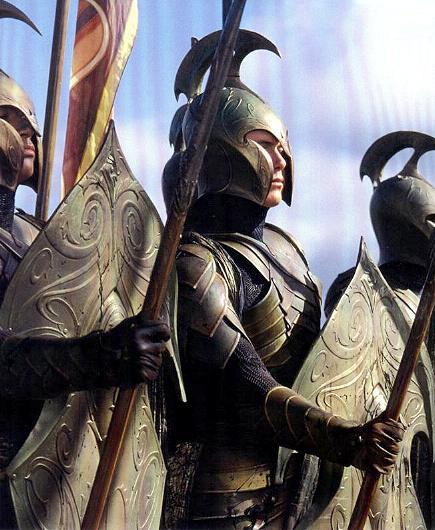
Iceland’s Real Elves

warrior elvesI’ve always wanted to visit Iceland.

Not simply because it’s the most sparsely populated country in Europe . . . even though I’m not big on crowds.

Not simply because of its spectacular glaciers and volcanic activity . . . even though these natural wonders inspire genuine awe.

Not simply because it is home to the world’s most ancient parliamentary democracy . . . even though I believe representative democracy is the best sort of government available.

Not simply because they colonized Greenland, from which the Norse were the first Europeans to discover the Americas . . . even though Leif Erikson deserves the accolades rendered to others.

Not simply because 40,000 of my fellow citizens are of Icelandic descent . . . even though I’m pleased they have contributed to our national “melting pot.”

Not simply because Iceland’s tenth largest city is called Fjarðabyggð . . . even though that vivid name is sure to capture the imagination of any writer.

Not simply because the Icelandic alphabet actually includes a runic letter (Þ, þ) named thorn . . . even though this too makes the nation of Iceland unique.

And, not simply because J.R.R. Tolkien and his friend C.S. Lewis established a group called Kolbitar which was devoted to reading Icelandic and Norse sagas. The word itself means “coal biter” and refers to those in a harsh environment drawing so close to the fire’s warmth they can almost bite the coals.

When the Lord of the Rings (as a work in progress) was being in read at meetings of the Inklings, one of the groups members at some point blurted out, “Oh no, not another –– elf!” [I only mention this here because that impetuous comment is often incorrectly attributed to Lewis—a genuine fan of Tolkien’s masterpiece. It was actually voiced by Hugo Dyson, another WWI veteran who taught English at Merton College.]

In the past, all of these reasons have contributed to my curiosity about the Land of Ice, but now I have added one more reason to someday visit.

It turns out that some Icelanders believe that elves, called by them Huldufólk (hidden folk), are real!

The elves have a large enough human constituency, that they are able to block highway construction due to the impact on the local Huldufólk!

Technically, the preservation of the elvish solitude is only the secondary concern in the lawsuits, the first being protection of one of Iceland’s numerous lava fields. Iceland’s Supreme Court has vacillated on the case, which can only raise the ire of any elves that may reside there.
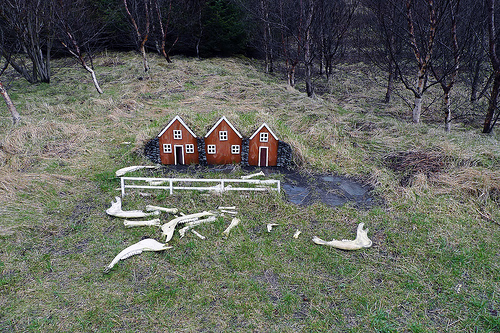
elf houseIf the proponents of the reality of the Huldufólk are right, there remains one shortcoming to the Icelandic elves. Apparently, if the elf homes that dot the countryside are any indication, the northern island breed are a diminutive race. As in tiny, what Americans would think of more as a gnome or perhaps even a fairy.

My problem is that I’ve been spoiled by J.R.R. Tolkien’s version of the elvish races. I see them a tall, noble, and wise. The kind of folk you’d want for a friend, if you could get past the aloofness that is apparently characteristic of beings who live centuries rather than decades.

I fear that these Icelandic elves are (pardon me, any Huldufólk who may be reading this) a rather inferior lot. More like leprechauns than warriors. If you live in Iceland and can correct my errors about the hidden folk there, please contact me. Even better if you happen to know some elves personally.
Government & Baboons

I recently read an interesting article about battling terrorism from an international base in Djibouti. Many African nations have joined those from Europe and North America in trying to protect vulnerable villages from the ravages of violent extremism.

However, as readers of Mere Inkling know, we don’t deal with political matters here. Everyday life, yes. Writing and self-expression, of course. Faith, definitely. Imagination, most certainly. Current events are also on the table for consideration, insofar as they relate to the aforementioned subjects.

Politics though, as a subject in and of itself, is not on the Mere Inkling menu.

With that in mind, I want to share a passage from the Air Force magazine article. In a description of “a recent personnel recovery mission in Ethiopia,” it says,

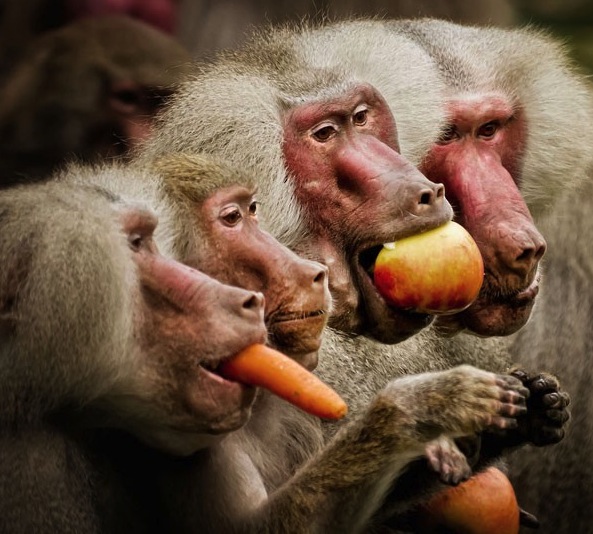
The HC-130s landed at night on a pitch-black airstrip, but first had to make a “clearing pass” to scare a congress of baboons and a pod of hippopotamuses off the runway.

Quite a picture. However, the image itself only made part of the impression left on me by this sentence. More lasting was the reminder of what a group of baboons is called.

C.S. Lewis wrote a fascinating essay about government entitled “Democratic Education.” One of many of its many kernels of wisdom is this: “Democracy demands that little men should not take big ones too seriously; it dies when it is full of little men who think they are big themselves.”

Returning to the subject of animals, the second chapter of Genesis tells us,

Now out of the ground the Lord God had formed[f] every beast of the field and every bird of the heavens and brought them to the man to see what he would call them. And whatever the man called every living creature, that was its name. The man gave names to all livestock and to the birds of the heavens and to every beast of the field.

So, Adam named the animals, and I imagine that after her creation, Eve helped her husband refine some of those appellations. What I don’t know is this—exactly who decided how we label groups of the same species?

I would point out how apropos baboons being referred to as a “congress” is . . . except for two considerations. (1) The connection would be lost on many readers whose governments have parliaments, and (2) It turns out this is actually an error. The actual word for baboon bands is a “troop.” So much for their unfortunate association with an organization that has lost the confidence of nine out of ten Americans.

Here are a few of the familiar and unfamiliar collective nouns for a variety of animals, with some brief comments and questions.

Lions | Pride – Aptly named!

Prairie Dogs | Coterie – I never considered prairie dogs snobbish.

Kittens | Intrigue – I should have learned that from simple observation.

Finches | Charm – They really do, don’t they?

Wombats | Wisdom – Wisdom to Aussies, a mystery to me.

Pekingese | Pomp – Well, perhaps just slightly elitist.

Cobras | Quiver – Logical, given the prospect of meeting a group of vipers.

Peacocks | Ostentation – Much nicer than the “pride” option.

Barracudas | Battery – Same as electric eels, I suppose.

Crows | Murder – A term familiar to most literary folk.

Bullfinches | Bellowing – Huh? Sounds more hippopotamusish.

Cows | Kine – Have to thank the medieval English for this one.

Seabirds | Wreck – Beware when they fly overhead.

Bacteria | Culture – And what kind of civilization have they ever built?

Deer | Gang – Must be the teenagers, before they become a herd.

Cockroaches | Intrusion – Accurate, repulsive and ominous.

Guillemots | Bazaar – What’s a guillemot, and what is it selling?

Cormorants | Gulp – Didn’t their momma’s teach them to chew?

Cheetahs | Coalition – Wouldn’t “a ‘sprint’ of cheetahs” sound better?

Woodpeckers | Descent – Am I missing something here?

Clams | Bed – Not much else to do in the clam-world.

Turtledoves | Pitying – Meaning they take pity on us, not vice versa.

Bobolinks | Chain – Cute, but lost on Americans where they’re known as reedbirds or ricebirds.

Snails | Walk – Someone’s lacking a bit in creativity here.

Ravens | Unkindness – Speaking of unkind, who labeled them this?

Flamingoes | Stand – Come on now, isn’t that a bit obvious?

Giraffe | Tower – I guess the flamingoes aren’t the only ones.

Lice | Flock – That is way too nice a word for those vermin!

Alligators | Congregation – As a pastor, I simply don’t want to go there.

This is way too much fun, but I’d better stop now so I can revisit this theme in a year or so. Until then, if you learn who gave that unkind name to groups of ravens, let me know.

Nature’s Hazards

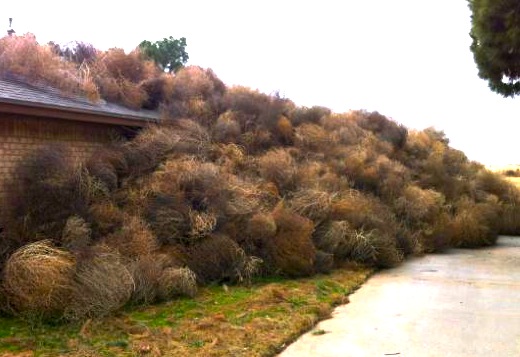
tumbleweedsNo matter where in the world you live, you are vulnerable to dangers uniquely associated with that locale. Some of us have moved around and weathered a variety of these threats.

My own family has survived earthquakes in our home state of Washington, ice storms in Oklahoma, nearby tornadoes in Texas, record-setting freezes in Minnesota, both droughts and failed levees in two different California cities along with a Super Typhoon in Guam. (Sometimes we’ve even been assailed by disasters that had no place occurring where they did, like a hurricane that knocked out our power for a full month in England, of all places!)

It’s quite possible that you too have experienced near misses when it comes to suffering Nature’s wrath. (I’d much rather attribute these things to fallen Nature than refer to them as “acts of God.”)

C.S. Lewis offers a wonderful description of Nature in Miracles.

You must have tasted, however briefly, the pure water from beyond the world before you can be distinctly conscious of the hot, salty tang of Nature’s current. To treat her as God, or as Everything, is to lose the whole pith and pleasure of her. Come out, look back, and then you will see . . . this astonishing cataract of bears, babies, and bananas: this immoderate deluge of atoms, orchids, oranges, cancers, canaries, fleas, gases, tornadoes and toads. How could you ever have thought that this was the ultimate reality? How could you ever have thought that it was merely a stage-set for the moral drama of men and women? She is herself.

Offer her neither worship nor contempt. Meet her and know her. If we are immortal, and if she is doomed (as the scientists tell us) to run down and die, we shall miss this half-shy and half-flamboyant creature, this ogress, this hoyden, this incorrigible fairy, this dumb witch. But the theologians tell us that she, like ourselves, is to be redeemed. The “vanity” to which she was subjected was her disease, not her essence. She will be cured, but cured in character: not tamed (Heaven forbid) nor sterilised. We shall still be able to recognise our old enemy, friend, play-fellow and foster-mother, so perfected as to be not less, but more, herself. And that will be a merry meeting.

But, until that glorious day when Nature has been reborn in the culmination of the event that took place on Calvary . . . until that day, Nature remains a capricious neighbor. It’s best to know what she is likely to throw at you based on where you reside—and be prepared. Disaster preparedness is something that the wise will concern themselves before catastrophe strikes.

There are some dangers, however, for which one cannot adequately prepare. The prospects of mega-tsunamis terrify me (and I don’t even live by the sea). Then there are zombie outbreaks, which are apparently taking place on a frequent basis, if the plethora of media on that ghoulish subject is any indication.

The photograph at the top of this page reveals a grim threat to life on the American plains. There may be a few other places where these merciless creatures wreak havoc (the arid portions of Australia, perhaps), but I hope most of those reading this have been spared the visage of plagues of tumbleweeds racing across the horizon in search of victims to overrun, scar, and bury. As the picture shows, sometimes it is not even safe to shelter in a home during a particularly virulent attack.

I’ve seen many a wayward tumbleweed, while I’ve driven across barren desert terrains. Occasionally you’ll see them alone, scouting ahead of the mass for weak prey. If you see an entire horde, well . . . it’s probably already to late to flee.

This picture makes me shiver. It’s one reason I’m so happy to have moved home to Puget Sound, where the incessant rain* keeps everything green. I can put up with an occasional tectonic jiggle, if it means I don’t have to worry about being buried alive beneath a mountain of desiccated thorns.

_____

* The rainfall in western Washington is highly exaggerated. It’s true that for half of the year it receives more rain than the national average, but the other six months it receives less than average of the rest of the nation.

Also, I don’t believe it is an accident that one of the most commonly encountered tumbleweeds in the United States is Salsola tragus, an utterly humorless thistle that invaded from Russia at the end of the nineteenth century. Despite occasional eruptions, it seems to be lying in wait, for the most part, growing in strength for the final conflagration between humanity and noxious weeds and their allies, the triffids.