
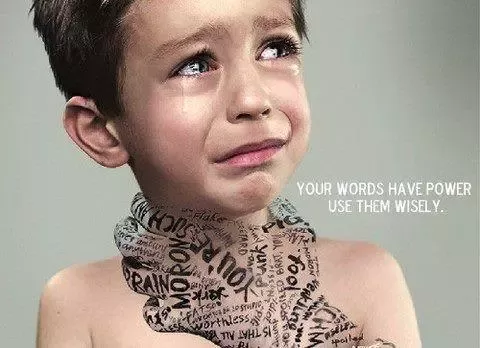
Kids are often cruel, dishing out insults and rude nicknames to those they deem “different.” Sadly, not everyone outgrows this ugly behavior. As C.S. Lewis wrote in The Four Loves,
We hear a great deal about the rudeness of the rising generation. I am an oldster myself and might be expected to take the oldsters’ side, but in fact I have been far more impressed by the bad manners of parents to children than by those of children to parents.
I recently discovered an artist whose music reveals the pain caused by this cruelty. In “Not My Name,” Matt Sassano describes how we can move beyond the wounds of our past. For we all understand these hurtful words possess power.
These are the scars
that I’m forced to live with,
These are the scars
that mark me as a misfit . . .
Who among us does not bear scars from past struggles? Who among us has never been ridiculed by others?
Despite having a loving mother who sheltered me from much of life’s traumas, I bear my own scars. That’s one reason this song powerfully resonated with me.
But there is a stronger reason I am touched by “Not My Name.” It’s because, as a pastor I have seen far, far too many women and men who remain buried beneath their pain.
I found healing in God’s grace. The scars now cause me little discomfort, though the memories remain. And I have found healing often begins when people who have endured life’s onslaughts learn they are not alone.
This man shares a heart just like their own.
These are the scars
that I am forced to live with
So pick me apart
I won’t fit the mold that you fit
But thеre’s a warrior inside me
That you playеd a part in building
Because you made me understand.About staying strong when you’ve fought so long
In a world that tells you you don’t belong
Living in the shadow of all your flaws
Where it’s hard to be seen for who you are.
And, the emotionally and spiritually wounded can see how someone suffering like them can proclaim this liberating truth:
So label me
Call me by my pain
That’s not my name
That’s not my name.I’m so much more
than your throw away
That’s not my name
That’s not my name. . . .You won’t sentence me
Your words are dead to me
I know my suffering
is not my identity.
As impressed as I was with this song, it means all the more now that I learned something about Sassano’s life.
The Sins of the Father
A short biography reveals some of the reason for Sassano’s plaintive spirit.
He was the son of an unfit pastor, whose anger and abuse crushed his childhood faith. His search for meaning “was intensified by the experience of living with two disabilities: Cerebral Palsy and dyscalculia (which impairs brain functions like navigation and mathematics).
“I spent much of my early life in and out of doctor’s offices and disability meetings, which led me to struggle with my self-perception and self-esteem.”
It is this tragic youth which directly inspires his video “Dear God.” Released in 2022, it reminds me of the lamentations we find in the Scriptures, particularly the Psalms and Jeremiah. In Madeleine L’Engle’s forward to C.S. Lewis’ lamentations in A Grief Observed, she expresses gratitude for his honest treatment of grief’s violence.
I am grateful to Lewis for the honesty of his journal of grief, because it makes quite clear that the human being is allowed to grieve, that it is normal, it is right to grieve, and the Christian is not denied this natural response to loss.
I am grateful, too, to Lewis for having the courage to yell, to doubt, to kick at God . . . This is a part of healthy grief not often encouraged. It is helpful indeed that C.S. Lewis, who has been such a successful apologist for Christianity, should have the courage to admit doubt about what he has so superbly proclaimed. It gives us permission to admit our own doubts, our own angers and anguishes, and to know that they are part of the soul’s growth.
The video amplifies the power of the lyrics of “Dear God.” So, do watch it.
I’ve got questions, confessions
I just want peace of mind
Time’s fading and I’m waiting
For something I can’t find
I am overwhelmed
Can I endure this hell?
No way to break the spell
I’ll spill my heart againDear God
I’ve lost the will to fight
Please give me a sign
I’m empty inside
Got no strength to carry on
The plague has multiplied
It’s eating me alive
How can I survive?
Dear God
Much like C.S. Lewis’ book describing the loss of his wife, Sassano’s songs can help bring healing to those in similar pain. Even if you don’t need to listen to these songs . . . trust me, there is someone you know and care about, who does!
 Mere Inkling Press
This post is the profound beauty of a Christian practicing what they preach. Thank you.
And your observation, Cindy, is also profound.
Amen to that!
Your pastor’s heart is showing, Rob, and honest acknowledgment of shared experience, just as Lewis does to our eternal gratitude to God who is able to bind up our wounds through words, music by the Spirit’s work. Including me, I can think of one another in our blogging community I want to share those songs with.
I’m glad Sassano’s songs ministered to you and that you’ll be sharing them. Yes, our Lord truly the Great Physician, the ultimate Healer.
I always enjoy music based blog post (I have a few). It’s a unique personal connection when people share songs with you. A powerful posts…
I hope you enjoyed his music, Jamey.
Rob,
Words are powerful and stuffing hurt hurts everyone. I do pray the past is forgiven and we can live free from that pain. Thank you, Gary
Gary Avants Forbear Productions * *garyavants66@gmail.com garyavants66@gmail.com
The part that hurts me the most, as a pastor, is that his father was such a destructive, hypocritical “representative” of God.
Yeah.
Gary Avants Forbear Productions * *garyavants66@gmail.com garyavants66@gmail.com
Thank you for this powerful and moving post.
You are most welcome, Anna.
Beautiful song . You are right. Well shared.👍😊
I am happy that you found it meaningful.
☺️🙏
I’ve thought often about parents and their impact on upbringing. It’s daunting to be a parent, and most do the best the know how. I’m also saddened by stories of those who don’t take their responsibilities seriously since it impacts their offspring forever.
Yes, their children… and many successive generations.
The good news, though, is that we bless our children, that blessing carries on to successive generations as well.
I hope so. Mine will likely blame me for some error or another.
Oh, I’m sure most of our kids will remember more than one of our failings. However, I’ve noticed that many of the “complaints” from descendants seem to morph into humorous anecdotes over the years. And, we have to hope they are laughing with us, and not at us.