
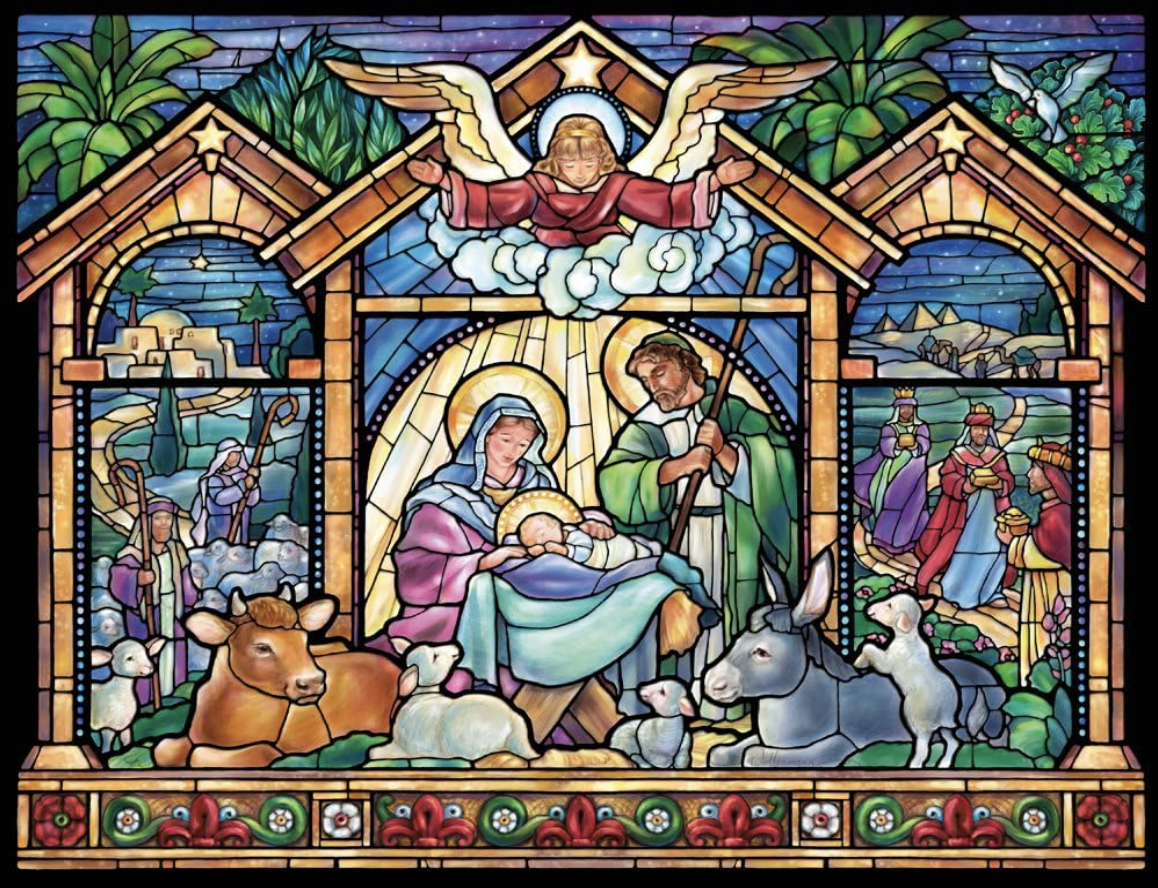
Divine Christmas Gifts

I hope everyone was pleased with the gifts they may have received during their Christmas celebrations. As grandparents, my wife and I delighted in the presence of our children and grandchildren as we celebrated together Jesus’ Nativity.

Which raises the subject of the proverbial “reason for the season.” My hope is that Mere Inkling’s friends will know the deep and lasting joy of receiving our Creator’s most precious gift.

In 1958, C.S. Lewis wrote to an American correspondent about one obstacle to receiving God’s gifts. He cited an observation by Saint Augustine that if we are too busy grasping less important things, we can miss out on what is truly priceless.

St. Augustine says “God gives where He finds empty hands.” A man whose hands are full of parcels can’t receive a gift.

Augustine was an ancient African bishop. One of his Christmas sermons has survived and remains quite inspiring sixteen centuries after it was first preached. I encourage you to bask in the glow of the following excerpt.

So then, let us celebrate the birthday of the Lord with all due festive gatherings. Let men rejoice, let women rejoice. Christ has been born, a man; he has been born of a woman; and each sex has been honored.

Now therefore, let everyone, having been condemned in the first man [Adam], pass over to the second. It was a woman who sold us death; a woman who bore us life. The likeness of the flesh of sin [Romans 8] has been born, so that the flesh of sin might be cleansed and purified.

And thus it is not the flesh that is to be faulted, but the fault that must die in order that the nature may live; because One has been born without fault, in whom the other who was at fault may be reborn.

Rejoice, you just; it is the birthday of the Justifier. Rejoice, you who are weak and sick; it is the birthday of the Savior, the Healer. Rejoice, captives; it is the birthday of the Redeemer.

Rejoice, slaves; it is the birthday of the one who makes you lords. Rejoice, free people; it is the birthday of the one who makes you free. Rejoice, all Christians; it is the birthday of Christ.

Rejoice, one and all. God’s undeserved gift to each of us, for all those willing to receive it, is forgiveness and eternal life. 

In his book The Problem of Pain, C.S. Lewis elaborates on the Augustinian analogy shared above.

Everyone has noticed how hard it is to turn our thoughts to God when everything is going well with us. We “have all we want” is a terrible saying when “all” does not include God. We find God an interruption.

As St Augustine says somewhere, “God wants to give us something, but cannot, because our hands are full – there’s nowhere for Him to put it.” Or as a friend of mine said, “We regard God as an airman regards his parachute; it’s there for emergencies but he hopes he’ll never have to use it.”

Now God, who has made us, knows what we are and that our happiness lies in Him. Yet we will not seek it in Him as long as He leaves us any other resort where it can even plausibly be looked for. While what we call “our own life” remains agreeable we will not surrender it to Him.

What then can God do in our interests but make “our own life” less agreeable to us, and take away the plausible sources of false happiness? It is just here, where God’s providence seems at first to be most cruel, that the Divine humility, the stooping down of the Highest, most deserves praise.

Remember friends, our celebration of the Messiah’s entrance into our world is not limited to a single day, or even a brief season. Every single day we can rejoice at the miracle of the Incarnation and the fact that God loved us enough to send his Son to redeem us.

Give Yourself a Holiday Gift

space trilogyChristmas is the season of giving, and as a grandfather I can truly say it’s more wonderful to give than to receive. Those little smiles and squeals of joy are precious indeed.

Sadly, many children (and adults) will be forgotten this season. Worthwhile programs to reach out to the overlooked are sponsored by countless churches and communities. One of the most highly regarded, Angel Tree, provides gifts to the children of men and women who are incarcerated. These innocent children are already suffering due to the poor choices of adults; God alone knows how special the most modest Christmas gift might be to these little ones.

That is one end of the spectrum—those who have little. Equally sadly, many children (and adults) will overindulge this season. They will bury themselves under piles of soon-to-be-forgotten presents. Most will also bury themselves further under mounds of debt.

C.S. Lewis colorfully captured this quandary in “Xmas and Christmas.”

And they buy as gifts for one another such things as no man ever bought for himself. For the sellers, understanding the custom, put forth all kinds of trumpery, and whatever, being useless and ridiculous, they have been unable to sell throughout the year they now sell as an Exmas gift. And though the Niatirbians [British] profess themselves to lack sufficient necessary things, such as metal, leather, wood and paper, yet an incredible quantity of these things is wasted every year, being made into the gifts.

Striving for balance in gift exchanging is important. For years now my father has said it’s unnecessary to give him Christmas or birthday gifts. It’s true. He’s able to purchase whatever he wants, and even the most thoughtful gifts are either redundant or undesired. He’s grateful, of course, but only out of courtesy. Last month, for his birthday, I took him up on his words. Instead of spending money on a gift, we made a special donation to the Gideons in his honor. He was delighted. I’ve known others who made the same request, that gifts intended for them be diverted to the benefit of others. It’s a grand custom.

After the homily on selflessness above, it may sound strange to hear that there is a Christmas gift I would like to suggest you consider giving to yourself. Actually, I’d advise a friend or loved one to purchase it for you, but since you probably haven’t encouraged them to subscribe to Mere Inkling (yet), I must satisfy myself with advising you to check out this special offer.

During the holiday season, HarperOne is running a special on C.S. Lewis’ Cosmic Trilogy (often referred to as the Space Trilogy). You can get them in various digital editions for only $1.99 each. Quite a bargain. And it leaves you plenty of resources to practice the truth that it’s better to give than receive.

Out of the Silent Planet, the first of these science fiction works, was the first Lewis book I read. A friend in a college fellowship group suggested it, and it introduced me to one of the greatest mentors a person could ever have! The books are available through this link: Cosmic Trilogy.

Oh, and if the Cosmic Trilogy is already in your library, or not your cup of tea, they are also discounting an illustrated edition of The Screwtape Letters.

The Trilogy is suitable for Christian and secular readers alike. It’s not overtly “religious.” In fact, in his C.S. Lewis: Companion and Guide, Walter Hooper says many of the intial reviewers of the title were rather confused about its intended meaning. (This despite offering positive reviews.) One person who did comprehend its significance was an Anglican theologian named Eric Mascall. In a 1939 issue of Theology he wrote:

This is an altogether satisfactory story, in which fiction and theology are so skillfully blended that the non-Christian will not realize that he is being instructed until it is too late. It is excellent propaganda and first-rate entertainment.

I’m certain he meant “propaganda” in the most positive, pre-war sense. Actually, one does not need to be a follower of Jesus of Nazareth to appreciate the series. If you’ve never read it before—and you don’t have a 100% aversion to the science fiction genre—the two dollar price means you’ll rarely have a better opportunity.

Treasuring Books

Most of us love and respect books, don’t we? We take care of our literary treasures, and the more deeply we are attached to a particular volume, the better we treat it.

Many of us are reluctant to loan out the books which line our shelves like so many gems, resting in a jeweler’s pristine cases. When we do agree to share them, we’re afraid they may never find their way home. And, when they eventually return to our welcoming grasp, they sometimes bear the scars of their sojourn in the paws of others who do not esteem them as they ought to. Page corners may be scored. Coffee or tea stains may have “embellished” the text. Bindings may have been carelessly mistreated. And, unbelievably, the borrowers are likely to be unaware of how they have abused the tome’s dignity and disfigured its beauty.

Speaking honestly, my own bookshelves are in constant disarray, and too many of my books still remain unpacked after our move into our retirement home. But I am absolutely serious about how painful I find it to witness the mistreatment of books by those ignorant of their value.

C.S. Lewis loved books. He recognized their power. He embraced their wonder. And—most wonderfully for us—he penned a number of classics that will continue to inspire readers for generations.

Yet, as much as Lewis treasured books, he took his own creations for granted. This changed in December of 1954, when he received a precious package from his publisher. Among his Christmas gifts that year were specially bound copies of Surprised by Joy and Mere Christianity. Receipt of the thoughtful present opened his eyes to an interesting notion. On the twenty-second day of the month, he wrote:

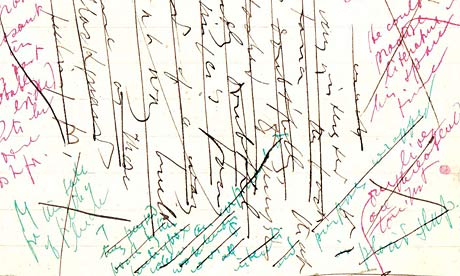
I never had a handsomer present. . . . Perhaps these two charming volumes will teach me at last to have for the bodies of my own books the same reverence I have for the bodies of all other books. For it is a curious fact that I never can regard them as being really books; the boards and print, in however mint a condition, remain a mere pretense behind which one sees the scratchy, inky old manuscript.

I daresay that those writers among us can relate to Lewis’ mindset. Even with the pride that accompanies having books or articles in print, our work somehow seems “different” than the other published materials we invariably respect. This is due in large part, I believe, to their familiarity. Writers, better than most, understand what familiarity breeds. We know these works that flowed from our own consciousness and sweat . . . we know them intimately. And we are keenly aware that if given another opportunity, there are parts of them we would even now edit to be clearer, sharper, and more eloquent.

I never cease to be surprised by the humility of new writers who almost whisper their accomplishments to others. It’s as though they are embarrassed . . . that they assume their friends would consider them braggarts if they spoke with the pride they genuinely feel about their work. Some of us hold onto our rejection letters. (I do.) How much better though, to print out high quality copies of articles or devotions we’ve written and place them in a prominent binder or display located near our keyboard.

Who knows, I may actually follow my own advice and do something like that. Sadly, I don’t have a grateful publisher eager to prepare special editions for me. Nevertheless, I’m glad Lewis did. I learned from his insight that whenever we release our literary progeny to the world, they merit the same degree of respect and affection that we book-lovers bestow so generously on the works of others.

___

Postscript: The image above is an actual manuscript page from James Joyce’s Ulysses. (It makes me feel much more confident about my own initial scribblings.)