A Font for All Seasons

There are a variety of ailments that disproportionately affect writers. Mundane disorders such as Repetitive Stress Injury, Computer Eyestrain and assorted carbuncles arise as no surprise. But there is another, psychological malady that can cripple an author’s creativity and savage his time schedule.

A fascination with fonts is a logical curiosity among people who love words. You can find stylized fonts reflecting for almost any special interest. In fact, just four months ago the total number of fonts surpassed the population of the planet. An affection for different fonts is one thing . . . but an obsession is quite another. Addicts are commonly referred to as “fontaholics.”

There truly are fonts for all seasons . . . too many versions to number. As an example of a unique font, you can check out Narnia BLL.

This lovely lettering is inspired by the recent films about the land of C.S. Lewis’ anointed Chronicles.

And It’s Not Just about Aesthetics

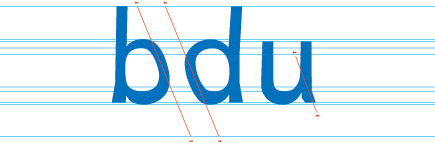
Recently a Dutch scholar devised a nefont specifically for people suffering from dyslexia.

Their approach, based on “weighting” the various letters and symbols, has been shown to improve readability for dyslexics. (Truth is, it would probably make reading easier for anyone.) Some see this new font as reinforcing prior studies which show serif fonts to be more legible than sans serif versions.

Whether you consider yourself immune to the lure of fonts, or are a self-confessed fontaholic, it’s a field about which every writer should understand the basics.
C.S. Lewis on Xmas

Advent has begun! As the Christian Church celebrates its “New Year,” it’s fun to look at C.S. Lewis’ essay, “Xmas and Christmas: A Lost Chapter from Herodotus.” He describes the predicament of secularized western civilization. Reversing the spelling of “Britain,” Lewis points out how a new holiday has displaced a profound holy-day.

In the middle of winter when fogs and rains most abound, [the Niatirbians] have a great festival called Exmas, and for 50 days they prepare for it (in the manner which is called,) in their barbarian speech, the Exmas Rush.

When the day of the festival comes, most of the citizens, being exhausted from the (frenzies of the) Rush, lie in bed till noon. But in the evening they eat five times as much as on other days, and crowning themselves with crowns of paper, they become intoxicated. And on the day after Exmas, they are very grave, being internally disordered by the supper and the drinking and the reckoning of how much they have spent on gifts and on the wine.

A few among the Niatirbians have also a festival, separate and to themselves, called Crissmas, which is on the same day as Exmas. And those who keep Crissmas, doing the opposite to the majority of Niatirbians, rise early on that day with shining faces and go before sunrise to certain temples where they partake of a sacred feast.

But as for what Hecataeus says, that Exmas and Crissmas are the same, this is not credible. It is not likely that men, even being barbarians, should suffer so many and so great things (as those involved in the Exmas Rush), in honor of a god they do not believe in.

Niatirb might just as well be the Setats Detinu. We see the same signs all around us. One shocking fact is how the secular seasonal movies now do not even feel compelled to offer the slightest nod to the true meaning of the season. Santa, for many, has utterly eclipsed the Babe in the manger. And “Christ” has literally been crossed out of Xmas.

May this entertaining portrait remind each of us of the true significance of the approaching season. And, may God also use the season of Advent to prepare our individual hearts to receive the most priceless and precious Christmas gift ever given.

Veterans Day: Joyous or Somber?

Much of the world commemorates Armistice Day, or as it has come to be known in the United States, Veterans Day. It is fitting to offer thanks for those who have gone to war to defend our freedoms, especially those who sacrificed their lives in that cause.

C.S. Lewis was a veteran of the “war to end all wars.” He was recuperating from severe battle wounds in an army hospital when WWI came to its conclusion. Just a few days after the Armistice, he wrote to his father:

As to the great news which is uppermost in our minds, I can only echo what you have already said. The man who can give way to mafficking [celebrating with boisterous public demonstrations] at such a time is more than indecent—he is mad. I remember five of us at Keble, and I am the only survivor: I think of Mr. Sutton, a widower with five sons, all of whom have gone. One cannot help wondering why.

Lewis knew what all veterans of war have learned. War is a terrible thing. It is something to be avoided whenever possible . . . but there are some things even worse than war. And in those circumstances, when war becomes the necessary lesser evil, it is never something to be celebrated. Innocents die in war. Innocence dies in war.

Yes, it is certainly good to express our appreciation to the veterans who have counted the cost and served in uniform. But we should do so with sober, deep and quiet gratitude.

Sharing Surnames

“‘It isn’t Narnia, you know,’ sobbed Lucy. ‘It’s you. We shan’t meet you there [again]. And how can we live, never meeting you?’

‘But you shall meet me, dear one,’ said Aslan.

‘Are—are you there too, Sir?’ said Edmund.

‘I am,’ said Aslan. ‘But there I have another name. You must learn to know me by that name. This was the very reason why you were brought to Narnia, that by knowing me here for a little, you may know me better there.’”

C.S. Lewis, The Voyage of the Dawn Treader

 Names are precious, and the way that others who share your name bring to it honor or dishonor is important. As Ecclesiastes says, “A good name is better than precious ointment . . .”

I may be more sensitive to this truth than most people, because I grew up with a modestly (in)famous name. Fewer people recognize the link today, since the Burt Lancaster film that publicized the Birdman of Alcatraz is rarely aired. When I was a kid, it seemed to be run annually, like the Wizard of Oz, and I invariably could count on someone making the name connection every time it ran.

Actually, it wasn’t all that bad. Lancaster’s portrayal of the compassionate inmate was extremely sympathetic. The connection didn’t bother me much. Well, not until I read about the genuine Robert Stroud. Not quite as appealing a human being. Enough said.

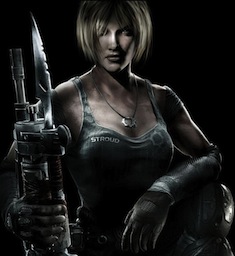
Anya Stroud, WarriorIf you conduct some web searches on variations of your family name, you’ll be surprised what you find. I recently came across a fictional “relative” named Anya Stroud. She looks like someone you’d like to have at your side in an apocalyptic battle, doesn’t she? I understand she is a resident of just such a violent world, in the game system she inhabits.

Returning though to the real world . . . what we do with our name means a great deal to others who share it, especially to our family. Perhaps most of all, to our descendants. Much better for them to look back upon an honorable and godly ancestor rather than a vile example of unredeemed humanity.

And there is another aspect to guarding our name. One of the names followers of Jesus are known by is “Christian.” This is the most precious name we can hold. It is because of this name we can approach our Creator and call him “Father.”

This is a name we should strive to protect and make praiseworthy. We should not however try to earn it, since that’s impossible. It’s a name given simply as a gift, to all who believe Jesus is the Christ, the Messiah promised to be our Redeemer.

Addendum:

Parents are blessed when their children bring honor to their name. So too our Father in heaven. In a world where many hypocrites appeal to his name to defraud and mislead others, it is good to be reminded that our calling as disciples is to live in a manner that conforms to God’s command: “You shall therefore be holy, for I am holy.”